
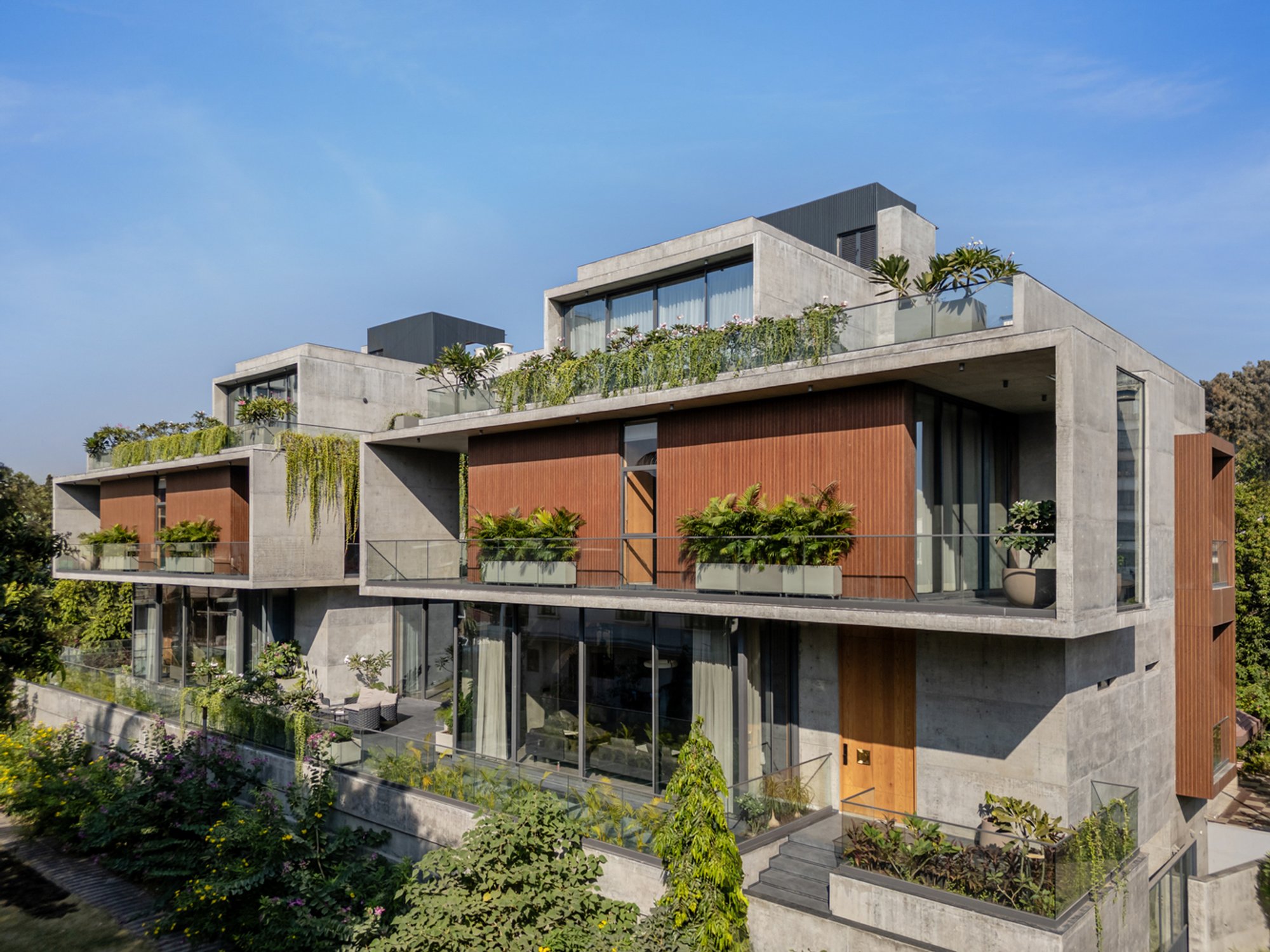
Twin House by Design Work Group: A Modern Architectural Dialogue Between Connection and Independence
Twin House by Design Work Group unites two sibling homes through concrete minimalism, shared spaces, and balanced privacy within contemporary Indian living.

Located in Surat, India, this 1,570 m² project by Design Work Group, led by Bharat Patel, Jitendra Sabalpara, and Dinesh Suthar, was completed in 2024. The design merges contemporary elegance with functional spaces, integrating premium materials and fittings. Photography by Vinay Panjwani highlights meticulous detailing and sophisticated spatial planning throughout.
Redefining Family Living in Modern India
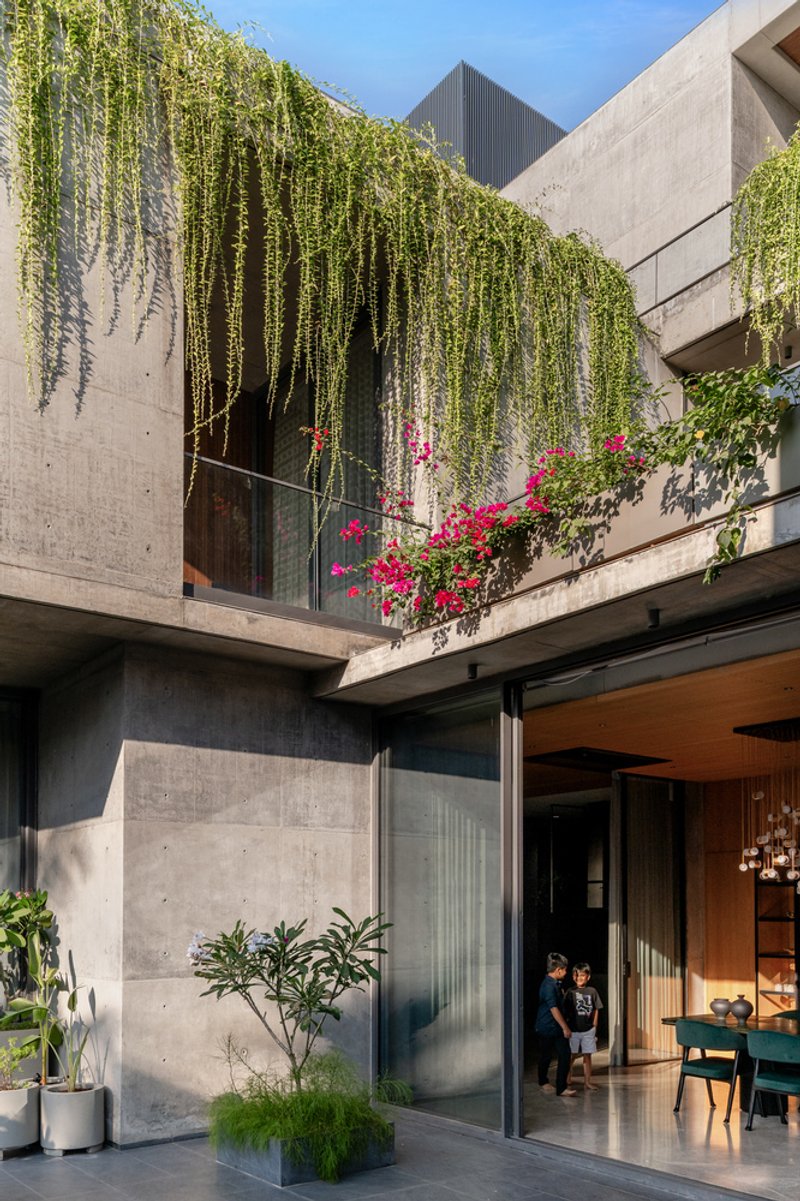
Nestled within the dense urban fabric of Surat, Gujarat, Twin House by Design Work Group (DWG) is a sophisticated exploration of how contemporary Indian families live, connect, and evolve. Designed for two sibling families sharing a single plot, the project transcends conventional notions of joint living by crafting an architectural balance between independence and togetherness.
Through its restrained material palette, monolithic concrete expression, and seamless spatial composition, Twin House reflects a new paradigm of multi-generational living — one that embraces both individuality and unity within a shared architectural language.
Concept: Duality in Design
At its core, Twin House embodies the architectural concept of duality — a balance between rawness and warmth, privacy and connection, solidity and lightness. The two residences are designed as distinct yet interconnected bungalows, unified by a shared deck and dining pavilion that form the symbolic heart of the home.
This transitional space acts as a contemporary reinterpretation of the traditional Indian courtyard — a fluid zone where families gather for rituals, celebrations, and everyday interactions. It mediates between the two volumes, encouraging permeability without intrusion, and redefines the meaning of communal living in a modern context.
Materiality: Brutalism with Warmth
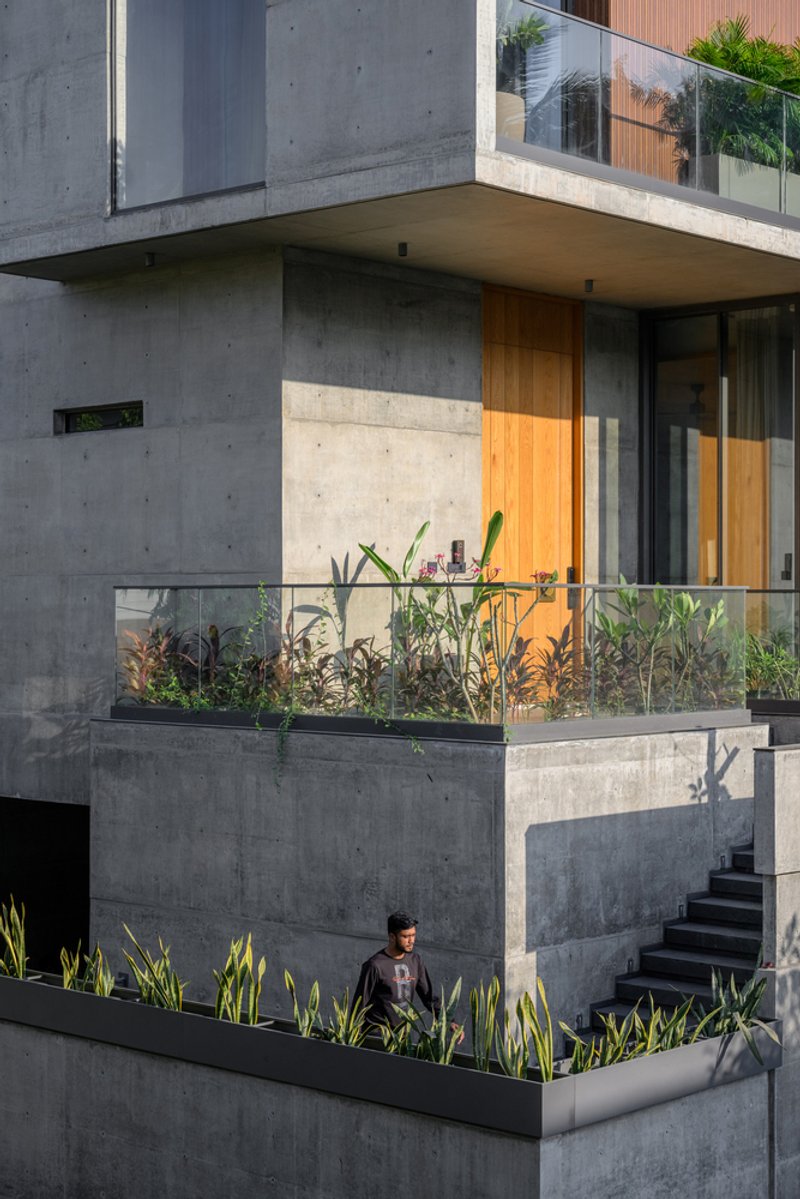
Material honesty defines the architectural character of Twin House. The client’s preference for exposed reinforced concrete (RCC) became the foundation of DWG’s design narrative. The monolithic concrete façades stand as sculptural forms — minimalist, timeless, and expressive of structural clarity.
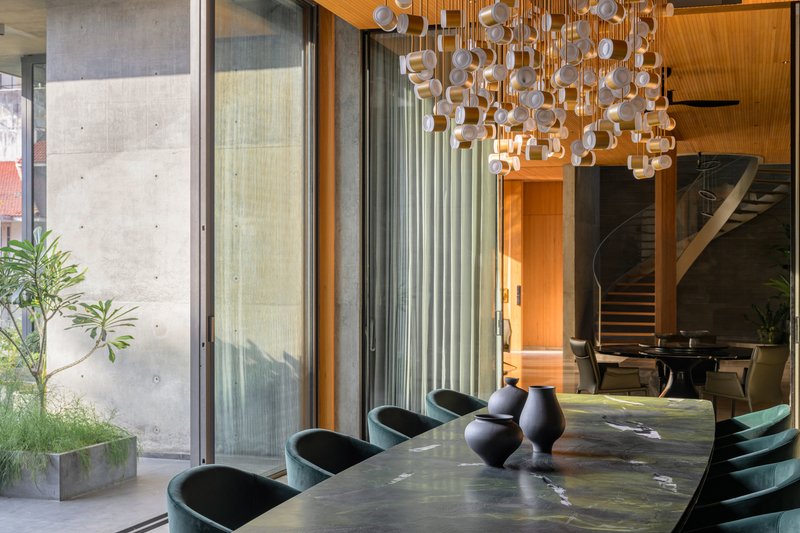
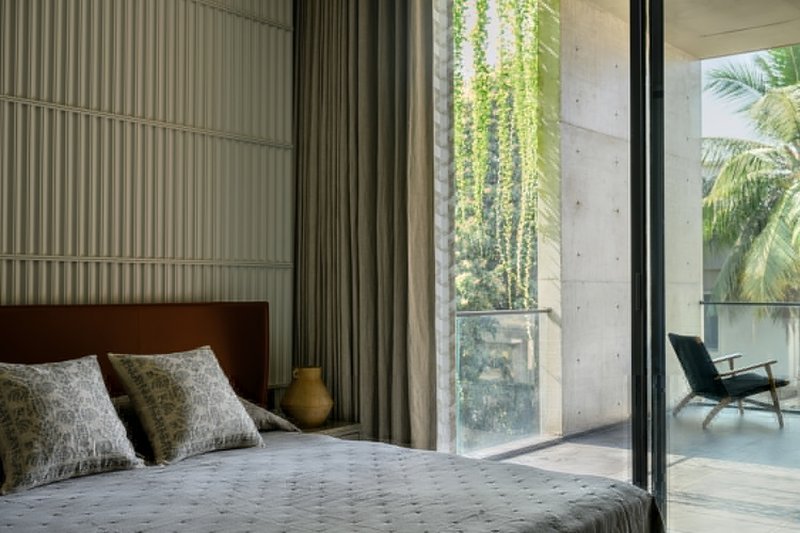
Yet, the rawness of concrete is counterbalanced by the tactile warmth of natural wood, seen in soffits, furniture, and interior detailing. This juxtaposition softens the austere brutalist form, evoking a sense of harmony between permanence and comfort. Inside, the interplay of cool concrete, warm timber, and smooth Italian stone creates a refined sensory experience that defines the home’s architectural essence.
Spatial Strategy: Independence and Interconnection
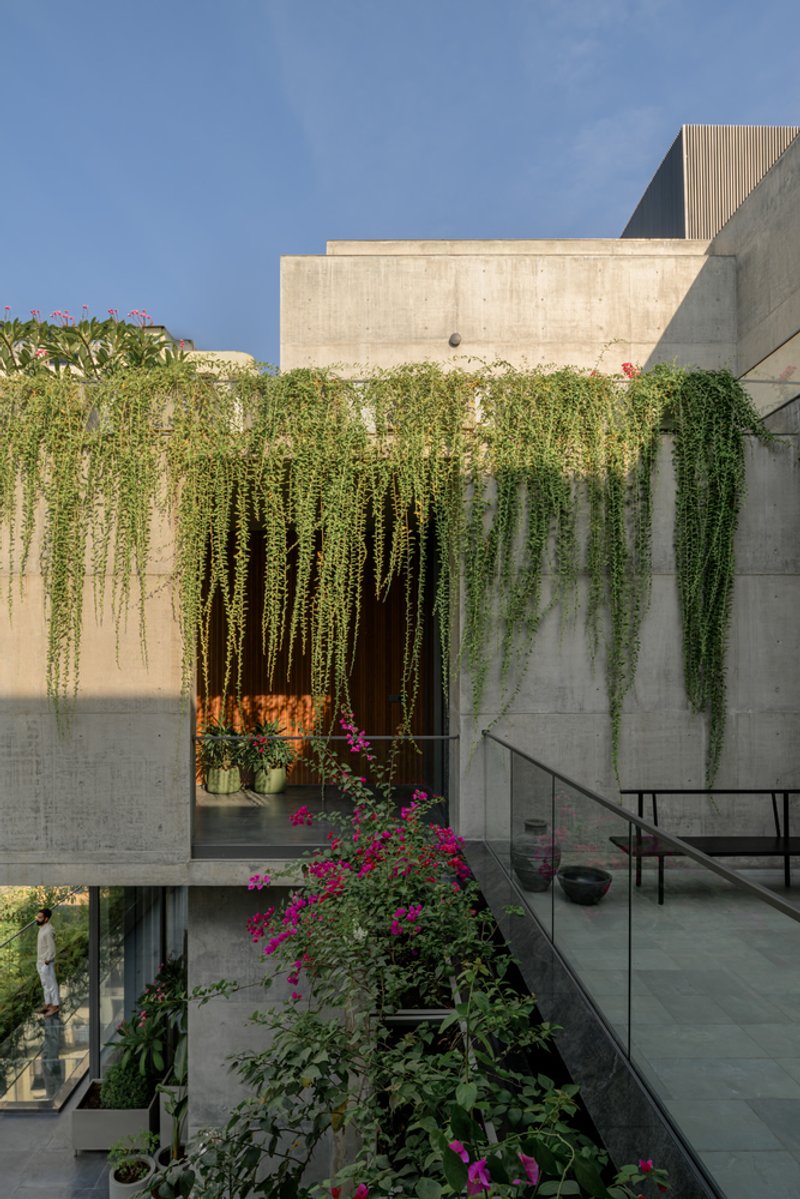
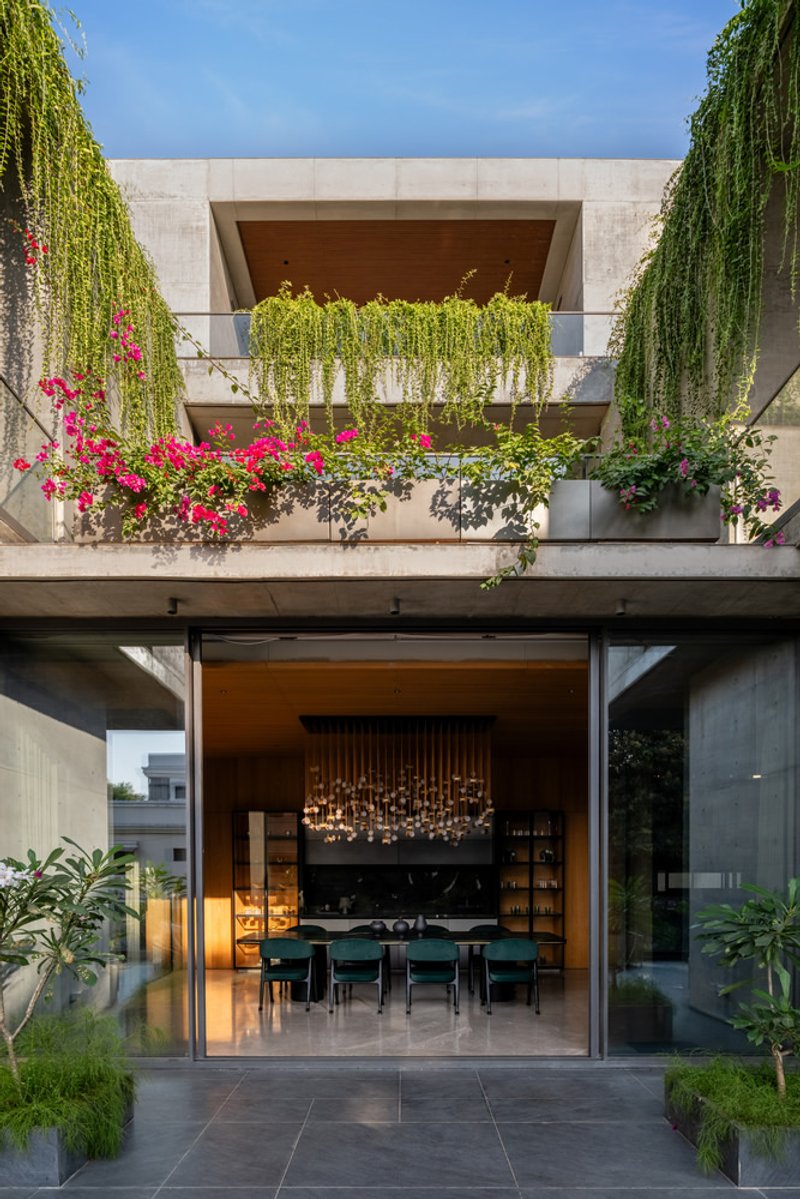
Each of the two houses within Twin House is designed as a self-sufficient unit, featuring private bedrooms, living spaces, and service zones. However, the architectural planning ensures a visual and spatial connection between them through carefully framed views, shared courtyards, and open decks.
The common dining and deck area serve as in-between zones — spaces that blur the boundaries between public and private, allowing both families to engage without compromising privacy. Circulation paths are designed to feel natural and intuitive, creating fluid transitions between spaces while maintaining clear functional zoning.
Vertically and horizontally layered, the plan maximizes light, ventilation, and spatial hierarchy, demonstrating DWG’s nuanced understanding of human behavior and family psychology.
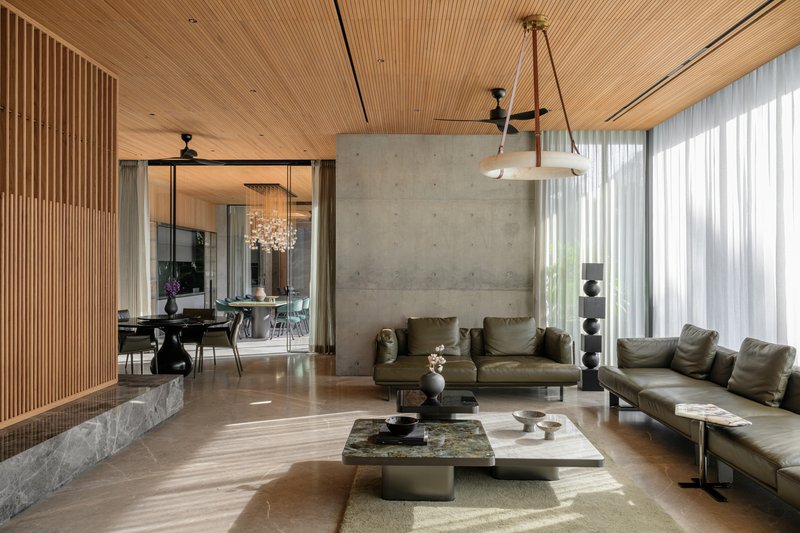
Minimalism Rooted in Culture
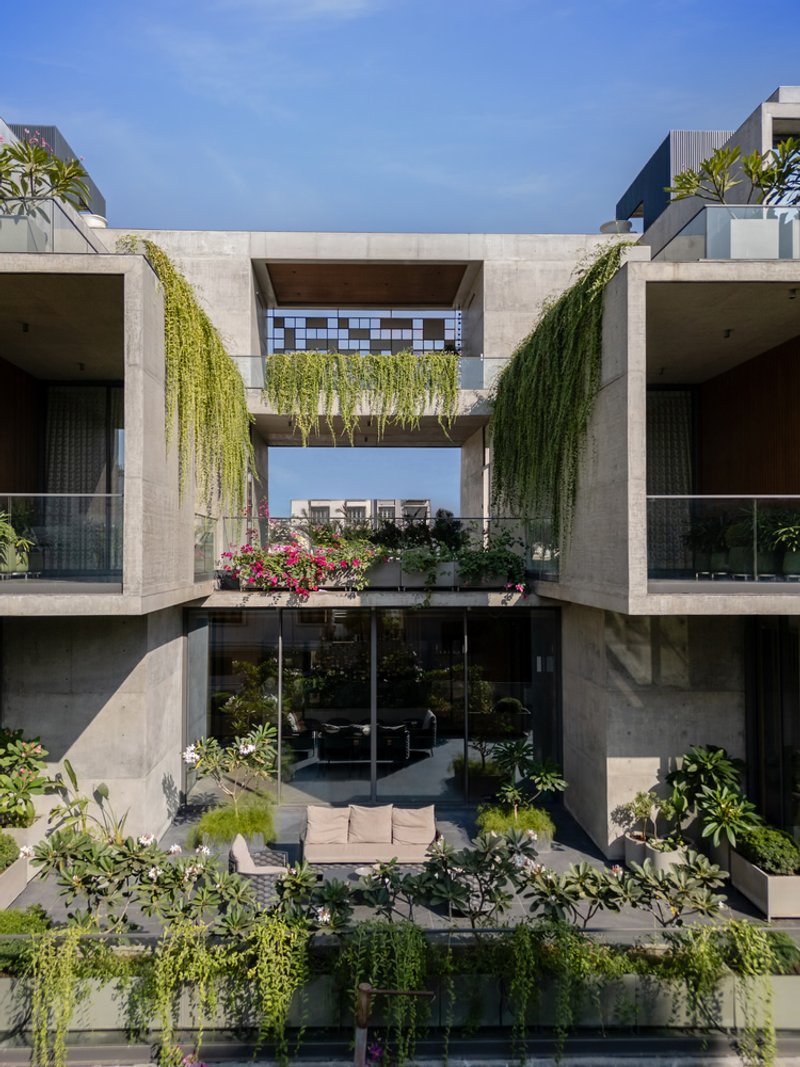
Visually, Twin House adopts a minimalist architectural vocabulary. Its cubic geometry, clean lines, and geometric discipline express restraint and precision. Ornamentation is replaced by proportion, light, and material integrity — a design ethos that celebrates craftsmanship and contextual sensitivity rather than excess.
Through this minimalist approach, the project connects modernist design sensibilities with the emotional warmth of Indian living traditions. The result is an architecture that feels both universal and deeply rooted in place.
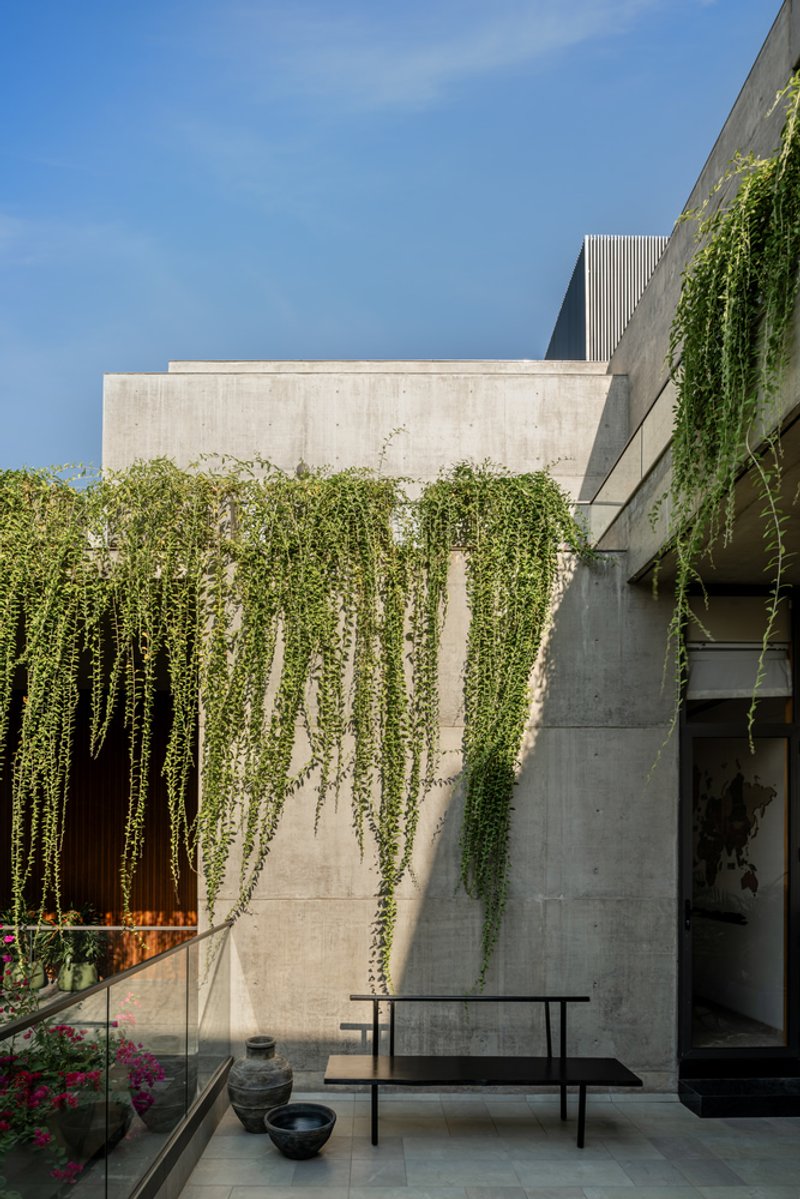
A New Model for Modern Indian Living
Twin House stands as a contemporary interpretation of Indian familial life, where evolving social structures demand new spatial models. Instead of a traditional joint family living under one roof, the design introduces a co-living typology that fosters independence while preserving emotional and spatial connectivity.
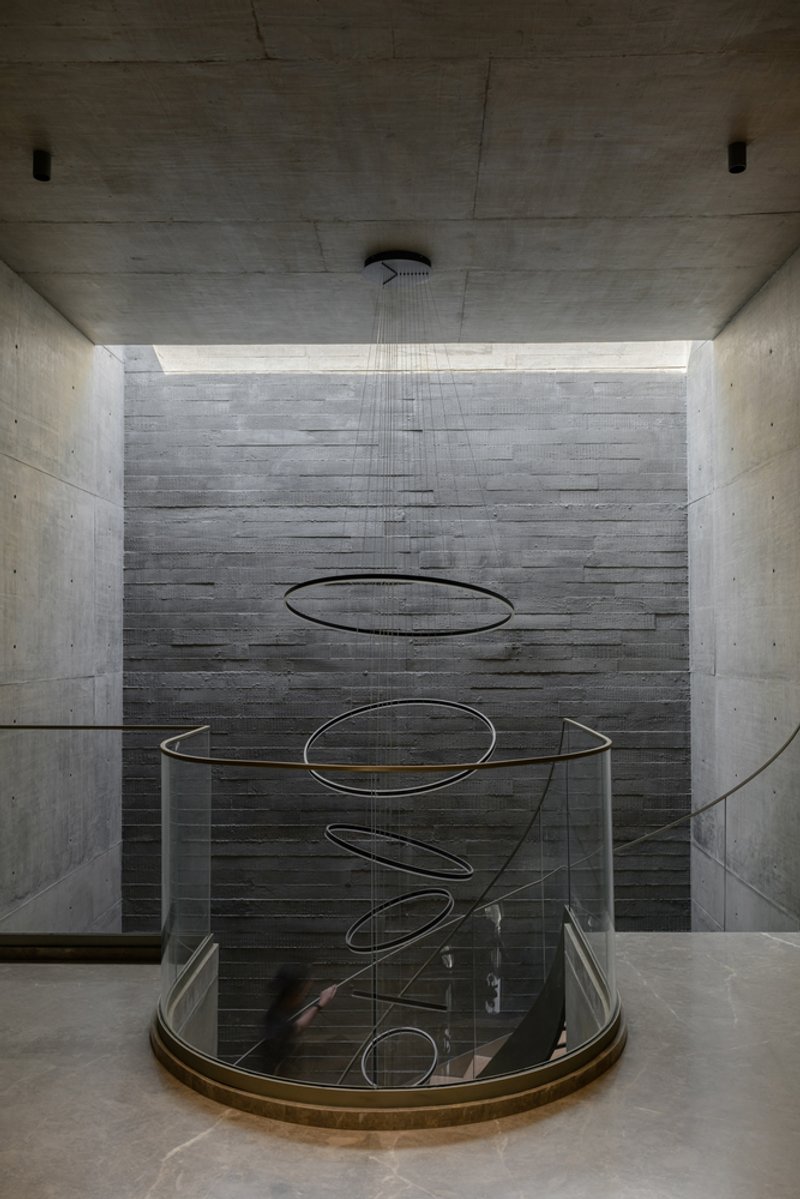
In doing so, Design Work Group challenges the conventional boundaries of domestic architecture in India, proposing a built environment that adapts to changing lifestyles while maintaining cultural depth and intimacy.
Twin House by Design Work Group is more than a residential project — it is an architectural meditation on family, materiality, and modern identity. By merging minimalism with emotional resonance, concrete with wood, and privacy with connection, it creates a timeless environment that reflects both the aspirations and traditions of contemporary Indian families.
It is a home that breathes, evolves, and endures — quietly bridging the gap between the past and the future of Indian residential architecture.
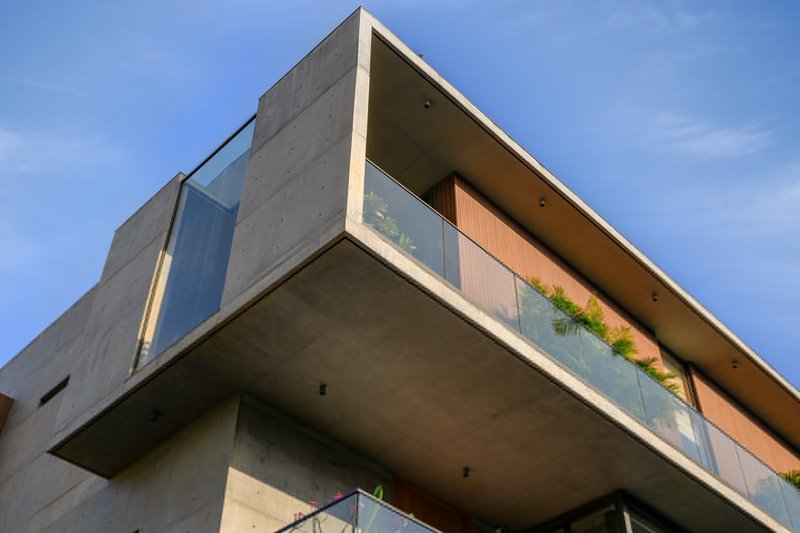
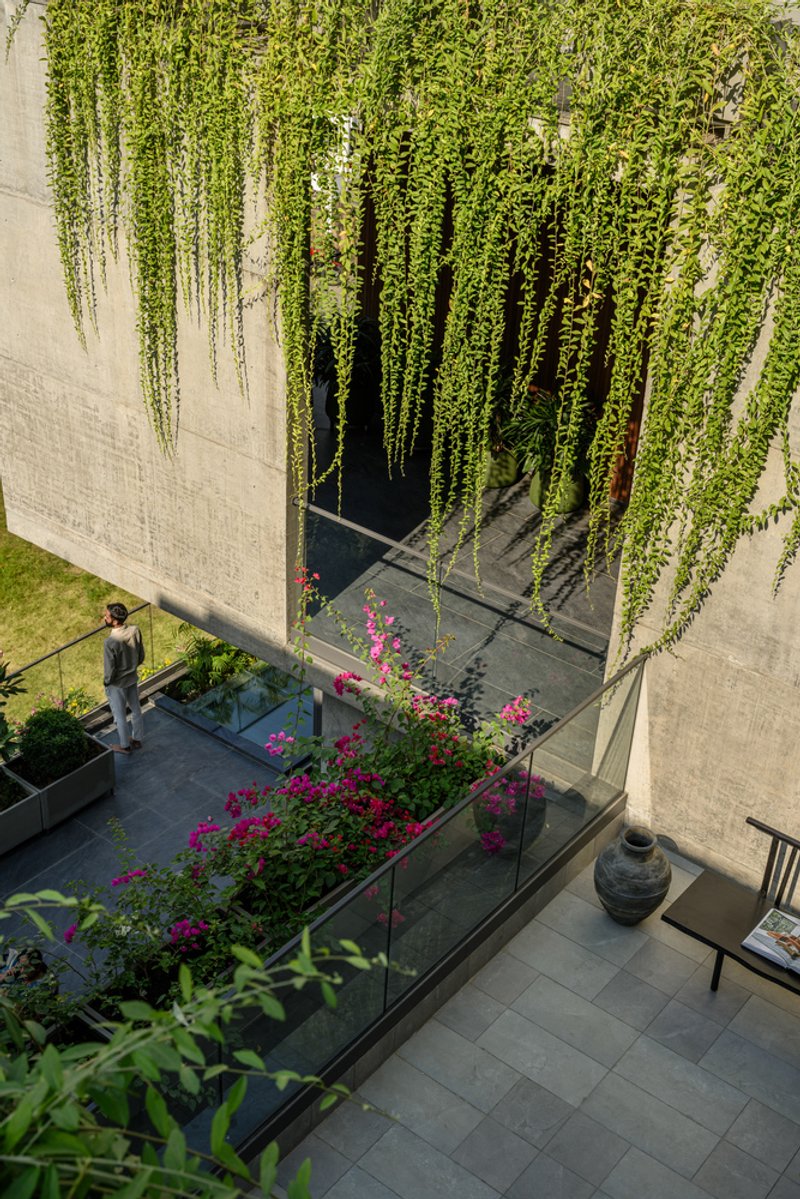
All photographs are works of Vinay Panjwani



Popular Articles
Popular articles from the community

BAUEN Builds Two Rammed Earth Volumes in Paraguay Inspired by the Ovenbird's Nest
In San Bernardino, a house of compacted earth channels the instinct of a constructive bird to shelter life from the Paraguayan summer.

Johnston Architects Reimagines the Methow Valley Hay Barn as a Small-Town Library in Winthrop
A 7,300-square-foot timber library channels the region's agrarian vernacular to serve a rural Washington community of 400 year-round residents.
Indiesalon Carves a Plywood Cave into a Seoul Bistro's Second Floor
Munhwa Bistro's second Seongsu branch wraps diners in a laminated timber vault laced with colored light and mirror illusions.
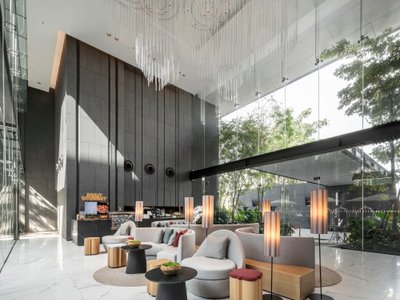
IDIN Architects Wraps a Hua Hin Hotel Around a Private Courtyard to Escape the City
Dusit D2 Hua Hin turns an urban infill site in Thailand's family vacation heartland into a self-contained resort through courtyard planning.


Similar Reads
You might also enjoy these articles

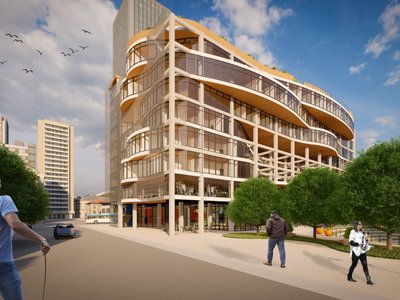
Olio Towers: A Mid-Rise for Performers That Fuses Housing, Rehearsal, and Stage
Located blocks from Houston's Theater District, this modular tower stacks living units around a central performance atrium.
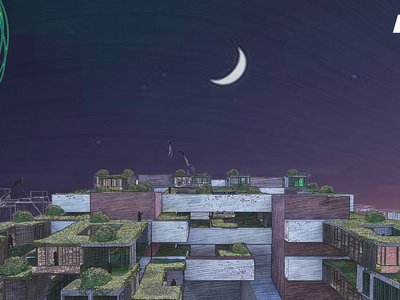
Oasis: Modular Green Housing Carved into Dhaka's Urban Fabric
A shortlisted Plugin Housing entry reclaims unauthorized settlements in Dhaka with stepped concrete volumes, green roofs, and ventilation-driven design.

Black Hole: A Floating Megastructure for the Post-Physical Era
Emiliano Mazzarotto envisions a spherical, self-scaling arena where e-sports, digital hotels, and holographic stadiums replace traditional public space.
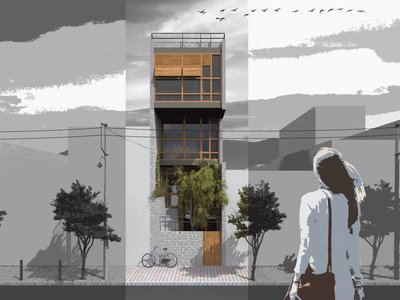
Compact & Sustainable Living in Piraeus: A Four-Level Family Home Built Around Light and Air
A narrow townhouse in one of Greece's densest port cities uses a central atrium and passive strategies to house three generations under one roof.


Explore Architecture Competitions
Discover active competitions in this discipline




The International Standard for Design Portfolios


The Global Benchmark for Architecture Dissertation Awards


The Global Benchmark for Graduation Excellence


Challenge to design mud housing for contemporary communities
Comments (0)
Please login or sign up to add comments
No comments yet. Be the first to comment!