

Two Sides House by MiMo Architects: A Multi-Generational Family Home in Sandton, South Africa
Two Sides House by MiMo Architects in Sandton blends multi-generational living, brick and timber design, spacious interiors, and thoughtful family-focused spaces.


Embracing Multi-Generational Living
The Two Sides House in Sandton, designed by MiMo Architects, is a thoughtful residence created for three generations of a single family. Unlike conventional multi-generational homes that merely place households side by side, this design emphasizes shared rhythms and meaningful interactions. The home balances privacy and connectivity, enabling family members to live together while enjoying moments of gentle contact in shared spaces.
Despite its compact footprint, the house maximizes spatial generosity where it matters most. Every square metre has been meticulously planned for functional efficiency and comfort, reflecting a careful consideration of both space and financial investment.


Materiality and Architectural Language
Constructed predominantly from brick, the house exudes a sense of mass, gravity, and warmth. The material palette conveys durability and grounding while fostering a calm, inviting atmosphere. At the center of the home, where the two households converge, full-height timber doors open into a brick-paved lobby, seamlessly connecting the garden path and the interior. This central hub acts as a welcoming pause, a space to feel rooted and present.
The choice of materials—brick, timber, and concrete—reinforces a balance between structural honesty and tactile warmth, creating a home that is both enduring and emotionally resonant.


Thoughtful Spatial Planning
A defining feature of the house is the long northern passage on the ground floor, which links essential areas such as the living room, library, stairs, and kitchen before opening to the verandah. Far from being a mere corridor, this passage integrates into the rooms it connects, fostering a sense of continuity and spatial dialogue.
The bookshelf area doubles as a sunlit window bay and daybed, subtly inviting residents to pause and reflect. Beyond it, the stairs lead to the upper level, where the passage widens into a pyjama lounge, a cozy retreat for the family to unwind.
Every corner of the home is designed to be active and inviting, eliminating wasted space. The upper terrace reconnects the family with a Gingko tree, planted years ago by the parents, which now serves as a living anchor and symbolic centerpiece.


Integration of Nature and Shared Moments
The design carefully intertwines interior and exterior spaces. Views from terraces, verandahs, and key interior vantage points reconnect residents with the garden and the symbolic Gingko tree. This creates a strong sense of family continuity, blending natural elements with everyday living.
MiMo Architects’ approach demonstrates restraint, precision, and respect for material honesty, resulting in a home that is both grounded and emotive. Every space, every material, and every design decision acknowledges the rhythms of family life and the beauty of shared generational living.


The Two Sides House is a masterful example of multi-generational architecture, where compact design, thoughtful materials, and strategic spatial planning combine to create a home that is functional, emotional, and enduring.


Popular Articles
Popular articles from the community

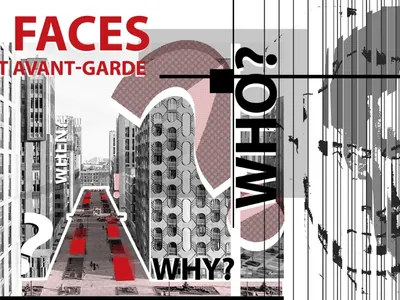
Faces of the Soviet Avant-Garde: Turning Moscow's Street Names into an Open-Air Museum
A network of sculptural installations across a Moscow residential district transforms forgotten architect names into spatial encounters with cultural memor
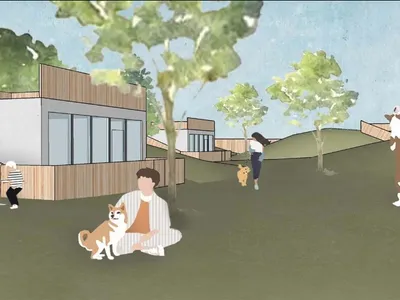
Temporary Home for Dogs: A Reversed Zoo Rethinks Animal Shelter Architecture
In Bucharest, a sinuous corridor and freed landscape flip the logic of containment, designing a shelter that works to make itself unnecessary.
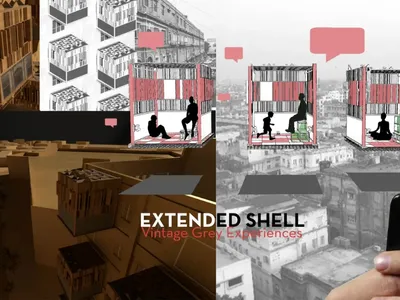
Extended Shell: Retrofitting Kolkata's Balconies as Living Urban Thresholds
A modular retrofit system recovers the social and environmental intelligence of Kolkata's historic verandas for contemporary Park Street residents.
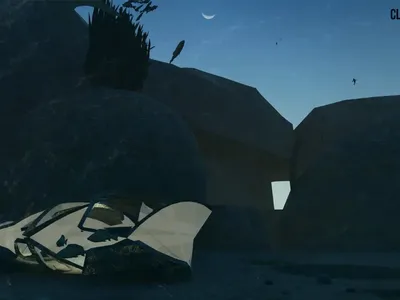
Cloaked Colonization: A Mobile Underwater Habitat That Moves Like a Fish
Micah Abaya's shortlisted EHC Pacific entry reimagines ocean settlement as a dispersed network of self-sustaining architectural organisms.

Similar Reads
You might also enjoy these articles

Hodi-Mandai Geram
Project Function: Preservation and revitalization of the Intangible heritage and socio-spatial identity of the Hodi by Housing, Cultural Memory Center, Sacred Grove, landscape, local tourism economy

Olio Towers: A Mid-Rise for Performers That Fuses Housing, Rehearsal, and Stage
Located blocks from Houston's Theater District, this modular tower stacks living units around a central performance atrium.
Oasis: Modular Green Housing Carved into Dhaka's Urban Fabric
A shortlisted Plugin Housing entry reclaims unauthorized settlements in Dhaka with stepped concrete volumes, green roofs, and ventilation-driven design.

Black Hole: A Floating Megastructure for the Post-Physical Era
Emiliano Mazzarotto envisions a spherical, self-scaling arena where e-sports, digital hotels, and holographic stadiums replace traditional public space.

Explore Housing Competitions
Discover active competitions in this discipline

Challenge to reimagine the Iron Throne

Photograph architecture without architects

Illustrate the lost glory of Angkor Wat - Render Challenge

Design challenge to reuse E-waste
Comments (0)
Please login or sign up to add comments
No comments yet. Be the first to comment!