
Urban Gauze Textile House and Office by DOT: Weaving Light, Air, and Industry in Surat
DOT transforms a Surat textile factory into a breathable, light-filled workspace integrating design, production, and sustainability through adaptive reuse.


A New Vision for Industrial Architecture in Surat
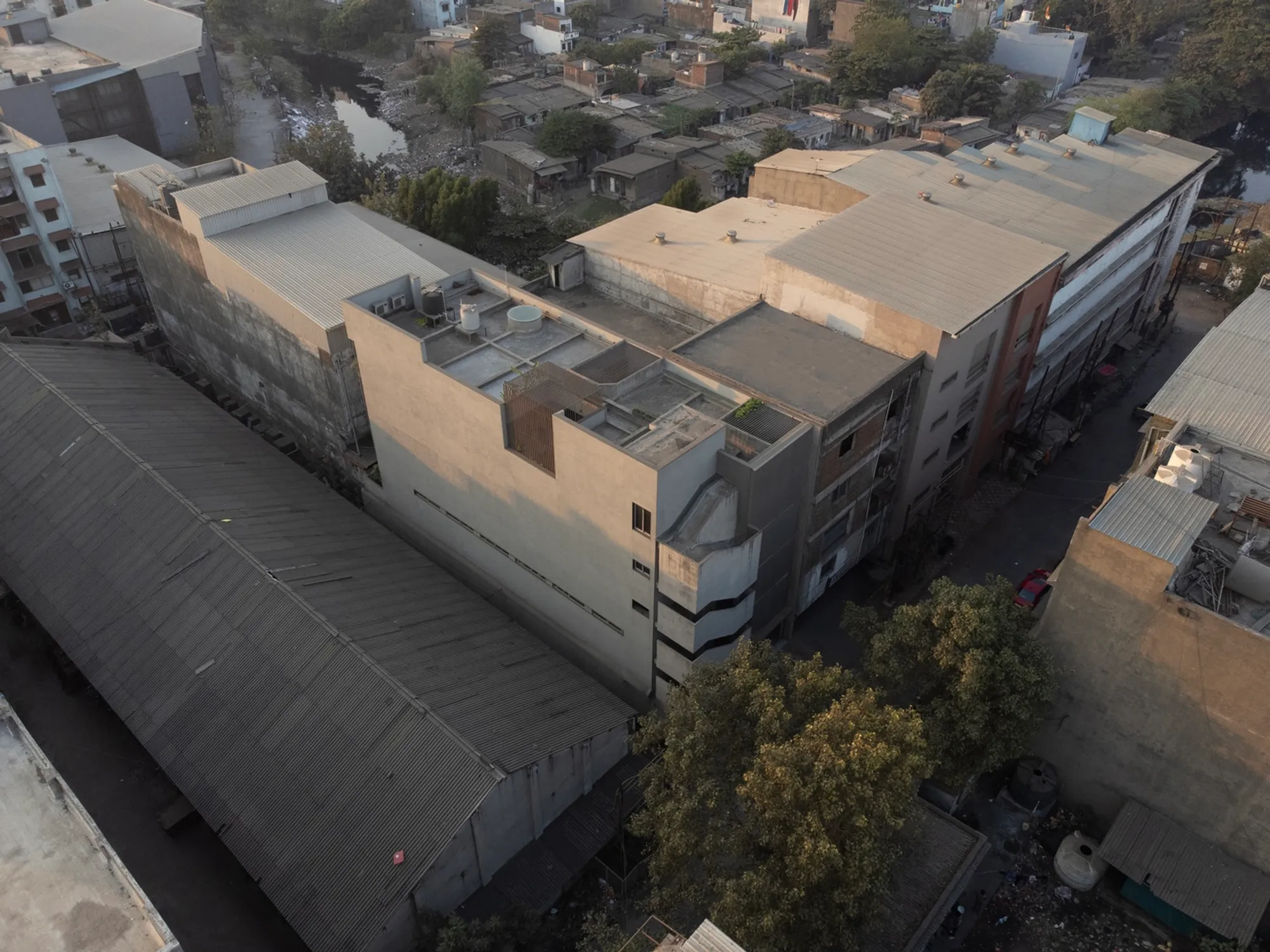
Located in the heart of Pandesara GIDC, one of Surat’s most industrially dense and polluted zones, the Urban Gauze Textile House and Office by DOT redefines the relationship between work, wellness, and design. Surat, historically known as a textile capital of India since the Mughal era, continues to thrive as a major center for silk sarees, cotton fabrics, embroidery, and polyester production. Yet, behind its industrial success lies a challenge—textile workers often operate in poorly lit, unventilated spaces, exposed to high levels of air pollution and unsafe conditions.
DOT’s intervention, aptly titled Urban Gauze, transforms one such four-storey textile house into a human-centric industrial workspace, balancing functionality, sustainability, and aesthetic refinement.
Revitalizing the Industrial Typology
The project began with a simple yet radical question: Can an industrial building breathe?
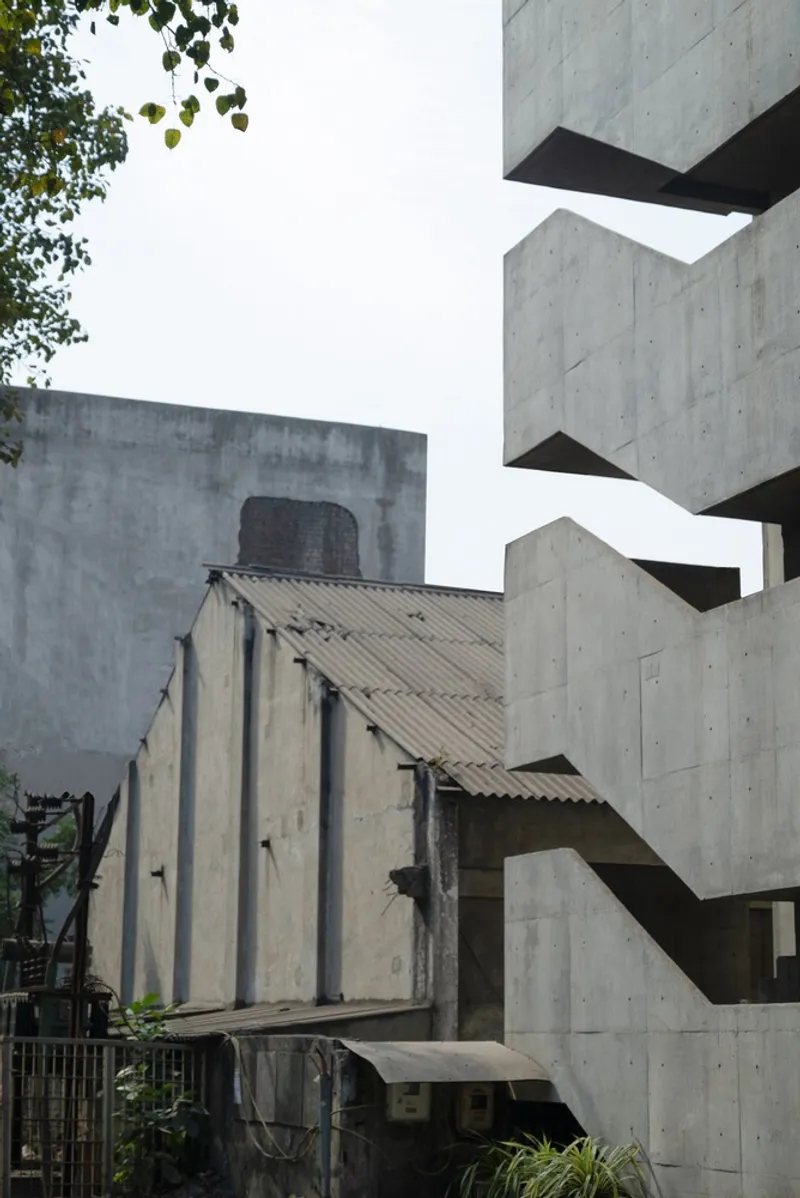
Set within a narrow urban lane where factories share walls and stretch deep into the plot, the existing structure suffered from the typical ailments of industrial design—dark interiors, unplanned circulation, and a lack of architectural character. DOT’s design team approached the project as a remodeling prototype rather than a rebuild, retaining the structural framework while introducing light, air, and spatial clarity.
Through structural optimization and adaptive reuse, existing slabs were reinforced to support heavy textile machinery, while double-height zones and mezzanine insertions accommodated offices and storage. A newly added top floor now houses executive offices, a design studio, and a display space, integrating creativity and production under one cohesive roof.
Architecture of Light and Ventilation
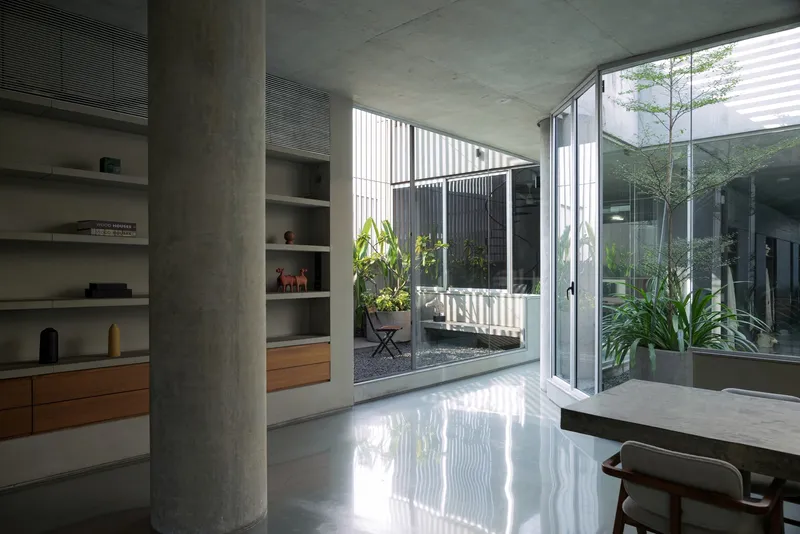
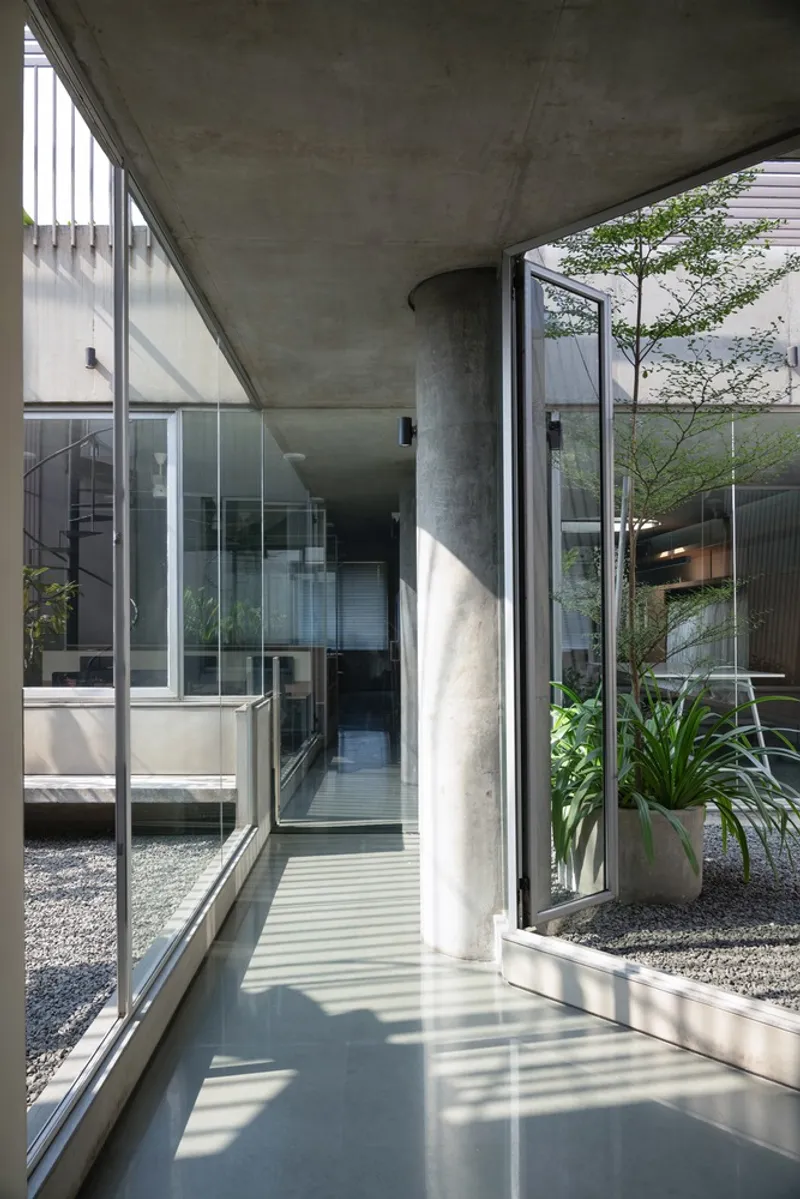
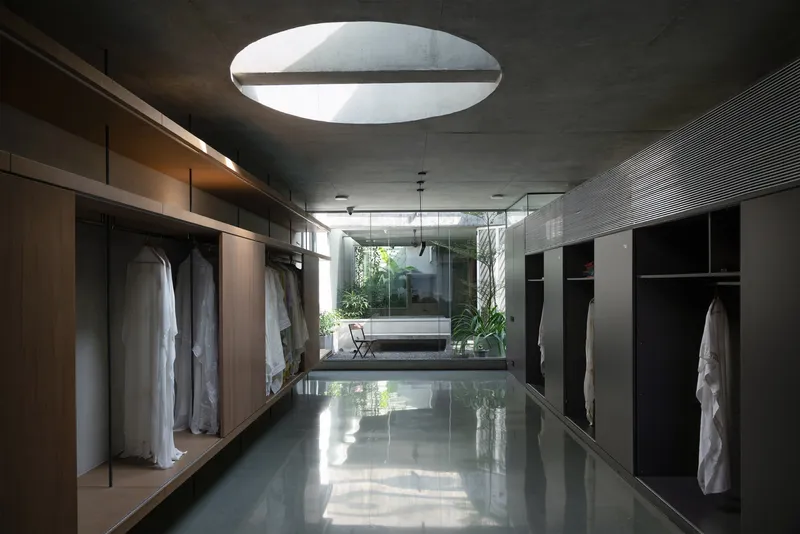
Central to the project’s design ethos is passive environmental performance. The architects introduced a series of interventions to optimize daylight and airflow—clerestory windows, rear light shafts, and three landscaped courtyards on the top floor bring natural light deep into the building’s core.
The result is a workspace that feels both porous and protected, a breathable architectural “gauze” filtering Surat’s harsh industrial climate. These courtyards and skylights reduce mechanical cooling demands by 15% and lighting energy by 35%, demonstrating the power of design to reduce operational costs while enhancing user comfort.
Planters and open light wells add a touch of nature to the otherwise concrete-heavy industrial context, fostering a sense of serenity and well-being for workers who spend long hours indoors.
Raw Materiality and Spatial Expression
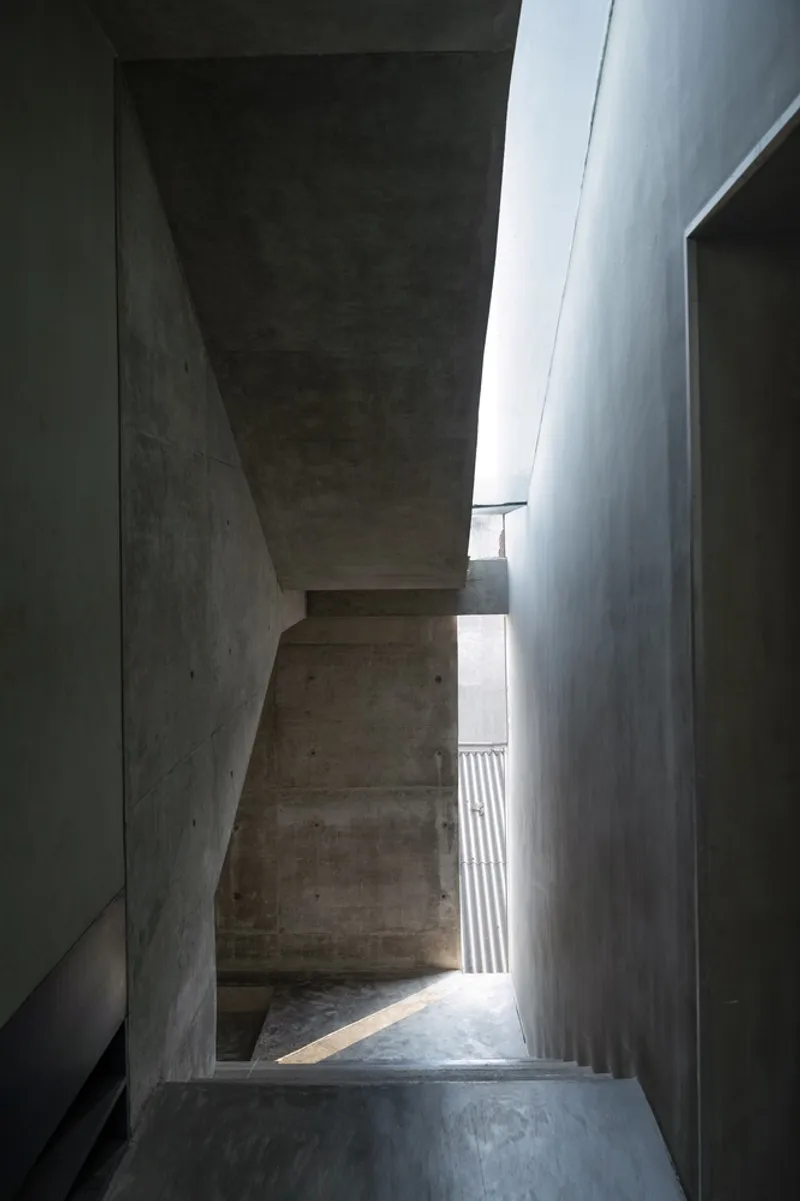
DOT’s material palette embraces honesty and economy. Exposed reinforced concrete (RCC), plain plaster finishes, and Kota stone flooring establish a minimal, monolithic aesthetic while keeping costs low. The design intentionally reveals the process of making—every joint, surface, and shuttering imprint becomes a mark of craft and structure.
The façade features perforated corrugated aluminum sheets that open for machine loading and unloading. These dynamic panels filter sunlight and air, creating softly illuminated interiors while preserving privacy and ventilation.
A striking new concrete staircase with a clerestory slit disconnects the interior from its chaotic surroundings and offers framed glimpses of a nearby peepal tree, transforming everyday movement into a meditative experience.

Sustainable Remodeling Through Design Efficiency
At a construction cost of only ₹1,120 per sq. ft., Urban Gauze demonstrates how architectural design can elevate low-budget industrial projects. Rather than focusing on luxury, the project emphasizes efficiency, adaptability, and human experience.
The design promotes natural daylight, clean air, and open communication—turning a once-claustrophobic factory into a community workspace where workers and designers coexist in a shared, inspiring environment. DOT’s remodeling approach not only improves this specific building but also serves as a scalable prototype for the textile industry, showcasing how industrial architecture can evolve toward sustainability and well-being.

A Breathable Industrial Future
Urban Gauze Textile House and Office by DOT stands as a prototype for India’s evolving industrial architecture—an example of how design can mediate between production and humanity, efficiency and emotion. The project acts as a “gauze” between the harshness of the industrial city and the softness of human life within it—filtering light, air, and experience into a new architectural identity.

Project Details
Project Name: Urban Gauze Textile House and Office Architects: DOT Location: Surat, India Area: 1,300 m² Year: 2024 Photographs: Jainee Gusain

All photographs are works of Jainee Gusain




Popular Articles
Popular articles from the community


Lunar Spiral: Space Architecture Shaped by the Mathematics of the Universe
Lunar Spiral reimagines space architecture through Fibonacci geometry, lunar regolith, levitating habitats, and self-sustaining Moon living.

Riyadh For All: Intergenerational Urban Design for Active Aging in Rabat
Riyadh For All reimagines urban design in Rabat with intergenerational co-living, adaptive courtyards, and Moroccan cultural exchange today.

The Earth Pod: 3D Printed Homes for Resilient Refugee Communities
The Earth Pod reimagines refugee housing through 3D printed homes made from clay, combining resilience, self-sufficiency, and rapid shelter.

Co-life: Sustainable Architecture for Age-Friendly Community Living
Co-life reimagines sustainable architecture for seniors through courtyards, rammed earth, shared gardens, and spaces designed for belonging.


Similar Reads
You might also enjoy these articles


Hodi-Mandai Geram
Project Function: Preservation and revitalization of the Intangible heritage and socio-spatial identity of the Hodi by Housing, Cultural Memory Center, Sacred Grove, landscape, local tourism economy


Olio Towers: A Mid-Rise for Performers That Fuses Housing, Rehearsal, and Stage
Located blocks from Houston's Theater District, this modular tower stacks living units around a central performance atrium.

Oasis: Modular Green Housing Carved into Dhaka's Urban Fabric
A shortlisted Plugin Housing entry reclaims unauthorized settlements in Dhaka with stepped concrete volumes, green roofs, and ventilation-driven design.

Black Hole: A Floating Megastructure for the Post-Physical Era
Emiliano Mazzarotto envisions a spherical, self-scaling arena where e-sports, digital hotels, and holographic stadiums replace traditional public space.
Explore Office Building Competitions
Discover active competitions in this discipline



Challenge to reimagine the Iron Throne


Photograph architecture without architects


Illustrate the lost glory of Angkor Wat - Render Challenge


Design challenge to reuse E-waste
Comments (0)
Please login or sign up to add comments
No comments yet. Be the first to comment!