

Urban Tree House by NO ARCHITECTURE: Innovative Matrix Plan and Garden Folly Redefining Manhattan Living
Urban Tree House by NO ARCHITECTURE redefines Manhattan living with flexible spaces, operable walls, timber interiors, and stunning Hudson River views.


Located within an iconic residential tower on the edge of Manhattan’s vibrant West Village, the Urban Tree House project by NO ARCHITECTURE exemplifies groundbreaking contemporary residential design. Completed in 2021, this 326 square meter luxury apartment seamlessly merges two previously separate units into a cohesive living space that rethinks conventional apartment layouts and spatial dynamics.

A Matrix Plan for Dynamic Urban Living
The core design innovation of the Urban Tree House lies in the architects’ signature matrix plan approach, a conceptual framework that eliminates spatial inefficiency and social isolation by ensuring all rooms remain interconnected. Unlike traditional apartment designs defined by fixed “bedrooms” and “living areas,” this project embraces flexibility through user-defined chambers — multi-functional spaces adaptable to different lifestyles and needs.
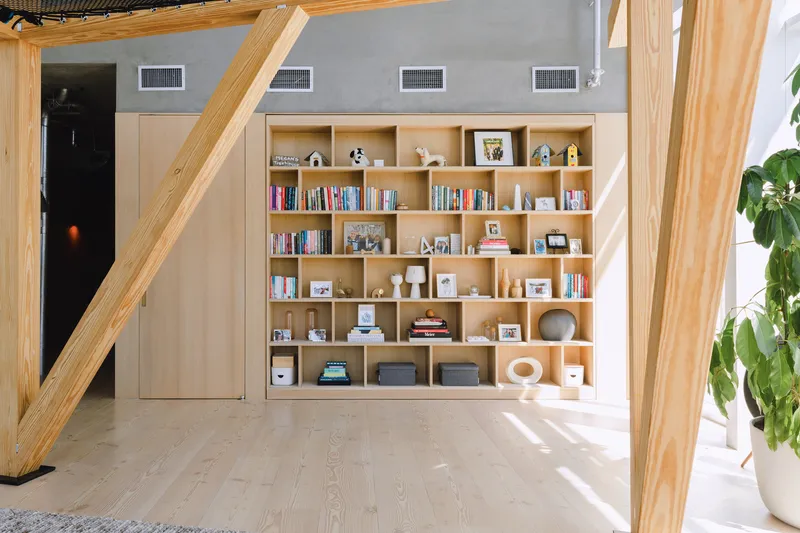
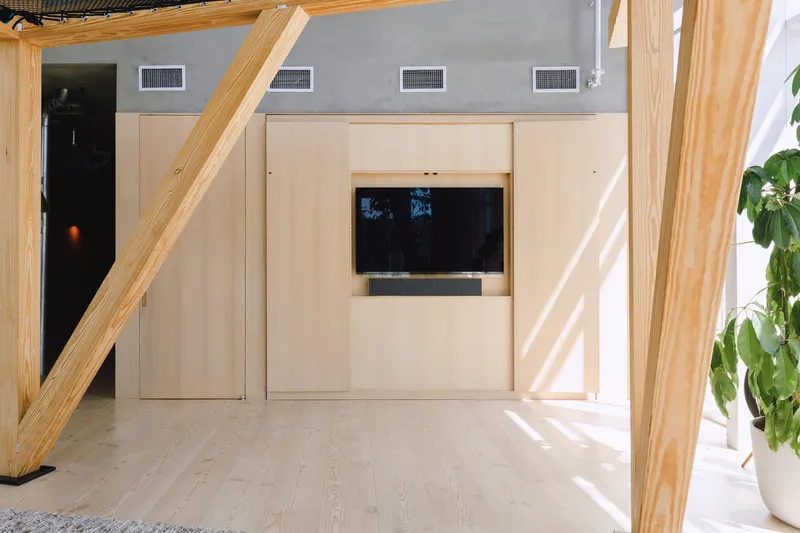
This 4-bedroom, 4-bath apartment operates as an open, dynamic environment where inhabitants are empowered as co-designers. Through a series of bespoke operable walls, residents can easily modulate privacy and openness, creating a personalized balance between solitude and social interaction. These innovative movable partitions include massive bookshelves that serve as spatial mediators—one sliding along built-in tracks and another rotating a full 360 degrees—allowing the living area to transform fluidly according to user preferences.

Integrating Nature with Architecture: The Garden Folly
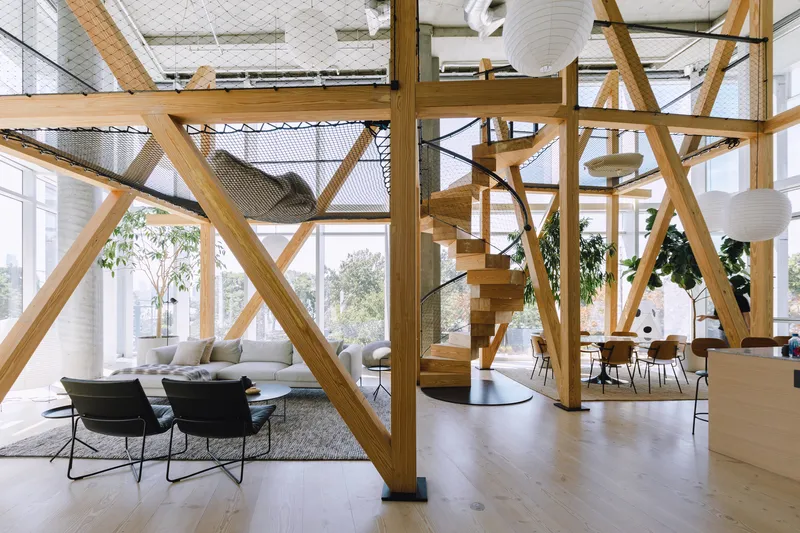
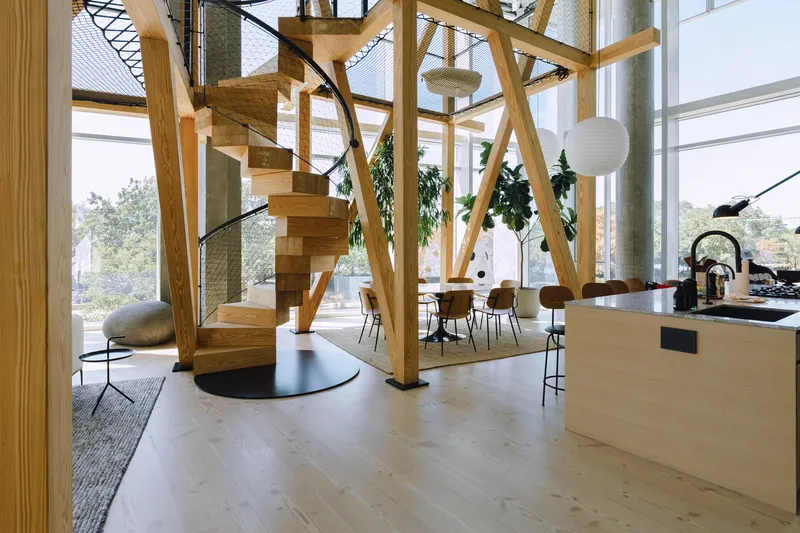
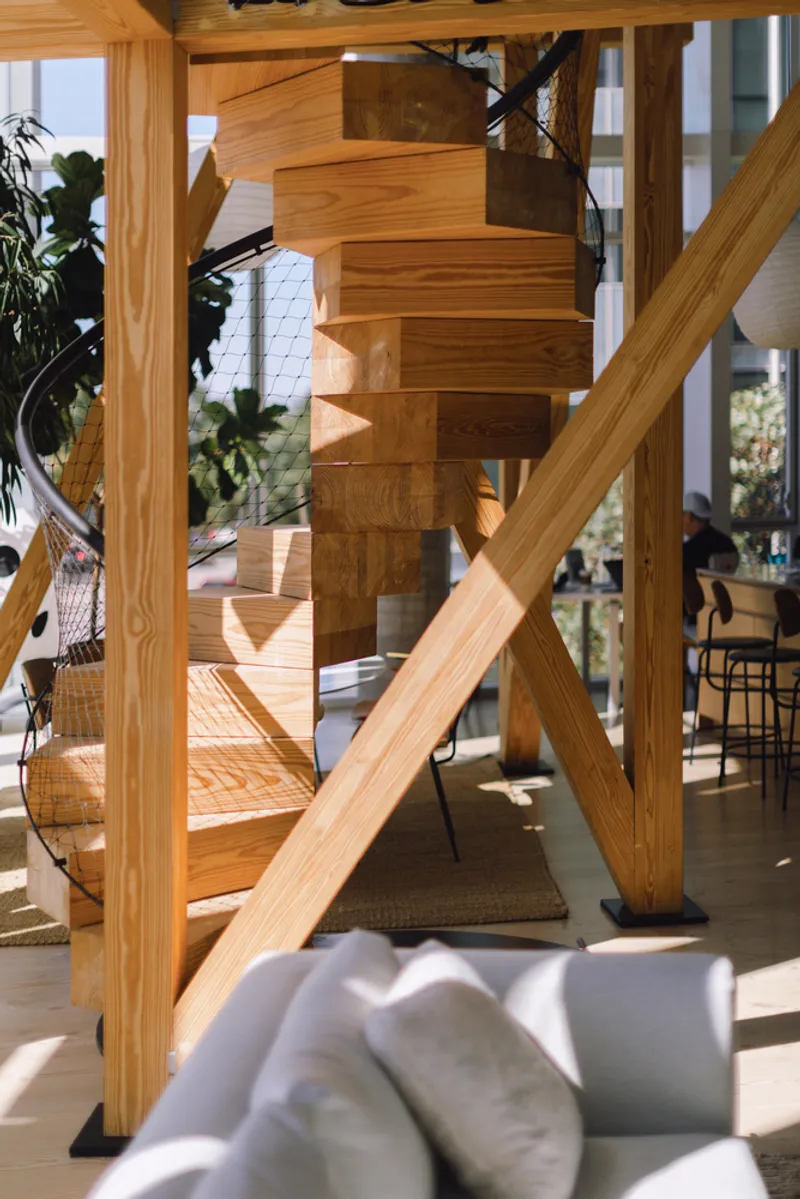
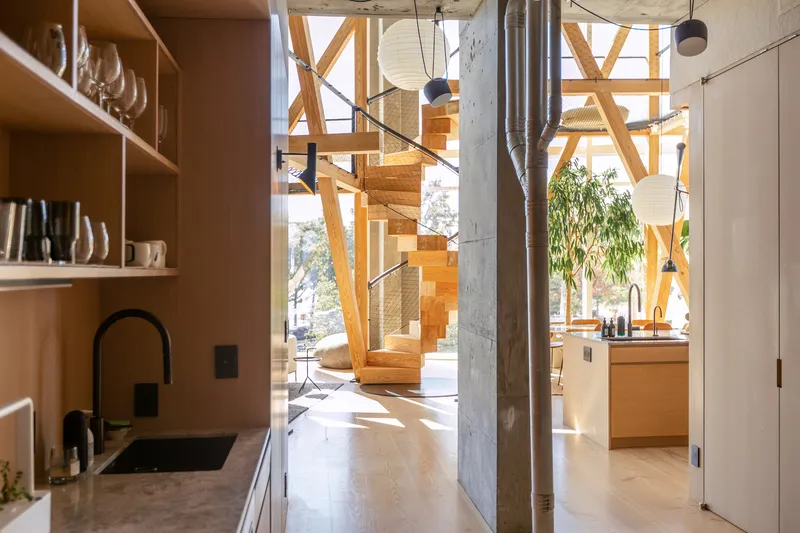
A striking architectural element that enhances the living experience is the insertion of a garden folly—two elevated “tree houses” connected by a self-supporting spiral staircase. These elevated platforms address the vast double-height space, enclosed by 22-foot tall glass walls on three sides, offering expansive views of the Hudson River and the adjacent parkland.
The tree houses introduce a natural, tactile dimension within the urban interior, aligning with the apartment’s walls and rotating to face verdant outdoor landscapes. Suspended like hammocks, these platforms invite new perspectives and a closer connection to nature, blending the boundary between interior architecture and the natural environment.
The timber framework of these installations elegantly expresses a three-dimensional spatial matrix, highlighting interconnections along the x, y, and z axes — a living diagram of architectural and environmental dialogue.


Materials and Craftsmanship
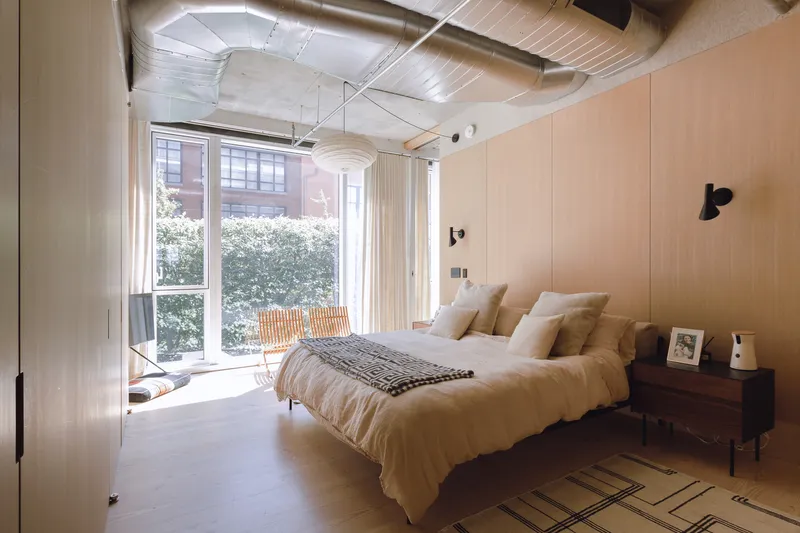
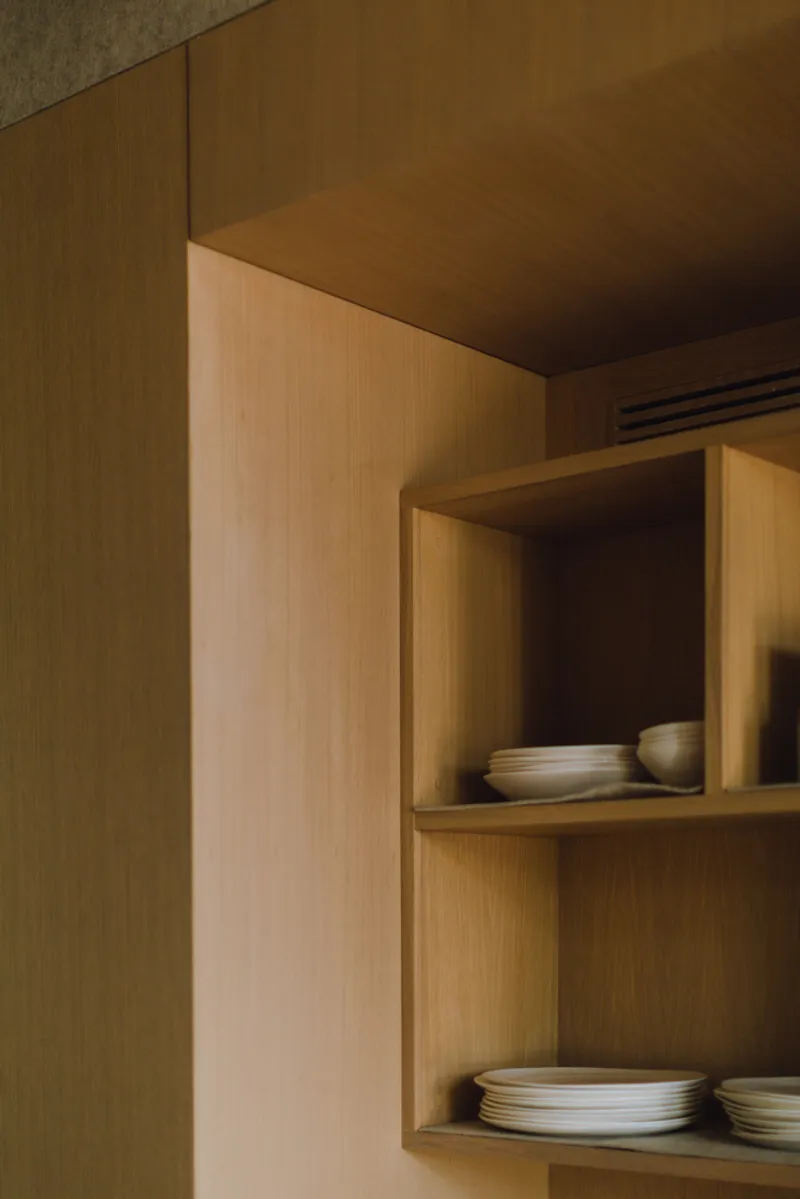
Throughout the apartment, Douglas fir paneling unifies the interiors with a warm, natural aesthetic. Doors and partitions echo this timber cladding, presenting as continuous, full-height panels that contribute to a seamless and fluid spatial experience. This use of natural wood complements the abundant natural light and panoramic views, creating a serene, organic atmosphere within the bustling city context.

Collaborative Expertise and Construction
The successful realization of Urban Tree House was supported by meticulous collaboration. The project enlisted the expertise of Blueberry Construction as the main contractor, with Gallon Engineering providing general engineering services. Lighting manufacturer Louis Poulsen contributed to the sophisticated interior illumination, enhancing the overall ambiance.
The Urban Tree House by NO ARCHITECTURE represents a transformative approach to urban living in Manhattan. By merging architectural innovation, nature integration, and user-centered flexibility, it sets a new standard for luxury residential design that responds to the evolving needs of city dwellers. This project is a prime example of how thoughtful design can redefine spatial relationships and foster a harmonious connection between architecture and nature in an urban context.
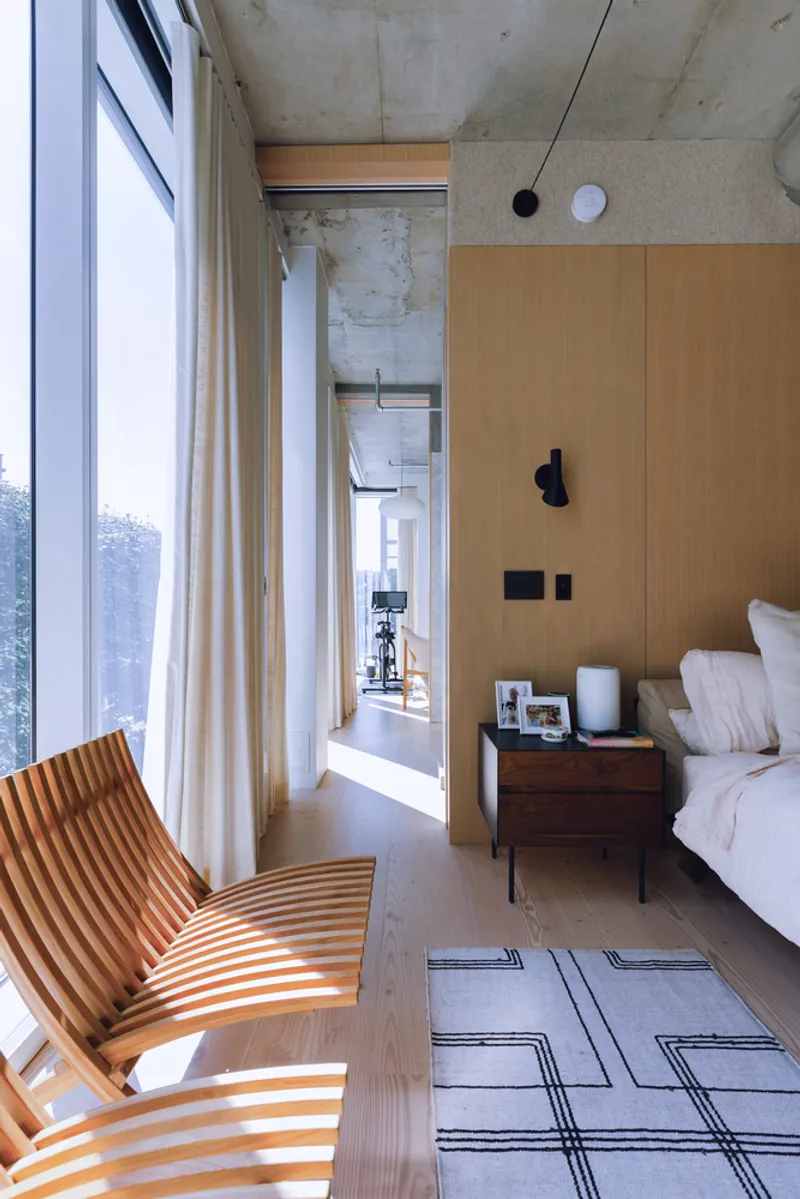
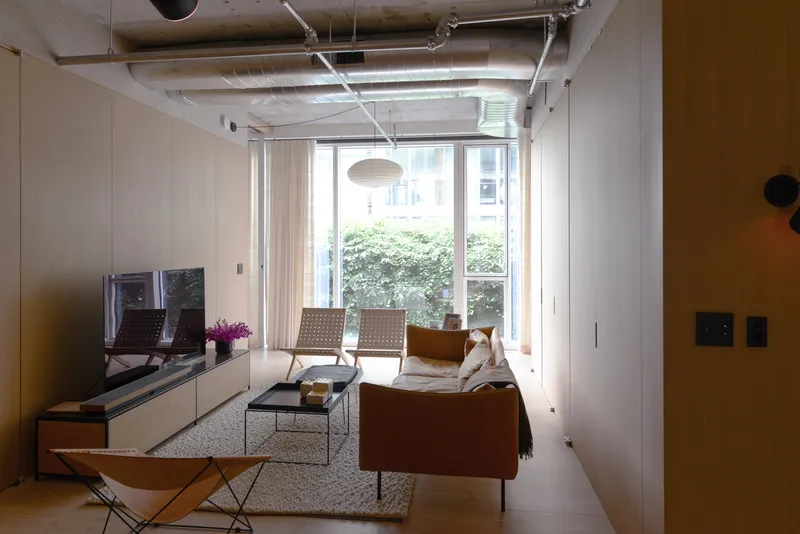
All Photographs are works of Jisun Lee (Studio Gumjung), Dorothy Hong


Popular Articles
Popular articles from the community


Opera on the Sea: Driftwood Logic Shapes a Timber Opera House on Estonia's Coast
Trevor Orgill's opera house translates the entangled drift of floating timber into a civic building where wood, water, and music converge.
Extended Shell: Retrofitting Kolkata's Balconies as Living Urban Thresholds
A modular retrofit system recovers the social and environmental intelligence of Kolkata's historic verandas for contemporary Park Street residents.

Opera by the Sea Estonia: Three Shells Dissolving Architecture into Tallinn's Coastline
A winning opera house proposal replaces monumental form with interconnected shells that blur the boundary between building, park and Baltic Sea.

Cloaked Colonization: A Mobile Underwater Habitat That Moves Like a Fish
Micah Abaya's shortlisted EHC Pacific entry reimagines ocean settlement as a dispersed network of self-sustaining architectural organisms.

Similar Reads
You might also enjoy these articles


Hodi-Mandai Geram
Project Function: Preservation and revitalization of the Intangible heritage and socio-spatial identity of the Hodi by Housing, Cultural Memory Center, Sacred Grove, landscape, local tourism economy


Olio Towers: A Mid-Rise for Performers That Fuses Housing, Rehearsal, and Stage
Located blocks from Houston's Theater District, this modular tower stacks living units around a central performance atrium.

Oasis: Modular Green Housing Carved into Dhaka's Urban Fabric
A shortlisted Plugin Housing entry reclaims unauthorized settlements in Dhaka with stepped concrete volumes, green roofs, and ventilation-driven design.

Black Hole: A Floating Megastructure for the Post-Physical Era
Emiliano Mazzarotto envisions a spherical, self-scaling arena where e-sports, digital hotels, and holographic stadiums replace traditional public space.

Explore Urban Dweller Competitions
Discover active competitions in this discipline

Challenge to reimagine the Iron Throne

Photograph architecture without architects

Illustrate the lost glory of Angkor Wat - Render Challenge

Design challenge to reuse E-waste
Comments (0)
Please login or sign up to add comments
No comments yet. Be the first to comment!