
Baukooperative Channels Viennese Modernism into a Meticulously Crafted Hotel in Vienna
Hotel Welt Wien revives early twentieth century Viennese craft traditions through brass hardware, patterned metalwork, and rich material layering.

Vienna's architectural identity sits at the intersection of imperial grandeur and radical modernism, a city where Adolf Loos, Josef Hoffmann, and Otto Wagner redrew the rules of what a building could say. Hotel Welt Wien, designed by Baukooperative, enters that conversation with unusual confidence. Rather than quoting period details as decoration, the project absorbs the material logic of Viennese Modernism: the emphasis on craft, the insistence on total design from doorknob to facade, and the belief that ornament should be structural rather than applied.
What makes the hotel genuinely interesting is its refusal to flatten the style into a mood board. Baukooperative treats brass, terrazzo, patterned metalwork, and colored ceiling planes as an interconnected system, not a collection of lifestyle references. Every room, corridor, and threshold operates under the same discipline: materials are specific, junctions are considered, and light is treated as an active collaborator. The result is a hotel that feels both historically literate and entirely contemporary.
A Facade That Announces Without Shouting
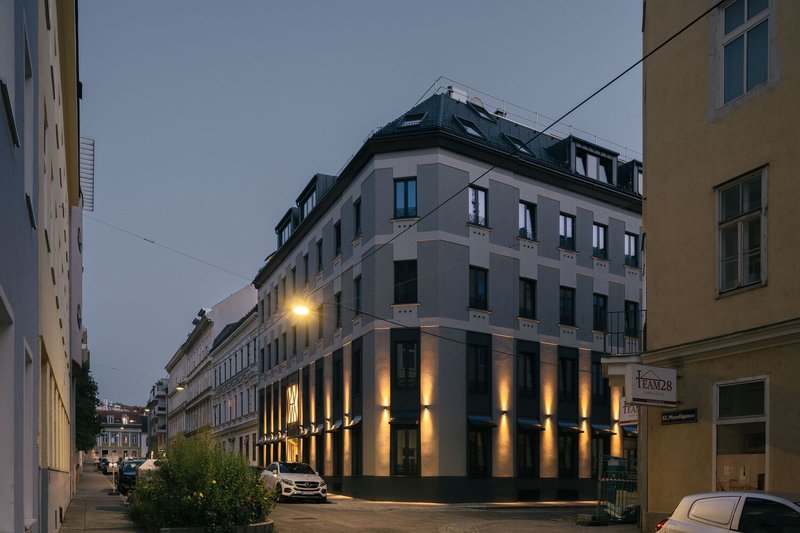
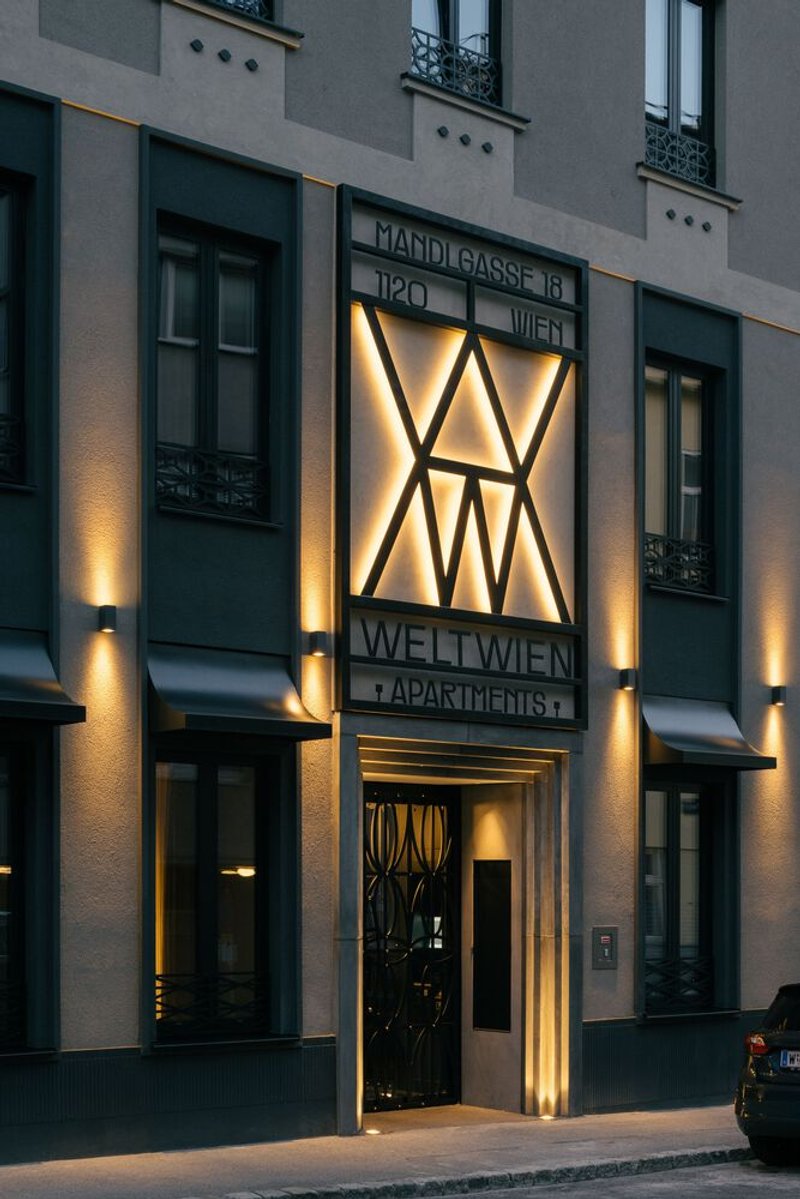
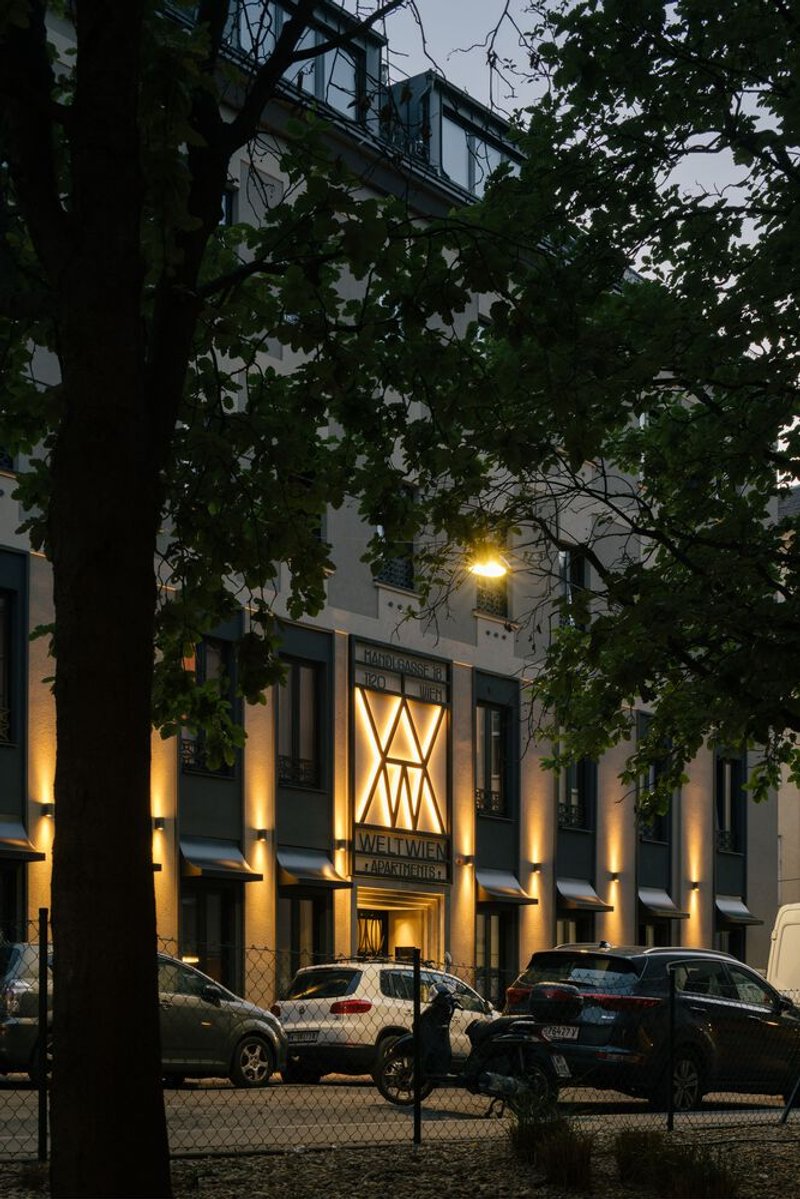
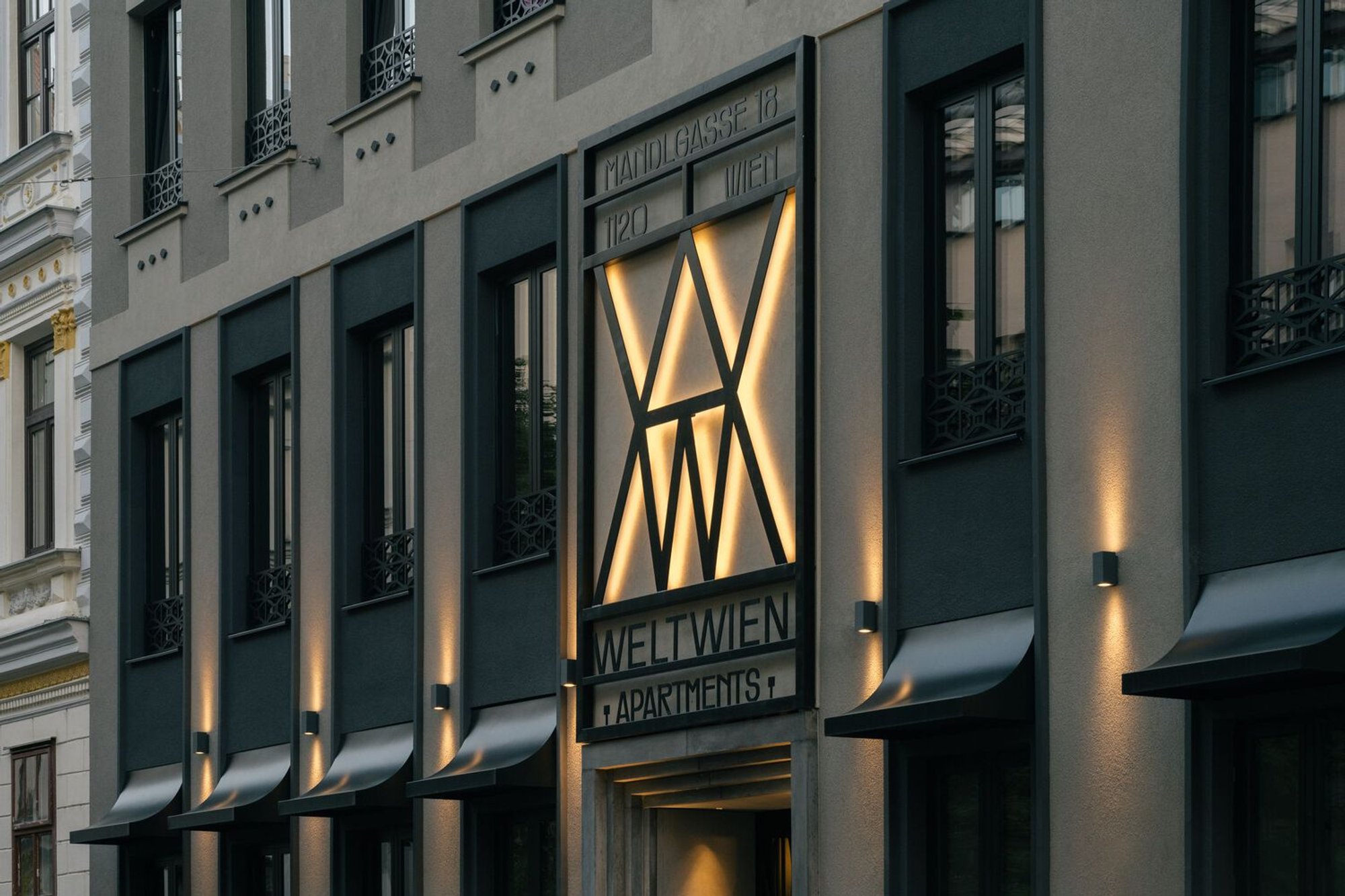
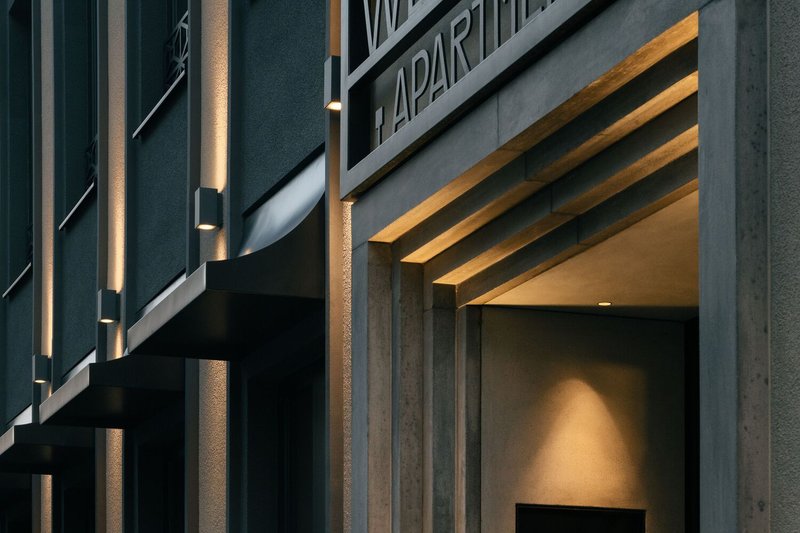
The building's street presence relies on restraint amplified by precision. At dusk, vertical uplights wash the facade in warm tones while the ground floor columns frame illuminated interiors like a vitrine. The geometric signage panel above the entrance acts as a lantern, pulling the eye without relying on scale or spectacle. Seen through winter branches, the facade reads as a calm, glowing volume against the city's denser urban fabric.
The projecting bay windows, finished in dark metal with patterned balcony railings, are the most overtly Viennese gesture. They recall the plasticity of Secession-era apartment buildings while their detailing, clean frames, mesh-like railing patterns, keeps them anchored in a present-day vocabulary. Baukooperative understands that the bay window is not nostalgic scenography; it is a device for pulling light and city views deep into compact floor plates.
The Threshold as Ceremony
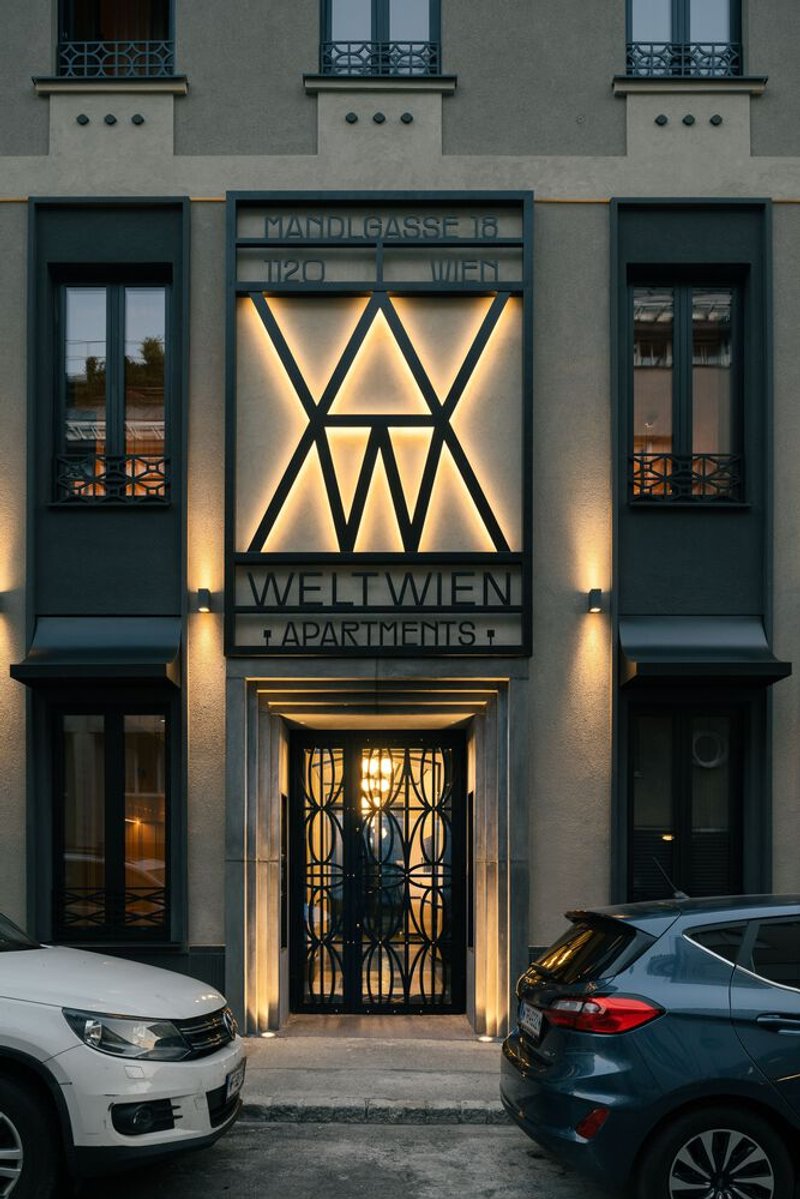
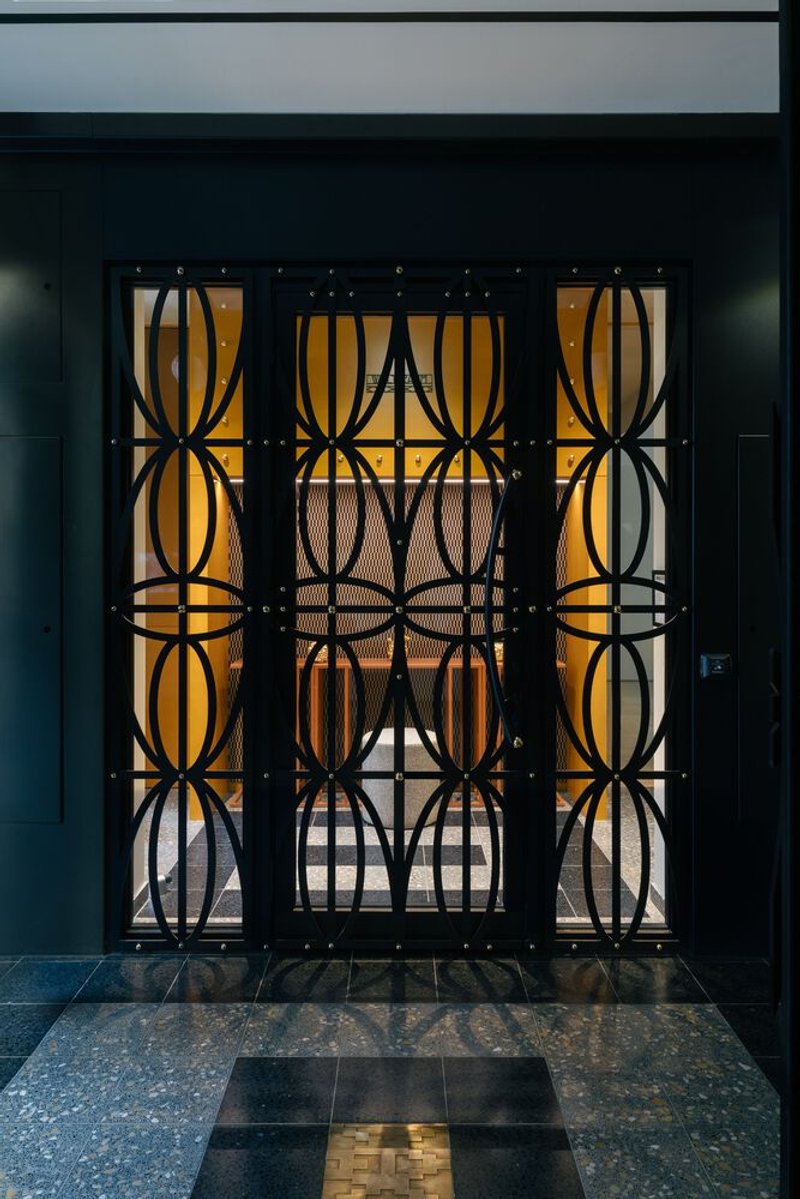
Hotels live or die at the entrance, and Hotel Welt Wien treats arrival as an event. The decorative metalwork gate, with its curving rods backlit by amber light, references Hoffmann's lattice screens and Loos's love of material contrast without copying either. The mosaic tile threshold beneath it signals a shift in register: you are leaving the street and entering a curated world. This is not a revolving door and a lobby desk. It is architecture asking you to slow down.
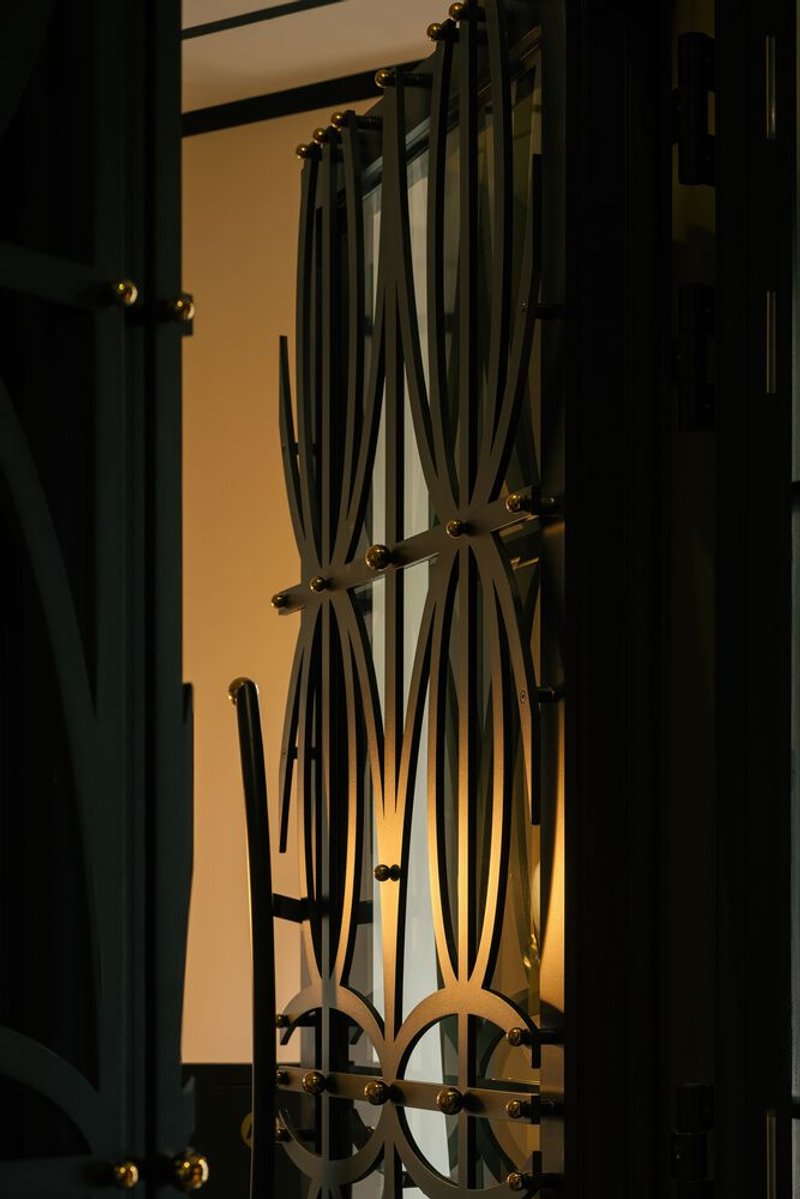
The close-up of the gate's curving rods reveals the care involved. Each rod catches light differently depending on the hour, turning the entry screen into a piece of kinetic metalwork. Baukooperative evidently invested real design energy here, understanding that the first two meters of a hotel set the emotional baseline for everything that follows.
Interior Corridors and the Craft of Transition
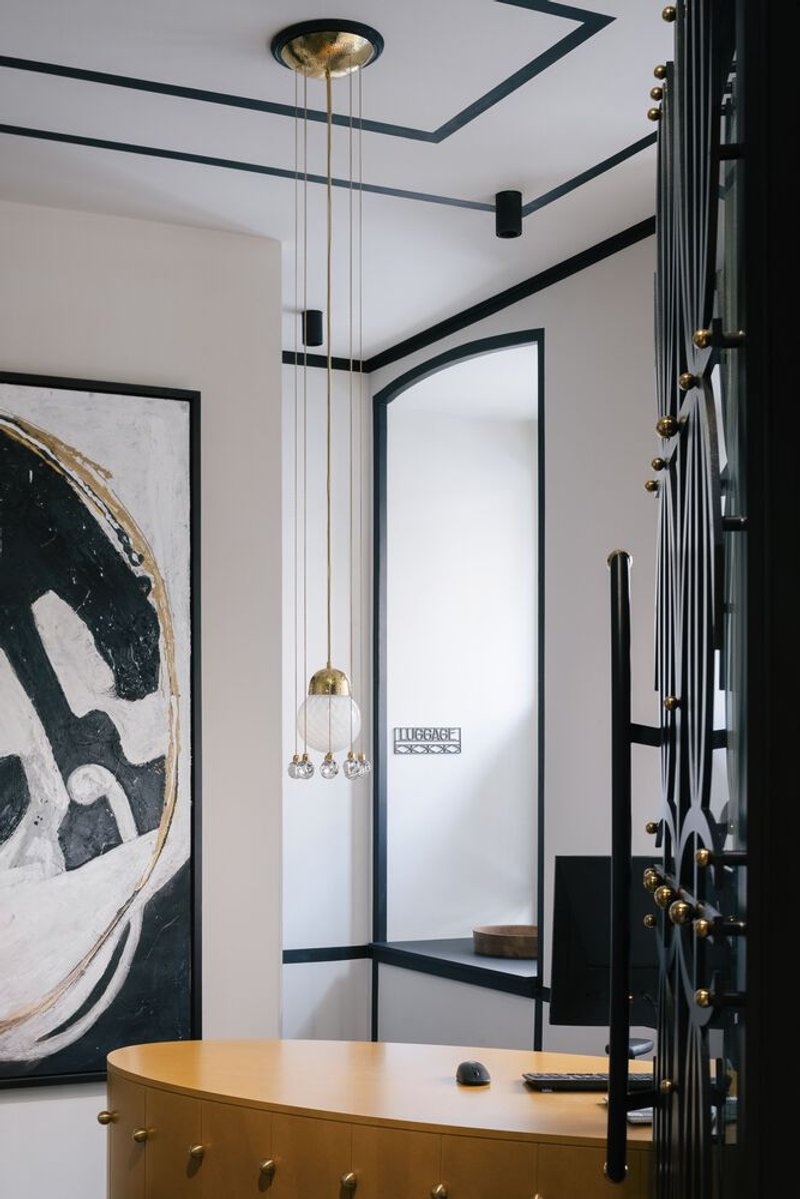
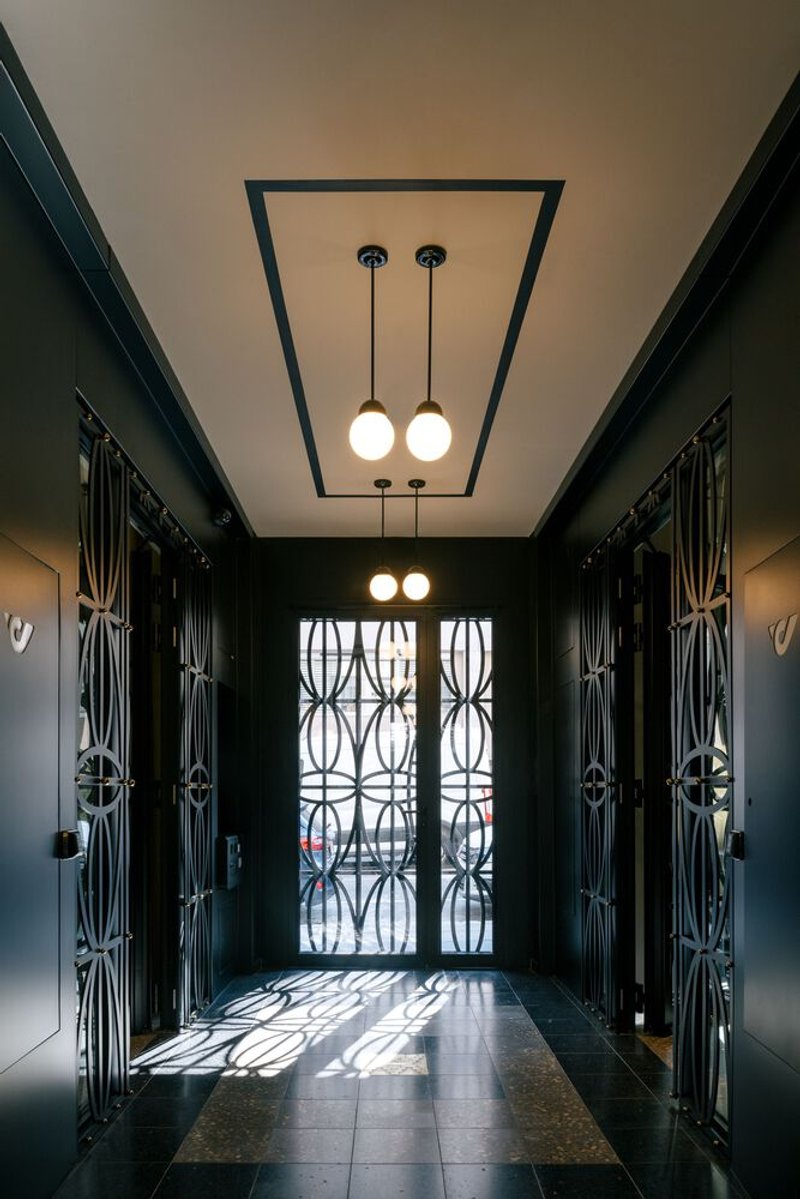
Circulation spaces in most hotels are afterthoughts, corridors designed to be passed through as quickly as possible. Here they become rooms in their own right. The entry hall suspends pendant lights at precise heights above a brass console table, giving the space a domestic gravity that contradicts its public function. Dark paneled corridors filter daylight through patterned metal screens on the entry doors, casting geometric shadows that shift through the day.
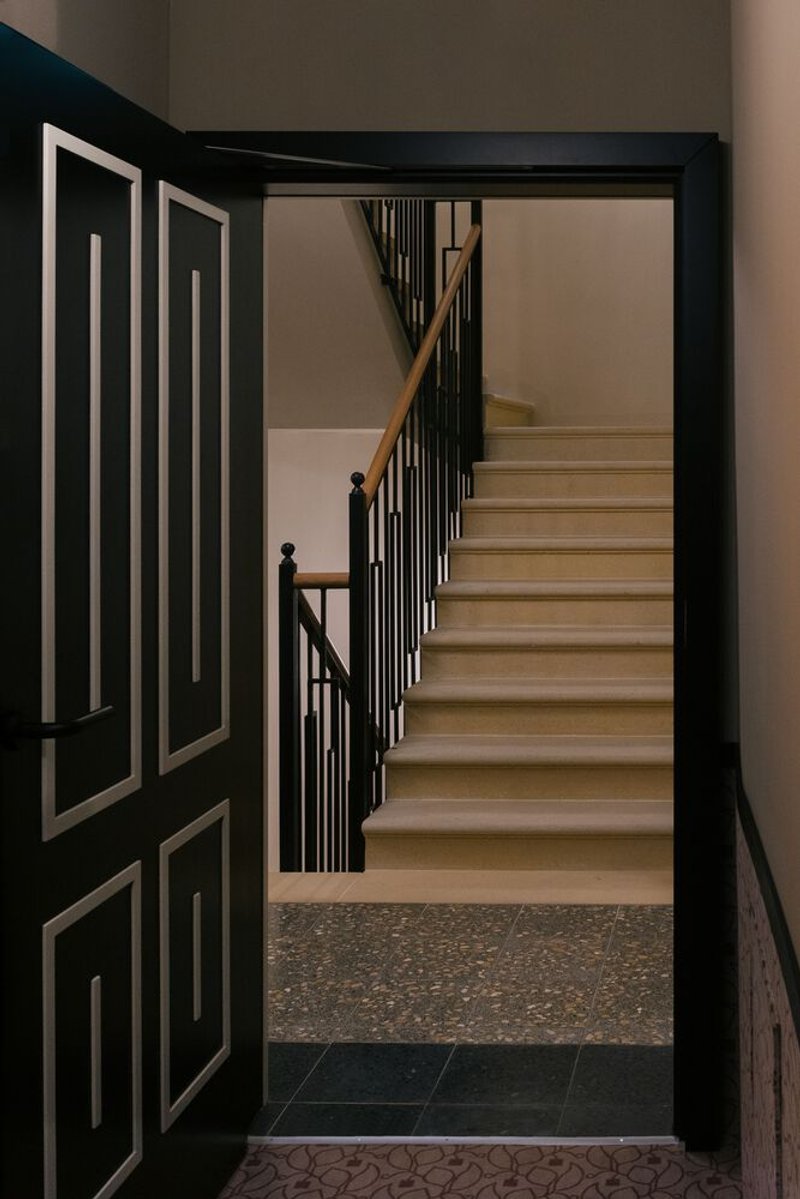
The transition from corridor to staircase, visible through a black paneled door, shows Baukooperative's commitment to legibility. Terrazzo flooring meets timber stairs with vertical metal railings, each material clearly delineated. There is no attempt to blur boundaries; instead, every material change marks a spatial threshold. The result is a building that you read as you move through it, each surface telling you where you are.
Guest Rooms as Total Design
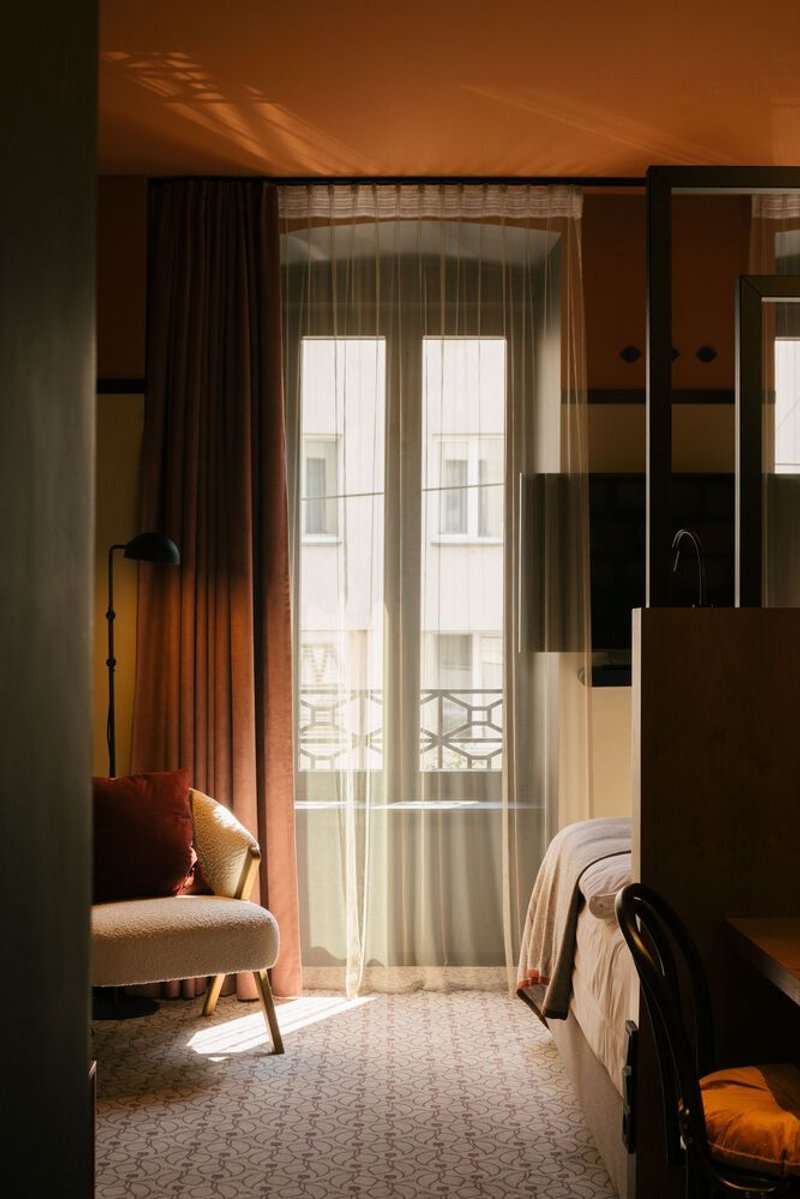
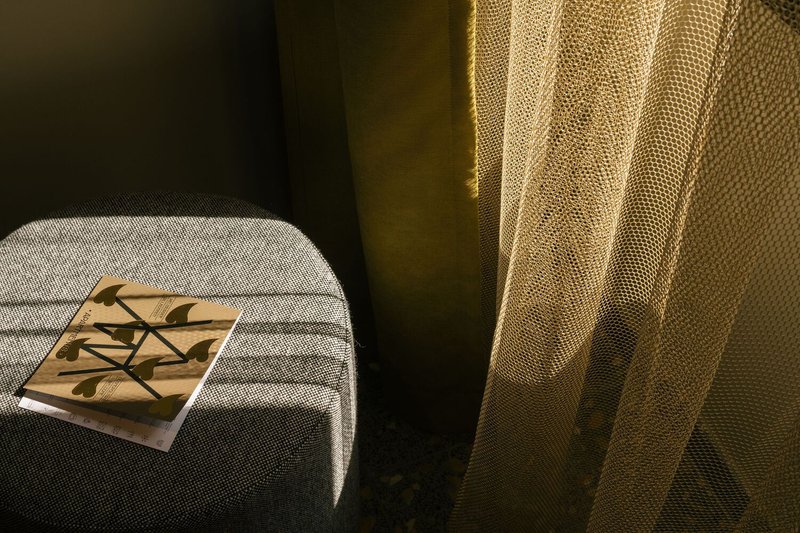
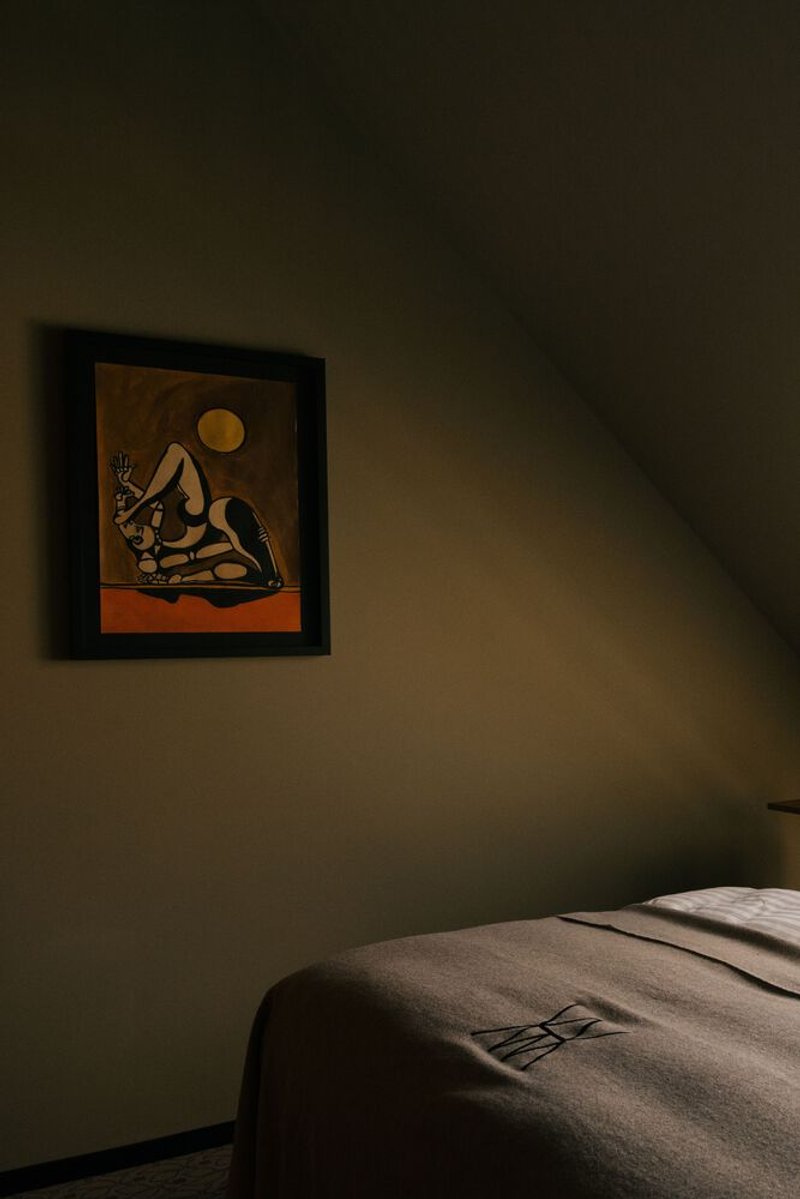
The rooms demonstrate the Gesamtkunstwerk principle, the total work of art, that defined Viennese Modernism at its peak. Floor-to-ceiling curtains in warm tones filter afternoon sunlight into a soft golden wash. An upholstered chair sits beside a yellow mesh curtain, framed by that same filtered light, transforming a reading corner into something approaching a painting. Even the artwork placement, a framed piece on a sloped wall above the bed, acknowledges the room's geometry rather than fighting it.
What makes these interiors work is consistency of tone rather than uniformity of surface. Materials vary, from fabric to wood to plaster, but the color temperature holds steady. Baukooperative has clearly controlled the palette at every scale, ensuring that hardware, curtain mesh, and wall finishes all participate in the same warm, slightly amber atmosphere.
Kitchens, Bathrooms, and the Details That Matter Most
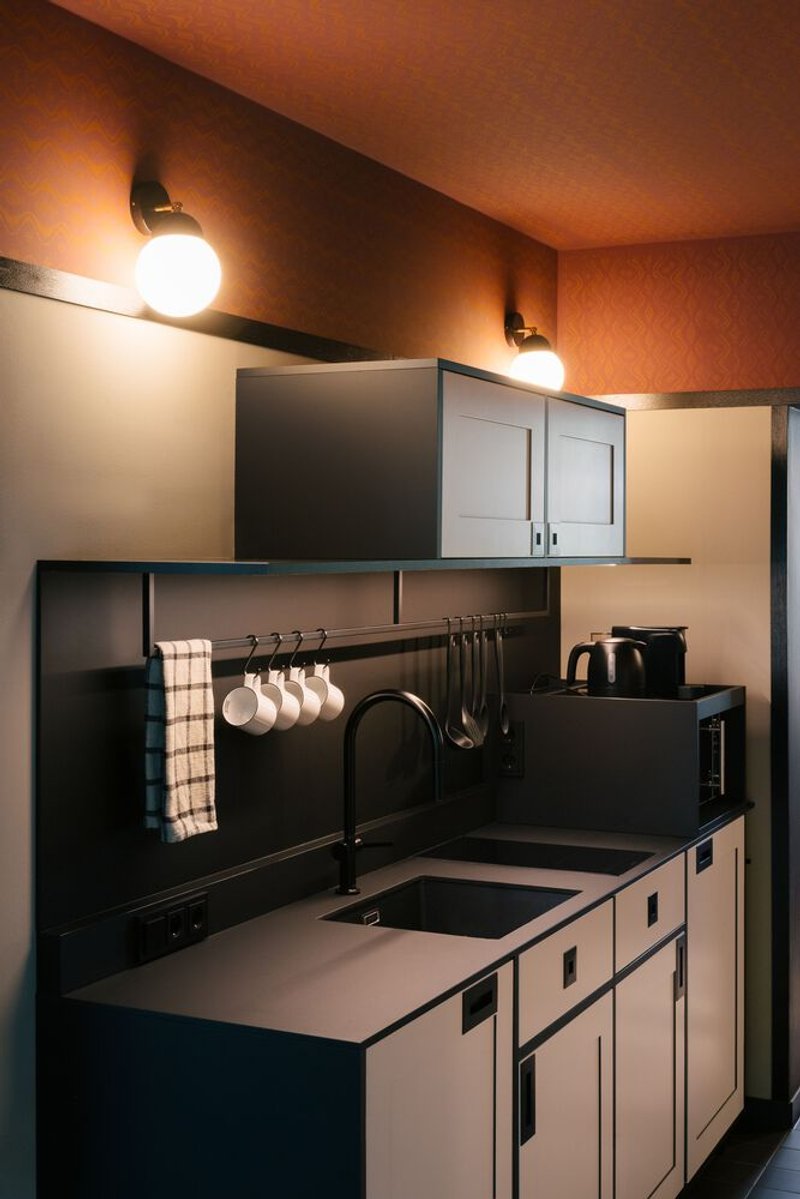
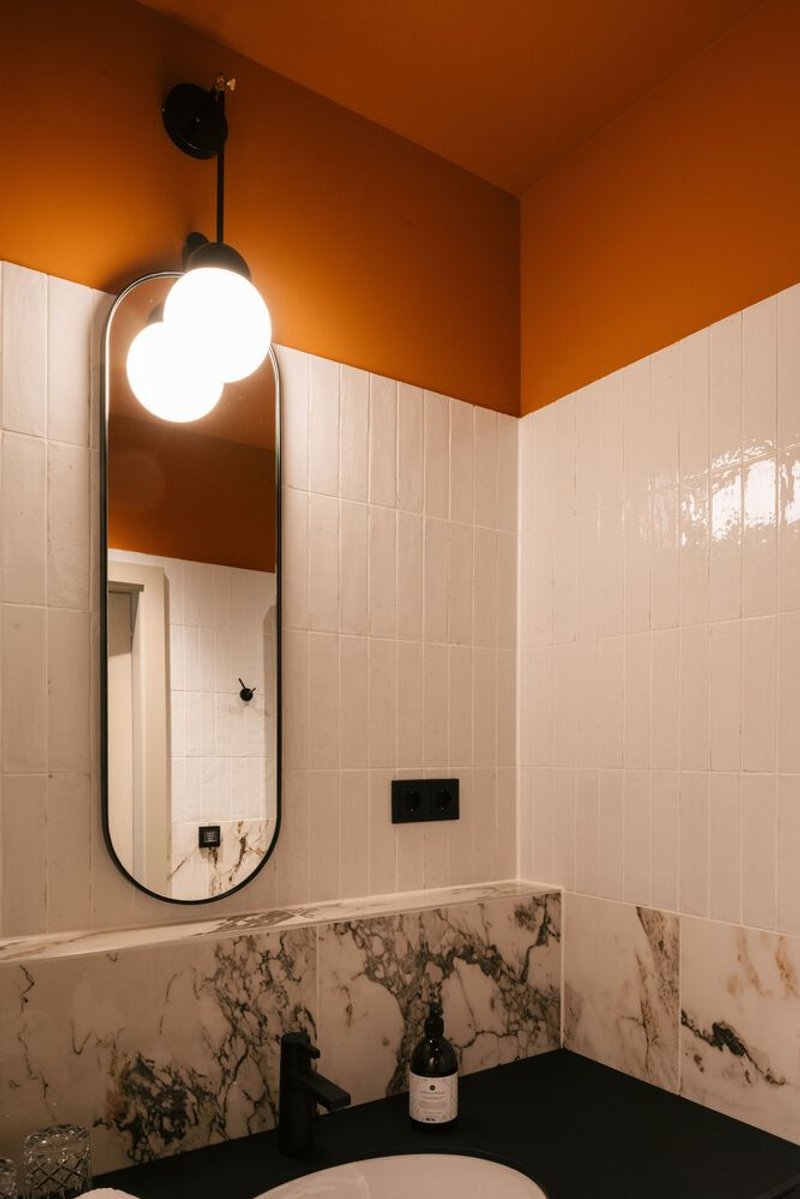
The compact kitchens and bathrooms are where the project's craft commitment is most legible. Cream cabinets with black countertops and hanging utensils recall the fitted kitchens of interwar Viennese apartments, spaces designed for efficiency without sacrificing visual coherence. The bathroom vanity pairs white tile wainscoting with a marble countertop and an orange ceiling plane, a bold chromatic move that could easily fail but here reads as deliberate and controlled.
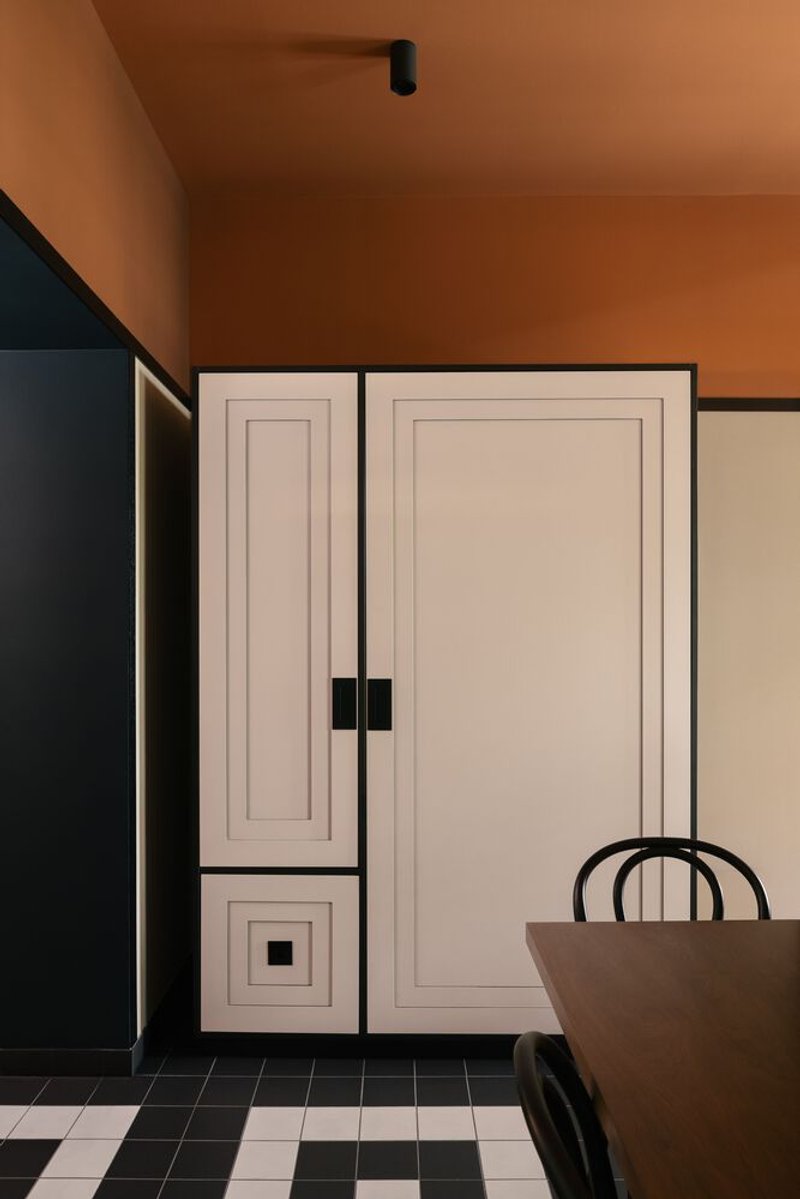
Checkered floor tiles, black hardware, and that recurring orange ceiling create a system of repeated elements that tie these service rooms back to the larger project. The hardware, visible in close-up throughout the building, deserves particular mention. Brass spherical door handles, vertical cabinet pulls, and linear LED strips all share a vocabulary of cylindrical and linear forms that knits the entire interior together.
Materiality in Detail
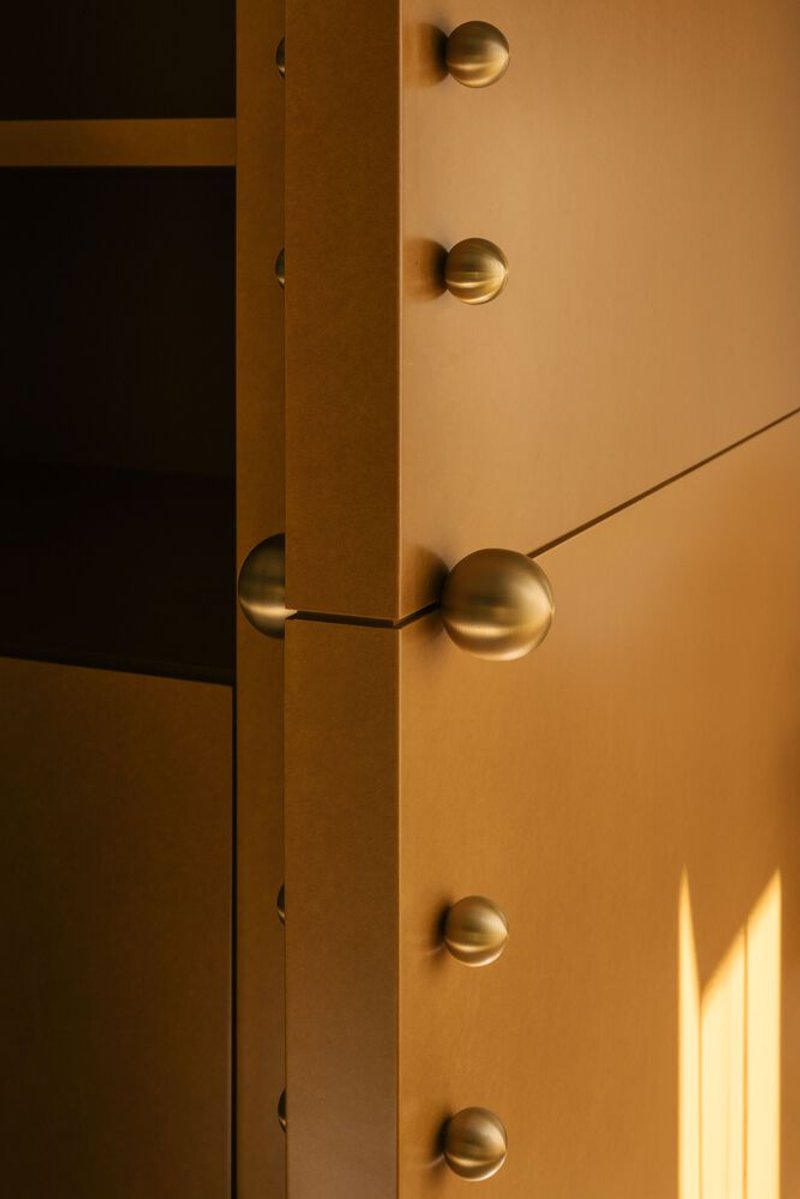
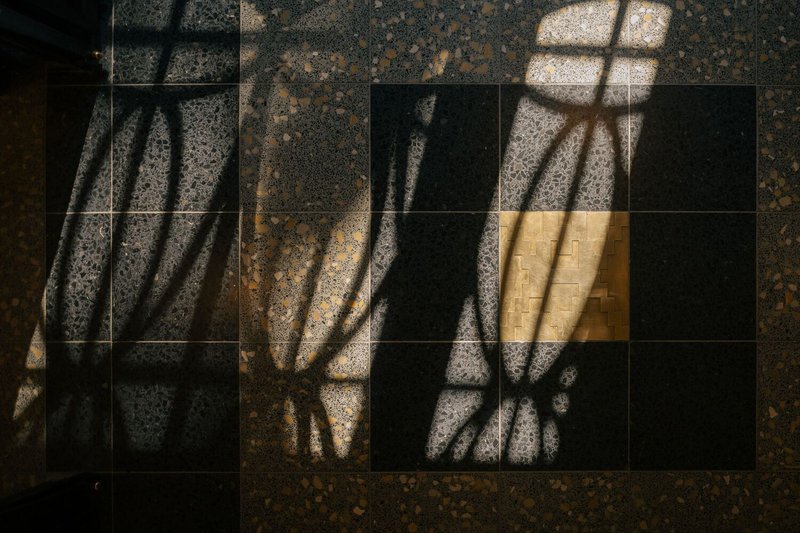
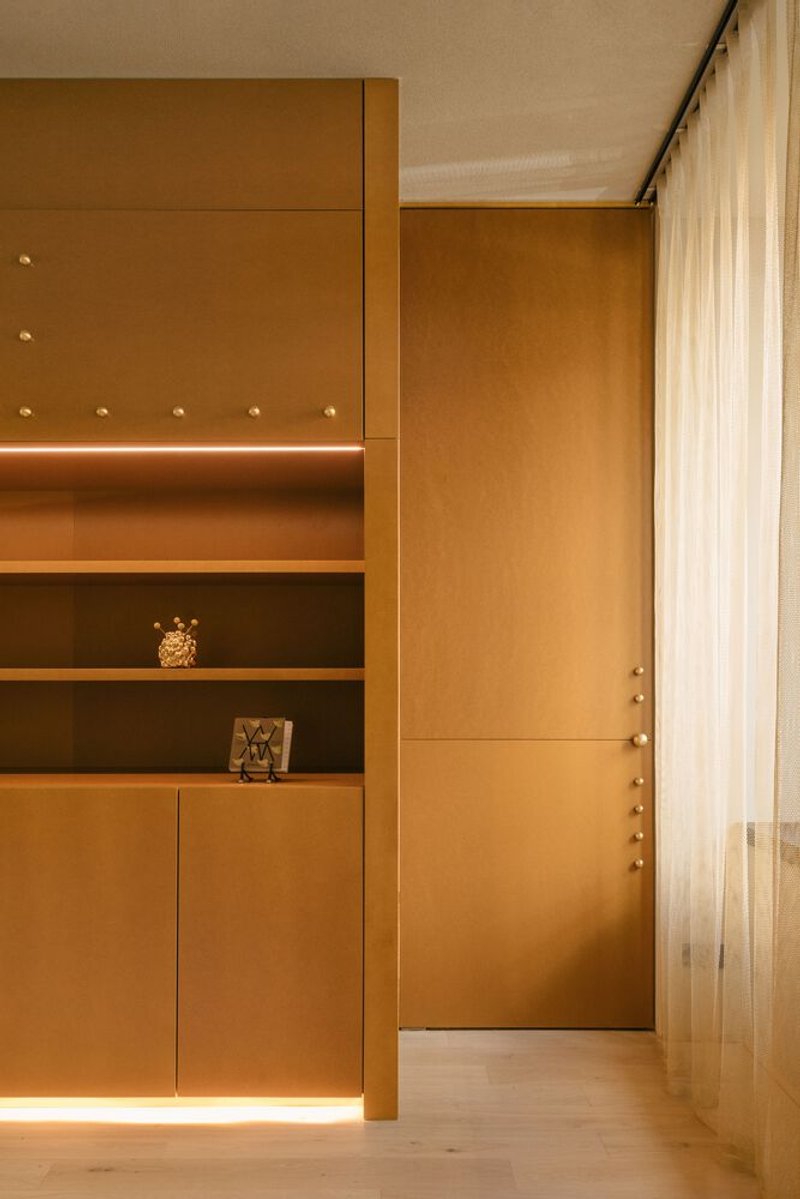
Three details tell the story of this project's ambition. A brass spherical door handle catches afternoon sun, its patina already beginning to register the touch of use. A terrazzo floor with brass inlay receives the shadows of tree branches and window frames, turning a static surface into a sundial. A wood-paneled entryway with built-in shelving and brass hardware is lit by a single linear LED strip, the light source itself becoming an architectural element rather than a concealed utility.
These are the moments that separate architecture from fit-out. Baukooperative has not simply selected nice finishes; they have designed junctions, anticipated how light will interact with surface, and chosen materials that will age rather than degrade. In a hospitality market saturated with disposable interiors, this durability of intent is notable.
Outdoor Terraces and the Vertical Garden
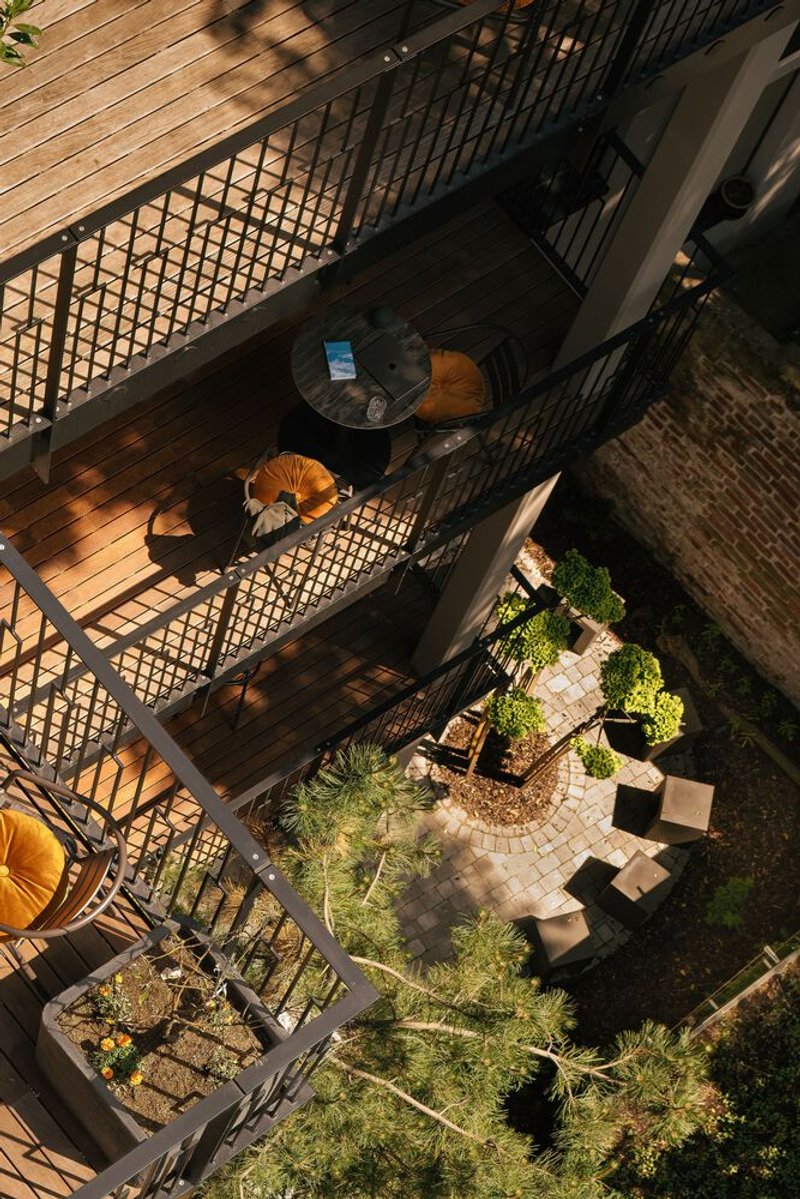
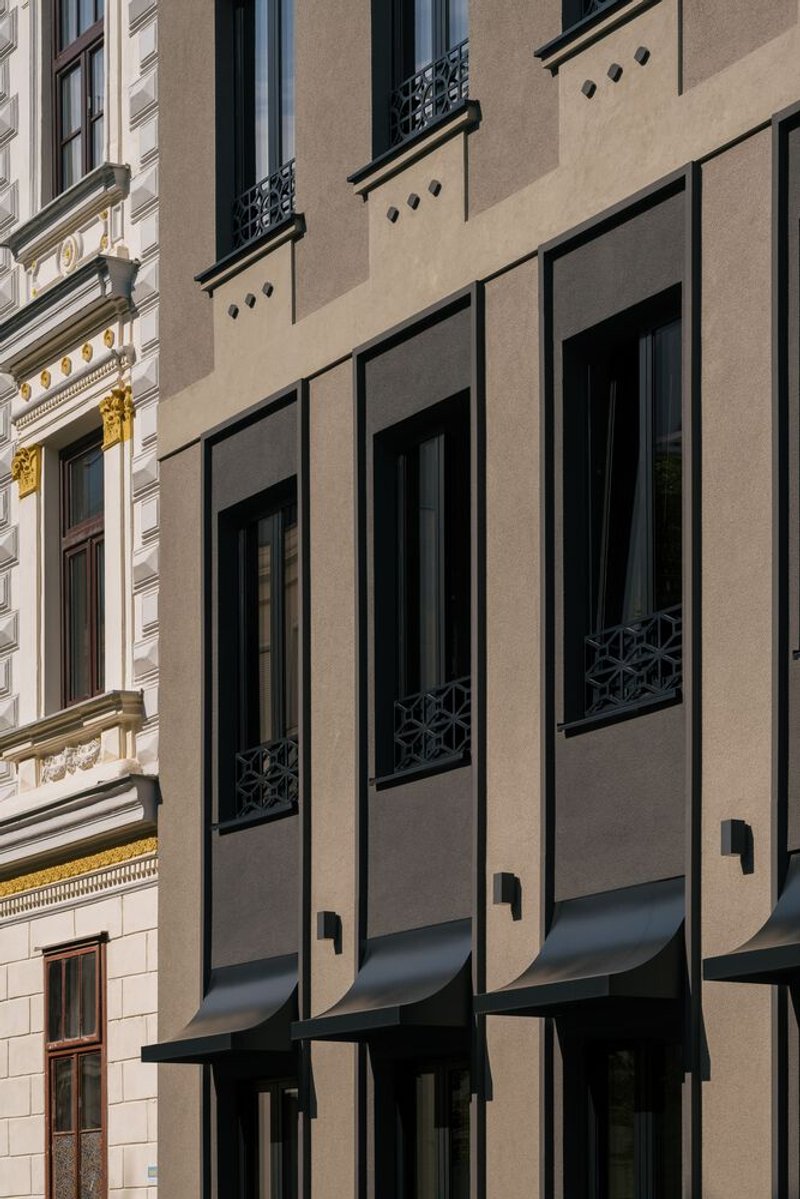
The tiered outdoor terraces introduce greenery and shadow play to the project. Viewed from above, metal mesh railings, planted beds, and the geometry of afternoon shadows create a layered composition that extends the interior palette outward. The bay windows, seen from the street, project forward with their dark frames and patterned railings, creating a rhythm of solid and void that gives the facade its depth.
An entrance detail showing exposed timber beams extending over a concrete frame with vertical metal panels reveals the structural honesty underneath the ornament. Baukooperative is not disguising the building's skeleton; they are dressing it with elements that have both decorative and functional purpose. The metal panels shade, the beams span, and the concrete carries load. Each is visible and legible.
Plans and Drawings
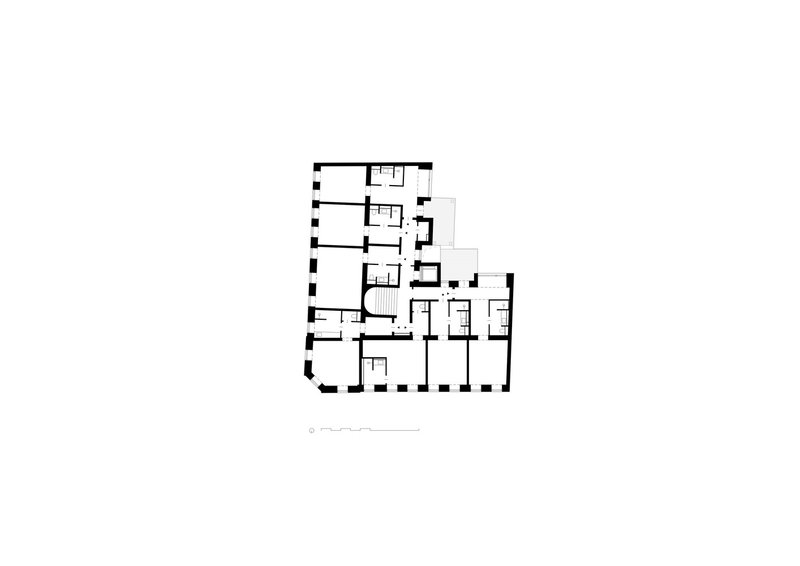
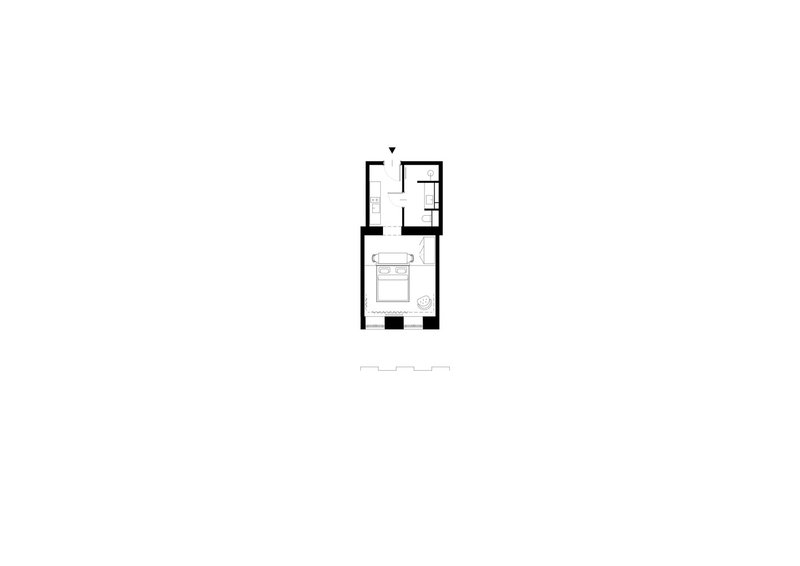
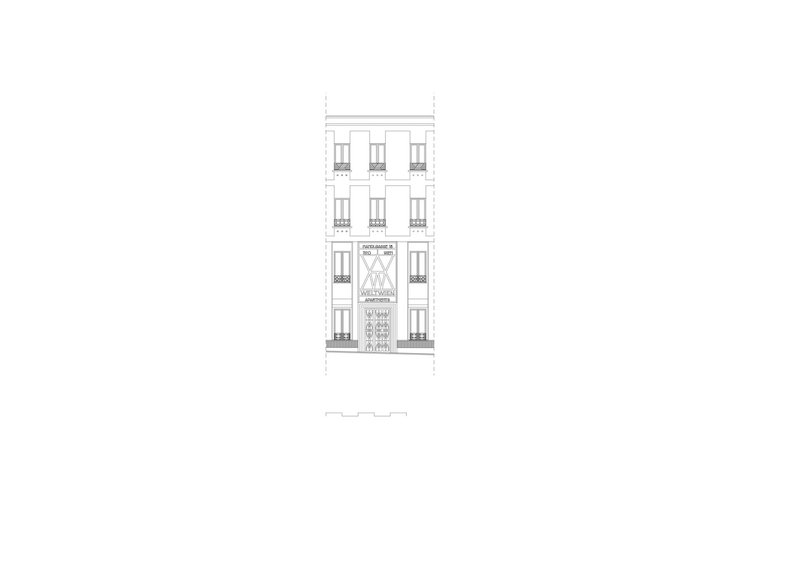
The floor plans confirm what the photographs suggest: rooms are organized around a central stairwell, a classic Viennese apartment building typology adapted for hospitality. The bedroom suite plan reveals a generous sequence of ensuite bathroom, walk-in closet, and sleeping area that prioritizes spatial progression over raw square footage. The elevation drawing, with its symmetrical window openings and ornamental entry, shows that the facade's apparent simplicity is in fact carefully composed, each opening sized and positioned relative to the structural grid.
Why This Project Matters
Hotel Welt Wien matters because it proves that historical reference can be rigorous rather than sentimental. Baukooperative has not built a Secession theme park. They have absorbed the principles of Viennese Modernism, its insistence on craft, its treatment of ornament as integral to structure, its commitment to designing every element from threshold to handle, and applied those principles with contemporary tools and materials. The orange ceilings, the mesh curtains, the brass inlay terrazzo: none of these are period-correct, and that is precisely the point.
In a hospitality market increasingly dominated by interchangeable minimalism or overwrought maximalism, this project occupies a rare middle ground. It has personality without being loud, craft without being precious, and historical awareness without being backward-looking. For architects working in cities with strong design legacies, Hotel Welt Wien offers a model: take the discipline, leave the nostalgia.
Hotel Welt Wien, designed by Baukooperative, Vienna, Austria.
About the Studio
Share Your Own Work on uni.xyz
If projects like this are the kind of work you want to make, uni.xyz is a place to publish your own, find collaborators, and enter design competitions.


Popular Articles
Popular articles from the community

Filtering Space: A Gradual Spatial Experience
From urban intensity to spatial calm.



Magic Box Office Barcelona Innovative Sustainable Workplace Design
Innovative sustainable office design featuring triangular form, ceramic façade, flexible interiors, natural light optimization, and creative workspace for modern work culture.
Marvila Apartment Renovation in Lisbon: A Bright Minimalist Attic Transformation by KEMA Studio
Bright attic transformed into minimalist Lisbon apartment with skylights, sustainable materials, open plan layout, and industrial-inspired interior design elements.

Similar Reads
You might also enjoy these articles
Filtering Space: A Gradual Spatial Experience
From urban intensity to spatial calm.


The Ken Roberts Memorial Delineation Competition (Krob)
As the most senior architectural drawing competition currently in operation anywhere in the world, it draws hundreds of entries each year, awarding the very best submissions in a series of medium-based categories.


Waterfront Redevelopment and Urban Revitalization in Mumbai: Forging a New Dawn for Darukhana
A transformative waterfront redevelopment project reimagining Darukhana’s shipbreaking heritage into an inclusive urban future.

OUT-OF-MAP: A Call for Postcards on Feminist Narratives of Public Space
Rhizoma Design and Research Lab invites artists, designers, architects, researchers, and students to reflect on how feminist perspectives can reshape public space. Selected works will be exhibited in Barcelona, October 2026. Submissions open until 15 April 2026.
Explore Architecture Competitions
Discover active competitions in this discipline




The International Standard for Design Portfolios


The Global Benchmark for Architecture Dissertation Awards


The Global Benchmark for Graduation Excellence


Challenge to reimagine the Iron Throne
Comments (0)
Please login or sign up to add comments
No comments yet. Be the first to comment!