
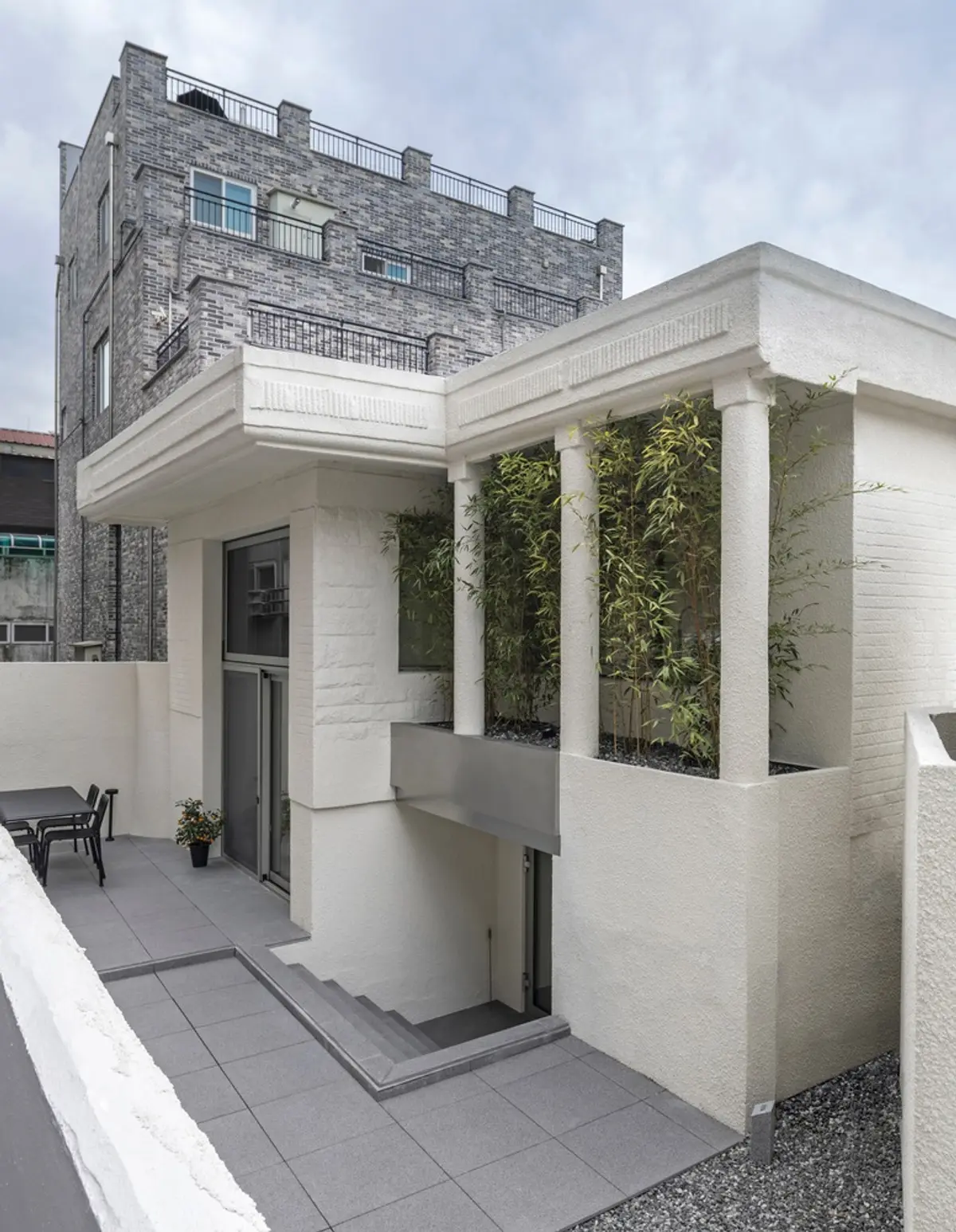
Villa de VOID by Atelier ITCH – A Subtractive Architecture Approach to Light, Connectivity, and Family Living
A compact urban home transformed through a central void, bringing light, connection, and nature into a once dark, enclosed semi-basement structure.


Tucked discreetly behind a narrow alley in a dense South Korean neighborhood, Villa de VOID by Atelier ITCH transforms an enclosed, low-ceilinged structure into an open, light-filled home centered on spatial connectivity. Originally divided into two separate units—a semi-basement with a ceiling height just above two meters and a ground-floor apartment—the house felt fragmented and disconnected. For a family who spends most of their time at home, including two parents working remotely and their adult son, the architects sought to redesign the dwelling around openness, visibility, and meaningful interaction.


Transforming Constraints into Architecture
The site posed two major challenges:
- Lack of natural ventilation and daylight due to surrounding buildings.
- A dark, underutilized semi-basement that needed to become a functional part of the home.
Atelier ITCH approached these limitations through the architectural language of subtraction, making the “void” not an absence, but the core that organizes all spatial movement. By carving out a vertical opening along the south-facing side—where a modest 3-meter yard offered a rare pocket of daylight—the design reconnects the basement and ground floor into one cohesive whole.
The Void as a Spatial and Emotional Core
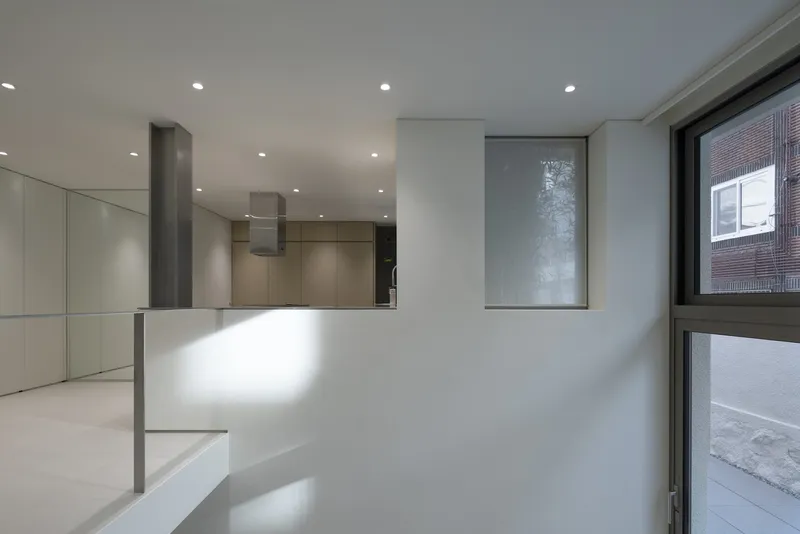
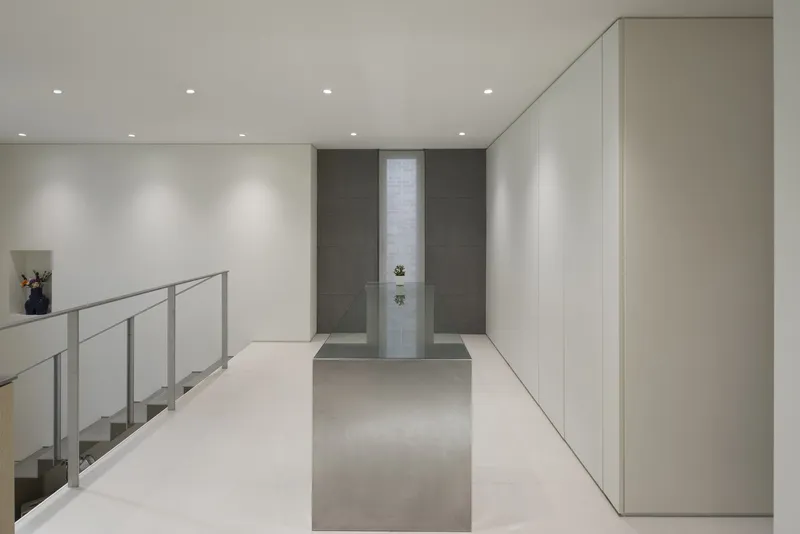
The newly created void becomes the heart of the home. A sculptural staircase rises through this open vertical volume, guiding natural light deep into the basement. The first half of the stair is treated as a solid, unifying element tied closely to the exterior window, visually extending the basement toward the outdoors. The upper half transitions into a lightweight metal structure, allowing air and light to flow freely while preventing the narrow space from feeling compressed.
This interplay between solid and light materials expresses the architecture’s intention: a dwelling that embraces openness even within tight urban boundaries.


Bringing Nature Inside: The Bamboo Terrace
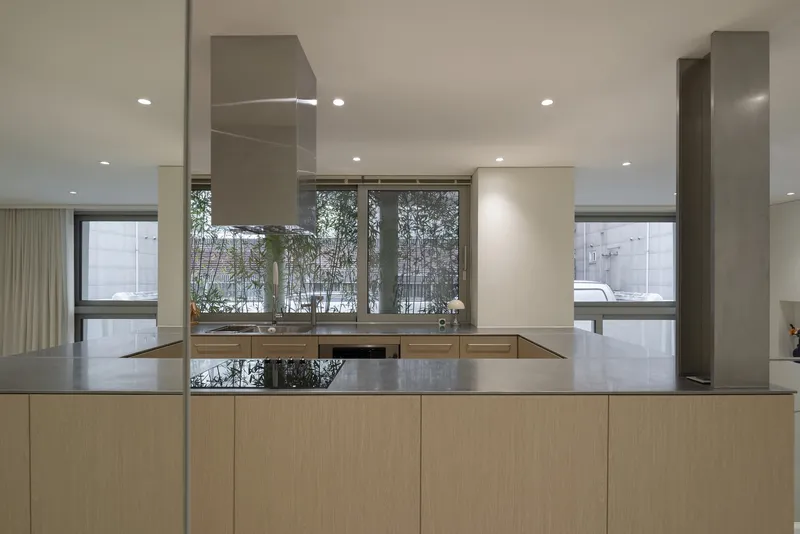
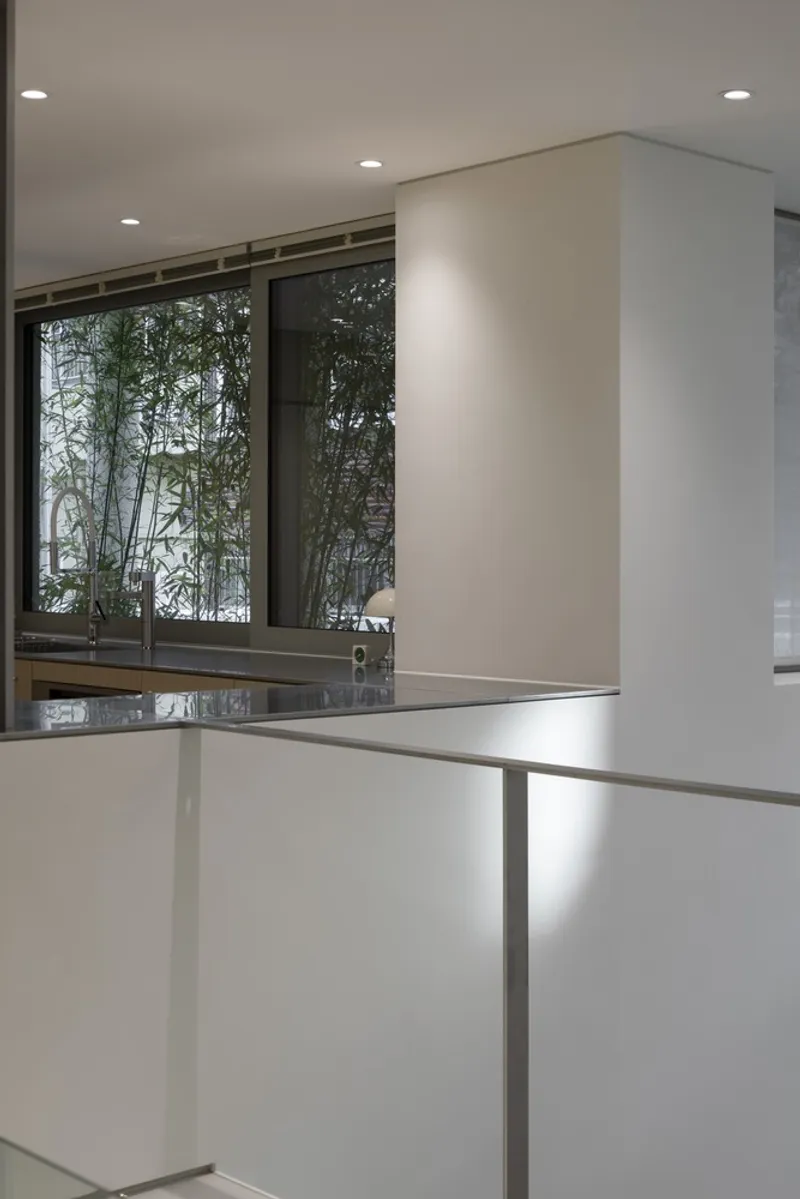
Adjacent to the kitchen, a former terrace is transformed into a lush, bamboo-filled garden. This subtle intervention dramatically shifts the character of the interior:
- Bamboo screens neighboring buildings, restoring privacy in a dense urban context.
- Soft, filtered southern light creates calming shadows and a natural ambience throughout the kitchen.
- Upper cabinets are removed to keep the space open, while a full-height storage wall elegantly integrates appliances and everyday necessities.
As the family gathers in the kitchen multiple times a day, this intimate connection with greenery offers a moment of psychological relief—an urban oasis framed like a living landscape painting.


A House Filled by Emptiness
Inside Villa de VOID, the designers demonstrate how subtraction can become a form of addition. By carving out a central void, they amplify light, create circulation, and strengthen family connections. Instead of hiding the basement, the design celebrates it—turning a once dim, confined space into an integral part of daily life.


All photographs are works of Kiwoong Hong


Popular Articles
Popular articles from the community


Conexión: Biophilic Design Reimagines High-Rise Living in Hong Kong
Conexión reimagines high-rise living in Hong Kong through biophilic design, green facades, shared spaces, daylight, water and nature within.

The Ocean Hive: Sustainable Architecture for a Self-Sufficient Civilization at Sea
The Ocean Hive imagines sustainable architecture at sea, where modular habitats, algae, wave power and ocean waste sustain a growing colony.

Play: Fragments of Their World
Familiar architecture becomes modular playground design, creating safe spaces where displaced children can learn, connect, imagine and play.

Co-Life: Senior Housing Design That Reconnects Older Adults With the City
Co-Life reimagines senior housing design through healing gardens, shared streets, workshops, and a sustainable community across generations.

Similar Reads
You might also enjoy these articles


Hodi-Mandai Geram
Project Function: Preservation and revitalization of the Intangible heritage and socio-spatial identity of the Hodi by Housing, Cultural Memory Center, Sacred Grove, landscape, local tourism economy


Olio Towers: A Mid-Rise for Performers That Fuses Housing, Rehearsal, and Stage
Located blocks from Houston's Theater District, this modular tower stacks living units around a central performance atrium.

Oasis: Modular Green Housing Carved into Dhaka's Urban Fabric
A shortlisted Plugin Housing entry reclaims unauthorized settlements in Dhaka with stepped concrete volumes, green roofs, and ventilation-driven design.

Black Hole: A Floating Megastructure for the Post-Physical Era
Emiliano Mazzarotto envisions a spherical, self-scaling arena where e-sports, digital hotels, and holographic stadiums replace traditional public space.

Explore Urban Void Competitions
Discover active competitions in this discipline

Challenge to reimagine the Iron Throne

Photograph architecture without architects

Illustrate the lost glory of Angkor Wat - Render Challenge

Design challenge to reuse E-waste
Comments (0)
Please login or sign up to add comments
No comments yet. Be the first to comment!