
Voronoi-Island: Adaptive Reuse Architecture Reimagining Offshore Oil Rigs
Voronoi-Island transforms abandoned offshore oil rigs into futuristic marine hubs through adaptive reuse architecture.

Voronoi-Island presents a bold architectural vision for the future of abandoned offshore infrastructure through the lens of adaptive reuse architecture. Designed by Saeed Delavary, the project explores how decommissioned oil rigs can evolve into sustainable marine environments that combine cultural, residential, and recreational functions within a unified architectural system.
As thousands of offshore oil rigs approach the end of their industrial lifecycle, architects and urban thinkers are increasingly searching for environmentally responsible alternatives to demolition. Voronoi-Island addresses this urgent global issue by transforming obsolete oil platforms into inhabitable oceanic structures that celebrate both innovation and environmental awareness.
The proposal stands as a compelling example of sustainable architecture, modular construction, and futuristic marine design. Rather than viewing oil rigs as industrial waste, the project reinterprets them as opportunities for adaptive transformation and long-term ecological integration.
Reimagining Offshore Infrastructure Through Adaptive Reuse
The core architectural strategy behind Voronoi-Island revolves around prefabricated modular systems. Instead of constructing entirely new offshore structures, the project utilizes the existing framework of oil rigs while introducing lightweight modular volumes assembled on-site.
This method significantly reduces environmental impact, construction complexity, and offshore building costs. The modules are manufactured on land in controlled conditions before being transported to the site and assembled using industrial-grade fastening systems.
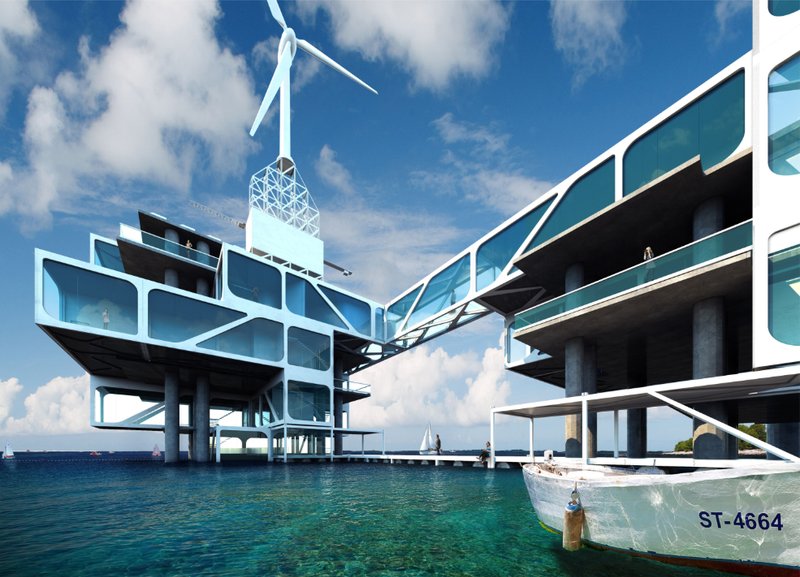
The proposal intentionally preserves much of the original rig structure, allowing the industrial identity of the platform to remain visible while simultaneously introducing a softer and more human-centered architectural language.
By embracing adaptive reuse architecture, Voronoi-Island demonstrates how existing industrial systems can evolve into public spaces that support tourism, education, marine research, hospitality, and cultural interaction.
Architecture Inspired by Voronoi Geometry and Ocean Patterns
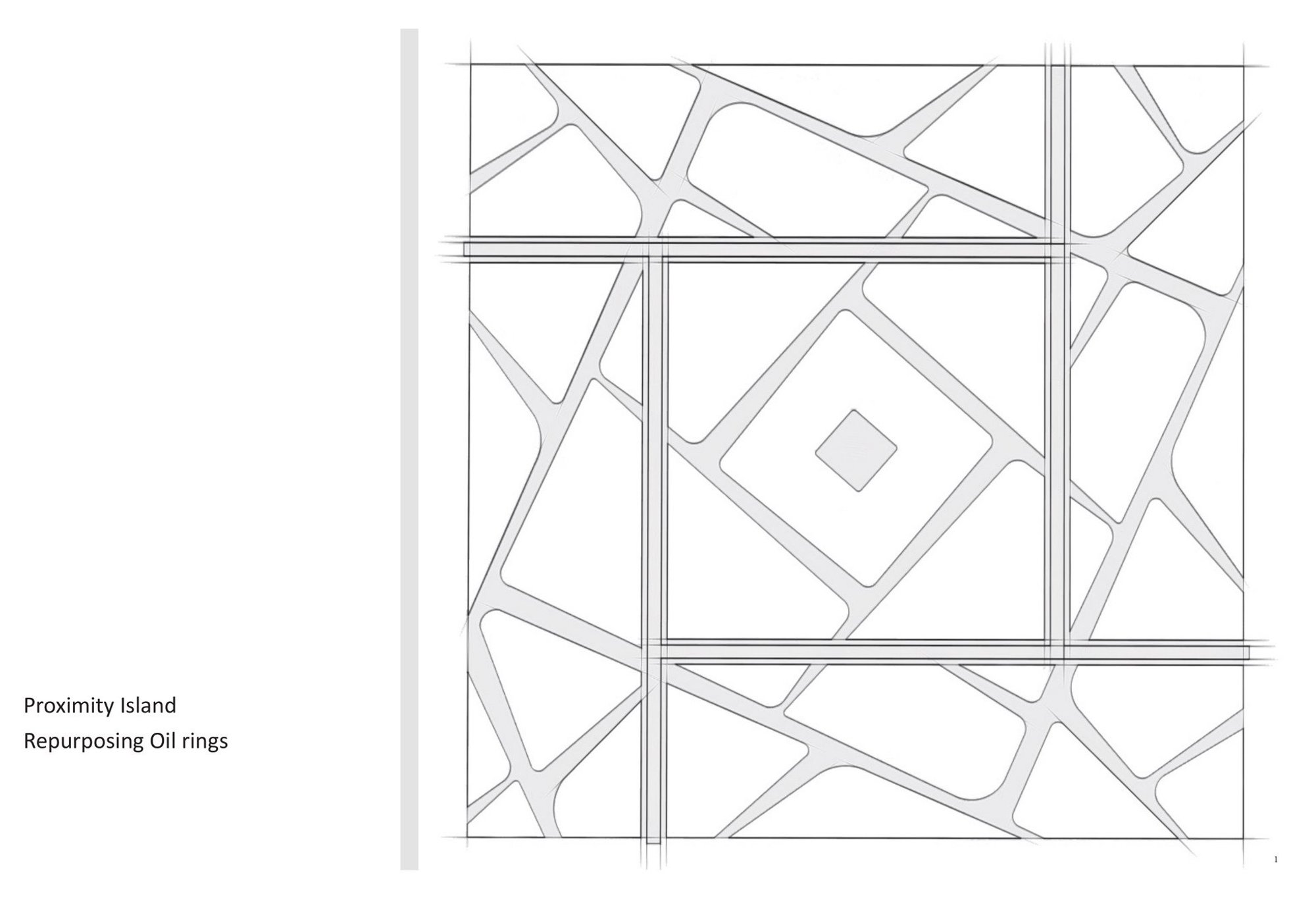
One of the project’s most distinctive features is its use of Voronoi and Thiessen polygon geometries. Inspired by the dynamic foam patterns created where sea waves meet the coastline, the architectural language creates a visual dialogue between water and structure.
The polygonal framework extends across facades, ceilings, floors, and interior circulation systems, generating a cohesive spatial identity throughout the complex. Transparent surfaces and geometric framing create constantly shifting reflections of sea and light, reinforcing the project’s immersive relationship with the surrounding environment.
Rather than functioning as decoration, the Voronoi-inspired system becomes a spatial organizer that shapes movement, visual permeability, and user experience.
This biomimetic approach gives the project a futuristic identity while grounding it conceptually within natural marine phenomena.
A Floating Museum and Residential Marine Destination
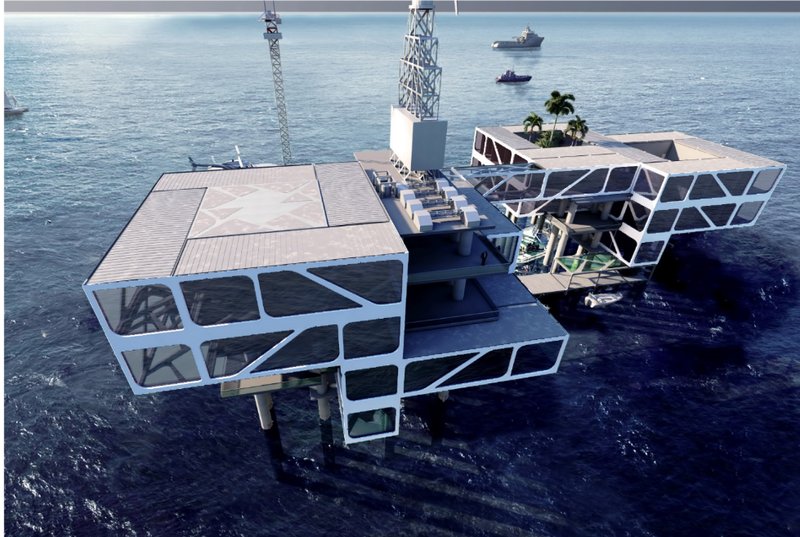
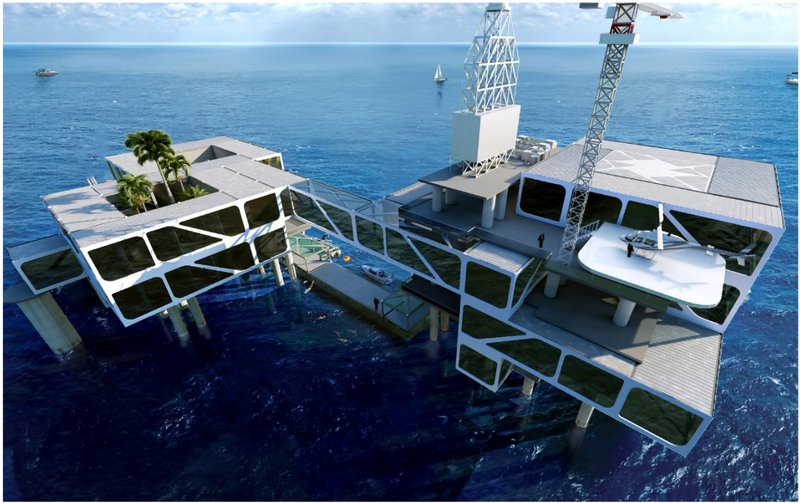
Voronoi-Island combines multiple functions within two interconnected offshore platforms. The programmatic organization transforms the former industrial rig into a hybrid cultural and hospitality destination.
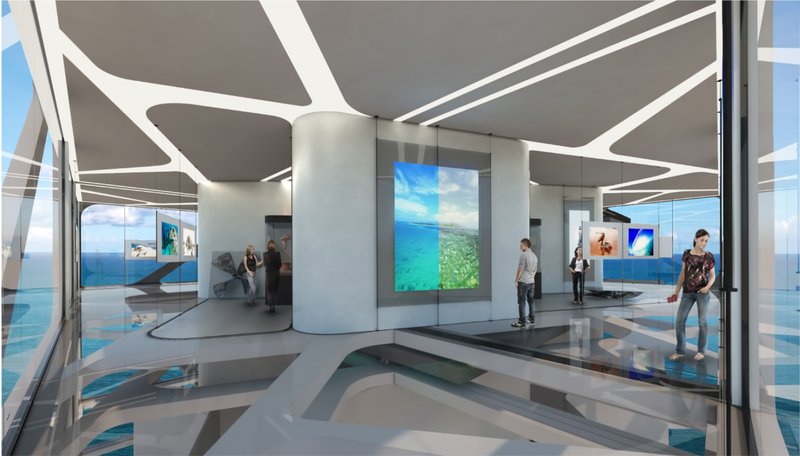
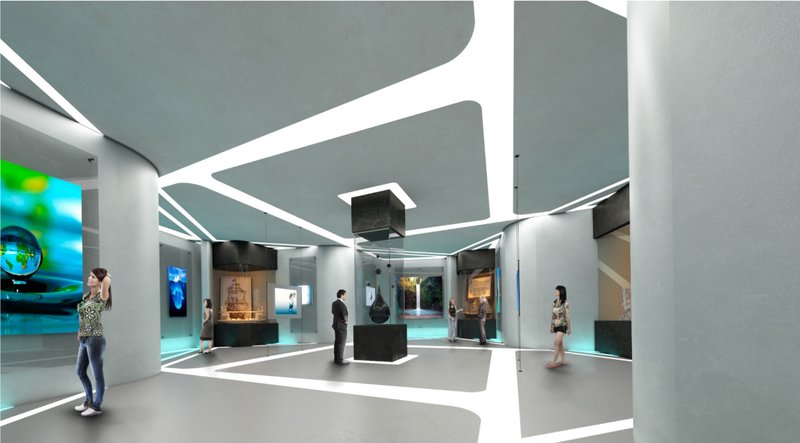
The museum component includes permanent exhibition spaces, temporary galleries, educational installations, archive areas, restoration facilities, administration zones, and interactive exhibition environments. Large glass surfaces and transparent floor systems allow visitors to experience the ocean beneath the structure, creating a direct relationship between architecture and the underwater world.
A dedicated underwater gallery and restaurant level offers visitors panoramic views into the Mediterranean marine ecosystem. The restaurant extends partially below sea level, producing a rare spatial condition where visitors experience architecture suspended between land, water, and infrastructure.
The residential section introduces temporary apartments and hospitality suites designed for artists, researchers, tourists, and museum guests. These living units are arranged around shared courtyards, pools, spa areas, and open terraces, encouraging both privacy and communal interaction.
The bridge connections between platforms strengthen the spatial continuity of the project while also framing dramatic views of the surrounding ocean.
Horizontal Expansion Instead of Vertical Dominance
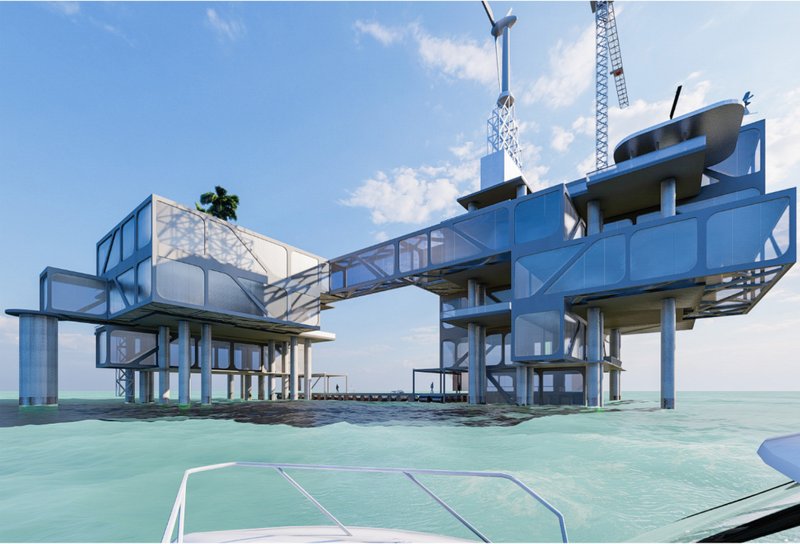
A major conceptual shift within the project is its move away from the traditional vertical dominance associated with offshore oil rigs. Conventional rigs are perceived as isolated industrial towers emerging aggressively from the sea.
Voronoi-Island instead introduces a horizontal architectural composition that spreads across the water surface in a more balanced and environmentally responsive manner.
This transformation changes the perception of the oil rig from a disruptive industrial object into an inhabitable marine landscape. The horizontal expansion creates terraces, open decks, public spaces, and exterior circulation zones that encourage interaction with the ocean.
The resulting architectural expression feels lighter, more accessible, and more integrated with the surrounding environment.
Modular Construction and Economic Feasibility
One of the strongest aspects of the proposal is its practical understanding of offshore construction economics. Building at sea is notoriously expensive and technically demanding. Voronoi-Island addresses these limitations through a highly rational prefabrication strategy.
The modules are designed within transportation limits, allowing them to be fabricated on land and shipped efficiently using standard marine logistics. On-site assembly minimizes intervention time and reduces structural risks associated with offshore construction.
This modular methodology also creates flexibility for future expansion and adaptation. Additional modules could be introduced over time depending on changing functional requirements.
By combining adaptive reuse with prefabricated systems, the project demonstrates how architecture can operate both conceptually and pragmatically.
Interior Spaces Defined by Light, Transparency, and Movement
The interiors of Voronoi-Island continue the polygonal language introduced on the exterior facade. Large open galleries, curved circulation paths, and illuminated ceiling patterns create immersive spatial experiences that reference flowing water and marine movement.
Glass floors and transparent partitions amplify visual connections between different levels of the structure while maximizing natural daylight penetration.
The museum interiors feel less like enclosed rooms and more like interconnected environments suspended above the sea. This fluidity strengthens the project’s ambition to blur the boundary between architecture and nature.
Meanwhile, the hospitality areas introduce softer residential qualities through courtyards, wellness spaces, and panoramic sea views. The contrast between exhibition spaces and living environments creates a layered and multifunctional architectural ecosystem.
Sustainability and the Future of Offshore Architecture
Voronoi-Island raises important questions about the future of offshore infrastructure and sustainable architectural development.
Instead of demolishing aging oil rigs and generating further environmental waste, the proposal advocates for transformation, reuse, and long-term ecological adaptation. The project imagines a future where offshore structures become centers for tourism, research, cultural activity, and environmental awareness.
Renewable energy systems, marine integration, and adaptive reuse strategies position the project within broader conversations surrounding climate-conscious architecture and circular construction methodologies.
The design also suggests that future marine habitats may evolve beyond purely industrial purposes and become hybrid environments where architecture mediates between humans and the ocean.
A New Identity for Offshore Architecture
Voronoi-Island ultimately challenges conventional perceptions of offshore oil infrastructure. Through adaptive reuse architecture, modular construction, and biomimetic design principles, the project transforms industrial remnants into spatial experiences that celebrate sustainability, culture, and innovation.
Saeed Delavary’s proposal demonstrates how architecture can redefine neglected industrial systems and convert them into meaningful public environments. The project merges futuristic aesthetics with practical construction logic while creating a powerful dialogue between geometry, water, and human occupation.
As discussions around environmental responsibility and post-industrial landscapes continue to grow, Voronoi-Island offers a visionary model for the future of offshore adaptive reuse architecture.
The project illustrates that the next chapter of marine infrastructure may not be demolition, but transformation.




Popular Articles
Popular articles from the community

Kaffeebühnen: Coffee Shop Architecture Designed as a Civic Stage Between Vienna’s City and Park
Kaffeebühnen turns coffee shop architecture into a civic stage, linking Vienna’s park edge, urban life, warm timber yards, and coffee craft.

IKC de Geluksvogel: Sustainable School Architecture Designed for Free Movement and Digital Learning
IKC de Geluksvogel turns sustainable school architecture into a flexible Maastricht campus for digital learning, nature, and free movement.
Eco Chapel: A Green Architecture Pavilion Designed in Symbiosis with the Forest
Eco Chapel uses green architecture to weave prayer, learning and reuse into a forest pavilion shaped by modular hexagonal canopies for life.
The Faith: Modular Architecture for Play, Learning, and Hope in Kutupalong Refugee Camp
A modular playground architecture project in Bangladesh where play, learning, safety, and hope rebuild childhood inside a refugee camp anew.


Similar Reads
You might also enjoy these articles
Eco Chapel: A Green Architecture Pavilion Designed in Symbiosis with the Forest
Eco Chapel uses green architecture to weave prayer, learning and reuse into a forest pavilion shaped by modular hexagonal canopies for life.
Kaffeebühnen: Coffee Shop Architecture Designed as a Civic Stage Between Vienna’s City and Park
Kaffeebühnen turns coffee shop architecture into a civic stage, linking Vienna’s park edge, urban life, warm timber yards, and coffee craft.
Healing Façade: Sustainable Architecture for Reforestation, Community, and Sacred Ecology in Ethiopia
Healing Façade reimagines sustainable architecture as a living wall that restores soil, catches water and renews Ethiopia's forest churches.


Urban Forest: A Vertical Ecosystem for 5,000 Workers in Singapore's Changi Business Park
Radially stacked pods and layered green decks turn a 7-acre plot into 47 acres of ecological workspace projected for 2040.


Explore Industrial Building Competitions
Discover active competitions in this discipline




Comments (0)
Please login or sign up to add comments
No comments yet. Be the first to comment!