

Walirumana Ethno Educational Center by Salba
The Walirumana Ethno Educational Center blends Wayuu culture, sustainable materials, and flexible design, fostering education, entrepreneurship, and community development in Colombia.


The Walirumana Ethno Educational and Entrepreneurship Center, designed by Salba Architects under the leadership of Juan Salamanca Balen, is located 20 kilometers north of Uribia, La Guajira, Colombia, on the road to Puerto Colombia. Completed in 2020, the project spans 3122 ft² and was developed in collaboration with Proyecto Guajira, a foundation focused on education, social development, and basic assistance for the Wayuu communities of northern Colombia.
This region of La Guajira, which extends into Venezuela, is defined by harsh desert landscapes and limited infrastructure, making daily life difficult for indigenous Wayuu people. Access to resources, basic services, and sustainable economic opportunities has long been restricted. In response, the Ethno Educational Center provides a multifunctional architectural model designed to support community education, cultural preservation, and local entrepreneurship.

Flexible and Adaptive Architecture
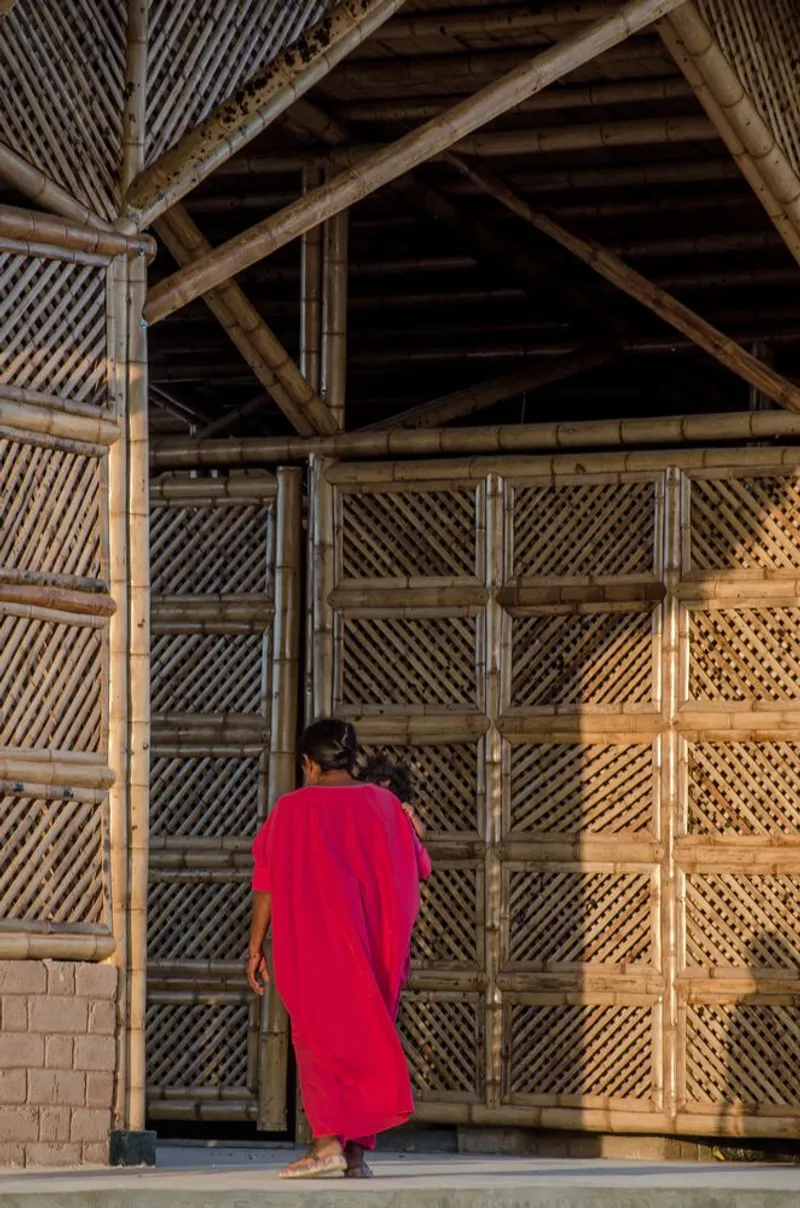
The center is designed with flexibility in use, allowing it to transform according to community needs. The building’s revolving doors and modular layout enable different spatial configurations:
- Classroom Mode – When closed, the modules create a classroom for up to 50 students and an auxiliary library for 12.
- Dining Space – With the central modules opened, the classroom connects to the kitchen and becomes a communal dining area. Colorful fold-down windows transform into desks and tables, blending practicality with vibrant design.
- Entrepreneurship Hub – When the kitchen closes, shaded outdoor spaces function as a workshop area for locals to practice and share traditional crafts, reinforcing the Wayuu’s cultural identity and economic independence.

Cultural and Material Expression
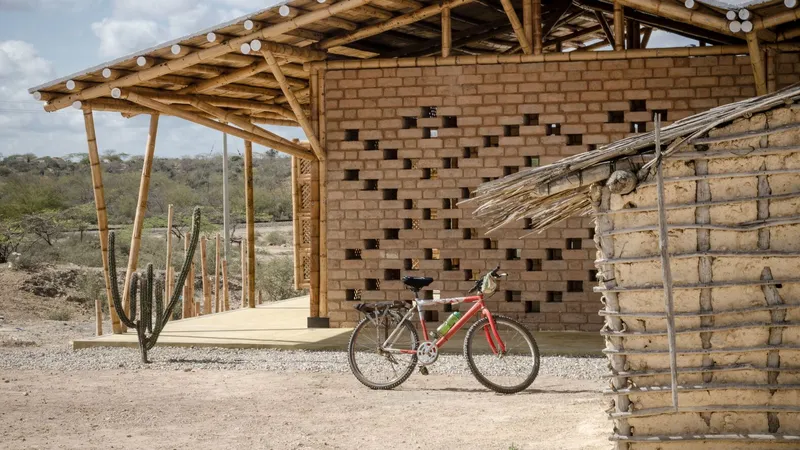
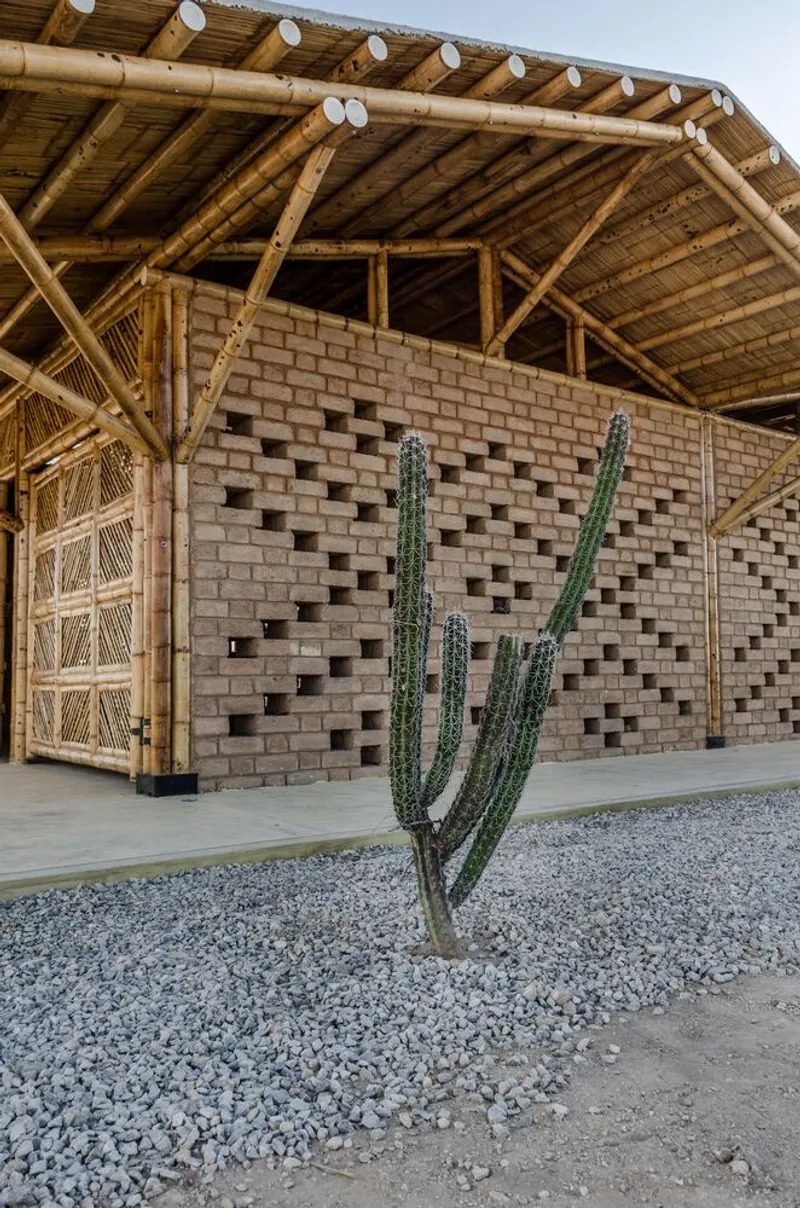
The design integrates traditional Wayuu cultural references and sustainable construction practices. The use of compressed earth blocks reflects the region’s vernacular architecture while allowing for natural ventilation through patterned lattice walls inspired by Wayuu weaving motifs.
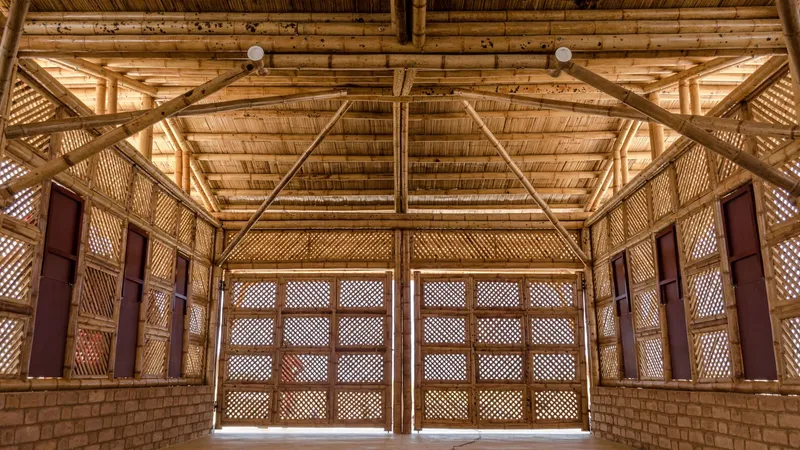
The folding roof structure draws inspiration from the surrounding desert mountains, significant both as landscape markers and as symbols within Wayuu cosmology. Inside, the guadua (bamboo) textures reinterpret the traditional bahareque construction technique, showcasing how time and climate shape local materials.
By combining local construction techniques, sustainable materials, and cultural narratives, the project becomes more than a building – it is a community anchor that strengthens education, social interaction, and cultural continuity.

The Walirumana Ethno Educational Center demonstrates how architecture can serve as a catalyst for social transformation in vulnerable communities. By merging education, culture, and sustainability, Salba Architects have created a model that empowers the Wayuu people while respecting their heritage and environment.


Popular Articles
Popular articles from the community

AL-JANNAH: Sustainable Architecture and Permaculture for Afghan Widows
AL-JANNAH uses sustainable architecture and permaculture to create resilient oasis of housing, learning, work and renewal for Afghan widows.

The Earth Pod: 3D Printed Homes for Resilient Refugee Communities
The Earth Pod reimagines refugee housing through 3D printed homes made from clay, combining resilience, self-sufficiency, and rapid shelter.

Conexión: Biophilic Design Reimagines High-Rise Living in Hong Kong
Conexión reimagines high-rise living in Hong Kong through biophilic design, green facades, shared spaces, daylight, water and nature within.

The Musturak Paradise: Senior Living Architecture for a Connected Future in Temara, Morocco
The Musturak Paradise reimagines senior living architecture in Temara via private homes, social spaces, culture, community, and shared care.

Similar Reads
You might also enjoy these articles


Hodi-Mandai Geram
Project Function: Preservation and revitalization of the Intangible heritage and socio-spatial identity of the Hodi by Housing, Cultural Memory Center, Sacred Grove, landscape, local tourism economy


Olio Towers: A Mid-Rise for Performers That Fuses Housing, Rehearsal, and Stage
Located blocks from Houston's Theater District, this modular tower stacks living units around a central performance atrium.

Oasis: Modular Green Housing Carved into Dhaka's Urban Fabric
A shortlisted Plugin Housing entry reclaims unauthorized settlements in Dhaka with stepped concrete volumes, green roofs, and ventilation-driven design.

Black Hole: A Floating Megastructure for the Post-Physical Era
Emiliano Mazzarotto envisions a spherical, self-scaling arena where e-sports, digital hotels, and holographic stadiums replace traditional public space.

Explore Educational Building Competitions
Discover active competitions in this discipline



Challenge to design public laboratory


Challenge to reimagine the Iron Throne


Photograph architecture without architects


Illustrate the lost glory of Angkor Wat - Render Challenge
Comments (0)
Please login or sign up to add comments
No comments yet. Be the first to comment!