

We Stack Up! A Community Center for Cultural Exchange and Adaptation
This article explores a modular cultural center in Bijlmermeer, promoting international student and local resident integration.


We Stack Up! created by SEOHYUN AHN, Jeong Jiinis, Hyeonyeong Hwang, Shortlisted entry of Overseas Oasis an innovative project designed to address the housing and community challenges faced by international students in the Netherlands, specifically in Bijlmermeer, a suburb of Amsterdam. This center aims to bring together diverse cultures, foster communication, and assist in the adaptation process through modular spaces that facilitate interaction between international students and local residents.
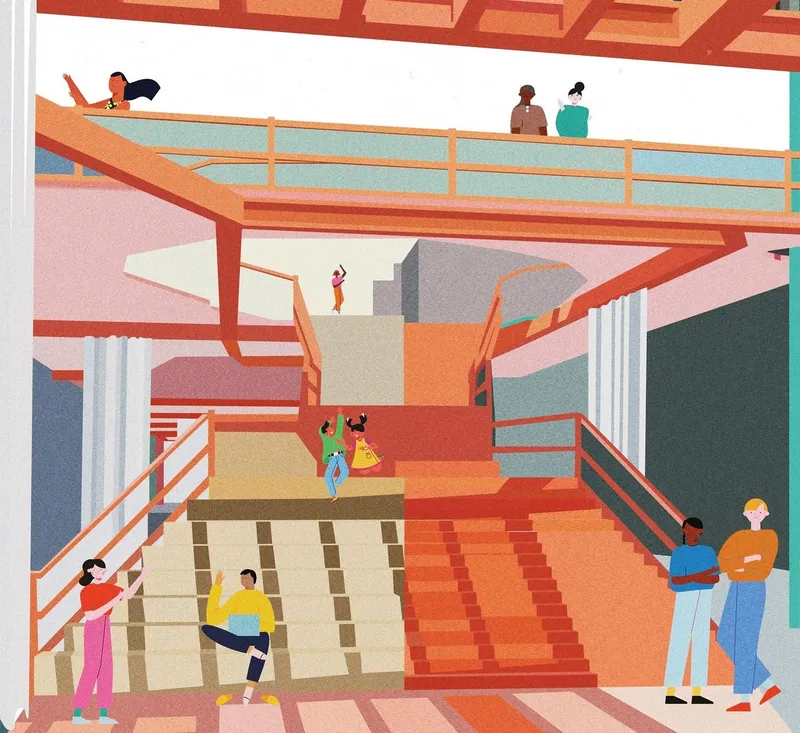
The Issue
International students in the Netherlands often struggle with housing due to rising prices and limited availability. This challenge is exacerbated by the lack of interaction between international students and local residents, leading to isolated communities. While international students form their own groups in dormitories, there is a pressing need for spaces that promote broader community engagement.

Location and Context
Bijlmermeer is a multicultural suburb of Amsterdam, home to more than 150 nationalities. Historically, it attracted diverse populations due to affordable housing projects. However, despite the rich cultural fabric, there is a significant gap in community spaces where residents and international students can interact and share experiences.

Problem Recognition
The project site is strategically located at the entrance of a hexagonal modular apartment complex, connected by a bicycle path. Despite the presence of green spaces, parks, and individual amenities, there is a notable absence of communal areas for interaction. The design aims to fill this void by creating spaces that encourage meetings and cultural exchanges among residents and international students.

Design Approach
We Stack Up! employs a modular design to create multi-layered spaces that serve various functions. Each module can be used independently or in combination, providing flexibility in usage. The design process involved several iterations, considering the site's context, surrounding architecture, and the need for accessible, adaptable spaces.
Key Design Features:
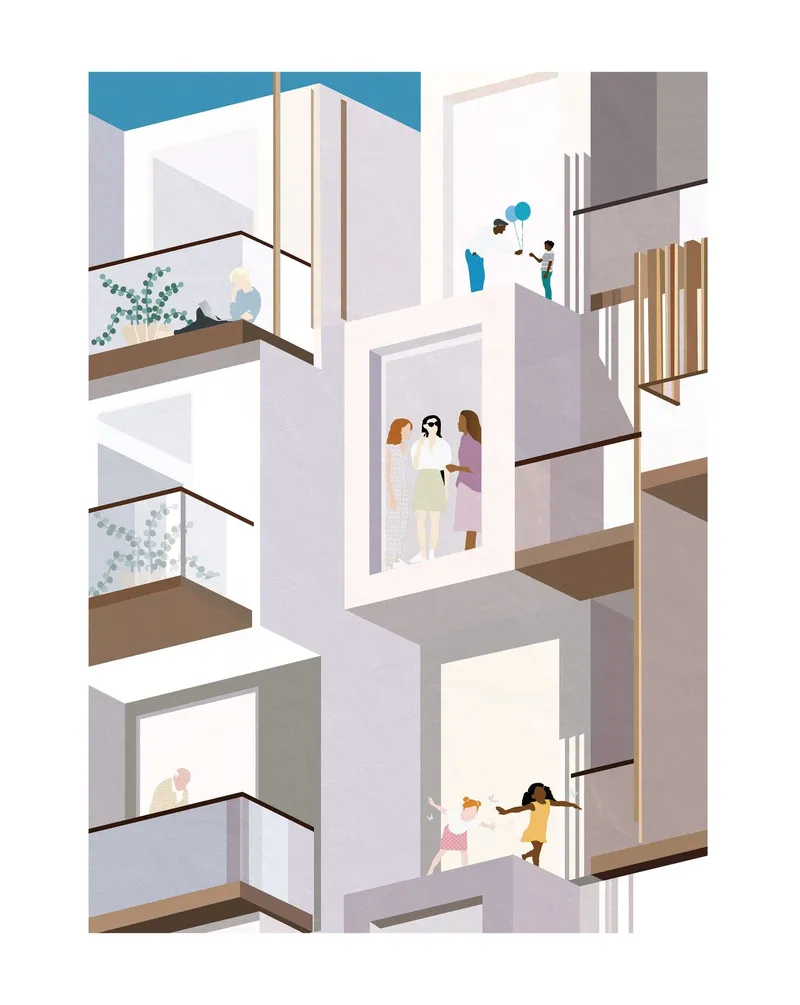
Modular Spaces: Each module is designed to accommodate different activities, promoting flexibility and adaptability.
Green Spaces: Incorporation of natural green spaces to enhance the living environment and provide areas for relaxation and interaction.
Community Halls: High-rise community halls where people can meet, share, and engage in various levels of activities.
Sloping Roofs: Designed to maximize sunlight exposure and create a unique architectural aesthetic.
Programmatic Elements
Housing and Play: Designed for international students, these spaces encourage play, communication, and cultural exchange with local residents, aiding in their settlement and adaptation.
Kitchen and Garden Spaces: These areas foster communal gardening and cooking activities, allowing people to share food cultures and build connections.
Music Lounge: A semi-public space where students can perform, share music from various cultures, and engage in creative work.
Design Investigation and Development
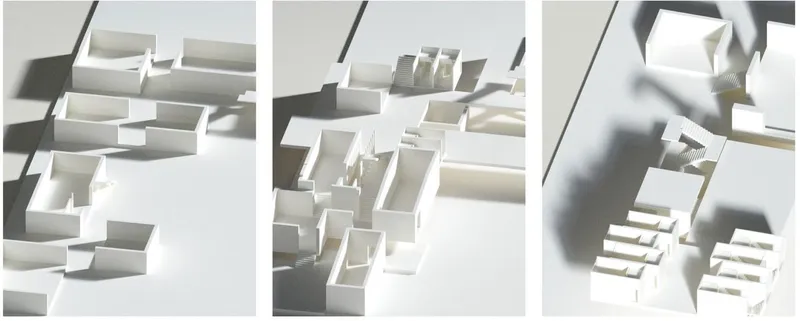
The design process included extensive research into Dutch history, architectural values, and social issues. The team visited the site to understand its atmosphere and the needs of its inhabitants. Multiple iterations and concept models were developed to refine the design, ensuring it met the needs of both international students and local residents.

Material Selection and Sustainability
Reinforced concrete and glass were chosen for their structural integrity and ability to create open, flexible spaces. The design incorporates eco-friendly systems, such as maximizing natural light and controlling humidity through open roof angles. The green roofs provide additional community spaces and help regulate building temperatures.
Future Expansion and Transformation
The project envisions expanding the use of modular cubes beyond international students to include local residents, children, and the elderly. By creating accessible and engaging spaces, We Stack Up! aims to foster a dynamic community where new arrivals and long-term residents can interact, share experiences, and support each other.
We Stack Up! addresses a critical need for community spaces in Bijlmermeer, Amsterdam. By providing flexible, modular spaces that encourage cultural exchange and adaptation, it offers a solution to the housing and community integration challenges faced by international students. This project exemplifies innovative architectural design, promoting inclusivity and cultural harmony in a diverse urban environment.


Popular Articles
Popular articles from the community

Faces of the Soviet Avant-Garde: Turning Moscow's Street Names into an Open-Air Museum
A network of sculptural installations across a Moscow residential district transforms forgotten architect names into spatial encounters with cultural memor

Singing Woman: An Opera House That Performs Before the Curtain Rises
Ovidiu Cristian Pavel's conceptual opera house translates Estonia's choral identity into a sculpted waterfront landmark facing the Baltic Sea.

Tsunami Convergenics: Turning Catastrophic Ocean Forces into Underwater Housing Infrastructure
A speculative underwater settlement off the coast of Onagawa, Japan, treats tsunamis and typhoons as energy sources rather than threats.

Opera on the Sea: Driftwood Logic Shapes a Timber Opera House on Estonia's Coast
Trevor Orgill's opera house translates the entangled drift of floating timber into a civic building where wood, water, and music converge.

Similar Reads
You might also enjoy these articles

Shakur's House: Exposed Brick as an Interior Organiser in a 168 m² Mashhad Residence
Brick moves indoors in this Mashhad residence, where masonry walls, glass partitions and teal planes sequence a compact home without closing it off.

Day and Night Park: A Time-Based Urban Newsstand in Beijing
A temporary urban newsstand in Beijing blending travel, light, and reading through poetic colors, compact form, and community-focused design.

Modernist Patio Renovation in El Masnou, Barcelona by Oliver Segura Arquitectura + Cebrià Arquitectura
Modernist patio renovation blending tradition and innovation with a movable pool, leveled floors, and Catalan materials in El Masnou.

Alto Residencial Coop: Cooperative Housing Development in Santiago de Compostela by Carbajo Barrios Arquitectos
A linear cooperative housing complex blending white volumes and perforated metal façades, enhancing community living, natural light, privacy, and urban integration.

Explore Cultural Hub Competitions
Discover active competitions in this discipline

Challenge to reimagine the Iron Throne

Photograph architecture without architects

Illustrate the lost glory of Angkor Wat - Render Challenge

Bring back Drive In's
Comments (0)
Please login or sign up to add comments
No comments yet. Be the first to comment!