
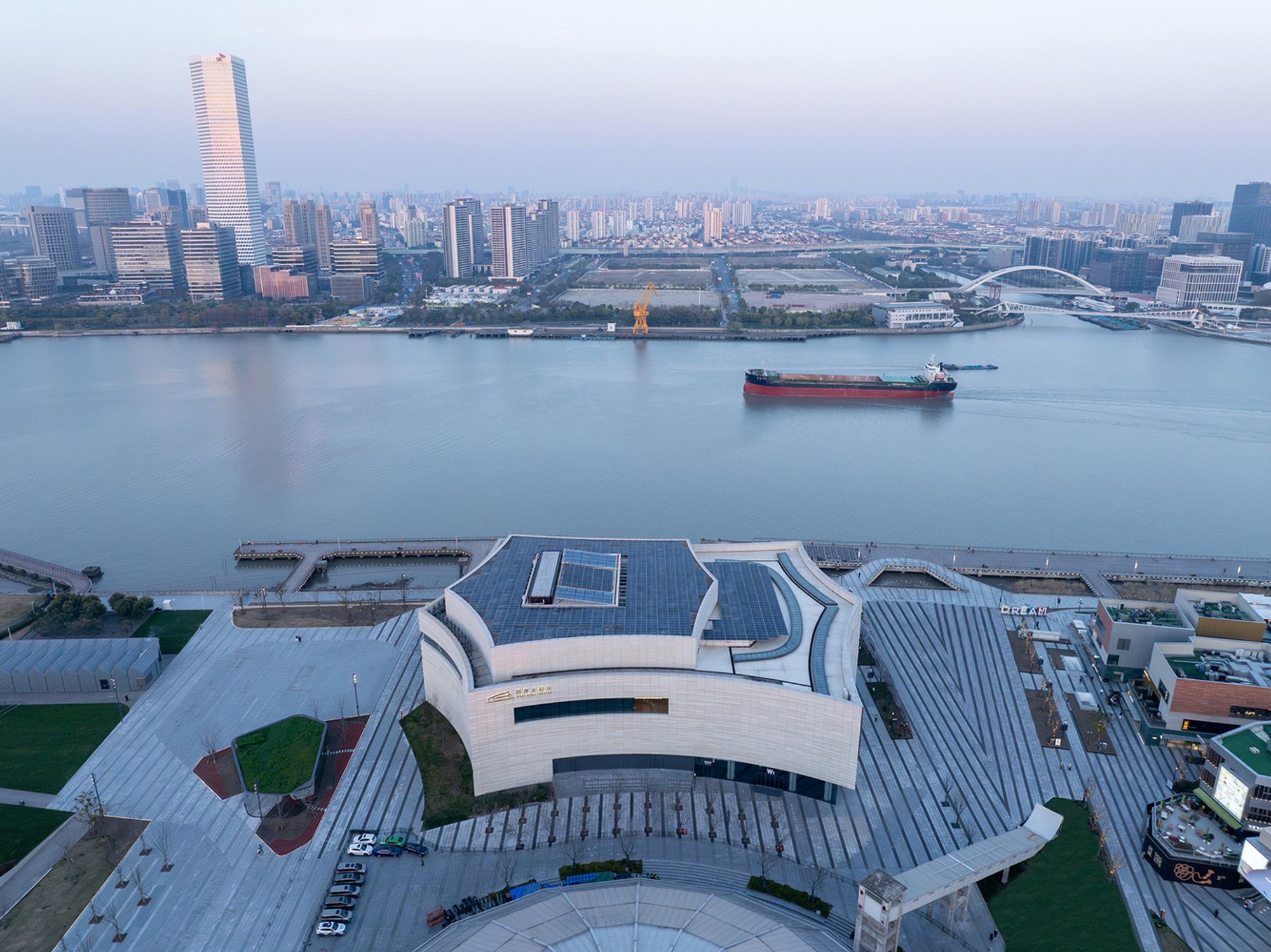
West Bund Grand Theater Shanghai by Schmidt Hammer Lassen Architects
The West Bund Grand Theater Shanghai by SHL merges heritage, modern design, and world-class performance spaces into a landmark cultural destination.

The West Bund Grand Theater Shanghai, designed by Schmidt Hammer Lassen Architects, stands as a monumental cultural landmark in China’s most dynamic arts district. Completed in 2025, this 23,177 m² project is more than a performance venue—it is a symbolic fusion of Shanghai’s industrial past and its vision for a globally recognized cultural future.
The Vision of the West Bund
The West Bund district has rapidly transformed from a 20th-century industrial hub into Shanghai’s leading arts and cultural destination. Situated on the banks of the Huangpu River, it represents the city’s ambition to create a waterfront comparable to Paris’s Rive Gauche or London’s South Bank. Once complete, the West Bund will become Asia’s largest cultural district, integrating existing heritage structures with innovative architectural interventions.
The West Bund Grand Theater serves as one of the district’s anchor venues, reinforcing the area’s identity as a hub for creativity, performance, and international cultural exchange.
A Theater Shaped by the River
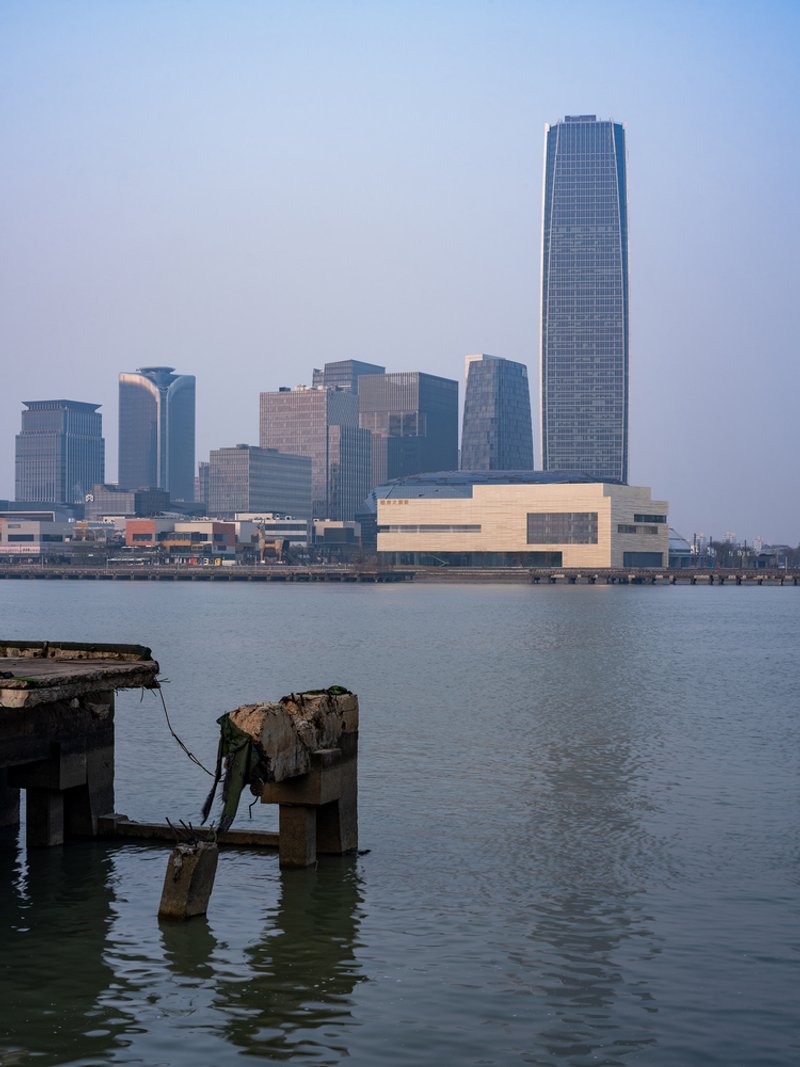
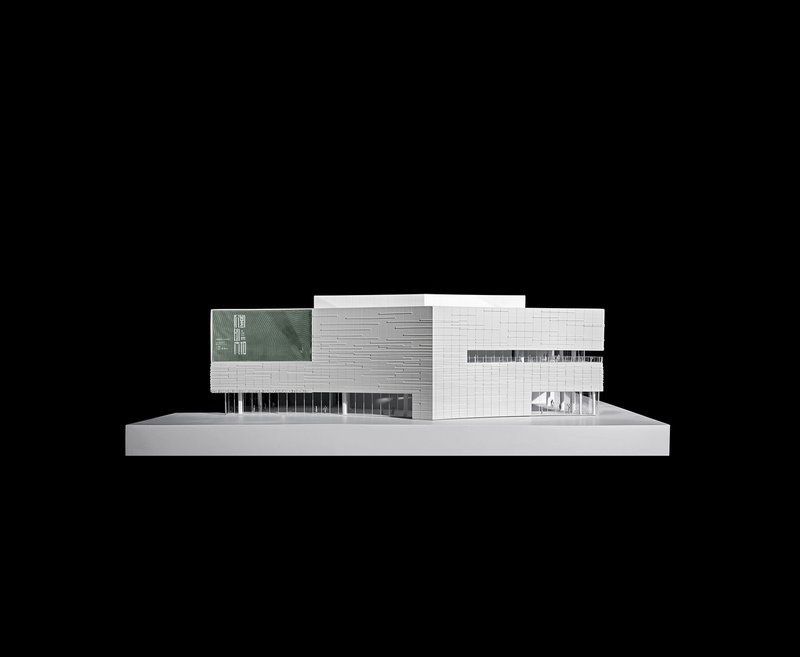
The Huangpu River is the lifeblood of Shanghai, and its influence is deeply embedded in the theater’s design. SHL drew inspiration from the river’s constant movement, shaping the theater’s facade with Glass Fiber Reinforced Concrete (GFRC) panels that ripple in horizontal organic layers. This monolithic concrete form reflects the weight and power of the water while echoing the industrial heritage of the cement plant that once occupied the site.
In contrast, the adjacent West Bund Dome—a translucent adaptive reuse of a historic facility—completes the yin-yang dialogue. Where the dome glows with light and transparency, the theater asserts strength and solidity. Together, the two buildings embody the balance of history and modernity, permanence and fluidity.
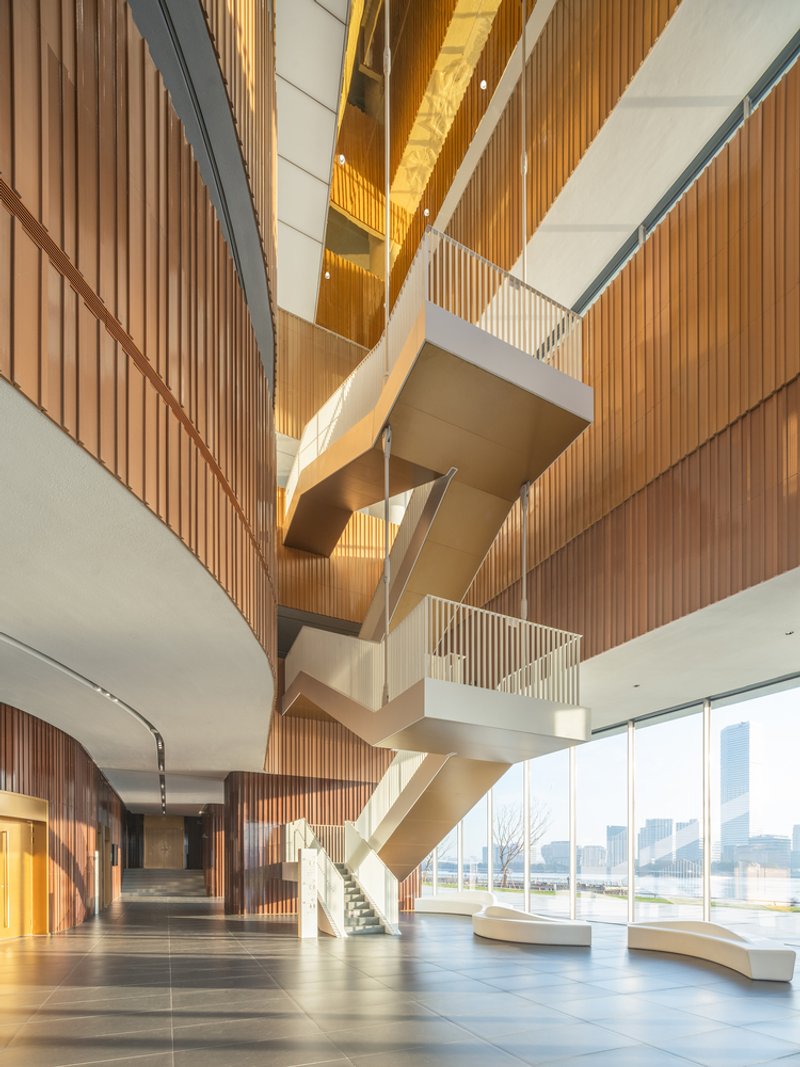
World-Class Performance Spaces
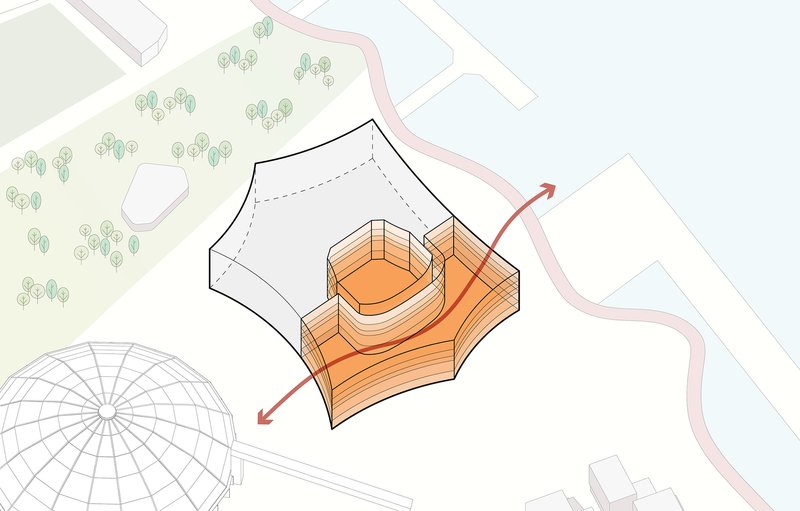
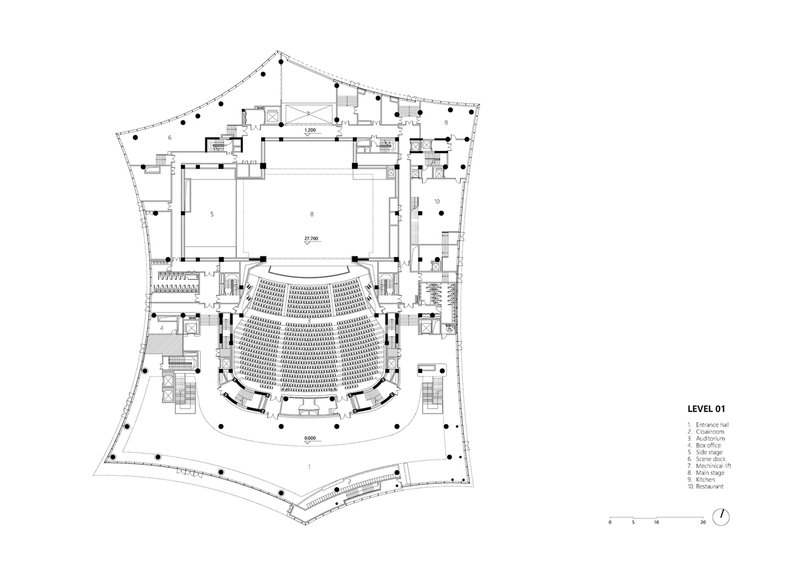
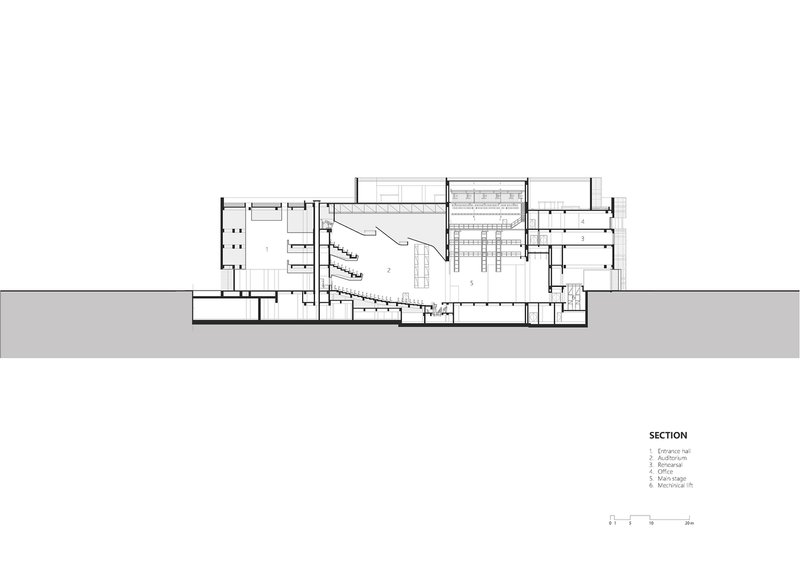
At the heart of the building lies a 1,600-seat main auditorium, equipped with exceptional acoustics and sightlines for large-scale productions. Complementing this is a 200-seat black-box theater, offering an intimate setting for experimental and avant-garde performances.
The theater’s design ensures flexibility, accommodating a wide range of cultural programming, from symphonies and operas to contemporary performances. More than just a venue, it is envisioned as a stage for Shanghai’s global cultural ambitions.
A Public Space for the City
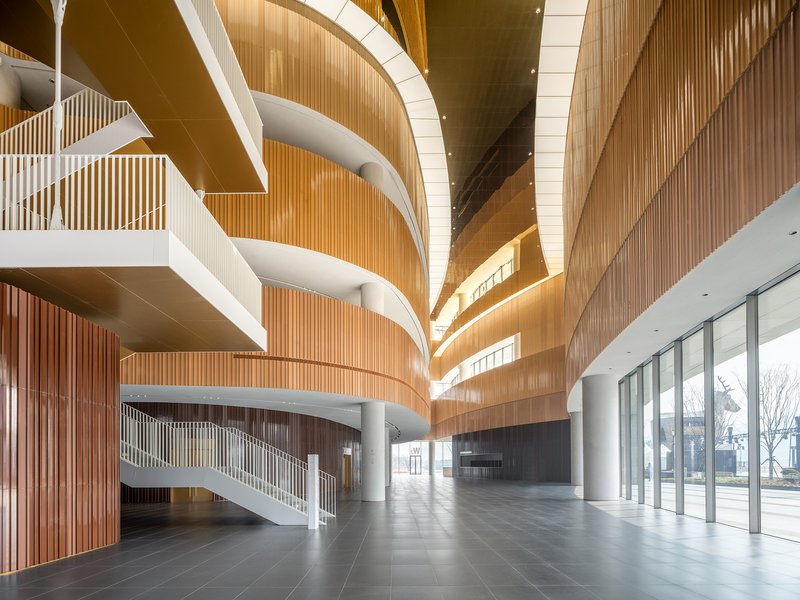
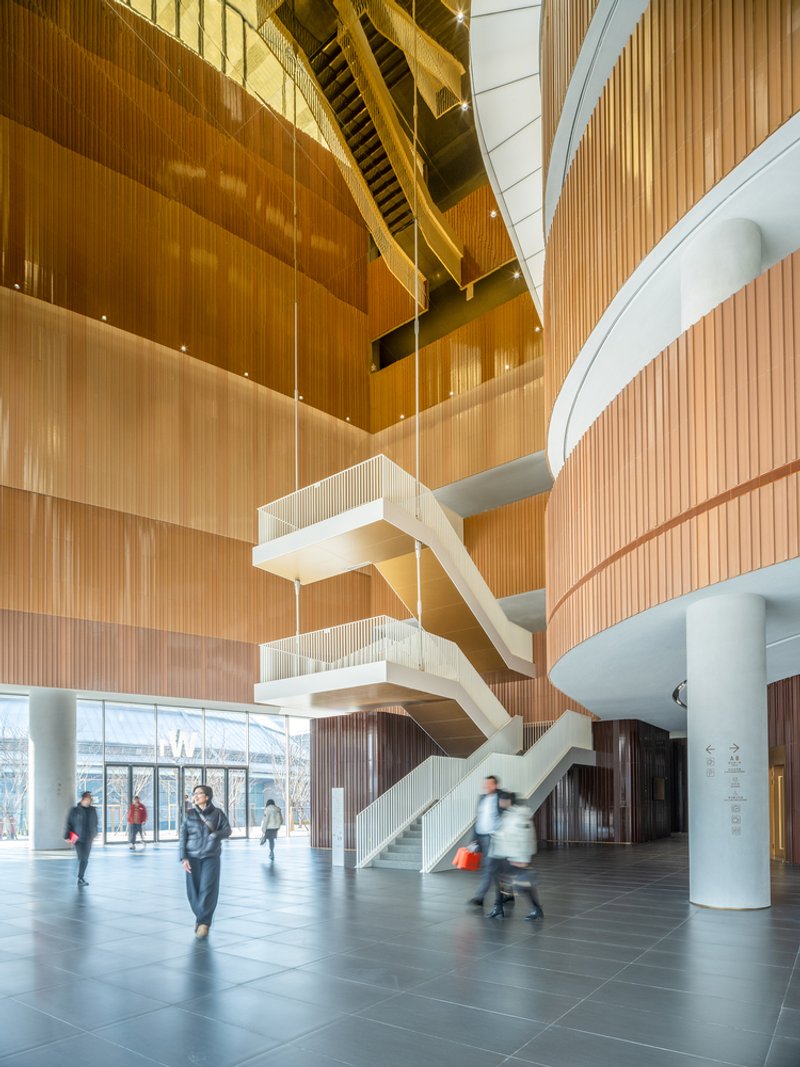
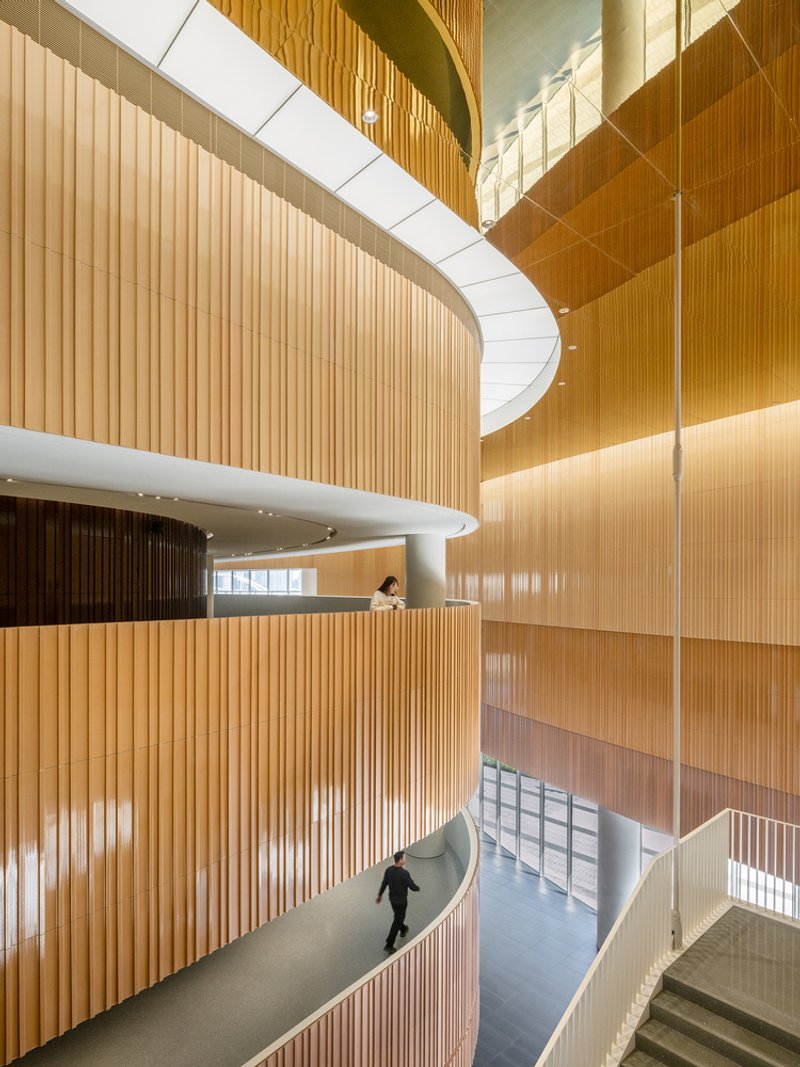
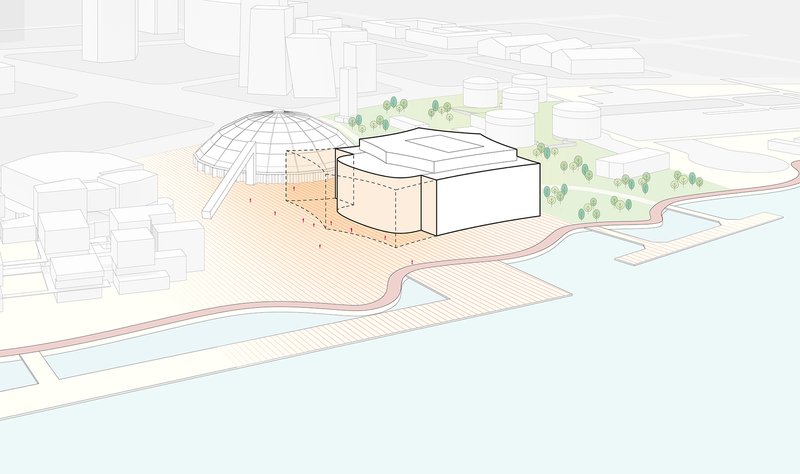
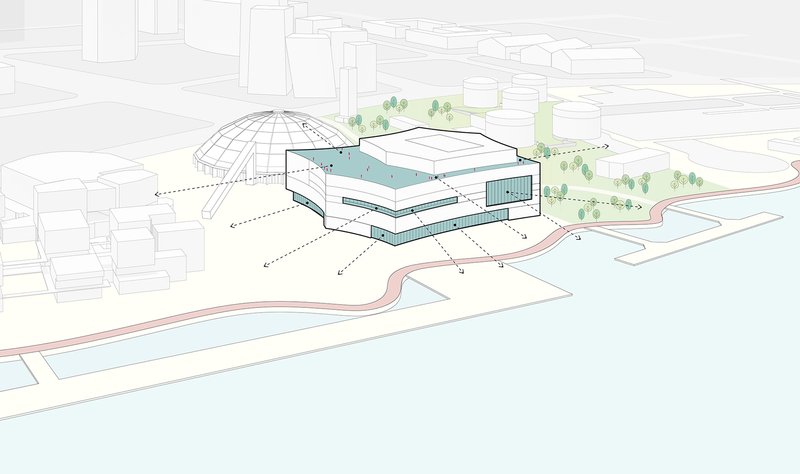
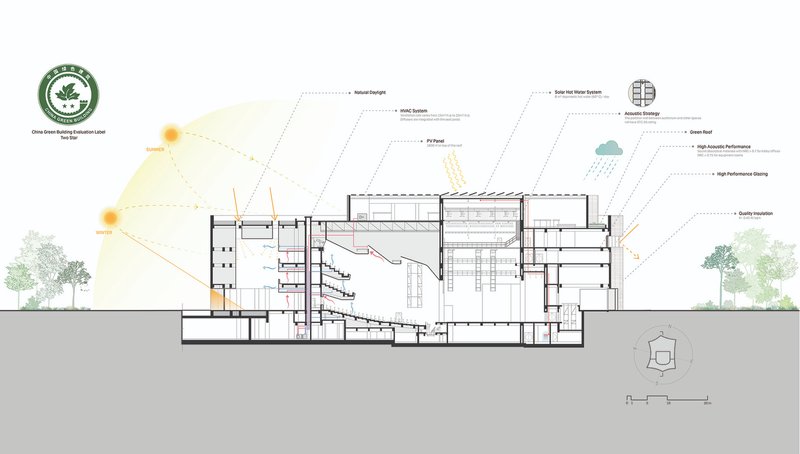
Beyond its role as a performance hall, the West Bund Grand Theater Shanghai is also a civic space. A large outdoor plaza connects the building to its urban surroundings, encouraging gathering and interaction. Expansive windows frame sweeping views of the river and the district, inviting daylight deep into the interiors.
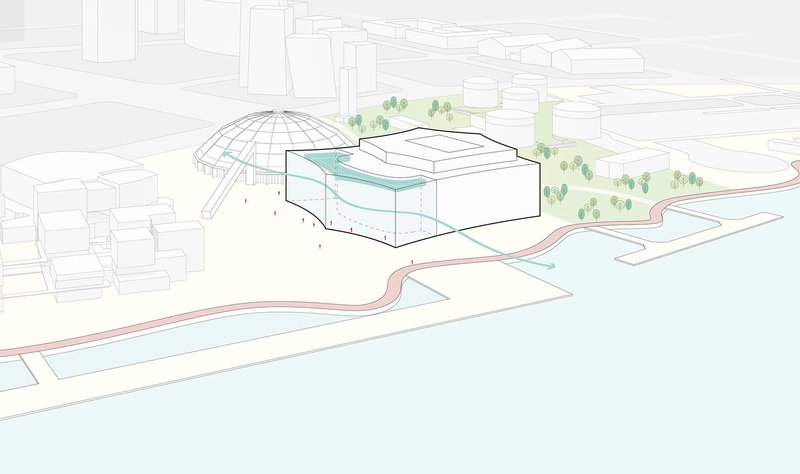
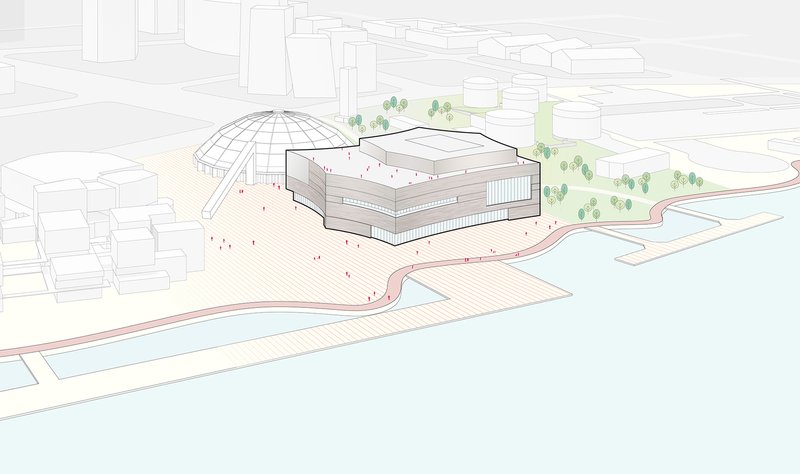
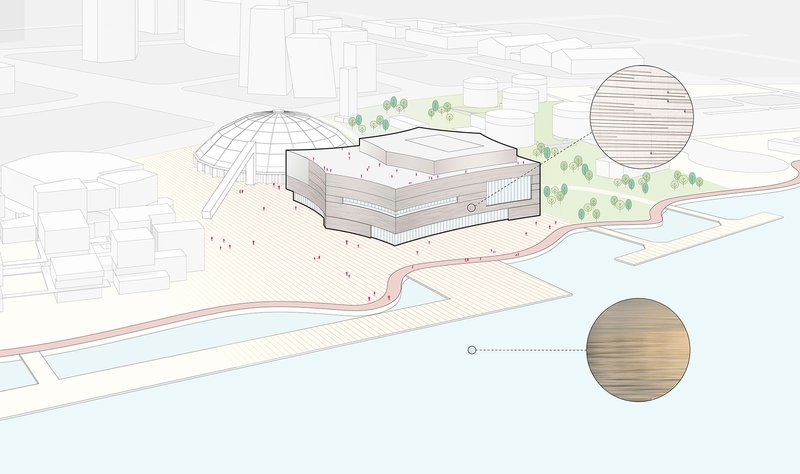
Generous terraces—one located mid-height and another on the roof—provide theater-goers with opportunities to step outside, take in the skyline, and engage with the city between acts. This seamless integration of performance, architecture, and public life ensures the theater is as much for the community as for the performers.
Honoring Heritage, Embracing the Future
The West Bund Grand Theater is not only a cultural beacon but also a celebration of Shanghai’s history. Built alongside the preserved dome of China’s largest cement plant, the theater honors its industrial past while embracing a new role as a 21st-century cultural powerhouse.
It is this balance—between history and progress, solidity and fluidity, art and community—that defines the theater as a landmark of modern Chinese architecture.
The West Bund Grand Theater Shanghai by Schmidt Hammer Lassen Architects embodies the essence of Shanghai: dynamic, forward-looking, and deeply rooted in its cultural and historical context. Through its design, the theater bridges the past and the future, creating a world-class venue that enriches the city’s global cultural identity.
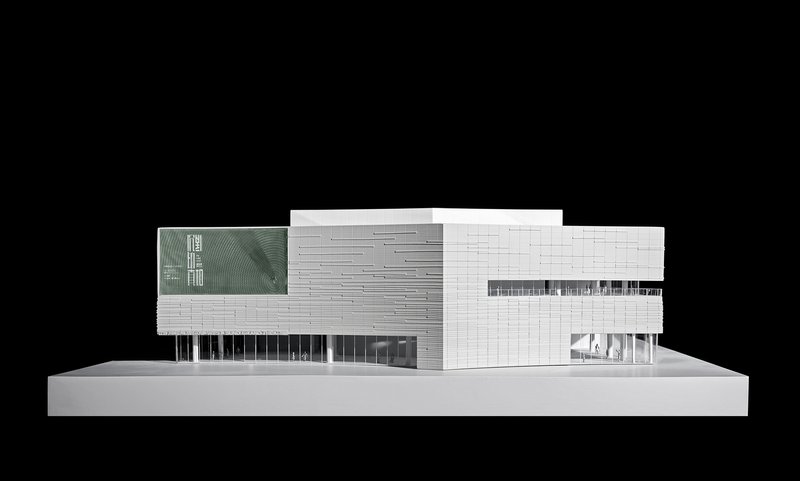
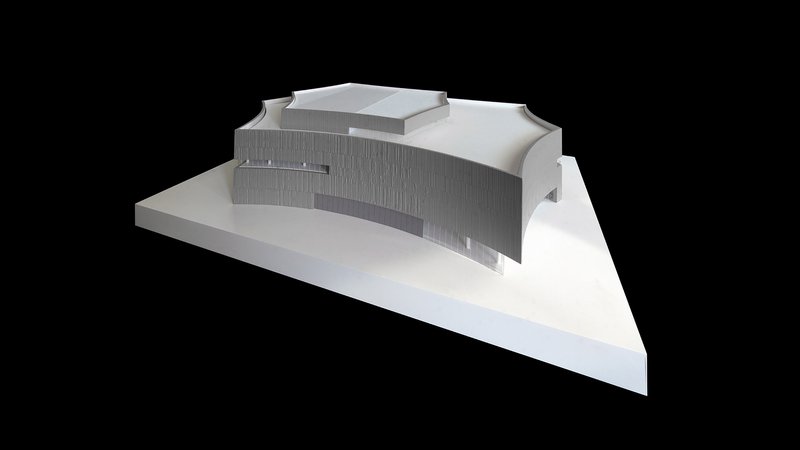
All Photographs are works of RAWVISION studio




Popular Articles
Popular articles from the community

boq architekti Fits a Gabled Family House onto a Tiny Moravian Hillside Plot with No Room for a Garden
A 115 square meter home in South Moravia trades a garden for a rooftop terrace and a fully glazed facade facing the village below.
Paco Oria Estudio Rebuilds a 1949 Valencian Town House Around Timber, Terracotta, and a New Interior Patio
In Godella, Spain, a semi-detached house from the postwar era is stripped to its party walls and rebuilt with wood and ceramics.
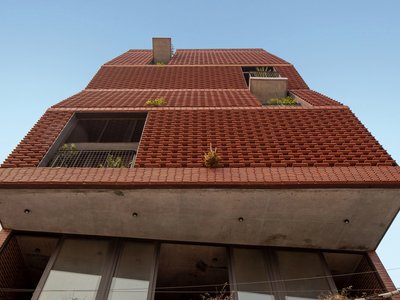
H&P Architects Stack a Vertical River of Brick and Greenery in Hanoi
A perforated terracotta tower in Dong Anh channels water, light, and air through eight staggered levels of domestic life.

BICA Arquitectos Buries a Coastal Home in a Man-Made Dune on Portugal's Tróia Peninsula
A 300-square-meter house of timber, sand mortar, and travertine dissolves into the dune landscape it helped regenerate on the Alentejo coast.


Similar Reads
You might also enjoy these articles


Bamboo Housing Challenge 2026: Design Affordable, Sustainable Homes Using Bamboo
An international design competition by Bamboo U and IBUKU inviting architects and designers to reimagine affordable housing using bamboo — with the winning design built full-scale in Bali.

Computational Design & Education: Beegraphy Design Awards Introduces 7th Category (Featuring Jiyun's Innovative Approach)
Dive into Beegraphy’s 7th Design Awards category, where computational design meets education to create immersive, interactive learning tools, inspired by Jiyun’s work.

From Parametric Lighting to Urban Furniture: Join the 2nd Workshop in Beegraphy’s Computational Design Series
Dive into Cutting-Edge Design Techniques and Practical Applications with Industry Experts

Introducing Sphere by UNI: Pioneering a New Era in AEC Industry
Unlocking Global Potential with BIM and Agile Management

Explore Architecture Competitions
Discover active competitions in this discipline




The International Standard for Design Portfolios


The Global Benchmark for Architecture Dissertation Awards


The Global Benchmark for Graduation Excellence


Challenge to reimagine the Iron Throne
Comments (0)
Please login or sign up to add comments
No comments yet. Be the first to comment!