

Wohnen Hoch Drei: A Sustainable Residential Community in Hamburg
Wohnen Hoch Drei in Hamburg features sustainable timber buildings, communal courtyards, diverse flats, and eco-conscious design fostering community interaction.


Located in Hamburg, Germany, the Wohnen Hoch Drei building community by Limbrock Tubbesing Architekten is a striking example of contemporary residential architecture that merges sustainable design with strong community engagement. Completed in 2025, this 3,164 m² development emphasizes a harmonious connection to nature, blending timber construction, natural materials, and thoughtfully designed shared spaces.
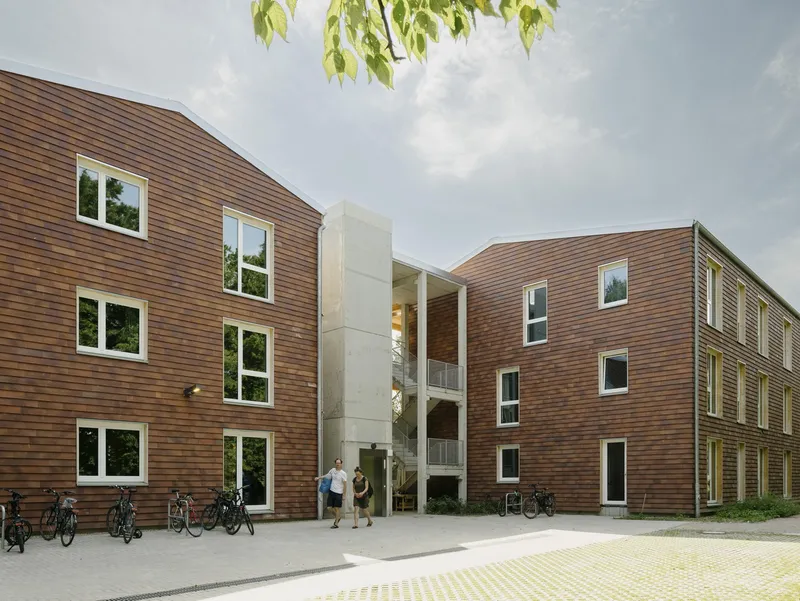
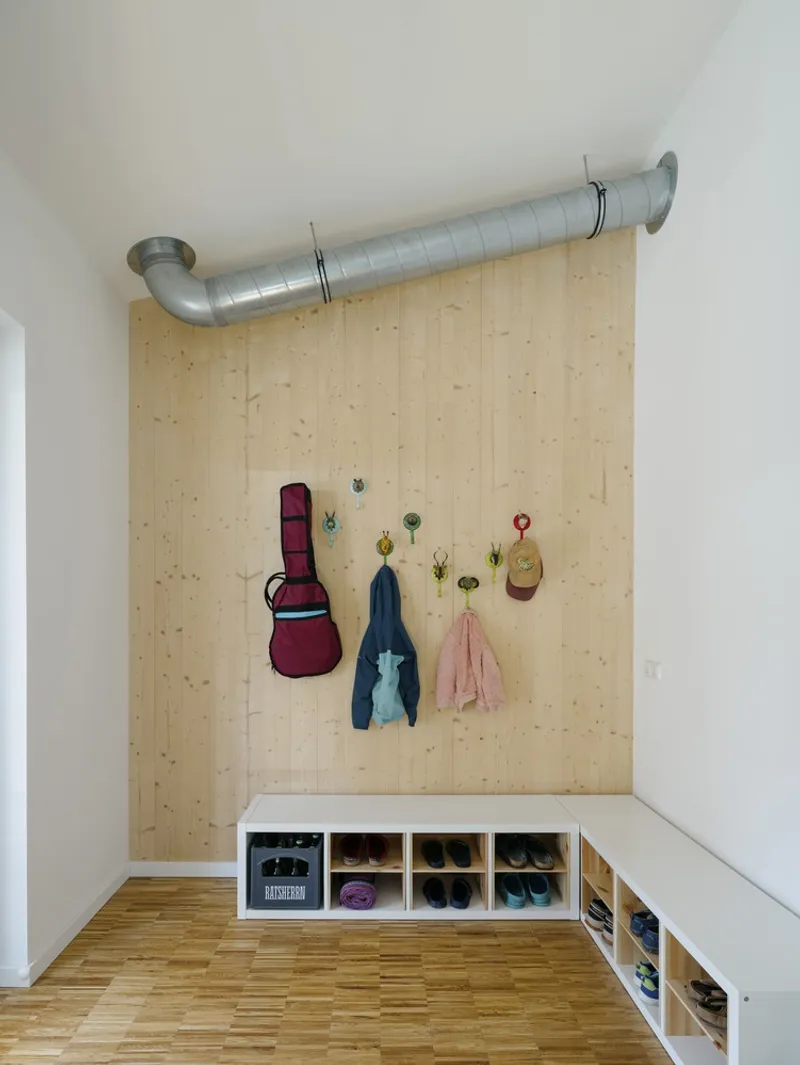
The project is situated adjacent to the western edge of Harburg City-Park, with two L-shaped buildings oriented toward the lush green landscape. This layout not only maximizes views and natural light but also establishes a seamless integration with the surrounding environment, fostering a sense of openness and belonging.
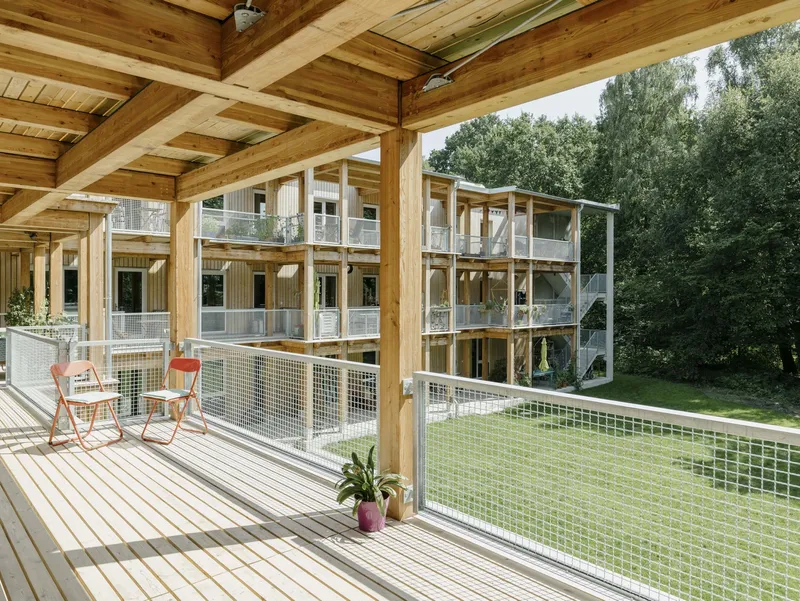

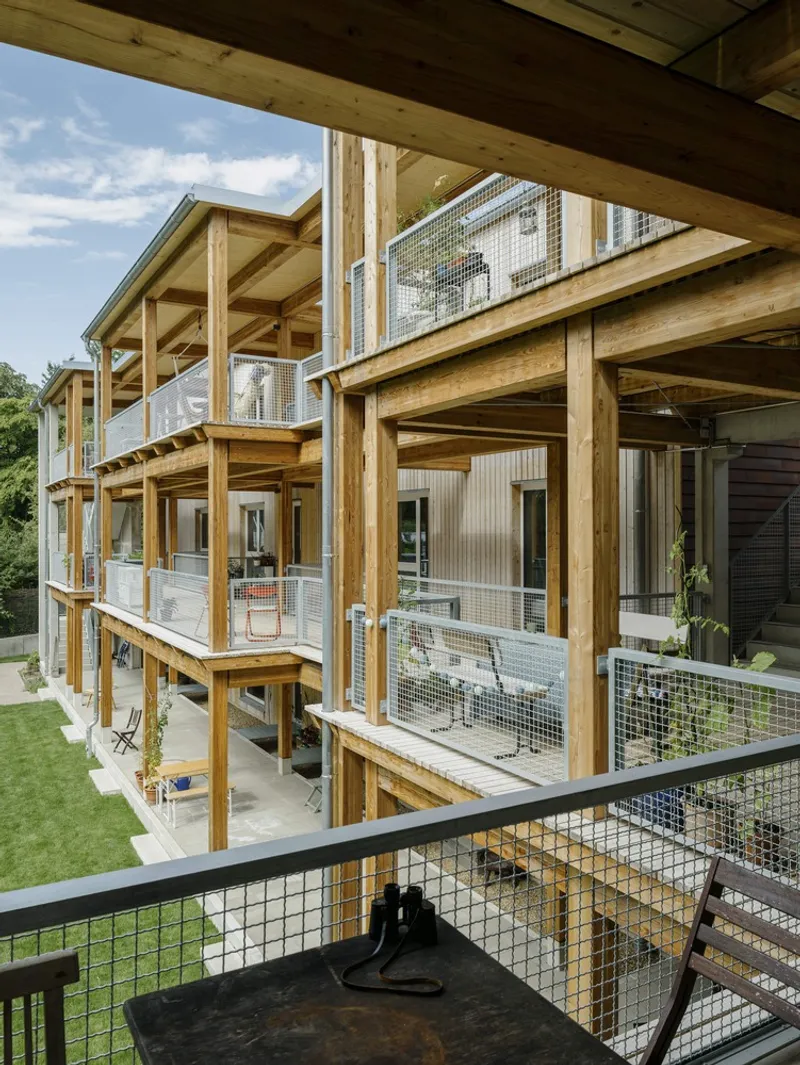
Constructed primarily using cross-laminated timber, the buildings feature exposed load-bearing timber walls and ceilings, highlighting the warmth and sustainability of natural materials. The southern façade is clad in vertical larch wood, while the northern street-facing side employs reddish bricks arranged like wooden shingles, reflecting the vibrant materiality of nearby clinker buildings.
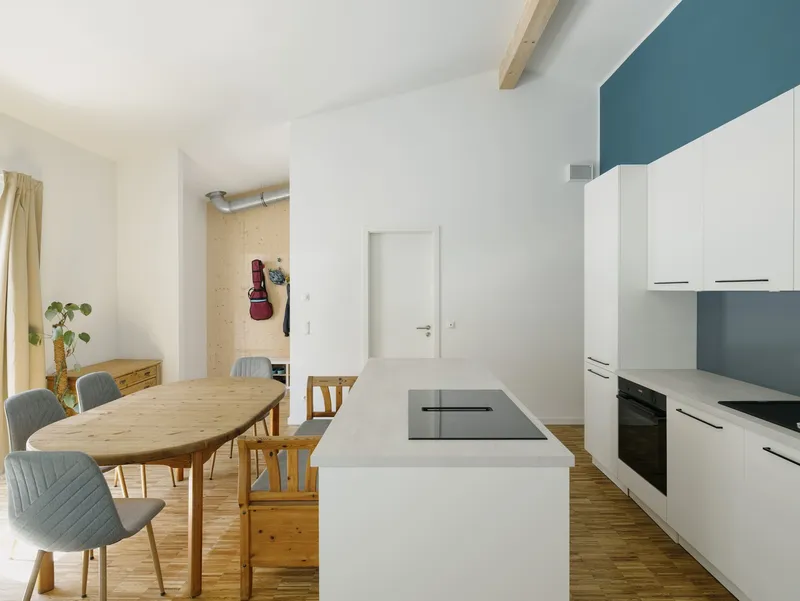
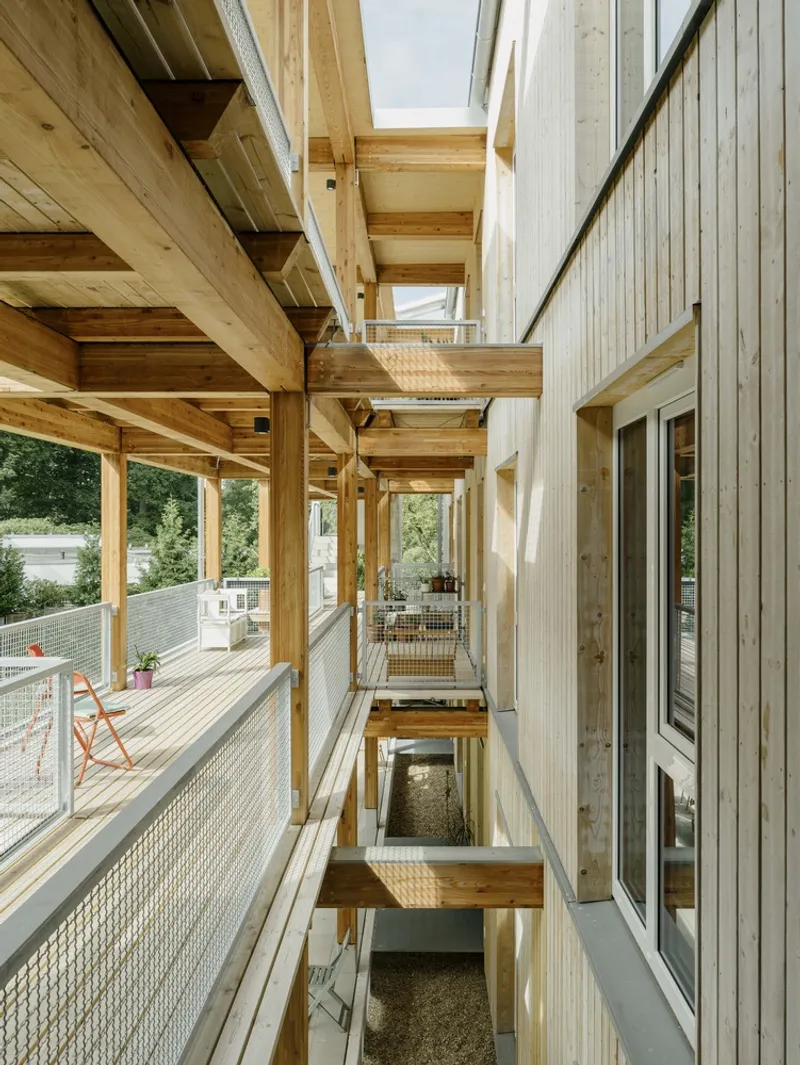
Community-focused design is central to Wohnen Hoch Drei. Open pergolas, designed as wooden shelves, connect the two buildings and extend into neighborhood meeting areas, encouraging social interaction among residents. The development comprises 24 flats of varied typologies, including traditional apartments, cluster flats for shared living, and ground-floor communal areas equipped with co-working spaces. The L-shaped arrangement creates a sheltered courtyard, providing a green sanctuary for residents to relax, socialize, and connect with nature.
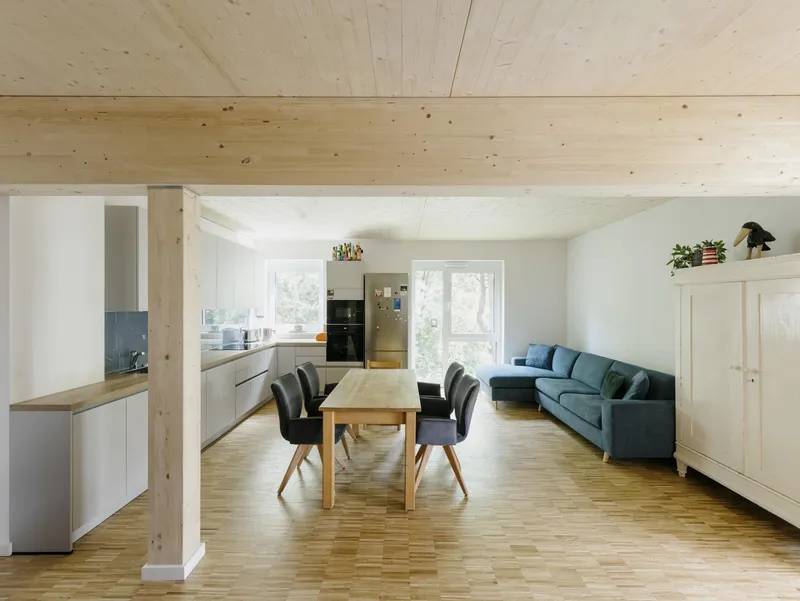
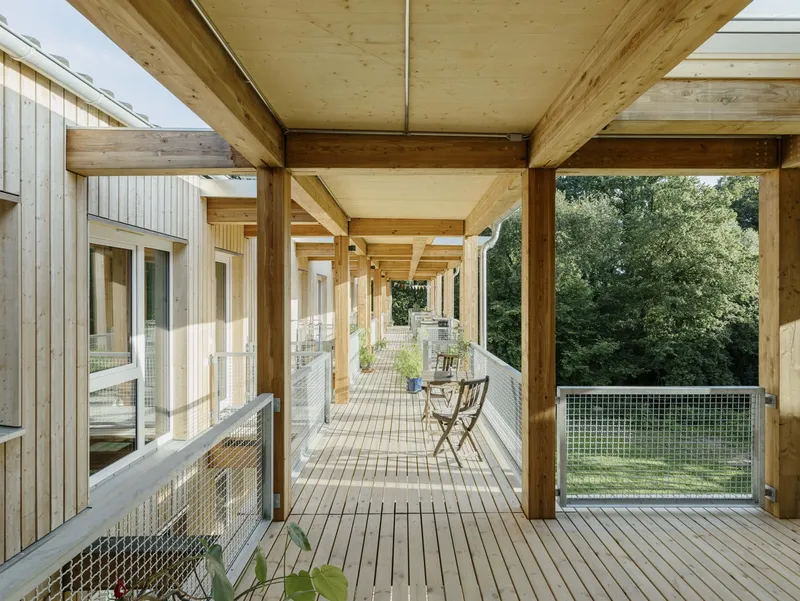
The architecture also thoughtfully incorporates modern sustainability features. Flat gable roofs are finished with grey-toned sheet metal, complementing the integrated photovoltaic system while providing a visual contrast to the warm, natural façade materials. The project demonstrates a holistic approach to eco-conscious urban living, balancing aesthetic warmth, functional design, and environmental responsibility.
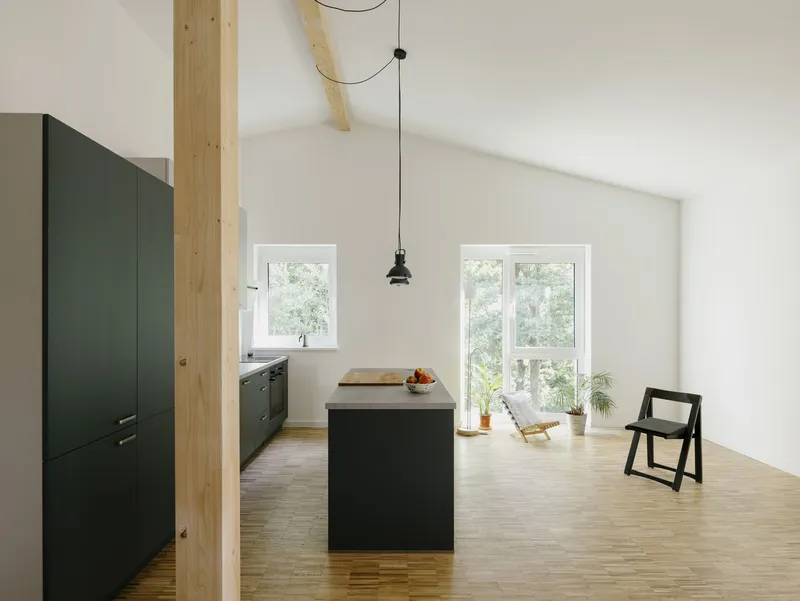
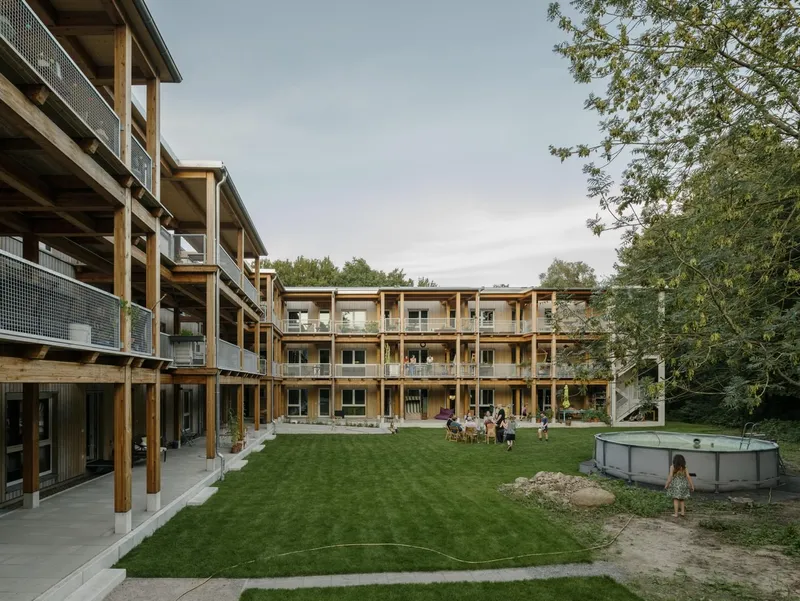
Photography by Jakob Boerner captures the tactile warmth of the timber interiors, the openness of balconies and decks, and the inviting communal spaces that define the Wohnen Hoch Drei experience.
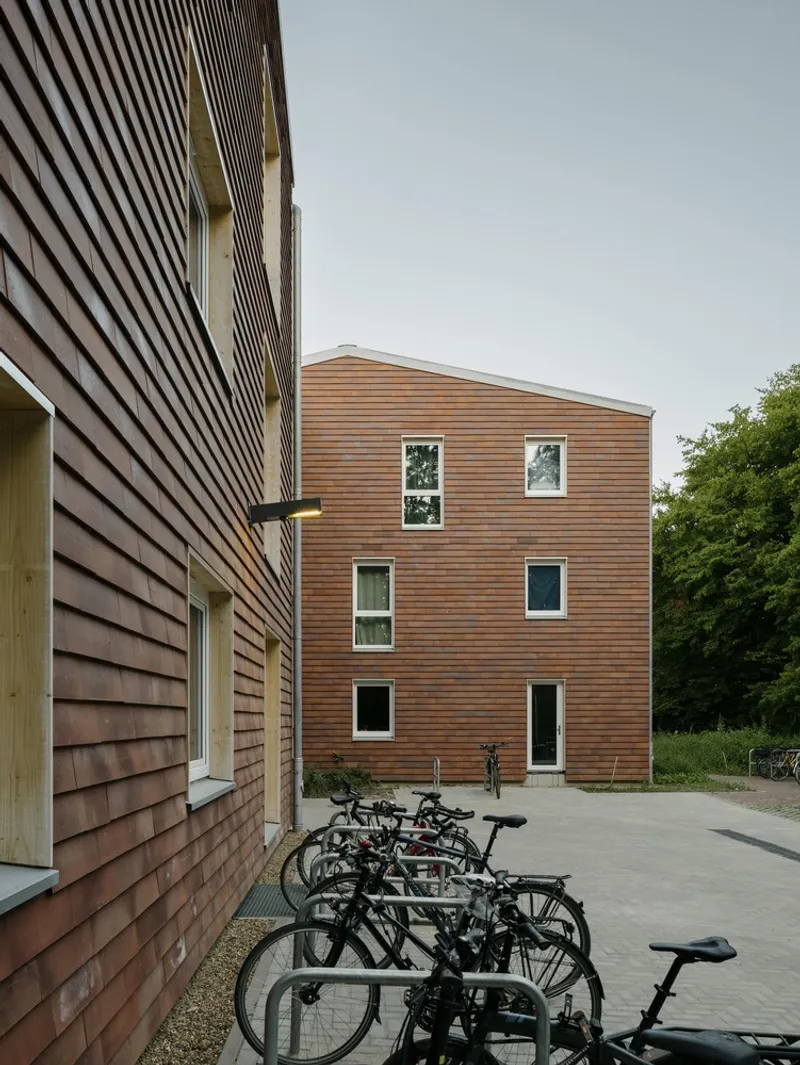
All photographs are works of Jakob Boerner




Popular Articles
Popular articles from the community


Co-Life: Senior Housing Design That Reconnects Older Adults With the City
Co-Life reimagines senior housing design through healing gardens, shared streets, workshops, and a sustainable community across generations.

Hill & Cross Opera: Sculptural Opera House Architecture Shaped by Tallinn’s Landscape and Identity
Hill & Cross Opera reimagines opera house architecture in Tallinn through its sculptural hill, civic plaza, glass wave and a luminous cross.

The Musturak Paradise: Senior Living Architecture for a Connected Future in Temara, Morocco
The Musturak Paradise reimagines senior living architecture in Temara via private homes, social spaces, culture, community, and shared care.

Conexión: Biophilic Design Reimagines High-Rise Living in Hong Kong
Conexión reimagines high-rise living in Hong Kong through biophilic design, green facades, shared spaces, daylight, water and nature within.

Similar Reads
You might also enjoy these articles


Hodi-Mandai Geram
Project Function: Preservation and revitalization of the Intangible heritage and socio-spatial identity of the Hodi by Housing, Cultural Memory Center, Sacred Grove, landscape, local tourism economy


Olio Towers: A Mid-Rise for Performers That Fuses Housing, Rehearsal, and Stage
Located blocks from Houston's Theater District, this modular tower stacks living units around a central performance atrium.

Oasis: Modular Green Housing Carved into Dhaka's Urban Fabric
A shortlisted Plugin Housing entry reclaims unauthorized settlements in Dhaka with stepped concrete volumes, green roofs, and ventilation-driven design.

Black Hole: A Floating Megastructure for the Post-Physical Era
Emiliano Mazzarotto envisions a spherical, self-scaling arena where e-sports, digital hotels, and holographic stadiums replace traditional public space.


Explore Residential Building Competitions
Discover active competitions in this discipline


Challenge to design mud housing for contemporary communities


Challenge to reimagine the Iron Throne


Photograph architecture without architects


Illustrate the lost glory of Angkor Wat - Render Challenge
Comments (0)
Please login or sign up to add comments
No comments yet. Be the first to comment!