
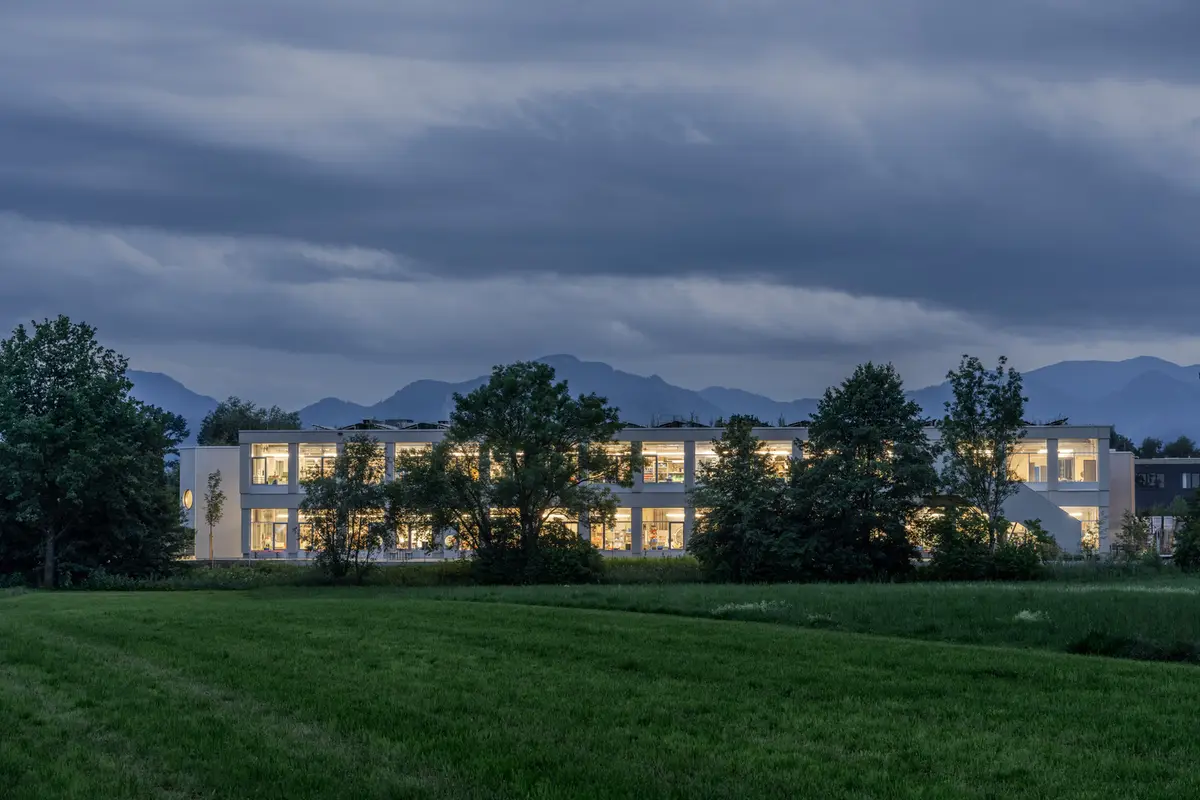
Workshop with Three Courtyards by Opposite Office + Studio Lot + Hanfstingl Architekten
The Workshop with Three Courtyards is an inclusive, sustainable facility in Rosenheim, combining daylight-filled courtyards, robust materials, and community-focused design.


The project in Rosenheim, Germany, designed by Opposite Office, Studio Lot, and Hanfstingl Architekten, spans 10,000 m² and is set for completion in 2025. Featuring work by leading manufacturers and engineering teams, it showcases refined craftsmanship, efficient project management, and contemporary architectural detailing captured by Edward Beierle.
Inclusive and Sustainable Workshop Design
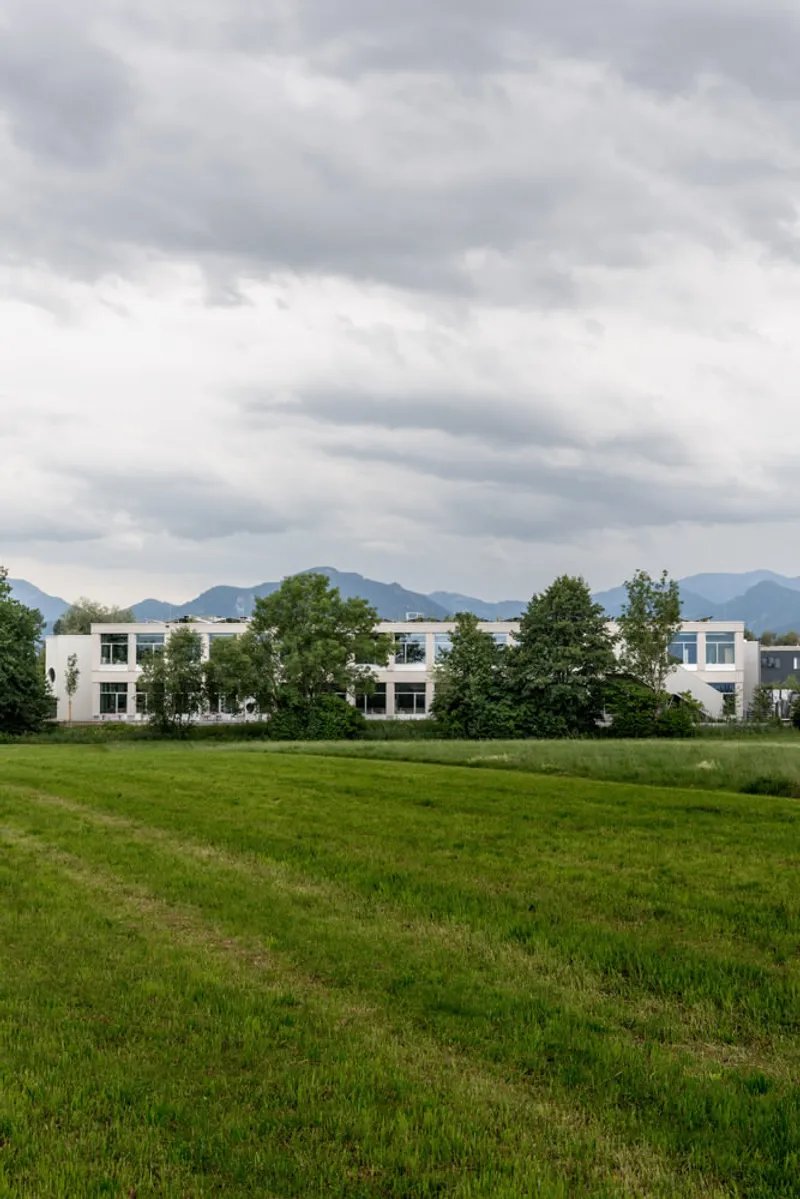
The Workshop with Three Courtyards in Rosenheim, Germany, is an exemplary model of inclusive and sustainable architecture. Spanning 10,000 m², the facility provides 120 workplaces for people with disabilities, incorporating an integrated support center while blending technical precision with social responsibility.
Designed collaboratively by Opposite Office, Studio Lot, and Hanfstingl Architekten, the workshop accommodates diverse activities such as carpentry, metalworking, and document shredding, all within a bright and welcoming environment that fosters community, participation, and engagement.
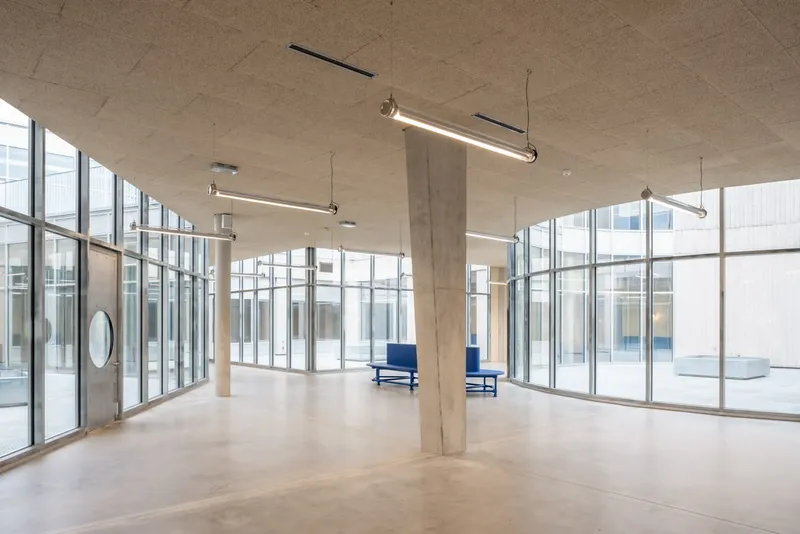
Courtyard-Centric Layout for Daylight and Community
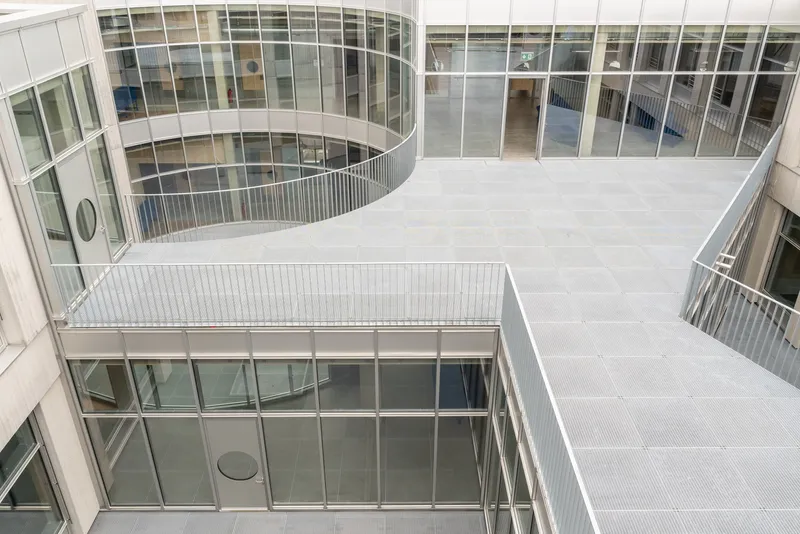
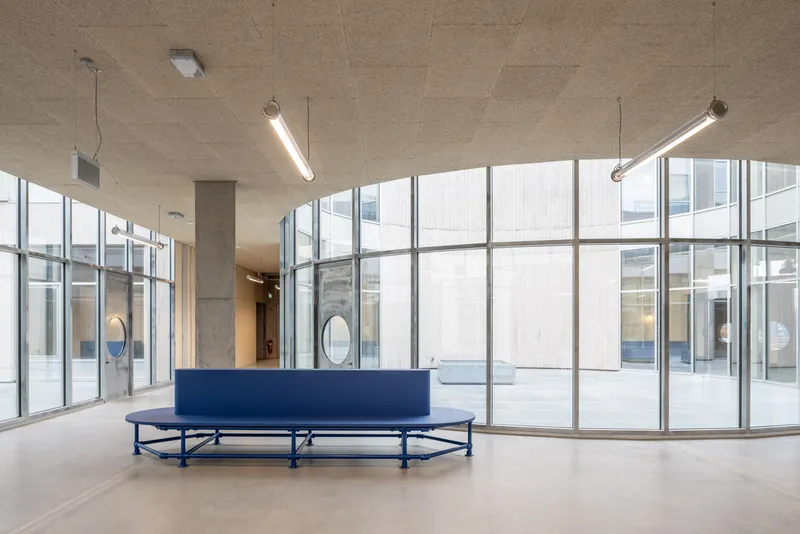
The building’s defining feature is its three courtyards, each uniquely shaped as a triangle, square, and circle. These courtyards bring natural light deep into the 50-meter floor plan, serving as orientation points while offering calm, introverted spaces amid the busy Am Oberfeld industrial zone.
This innovative courtyard-driven design not only enhances visual connectivity but also encourages social interaction, making the courtyards informal gathering points for staff and visitors alike.
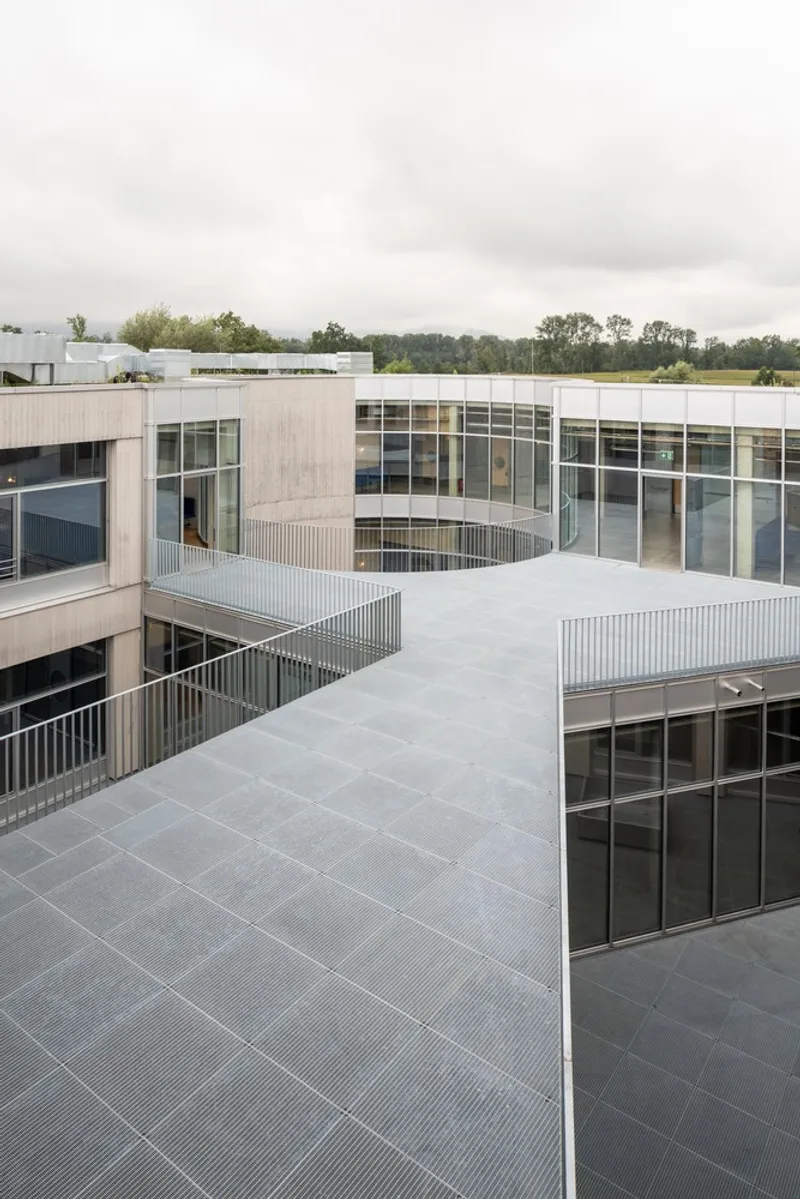
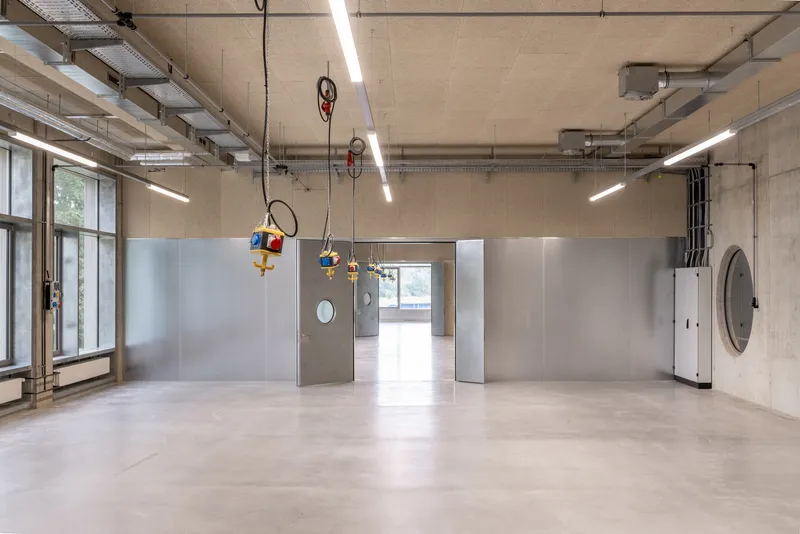
Communal Spaces and Social Interaction
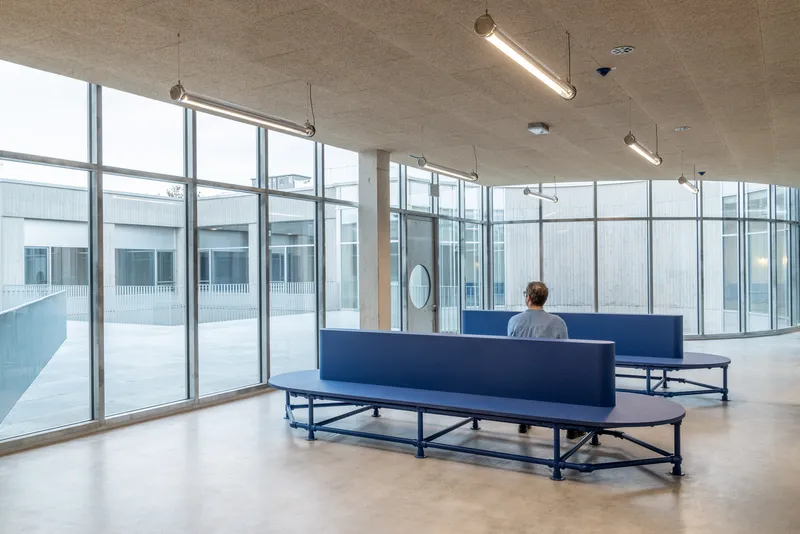
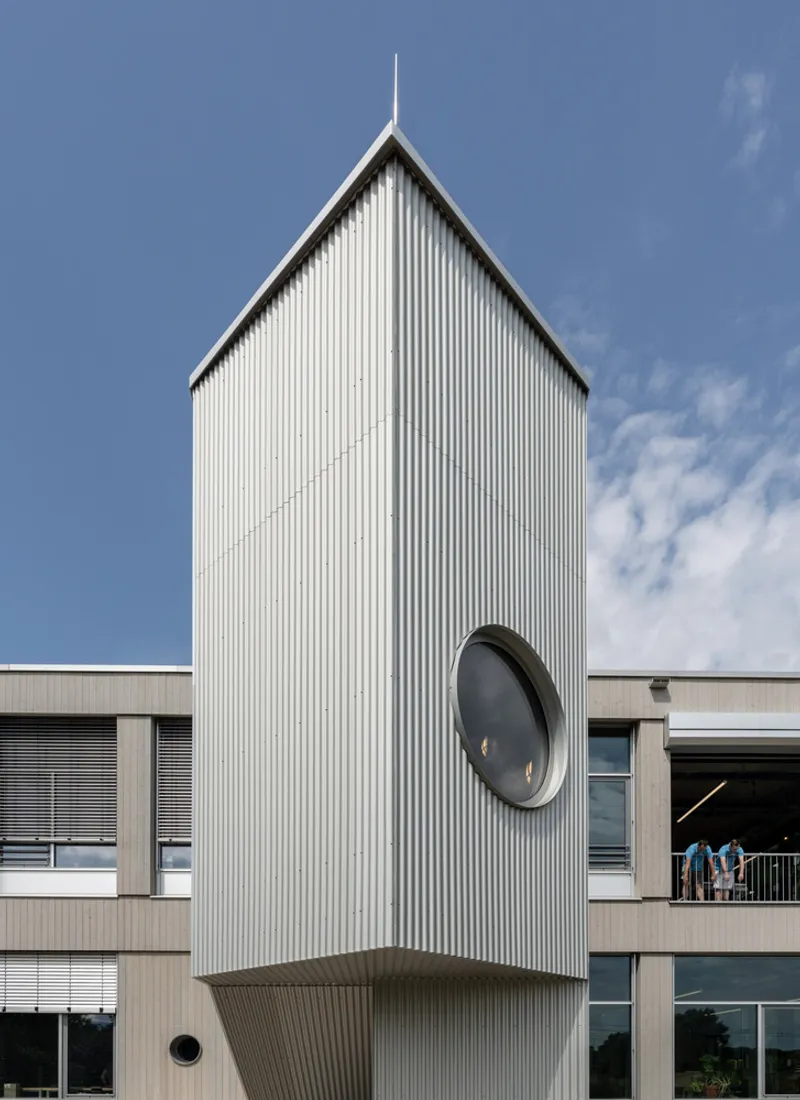
Beyond the initial program, the architects introduced additional communal areas. Using a compact circulation ring and four sculptural external staircases, they created a central common zone and roof terrace at no extra cost. These spaces have become the heart of the workshop, promoting dialogue, collaboration, and a sense of community.
Large sightlines, round windows, and portholes invite interaction across workspaces, fostering openness and inclusivity without overtly signaling accessibility features. The building’s design emphasizes transparency, connectivity, and social engagement for all users.
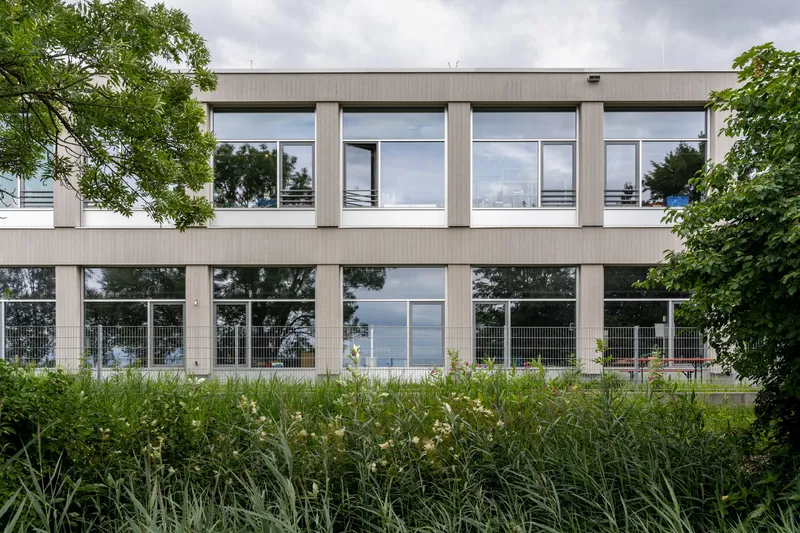
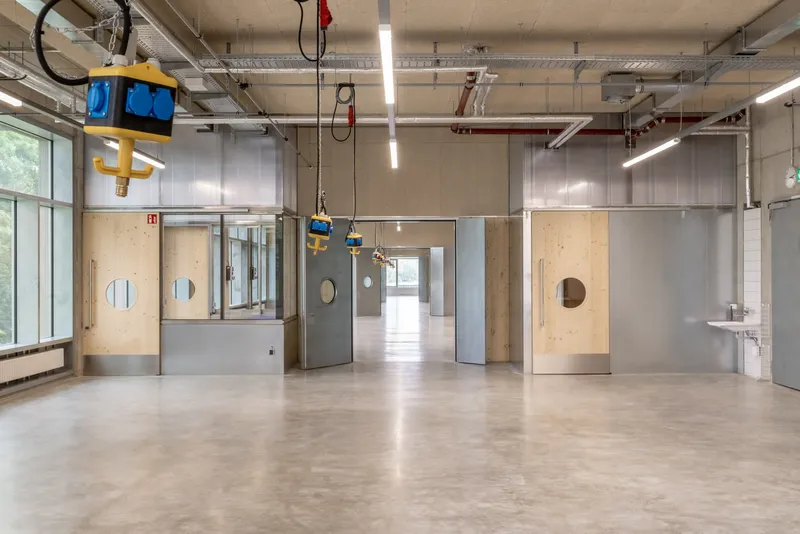
Materials, Durability, and Sustainability
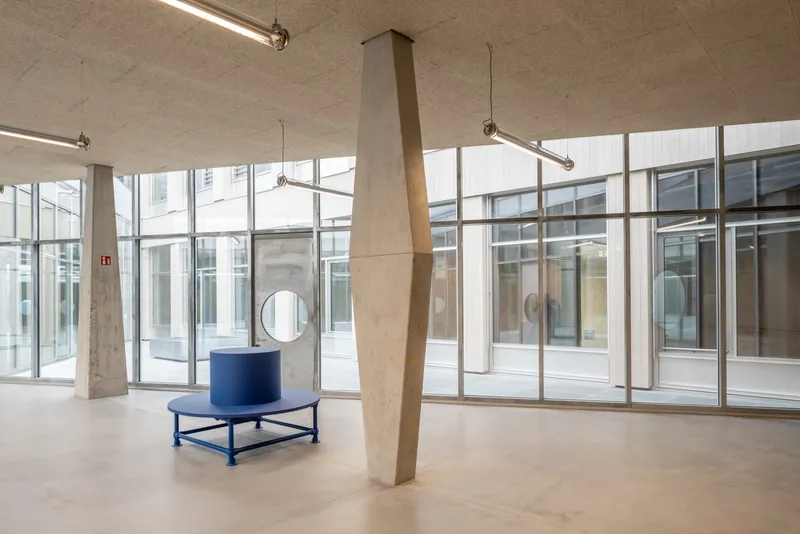
The workshop combines robust materials like steel, concrete, wood, and twin-wall sheets to ensure durability and long-lasting performance. Reinforced concrete allows for column-free interiors, accommodating pallet trucks, forklifts, and large-scale manufacturing tasks.
Sustainability is integrated into the project: the workshop is supplied with district heating from a neighboring carpentry workshop, and photovoltaic panels on the roof contribute to renewable energy generation.
From the roof terrace, visitors can view the planted courtyards with growing trees, complemented by blue seating areas that create inviting spaces to rest, reflect, and socialize.
A Workshop Beyond Work
More than a workplace, the Workshop with Three Courtyards is a space of participation, self-determination, and inclusion. Its design places the needs of people with disabilities at the center, creating a supportive, pleasant, and socially engaging environment. This project exemplifies how inclusive architecture, thoughtful planning, and sustainable design can transform industrial buildings into vibrant community hubs.
All photographs are works ofEdward Beierle


Popular Articles
Popular articles from the community


Co-Life: Senior Housing Design That Reconnects Older Adults With the City
Co-Life reimagines senior housing design through healing gardens, shared streets, workshops, and a sustainable community across generations.

Play: Fragments of Their World
Familiar architecture becomes modular playground design, creating safe spaces where displaced children can learn, connect, imagine and play.

Co-life: Sustainable Architecture for Age-Friendly Community Living
Co-life reimagines sustainable architecture for seniors through courtyards, rammed earth, shared gardens, and spaces designed for belonging.

The Musturak Paradise: Senior Living Architecture for a Connected Future in Temara, Morocco
The Musturak Paradise reimagines senior living architecture in Temara via private homes, social spaces, culture, community, and shared care.

Similar Reads
You might also enjoy these articles


Hodi-Mandai Geram
Project Function: Preservation and revitalization of the Intangible heritage and socio-spatial identity of the Hodi by Housing, Cultural Memory Center, Sacred Grove, landscape, local tourism economy


Olio Towers: A Mid-Rise for Performers That Fuses Housing, Rehearsal, and Stage
Located blocks from Houston's Theater District, this modular tower stacks living units around a central performance atrium.

Oasis: Modular Green Housing Carved into Dhaka's Urban Fabric
A shortlisted Plugin Housing entry reclaims unauthorized settlements in Dhaka with stepped concrete volumes, green roofs, and ventilation-driven design.

Black Hole: A Floating Megastructure for the Post-Physical Era
Emiliano Mazzarotto envisions a spherical, self-scaling arena where e-sports, digital hotels, and holographic stadiums replace traditional public space.

Explore Workshop Hall Competitions
Discover active competitions in this discipline

Challenge to design public laboratory

Challenge to reimagine the Iron Throne

Photograph architecture without architects

Illustrate the lost glory of Angkor Wat - Render Challenge
Comments (0)
Please login or sign up to add comments
No comments yet. Be the first to comment!