

ZhongWei Desert Diamond Hotel: A Diamond Amid the Desert Landscape
ZhongWei Desert Diamond Hotel blends diamond-inspired architecture with Ningxia’s desert, offering luxury, starlit views, immersive experiences, and harmonious human-nature connection.


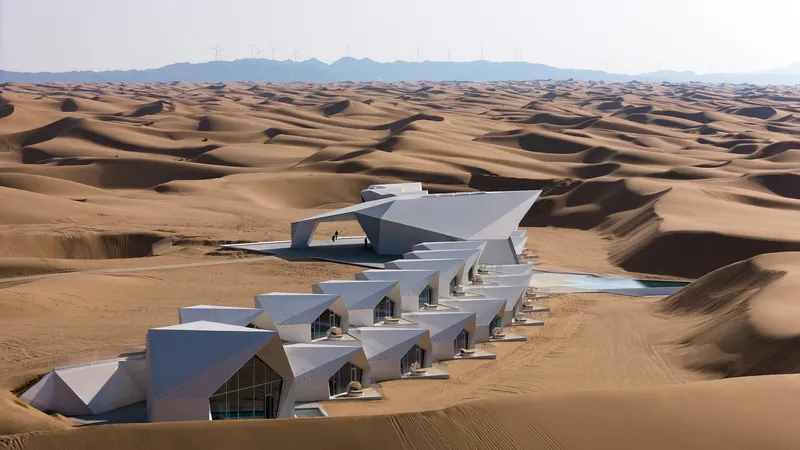
Nestled on the southeastern edge of the Tengger Desert, within a national nature reserve and an AAAAA-rated scenic area, the ZhongWei Desert Diamond Hotel is an architectural gem that bridges human experience with the vastness of nature. Shapotou, Zhongwei, offers an extraordinary blend of desert landscapes, the meandering Yellow River, high mountains, and serene oases. Visitors can traverse the Tengger Desert on camelback or ride the sand dunes in all-terrain vehicles, experiencing the poetic majesty of “a lone column of smoke rising in the desert, with the sun setting over the flowing river.”
The desert is a landscape of extremes: scorching sunlight, biting sandstorms, drastic day-night temperature shifts, and dry air. Building in such an environment is a formidable challenge. Yet, these harsh conditions became the hotel’s greatest inspiration, reflecting contrasts that merge in harmony: vast and mysterious, romantic yet cruel, desolate but passionate.
A Vision of Serenity and Strength
SHUISHI’s design philosophy aims to create a structure that embodies calm authority, allowing guests to retreat from urban life into a spiritual oasis. The hotel is envisioned as a surreal and romantic experience, fusing subtle science fiction elements with timeless elegance.
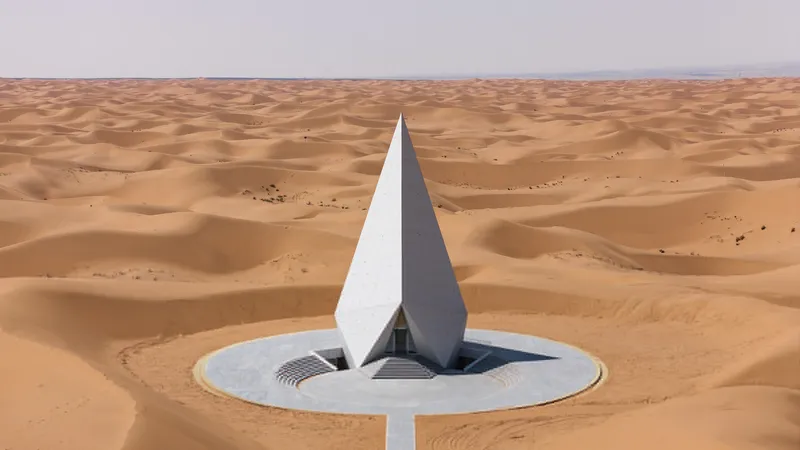
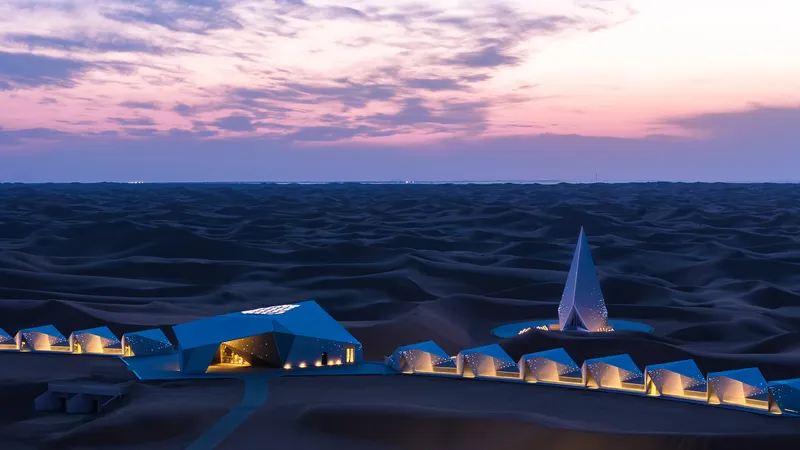
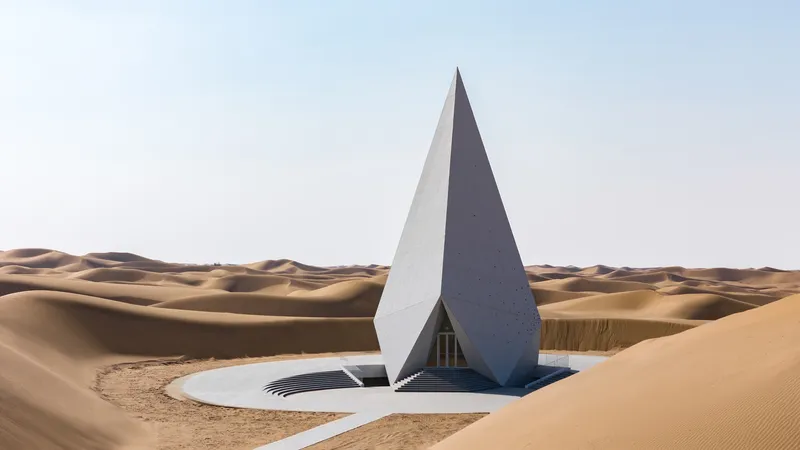
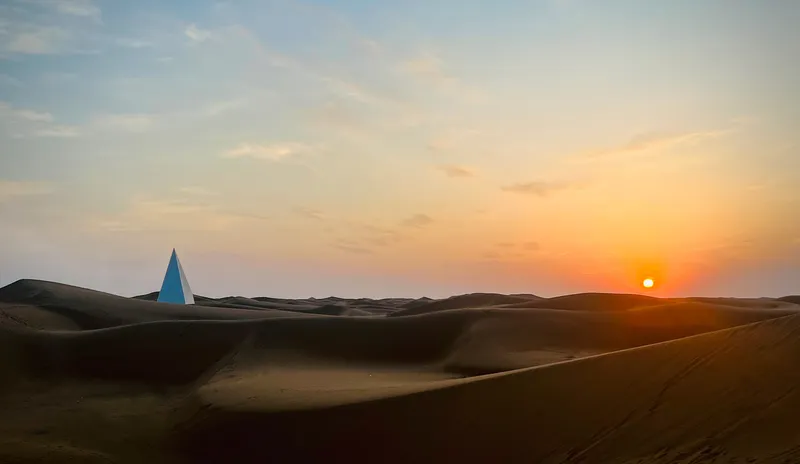
The inspiration? A diamond. Like a diamond, the hotel is designed to be pure, strong, and eternal, reflecting light and radiating brilliance across the desert. In Ningxia, the “home of stars”, the hotel’s diamond-inspired design creates a symbolic connection between the desert and the night sky, between humans and the natural world. The second phase of the project transforms the area into a luxurious desert and star-themed boutique resort, offering guests an immersive experience with high-end amenities, exclusivity, and spiritual satisfaction.
Architecture as a Medium Between Man and Nature
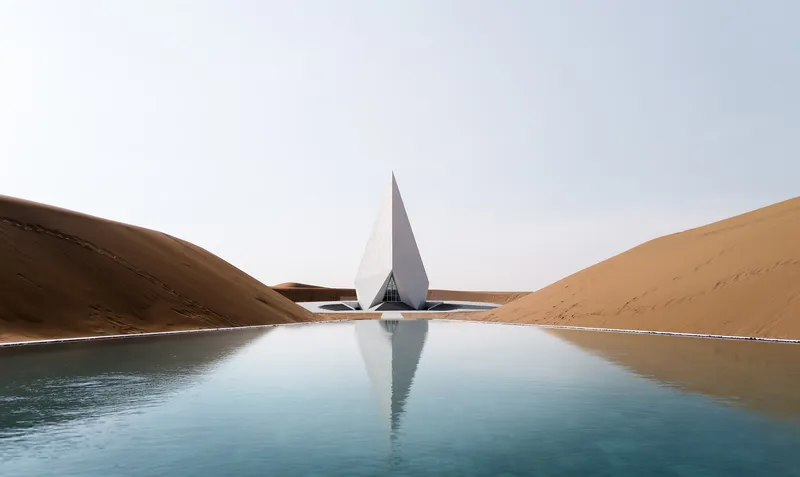
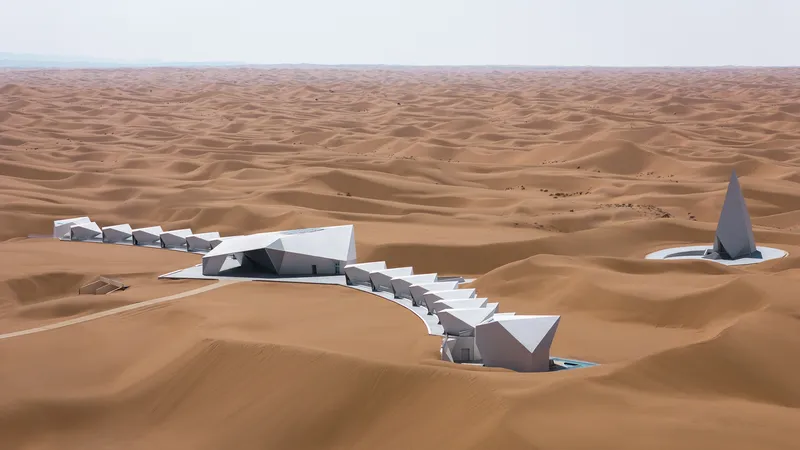
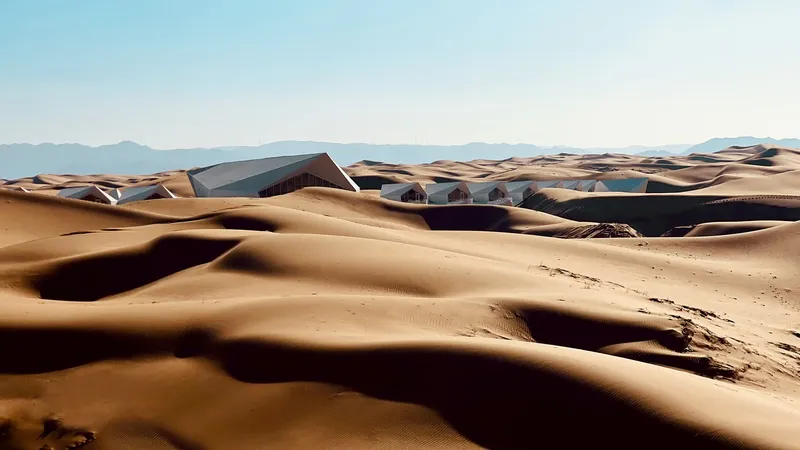
In the vast desert, architecture must respect nature, acting as a mediator between humans and their environment. Guests feel a release from the chaos of city life, reconnecting with inner energy and cosmic wonder. The hotel’s sculptural form nestles among the sand dunes, blending sharp geometric lines with soft, natural curves. Spaces lose conventional shapes, offering a sense of being embraced by nature, where light, wind, and silence become part of the experience.
The desert’s duality: cold and warm, light and dark, illusion and reality, manifests in the hotel’s design. Here, architecture amplifies nature, making invisible forces tangible.
Light as a Living Skin
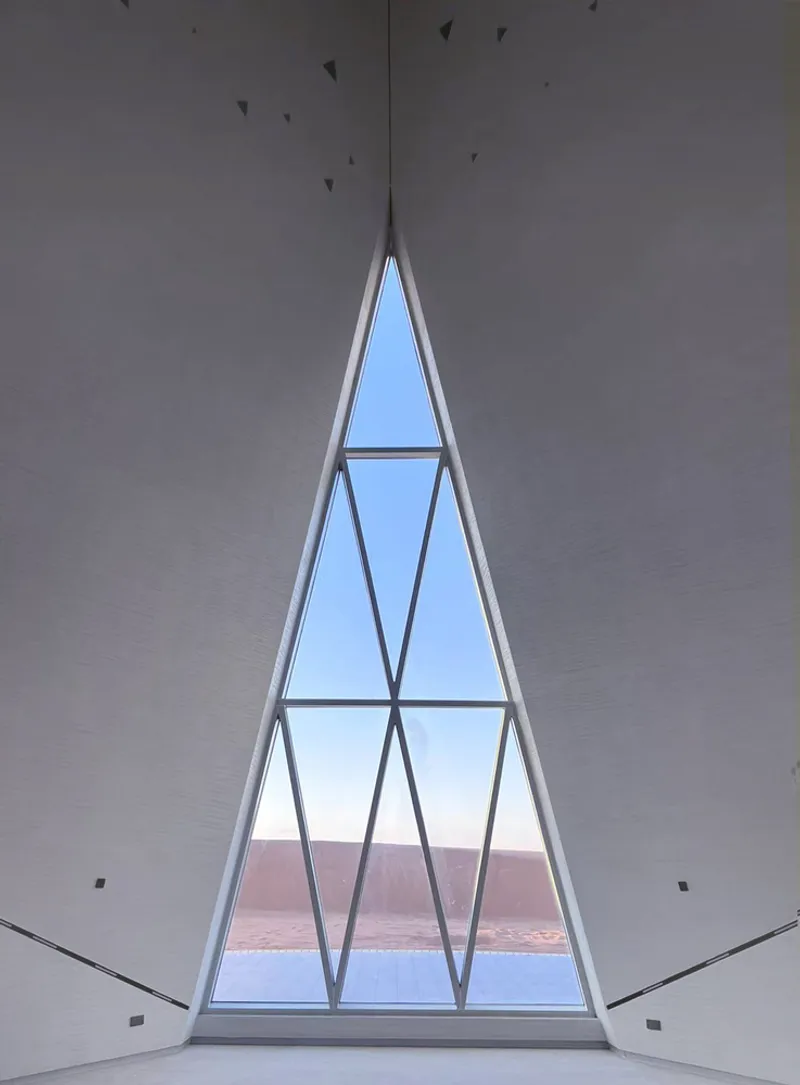
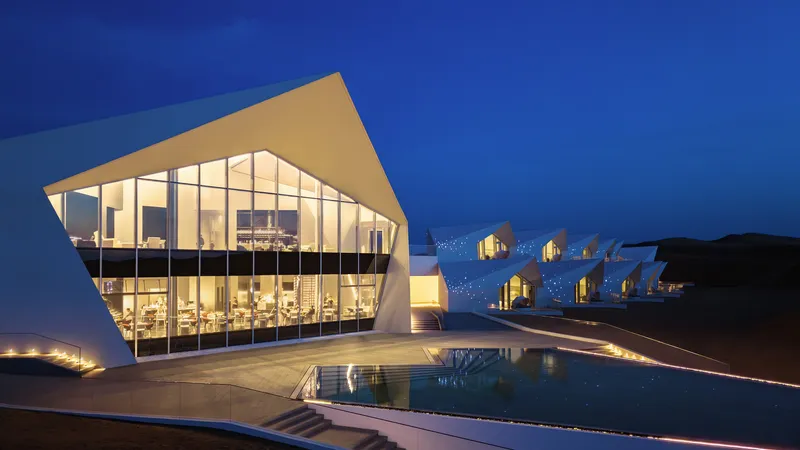
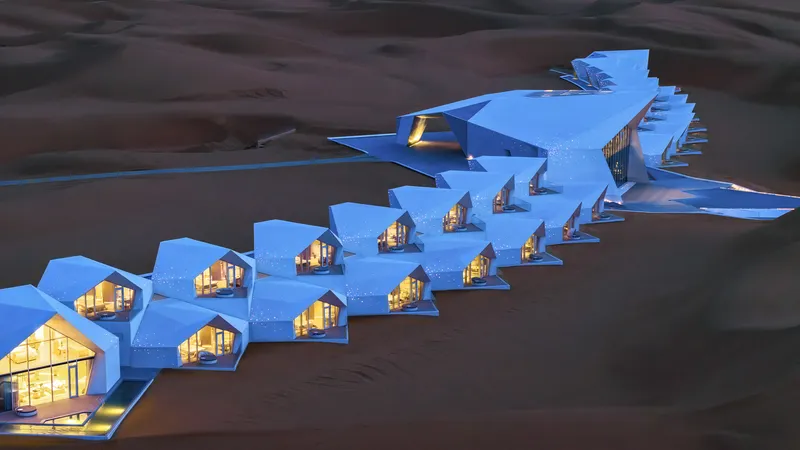
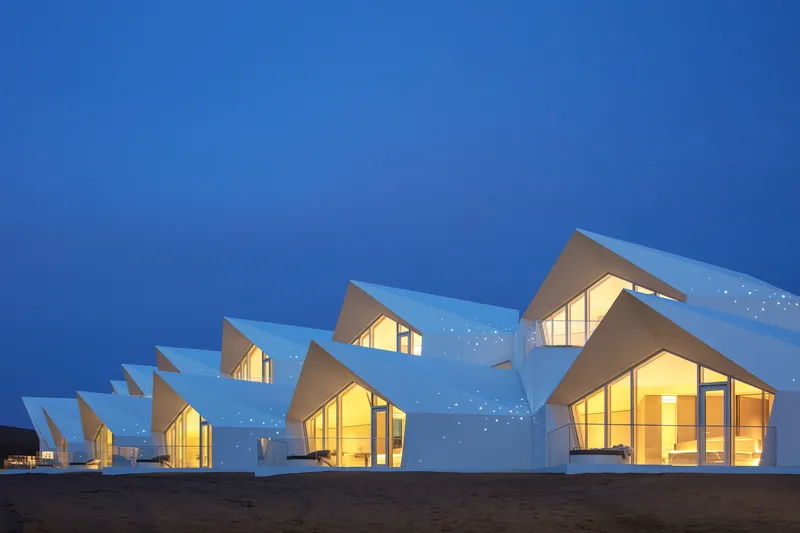
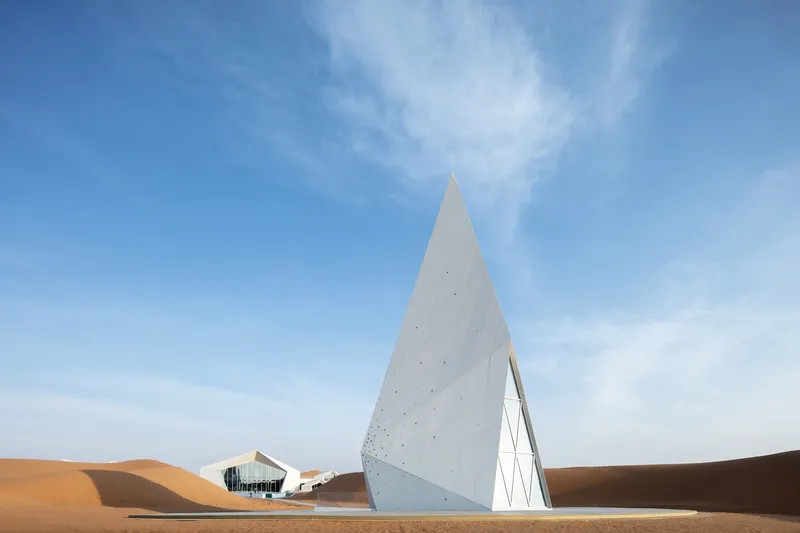
The hotel’s exterior features a grey-white coarse surface that shimmers like desert sand under the sun. Seasonal sunlight transforms the architecture into a living timepiece, marking hours through the play of light and shadow. Triangular star lights embedded in the surface mimic a kaleidoscope, creating a dynamic interplay of illumination by day and a twinkling galactic effect by night, reflecting Ningxia’s starlit skies.
Desert and Architecture in Harmony
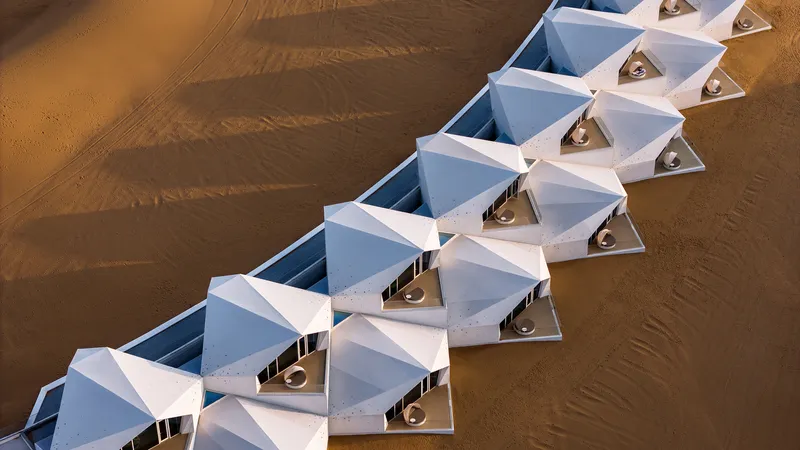
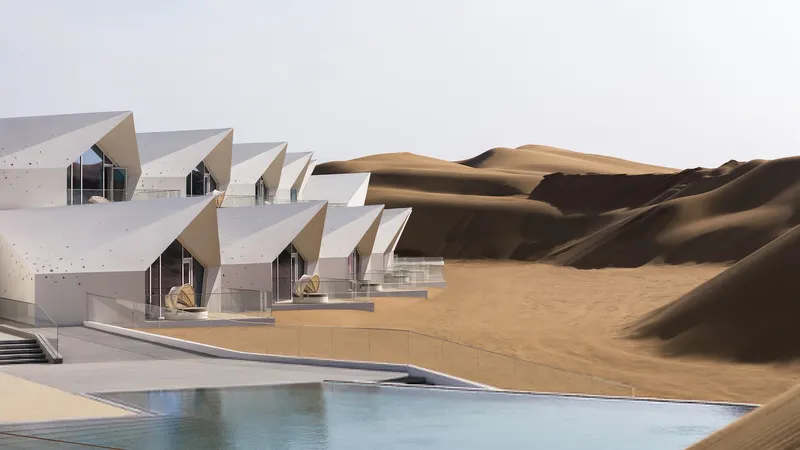
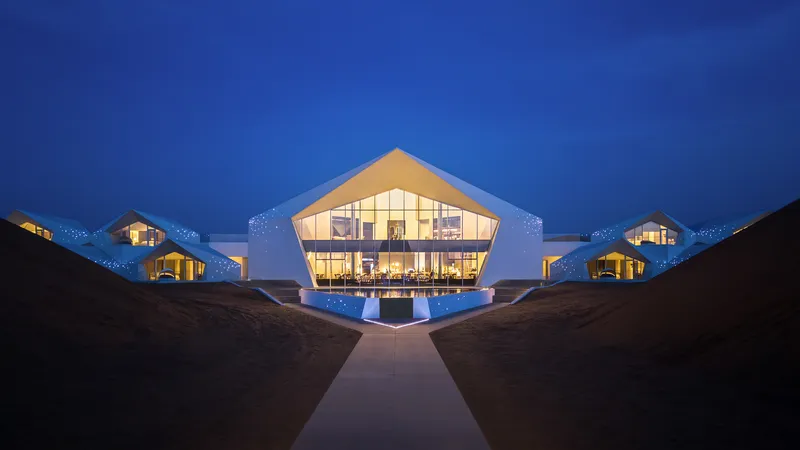
Every architectural element is designed to embrace the desert. Diamond-shaped windows frame sweeping views, and the irregular sections of interior spaces echo the rugged landscape. The hotel’s layout follows axial symmetry, with public areas centralized and guest rooms extending like wings, each with unique angles and elevations for private views.
- Level 1: Japanese restaurant, lounge bar, outdoor diamond-shaped pool, and terrace.
- Level 2: Lobby, reception, and bar, integrating public rituals and desert immersion.
The Star Hall, with a 27-meter-high star-shaped roof, serves as the ceremonial heart, welcoming natural light through towering triangular French doors. It is a space for weddings, rituals, or celestial observation, connecting guests to the universe. Surrounding plazas and auxiliary spaces support events, rituals, or private experiences.
Guestrooms: Diamonds in the Desert
The hotel features 30 guest rooms, designed as diamond-shaped sanctuaries.
- First-level suites: Semi-outdoor passages link living rooms and bedrooms, with terraces leading to immersive desert experiences.
- Second-level rooms: Fully independent diamond-shaped spaces, private terraces, bubble pools, and unobstructed desert views.
Detached luxury suites at the hotel’s wings provide wedding or private retreat options, featuring bubble pools, outdoor pools, and skylights to admire the galaxy, turning the desert into a place of romance and serenity.
Building Utopia in the Desert
Since its conception in May 2021, the ZhongWei Desert Diamond Hotel has been a labor of love and perseverance. Over 20 site visits documented the challenges of sandstorms, rain, and extreme silence. Today, the project stands as a utopia in the desert, harmonizing nature, architecture, and human experience. It’s a destination where guests feel both awe and intimacy, connecting with the cosmos and the eternal beauty of the desert.
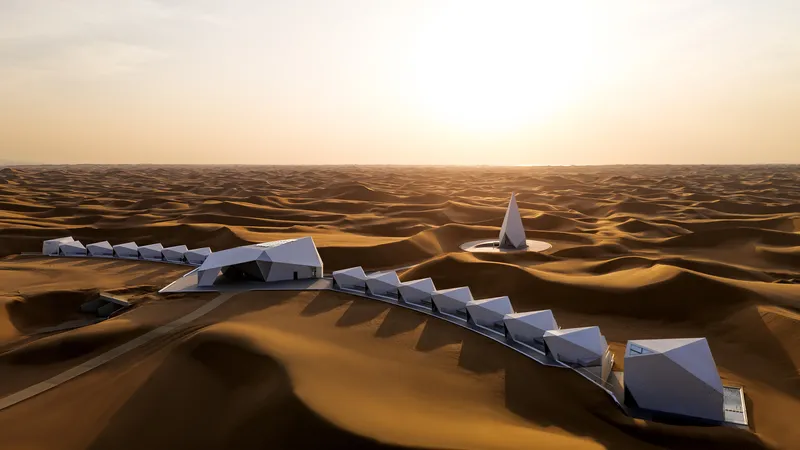
All photographs are works of Zhi Xia, Yuan Xie


Popular Articles
Popular articles from the community

Cloaked Colonization: A Mobile Underwater Habitat That Moves Like a Fish
Micah Abaya's shortlisted EHC Pacific entry reimagines ocean settlement as a dispersed network of self-sustaining architectural organisms.

Singing Woman: An Opera House That Performs Before the Curtain Rises
Ovidiu Cristian Pavel's conceptual opera house translates Estonia's choral identity into a sculpted waterfront landmark facing the Baltic Sea.

Opera on the Sea: Driftwood Logic Shapes a Timber Opera House on Estonia's Coast
Trevor Orgill's opera house translates the entangled drift of floating timber into a civic building where wood, water, and music converge.
Extended Shell: Retrofitting Kolkata's Balconies as Living Urban Thresholds
A modular retrofit system recovers the social and environmental intelligence of Kolkata's historic verandas for contemporary Park Street residents.

Similar Reads
You might also enjoy these articles


Hodi-Mandai Geram
Project Function: Preservation and revitalization of the Intangible heritage and socio-spatial identity of the Hodi by Housing, Cultural Memory Center, Sacred Grove, landscape, local tourism economy


Olio Towers: A Mid-Rise for Performers That Fuses Housing, Rehearsal, and Stage
Located blocks from Houston's Theater District, this modular tower stacks living units around a central performance atrium.

Oasis: Modular Green Housing Carved into Dhaka's Urban Fabric
A shortlisted Plugin Housing entry reclaims unauthorized settlements in Dhaka with stepped concrete volumes, green roofs, and ventilation-driven design.

Black Hole: A Floating Megastructure for the Post-Physical Era
Emiliano Mazzarotto envisions a spherical, self-scaling arena where e-sports, digital hotels, and holographic stadiums replace traditional public space.

Explore Desert Design Competitions
Discover active competitions in this discipline

Challenge to reimagine the Iron Throne

Photograph architecture without architects

Illustrate the lost glory of Angkor Wat - Render Challenge

Design challenge to reuse E-waste
Comments (0)
Please login or sign up to add comments
No comments yet. Be the first to comment!