
Zozo House by Atelier ITCH: A Minimalist Urban Retreat in Seoul
Zozo House by Atelier ITCH is a minimalist urban retreat in Seoul, blending simplicity, nature, and open-plan living for harmony.

Located in Dongdaemun-gu, South Korea, Zozo House is a masterful architectural project designed by Atelier ITCH. Completed in 2023, this 112 m² residence exemplifies the seamless blend of simplicity, functionality, and natural harmony, offering a unique living experience for a young couple and their dog, Zozo.
Crafting Fulfillment through Simplicity
The design philosophy behind Zozo House emphasizes the idea that simplicity can cultivate joy and fulfillment in everyday life. Inspired by Ludwig Mies van der Rohe's iconic principle, "less is more," the architects focused on integrating concealed details and subtle design elements that enrich daily experiences. Each aspect of the home is carefully crafted to heighten the residents' sensitivity to their surroundings, from observing changing light patterns to appreciating the interplay between materials and textures.
Minimal Intervention with Maximum Impact
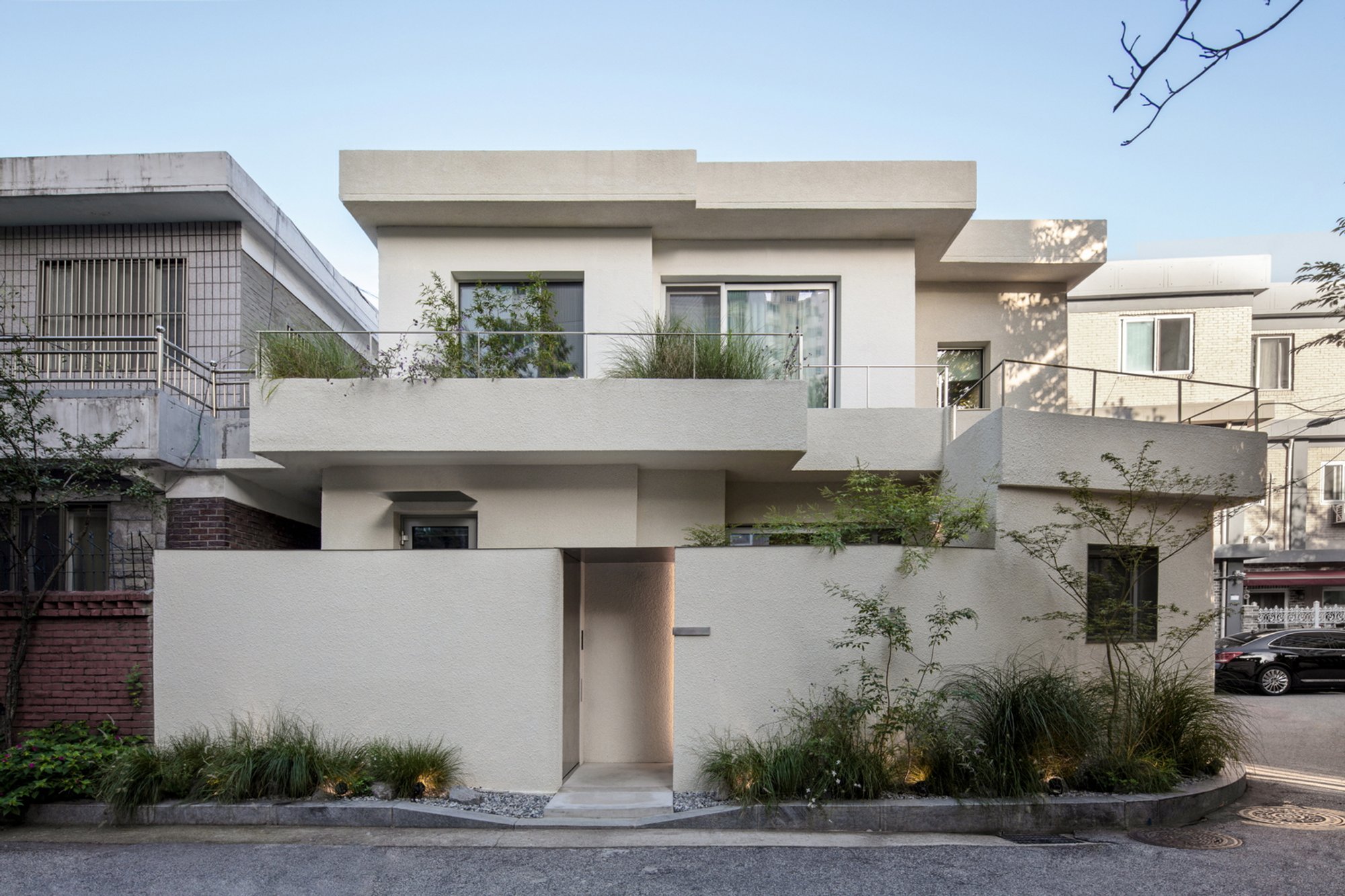
Situated at the end of a quiet residential alley, Zozo House is a renovation project that honors the original structure. The existing 20 m² ground floor and 15 m² upper floor were preserved with minimal alterations to their structure and color palette. Instead, the architects chose to enhance the surrounding environment by incorporating lush greenery and outdoor spaces.
The exterior now features multiple terraces—a road-facing terrace, a fenced-in garden terrace, and a second-floor balcony—all designed to foster a connection between the home and nature. Simple metal railings and entrance eaves underscore the minimalist aesthetic, while the recessed entrance ensures privacy.
Open Plan Living for Humans and Pets
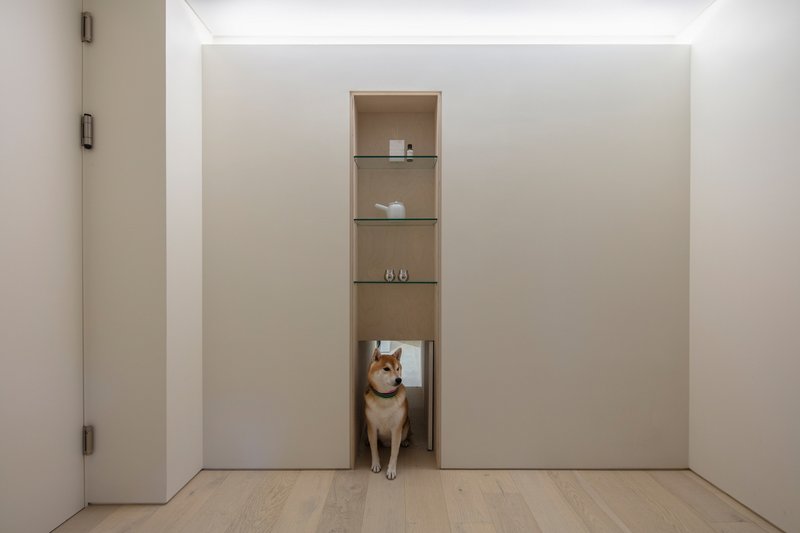
Designed for a couple in their 30s and their dog, Zozo, the interior layout prioritizes fluidity and openness. Traditional partitions are minimized, allowing Zozo to move freely throughout the home. Only essential spaces such as the guest room, bathroom, and closet are enclosed, while the rest of the house is unified through open-plan living.
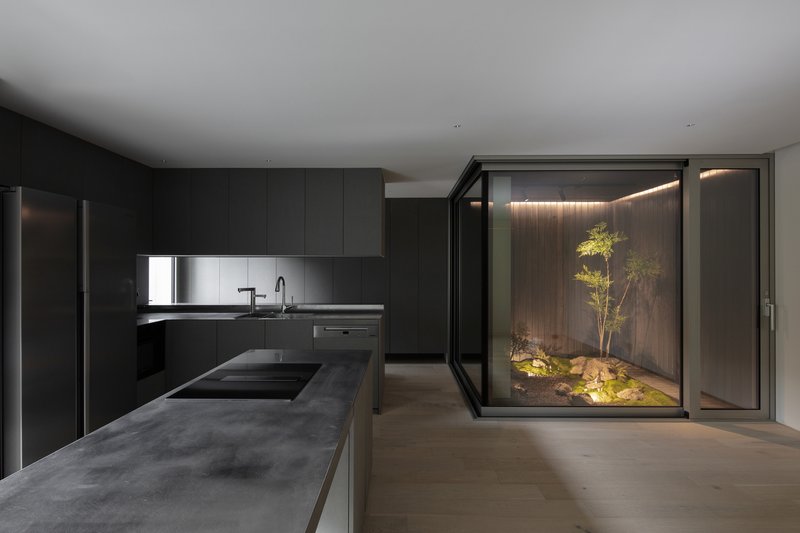
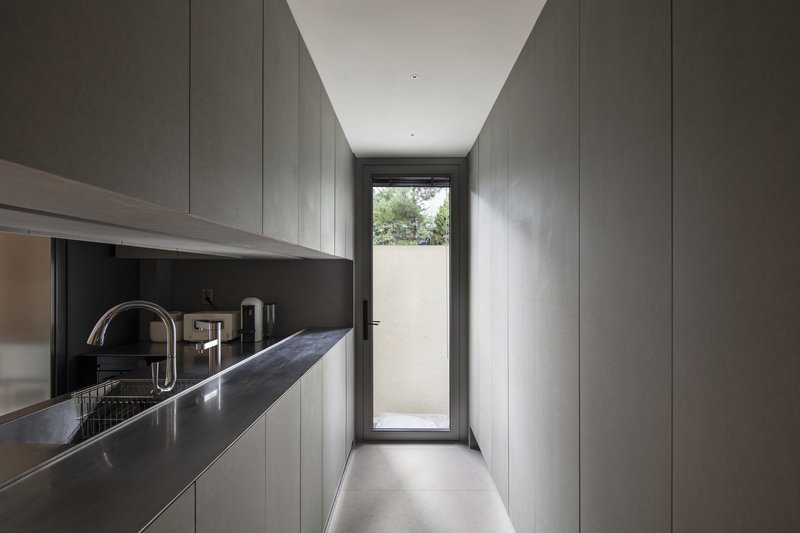
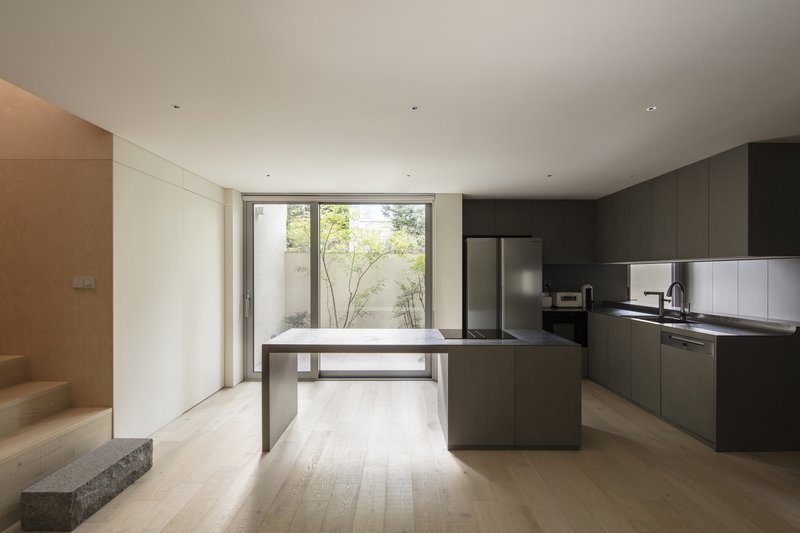
Upon entering, residents are welcomed by a long, dimly lit corridor flanked by storage units that double as a shoe rack. This corridor leads to an indoor moss garden framed by dark wooden finishes. Beyond the corridor lies the living room and kitchen, where functional elements seamlessly integrate. The kitchen sink and shoe rack, though visually connected, serve distinct purposes, reflecting the architects' attention to detail.
Indoor and Outdoor Garden Integration
The ground floor living room opens to two distinct garden spaces. A small outdoor terrace faces the street, while an indoor moss garden near the entrance surrounds the building's purification tank. Rather than relocating the tank, the architects chose to embrace it as part of the design, transforming the area into a serene green retreat.
This dual garden concept allows residents to experience varying atmospheres within their home—an outdoor terrace for sunlight and an indoor garden for tranquility. These spaces extend the living area and create a natural ambiance, emphasizing the house's connection to nature.
Seamless Vertical Flow
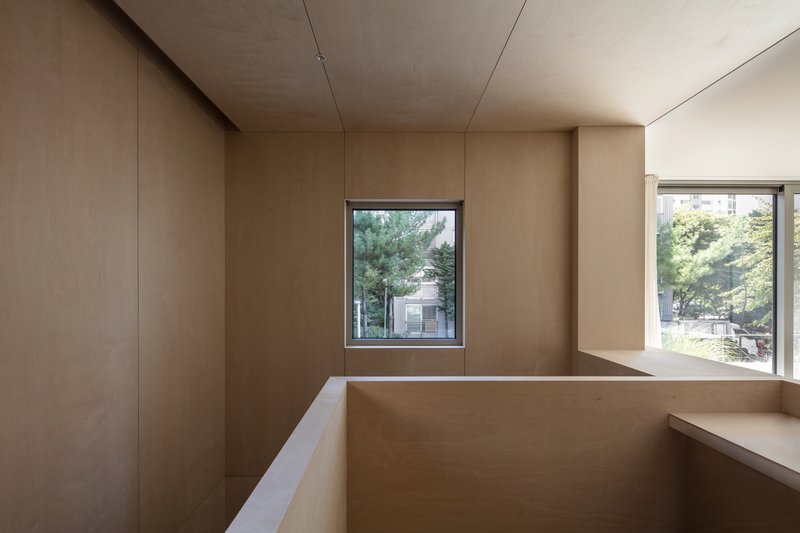
A single step marks the transition from the ground to the upper floor, with materials subtly shifting to distinguish the levels. The stairwell, clad in plywood, carries the natural warmth of wood from the walls to the ceiling. Soft light filters through windows, accentuating the textures and creating a calming ambiance.
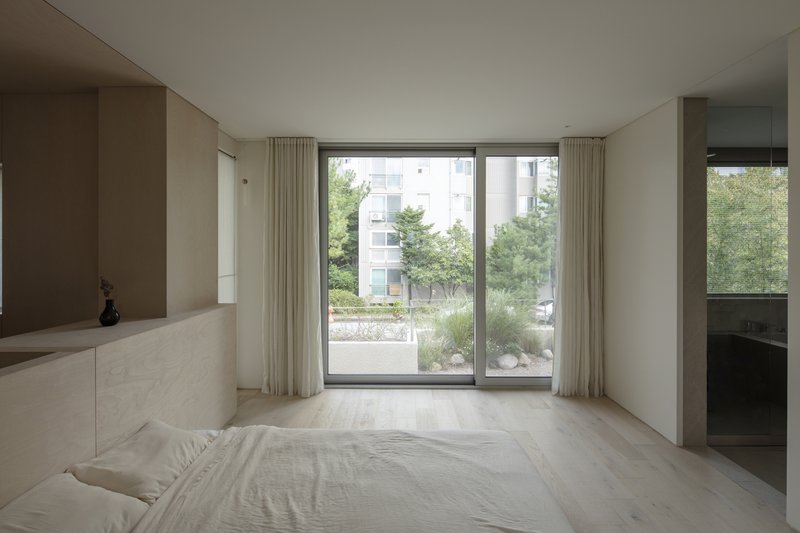
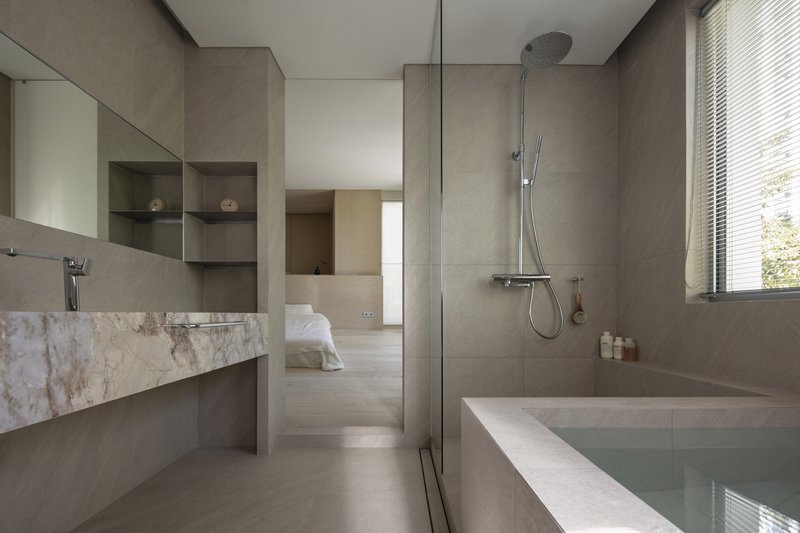
On the upper floor, a study area bridges the bedroom and stairwell, continuing the open-plan approach. The bedroom, free of rigid partitions, features a concealed door leading to the dressing room and bathroom. The bathroom is designed as a private sanctuary, complete with a large window overlooking a bamboo grove. The interplay of light and the gentle sway of bamboo shadows transforms daily rituals into moments of serenity.
The second-floor terrace further extends the indoor-outdoor living concept. It serves as a sunlit retreat for the couple and Zozo, offering a small yet vibrant garden space where they can relax together.
Simplicity as a Path to Abundance
Zozo House exemplifies how thoughtful architecture can enhance the quality of life through simplicity. Atelier ITCH's approach demonstrates that reducing excess and focusing on detail fosters an environment where residents can fully engage with their surroundings. The interplay between indoor and outdoor elements, functional design, and natural materials transforms this compact urban home into a tranquil sanctuary.
Architects: Atelier ITCHLead Architects: Jinwook Jung, Yourim LeePhotography: Kiwoong HongLocation: Dongdaemun-gu, Seoul, South KoreaYear: 2023Area: 112 m²
All photographs are work of Kiwoong Hong



Popular Articles
Popular articles from the community

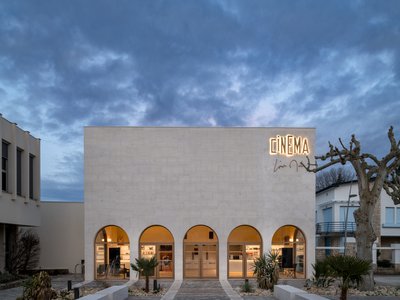
Louis Malle Cinema: A Limestone Cultural Landmark Revitalizing Community Life in Prayssac
Limestone cinema extension with public forecourt, blending heritage and modern design to create flexible cultural spaces and strengthen community interaction.
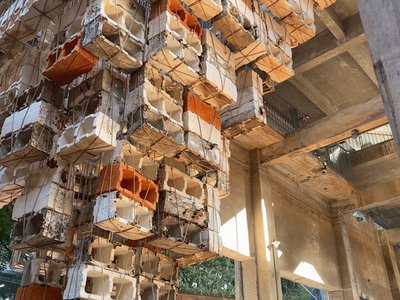
Inverted Architecture Installation by Studio Link-Arc: Exploring the Intersection of Architecture and Living Organisms
Inverted Architecture Installation by Studio Link-Arc blends mycelium, sustainability, inverted design, ecological cycles, and urban adaptive architecture in Shenzhen.
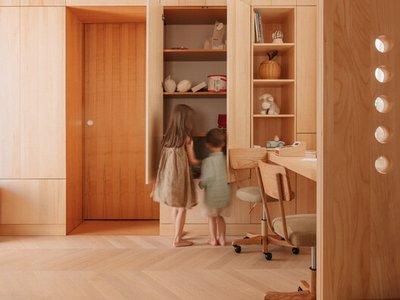
Treehouse Apartment: A Warm Timber Interior Blending Craft, Play, and Contemporary Living
Warm timber apartment with integrated treehouse, combining natural materials, craftsmanship, and playful design to create a flexible, family-oriented living environment.

Solar Steam: A Climate-Responsive Architecture That Redefines the Monument
A climate-responsive memorial architecture that transforms heat, decay, and time into a living system reflecting humanity’s ecological impact.


Similar Reads
You might also enjoy these articles


The Ken Roberts Memorial Delineation Competition (Krob)
As the most senior architectural drawing competition currently in operation anywhere in the world, it draws hundreds of entries each year, awarding the very best submissions in a series of medium-based categories.


Waterfront Redevelopment and Urban Revitalization in Mumbai: Forging a New Dawn for Darukhana
A transformative waterfront redevelopment project reimagining Darukhana’s shipbreaking heritage into an inclusive urban future.

OUT-OF-MAP: A Call for Postcards on Feminist Narratives of Public Space
Rhizoma Design and Research Lab invites artists, designers, architects, researchers, and students to reflect on how feminist perspectives can reshape public space. Selected works will be exhibited in Barcelona, October 2026. Submissions open until 15 April 2026.


Documentation Work on Buddhist Wooden Temple
Architectural syncretism and cultural hybridity: A comparative study of the Buddhist temples in Chattogram Hill tracks


Explore Architecture Competitions
Discover active competitions in this discipline




The International Standard for Design Portfolios


The Global Benchmark for Architecture Dissertation Awards


The Global Benchmark for Graduation Excellence


Challenge to reimagine the Iron Throne
Comments (0)
Please login or sign up to add comments
No comments yet. Be the first to comment!