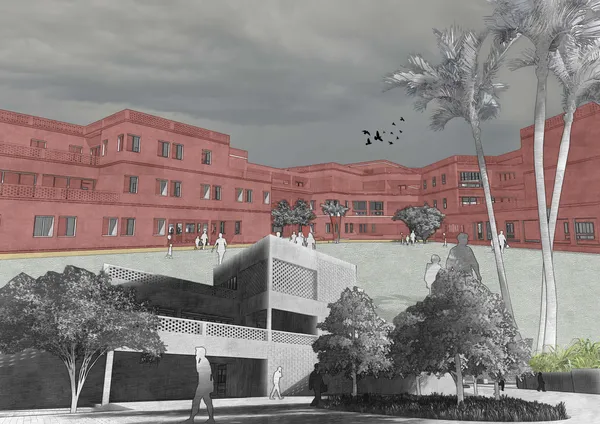
119Integrating Healing For Cancer PatientsA healing center in Rampal consisting of 100-bed hospital, rehab and research center. Including accessible therapy garden, job training, family area, etc. Sustainable using of rainwater collection to mitigate the fresh water crisis. It is a place where care meets the community & dignity.
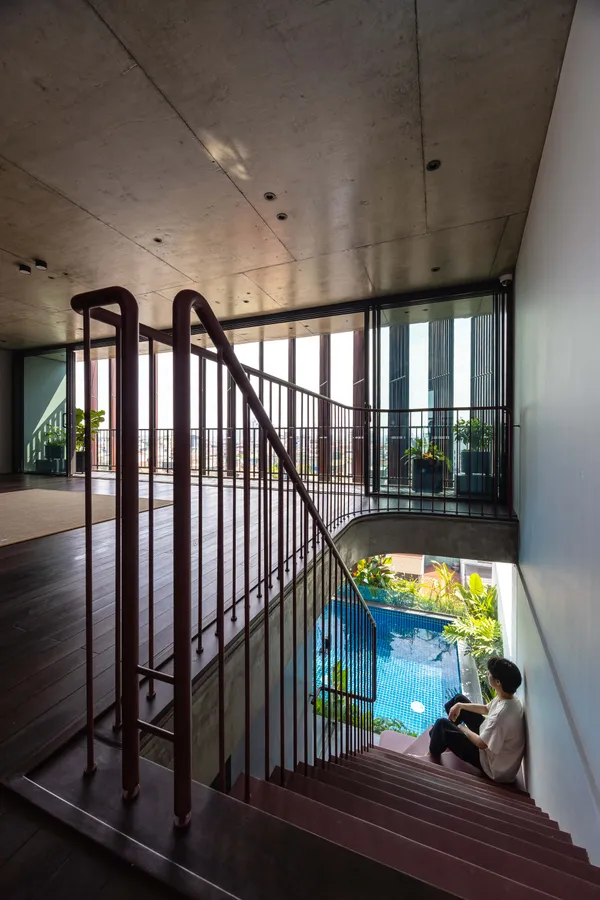
14HN08 HouseHN08 House is a multi-generational residence in Hanoi that reinterprets traditional Vietnamese living within a contemporary urban context. Designed by TNT Architecture, the house responds to the city’s dense environment and the client’s aspiration for a closer connection with nature.
1128Reinforcing The Identity of ChhattisgarhArchitecture is not just about buildings; it is also about people, memories, and the identity of a place. This project focuses on Chhattisgarh, a state formed in 2000, which today faces a challenge of identity.
4757RETREAT IN NATURE: WELLNESS AND RECREATIONAL PARKRetreat in Nature: Wellness Center & Healing Park” in Baishtila, Sylhet reimagines mental, physical & community wellness through culturally rooted, eco-integrated design. On 65 acres of rich topography & heritage, it offers dual zones: immersive retreat experiences and community-based preventive, educational care.
120Intersection of performing arts in sensory designThis thesis proposes a sensory-driven design for the Sewri Performing Arts Centre, integrating light, texture, sound, movement, comfort, and site response. Moving beyond function and aesthetics, it explores how architecture can shape memory, mood, and interaction, creating spaces that are iconic, human, and experientially rich.
443Tale of a Legend; Memorial for Sher-E-Bangla Sher-e-Bangla Abul Kasem Fazlul Huq was a great Bengali leader who fought for the civil rights of the people of East Bengal during the British and Pakistan eras. He is known as the tiger of Indian sub-continental politics. This memorial dedicated to him stands at Chakhar, Barisal, Bangladesh.
5232Level MinusLevel Minus reimagines an abandoned quarry in Pune as a boutique hotel, embracing the site's void as a generator of form and experience. Embedded within the rock, the design balances carved and constructed spaces, creating a quiet dialogue with the land and lake. Architecture here adapts to terrain, revealing beauty through absence, not imposition.
932Unveiling Biodiversity: A Natural History Museum The Natural History Museum Complex in Teknaf, Cox’s Bazar, Bangladesh, serves as an innovative and comprehensive hub for the exploration and preservation of the region's rich biodiversity. Situated in a biodiversity hotspot, this complex integrates marine, inland water, and terrestrial ecosystems, creating a dynamic journey through various galleries.
4433GAME-UTOPIA:IT INSTITUTE IN PHY-GITAL WORLDGame-Utopia explores 21st-century architecture through AI, algorithmic design, and immersive technologies. An IT Institute in Dhaka and its digital twin in the metaverse test procedural geometry, behavioral heatmaps, and interactive spaces, reimagining learning, social interaction, and architectural experience in both physical and virtual worlds.
1012People's Choice AwardThe Land for All Land for All is an educational and community center in São Paulo that affirms the right to land as a basic human right. Its design follows the logic of bamboo weaving, while the graphic language is inspired by Brazilian cordel literature.
9990A Journey Beneath the SurfaceSonadia Island is a small (spans approximately 9 sqkms) picturesque island located off the coast of Cox's Bazar in Bangladesh. Sonadia serves as a critical habitat for several endangered species, including migratory birds and marine turtles making it a significant ecological site in the region. Despite its ecological significance, the island remains largely
536Bio integrated conservation and research centreBio-Integrated Research and Conservation Centre, NEOM, redefines sustainability in arid climates by fusing marine and desert research with conservation, education, and tourism. The design employs climate-responsive strategies, biomimicry, and futuristic systems to create a resilient hub for ecology, innovation, and cultural exchange.
2036Eco-Homes: Enhancing the Urban Poor of Sattola Eco-Homes redefines housing for Dhaka’s urban poor proposing modular, affordable homes built from recycled concrete and salvaged materials, 22% cheaper than conventional. With an Anti-Eviction Grid that prevents displacement, plus courtyards, rooftop farms, and community-led design, it’s a sustainable, dignified model ready to be replicated worldwide.
134Green in the RustThe Kahrizak Sugar Factory, as an abandoned industrial heritage site, has significant potential for redevelopment. One of the strategies for reusing such spaces is adaptive reuse with an agritourism approach, which simultaneously contributes to the preservation of industrial and agricultural heritage and promotes the region’s socio-economic development.
3188REVIVAL OF TERRACOTTA:unveilling PAAL's heritageRevitalizing Murarikati's PAAL terracotta artisan community through a modern production unit, incorporating sales, exhibition and visitor opportunities. Fostering cultural preservation, women's empowerment, resilient housing, skill-based training, and community facilities, incorporating green practices, and ensuring ecological restoration.
250NESTLED ABODE: Fostering Human-Bird ConnectionEnvironmental challenges we face now are peaking at the vulnerable state, yet we often ignore the subtle changes. Among the most vulnerable are birds. Thesis focuses on ways to support and enhance the work of ornithologists. By integrating research facilities, education spaces, and public awareness programs, the centre will serve as a hub for conservation.
031Raindrop PreludeWater travels and condenses with fluctuations, Till it reaches its highest density to fall down. To be nothing again.
225Home On A LeafThe senior center project in Kielnarowa combines residential, recreational, educational, and cultural functions, promoting an active and sustainable lifestyle. The complex consists of several buildings integrated into the landscape, surrounded by therapeutic gardens, fostering intergenerational integration and connection with nature.
146181Exploring the Deep: An Oceanarium ComplexThe Oceanarium Complex on Sonadia Island spans 720 acres, showcasing marine biodiversity through multi-zone aquariums, research labs, and eco-friendly amenities. Designed to conserve endangered species, promote education, and support local communities, it fosters sustainable tourism while positioning Bangladesh as a leading eco-tourism destination.
365Encounters with the City:Transit Beyond EfficiencyThis thesis critiques BKC as an inhuman corporate enclave privileging cars over people. It proposes a masterplan with three buildings that weave everyday city programs into BKC, reclaiming ground for pedestrians, adding amenities, and reintroducing human scale to create an inclusive civic district.
233Connecting the DotsThis project envisions a multipurpose urban student center as a unifying hub for Dhaka University’s fragmented campus, with a focus on the historically significant TSC area. Set within a dynamic urban context, the design weaves together public spaces, educational facilities, and cultural programs into an inclusive framework that fosters interaction.
3152Best in RegionInvisible Woundsocio-therapeutic center that integrates psychological healing with community life where architecture transforms therapy into a shared social experience, turning stigma into awareness and recovery into resilience.
23302Atghar-Kuriana Floating Guava Market developmentMasterplan Development Of Atghar-Kuriana Floating Guava Markets: An Approach To Enhance Tourism In Pirojpur, Barisal focuses on preserving the unique cultural identity of the floating guava trade while promoting sustainable tourism. The project aims to empower local farmers, improve infrastructure, and create rural placemaking opportunities.
012Adaptation of post-war civilian shelters The project explores the adaptive reuse of post-war shelters as infrastructure for public safety and urban space. It reviews global models, highlights gaps in Poland’s system, and proposes a concept for the adaptation of civilian shelters that combines social use in peacetime with full protective capacity in emergencies.