
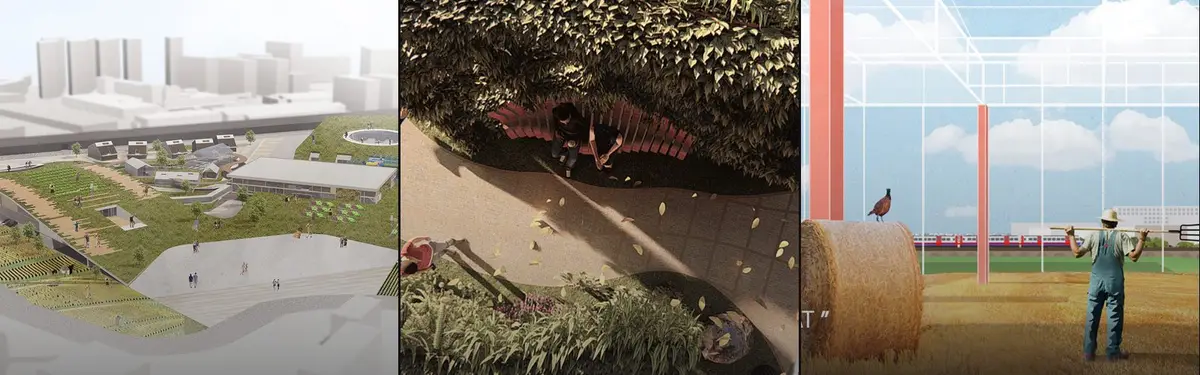


Food Forest
Design and planning of productive landscapes that integrate food cultivation with ecological and social systems.
Food forests represent a design approach that combines agriculture, landscape architecture, and ecology to create multifunctional spaces. These systems prioritize food production alongside environmental benefits, community access, and spatial experience.
The community explores food forests through farmscape design, urban agriculture installations, and institutional models for food security. Projects range from timber pavilions and green facades integrated into forest edges to terraced houses and living canopies that blur boundaries between built environment and productive landscape.


Popular projects
View all 56 projects


Latest journals
View all 58 journals
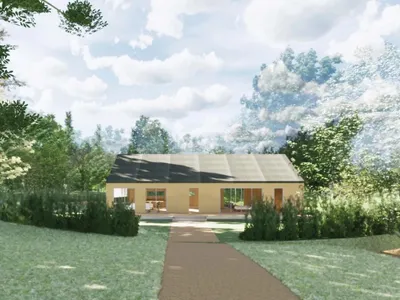
Path Linked Forest: A Fairy Tale Becomes a Landscape of Choice and Discovery
Suily and Jieun Park reinterpret Little Red Riding Hood's journey as a network of paths where the forest itself tells the story.

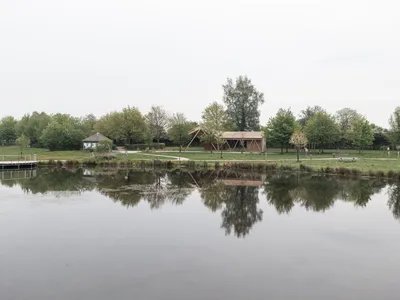
Atelier MA Builds a Twisting Timber Pavilion at the Edge of a French Forest Pond
Split chestnut shingles and triangulated larch frames welcome visitors to the Mormal forest in northern France's Avesnois region.
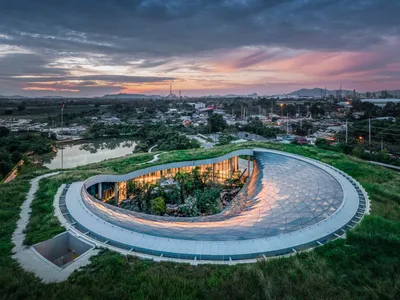
Architects 49 Wraps an LNG Terminal Office in a Living Forest Canopy in Map Ta Phut
A 13,500-square-meter circular office harnesses cold energy from liquified natural gas to grow a cloud forest in industrial Thailand.

Rodrigo Nuñez Arquitectos Terraces a 900 m² Brick House into a Forest Edge in León
A single clay brick and timber define a dwelling that mediates between suburbia and a protected pine forest on a steep Spanish slope.


