


Healing Architecture
Architecture designed to support physical, mental and communal recovery, including hospices, rehabilitation centres and spaces for post-conflict healing.
Healing architecture is the design of buildings and landscapes intended to support recovery from illness, injury, grief and trauma. It draws on research in environmental psychology, evidence-based health design and the cultural meanings that people attach to shelter, light, water and routine.
Members here explore projects ranging from palliative care villages and paediatric health centres to rehabilitation facilities and memorial spaces in post-war cities. The work tends to ask how spatial sequence, daylight, material choice and shared rooms can ease the experience of care and loss.


Popular projects
View all 19 projects


Latest journals
View all 17 journals

The Creative Horizon of Life: A Palliative Care Village Built from the Archetype of Home
Adrianna Tkaczyk breaks a palliative care centre into gabled houses along a waterfront, letting meadows, courtyards and light carry the work of care.


Na.M.A.S.T.E. Bhavan: Healing Architecture That Purifies Both Water and Mind
A gesture-driven structure on the Varanasi ghats merges river purification infrastructure with sensory therapy and cultural space.
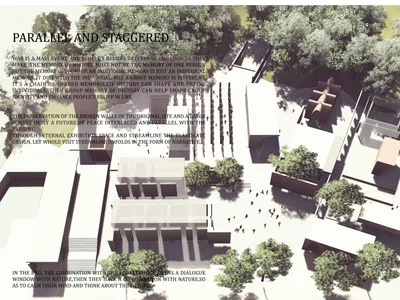
Parallel and Staggered: Rebuilding Aleppo Through Spatial Choreographies of Grief and Hope
A post-conflict memorial landscape in Aleppo guides visitors through five emotional atmospheres, from underground grief corridors to sunlit public plazas.

Recollection of Echoes: Architecture as a Vehicle for Post-War Collective Healing
A layered urban proposal transforms ruins, water, and shared living into spatial instruments of remembrance, coexistence, and renewal.


