
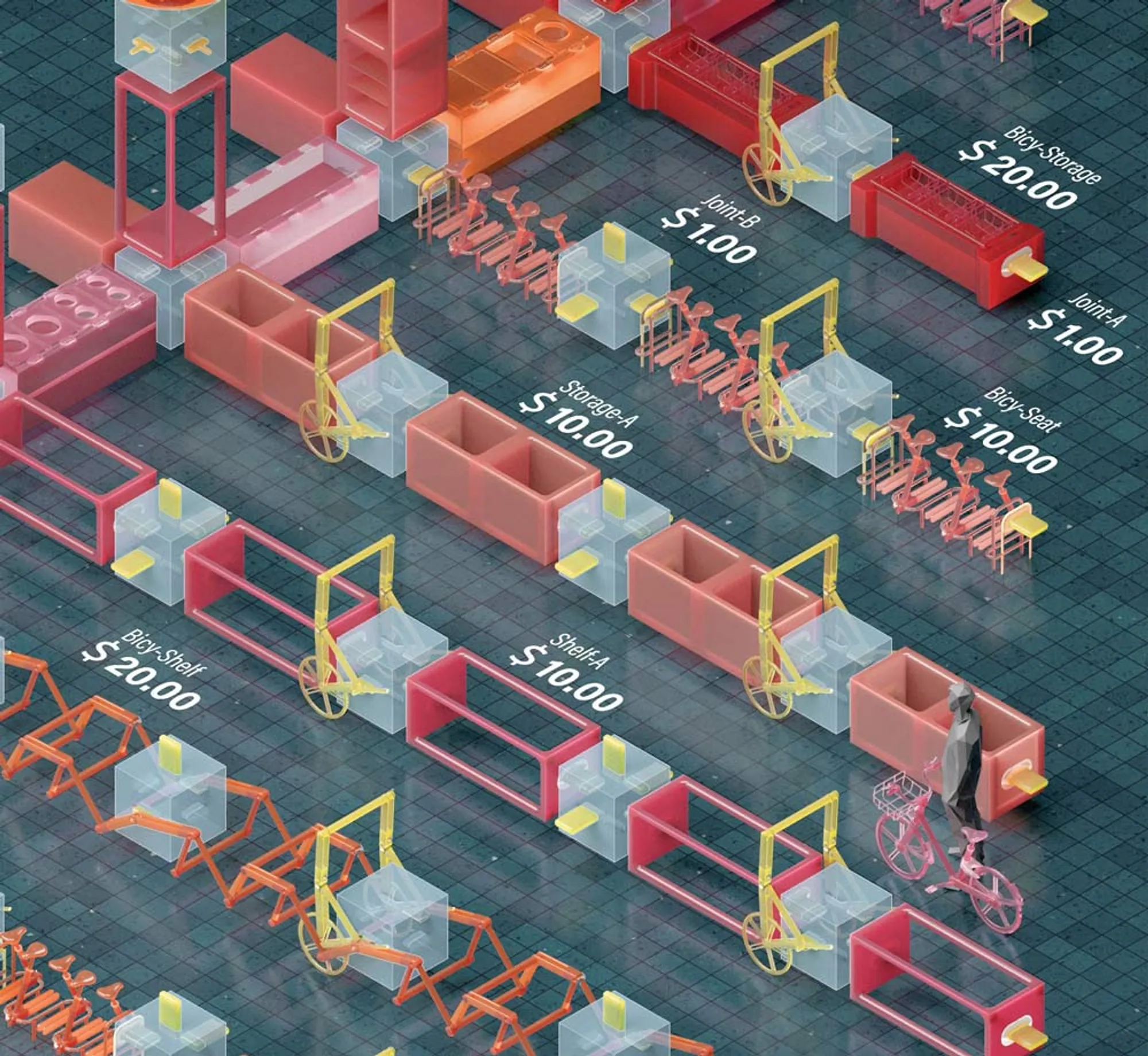
Architects re-invent new upgrades for traditional handcarts that restore their relevance in 21st Century.
The open source handcart design challenge- Allcart


The Storyline
The market scenario is changing rapidly with every passing decade. With technology pushing almost every digital interaction automated from the warehouse to home solutions, the streets are a choice now and not a go-to destination for all of us.
A social network to the city in the offline realm, the streets have been a place to serve the city by people from all backgrounds of life.
The digital motion not only moves a lot of economic activity to screens – it builds a huge wall for people especially from lower strata to participate in commerce activities freely. And the public health concerns at the same time have changed the game entirely for most of these breadwinners who in turn made our streets how they used to be.
What does this mean for the future? And especially the future of the streets?
The lockdowns may have been very temporary yet their impacts are still existent on city life. People are not preferring to eat on the streets let alone the restaurants.
Vendors are pushed to invest more in selling things that no one wants to buy – especially in the food sector which holds a lot of share in the public street life. The changing market dynamics hit most severely the people with the thinnest economic cushion.
When corporations face a huge alienation crisis like this, they hire expensive consultancy services to find the grip on the market they’ve been replaced from recently and have the budget to reinvent their product chain entirely. (E.g. The Gas car to electric transition)
The Challenge
Such options are never available with small vendors and markets they serve. They try to fit the ideas they know with whatever small information they have and try again. But will it help?
The challenge vendors face is unprecedented especially when the entire commerce is now an upstream ride for them. How can we as designers help them restructure their businesses a little? How can we, with the limited knowledge we have, open a gateway to them reaching unlimited possibilities of relevance in 2020? How can we empower them with new tools that help them stay relevant in changing times like today?
The design challenge was to develop a handcart concept for vendors that could help them reinvent their commerce methods considerably. The design outcomes were lean and cost-effective for the investment they can make and open new means to utilize the inherent qualities of selling on the street and not being pinned to any location. The design used available technologies and hybrids like smartphones, etc. to give them a much-needed boost.
This was a multi-level challenge where the first competition sought only the cart design, followed by a next challenge that called for plugins that could be built on the winning design.
The jury for the competition consisted of esteemed designers, professionals, and academicians from around the world. The Lead Jurors for the competitions were as follows:
Bijoy Ramachandran, Partner, Hundredhands, India
Murray Legge, Architect, Murray Legge Architecture, United States
Sunitha Kondur, Partner, Hundredhands Design, India
Namrata Tidke, Senior Design Associate, MuseLAB, India
Volodymyr Veshtak, Founder, Object №, Ukraine

Some of the Best of competition projects are:
Winning Project: TOOGI
By: Sthephanie Gutierrez & Carlos David Gutierrez
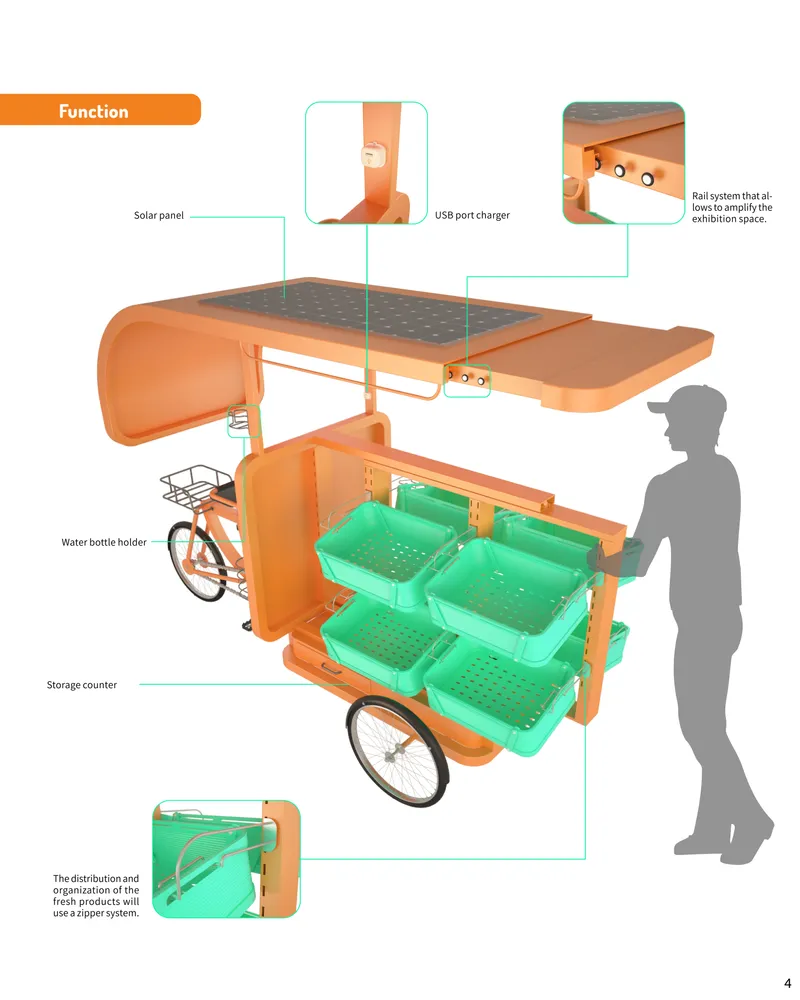
Fig: 1 Design function
Description: Strategy developed to improve Colombian street vendors and farmers' quality of life.
-----------------
People’s Choice: Genesis
By: Hernan Gregorio, Jordan Cutsinger & Jacob Kim
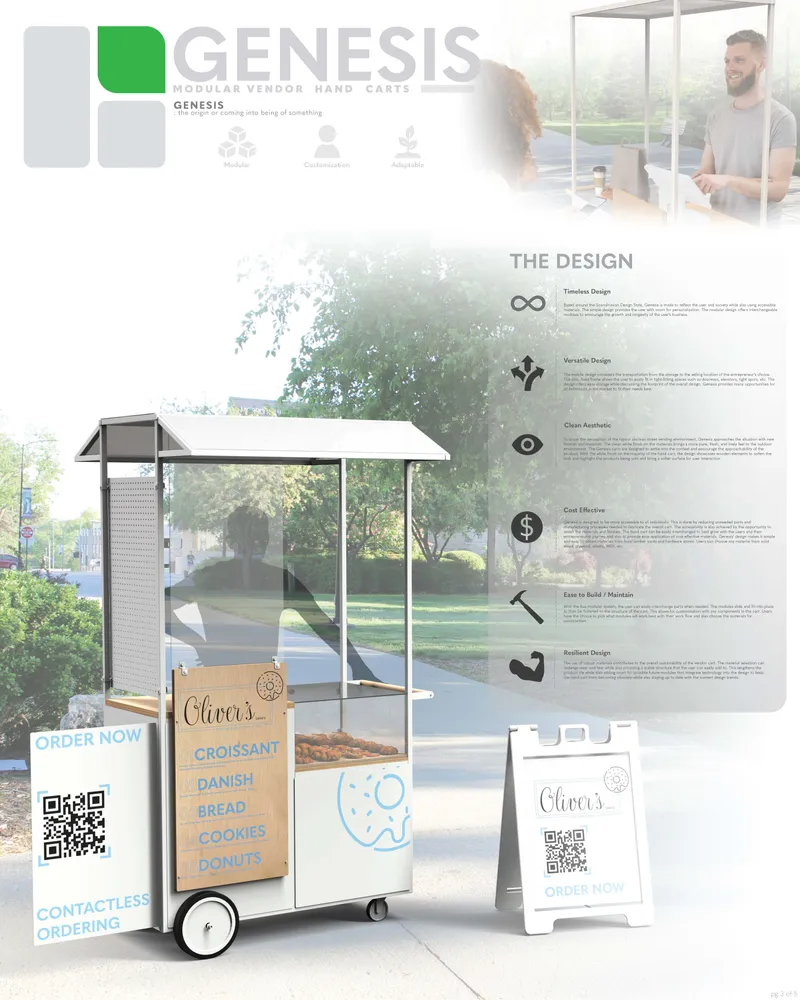
Fig: 2 Design
Description: Genesis, the modular, cost-effective, and aesthetic hand cart for a post-Covid-19 street vendor scenario. Genesis offers each vendor modular personalization, a cost-effective design, and a blank canvas for the vendor's product, brand, and personality to take the spotlight.
--------------------
Editor’s Choice: BICYCART
By: Jingyun Ma & Kan Lin

Fig: 3 Customization and adaptability
Description: BICYCART is a cart designed for China's post-covid-19 era which constitutes a new design by deconstructing and reorganizing the existing waste materials. The modular design ensures the high customization, high mobility, and high flexibility of the cart. The main material of the cart is reconstructed from the widely abandoned sharing bike-Mobike in China.
--------------------
Editor’s Choice: Social Q
By: Hernan Gregori, Dustin McDermott & Zachary Spearman
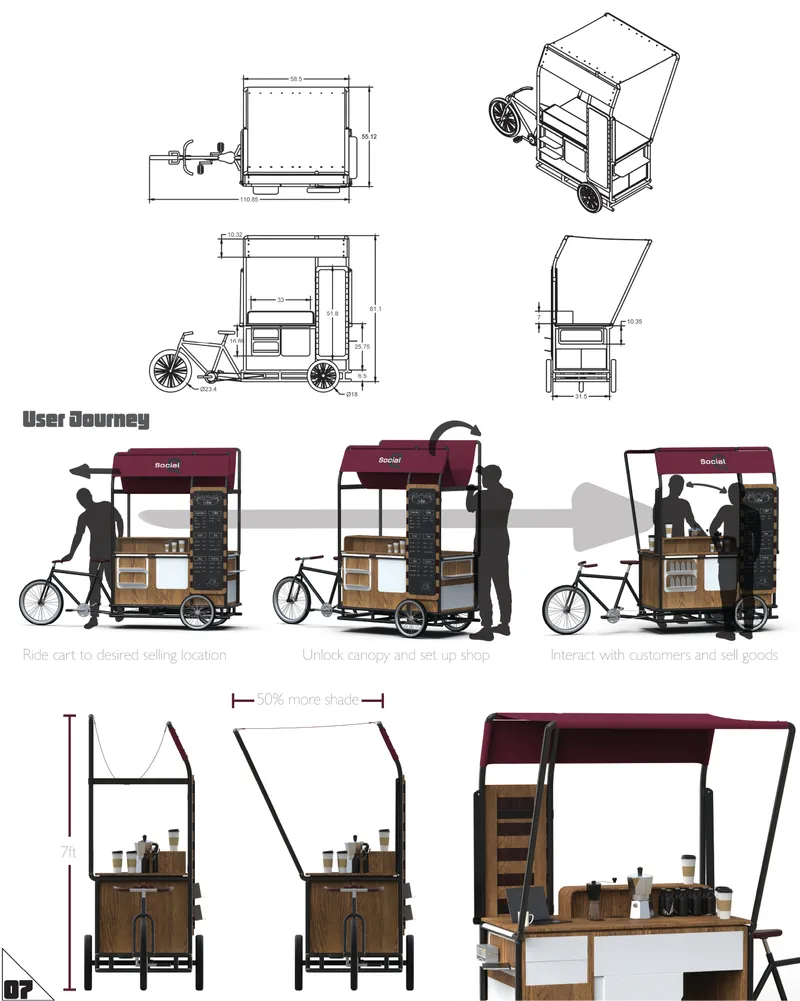
Fig: 4 User Journey image
Description: Social Q is a modern food cart that creates multiple modular design opportunities, using simple materials, and is easily transportable.
--------------------
Editor’s Choice: Curio
By: Hernan Gregori, Kayla Roles, Matthew Henninger & Jacob Lathrum

Fig: 5 Cover image
Description: Curio is a mobile marketing tool designed to creatively display products through an expandable cart, creating a unique experience for consumers. The cart is designed for extreme customization, utilizing unfinished materials, various modular pieces, and expandable elements to adapt and fit every consumer’s needs, wants, and aesthetics.
Follow us on social media: Facebook | Instagram | LinkedIn | Twitter | Youtube
References (3)




Popular Articles
Popular articles from the community


Conexión: Biophilic Design Reimagines High-Rise Living in Hong Kong
Conexión reimagines high-rise living in Hong Kong through biophilic design, green facades, shared spaces, daylight, water and nature within.

Co-life: Sustainable Architecture for Age-Friendly Community Living
Co-life reimagines sustainable architecture for seniors through courtyards, rammed earth, shared gardens, and spaces designed for belonging.

Play: Fragments of Their World
Familiar architecture becomes modular playground design, creating safe spaces where displaced children can learn, connect, imagine and play.

Riyadh For All: Intergenerational Urban Design for Active Aging in Rabat
Riyadh For All reimagines urban design in Rabat with intergenerational co-living, adaptive courtyards, and Moroccan cultural exchange today.


Similar Reads
You might also enjoy these articles

Lunar Spiral: Space Architecture Shaped by the Mathematics of the Universe
Lunar Spiral reimagines space architecture through Fibonacci geometry, lunar regolith, levitating habitats, and self-sustaining Moon living.
The Main Dream: Modular Architecture for Play, Learning, and Community
A modular playground turns recycled plastic into adaptable spaces where refugee children can play, build, learn, and reconnect.
Play: Fragments of Their World
Familiar architecture becomes modular playground design, creating safe spaces where displaced children can learn, connect, imagine and play.

Wadi Rum Observatory: Desert Architecture Designed for the Night Sky
Wadi Rum Observatory turns desert architecture into a quiet instrument for astronomy, hiding research spaces under Jordan's starlit terrain.


Explore Furniture Design Competitions
Discover active competitions in this discipline



Challenge to merge furniture with learning


Design challenge to equip cities with modern furniture


Competition to design a workstation for architects

Packaging challenge - Design meets sustainability
Comments (0)
Please login or sign up to add comments
No comments yet. Be the first to comment!