
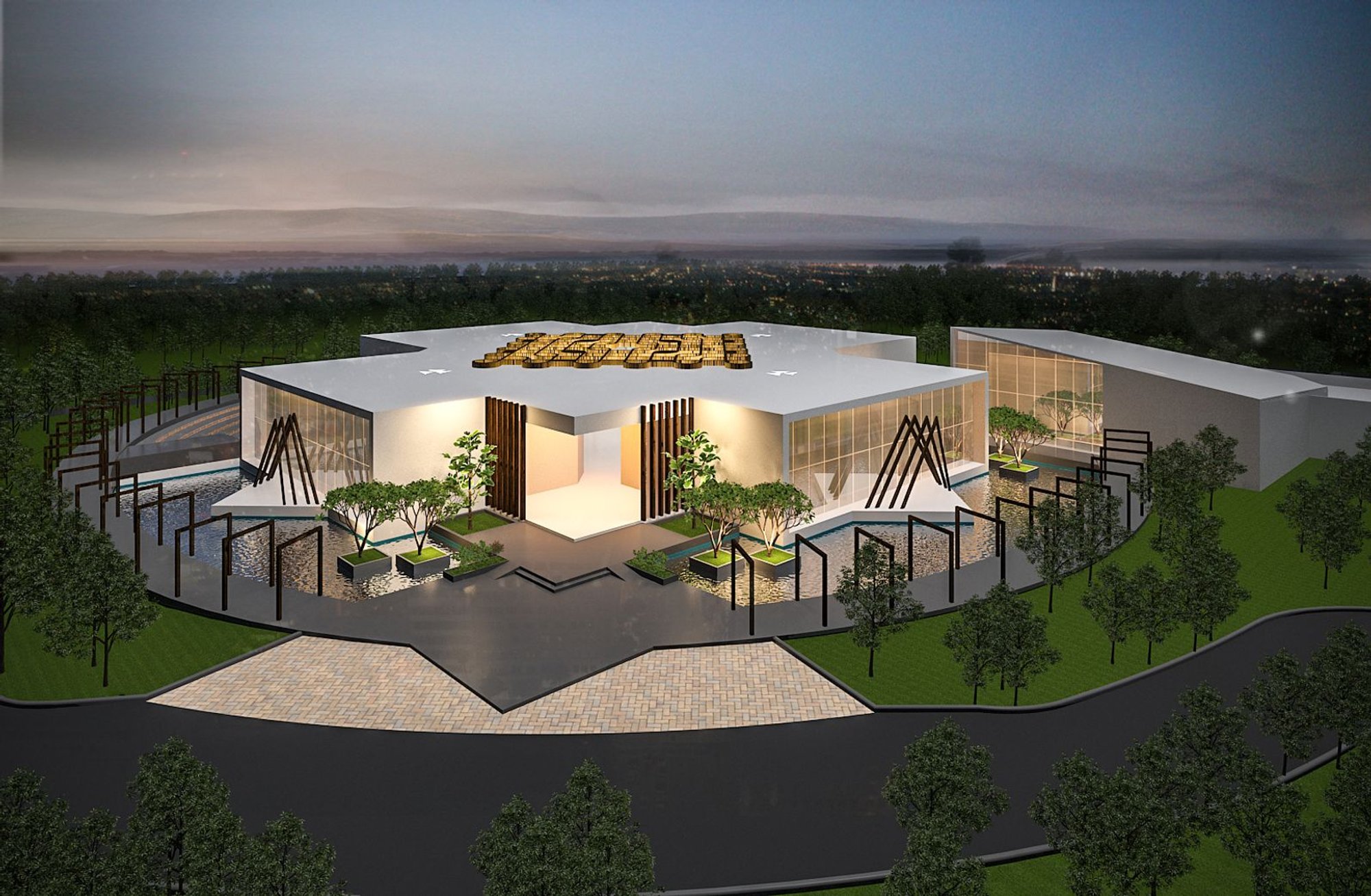
Bharat Bhavan 2020 – A Contemporary Cultural Architecture Inspired by Tradition
A contemporary cultural architecture landmark that reinterprets India’s traditional motifs to create a vibrant, community-driven Bharat Bhavan.

Project by Sahana Shetty
Bharat Bhavan 2020 stands as a refined example of cultural architecture, re-imagining India’s traditional design vocabulary through a modern, community-centric lens. Designed by Sahana Shetty, the project merges geometry, symbolism, and spatial harmony to create a cultural hub for learning, performance, and collective expression.
Across India’s diverse landscape, architecture has always been a vessel of identity—carrying stories, rituals, and visual languages across generations. Bharat Bhavan extends this legacy by offering a contemporary building deeply rooted in the geometry and symbolism of the Rangoli, one of India’s most enduring cultural art forms. The result is a structure that feels modern yet familiar, vibrant yet calm, and responsive to the cultural aspirations of the millennial generation.
A Modern Interpretation of Traditional Design Principles
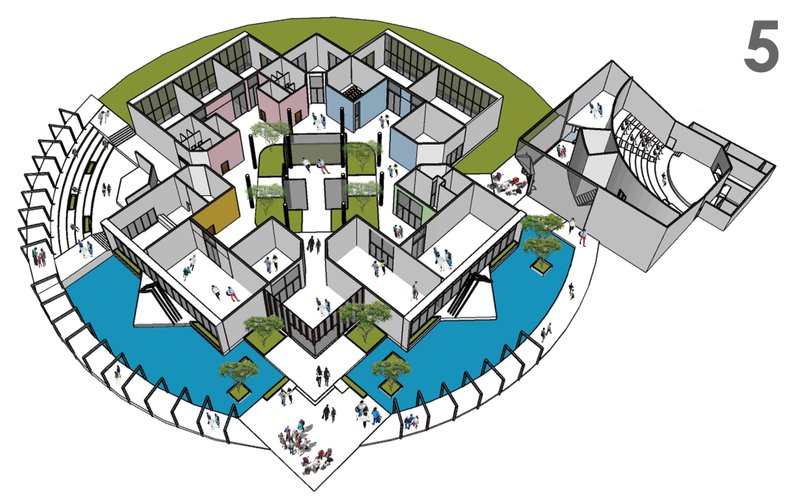
The design takes shape from a symmetrical Rangoli pattern, translated into a centralized courtyard plan. This courtyard becomes the heart of the building, from which all activities radiate outward.
The architecture incorporates:
- Strong geometric order inspired by traditional Indian patterns
- Centralized clustering of spaces to promote social interaction
- Modern volumes merged with vernacular motifs
- Transparent edges and open courts to maximize natural light
Each of these elements contributes to a built form that honors India’s artistic heritage while accommodating contemporary cultural needs.
Design Development: A Geometry Rooted in Culture
The initial schematic studies reflect an unwavering commitment to cultural geometry. The Rangoli-inspired layout organizes spaces in a rhythmic sequence—galleries, studios, amphitheatre, administrative block, and performance areas form a tightly integrated whole.
This cultural architecture approach ensures that the building is not just a container for art and community activities—it is itself an exhibit of cultural continuity.
A Courtyard That Becomes the Centre of Community Life
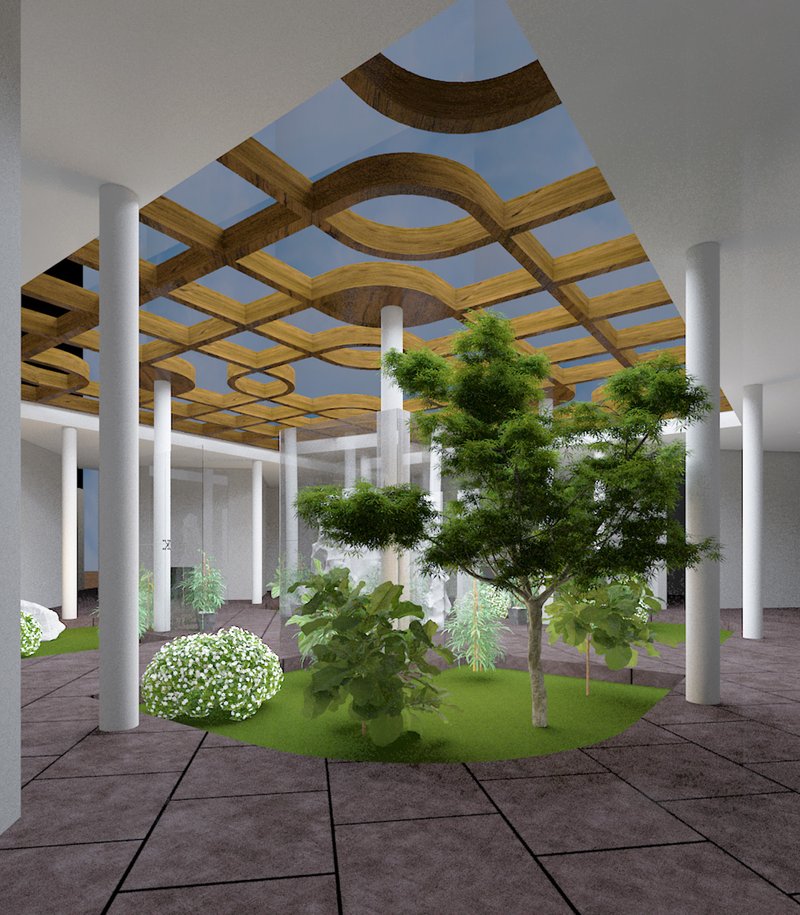
The courtyard is conceptualized as the beating heart of the complex. It is sky-lit with a sculptural trellis, creating a dynamic play of light and shade. The bright interior palette ensures a vibrant, welcoming atmosphere, setting the tone for learning, expression, and creativity.
Surrounding the courtyard are:
- Studios for dance, music, and group activities
- Exhibition galleries
- A public lobby
- Administrative spaces
- Circulation corridors connecting to outdoor decks and water features
This spatial arrangement allows seamless internal movement paired with strong visual connectivity across spaces.
Landscape as Architecture: Water, Walkways & Green Zones
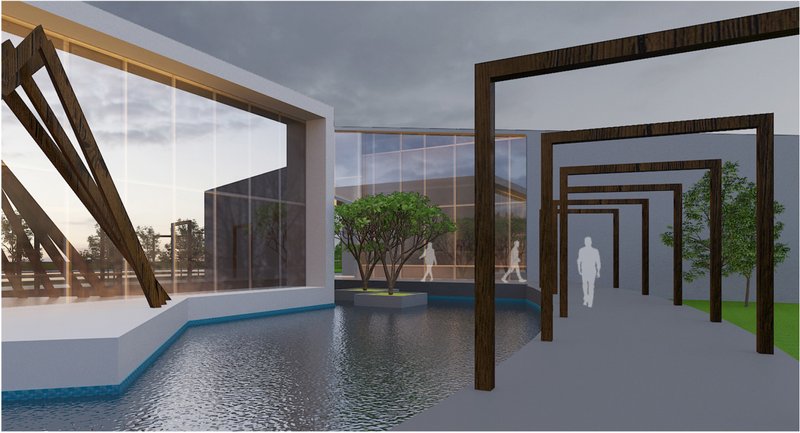
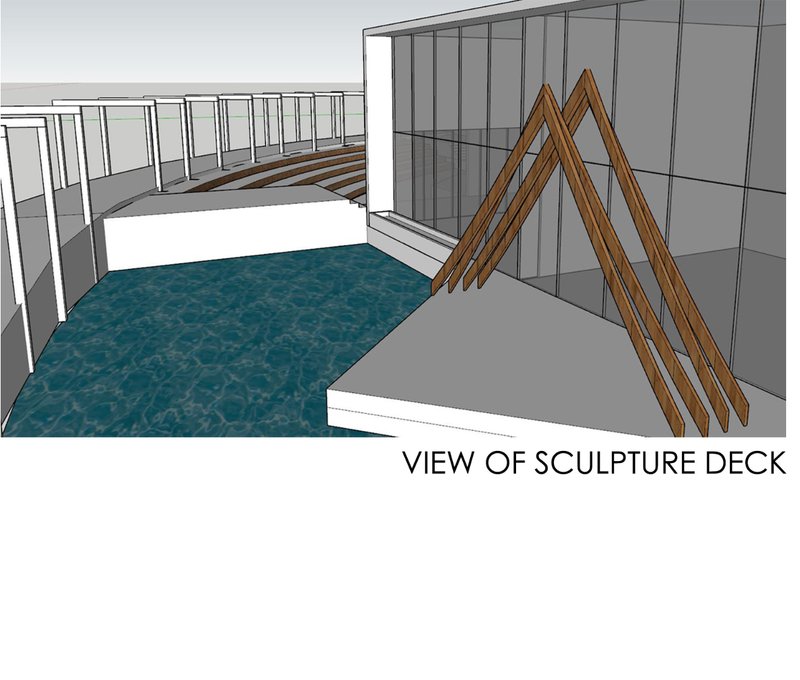
The design places strong emphasis on landscape integration. A continuous circular walkway enclosed by a trellis wraps the building, linking indoor and outdoor experiences.
Key landscape elements include:
- Reflective water bodies defining the perimeter
- Strategic plantation zones ensuring shaded walkways
- Sculpture decks that extend the cultural narrative outdoors
These features soften the geometric rigor of the built form and create an immersive, human-scale environment.
Why Bangalore? The Cultural Context of the Site
Set in the evolving metropolitan landscape of Bangalore, Bharat Bhavan is strategically positioned to serve a diverse and growing urban population. The city’s strong cultural mix, expanding creative economy, and climatic advantages make it an ideal location for a contemporary cultural architecture landmark.
The site offers:
- Clean air and accessible infrastructure
- Connectivity via major highways and transport nodes
- A pleasant climate conducive to open-air cultural activity
- A visually rich context, including vistas toward the iconic Nandi Hills
With nearly five acres of land, the site allows the architecture to breathe while maintaining urban relevance.
Functional Zoning and Spatial Efficiency
The planning reflects both clarity and generosity. The auditorium and amphitheatre are strategically positioned along the diagonal axis to minimize glare, maximize acoustic performance, and ensure user comfort.
Other facilities include:
- Entrance deck and lobby
- Galleries and exhibition spaces
- Café and museum shop
- Performing arts studios
- AV rooms and projector room
- Administrative block
- Ample car and bus parking
Separate service entries ensure smooth operations without disturbing public movement.
Visual Experience: A Blend of Modernity & Heritage
The renderings capture Bharat Bhavan as an environment of calm transitions and expressive architectural gestures:
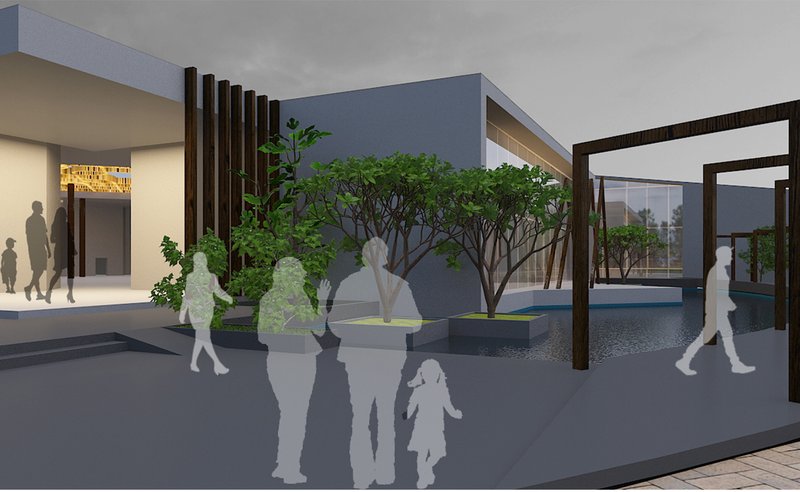
- Entrance View: Clean lines, sculpted greenery, and warm lights create an inviting threshold.
- Approach to Auditorium: Water bodies and rhythmic colonnades guide visitors with grace and symmetry.
- Sculpture Deck: Angular timber elements stand as contemporary cultural sculptures.
- Courtyard View: A lush, green central landscape framed by a patterned trellis canopy elevates the sensory experience.
Every frame reinforces the project’s cultural architecture identity—rooted in tradition, yet designed for the future.
Bharat Bhavan 2020 by Sahana Shetty is more than a building; it’s an architectural narrative of India’s evolving cultural identity. Through the reinterpretation of traditional forms, geometric harmony, and sensitive spatial planning, the project creates a vibrant community hub where creativity, learning, and heritage converge.
In essence, Bharat Bhavan becomes a physical manifestation of India’s cultural continuity—celebrating the past while empowering the future.




Popular Articles
Popular articles from the community


Solar Steam: A Climate-Responsive Architecture That Redefines the Monument
A climate-responsive memorial architecture that transforms heat, decay, and time into a living system reflecting humanity’s ecological impact.
Inverted Architecture Installation by Studio Link-Arc: Exploring the Intersection of Architecture and Living Organisms
Inverted Architecture Installation by Studio Link-Arc blends mycelium, sustainability, inverted design, ecological cycles, and urban adaptive architecture in Shenzhen.
Flamboyant House by Juliana Camargo + Prumo Projetos
Modern Brazilian house integrating existing tree, pool, and volumes with glass, wood, and transitional spaces blending interior, exterior, and landscape seamlessly.
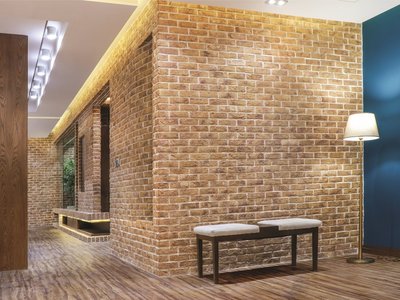
A Contemporary Take on Iranian Residential Architecture
A modern interior design in Mashhad that reinterprets brick, light, and spatial flow to create a warm, contemporary residential architecture.

Similar Reads
You might also enjoy these articles

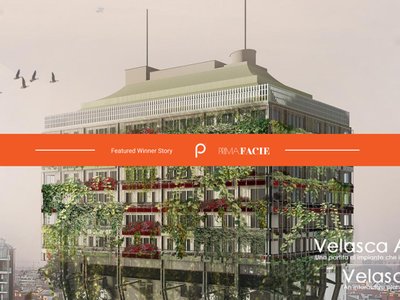
Digital Façade Design for our cities’ urban fronts
Prima Facie - Result Story
Protecting avian biodiversity: Bird observatories to help spread awareness & save rare bird species.
Results for ‘Fly’ - Landscape design competition out now
Connecting with nature: Forest interpretation center in Australia's Wollemi National Park
‘Asatti’ - Landscape design competition - Result story


Explore Conceptual Architecture Competitions
Discover active competitions in this discipline




The Global Benchmark for Architecture Dissertation Awards


The Global Benchmark for Graduation Excellence


Challenge to design an urban locus of culture and heritage


Bring back Drive In's
Comments (0)
Please login or sign up to add comments
No comments yet. Be the first to comment!