
Celestial Inset
Concept description

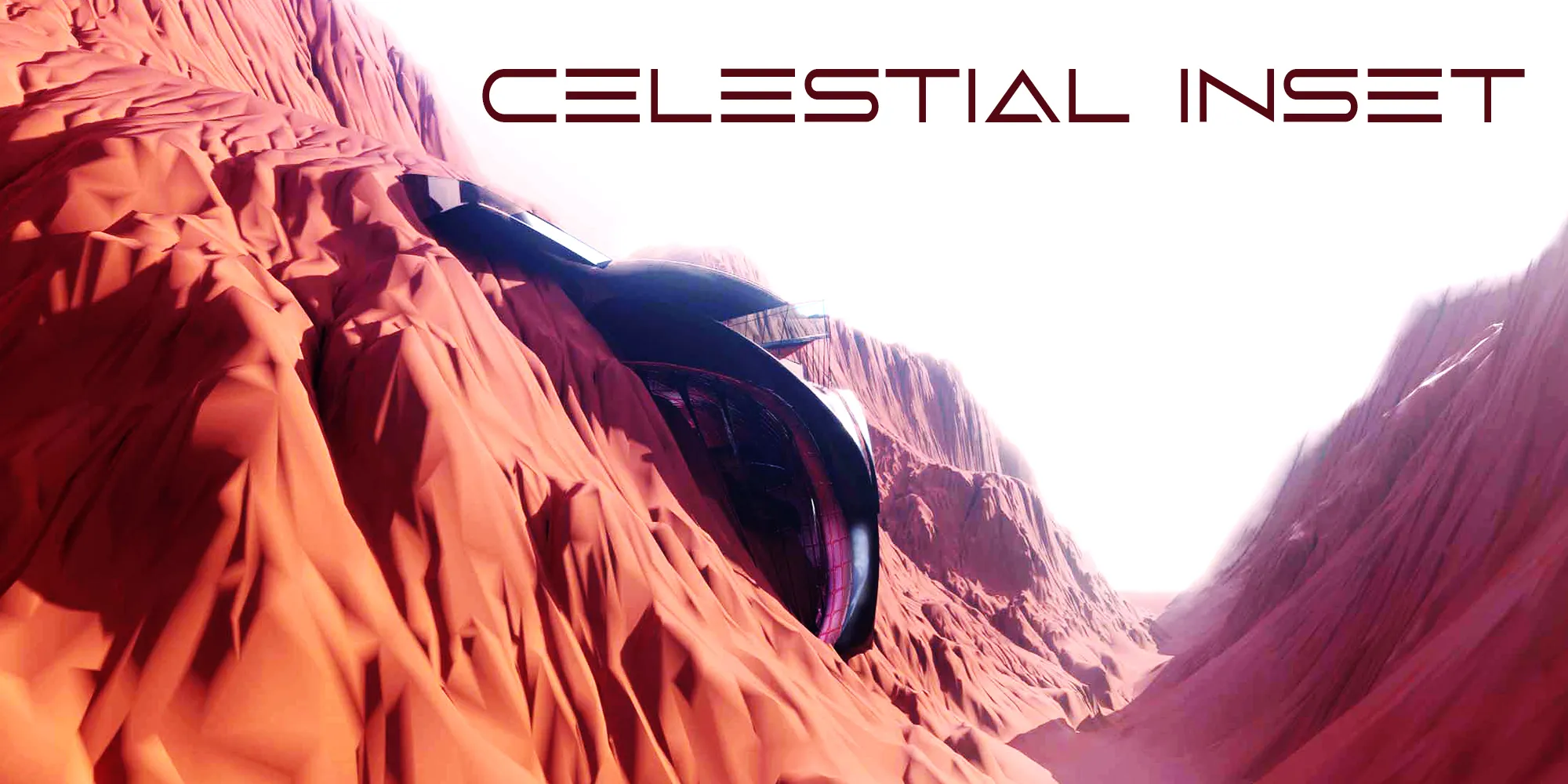
Celestial Inset design was based on the development of a hub space with support spaces with a variety of techniques that are united in the same language. The first step was to study in a minuscule way the different areas discovered so far on Mars to be able to choose the place where we wanted to land. After discussing the pros and cons of different sites we decided that the suitable site for our project had to be the canyon Valles Marineris, since the air currents that form in a canyon could be used to create energy, in addition to the view offered by a Canyon. Valles Marineris is a vast canyon system that runs along the Martian equator just east of the Tharsis region, it is an immense canon, its length is compared to the length of the United States, because of this for our specific site we chose one of the indentations of the canon which would give us the same characteristics of a canon but in a smaller area.
The concept behind our project is to design a system in which we have a hub space and secondary spaces that support it and operate in a complementary way. We create a brace system that is attached to the canyon and then in a way inflates, we could say that our technique is "attach" to the canyon and inflate, thus creating the shape of our main structure.
We know how limited energy sources will be when thinking about starting life on a new planet, for this reason, our priority was to create an air system that makes good use of the wind currents that occur within a canyon. To create energy that can supply the entire martian hub. The air system is located in the upper part and is composed of turbines designed so that when the air passes through them they produce energy, this system complements with tubes in front of the martian hub where the air will be filtered and dust tests will be carried out on Mars to study the soil and its different properties.
Housing is another of the main systems that are part of the martian hub and that we believe is important. The idea is to create small hubs that have the necessary elements to live on this planet, the design is based on the same concept that was used for the martian hub, attach and inflate in this way we have the same design language throughout the model. . Each small hub can have 1 to 4 people, with expandability options if necessary in the future. Its design has glass windows in front of the entire unit, which allows the inhabitants to have an extraordinary view of the entire canon, making the stay of this place special and unique.
The possibilities of inhabiting a new planet are high, that is why throughout the entire process prototypes were thought of that could expand on Mars over the years, all having the same construction process, attaching to the canon in the places considered more optimal for its operation, each of these hubs would be connected to facilitate mobility and operation in the community on this new planet.

Popular Articles
Popular articles from the community


EW PARK: Sustainable Architecture Reimagines the Future of Urban Parking
EW PARK reimagines city parking as a modular wooden tower combining automation, solar energy, electric mobility, and adaptable urban design.

The Earth Pod: 3D Printed Homes for Resilient Refugee Communities
The Earth Pod reimagines refugee housing through 3D printed homes made from clay, combining resilience, self-sufficiency, and rapid shelter.

Hill & Cross Opera: Sculptural Opera House Architecture Shaped by Tallinn’s Landscape and Identity
Hill & Cross Opera reimagines opera house architecture in Tallinn through its sculptural hill, civic plaza, glass wave and a luminous cross.

Conexión: Biophilic Design Reimagines High-Rise Living in Hong Kong
Conexión reimagines high-rise living in Hong Kong through biophilic design, green facades, shared spaces, daylight, water and nature within.

Similar Reads
You might also enjoy these articles

Day and Night Park: A Time-Based Urban Newsstand in Beijing
A temporary urban newsstand in Beijing blending travel, light, and reading through poetic colors, compact form, and community-focused design.

Modernist Patio Renovation in El Masnou, Barcelona by Oliver Segura Arquitectura + Cebrià Arquitectura
Modernist patio renovation blending tradition and innovation with a movable pool, leveled floors, and Catalan materials in El Masnou.

Alto Residencial Coop: Cooperative Housing Development in Santiago de Compostela by Carbajo Barrios Arquitectos
A linear cooperative housing complex blending white volumes and perforated metal façades, enhancing community living, natural light, privacy, and urban integration.
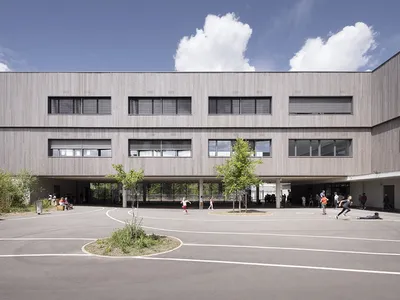
Vil Genis School by BPA ARCHITECTURE – Massy, France
Vil Genis School in Massy, France, features sustainable design, south-facing classrooms, community integration, accessible spaces, and modern educational architecture.


Comments (0)
Please login or sign up to add comments
No comments yet. Be the first to comment!