
Dirnbergergut Building Ensemble by Moser und Hager Architekten: Sustainable Multi-Generational Residential Design in Austria
Dirnbergergut Building Ensemble by Moser und Hager transforms a historic Austrian farmstead into multi-generational residences, blending modern design with preserved brick structures.

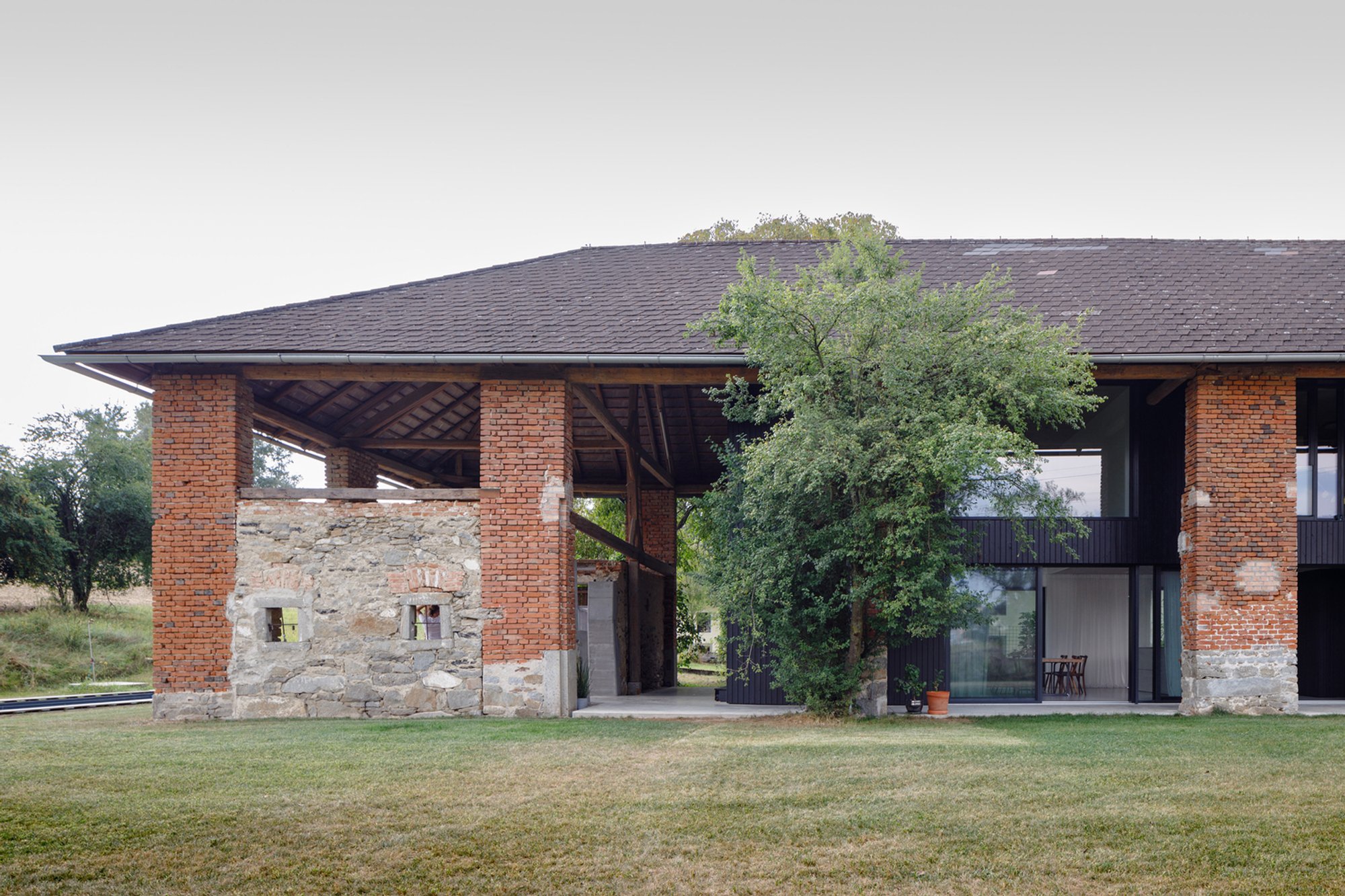
The Dirnbergergut Building Ensemble, designed by Moser und Hager Architekten, is a striking example of how historic preservation, sustainable renovation, and contemporary residential design can seamlessly coexist. Located north of the Danube in Austria, this project transforms a former farmstead into three modern, multi-generational homes while carefully maintaining the site’s historic character and architectural heritage.
Historical Context and Project Overview
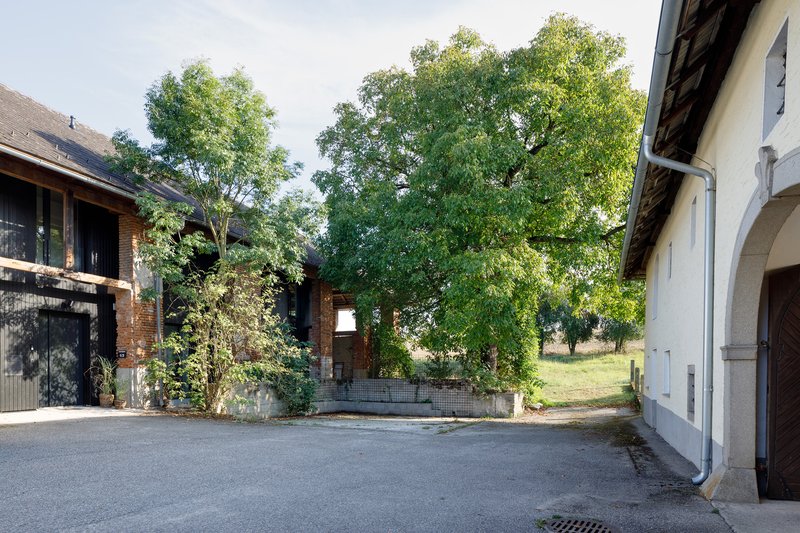
Located north of the Danube, the Dirnbergergut Building Ensemble was originally a historic farmstead comprising two distinct structures: a former living quarters with a disused inn on the ground floor, and an old barn that functioned as a pigsty in the 1970s and later as a partially rented space.
The architectural challenge was to transform these historic buildings into three modern, multi-generational residential units while preserving the barn’s original character. The project aimed to seamlessly integrate contemporary living spaces with the farmstead’s rich historical fabric, ensuring a sensitive, sustainable renovation.
Design Concept: Preserving History Through Architecture
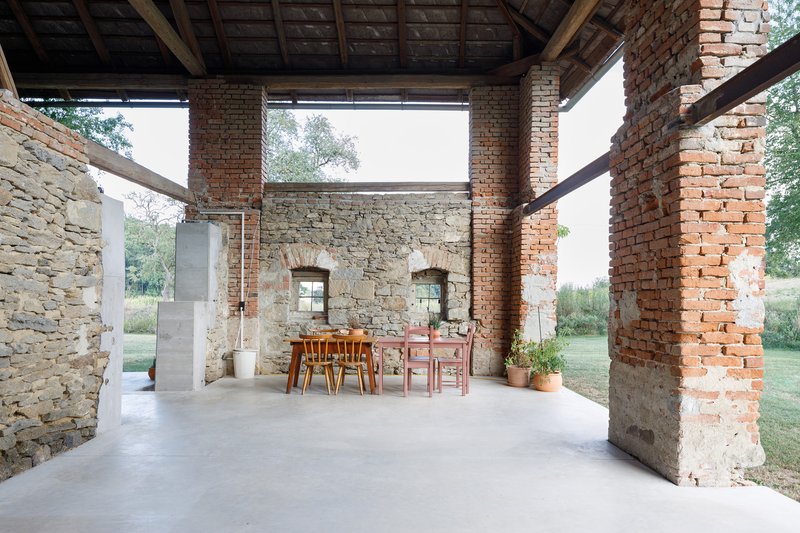
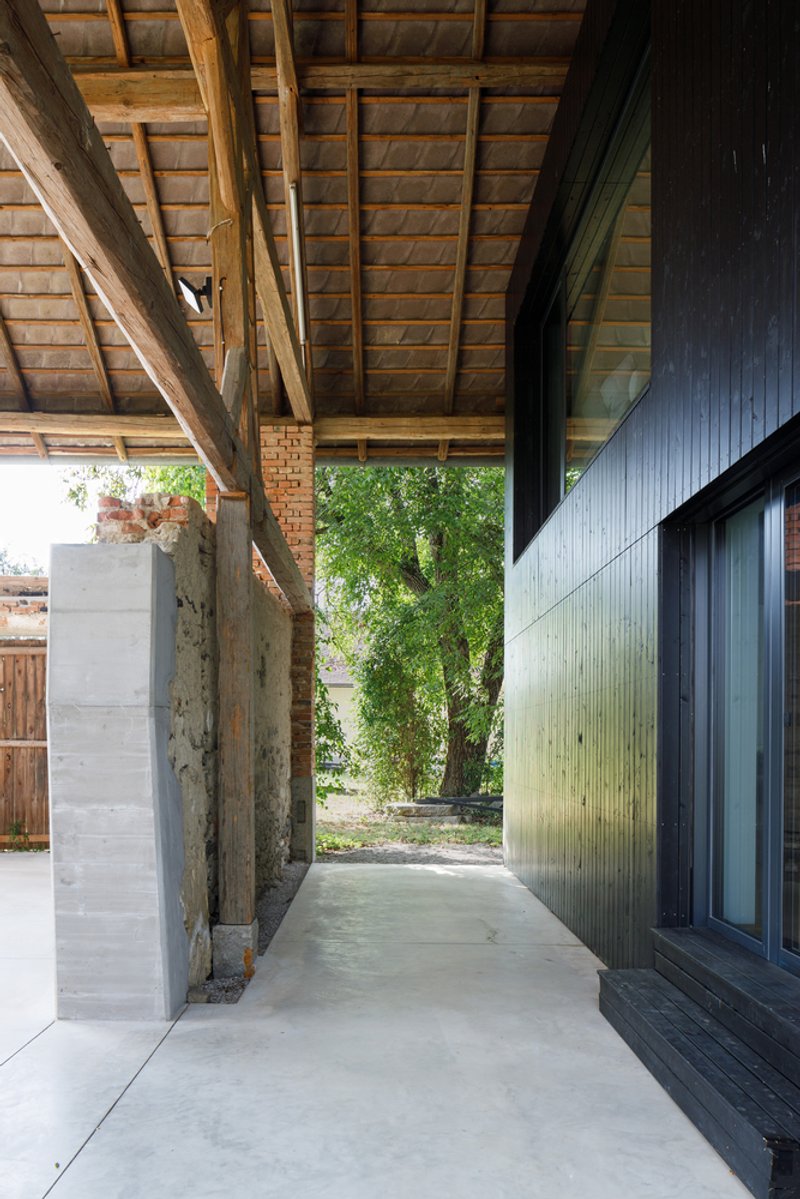
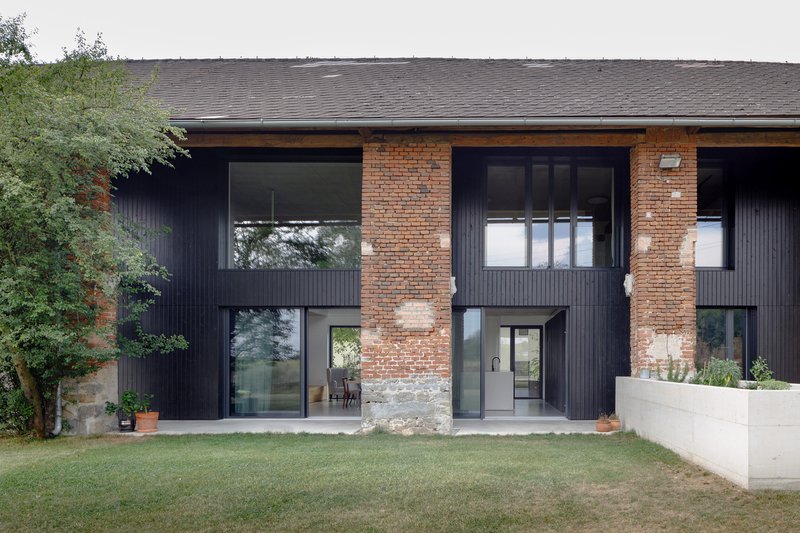
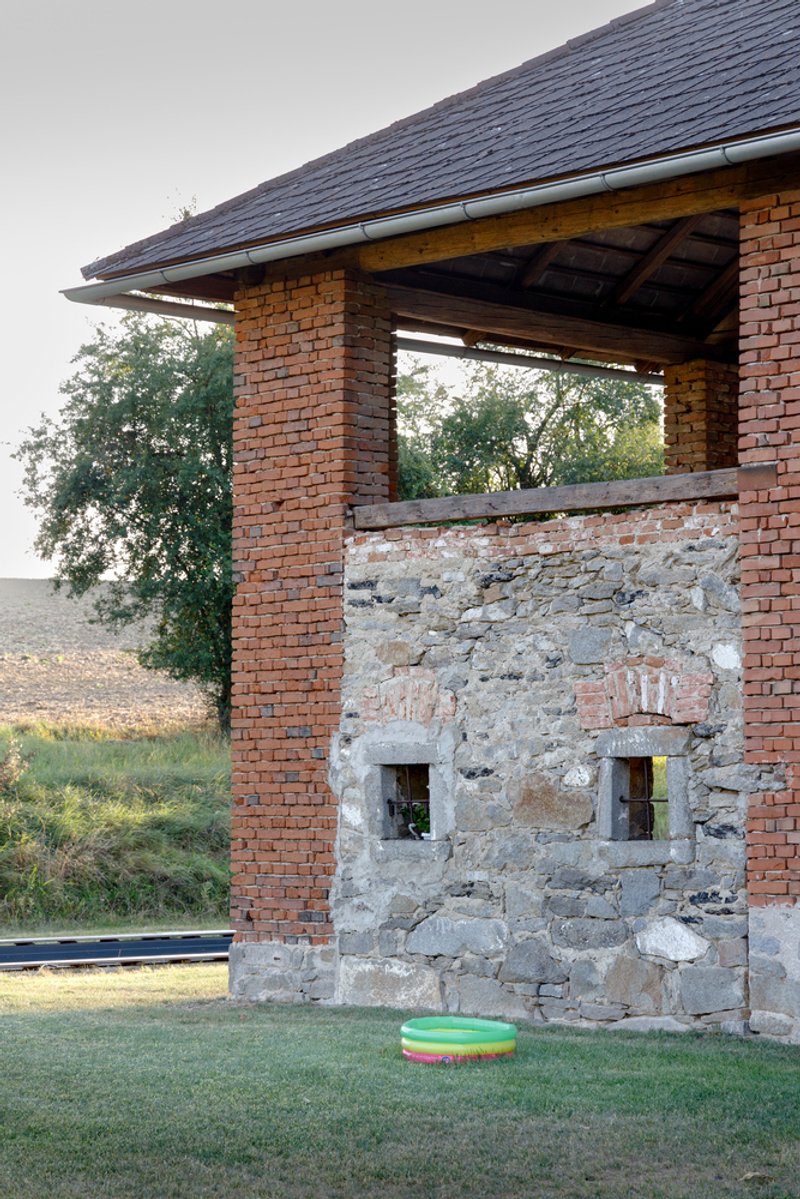
The design concept centers on retaining and highlighting the existing barn structure. The massive brick pillars and the original roof were preserved as load-bearing elements, serving as both functional and visual anchors within the new spaces.
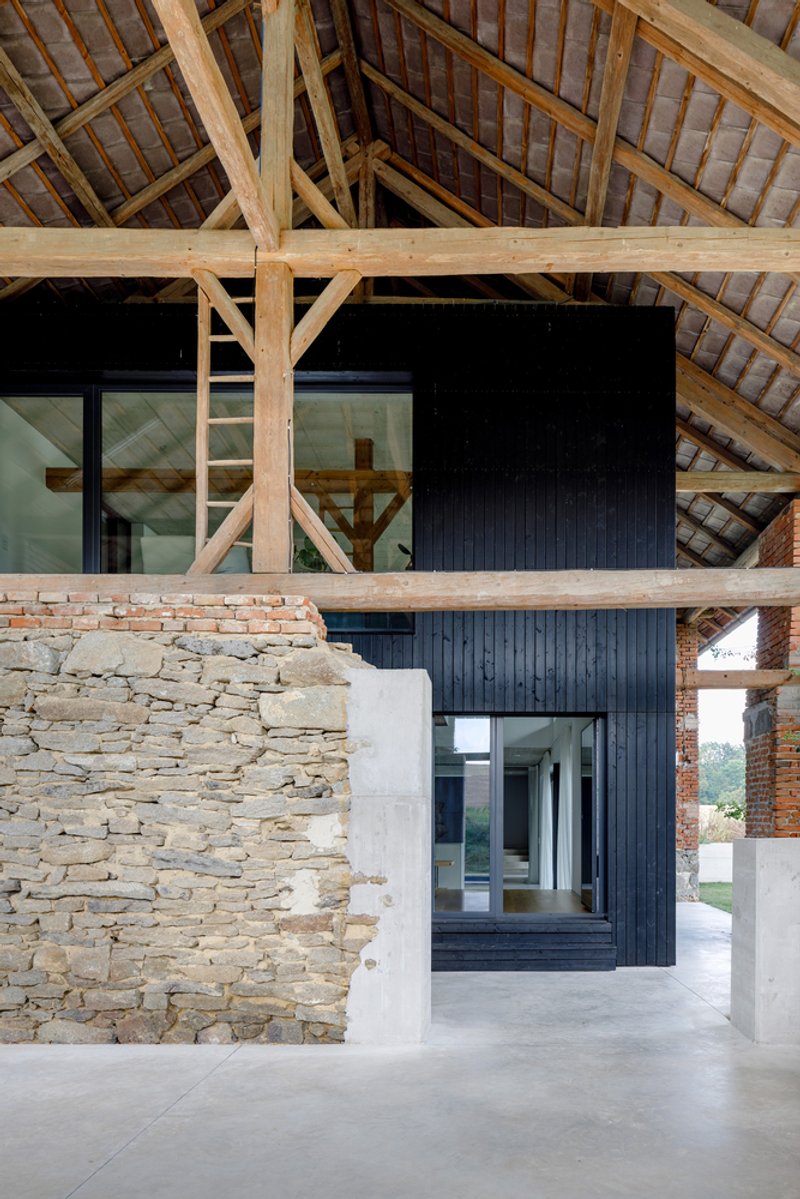
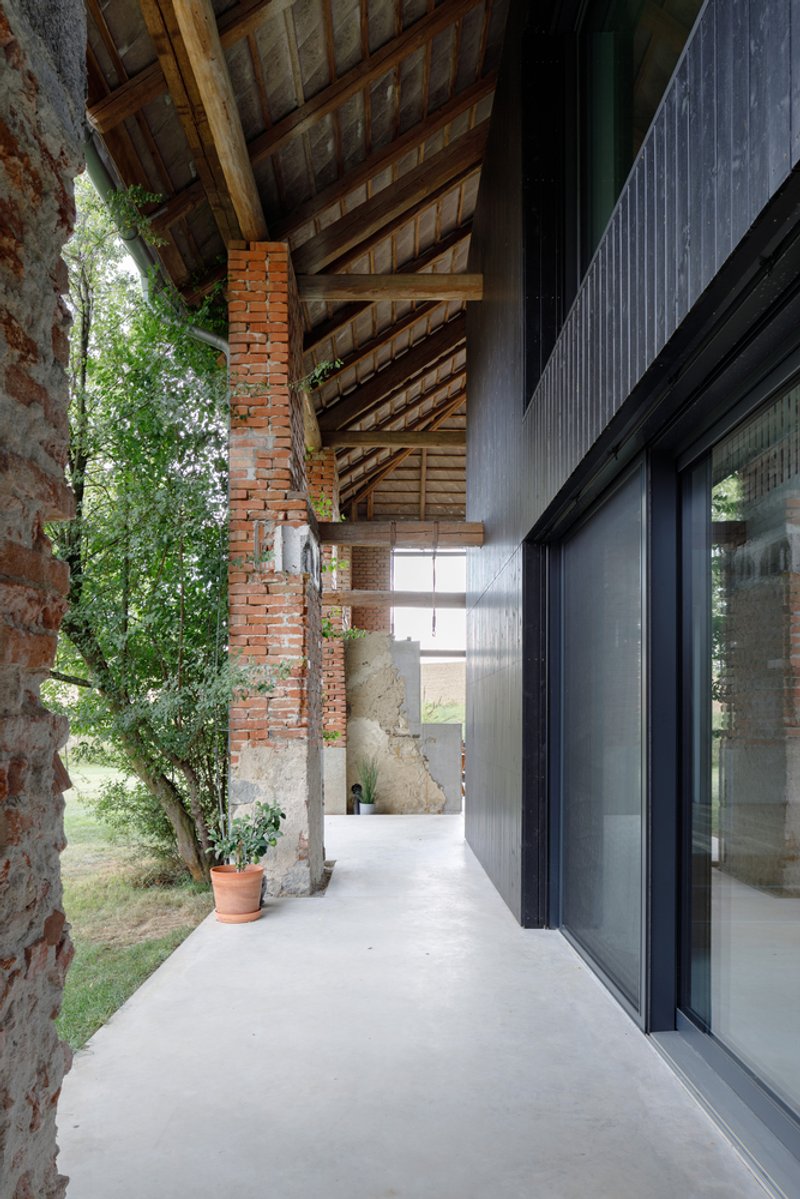
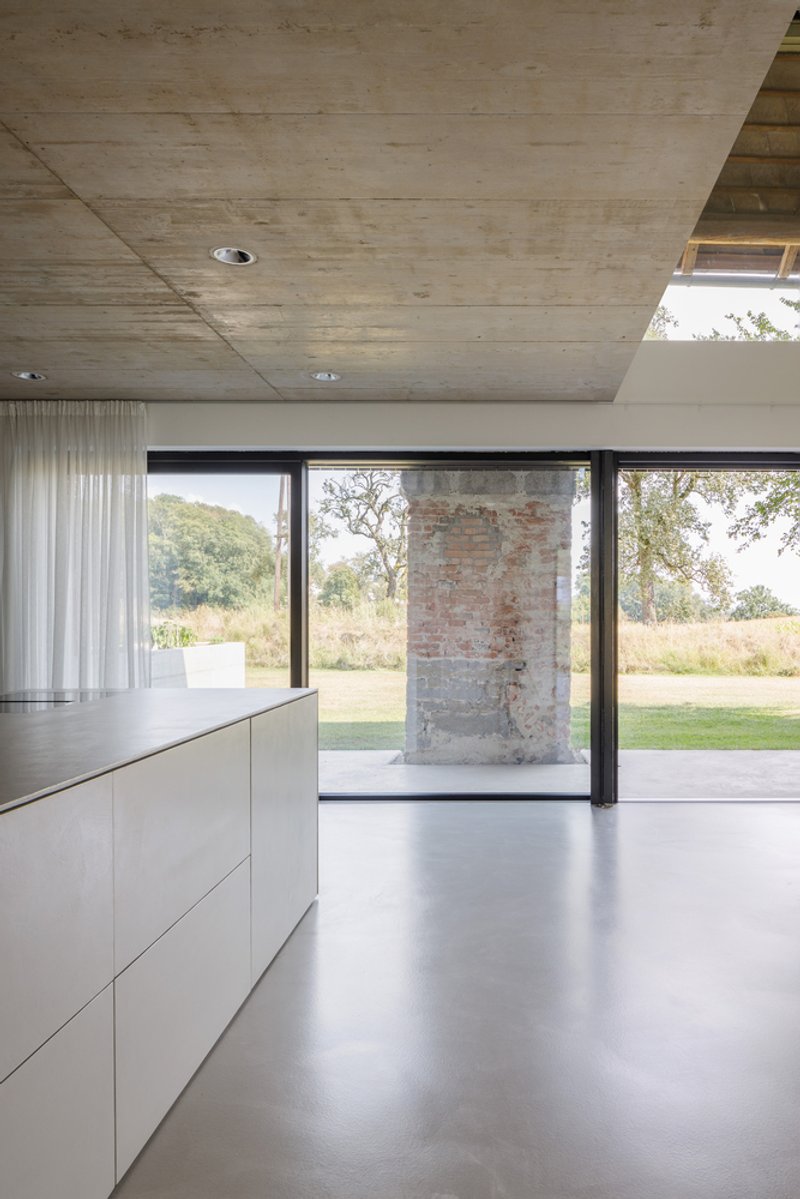
A modern, inserted structure was carefully positioned within the barn, offset from the existing walls to create a transitional threshold between old and new. This deliberate spatial arrangement opens up unique perspectives of the surrounding landscape while providing glimpses into the barn’s historic construction.
The interplay between historic brick elements and modern construction allows for architectural cohesion, giving the interior a sense of depth and continuity while emphasizing the barn’s original identity.
Spatial Planning and Interior Design
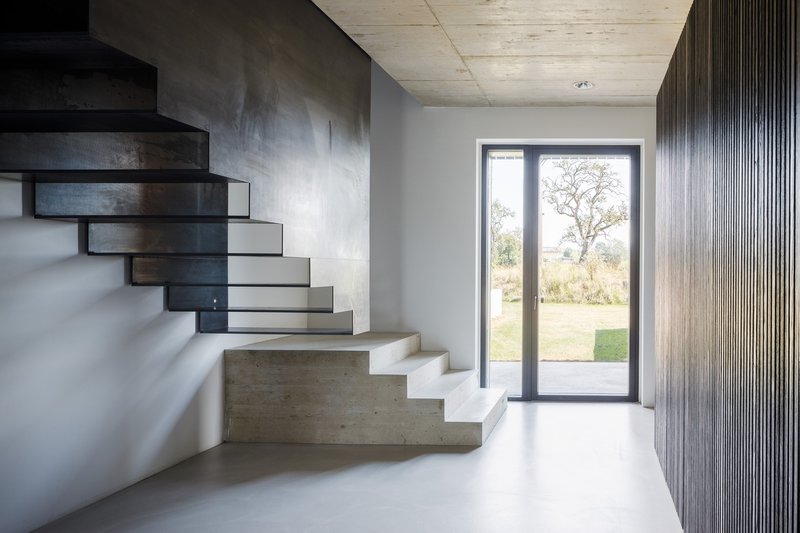
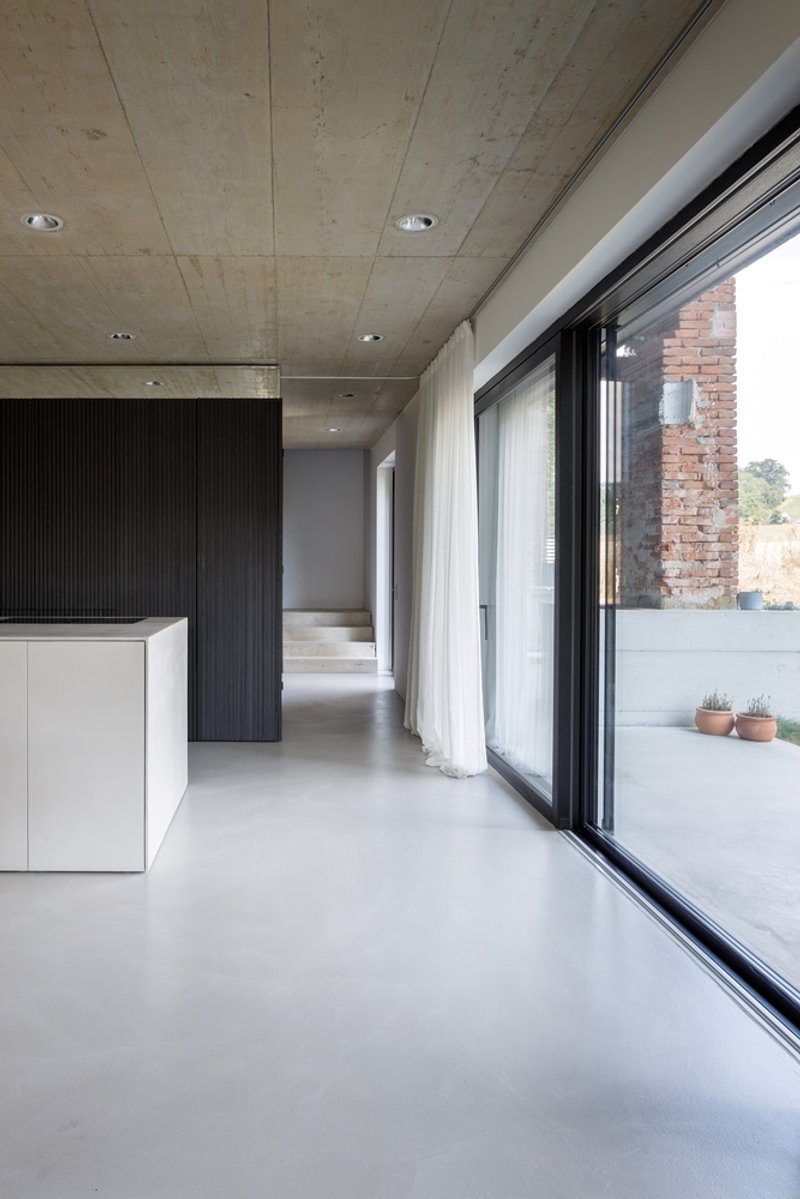
The open floor plan of the new residential units revolves around a central infrastructure block, efficiently housing technical installations and utilities. This layout maximizes usable living space while maintaining the integrity of the barn’s original structure.
Key design strategies include:
- Exposed historic elements: Brick pillars and roof structures remain visible, creating a strong visual link to the site’s history.
- Minimalist modern inserts: The new building features restrained, simple façades that harmonize with the heavy, textured brick of the barn.
- Seamless indoor-outdoor connection: Covered outdoor areas extend the living space and enhance interaction with the landscape.
- Sustainable renovation: Adaptive reuse of existing materials and structures reduces environmental impact while preserving heritage.
Architectural Experience
The contrast between old and new architecture defines the Dirnbergergut experience. The offset of structures creates intimate threshold spaces and unexpected sightlines, enhancing the dialogue between historic fabric and contemporary living.
Visitors and residents experience a carefully balanced interaction of materials—warm wood, exposed concrete, and textured brick—resulting in a modern, sustainable residence that respects and revitalizes its historic surroundings.
All photographs are works of Gregor Graf




Popular Articles
Popular articles from the community

Solar Steam: A Climate-Responsive Architecture That Redefines the Monument
A climate-responsive memorial architecture that transforms heat, decay, and time into a living system reflecting humanity’s ecological impact.
On the Brooks House by Monsoon Collective – A Contemporary Kerala Home Rooted in Tradition
Kerala home blending tradition and modernity with water-inspired design, brick architecture, courtyard planning, and sustainable rainwater harvesting strategies.
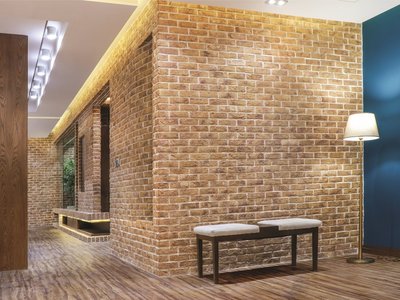
A Contemporary Take on Iranian Residential Architecture
A modern interior design in Mashhad that reinterprets brick, light, and spatial flow to create a warm, contemporary residential architecture.
Treehouse Apartment: A Warm Timber Interior Blending Craft, Play, and Contemporary Living
Warm timber apartment with integrated treehouse, combining natural materials, craftsmanship, and playful design to create a flexible, family-oriented living environment.

Similar Reads
You might also enjoy these articles


The Ken Roberts Memorial Delineation Competition (Krob)
As the most senior architectural drawing competition currently in operation anywhere in the world, it draws hundreds of entries each year, awarding the very best submissions in a series of medium-based categories.


Waterfront Redevelopment and Urban Revitalization in Mumbai: Forging a New Dawn for Darukhana
A transformative waterfront redevelopment project reimagining Darukhana’s shipbreaking heritage into an inclusive urban future.

OUT-OF-MAP: A Call for Postcards on Feminist Narratives of Public Space
Rhizoma Design and Research Lab invites artists, designers, architects, researchers, and students to reflect on how feminist perspectives can reshape public space. Selected works will be exhibited in Barcelona, October 2026. Submissions open until 15 April 2026.

Documentation Work on Buddhist Wooden Temple
Architectural syncretism and cultural hybridity: A comparative study of the Buddhist temples in Chattogram Hill tracks

Explore Architecture Competitions
Discover active competitions in this discipline




The International Standard for Design Portfolios


The Global Benchmark for Architecture Dissertation Awards


The Global Benchmark for Graduation Excellence


Challenge to reimagine the Iron Throne
Comments (0)
Please login or sign up to add comments
No comments yet. Be the first to comment!