
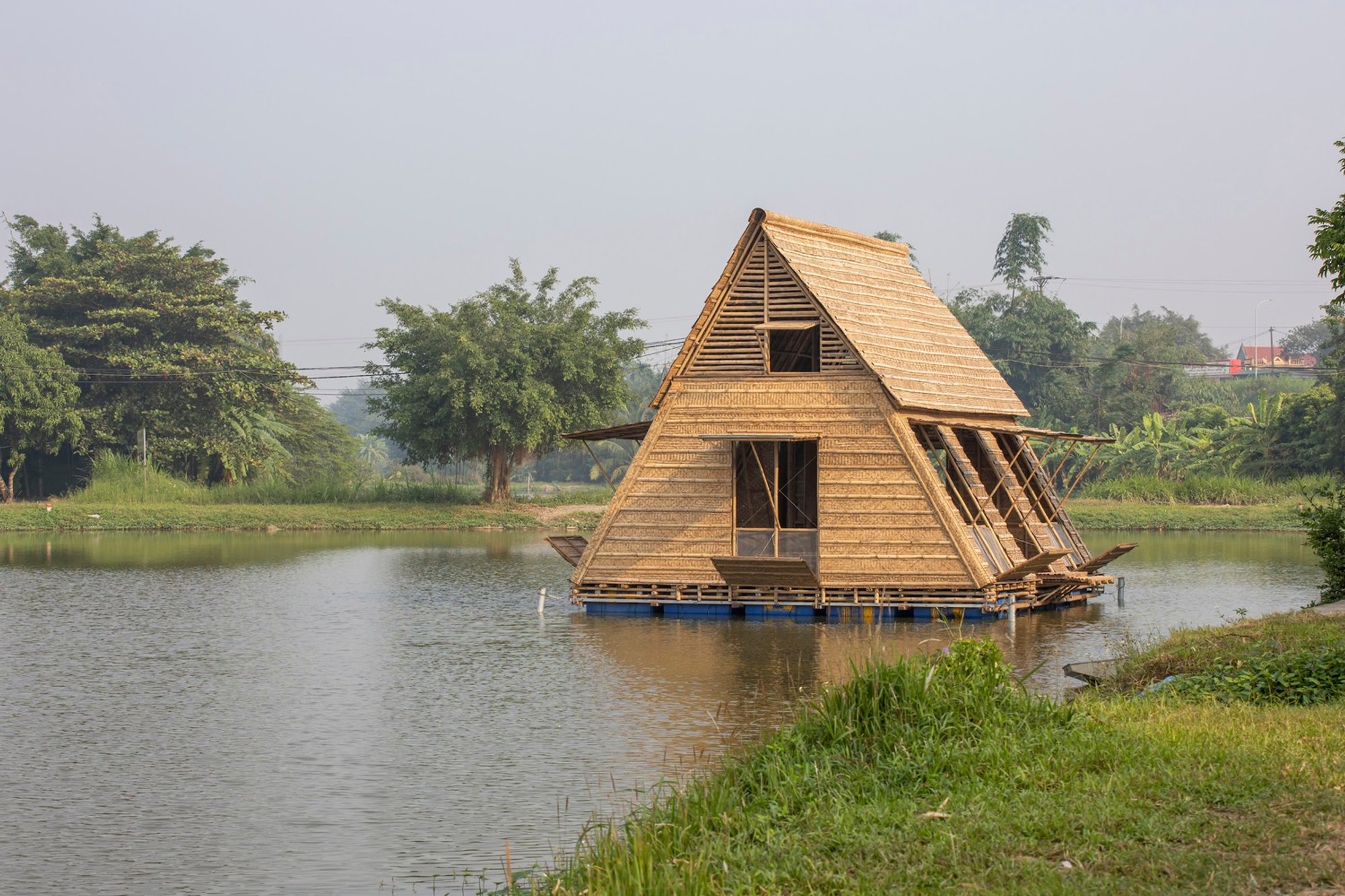
Floating Bamboo House by H&P Architects: A Climate-Resilient Model for Riverine Communities in Vietnam
Floating Bamboo House is a climate-resilient, modular bamboo dwelling designed for Vietnam’s flood-prone river communities by H&P Architects.

A Vision for Sustainable, Floating Living
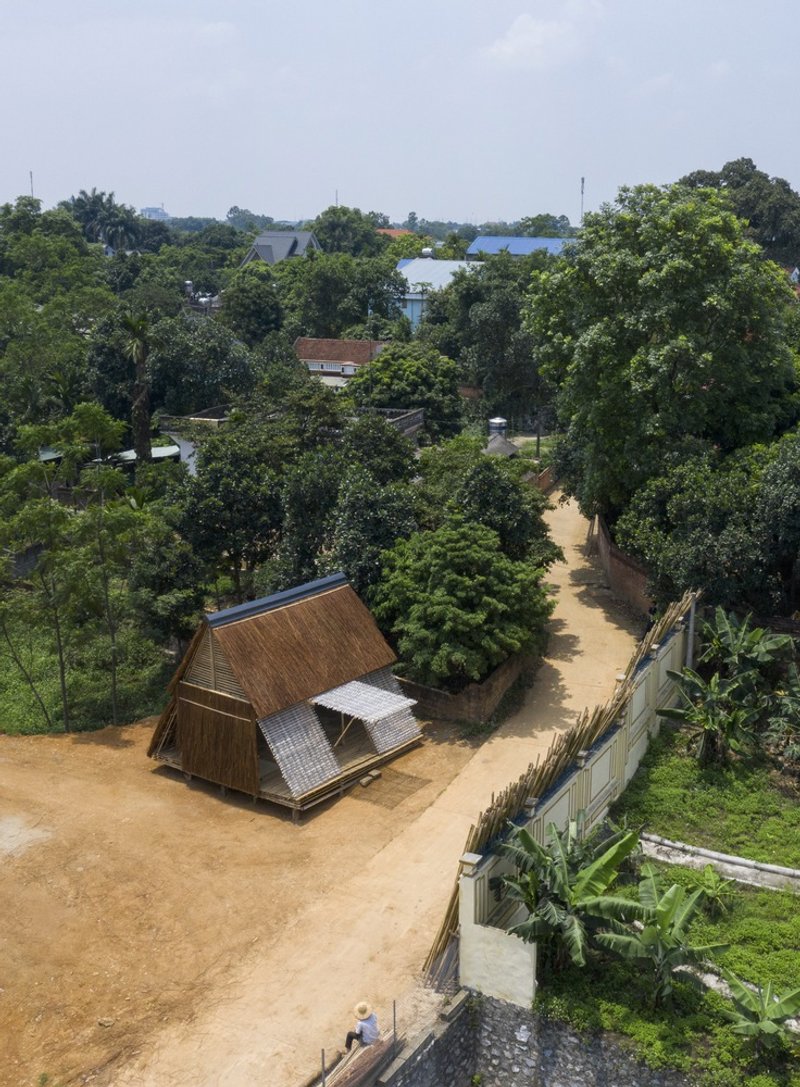
Located in Hồng Thái, Vietnam, the Floating Bamboo House by H&P Architects is a pioneering prototype designed to empower river-dependent communities, particularly in the flood-prone Mekong Delta region. With only 36 square meters of floor area, this compact structure is not just a house—it’s a symbol of climate resilience, cultural continuity, and vernacular innovation.
Constructed from Local, Renewable Materials
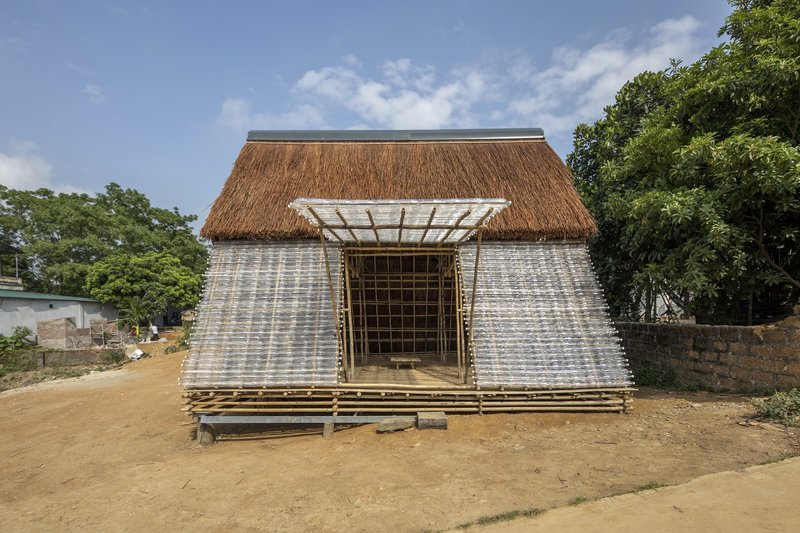
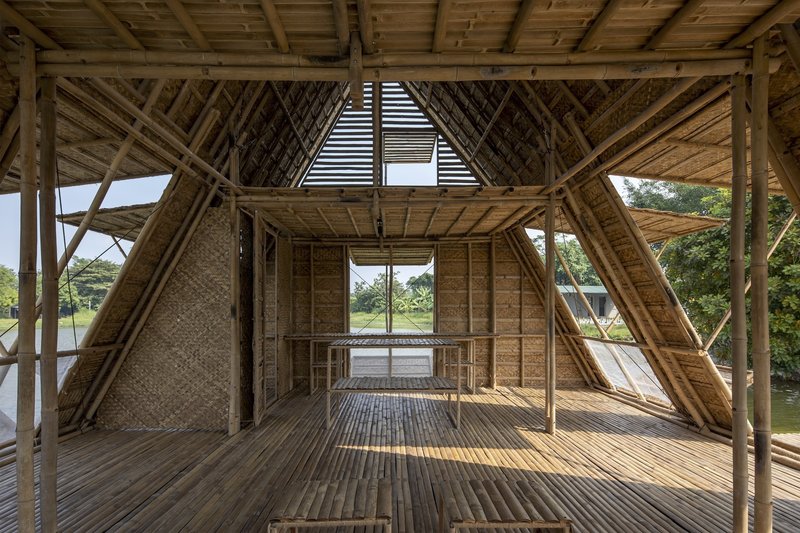
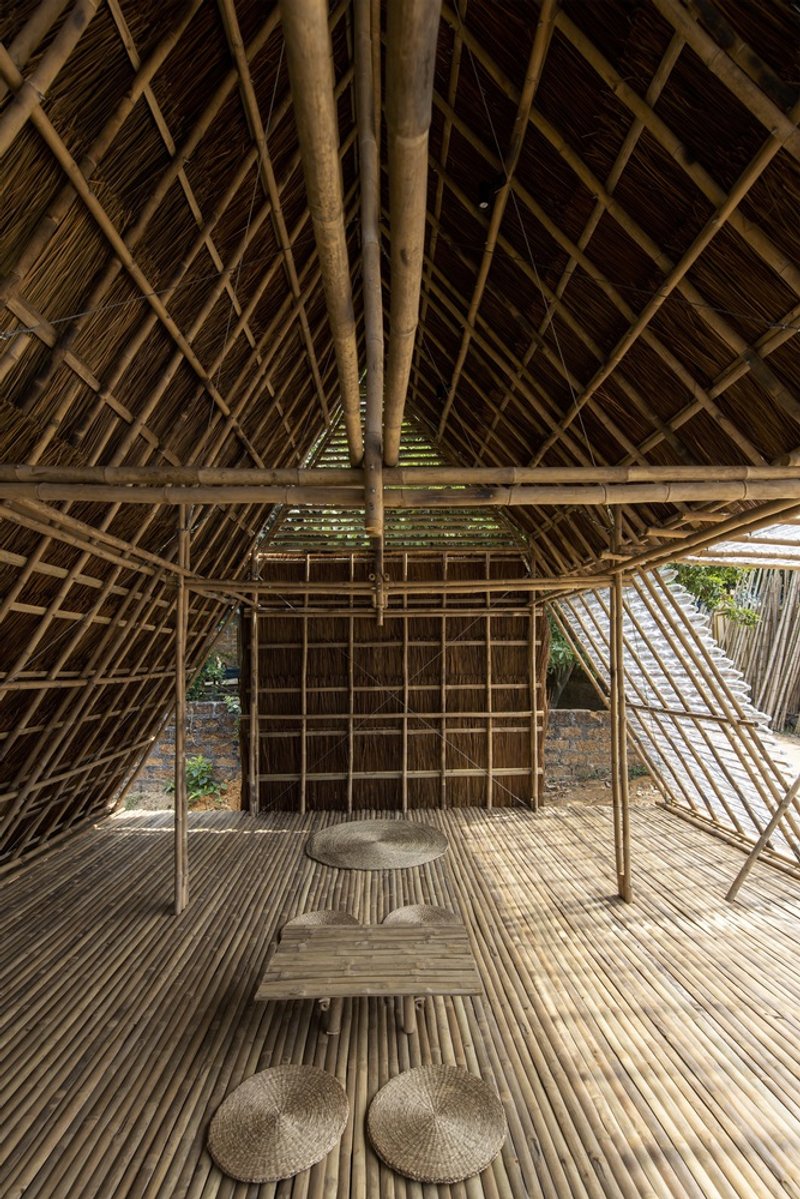
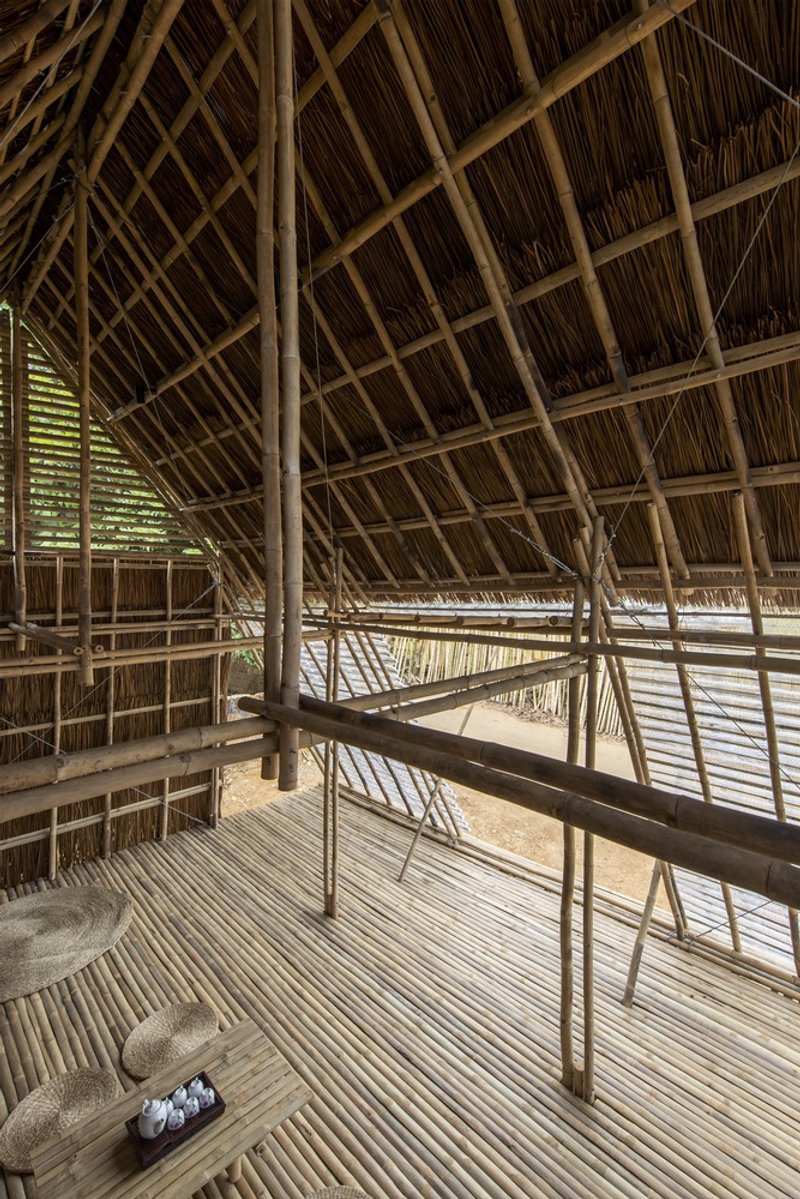
The architecture draws from traditional Vietnamese housing typologies, yet transforms them into a floating solution suitable for modern challenges. The house is built using solid cored bamboo poles (diameter 3–4.5cm, lengths of 3m and 6m) which are fastened using simple, low-tech methods like latches and ties. This approach enables low-cost, DIY construction and encourages local participation and self-sufficiency.
Light, Adaptable Envelope with Smart Resource Integration
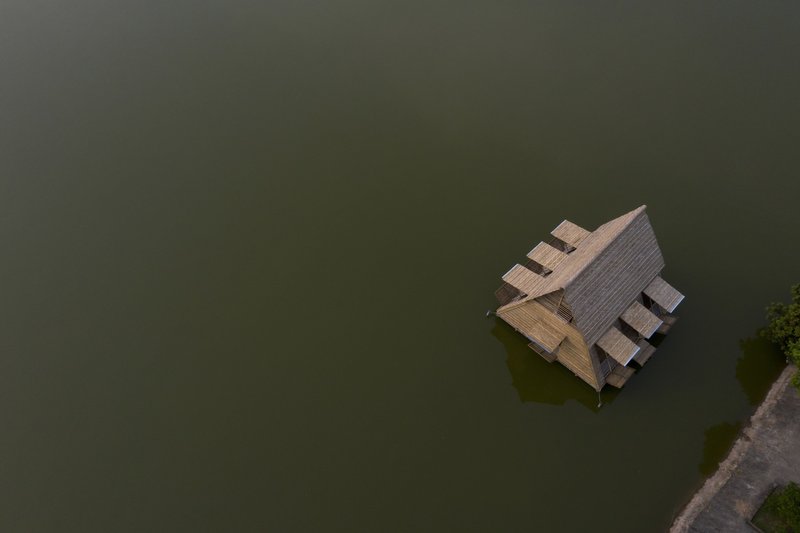
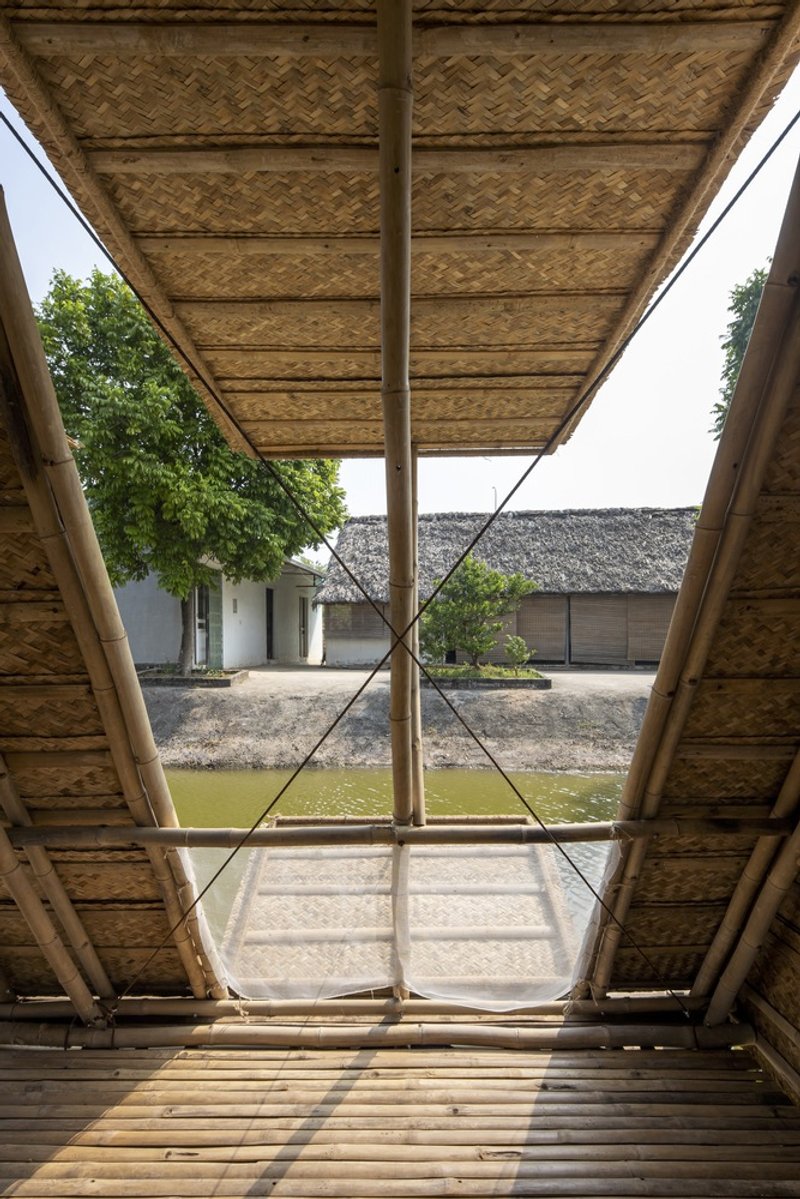
The exterior and interior walls are crafted from woven bamboo sheets, corrugated iron, bamboo screens, and leaves, creating a breathable yet weather-resistant envelope. The oversized roof not only shelters the interior but also collects rainwater and supports solar panels, ensuring off-grid functionality.
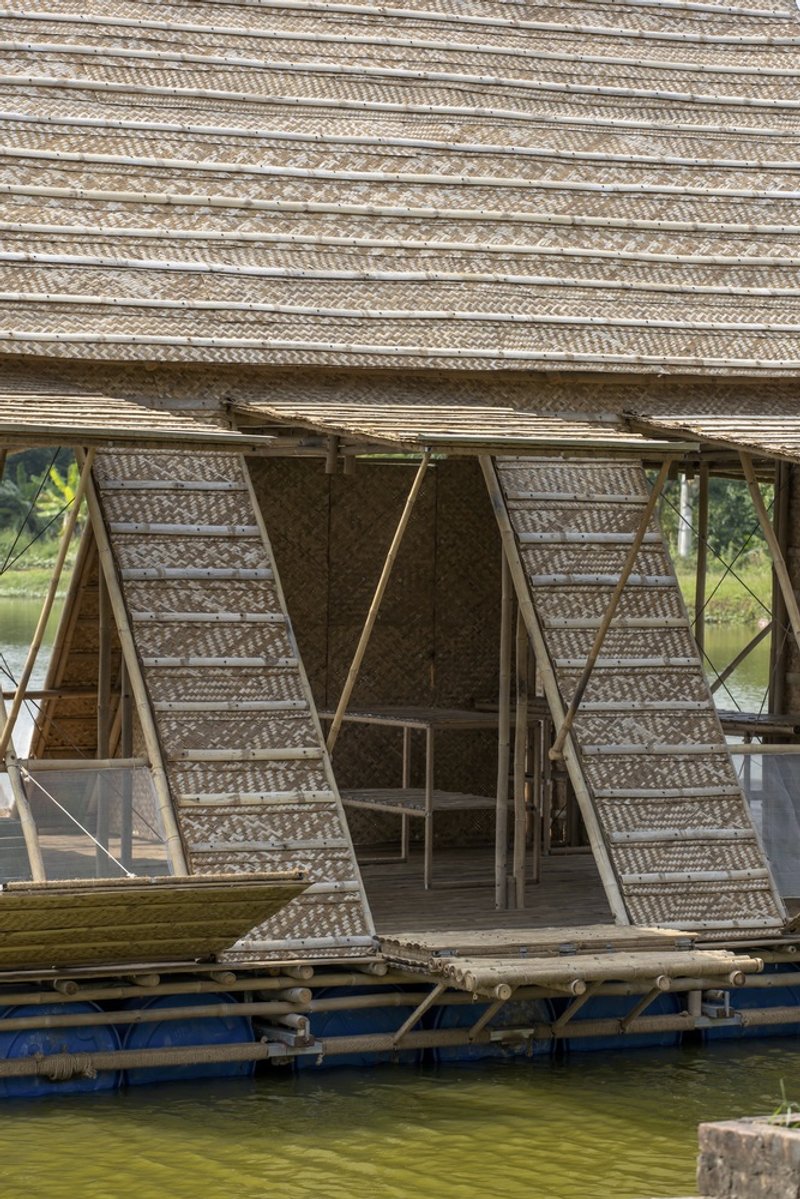
Flexible doors and shutters are designed to respond to changing weather conditions. These elements provide both security and a poetic, floral-like presence on the water—“flowers amidst floating waters,” as described by the architects.
Floating Foundation & Multi-functional Design
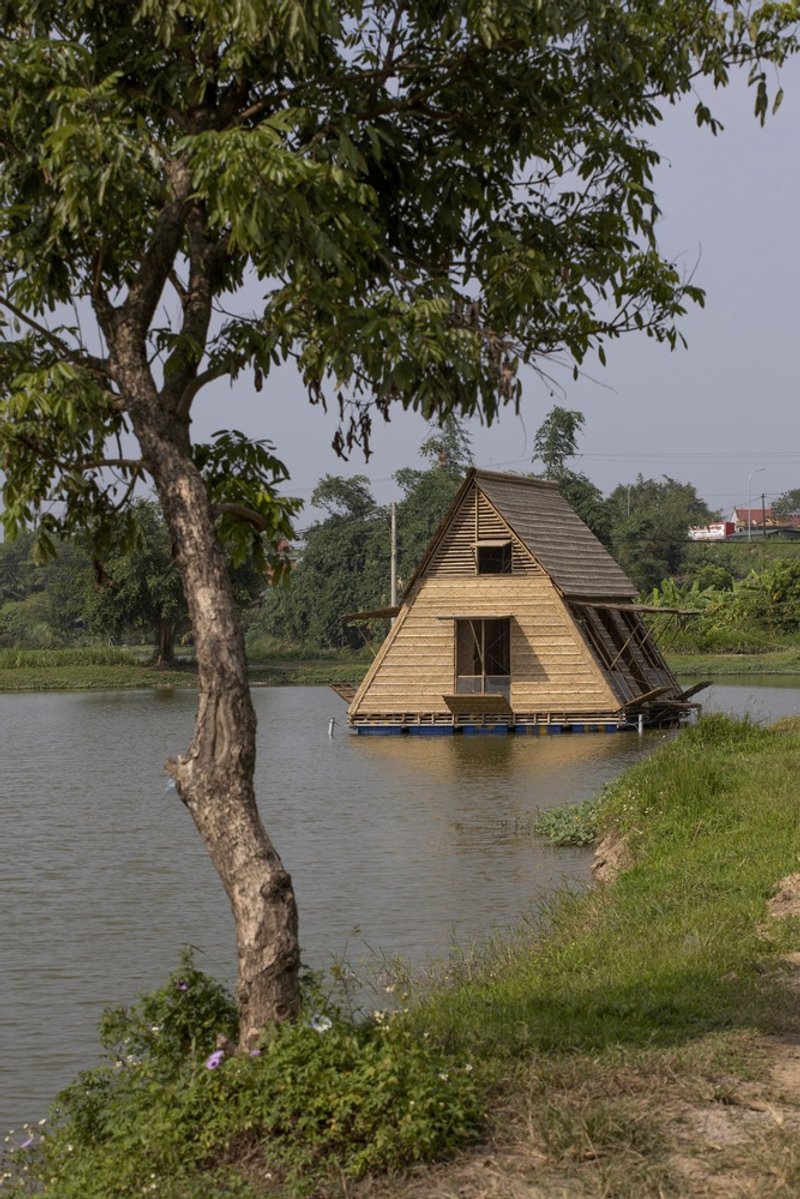
The house is buoyed by plastic drums tied beneath the floor, allowing it to float securely during floods. At its center, the FB House includes integrated freshwater tanks and septic systems to ensure hygiene and environmental stewardship.
With a 6m x 6m square floor plan, the house comprises two levels. The upper level can be partially removed to transform the space into a multi-use pavilion, reminiscent of Vietnam’s traditional communal Rông houses and Đình pavilions. This flexibility allows the house to function as a home, classroom, library, or community space—adapting to the evolving needs of its users.
Building Resilient Floating Communities
Looking ahead, H&P Architects envision entire floating neighborhoods, where multiple FB Houses are linked by shared platforms, vegetable rafts, and fish farms. These floating agglomerations could provide holistic and self-sustaining environments for families displaced by rising sea levels.
Responding to the Realities of Climate Change
Vietnam is one of the world’s most climate-vulnerable nations. With projections estimating that 47% of the Mekong Delta and 13% of the Red River Delta could be submerged due to a 1-meter sea level rise, an estimated 20 to 30 million people are at risk of displacement. The Floating Bamboo House offers a scalable, sustainable, and locally-appropriate solution to this impending crisis, giving impoverished communities the means to build safe and dignified homes in the face of environmental uncertainty.




Popular Articles
Popular articles from the community

Fifth NRE Jazz Club – De Bever Architecten: Eindhoven’s Revitalized Cultural Hub
Historic gas factory transformed into Fifth NRE Jazz Club blending modern sustainability, jazz culture, dining, and heritage architecture seamlessly.
Split House: A Compact Urban Home Blending Privacy, Light, and Flexible Living in Japan
Compact Japanese home featuring DOMA space, flexible café potential, passive lighting, privacy zoning, and sustainable urban living design.

Solar Steam: A Climate-Responsive Architecture That Redefines the Monument
A climate-responsive memorial architecture that transforms heat, decay, and time into a living system reflecting humanity’s ecological impact.
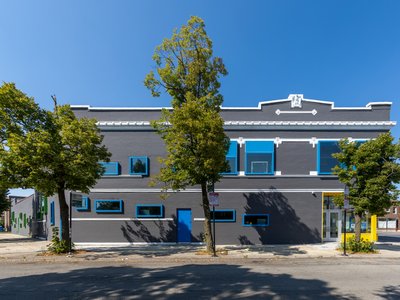
Gads Hill Early Learning Center by JGMA: Adaptive Reuse Shaping Community-Focused Educational Architecture
Adaptive reuse transforms fragmented structure into vibrant early learning center with playful façade, natural light, and community-focused sustainable design.


Similar Reads
You might also enjoy these articles


The Ken Roberts Memorial Delineation Competition (Krob)
As the most senior architectural drawing competition currently in operation anywhere in the world, it draws hundreds of entries each year, awarding the very best submissions in a series of medium-based categories.

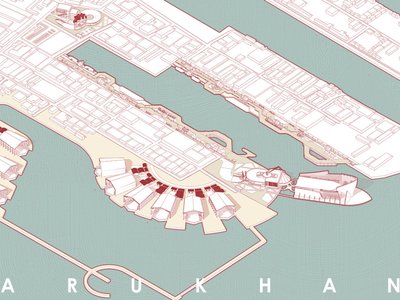
Waterfront Redevelopment and Urban Revitalization in Mumbai: Forging a New Dawn for Darukhana
A transformative waterfront redevelopment project reimagining Darukhana’s shipbreaking heritage into an inclusive urban future.

OUT-OF-MAP: A Call for Postcards on Feminist Narratives of Public Space
Rhizoma Design and Research Lab invites artists, designers, architects, researchers, and students to reflect on how feminist perspectives can reshape public space. Selected works will be exhibited in Barcelona, October 2026. Submissions open until 15 April 2026.


Documentation Work on Buddhist Wooden Temple
Architectural syncretism and cultural hybridity: A comparative study of the Buddhist temples in Chattogram Hill tracks


Explore Architecture Competitions
Discover active competitions in this discipline




The International Standard for Design Portfolios


The Global Benchmark for Architecture Dissertation Awards


The Global Benchmark for Graduation Excellence


Challenge to reimagine the Iron Throne
Comments (0)
Please login or sign up to add comments
No comments yet. Be the first to comment!