
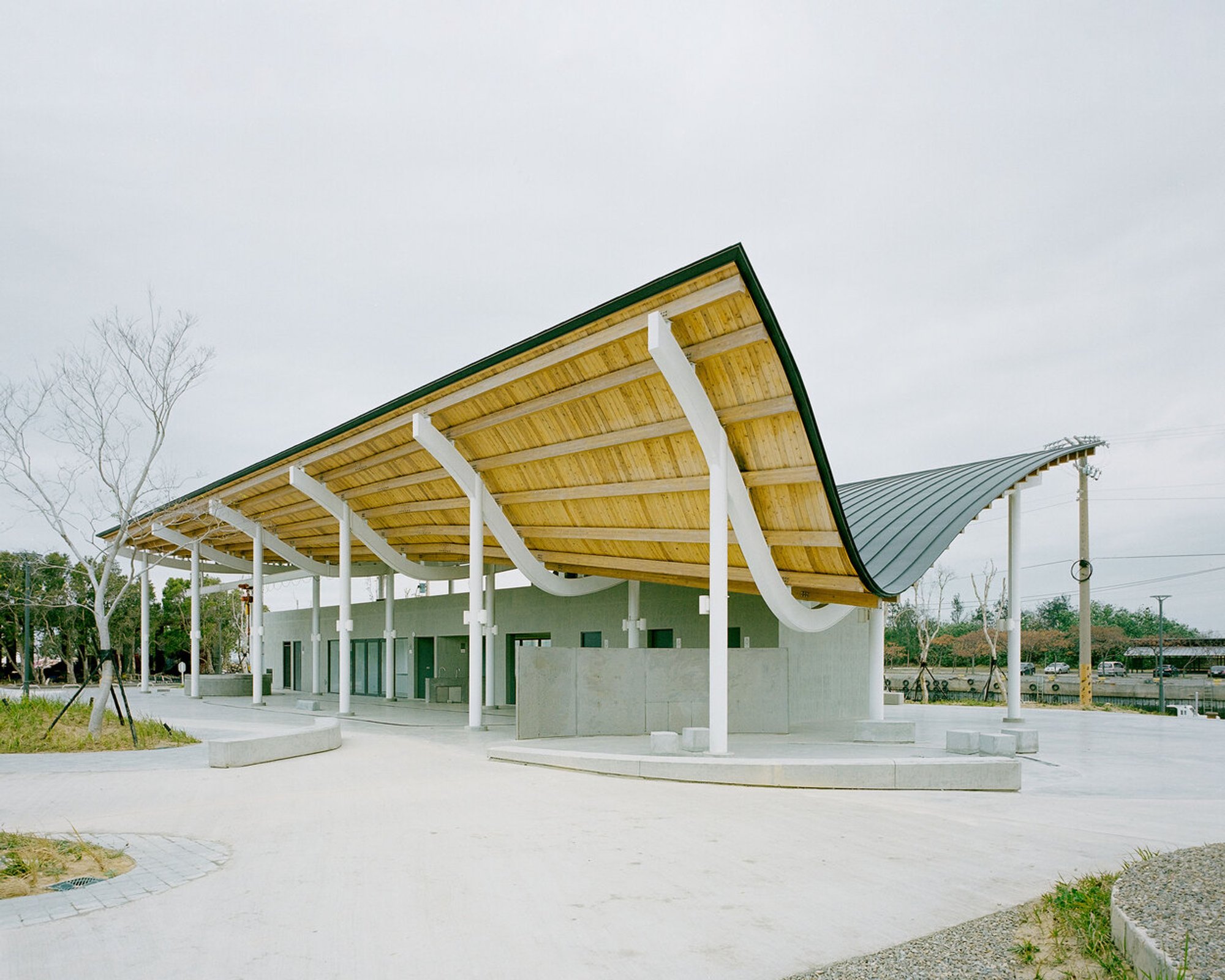
Harbourside Canopy by B+P Architects: A Waterfront Market Rooted in Landscape, Culture, and Community
A timber-and-concrete waterfront canopy blending market, classroom, and landscape, celebrating fishing culture, community life, and coastal rhythms in Hsinchu, Taiwan.

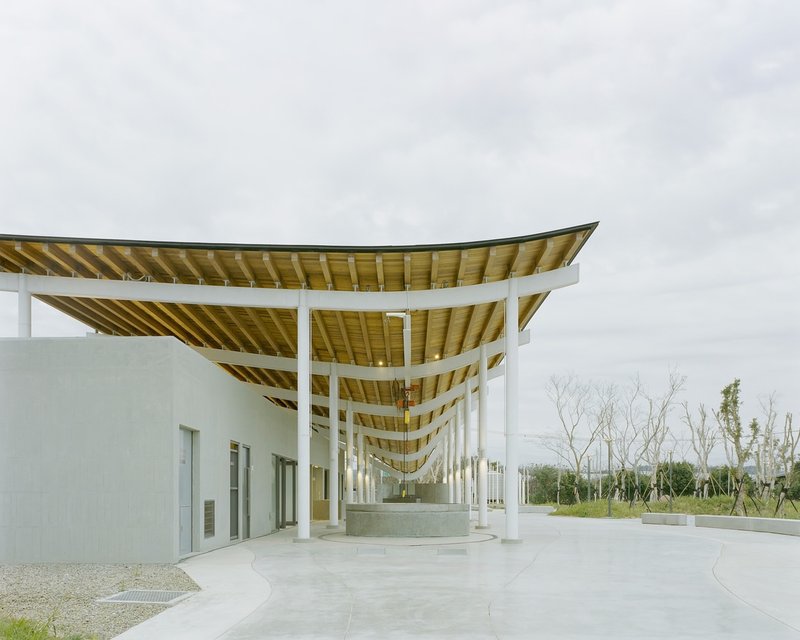
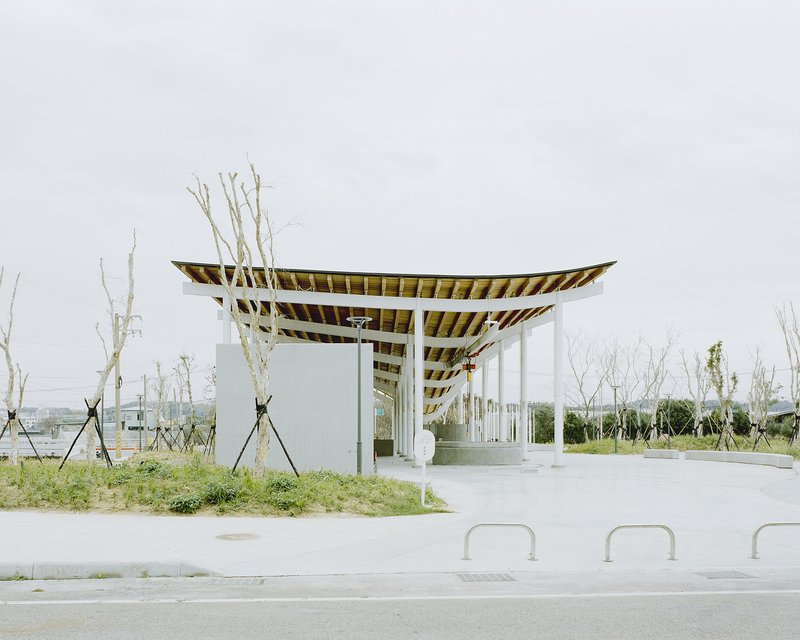
Located in Hsinchu, Taiwan, the Harbourside Canopy by B+P Architects transforms a traditional fishing port into a contemporary waterfront marketplace where culture, community, and coastal ecology converge. Completed in 2025, the 496 m² architectural intervention reimagines the local fishing experience through a minimal yet poetic pavilion structure that blends timber, concrete, windbreak forests, and earth berms into a multifunctional public space.
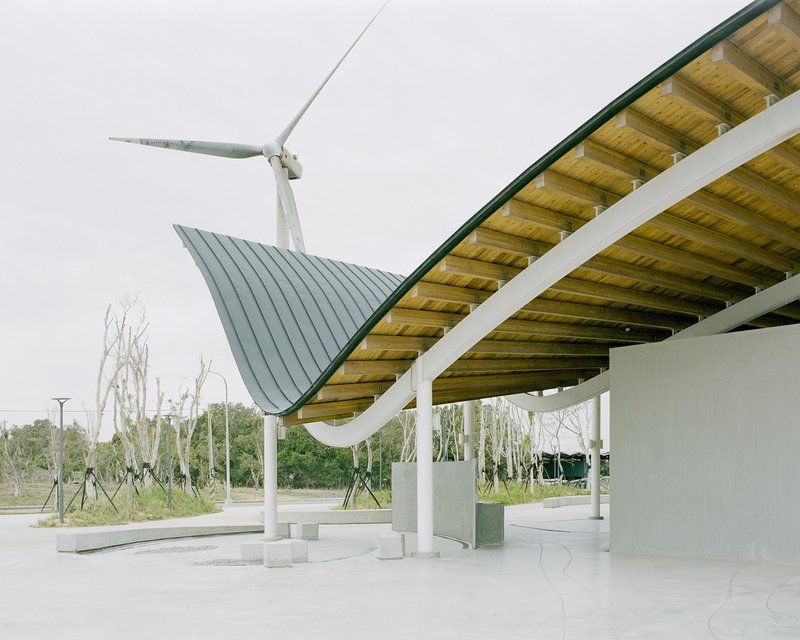
More than a market, the design creates a civic waterfront destination where fishermen, residents, and visitors gather for education, commerce, rest, and cultural exchange. The project reflects Hsinchu’s maritime identity and honors Taiwan’s fishing traditions while introducing sustainable public-realm strategies tailored to the coast’s climate and social rhythms.
A Landscape-Driven Market Pavilion
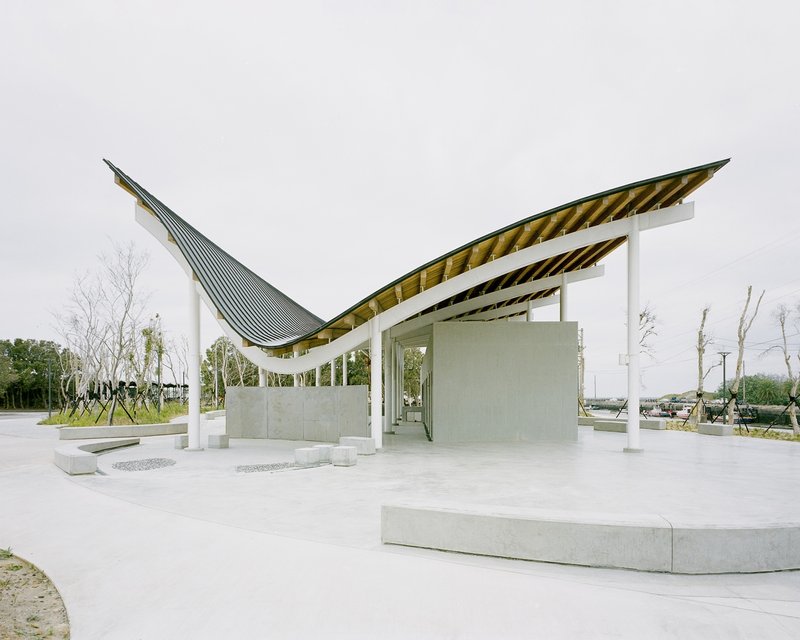
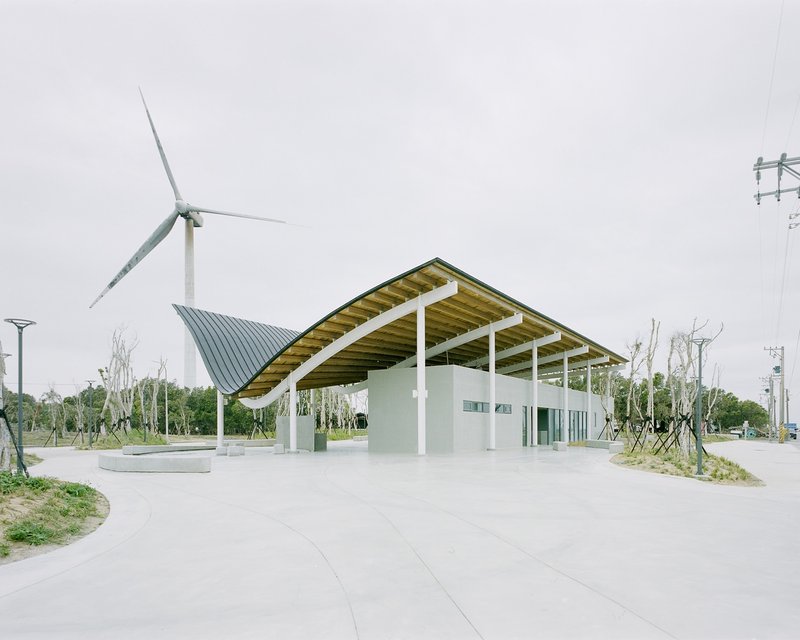
The Harbourside Canopy creates a spatial bridge between sea and land, connecting fishing docks to inland commercial activity. A series of sheds, landscape berms, concrete walls, and timber canopies carve out a porous market space that buffers strong coastal winds and frames daily harbor life.
A north-facing concrete wall anchors the structure along the pier, offering wind protection and visual grounding. Windbreak forests and soft earth berms create transitions between sheltered interiors and open waterfront views, forming a layered coastal landscape where architecture meets terrain.
Rhythm of the Harbor and Fishing Life
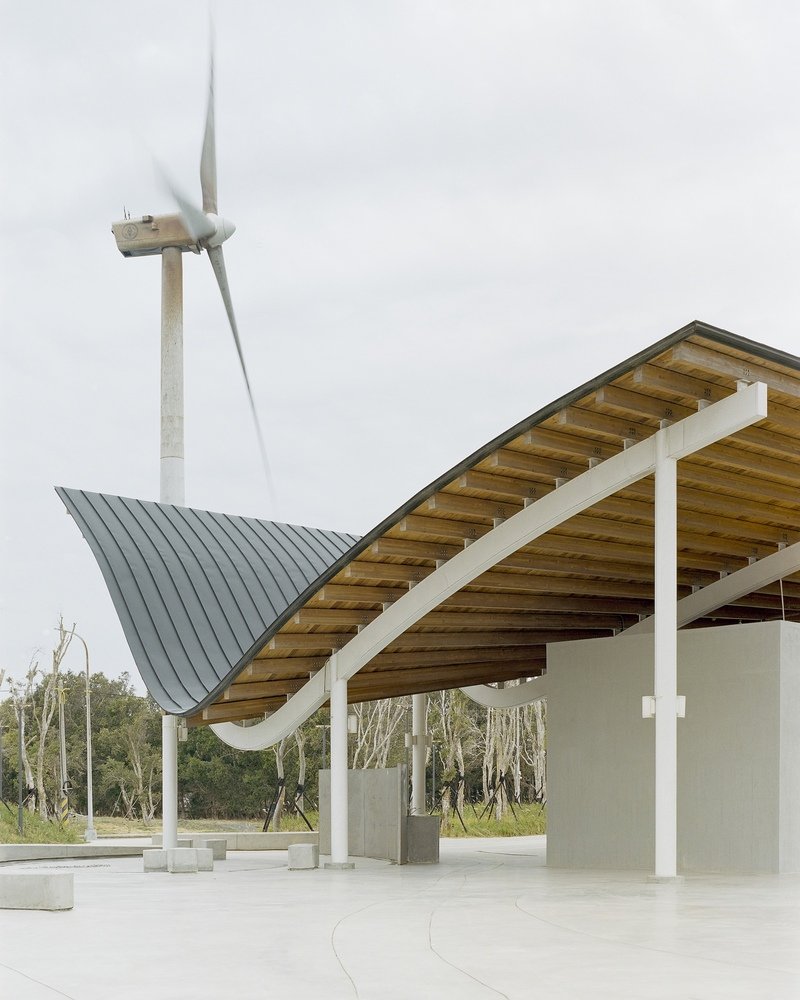
Approaching the port reveals an orchestrated waterfront scene: wind turbines turning at the horizon, Melaleuca trees lining the seawall, and repeating linear steel sheds echoing the movement and tempo of fishing routines. These elements create a visual rhythm reflective of fixed-net fishing culture, stitching together economy, ecology, and daily labor.
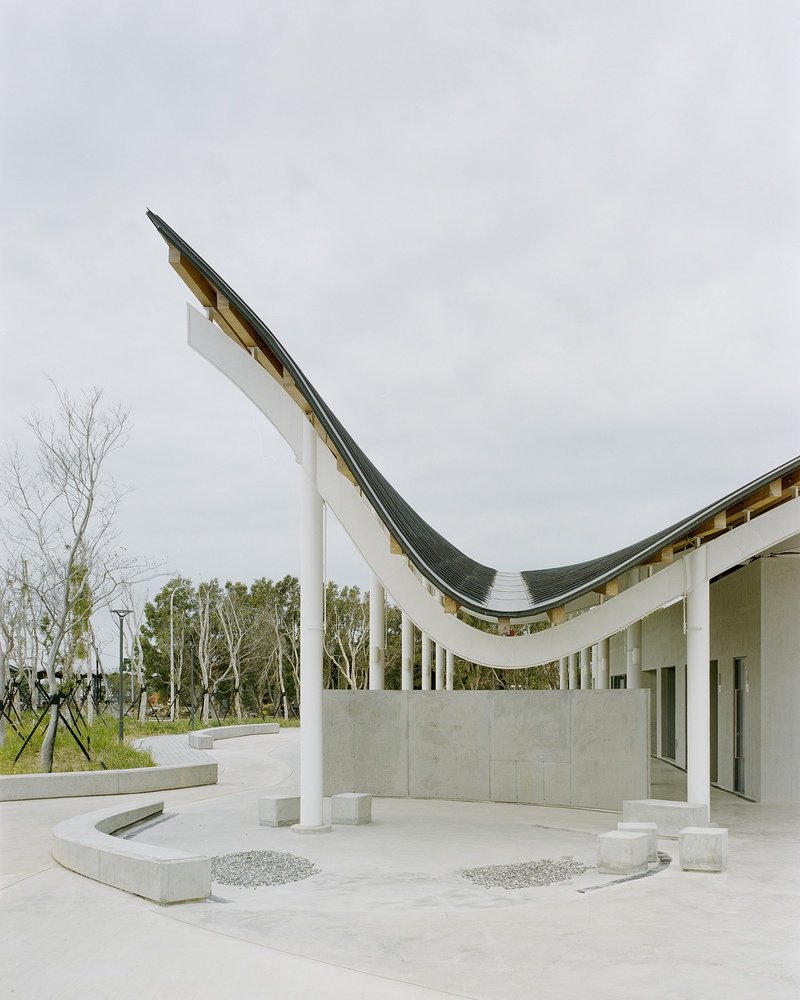
The sheds serve as working shelters where fishermen mend and dry their nets, sort catch, and rest from monsoon winds. Even roadside edges play a role, doubling as platforms for net drying—demonstrating how nature, labor, and architecture function as a continuous working landscape.
Market, Classroom, and Social Hub
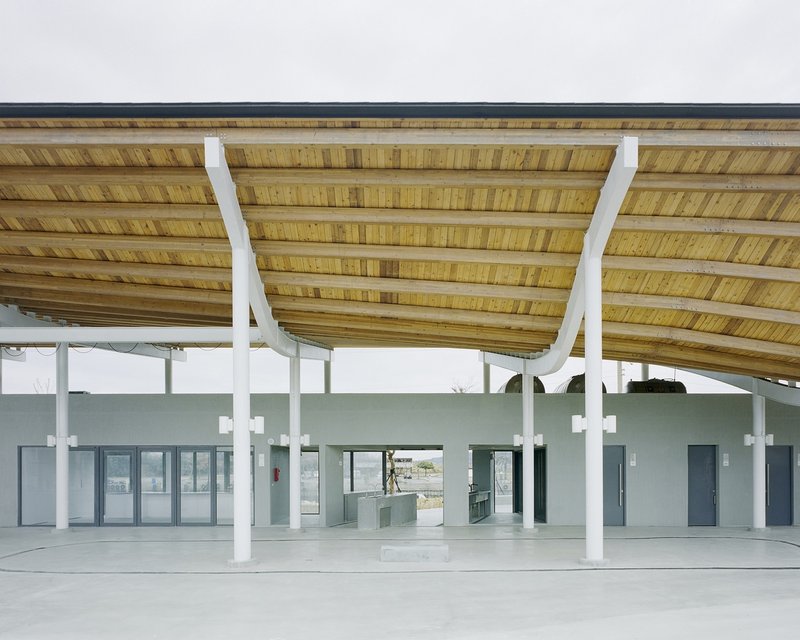
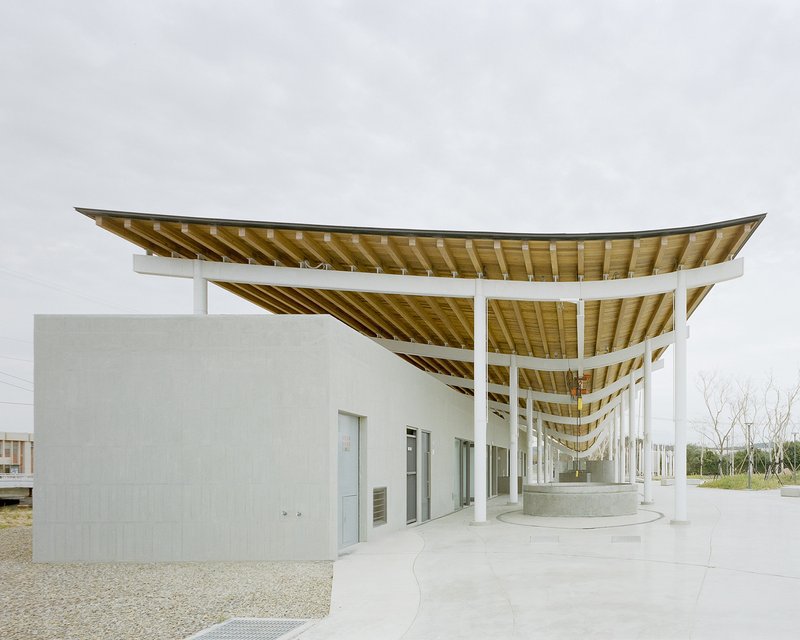
At the heart of the project lies a versatile market space, conceived as a living landscape pavilion rather than a conventional building. The design organizes concrete trays, fish washing stations, circular pans, and temporary vendor setups according to the sequence of fishing operations—from unloading and cleaning to sorting and selling.
A classroom sits between harbor and market, allowing sightlines and movement to flow seamlessly through the learning environment. The sounds of fishing boats, conversations, and water activity become part of the educational and market experience, strengthening local cultural immersion.
A timber-framed roof supported by steel crane beams shelters the central zone, guiding circulation and forming shallow rainwater pools below. These pools become reflective, communal moments where people pause amid the bustle—an elegant blending of architecture, landscape, and water.
Visual Connections and Sensory Experience
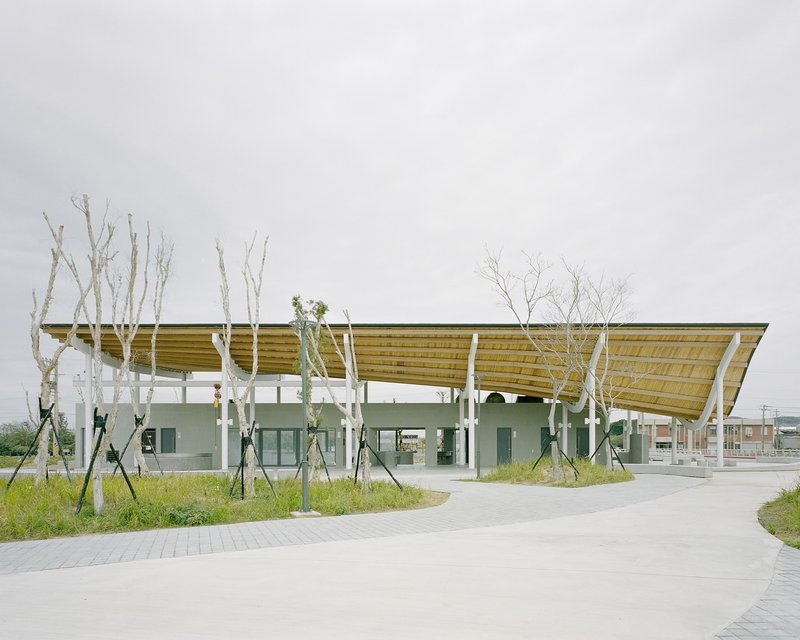
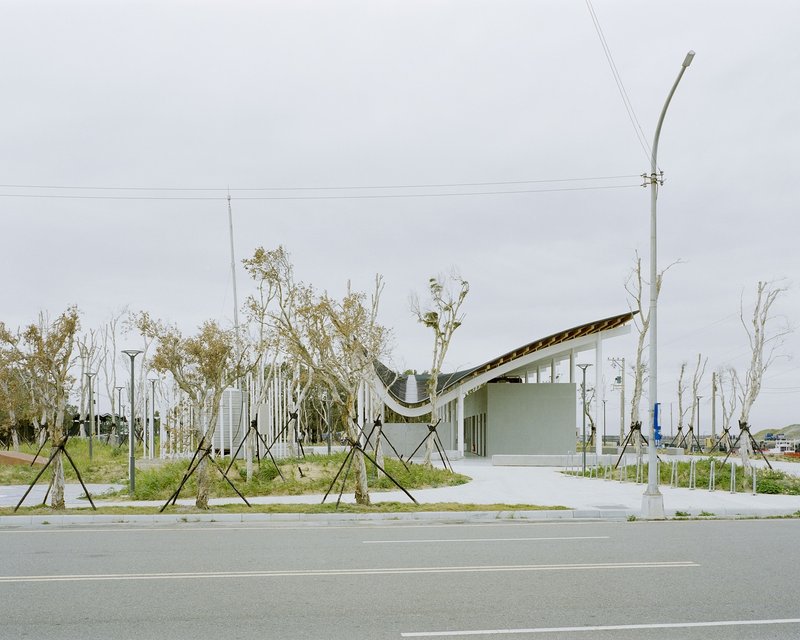
The project prioritizes soft transitions and framed views. From the outer road, glimpses of market activity filter through tree groves. On the southern slope, Melaleuca forests create shaded seating and natural rest pockets. Movement across the site unfolds through shifting views—from harbor to classroom, from docks to market stalls, and between shaded paths and sunlit clearings.
This subtle choreography of light, shadow, and landscape creates a tranquil yet active civic waterfront, turning everyday work into an experiential journey.
A Community Anchor for the Waterfront
Today, the Harbourside Canopy serves not only fishermen but also local indigenous communities, cyclists, travelers, and families. Acting as both gateway and gathering place, the structure becomes a cultural rest stop and service station along coastal routes.
Rather than imposing form, the architecture supports daily life, frames traditional practices, and reveals the beauty of labor, wind, sky, and tide. It stands as a quiet, grounded celebration of Taiwan’s fishing heritage—where community meets coast, and where landscape becomes market, classroom, and public living room.
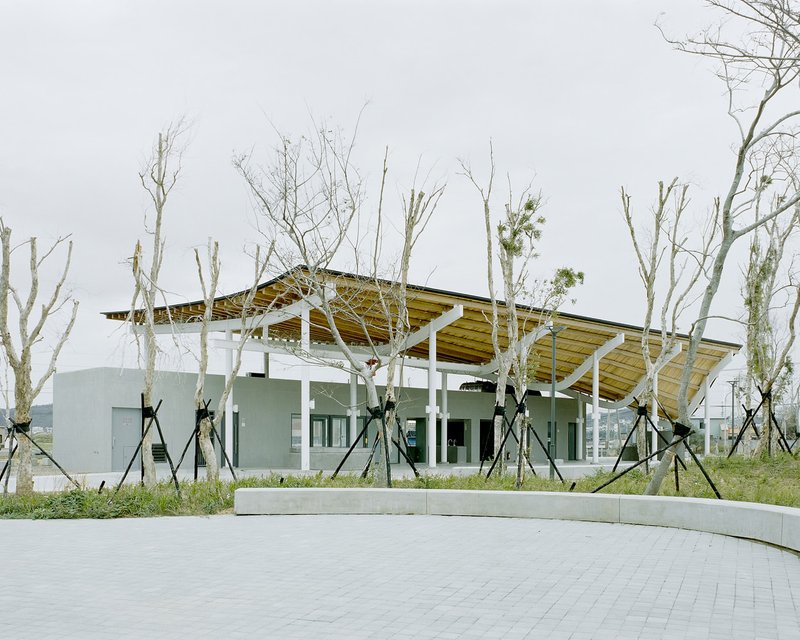
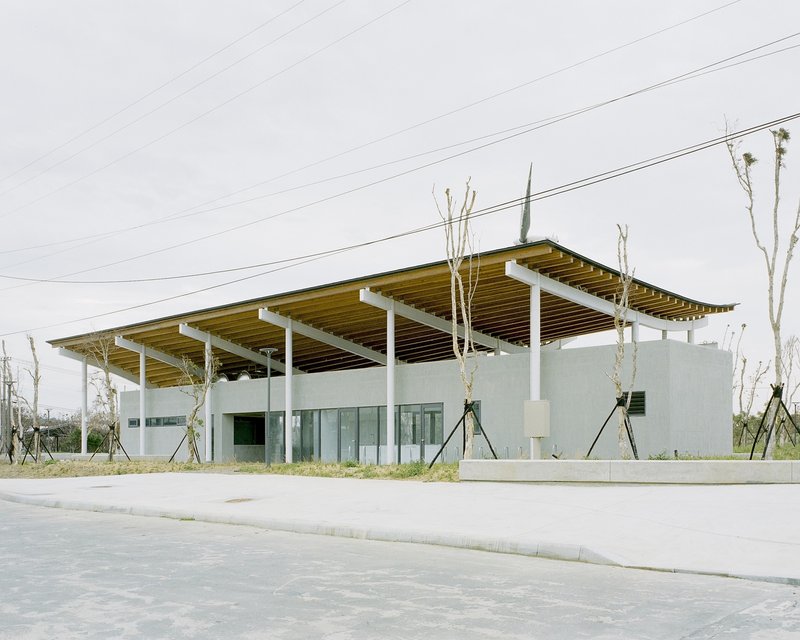
All photographs are works of Studio Millspace




Popular Articles
Popular articles from the community

An Miên Lumière Cafe by xưởng xép, Ho Chi Minh City, Vietnam
An industrial-inspired café where layered steel and warm light create a dynamic, immersive environment shaped by reflection, depth, and perception.
A Contemporary Take on Iranian Residential Architecture
A modern interior design in Mashhad that reinterprets brick, light, and spatial flow to create a warm, contemporary residential architecture.
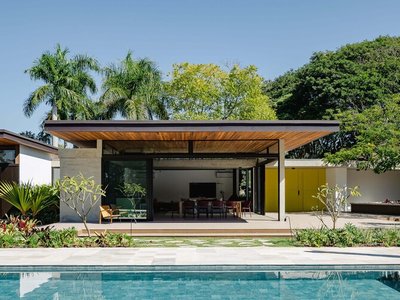
Flamboyant House by Juliana Camargo + Prumo Projetos
Modern Brazilian house integrating existing tree, pool, and volumes with glass, wood, and transitional spaces blending interior, exterior, and landscape seamlessly.
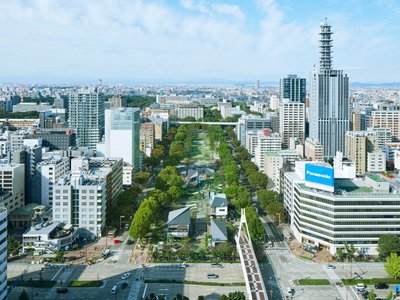
On the Brooks House by Monsoon Collective – A Contemporary Kerala Home Rooted in Tradition
Kerala home blending tradition and modernity with water-inspired design, brick architecture, courtyard planning, and sustainable rainwater harvesting strategies.


Similar Reads
You might also enjoy these articles


The Ken Roberts Memorial Delineation Competition (Krob)
As the most senior architectural drawing competition currently in operation anywhere in the world, it draws hundreds of entries each year, awarding the very best submissions in a series of medium-based categories.


Waterfront Redevelopment and Urban Revitalization in Mumbai: Forging a New Dawn for Darukhana
A transformative waterfront redevelopment project reimagining Darukhana’s shipbreaking heritage into an inclusive urban future.

OUT-OF-MAP: A Call for Postcards on Feminist Narratives of Public Space
Rhizoma Design and Research Lab invites artists, designers, architects, researchers, and students to reflect on how feminist perspectives can reshape public space. Selected works will be exhibited in Barcelona, October 2026. Submissions open until 15 April 2026.


Documentation Work on Buddhist Wooden Temple
Architectural syncretism and cultural hybridity: A comparative study of the Buddhist temples in Chattogram Hill tracks


Explore Architecture Competitions
Discover active competitions in this discipline




The International Standard for Design Portfolios


The Global Benchmark for Architecture Dissertation Awards


The Global Benchmark for Graduation Excellence

Challenge to design locus for the upliftment of human rights
Comments (0)
Please login or sign up to add comments
No comments yet. Be the first to comment!