
Himawari Nursery School by AKAIKE TOHYAMA ARCHITECTS: A Child-Centric Wooden Sanctuary in Tokyo
Himawari Nursery School is a child-centered, timber-designed preschool in Tokyo, promoting playful interaction, sensory learning, and community integration.

Location: Musashimurayama City, Tokyo, Japan Architects: AKAIKE TOHYAMA ARCHITECTS Project Area: 808 m² Completion Year: 2022 Photography: © Masaki Hamada (kkpo)
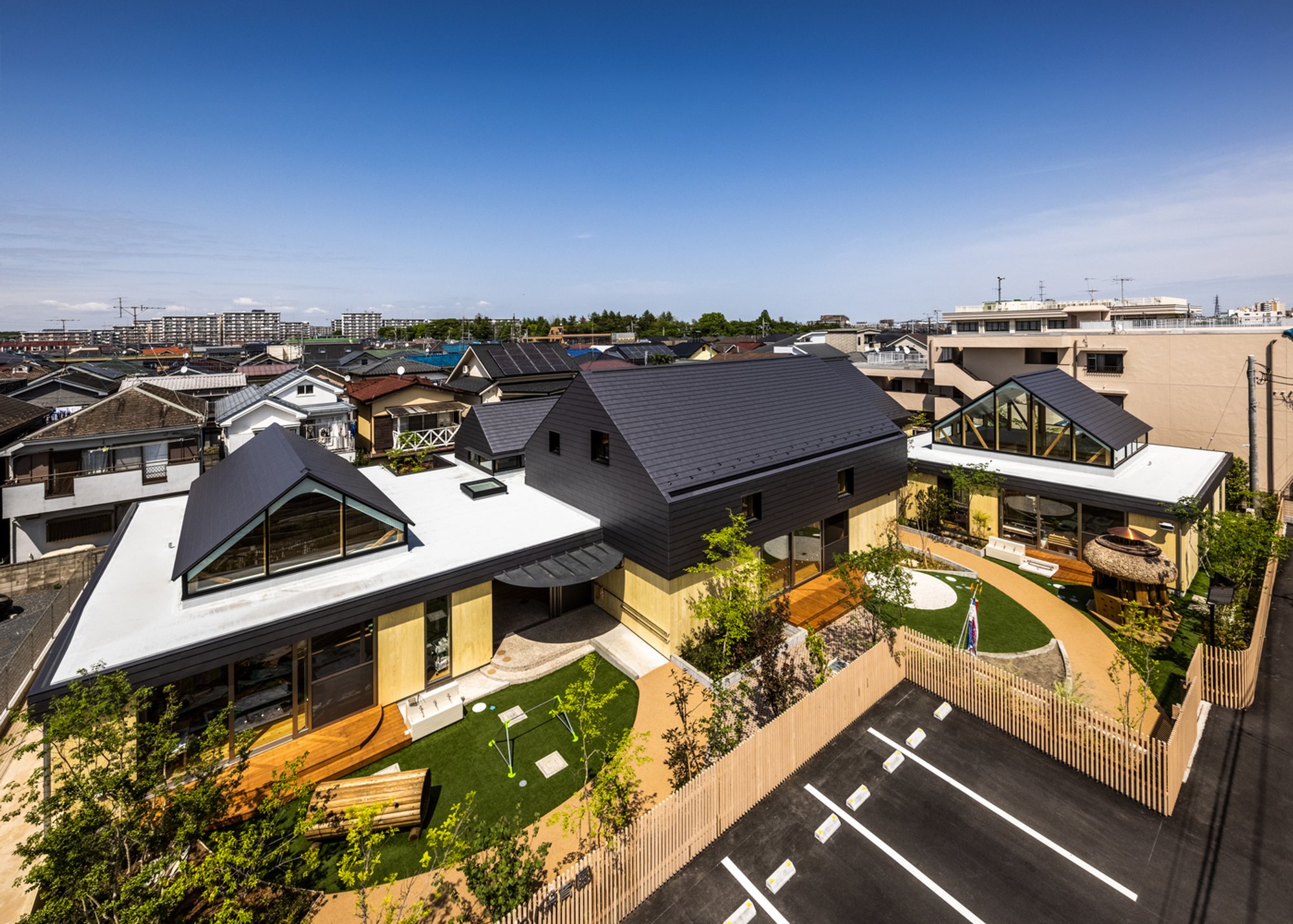
In the heart of Musashimurayama City, Tokyo, Himawari Nursery School emerges as a contemporary reimagining of early childhood learning spaces. Designed by AKAIKE TOHYAMA ARCHITECTS, this one-story wooden structure redefines the preschool typology through a fusion of natural materials, open-ended play environments, and architectural zoning that fosters interaction across age groups.
A Nursery School Rooted in Community and Nature
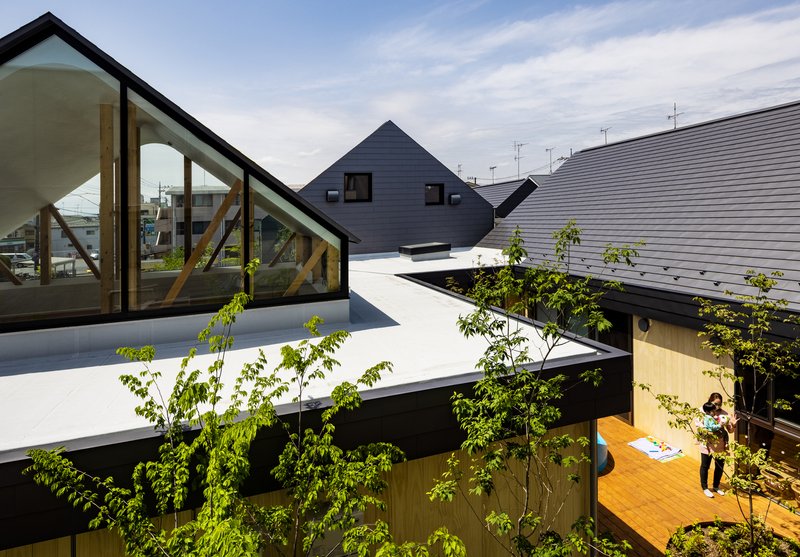
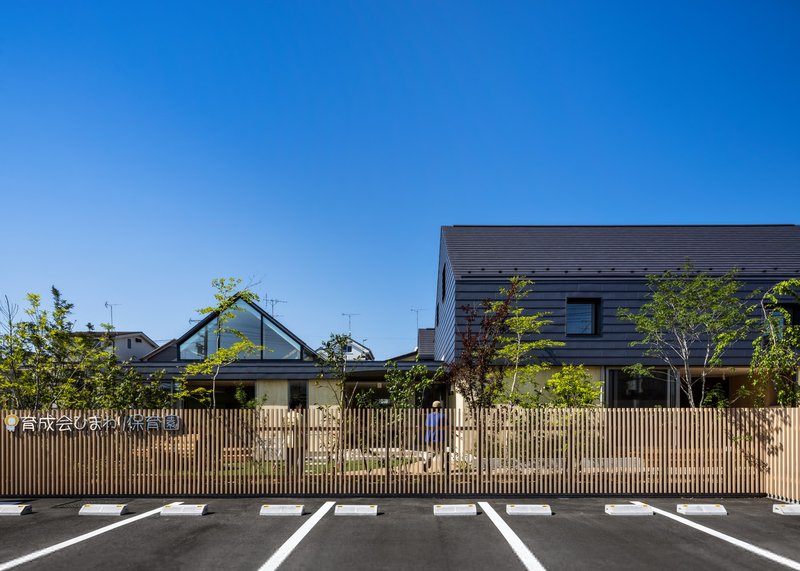
Responding to the urban fabric of Tokyo’s residential outskirts—where the Musashino Plateau meets the Sayama Hills—the architects sought to create a structure that seamlessly blends with the surrounding neighborhood. Unlike the former two-story reinforced concrete building, the new design is low-rise, timber-clad, and human-scaled, ensuring it complements the scale of adjacent detached homes. This conscious zoning choice enables intergenerational interaction, enhancing the social dynamics of early childhood education.
One-Story Wooden Architecture Encouraging Interaction
Central to the architectural vision was the client’s desire to eliminate the hierarchical separation found in the previous building. By situating all childcare functions—including nursery rooms, a multi-purpose hall, and play areas—on the ground floor, the design promotes a fluid spatial experience. Staff and administrative spaces are housed discretely on the second level, ensuring that children's daily rhythms remain uninterrupted and interconnected.
This layout also encourages age-integrated learning, where toddlers and older children can freely interact and move between zones, cultivating empathy, mentorship, and community from an early age.
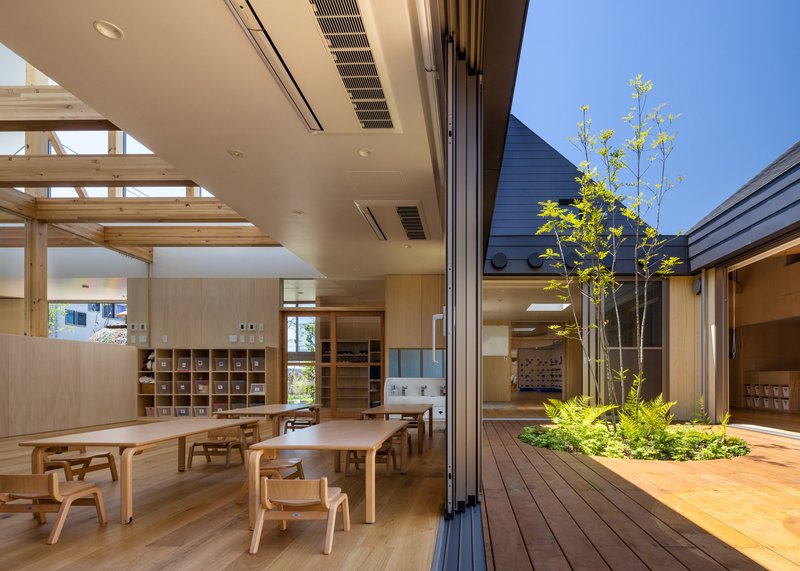
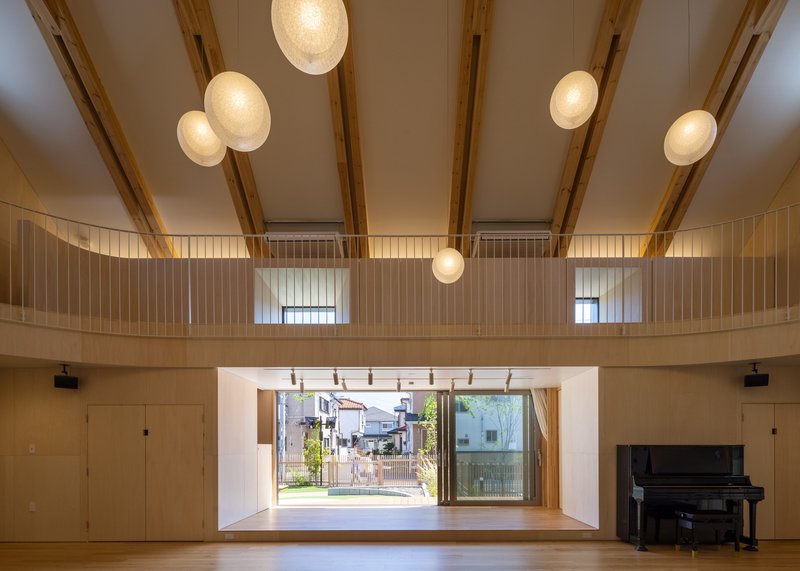
A Landscape of Movement: Playgrounds Interwoven with Architecture
The site design adopts a unique strategy: instead of a single central playground, it features a network of smaller outdoor play areas organically scattered around the built volumes. This approach transforms the entire school into a continuous playground, offering children diverse environments for exploration, movement, and sensory engagement.
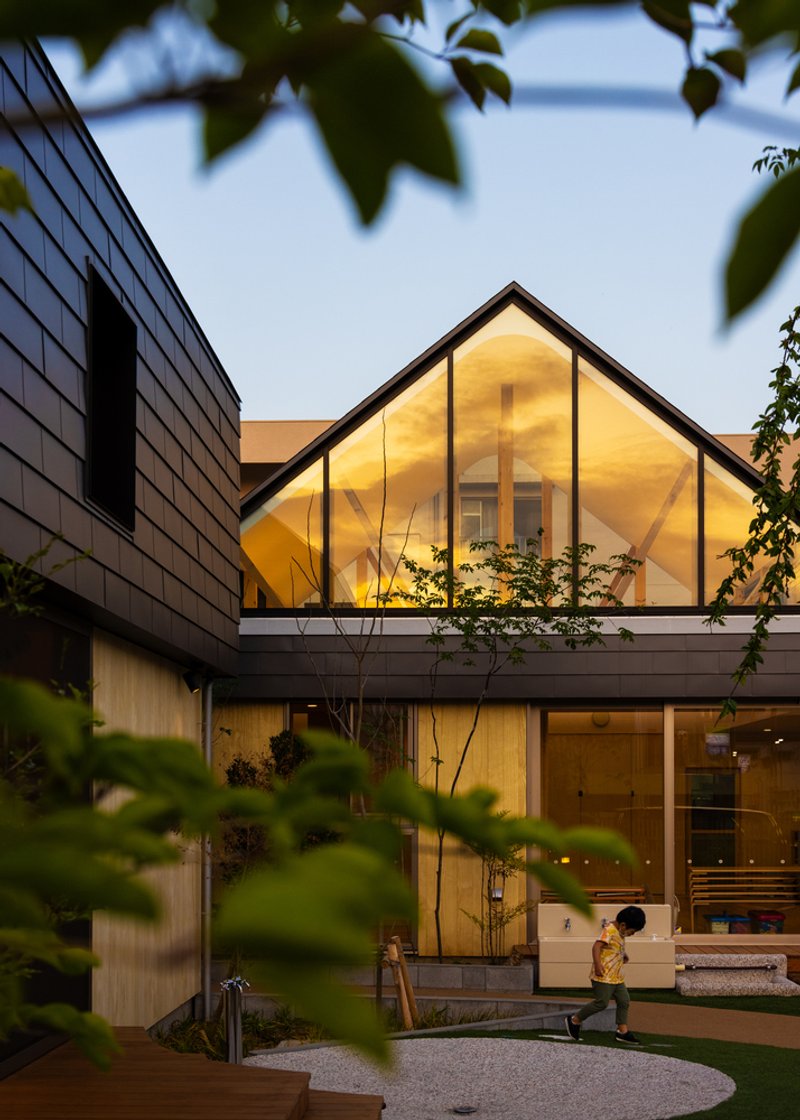
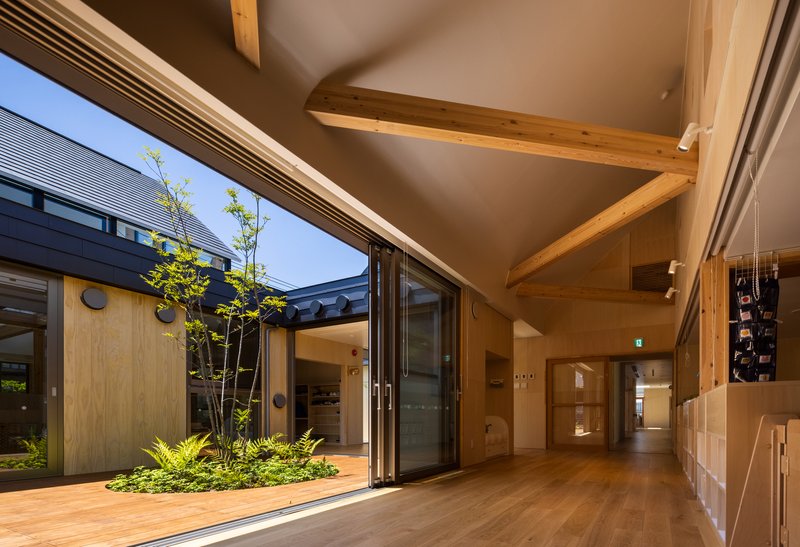
By dispersing volumes across the site, the architects generated a circulatory system that blurs the line between indoor and outdoor spaces. Pathways and courtyards flow effortlessly from classrooms to open-air yards, ensuring that children remain connected to nature and their environment throughout the day.
The design further stimulates exploration with tactile contrasts, including textured pavements, uneven ground planes, and seasonal plantings—trees that flower in spring and bear fruit in autumn—engaging all five senses in the learning experience.
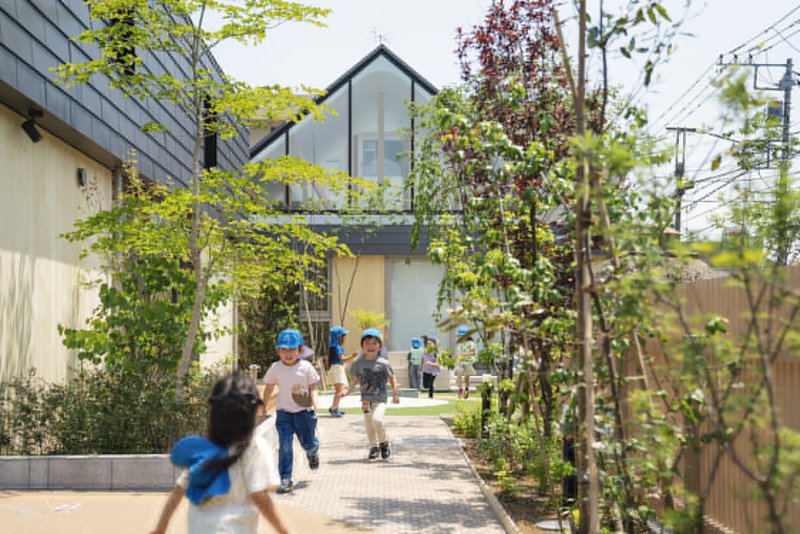
Architectural Identity: Five Wooden Houses within a Nursery School
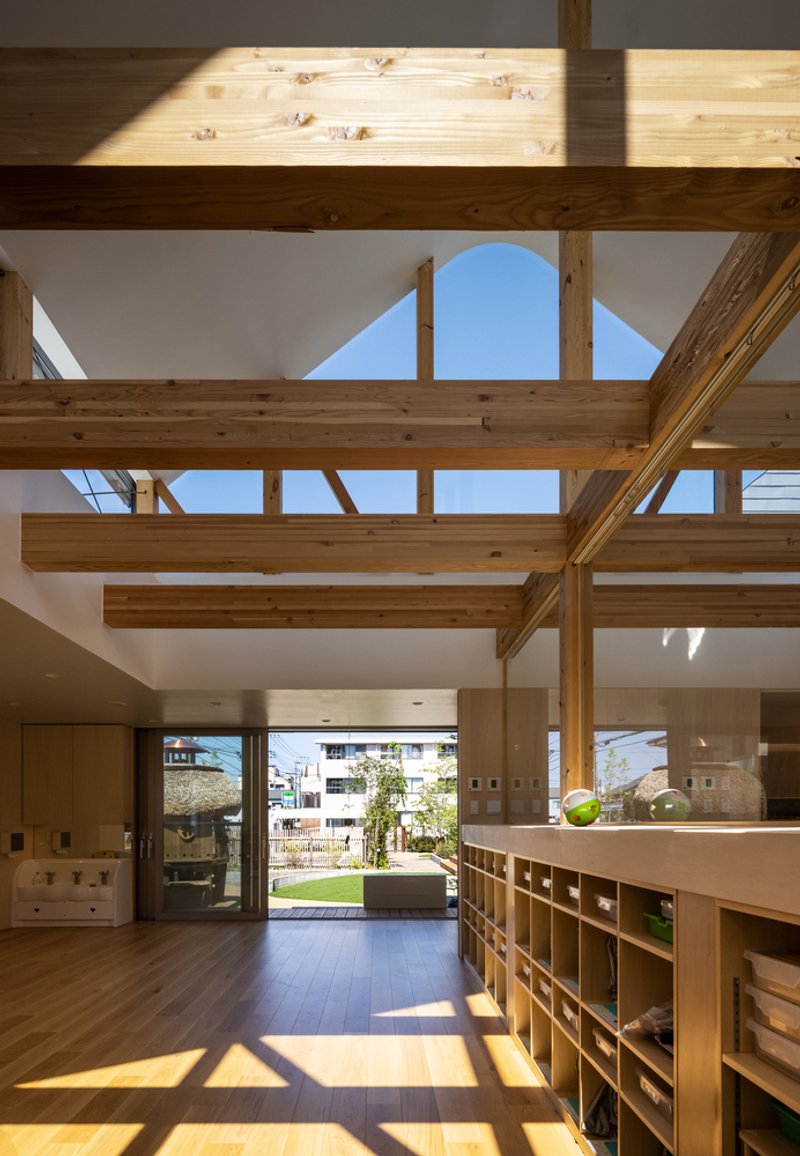
Rather than constructing a single monolithic volume, the school comprises five house-like structures beneath a gently sloping flat roof. These gabled forms echo the silhouette of traditional homes, fostering familiarity and a sense of belonging for children. The varying shapes also create distinct identities for each space, giving every room a unique atmosphere and function.
Exposed timber beams, warm wooden finishes, and natural light permeate each classroom and communal space, enveloping children in a serene and nurturing setting. The extensive use of wood, both internally and externally, emphasizes sustainability and child-friendly design, while also enhancing the building’s tactile quality.
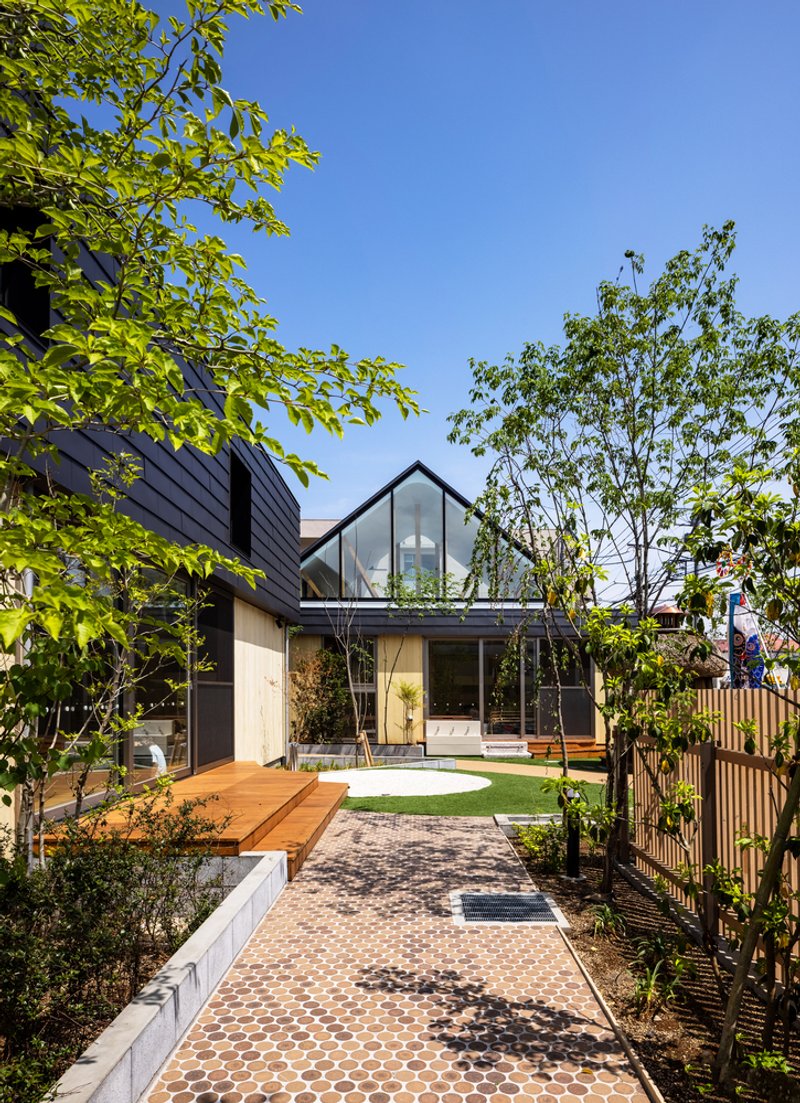
Integrating Architecture with Daily Life
The project also reflects a philosophy of everyday usability over large, event-centric spaces. The school’s modestly sized courtyards and garden paths are intentionally intimate, supporting spontaneous play and day-to-day exploration. The design intentionally avoids the traditional model of a large central yard, instead offering alley-like walkways that encourage movement between different outdoor nooks.
By interweaving small gardens, passageways, and building volumes, the architecture mirrors the scale and rhythm of urban life, inviting children to engage with their environment as a lived experience rather than a formal institution.
Project Team and Credits
- Lead Architects: Yukiko Akaike, Shinya Tohyama
- Structural Engineering: Ryoma Murata Building Studio
- Facility Engineering: NoMaDoS
- Landscape Design: Green Wise Co., Norifumi Hirata, Keiko Suzuki
- Construction: Hosoda Construction Co., Ltd.




Popular Articles
Popular articles from the community

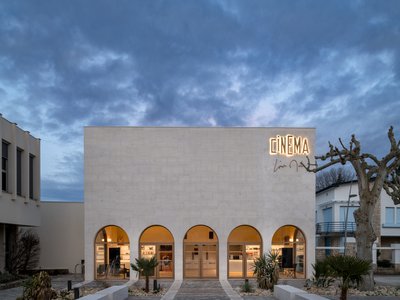
Louis Malle Cinema: A Limestone Cultural Landmark Revitalizing Community Life in Prayssac
Limestone cinema extension with public forecourt, blending heritage and modern design to create flexible cultural spaces and strengthen community interaction.
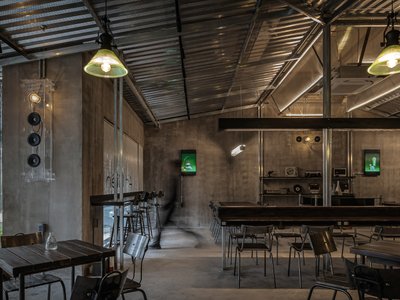
An Miên Lumière Cafe by xưởng xép, Ho Chi Minh City, Vietnam
An industrial-inspired café where layered steel and warm light create a dynamic, immersive environment shaped by reflection, depth, and perception.

Solar Steam: A Climate-Responsive Architecture That Redefines the Monument
A climate-responsive memorial architecture that transforms heat, decay, and time into a living system reflecting humanity’s ecological impact.


The Ken Roberts Memorial Delineation Competition (Krob)
As the most senior architectural drawing competition currently in operation anywhere in the world, it draws hundreds of entries each year, awarding the very best submissions in a series of medium-based categories.


Similar Reads
You might also enjoy these articles
The Ken Roberts Memorial Delineation Competition (Krob)
As the most senior architectural drawing competition currently in operation anywhere in the world, it draws hundreds of entries each year, awarding the very best submissions in a series of medium-based categories.


Waterfront Redevelopment and Urban Revitalization in Mumbai: Forging a New Dawn for Darukhana
A transformative waterfront redevelopment project reimagining Darukhana’s shipbreaking heritage into an inclusive urban future.

OUT-OF-MAP: A Call for Postcards on Feminist Narratives of Public Space
Rhizoma Design and Research Lab invites artists, designers, architects, researchers, and students to reflect on how feminist perspectives can reshape public space. Selected works will be exhibited in Barcelona, October 2026. Submissions open until 15 April 2026.

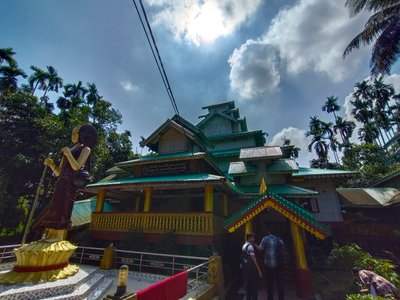
Documentation Work on Buddhist Wooden Temple
Architectural syncretism and cultural hybridity: A comparative study of the Buddhist temples in Chattogram Hill tracks


Explore Architecture Competitions
Discover active competitions in this discipline




The International Standard for Design Portfolios


The Global Benchmark for Architecture Dissertation Awards


The Global Benchmark for Graduation Excellence


Challenge to design public laboratory
Comments (0)
Please login or sign up to add comments
No comments yet. Be the first to comment!