
House in Toyama by NYAWA: A Sustainable Renovation in Hokuriku, Japan
A sustainable renovation in Toyama, Japan, blending traditional Japanese architecture with modern efficiency, passive design, and eco-friendly materials.

Revitalizing Tradition with Modern Sustainability
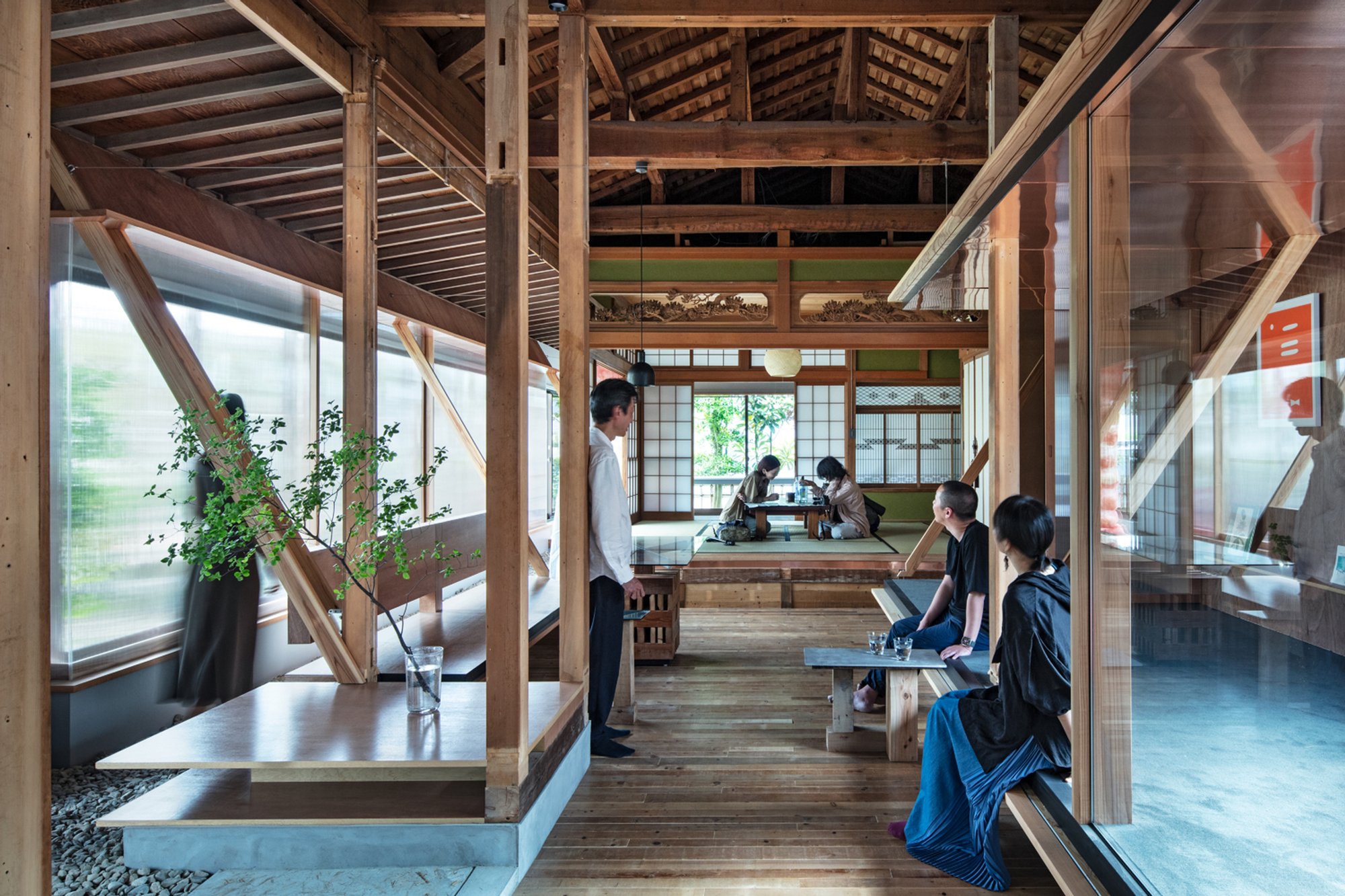
House in Toyama is a thoughtfully renovated home located in Toyama, Japan, designed by NYAWA. Originally an abandoned house in the Hokuriku region, this project transforms the space into a vacation home and rental property, blending traditional Japanese architecture with modern sustainability.
A Low-Impact Renovation Honoring Local Heritage
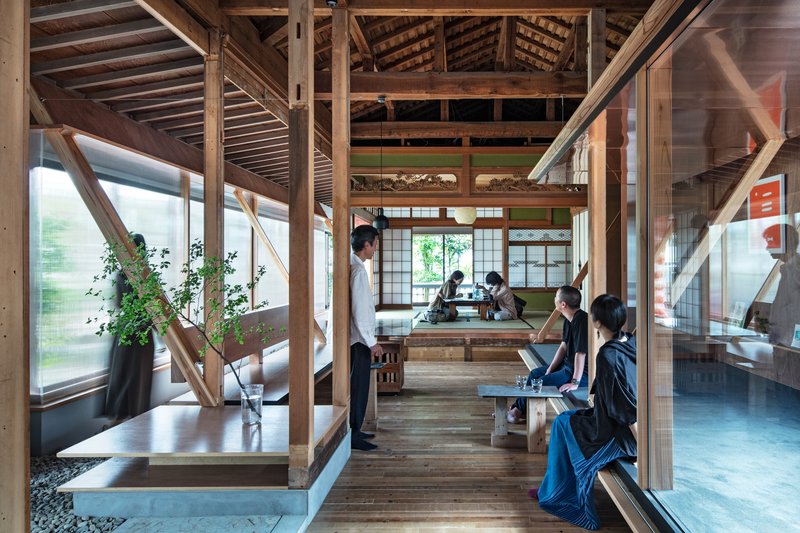
The project prioritizes energy-efficient restoration, preserving the original structure while minimizing environmental impact. The design reflects the region’s architectural heritage, particularly the concept of HIROMA—a multi-purpose gathering space traditionally found in Hokuriku homes. This area serves as a communal indoor space that maintains a connection to nature, even during the region’s cold winters.
Open Spaces with Structural and Thermal Efficiency
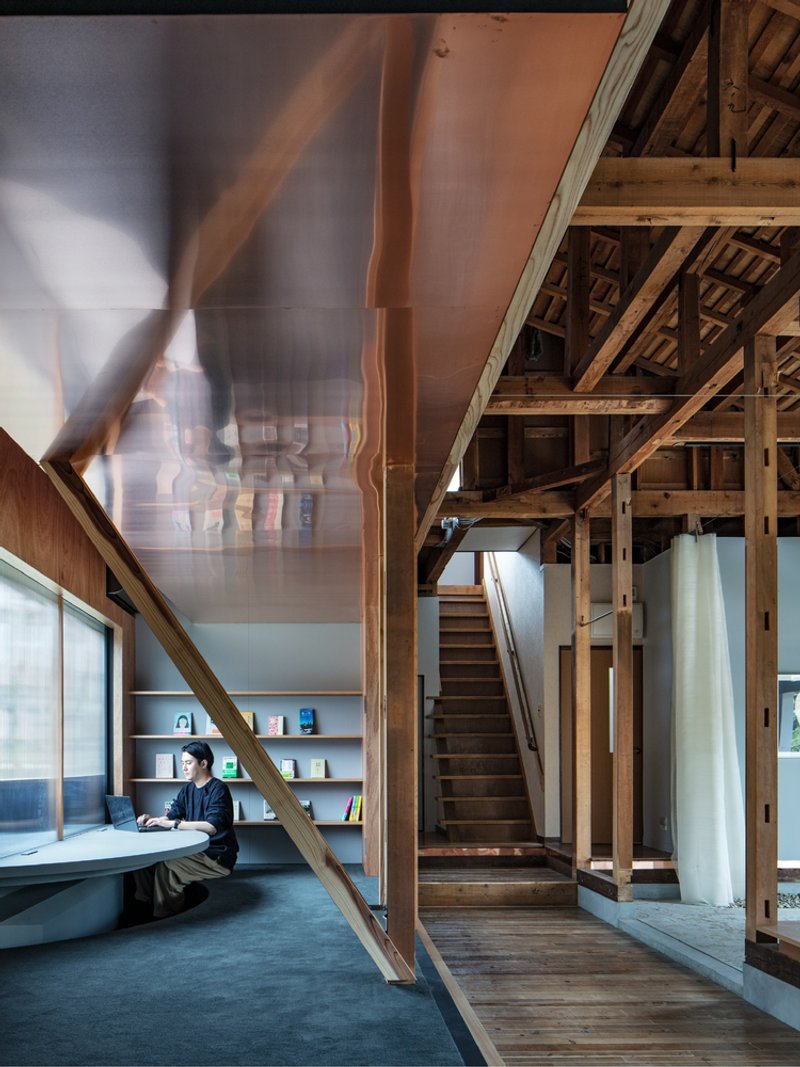
Inspired by traditional Japanese architecture, the renovation adapts HIROMA to modern needs. The space is centrally located and remains open and fluid, with minimal walls to allow natural light and ventilation. Structural reinforcements, inspired by the local pear orchards, create a bright and open atmosphere, essential in Toyama’s often cloudy climate.
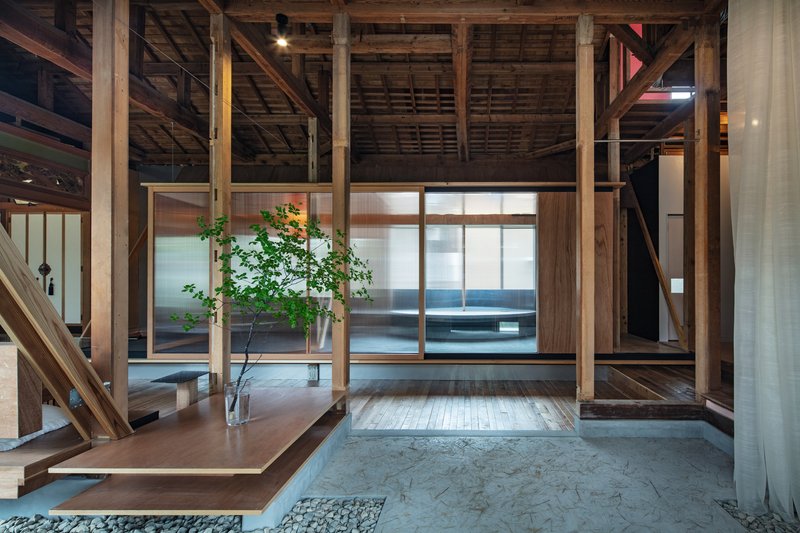
To enhance thermal comfort, the renovation strategically incorporates insulated compartments around HIROMA while maintaining an open layout. The lowest floor level and highest ceiling within the house create a dynamic, multi-layered environment, fostering intimate spaces throughout.
Blurring the Boundaries Between Past and Future
The renovation follows a sustainable design approach, emphasizing materials that evolve over time:
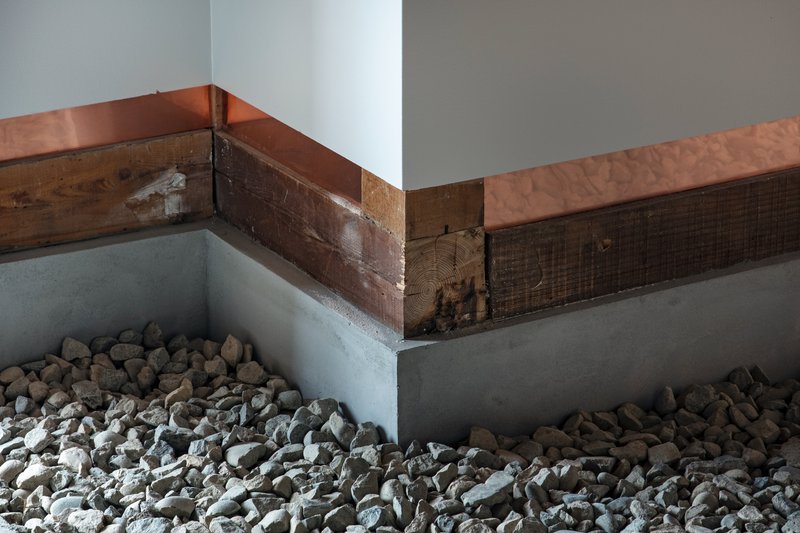
- Upcycled timber from the original structure.
- Natural materials like plywood, copper, silk, and textiles that age gracefully.
- Traditional Japanese proportions that honor the house’s history.
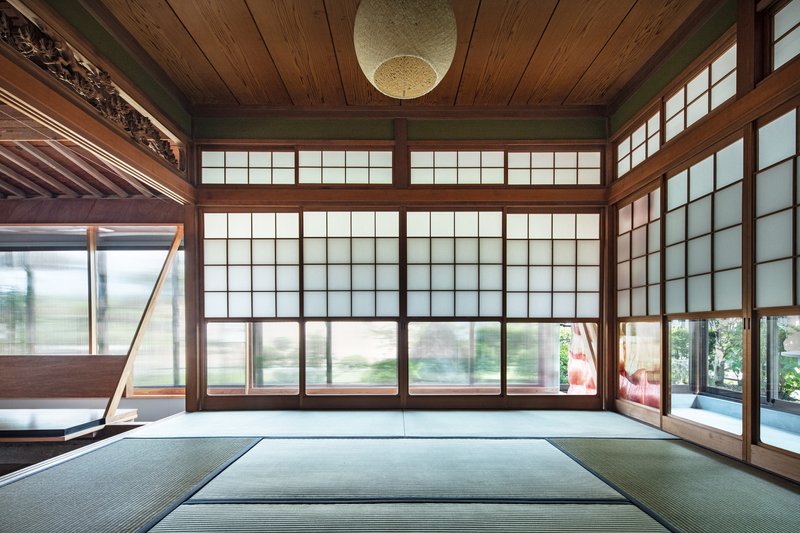
These choices create a timeless aesthetic, ensuring the home’s story continues for generations.
A Zero-Carbon Approach to Sustainable Living
One of the renovation’s key achievements is its carbon-neutral impact. By balancing CO2 absorption from reclaimed wood with the emissions from construction, the project exemplifies eco-friendly architecture. Additional sustainable features include:
- Passive design strategies that maximize natural daylight and ventilation.
- Sliding doors that offer flexibility between open-air living and climate control.
- Minimal new material usage, reducing the project’s environmental footprint.
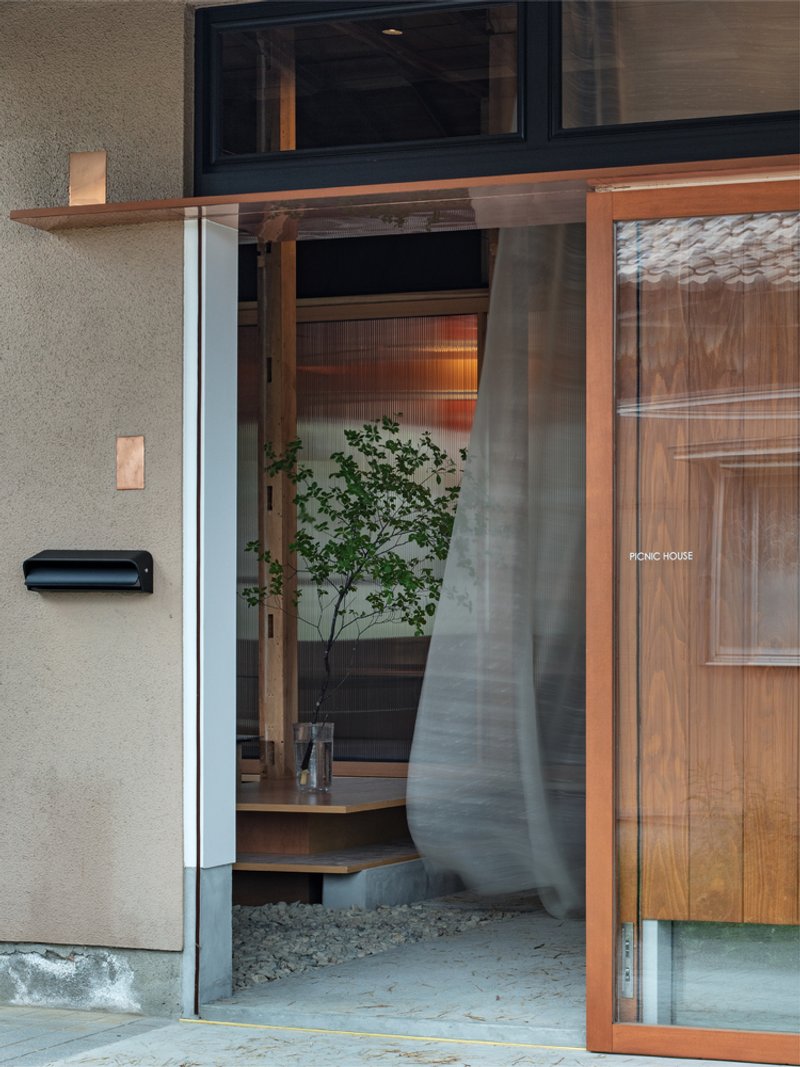
Redefining Rural Japanese Living
House in Toyama is more than just a renovation; it’s a model for sustainable architecture in Japan’s rural regions. By integrating local traditions, modern efficiency, and environmental consciousness, NYAWA creates a space where visitors can experience authentic Japanese living while supporting the revival of Toyama’s historic homes.
This project exemplifies the potential of low-energy, culturally sensitive renovations, bridging the past and future while fostering a sustainable community in rural Japan.
All Photographs are works of
Kenta Hasegawa




Popular Articles
Popular articles from the community

Fifth NRE Jazz Club – De Bever Architecten: Eindhoven’s Revitalized Cultural Hub
Historic gas factory transformed into Fifth NRE Jazz Club blending modern sustainability, jazz culture, dining, and heritage architecture seamlessly.
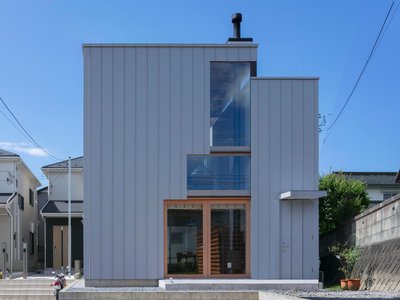
Split House: A Compact Urban Home Blending Privacy, Light, and Flexible Living in Japan
Compact Japanese home featuring DOMA space, flexible café potential, passive lighting, privacy zoning, and sustainable urban living design.


Solar Steam: A Climate-Responsive Architecture That Redefines the Monument
A climate-responsive memorial architecture that transforms heat, decay, and time into a living system reflecting humanity’s ecological impact.

Similar Reads
You might also enjoy these articles


The Ken Roberts Memorial Delineation Competition (Krob)
As the most senior architectural drawing competition currently in operation anywhere in the world, it draws hundreds of entries each year, awarding the very best submissions in a series of medium-based categories.


Waterfront Redevelopment and Urban Revitalization in Mumbai: Forging a New Dawn for Darukhana
A transformative waterfront redevelopment project reimagining Darukhana’s shipbreaking heritage into an inclusive urban future.

OUT-OF-MAP: A Call for Postcards on Feminist Narratives of Public Space
Rhizoma Design and Research Lab invites artists, designers, architects, researchers, and students to reflect on how feminist perspectives can reshape public space. Selected works will be exhibited in Barcelona, October 2026. Submissions open until 15 April 2026.


Documentation Work on Buddhist Wooden Temple
Architectural syncretism and cultural hybridity: A comparative study of the Buddhist temples in Chattogram Hill tracks


Explore Architecture Competitions
Discover active competitions in this discipline




The International Standard for Design Portfolios


The Global Benchmark for Architecture Dissertation Awards


The Global Benchmark for Graduation Excellence


Challenge to reimagine the Iron Throne
Comments (0)
Please login or sign up to add comments
No comments yet. Be the first to comment!