
Iwona Buczkowska revisits Cité Pierre Sémard in Seine-Saint-Denis, France
The citadel-like complex, which was built in the 1970s, is a fascinating example of how urban living can be both functional and aesthetically pleasing

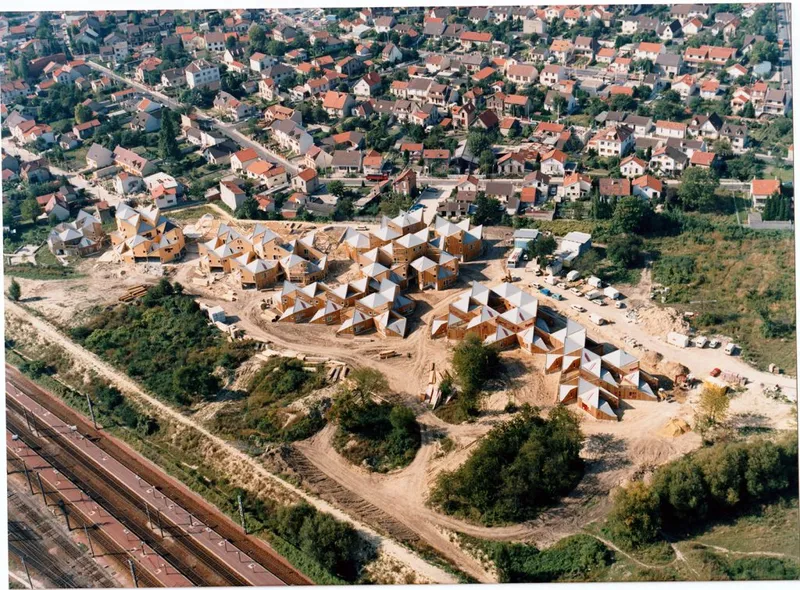
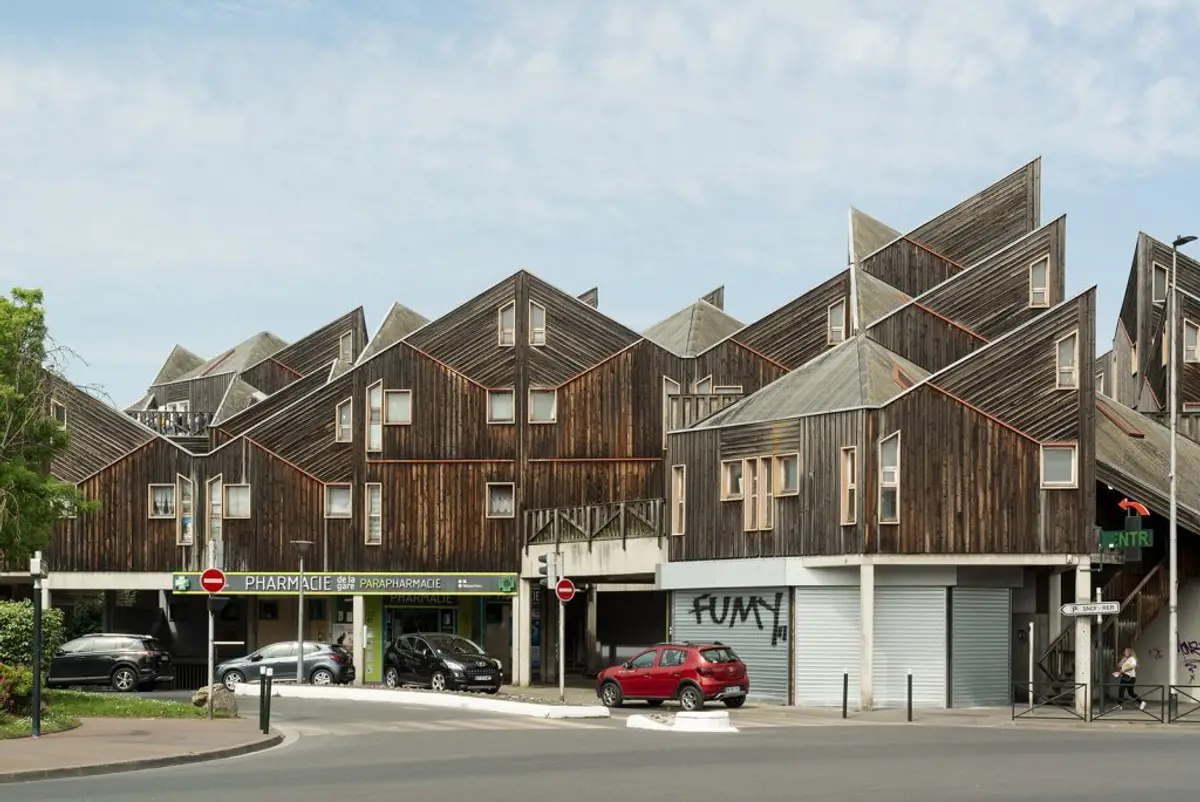
The Cité Pierre Sémard, a social housing complex in Le Blanc-Mesnil designed by Iwona Buczkowska, deserves preservation and attention rather than being demolished. The complex, which features distinctive, expansive roofs, consists of 225 units and was Buczkowska's first project after graduating from the École Spéciale d'Architecture in Paris. At the time of its construction, the Cité Pierre Sémard was the largest timber-built housing complex in France, reflecting Buczkowska's boldness and the opportunities available to young architects.

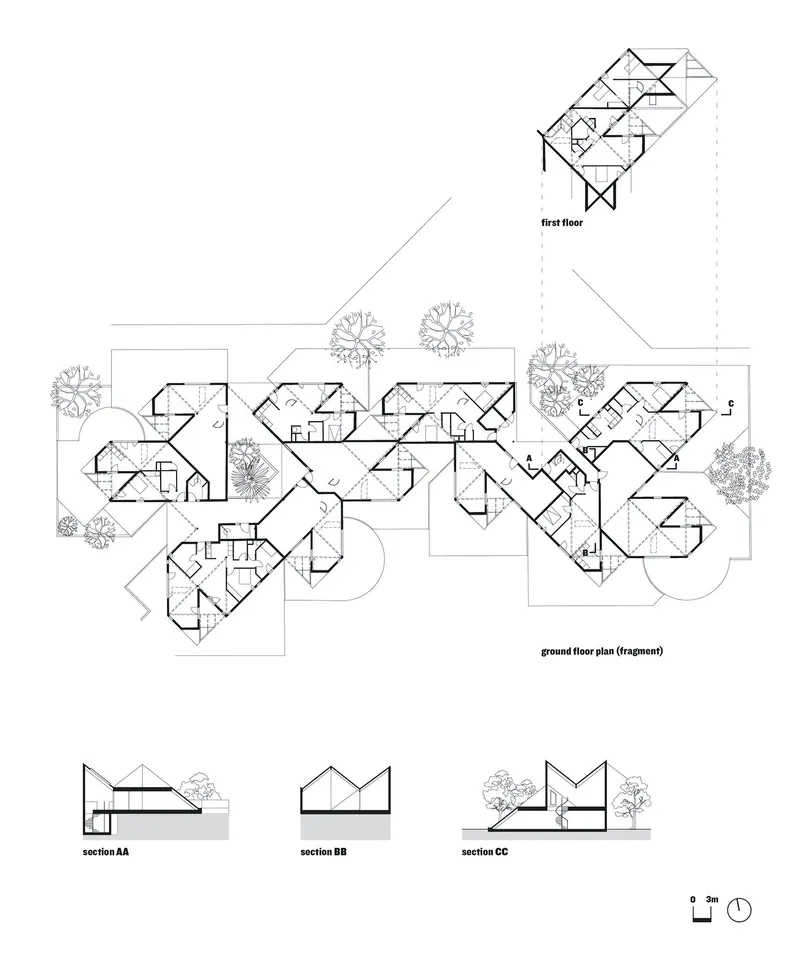
The Cité Pierre Sémard is a striking ensemble due to its elaborate and unpredictable volume. It is also known as the Pièce Pointue, or "pointed piece," and is characterized by its numerous bevelled roofs and larch-clad facades cut along different axes. When the sun reflects on them, the colour range varies from white to brown to ochre. In respect to the suburban houses surrounding the site, the buildings are low and have ground floors that open up to generous public courtyards or private gardens. The dwellings are interlocked and support each other, linked by open corridors that serve, shape, and wind around them. These outdoor walkways serve a purpose beyond simply connecting points on the plan; they become places for gathering and observation, offering visual openings that provide different perspectives of the surrounding landscape.
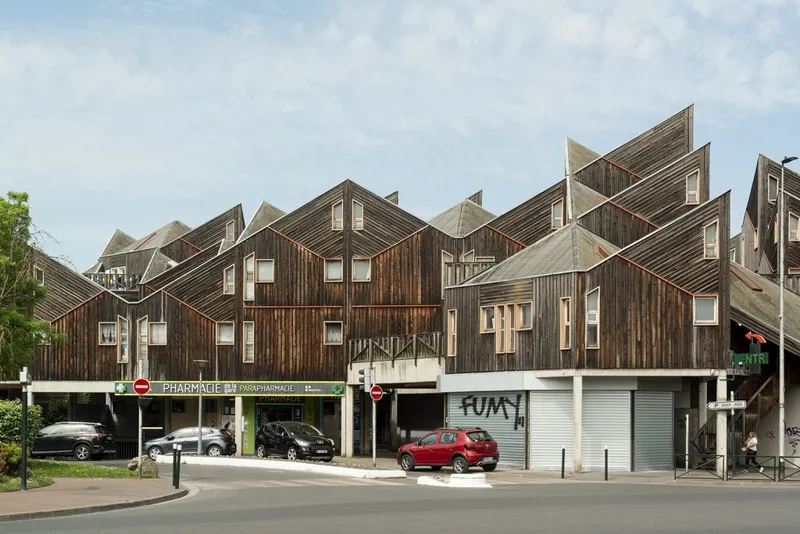
As you walk through the estate, you'll notice that the buildings become taller and more densely packed together. The shortest ones are only one story high, while the tallest ones are four stories tall. The entire area is designed with pedestrians in mind, and cars are directed to an underground parking garage that is located under the ground floor slab, which is the only major element made of concrete. There is a sense of discovery and complexity in the space that is not present in traditional, orthogonal conceptions of space. According to Buczkowska, "life is as complex as the escape of the gaze" and it is necessary to allow for this complexity to be seen by breaking away from rigid, linear forms that are often found in cities today. She believes that the viewer's point of view should be constantly stimulated and that the architect should focus on creating a sense of discovery. Her approach goes beyond the typical tower and slab blocks that were often used for social housing at the time.

The design of Buczkowska's living cells is characterized by the use of oblique lines. According to Buczkowska, the focus on the interior is crucial to the success of any architecture project. The convoluted volumes in her designs are a result of her approach to designing interiors that seamlessly extend to the exterior spaces. She creates living spaces as if she were designing them for herself, taking full advantage of the typological and structural potential of the frame. The sloping roofs are designed with openings to allow natural light to enter the flats. All the flats are designed to be easily accessible and most of them have windows facing all four cardinal points, ensuring that the interior spaces are always well-lit by natural light. Some flats even have up to thirty windows.

Despite the high number of units, the architect has made an effort to maintain the privacy of each apartment. To do this, they have utilized three hectares of land out of the six hectares available, constructing 225 units. This has resulted in a spacious, open design with large volumes. By cutting into these volumes, the architect has created multifaceted units with varying orientations, ensuring that each unit has a unique feel and maintains a sense of intimacy. Additionally, the architect has included elements of "sociability" by designing spaces that allow for visual contact with others. The overall goal is to create a housing complex that feels like a community and avoids the feeling of boredom, while still maintaining the benefits of individual houses.

The process of creating the Pièce Pointue was lengthy and complicated. One of her professors connected her final project with Sodedat 93, a public developer in Seine–Saint–Denis. In 1978, despite her uncertainty and lack of experience, she created her first design, which initiated the project. Initially, the municipality, developer, and stakeholders had to be convinced of the benefits of a wooden project that prioritized quality and spaciousness over efficiency and density (which is more financially lucrative). Despite the doubts of some, the architect continued to push for the project and the municipal council eventually approved the construction of five dwellings. Construction began in 1982 and it took a decade for the first prototype to be completed and all 225 units to be delivered in 1992.
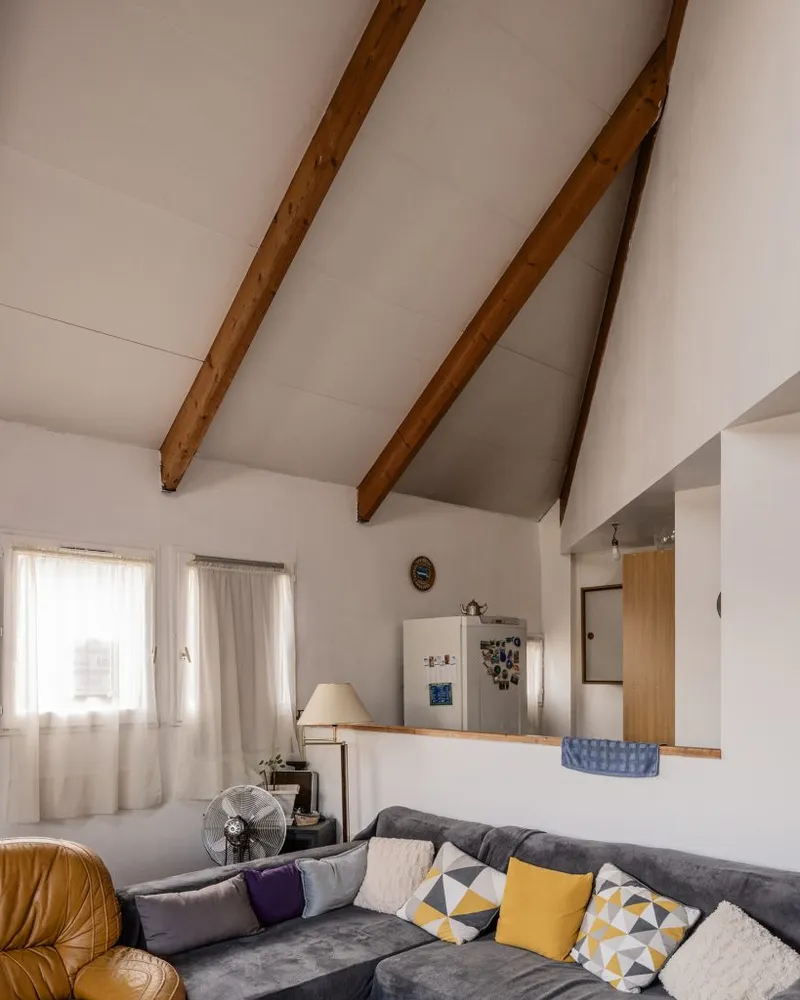
As an architect, Buczkowska faced two main challenges when designing social housing: maximizing the available surface area and keeping costs per square meter low. To meet these constraints, Buczkowska prioritized creating spacious and well-lit living spaces and common areas, as well as strong connections to the surrounding environment. This required a commitment to maintaining the building over the long term, including replacing certain elements like the roof every 20 years.

However, the Pièce Pointue estate, originally owned by Sodedat 93 and later purchased by Seine-Saint-Denis Habitat, has suffered from neglect and is now in need of repair. In 2020, Seine-Saint-Denis Habitat signed a contract to sell 132 units to property developer Cogedim, which proposed replacing them with 500 privately-owned units and eliminating almost one hectare of green space. This would result in a significant reduction in social housing availability at the site.
‘Buczkowska defends the idea that the onlooker’s point of view must be constantly nourished, and that the architect must take care of the notion of discovery’
The tenants' association L'Amicale and an architect have taken action to oppose the destruction of the Pièce Pointue, a housing project in France, which has been proposed by Cogedim and supported by the local government. They have launched petitions and accused the landlord of neglect, calling for a complete renovation of the Pièce Pointue. The residents claim that the building's decline, which the developers have cited as justification for demolition, is actually the result of the landlord's neglect.

When buildings become iconic and are embraced by popular culture through literature, music, or film, they become a part of our heritage that should be protected and preserved. The Pièce Pointue may not be as well-known as other examples of social housing, such as the Tours Nuages in Nanterre, the Espaces d'Abraxas in Noisy-le-Grand, the Étoiles in Ivry-sur-Seine, and the Choux in Créteil, but it should still be considered a symbol due to its unique design.
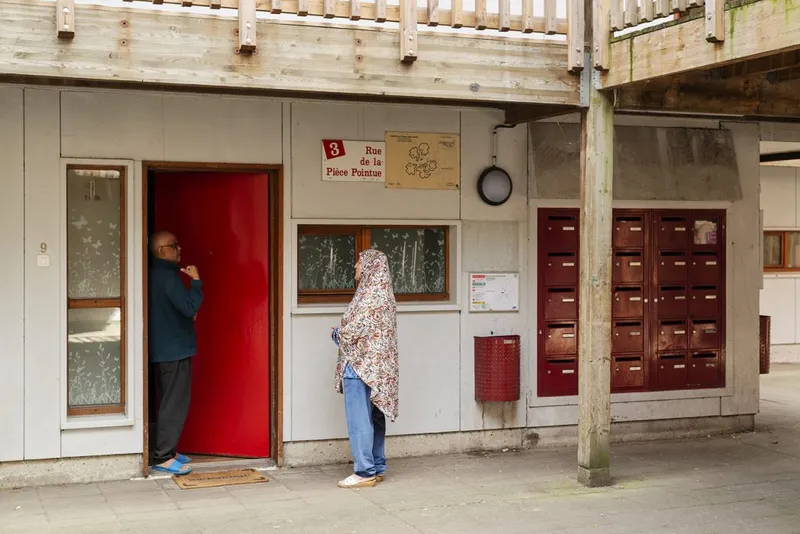
The Grand Paris development has led to increased pressure on land in the outskirts of the capital. As a result, many housing estates and large complexes near future transportation hubs are being demolished, renovated, or transformed, often under the justification of their unsanitary conditions. This pushes issues of social and economic inequality further away from the city. To prevent this from occurring, it is important to take action before structures become dilapidated and to maintain and care for existing buildings. When renovations are necessary, they should also consider the intangible aspects, such as the memories of the inhabitants.

One example of this is the Cité Pierre Sémard, where some residents have lived for over 30 years. Architect Kasia Buczkowska has a strong connection to the community and has worked with the tenants' association to advocate for the preservation of the unique living environment through a "total renovation."

In 2018, rumours began to spread in the community about the potential demolition of the Cité Pierre Sémard housing estate. In response, the tenants' association, L'Amicale, filed two legal appeals against developer Cogedim's plans to build new housing blocks on the parking lot by the station. The following year, L'Amicale was successful in getting the building permit for this project cancelled. However, the fight for the preservation of the estate has continued. In 2020, the tenants filed for the building to be classified as a historic monument and received support from the Ministry of Culture and the Directions Régionales des Affaires Culturelles.

As a result, demolition has been temporarily avoided. The struggle to protect such estates from density and profitability, especially in the midst of high land speculation, is more pressing than ever. It is essential to consider social, political, and environmental ecologies when designing cities and to address issues of class and ethnoracial inequality. Preserving the Cité Pierre Sémard is not only about protecting a symbol of non-conforming architecture, but also about safeguarding vulnerable individuals in the face of flawed housing markets and gentrification in the suburbs of Paris.

References (1)

Popular Articles
Popular articles from the community


ALGAL REALM: A Bio-Integrated Lunar Habitat Design for Life Beyond Earth
ALGAL REALM reimagines lunar habitat design with algae-powered life support, 3D-printed regolith, and vertical living for a lunar future.

Play: Fragments of Their World
Familiar architecture becomes modular playground design, creating safe spaces where displaced children can learn, connect, imagine and play.

Little Red Riding Hood: Architectural Design as a Journey Through Fear, Light, and Storytelling
Little Red Riding Hood reimagines the fairy tale through architectural design shaped by fear, light, scale, memory, uncertainty, and choice.

Lunar Spiral: Space Architecture Shaped by the Mathematics of the Universe
Lunar Spiral reimagines space architecture through Fibonacci geometry, lunar regolith, levitating habitats, and self-sustaining Moon living.

Similar Reads
You might also enjoy these articles
116 Rokeby Building, Collingwood
Sustainable Collingwood office building featuring double-skin façade, natural ventilation, rooftop amenities, and carbon-neutral design focused on wellbeing and longevity.
Contemporary Apartment Renovation in Spain: RV House by BIAN Opens Up to the Sea
A minimalist 1930s apartment in Santander is transformed into a flexible, sea-facing home through contemporary Spanish renovation.
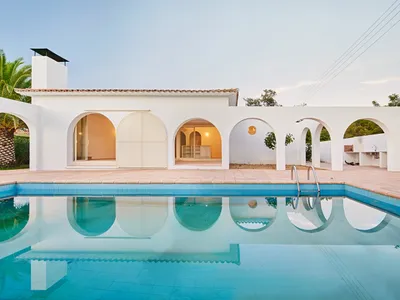
3 Marías House: A Contemporary Mediterranean Courtyard Retreat by Bajet Giramé + Burckhardt
Mediterranean courtyard home blending traditional architecture with modern design, terracotta flooring, flexible interiors, sustainable climate strategies, and garden integration.
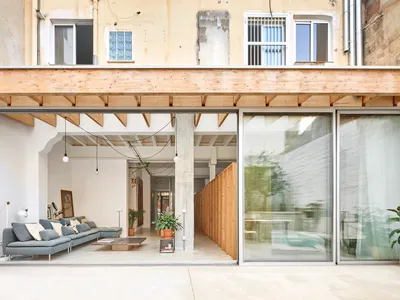
NZ10 Apartment by auba studio: Adaptive Reuse in Palma de Mallorca
Adaptive reuse apartment transforms bakery into light-filled home with patios, privacy layers, and wood interiors enhancing urban living experience.

Explore Housing Competitions
Discover active competitions in this discipline


Challenge to reimagine the Iron Throne

Photograph architecture without architects

Illustrate the lost glory of Angkor Wat - Render Challenge

Design challenge to reuse E-waste
Comments (0)
Please login or sign up to add comments
No comments yet. Be the first to comment!