
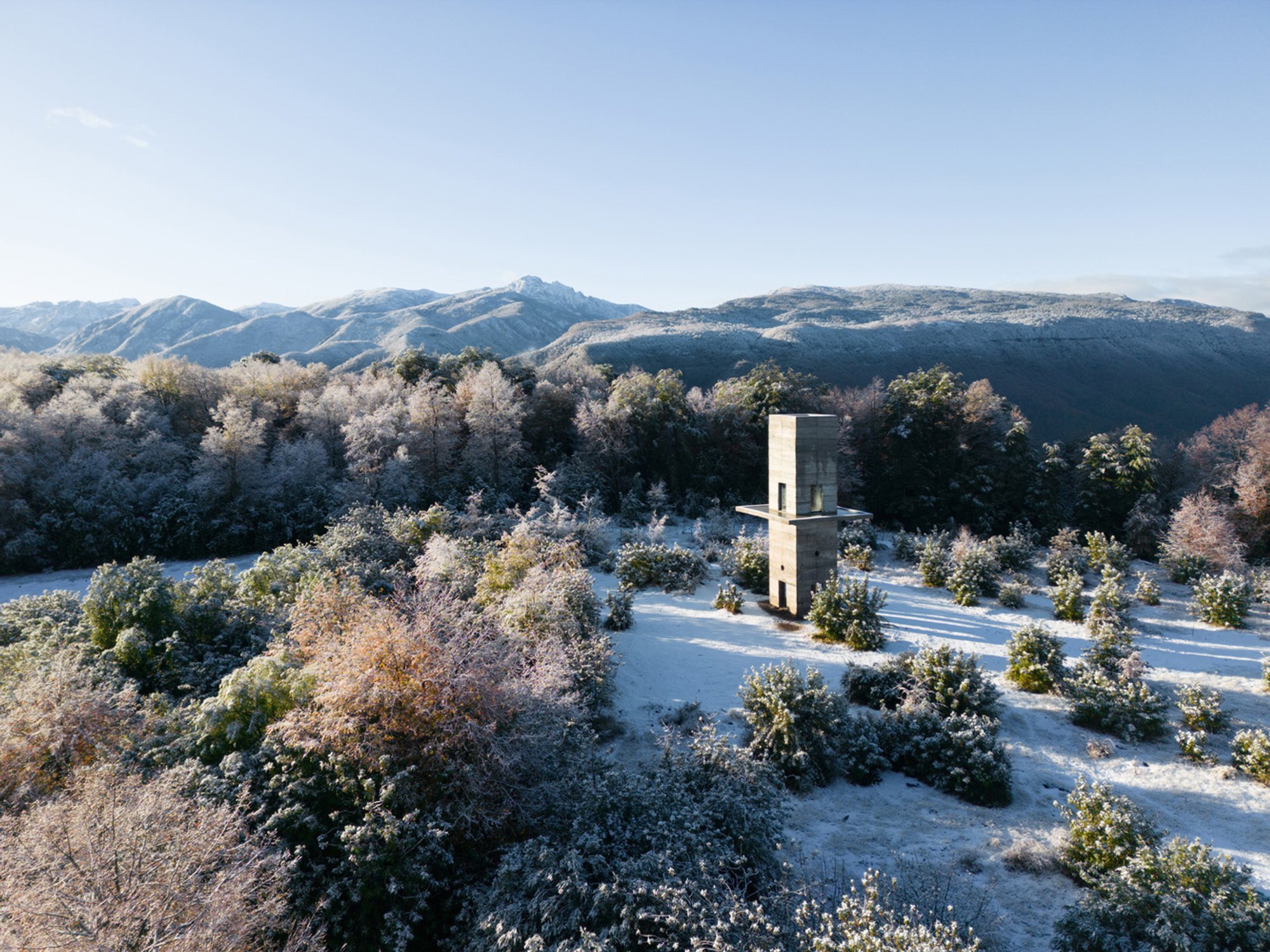
LAMA Pavilion by Pezo von Ellrichshausen: A Vertical Landmark in the Chilean Landscape
LAMA Pavilion is a vertical architectural landmark in Chile, blending nature, reflection, and perception through layered spaces and sculptural design.

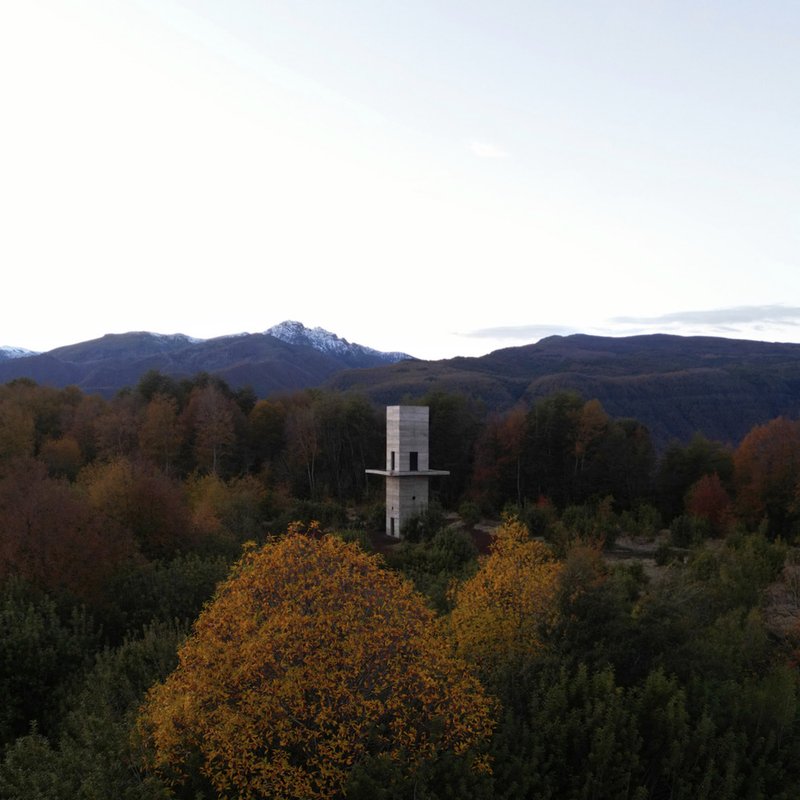
The LAMA Pavilion, designed by acclaimed Chilean architects Pezo von Ellrichshausen, is a striking architectural intervention nestled within the native forests of Yungay, Chile. This 35-square-meter pavilion, completed in 2023, serves as both a viewpoint and a sculptural landmark, harmoniously blending into the surrounding landscape while offering breathtaking views of the Andes Mountains.
A Towering Architectural Gesture
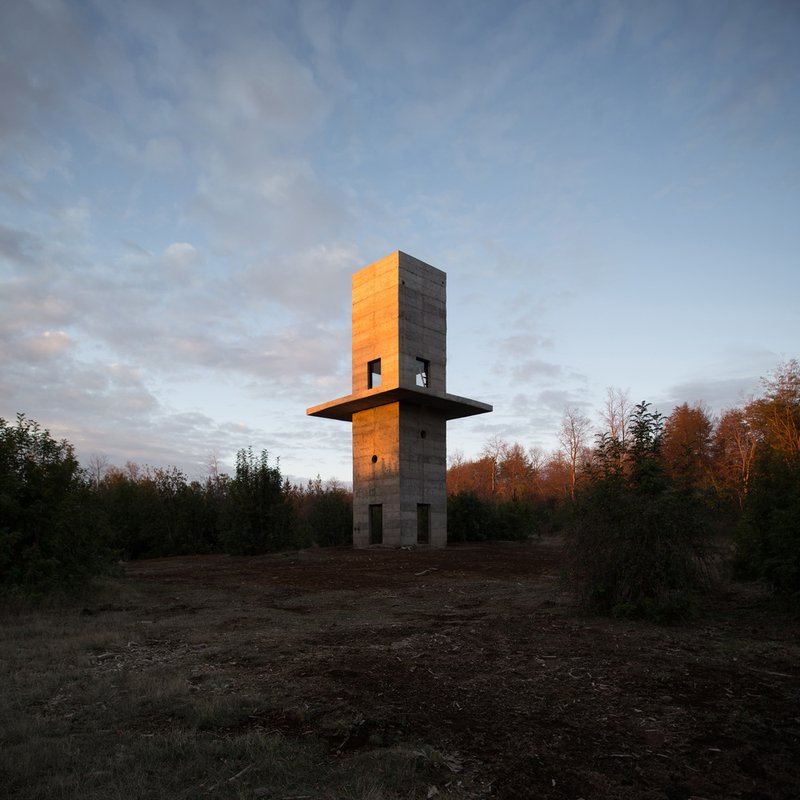
Designed as a vertical sequence of spaces, the LAMA Pavilion is composed of two stacked towers, each contributing to its slender and monolithic form. The lower tower features an extended eave that doubles as a protective roof, while the upper tower is crowned with a terrace that mirrors the floor below, creating a layered spatial experience.
At the heart of this architectural concept is a cantilevered slab, extending in all four cardinal directions, which serves as both a reflective pool and a delicate threshold between the two towers. This water feature transforms the pavilion into a living mirror, reflecting the sky, surrounding trees, and the upper section of the tower, creating an illusion of weightlessness.
A Play of Light, Shadow, and Perception
The horizontal slab not only enhances the visual impact of the pavilion but also plays a functional role in managing rainwater. When overflowing, the water cascades around the perimeter, creating a dynamic interplay between architecture and nature. Meanwhile, the slab casts a dense, compact shadow over the lower tower, reinforcing the sculptural qualities of the structure.
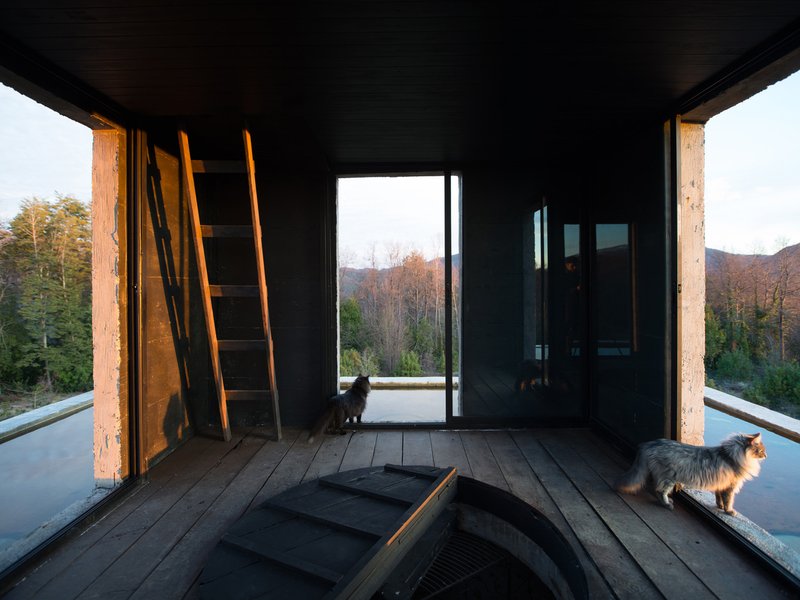
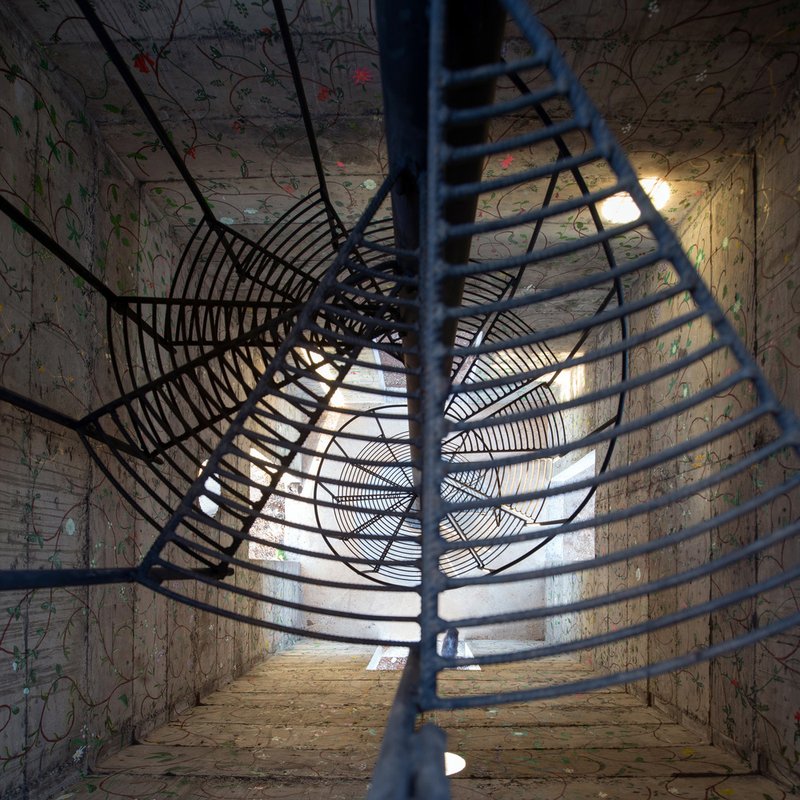
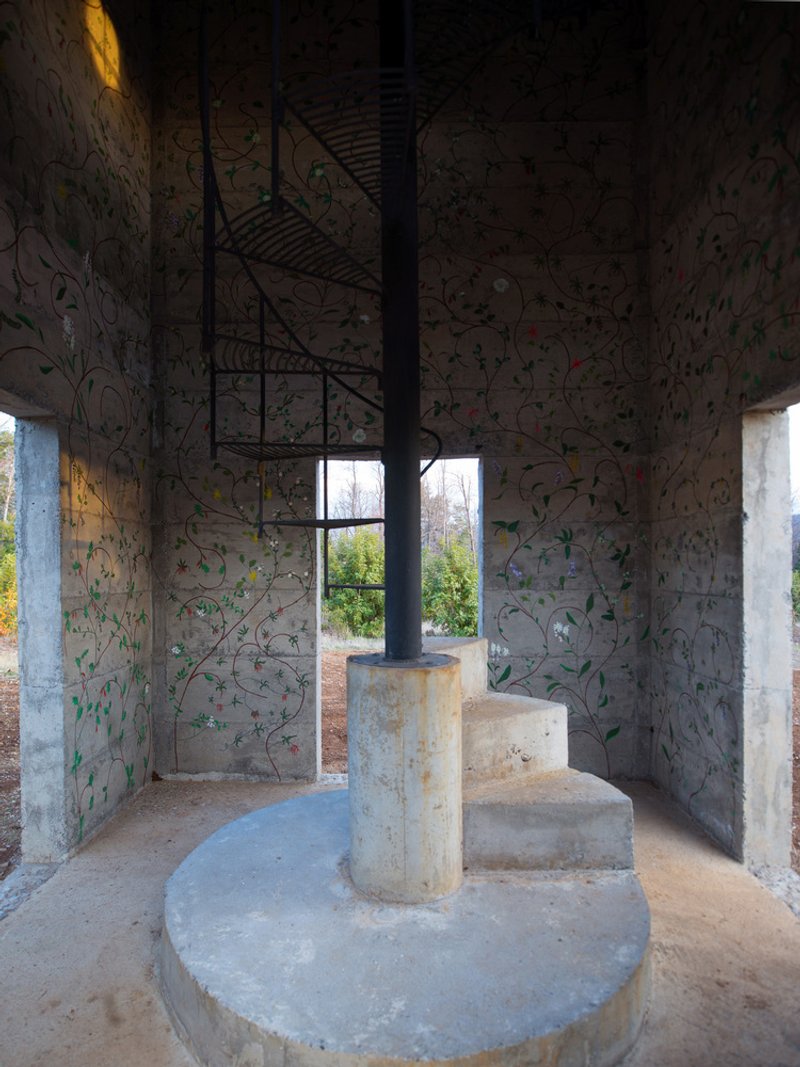
Inside, the pavilion defies conventional expectations of a viewing platform. Rather than directly framing panoramic views, the interior experience revolves around a helical staircase, enveloped by a continuous mural of native Chilean flora, both painted and living. This intricate installation transforms the ascent into a sensory journey through nature.
At the top, a dark, enclosed chamber with four peepholes acts as a camera obscura, offering a fragmented yet poetic perspective of the landscape. A wooden ladder leads further to an open rooftop, where a hearth stands, evoking the image of an ancient chimney, as if the entire tower could function as a monumental fire beacon.
Architectural Significance & Design Philosophy
The LAMA Pavilion exemplifies Pezo von Ellrichshausen’s signature approach—blurring the boundaries between art, architecture, and landscape. The project resonates with themes of spatial duality, material honesty, and poetic interpretation, reinforcing architecture’s ability to challenge perception and evoke emotion.
By integrating local materials, responding to the natural environment, and incorporating a deeply conceptual narrative, this project stands as a testament to the firm’s visionary design philosophy.
All Photographs are works of Pezo von Ellrichshausen




Popular Articles
Popular articles from the community

An Miên Lumière Cafe by xưởng xép, Ho Chi Minh City, Vietnam
An industrial-inspired café where layered steel and warm light create a dynamic, immersive environment shaped by reflection, depth, and perception.
On the Brooks House by Monsoon Collective – A Contemporary Kerala Home Rooted in Tradition
Kerala home blending tradition and modernity with water-inspired design, brick architecture, courtyard planning, and sustainable rainwater harvesting strategies.


The Ken Roberts Memorial Delineation Competition (Krob)
As the most senior architectural drawing competition currently in operation anywhere in the world, it draws hundreds of entries each year, awarding the very best submissions in a series of medium-based categories.

Solar Steam: A Climate-Responsive Architecture That Redefines the Monument
A climate-responsive memorial architecture that transforms heat, decay, and time into a living system reflecting humanity’s ecological impact.


Similar Reads
You might also enjoy these articles
The Ken Roberts Memorial Delineation Competition (Krob)
As the most senior architectural drawing competition currently in operation anywhere in the world, it draws hundreds of entries each year, awarding the very best submissions in a series of medium-based categories.


Waterfront Redevelopment and Urban Revitalization in Mumbai: Forging a New Dawn for Darukhana
A transformative waterfront redevelopment project reimagining Darukhana’s shipbreaking heritage into an inclusive urban future.

OUT-OF-MAP: A Call for Postcards on Feminist Narratives of Public Space
Rhizoma Design and Research Lab invites artists, designers, architects, researchers, and students to reflect on how feminist perspectives can reshape public space. Selected works will be exhibited in Barcelona, October 2026. Submissions open until 15 April 2026.


Documentation Work on Buddhist Wooden Temple
Architectural syncretism and cultural hybridity: A comparative study of the Buddhist temples in Chattogram Hill tracks


Explore Architecture Competitions
Discover active competitions in this discipline




The International Standard for Design Portfolios


The Global Benchmark for Architecture Dissertation Awards


The Global Benchmark for Graduation Excellence


Challenge to design a portable theatre
Comments (0)
Please login or sign up to add comments
No comments yet. Be the first to comment!