
Little Stove & Little Stump Coffee Shop Architecture: A Blend of Imagination and Functionality by NITAPROW
A unique coffee shop and playground in Bangkok blending storytelling and functional design by NITAPROW.


Located on the outskirts of Bangkok, Thailand, Little Stove & Little Stump Coffee Shop and Playground is an innovative project designed by NITAPROW. This unique mixed-use development combines a coffee shop, playground, and a narrative from a children’s book to create a space where reality and imagination intertwine. In this article, we explore the architectural significance of Little Stove & Little Stump, highlighting its design principles, challenges, and the unique solutions implemented by the architects.
Location and Context
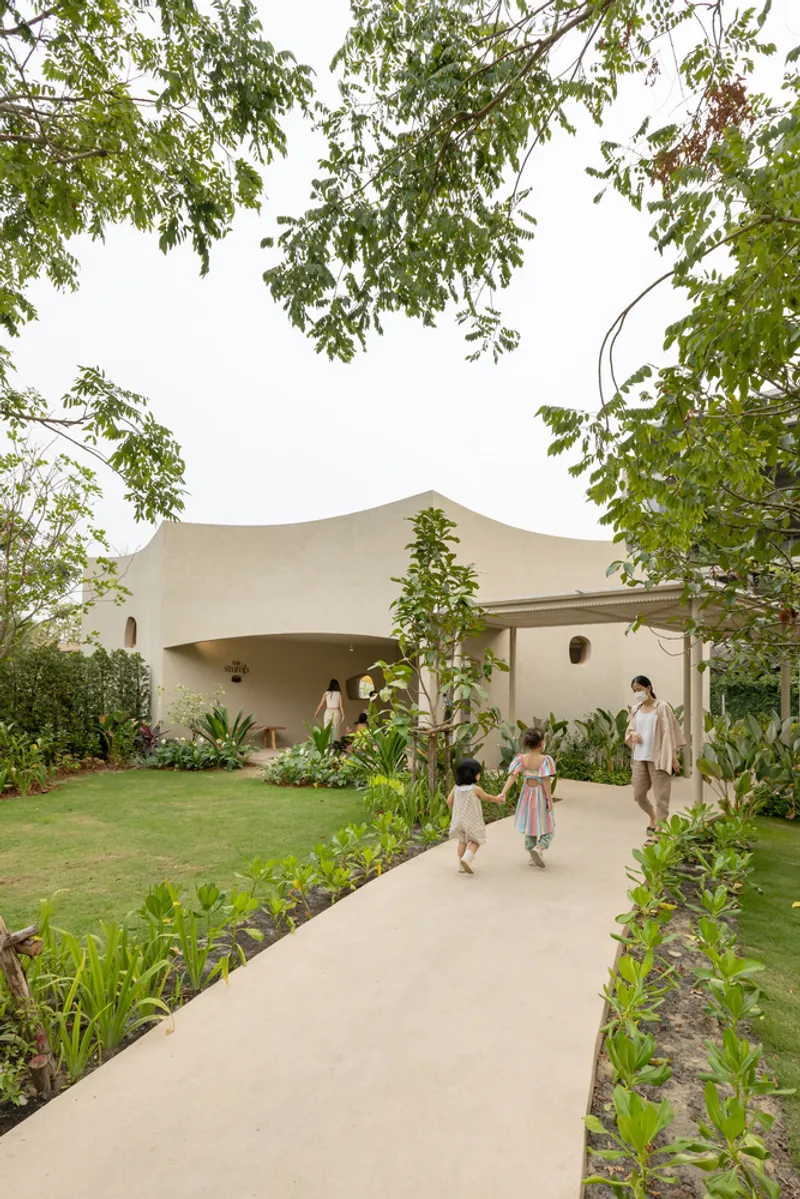
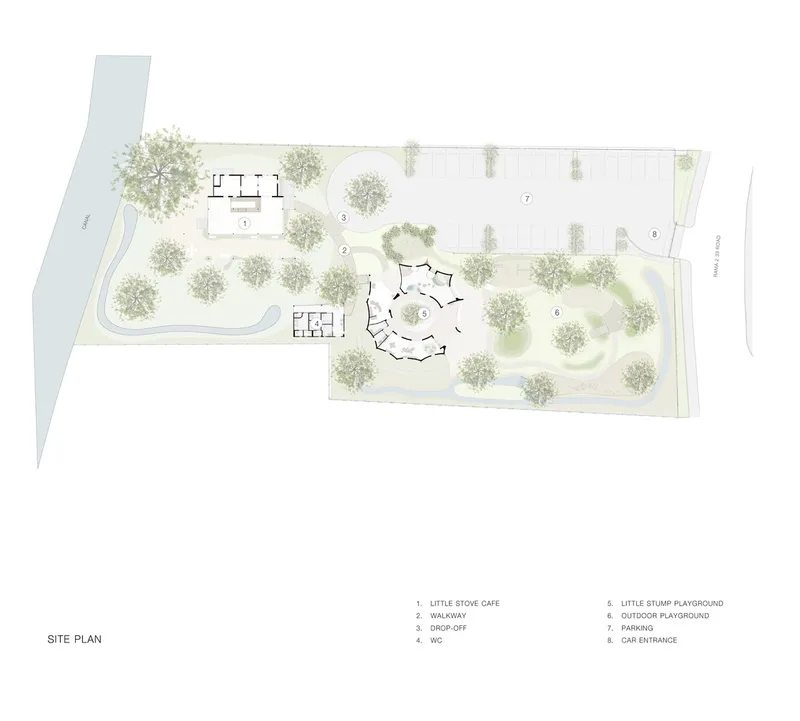
Situated next to a canal on a 4,600 sqm plot of land, Little Stove & Little Stump is accessible via an alley known as ‘Soi Wat Yai Rom’ or Grandma Umbrella Temple Alley. The design language of the compound draws inspiration from the Thai word “Rom,” which means both umbrella and sheltered area. This dual meaning is reflected in the design, creating a space that offers protection and comfort.
Design Philosophy
The design of Little Stove & Little Stump was developed in tandem with the creation of a children’s book, "The Stump and Friends." This book, illustrated by Littleblackoz Studio, served as a narrative foundation for the project, bridging the gap between reality and the world of imagination for children.
Key Design Elements
Little Stove Coffee Shop
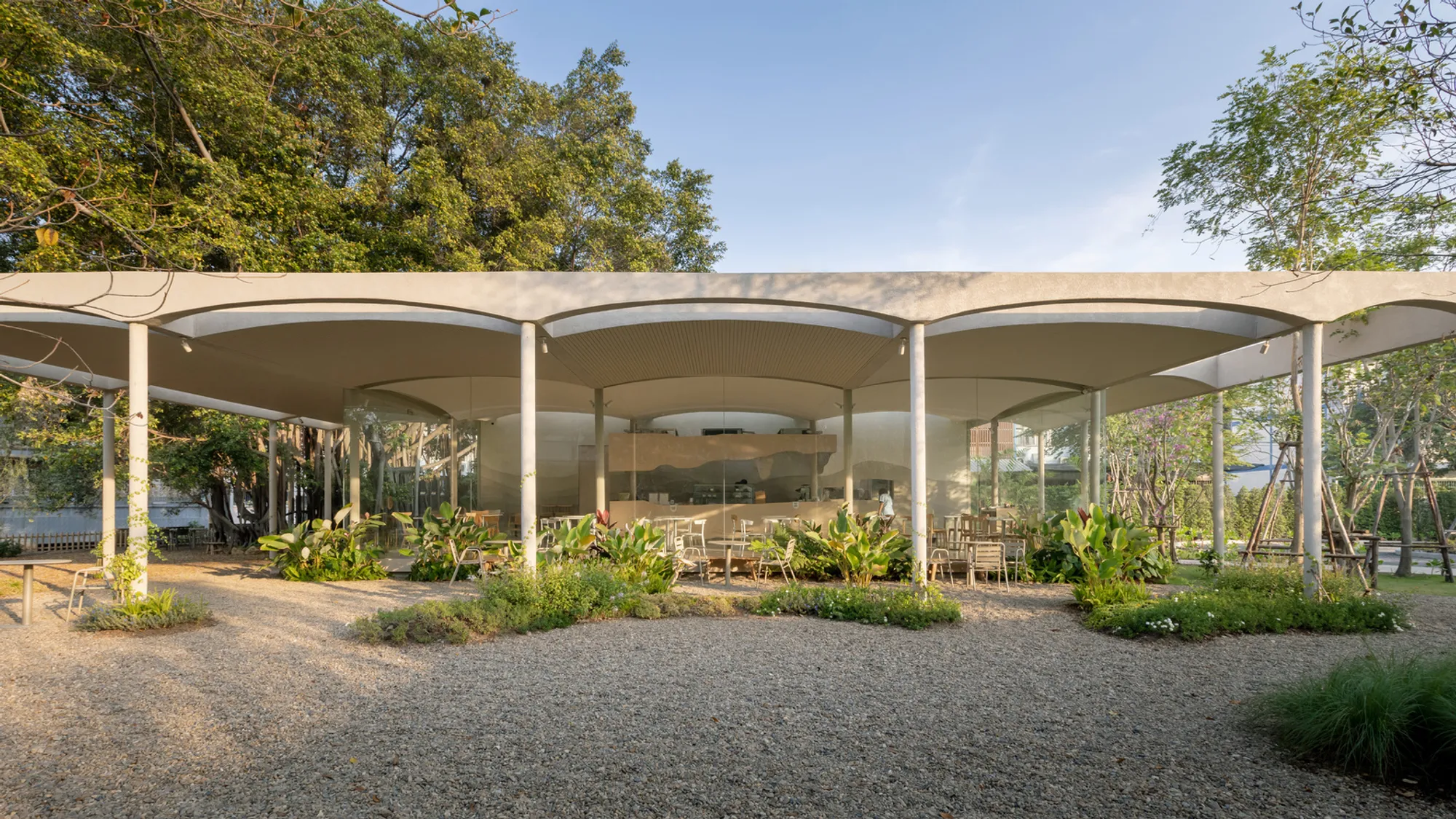
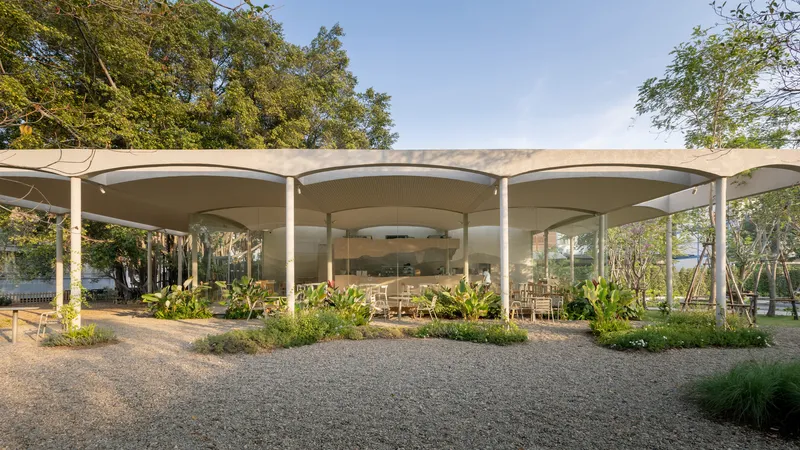
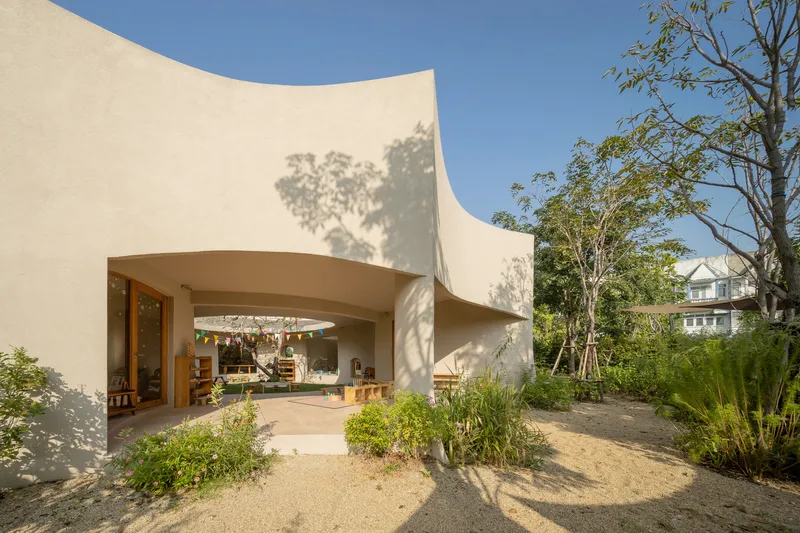
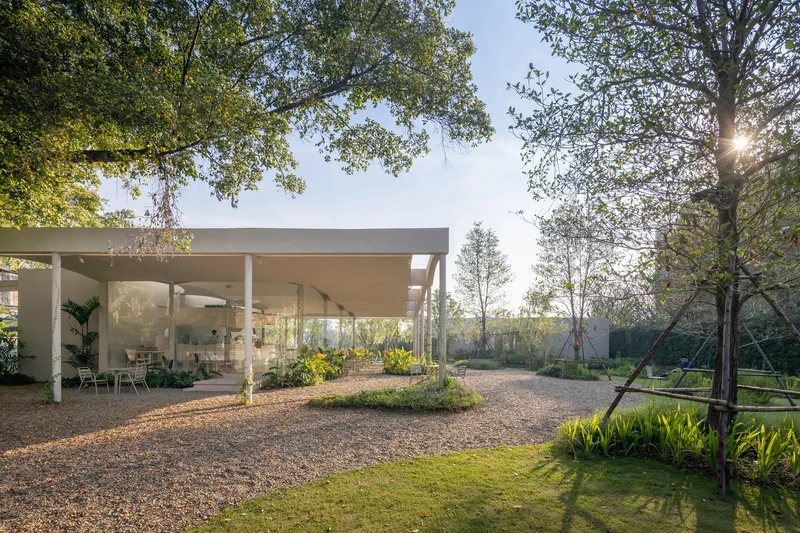
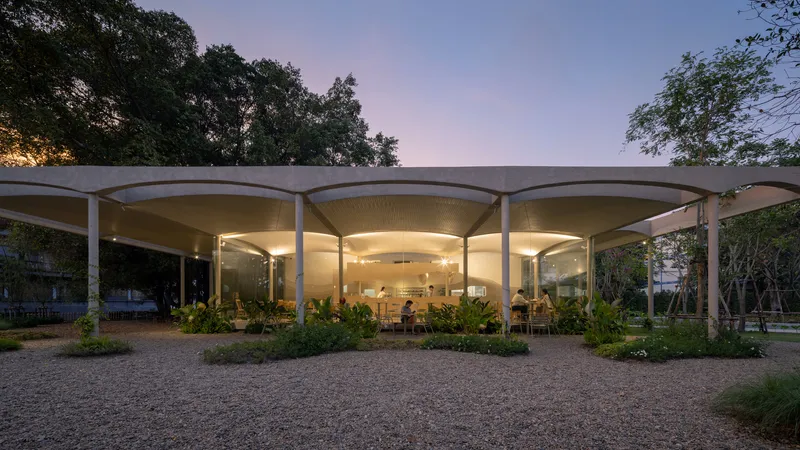
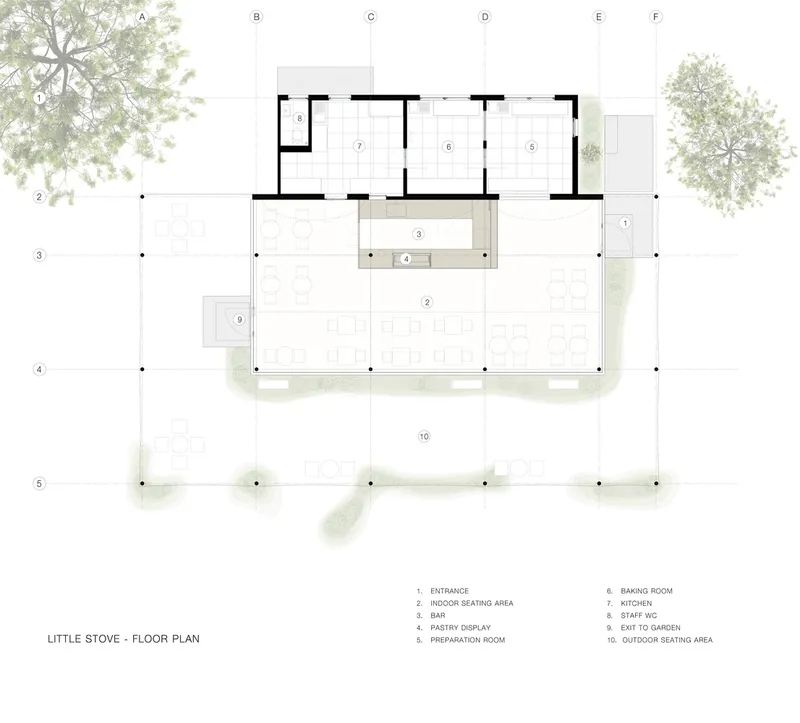
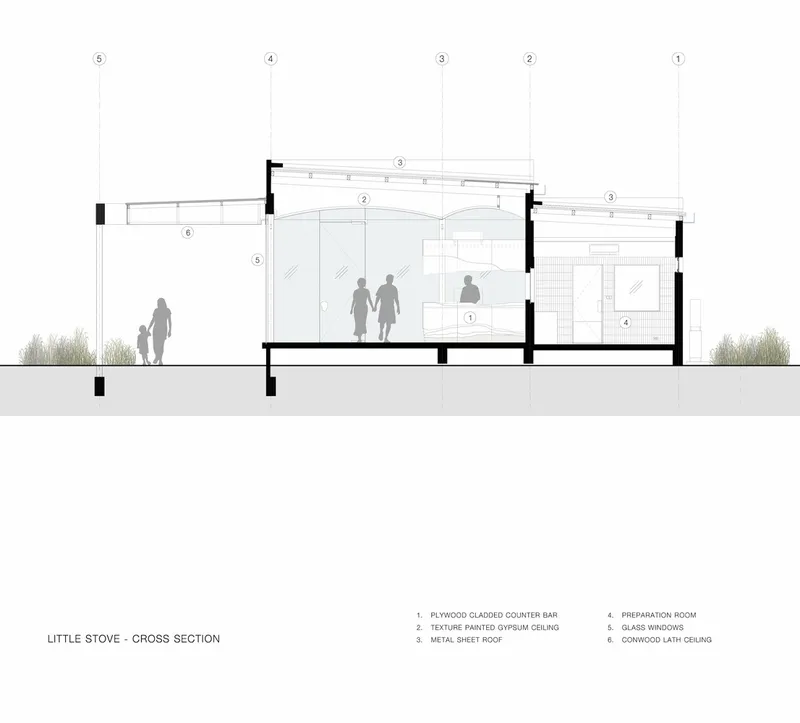
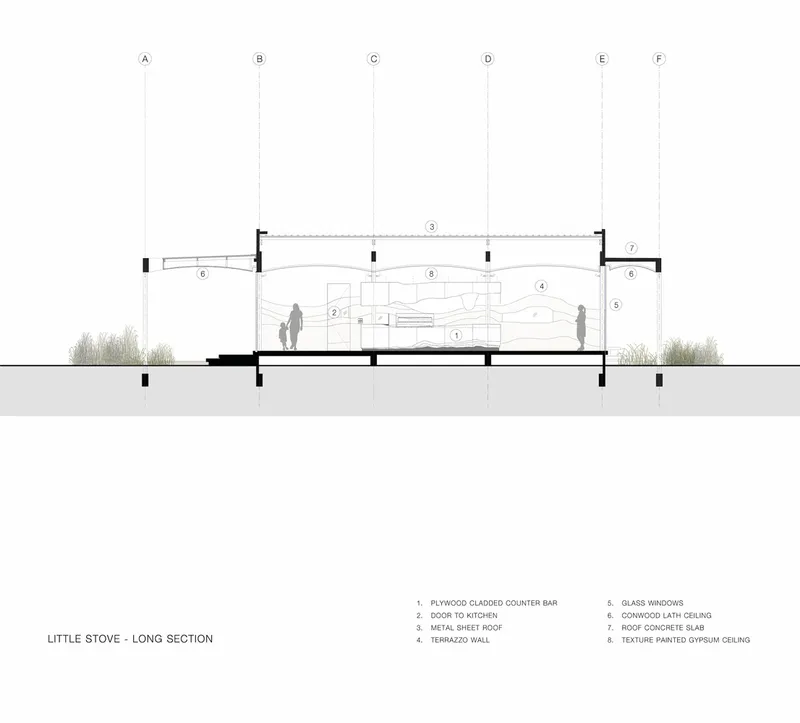
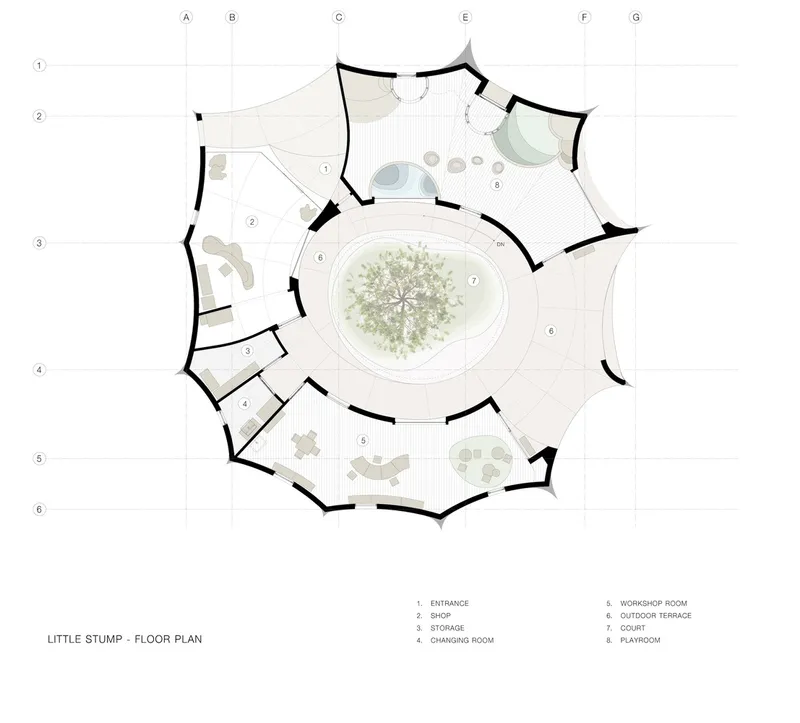
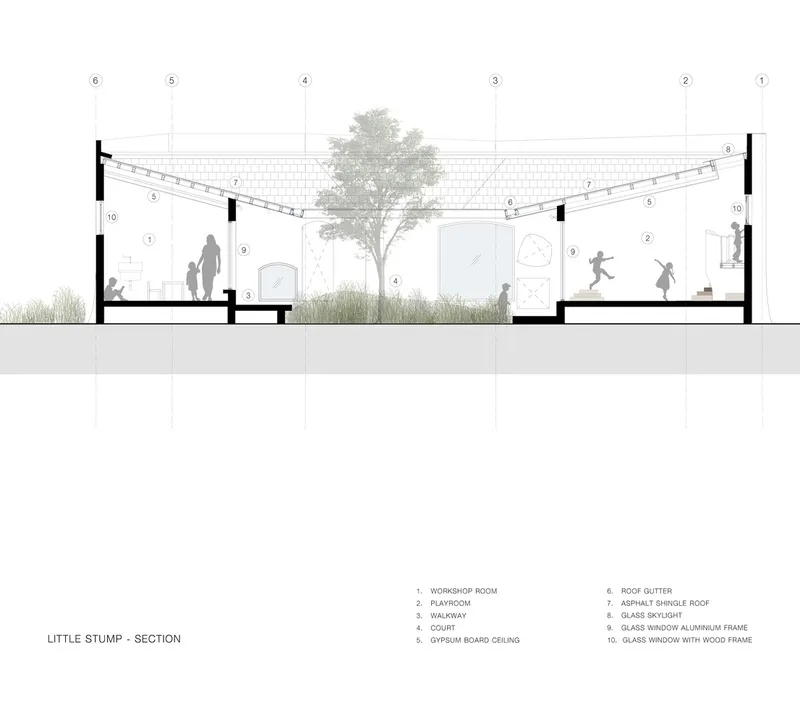
The coffee shop's design follows the abstract contour of an umbrella, with a curved roofline that extends from the exterior canopy into the interior ceiling. This curvature creates a seamless transition between indoor and outdoor spaces. The outdoor seating area, placed under a large canopy, encourages the use of outdoor seating and brings visitors closer to the spacious garden and the canal.
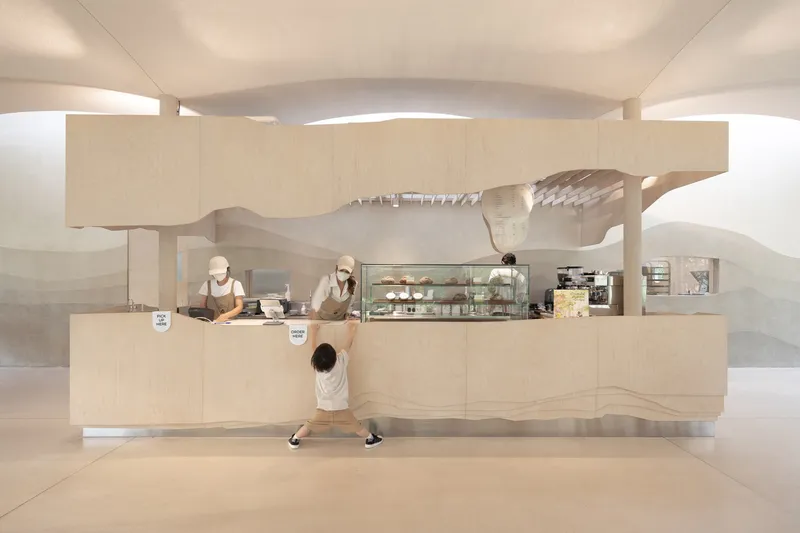
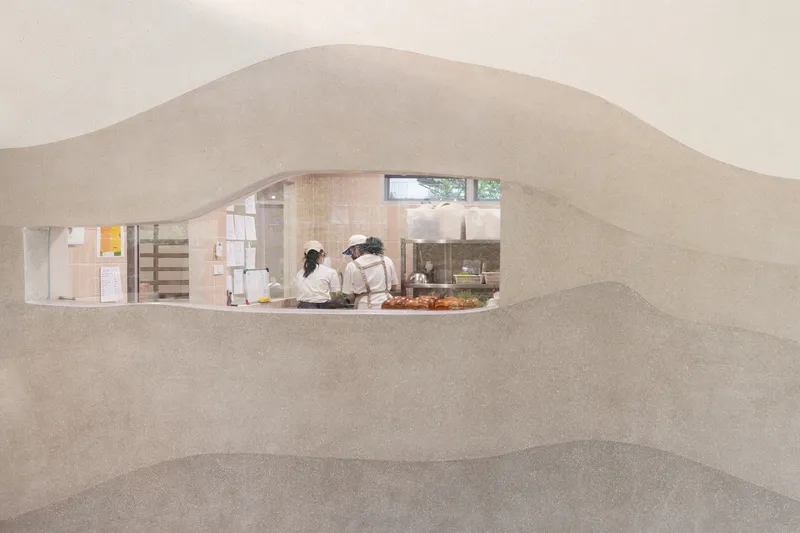
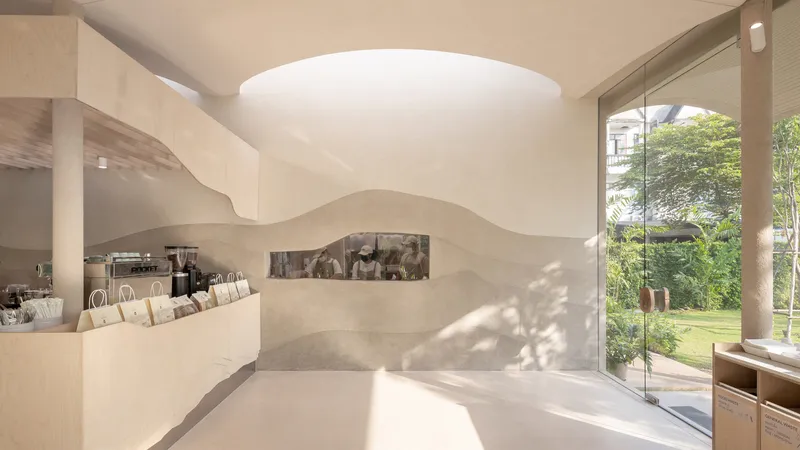
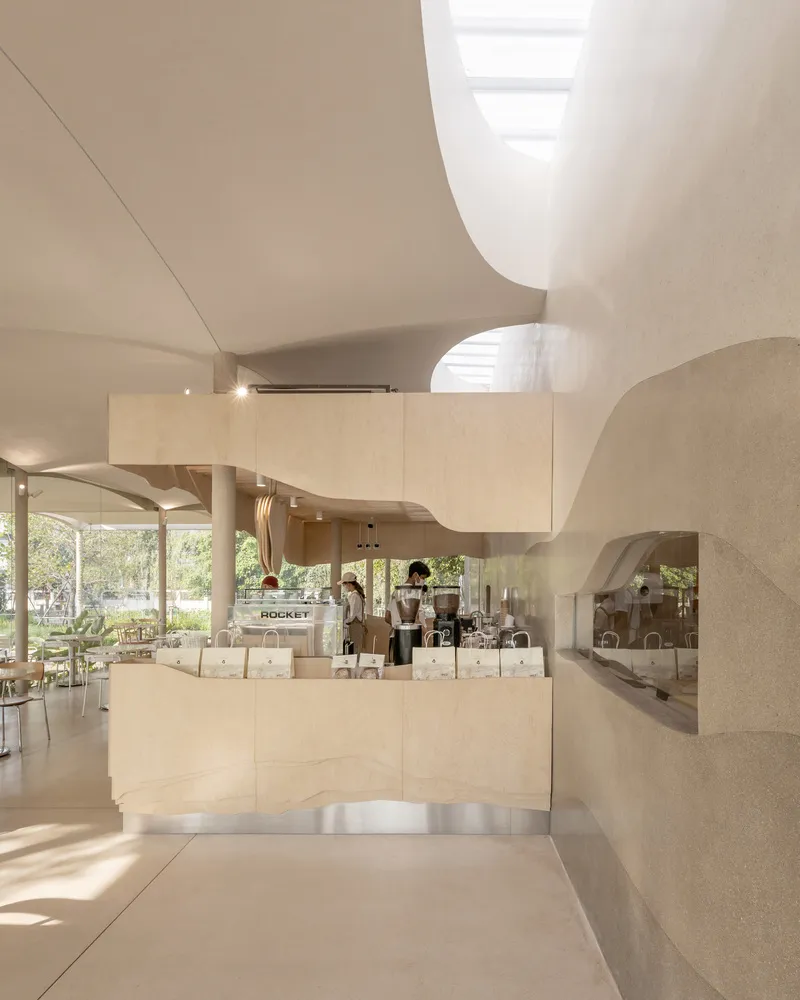
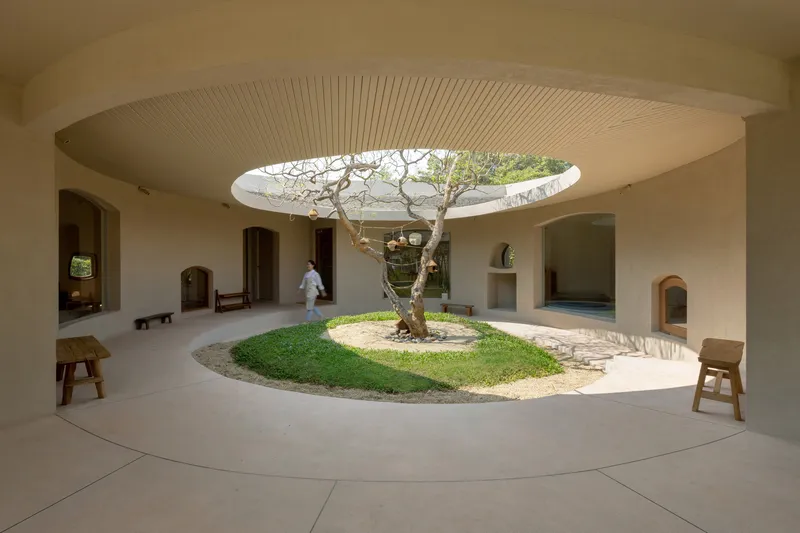
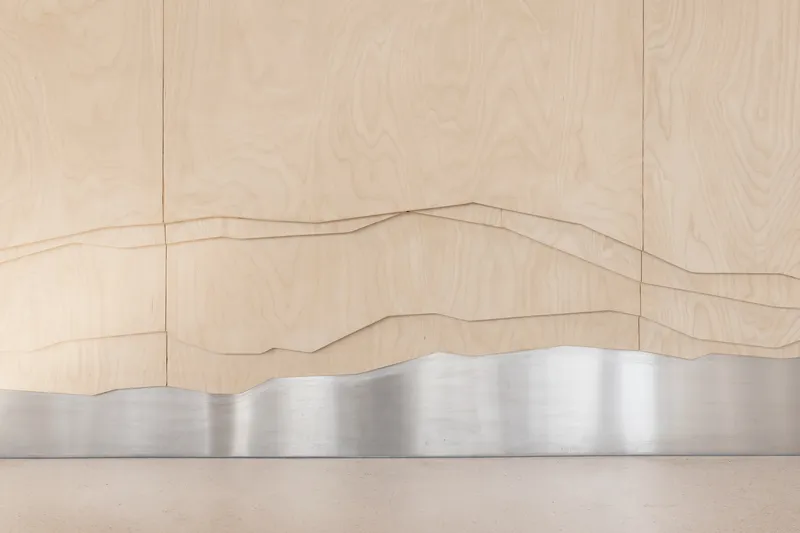
The interior features an elliptical skylight that brings natural light into the space, highlighting the hand-drawn layered terrazzo on the main interior wall. The display counter is strategically positioned to offer a wide-angle view of the seating area, both indoors and outdoors.
Little Stump Playground
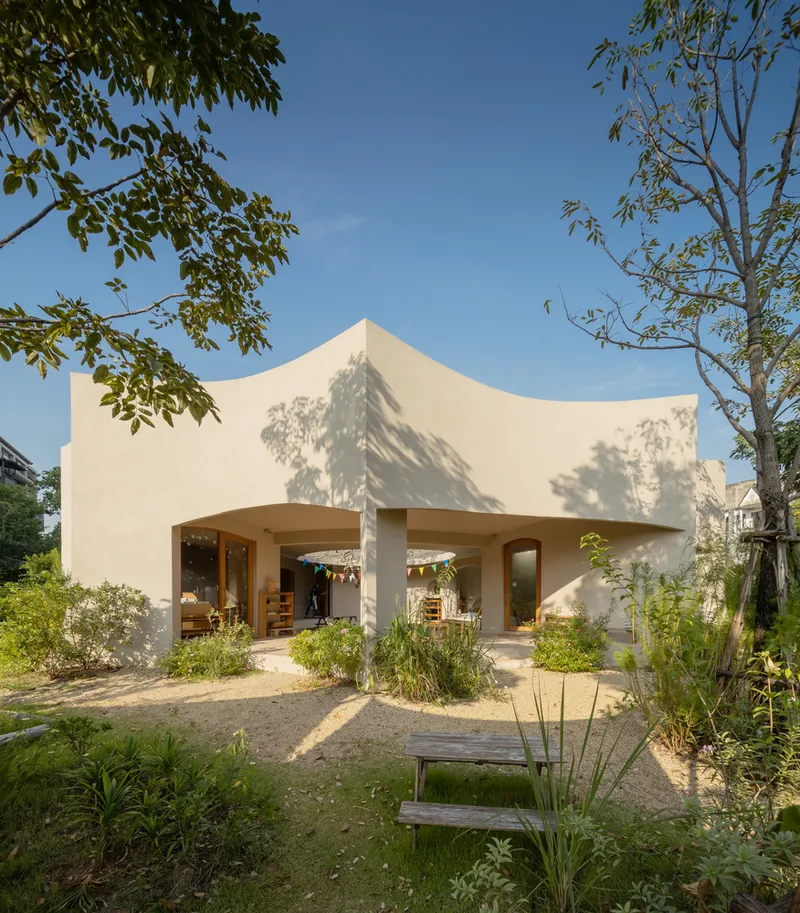
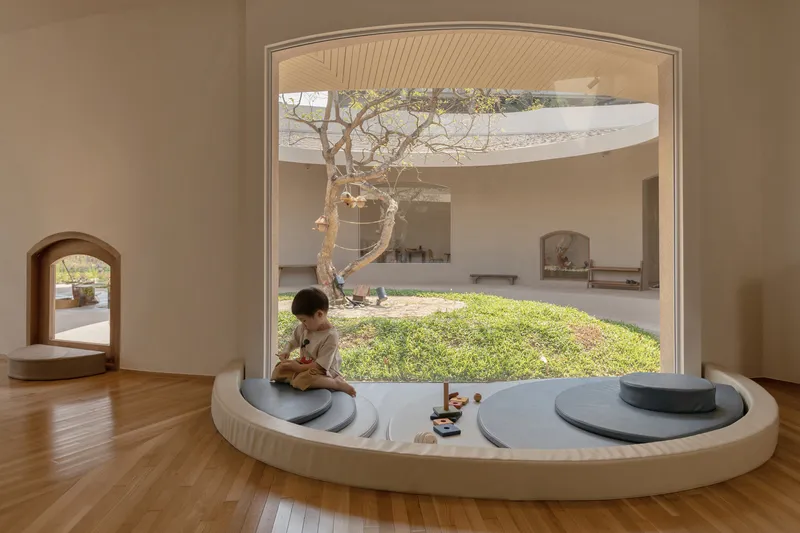
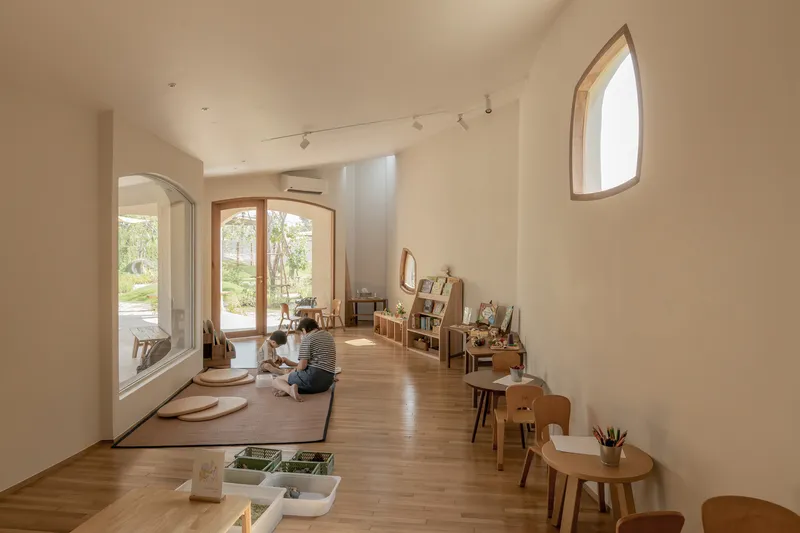
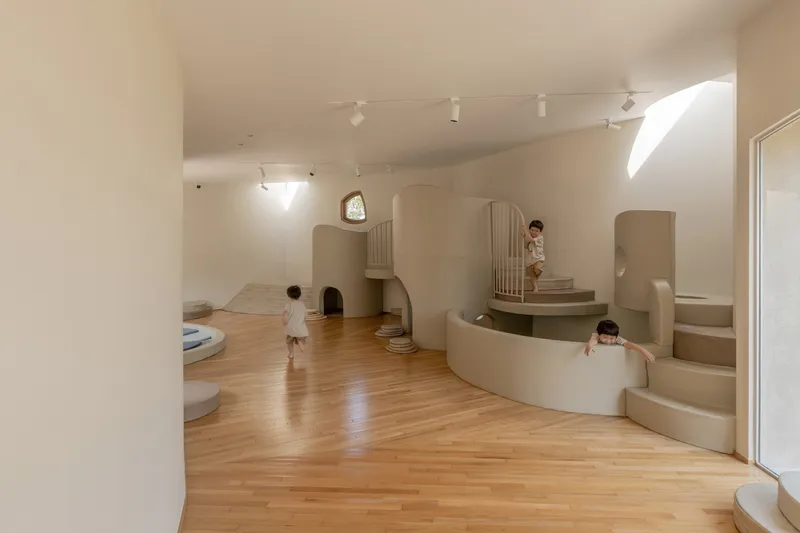
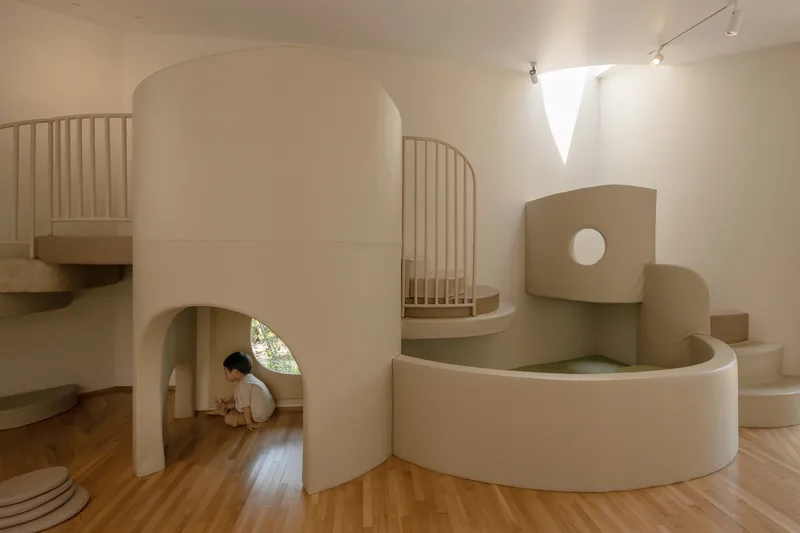
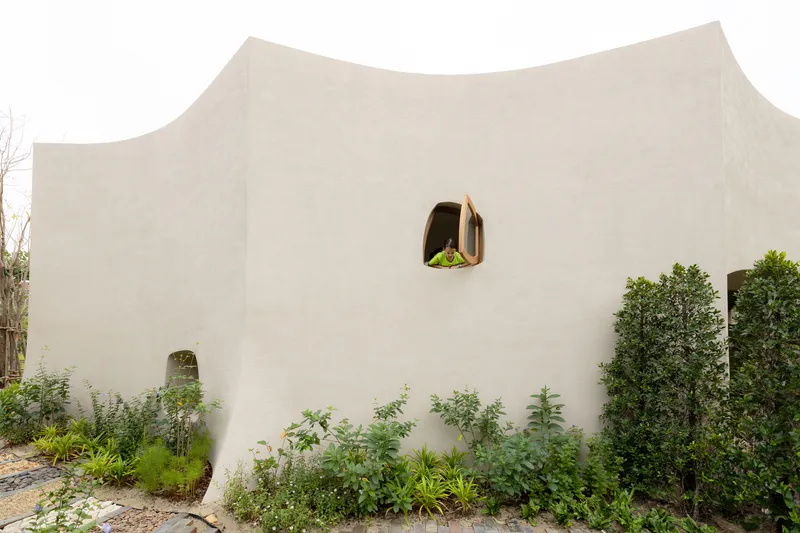
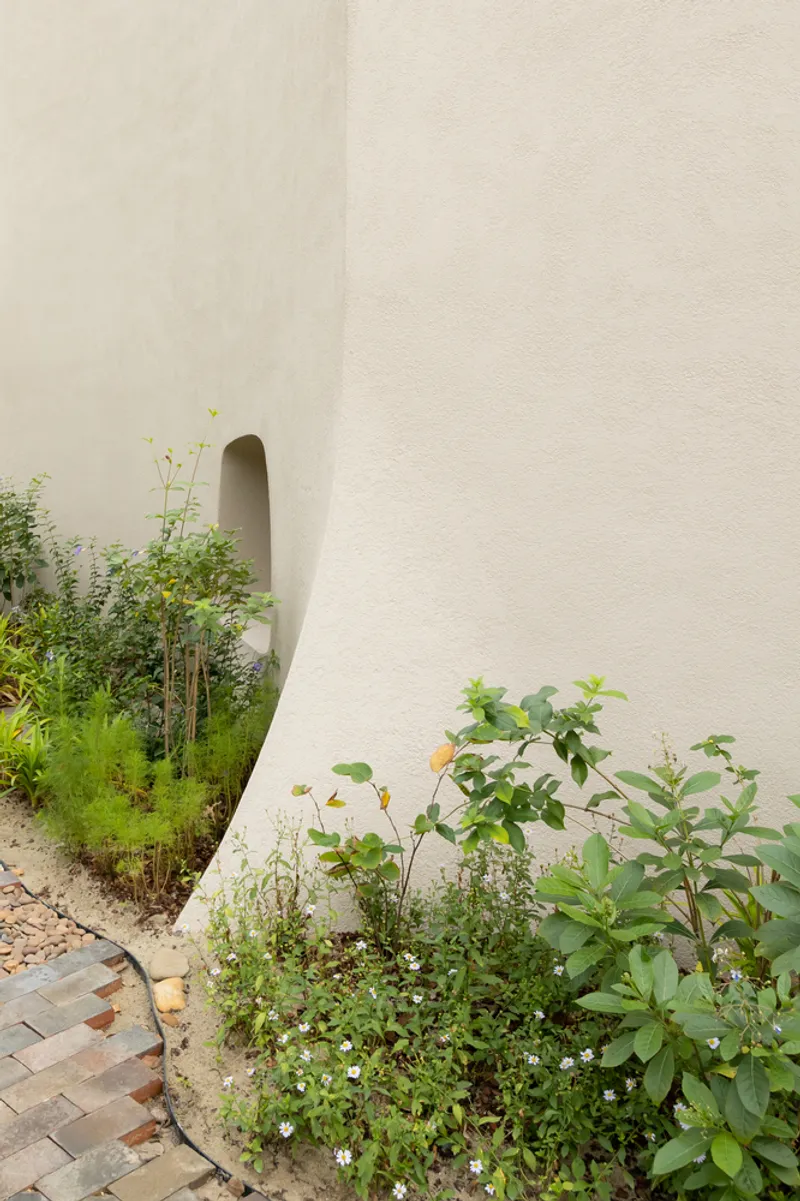
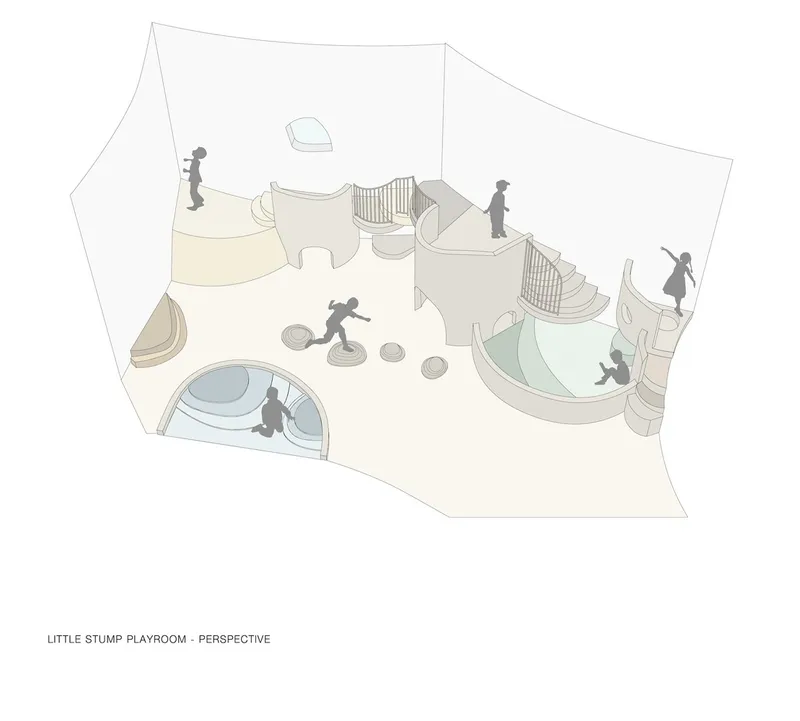
Inspired by a tree stump with a hollow core, Little Stump is designed to be a full-scale representation of the narrative from the children's book. The building features a center court with a symbolic tree, signifying growth and life. Organic shapes and forms from nature influence the design, with columns resembling tree trunks and window openings shaped like tree hollows.
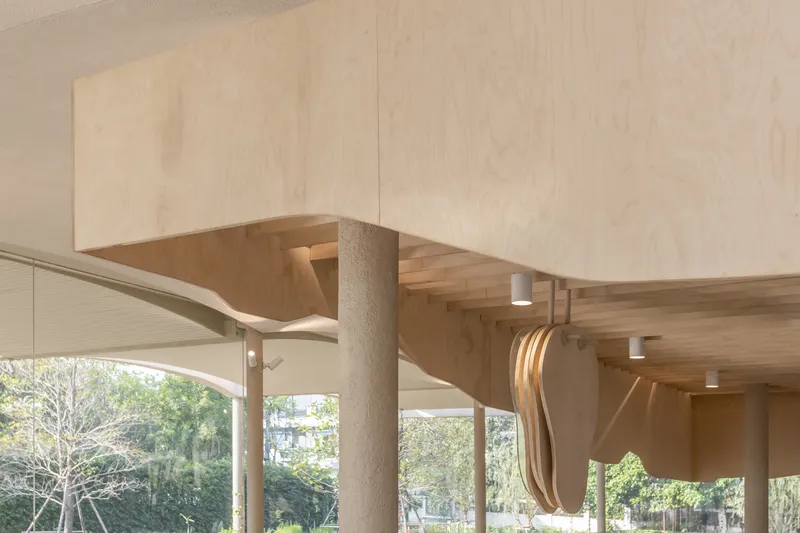
The playground is designed to be visually connected, allowing parents to keep an eye on their children as they move between indoor and outdoor spaces. This connectivity fosters a safe and engaging environment where children can expand their imagination, explore sensorial experiences, and learn through play.
Challenges and Solutions
Integrating Narrative and Functionality
One of the primary challenges was integrating the narrative of the children's book with the functional requirements of a coffee shop and playground. NITAPROW achieved this by incorporating elements from the book into the design, creating a cohesive and immersive experience for visitors.
Balancing Indoor and Outdoor Spaces
The design emphasizes the balance between indoor and outdoor spaces, ensuring that both areas are equally inviting and functional. The large canopy and skylight in the coffee shop, along with the visually connected playground, create a harmonious blend of indoor and outdoor environments.
Materials and Construction
The project utilizes a variety of materials to achieve its unique design. Hand-drawn layered terrazzo, plywood, and MDF are used throughout the interior, while the exterior features organic shapes and forms inspired by nature. These materials not only enhance the aesthetic appeal but also contribute to the functionality and durability of the spaces.
Little Stove & Little Stump Coffee Shop and Playground by NITAPROW is a testament to the power of imaginative design. By combining a narrative from a children's book with functional spaces, the architects have created a unique and engaging environment for both children and adults. This project highlights the importance of storytelling in architecture and the joy that can be found in spaces designed for play and imagination.



Popular Articles
Popular articles from the community

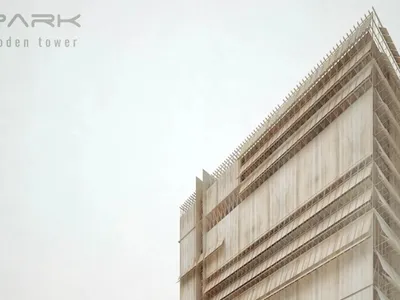
EW PARK: Sustainable Architecture Reimagines the Future of Urban Parking
EW PARK reimagines city parking as a modular wooden tower combining automation, solar energy, electric mobility, and adaptable urban design.

The Musturak Paradise: Senior Living Architecture for a Connected Future in Temara, Morocco
The Musturak Paradise reimagines senior living architecture in Temara via private homes, social spaces, culture, community, and shared care.

Conexión: Biophilic Design Reimagines High-Rise Living in Hong Kong
Conexión reimagines high-rise living in Hong Kong through biophilic design, green facades, shared spaces, daylight, water and nature within.

AL-JANNAH: Sustainable Architecture and Permaculture for Afghan Widows
AL-JANNAH uses sustainable architecture and permaculture to create resilient oasis of housing, learning, work and renewal for Afghan widows.


Similar Reads
You might also enjoy these articles


Hodi-Mandai Geram
Project Function: Preservation and revitalization of the Intangible heritage and socio-spatial identity of the Hodi by Housing, Cultural Memory Center, Sacred Grove, landscape, local tourism economy


Olio Towers: A Mid-Rise for Performers That Fuses Housing, Rehearsal, and Stage
Located blocks from Houston's Theater District, this modular tower stacks living units around a central performance atrium.

Oasis: Modular Green Housing Carved into Dhaka's Urban Fabric
A shortlisted Plugin Housing entry reclaims unauthorized settlements in Dhaka with stepped concrete volumes, green roofs, and ventilation-driven design.

Black Hole: A Floating Megastructure for the Post-Physical Era
Emiliano Mazzarotto envisions a spherical, self-scaling arena where e-sports, digital hotels, and holographic stadiums replace traditional public space.


Explore Architecture Competitions
Discover active competitions in this discipline



Challenge to reimagine the Iron Throne


Photograph architecture without architects


Illustrate the lost glory of Angkor Wat - Render Challenge


Design challenge to reuse E-waste
Comments (0)
Please login or sign up to add comments
No comments yet. Be the first to comment!