
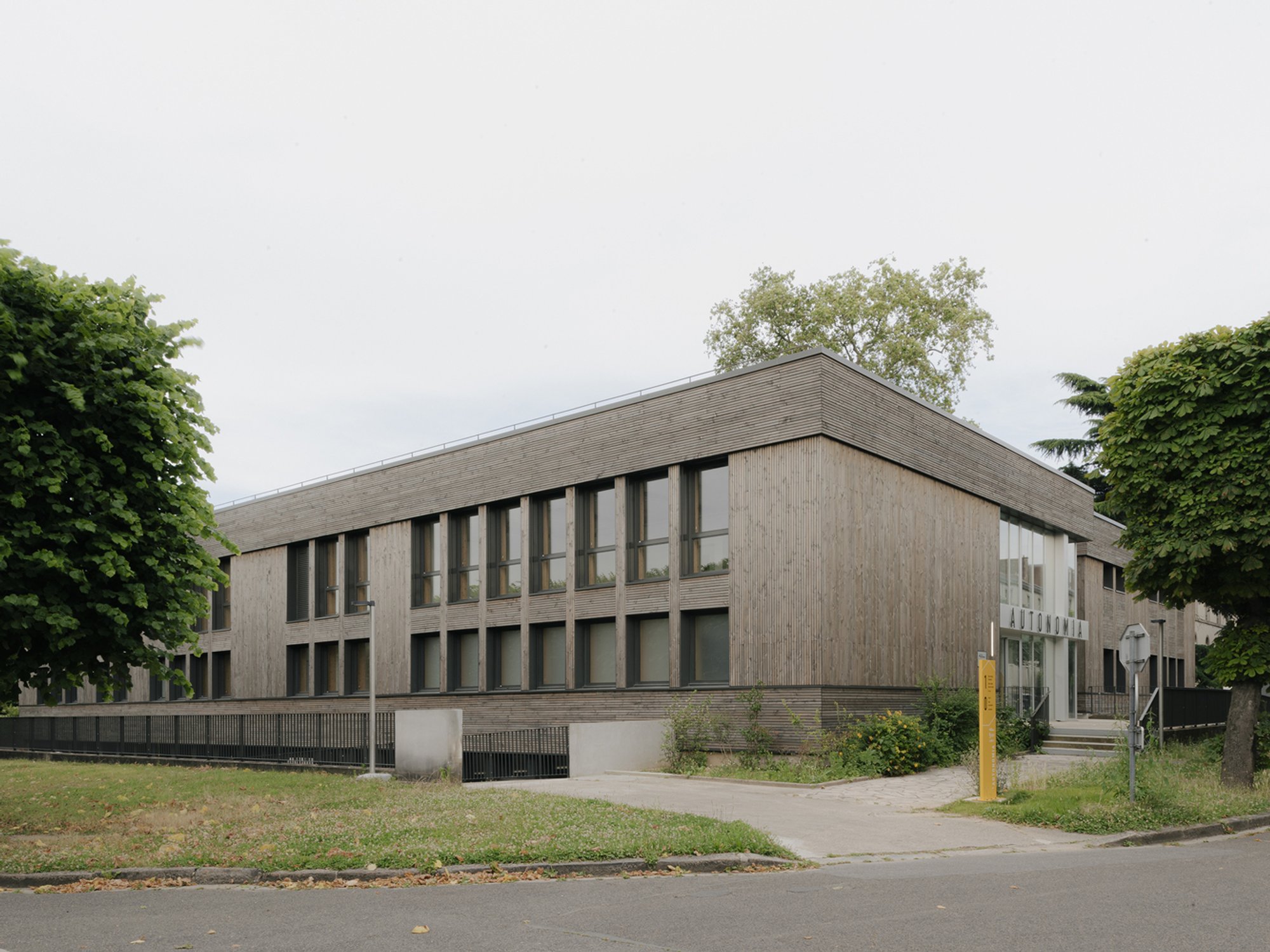
Louis Pasteur Building Transformation into the Autonomy Research Center by Atelier Téqui Architects
The transformed Louis Pasteur Building becomes a warm, flexible autonomy research center with timber façades, immersive patient spaces, and adaptable work environments.

The Louis Pasteur Building in Ivry-sur-Seine has undergone a major architectural transformation, reimagined by Atelier Téqui Architects as a pioneering Autonomy Research Center. Located within the historic Charles-Foix Hospital campus—originally established in 1873 as a “hospice for the incurable” designed by Théodore Labrouste—the renovated facility marks a significant step in healthcare innovation, rehabilitation research, and adaptive reuse architecture.
In 2024, the Public Assistance of Paris Hospitals (AP-HP) entrusted Sorbonne University with the upper floors of the former Pasteur building. The goal: to create France’s first research and experimentation center dedicated to autonomy in hospital environments. The result is a cutting-edge hub where clinicians, researchers, engineers, and patients collaborate in a living-lab setting to explore new solutions for mobility, independence, and everyday functionality.
Reimagining a 1960s Hospital Building
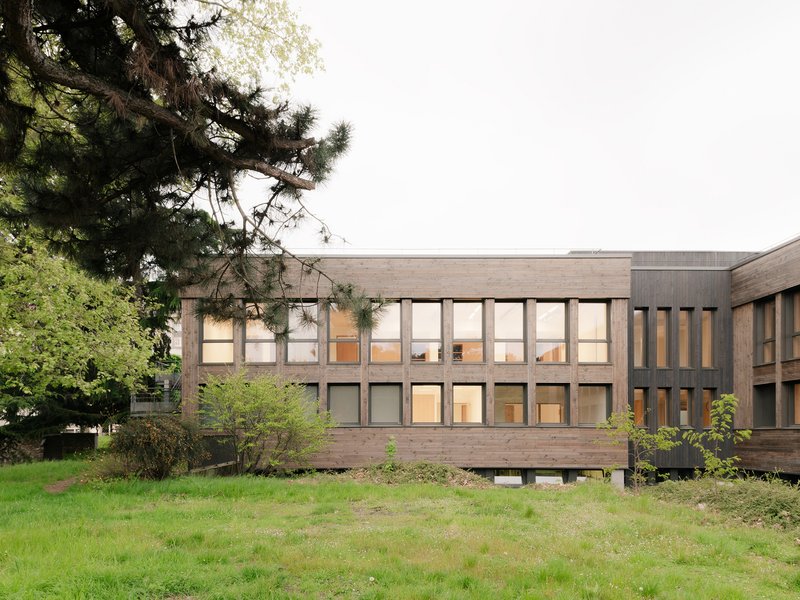
Originally constructed in 1964, the three-level structure featured a semi-buried pharmacy level, a ground floor with main street access, and an upper floor reached from the exterior. Its post-and-beam structural frame with brick infill offered flexibility, allowing the architects to reconfigure interior spaces while preserving the building’s load-bearing skeleton.
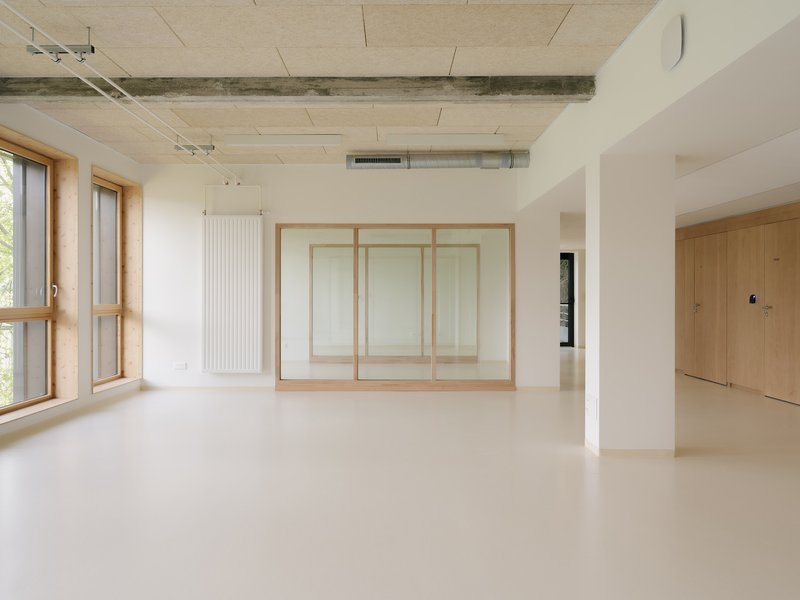
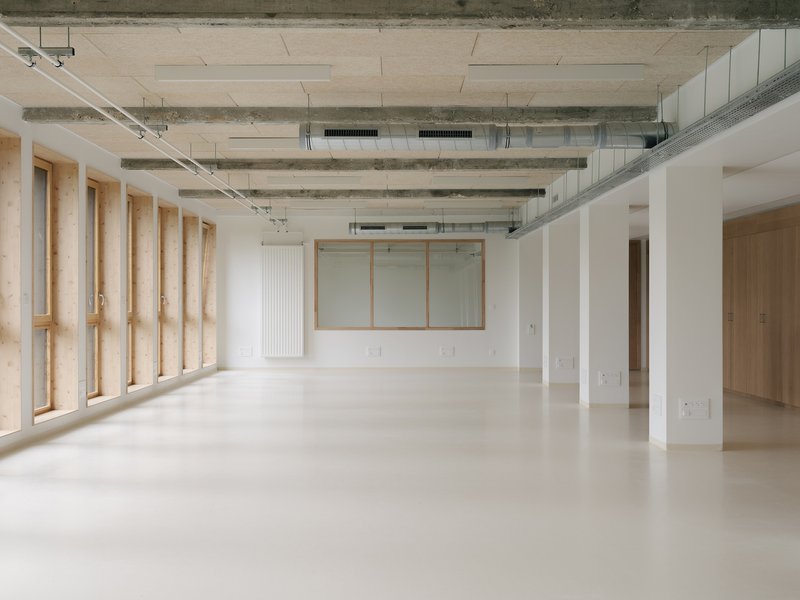
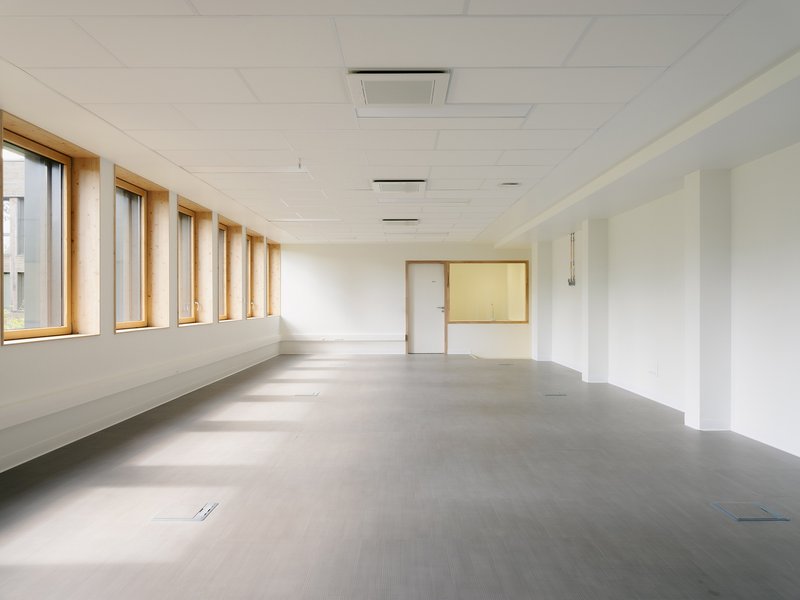
Atelier Téqui Architects undertook a full interior strip-out—removing partitions, cleaning the structure, and retaining only essential elements. Enlarged window openings increase natural light, clarity, and visual transparency throughout the building, enhancing both spatial comfort and clinical usability.
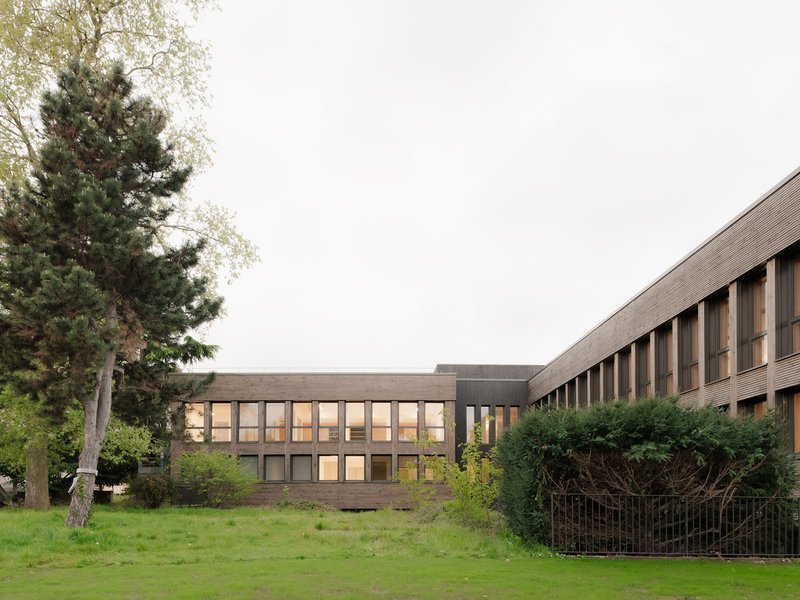
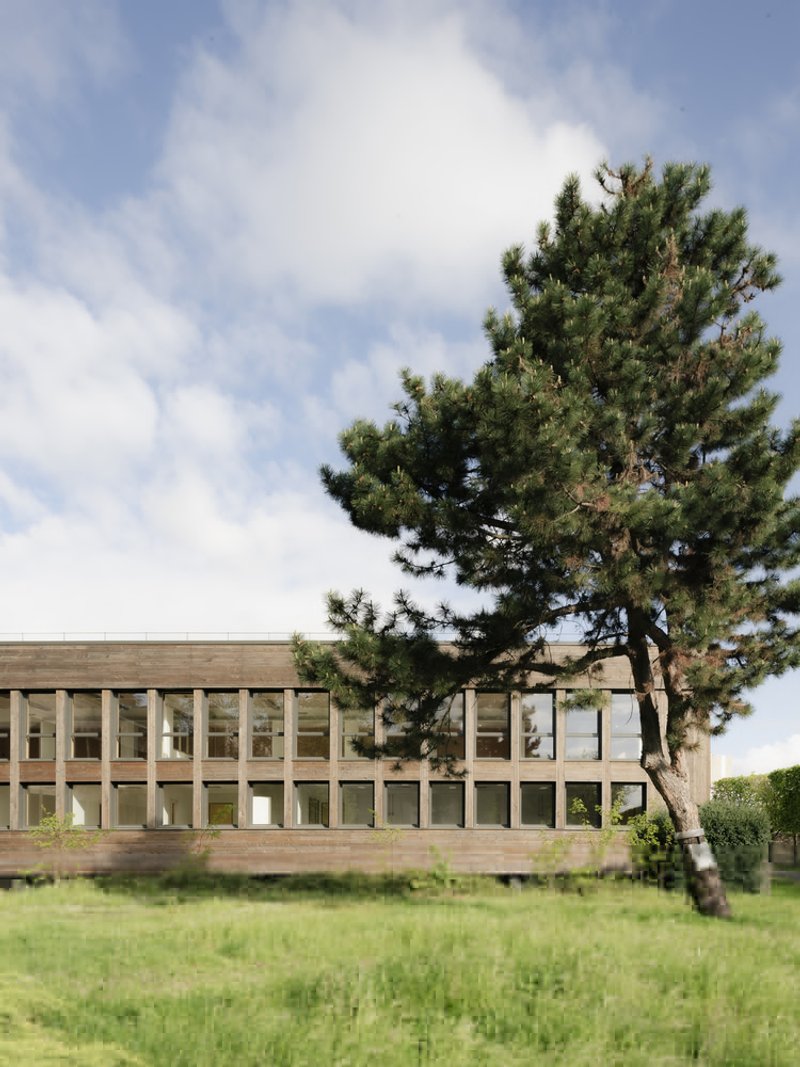
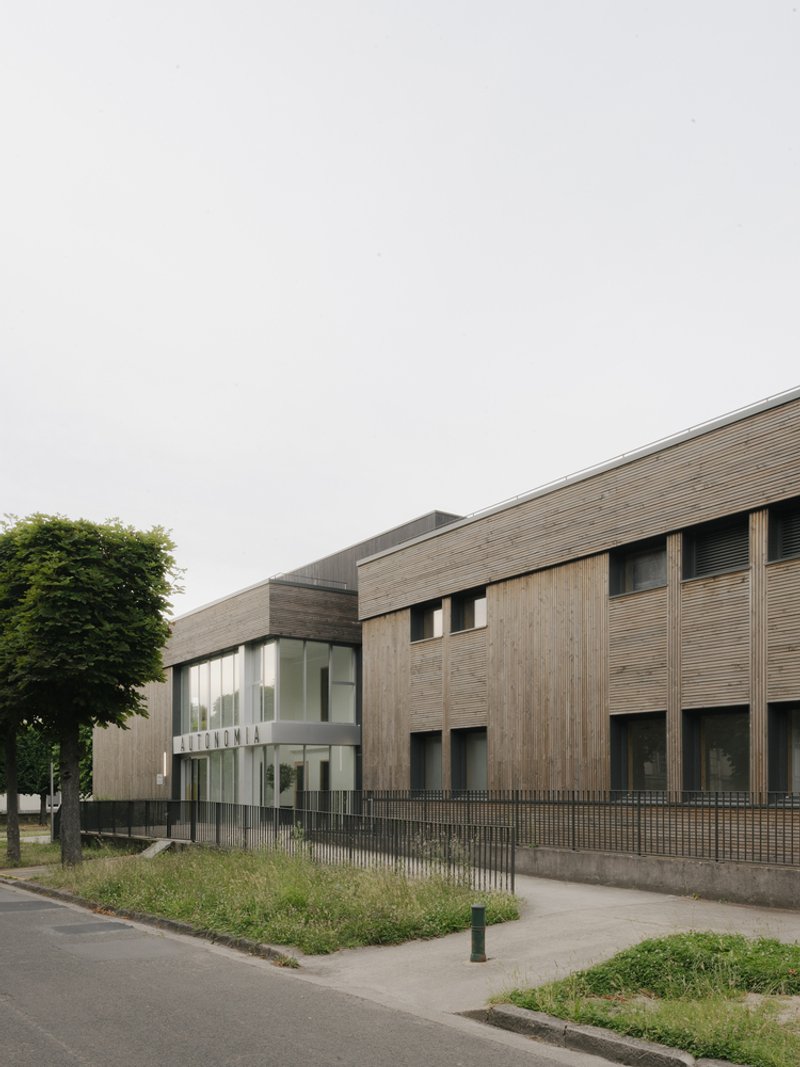
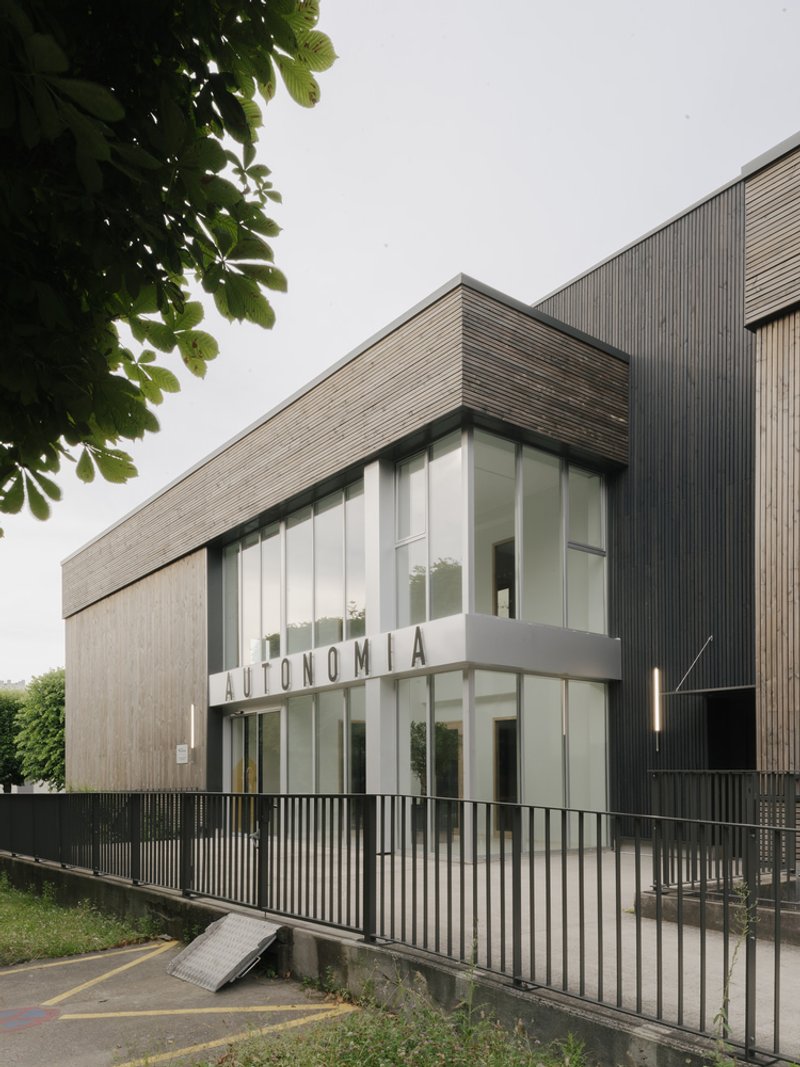
The façade underwent a substantial thermal upgrade. External insulation using glass wool is paired with a new Douglas fir cladding sourced from French forests. The false clerestory-style wooden façade, treated with a grey autoclave finish, ensures long-term durability while achieving the soft, naturally weathered appearance of aged timber.
Programmatic Layout: A Living Laboratory for Autonomy
Ground Floor: Immersive Patient Environments
The ground level serves as the primary interface for patients, users, and visiting clinicians. Designed to simulate real-world living scenarios, this floor includes:
- Full-scale domestic environments (home, bedroom, kitchen)
- A connected staircase for mobility assessments
- Walking test pathways
- Movement analysis platforms
- Doctor consultation rooms
- Logistics and administrative offices
These spaces allow individuals experiencing loss of autonomy to be assessed and trained in environments that replicate day-to-day activities. The goal is to test technology, evaluate mobility, and study rehabilitation strategies in realistic conditions.
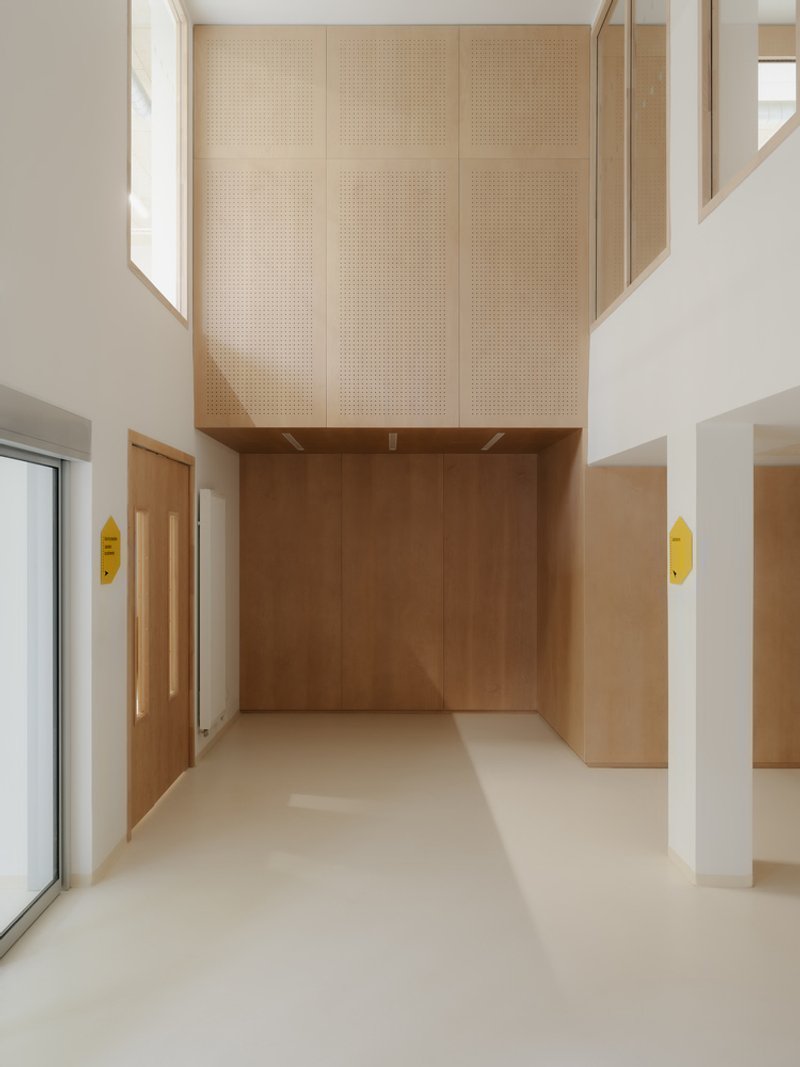
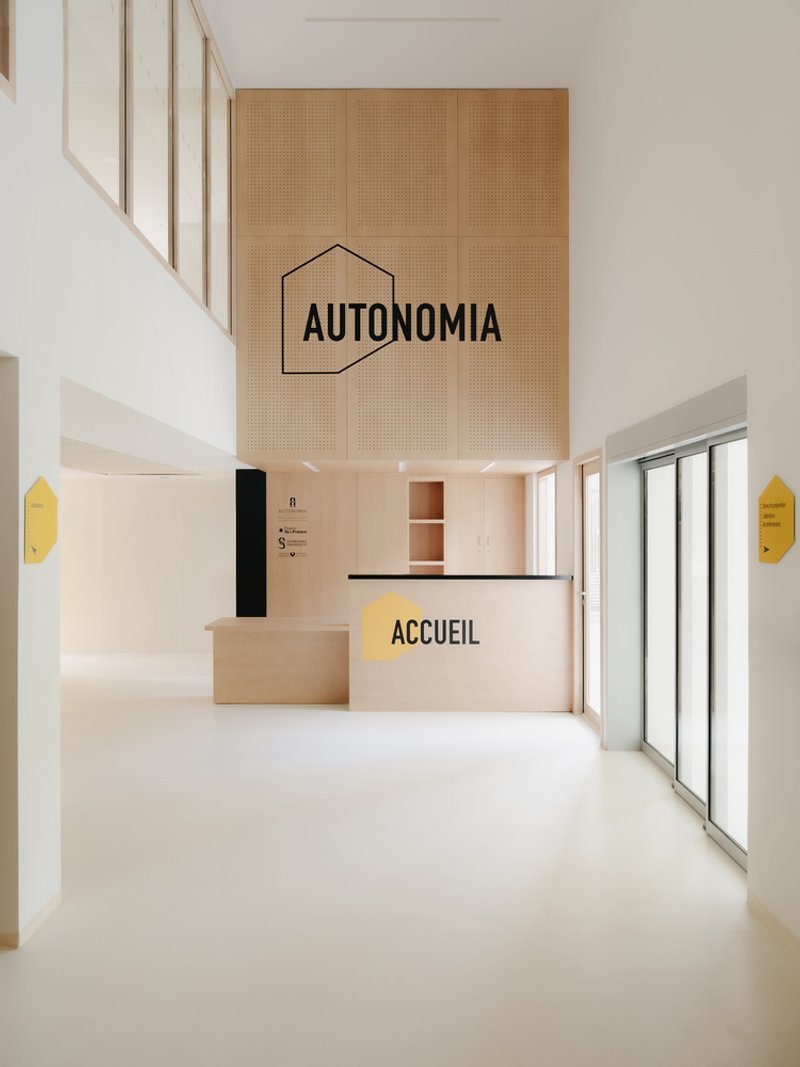
A welcoming double-height entrance hall—wrapped in warm wood and visible from the upper circulation areas—creates an inviting first impression. Integrated wayfinding and a custom-built reception desk ensure clarity for all users.
Upper Level: Research, Collaboration, and Innovation
The top floor is dedicated to research professionals. Its flexible configuration supports evolving study needs and collaborative workflows. Key spaces include:
- A fabrication workshop (fablab) for prototyping devices
- Open-plan and enclosed workspaces
- Conference and meeting rooms
- Informal lounges and a generous communal area
The architects emphasized adaptability through movable partitions, open office concepts, and versatile layouts that can evolve with emerging research methodologies.
Materiality and Atmosphere
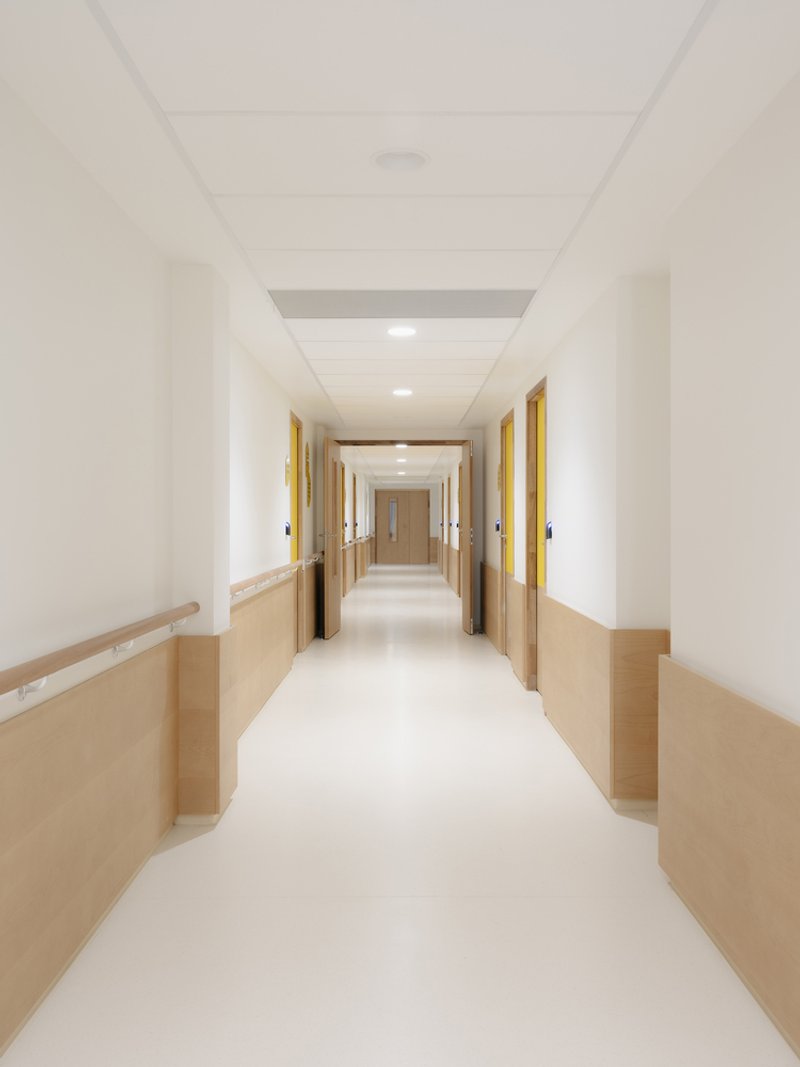
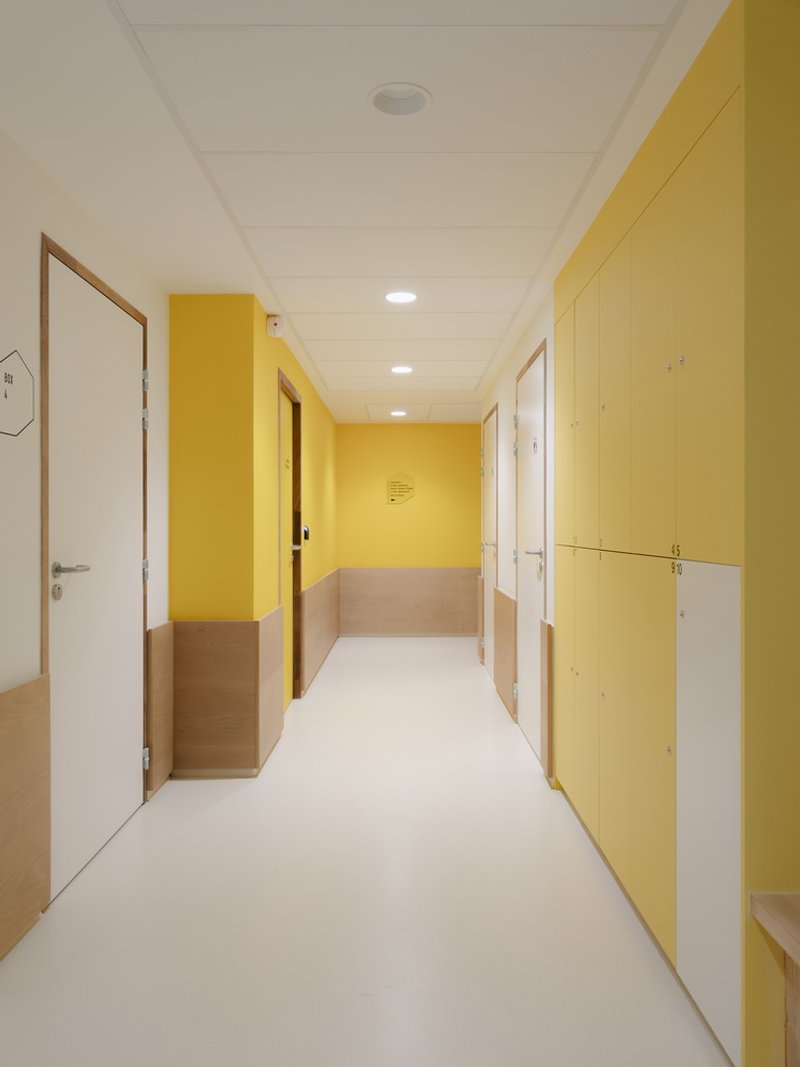
Wood plays a central role in shaping a warm, human-centered environment. Sycamore and beech—selected for their soft, slightly pink hues—appear throughout circulation areas, walls, and integrated furniture systems. On the upper floor, functional wooden walls conceal technical elements while providing built-in storage and refined interior aesthetics.
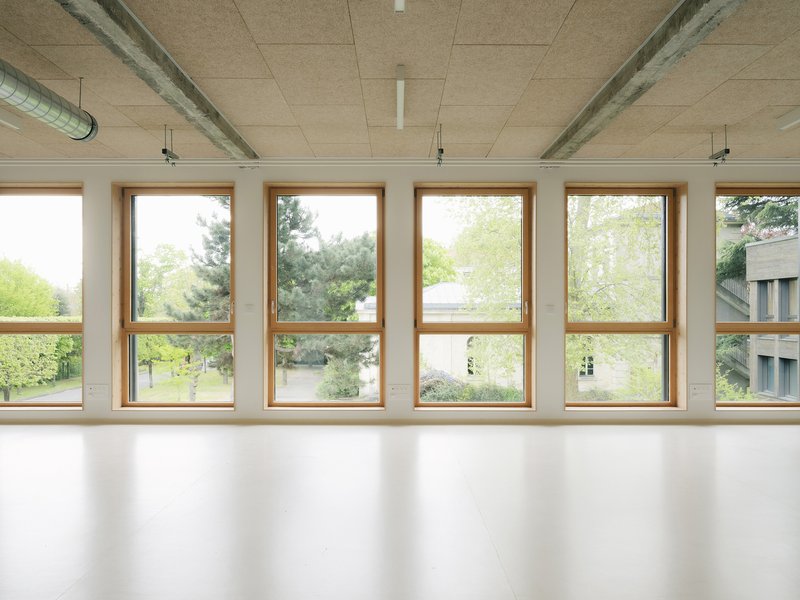
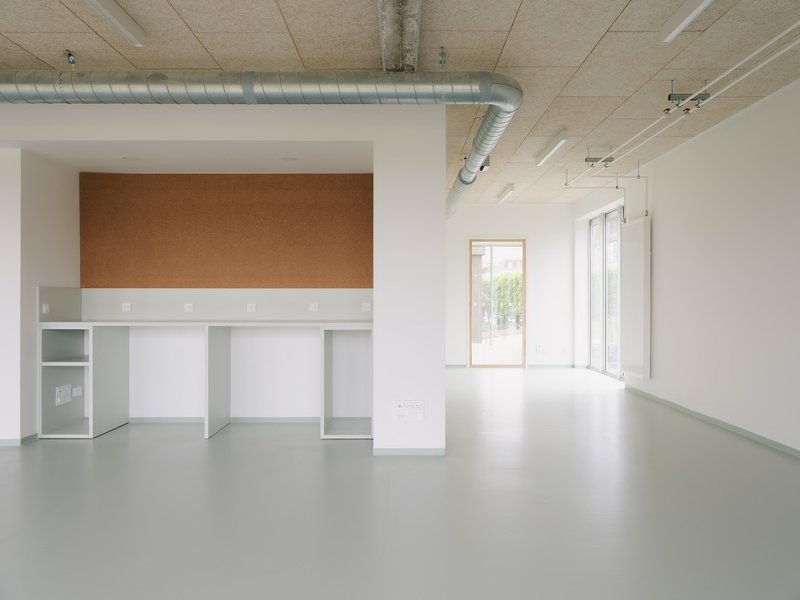
This use of natural materials not only improves thermal and acoustic comfort but also contributes to a reassuring atmosphere for patients navigating sensitive rehabilitation processes.
The transformation of the Louis Pasteur Building into the Autonomy Research Center represents a forward-thinking fusion of healthcare innovation, architectural sensitivity, and sustainable adaptive reuse. Atelier Téqui Architects successfully revitalized a mid-century structure into a technologically advanced environment that supports medical research, patient autonomy, and interdisciplinary collaboration—reinforcing the role of architecture as a catalyst for human wellbeing.
All photographs are works of Jean Baptiste Thiriet



Popular Articles
Popular articles from the community

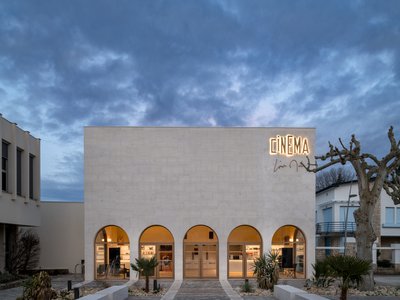
Louis Malle Cinema: A Limestone Cultural Landmark Revitalizing Community Life in Prayssac
Limestone cinema extension with public forecourt, blending heritage and modern design to create flexible cultural spaces and strengthen community interaction.
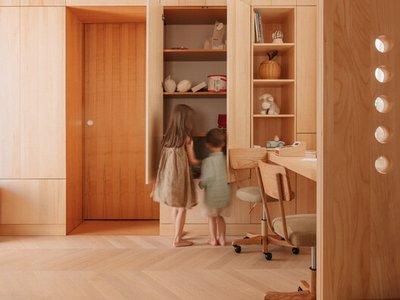
Treehouse Apartment: A Warm Timber Interior Blending Craft, Play, and Contemporary Living
Warm timber apartment with integrated treehouse, combining natural materials, craftsmanship, and playful design to create a flexible, family-oriented living environment.

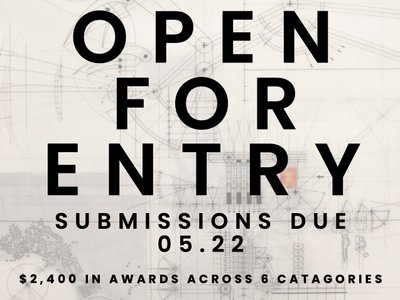
The Ken Roberts Memorial Delineation Competition (Krob)
As the most senior architectural drawing competition currently in operation anywhere in the world, it draws hundreds of entries each year, awarding the very best submissions in a series of medium-based categories.
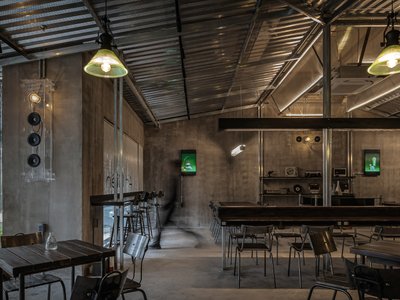
An Miên Lumière Cafe by xưởng xép, Ho Chi Minh City, Vietnam
An industrial-inspired café where layered steel and warm light create a dynamic, immersive environment shaped by reflection, depth, and perception.


Similar Reads
You might also enjoy these articles
The Ken Roberts Memorial Delineation Competition (Krob)
As the most senior architectural drawing competition currently in operation anywhere in the world, it draws hundreds of entries each year, awarding the very best submissions in a series of medium-based categories.

Waterfront Redevelopment and Urban Revitalization in Mumbai: Forging a New Dawn for Darukhana
A transformative waterfront redevelopment project reimagining Darukhana’s shipbreaking heritage into an inclusive urban future.
OUT-OF-MAP: A Call for Postcards on Feminist Narratives of Public Space
Rhizoma Design and Research Lab invites artists, designers, architects, researchers, and students to reflect on how feminist perspectives can reshape public space. Selected works will be exhibited in Barcelona, October 2026. Submissions open until 15 April 2026.


Documentation Work on Buddhist Wooden Temple
Architectural syncretism and cultural hybridity: A comparative study of the Buddhist temples in Chattogram Hill tracks

Explore Architecture Competitions
Discover active competitions in this discipline




The International Standard for Design Portfolios


The Global Benchmark for Architecture Dissertation Awards


The Global Benchmark for Graduation Excellence

Challenge to design public laboratory
Comments (0)
Please login or sign up to add comments
No comments yet. Be the first to comment!