
MAJI
Ngorongoro visitor center
Prologue
In the summer of 2019, I visited Kenya, which borders Tanzania and has a very similar nature and culture. This trip left me with mixed feelings. Beautiful nature on the one hand, great poverty on the other. Many people and animals do not have easy access to water, which is normal for others in the world. They often have to go for miles to get at least some water, which is usually very dirty. This experience reminds me of how precious water is.
One of the certain sources of water in Africa is the rainy season. People try to accumulate as much water as possible at this time.
Locality
The Ngorongoro Crater is a huge volcanic caldera, covering 260 sq. km in Northern Tanzania. Formed approximately 2.5 million years ago when a giant volcano exploded and collapsed in on itself, the Ngorongoro Crater is 610m deep. Ngorongoro is a world unique, offering exceptional views.
Idea
All the important project thoughts.
Concept
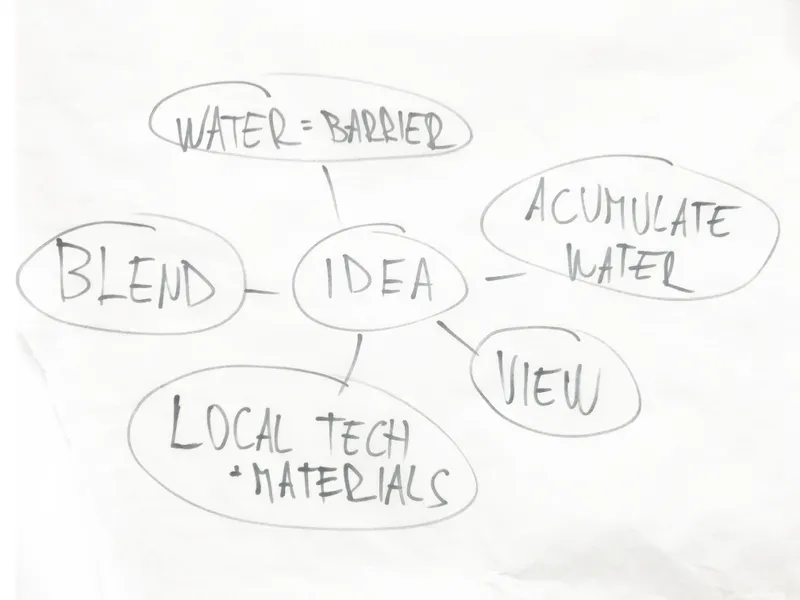
Can we create nature-inspired barriers instead of building walls?
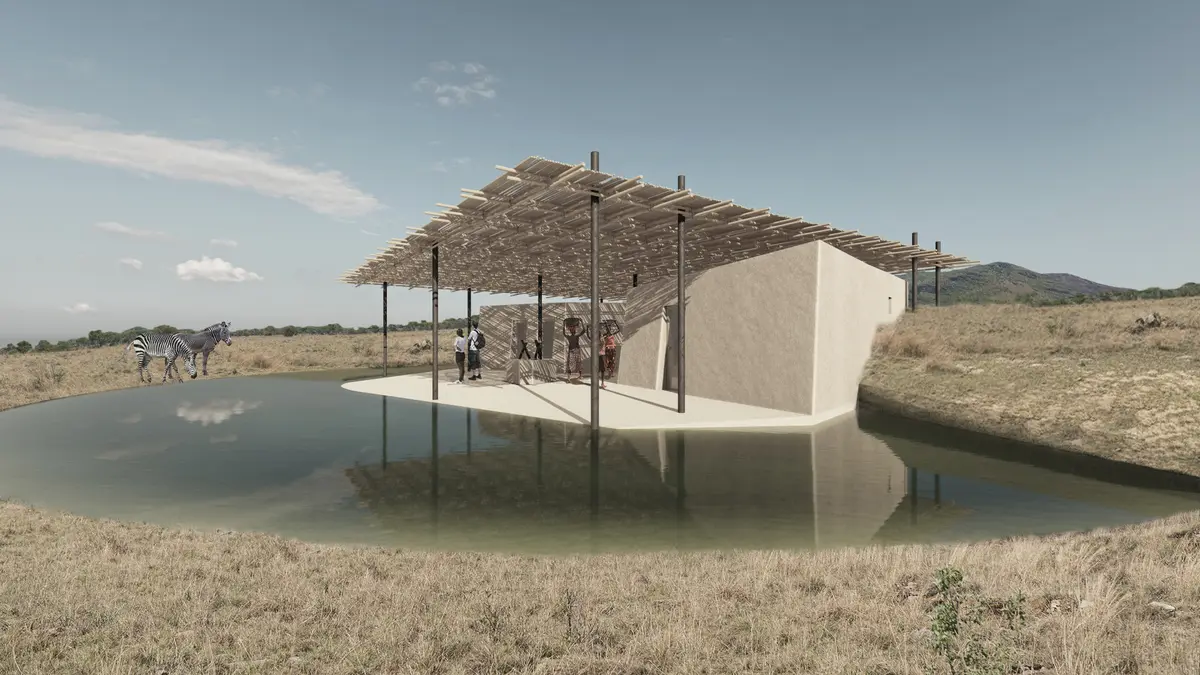
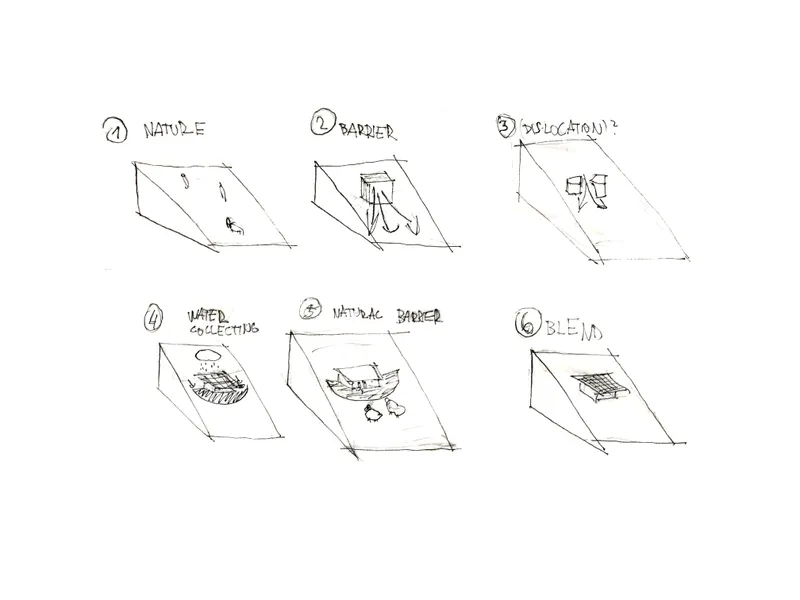
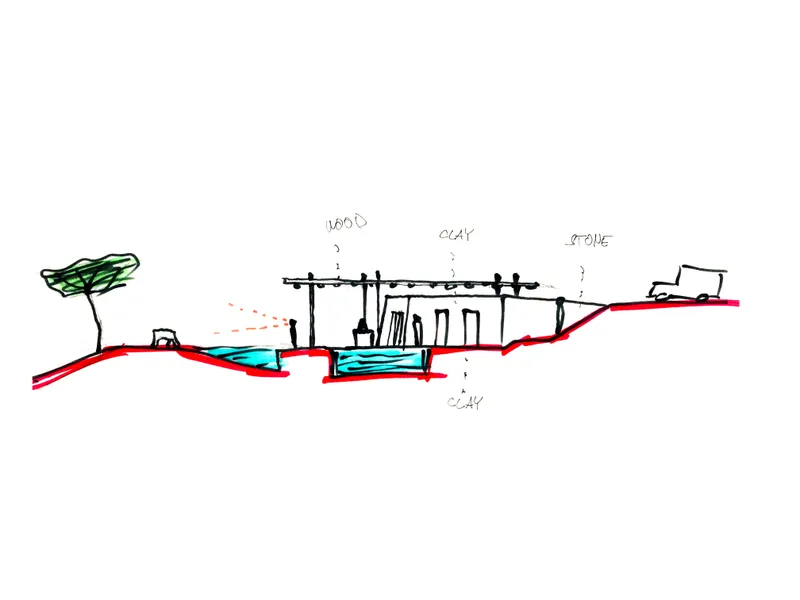
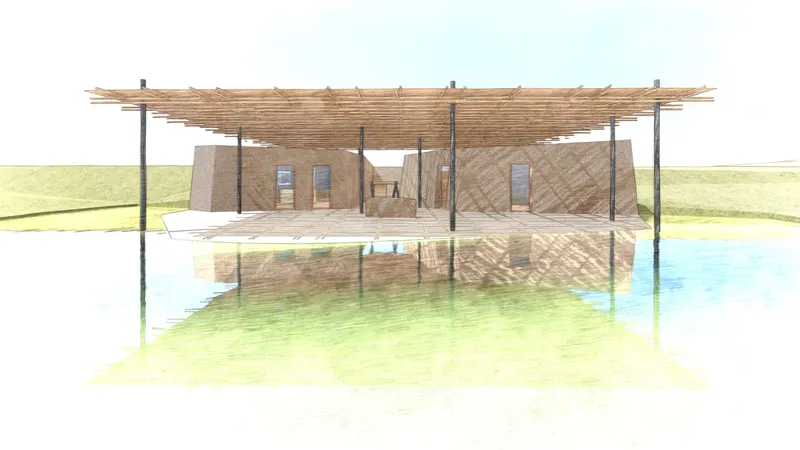
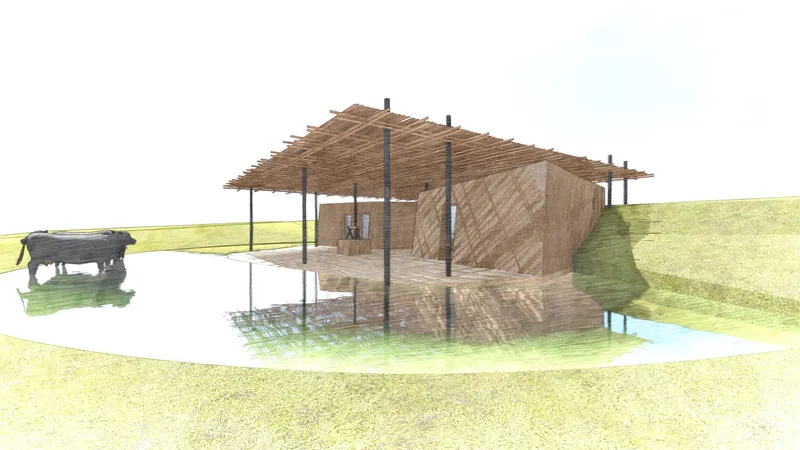
The creation of the concept begins with the placement of the basic shape on the competition site. Then it is formed into two smaller huts to fit better into local conditions and to emphasize the view when walking into the building. Both huts have sloped roofs and walls so the rainwater flows on the floor and continues towards the well and the water tank. After the rain season, the water can be used both by humans and animals. At the same time, the water tank creates an inconspicuous barrier between the two worlds. This is why the name Maji (water in Swahili) was given to the project. In order to blend in with the landscape, the building is set into the terrain and hidden under the pergola. Finally, a light wooden pergola connects the composition together and provides the necessary shadow.
 Programme
All rooms and spaces are designed in accordance with the competition area programme. I only added restrooms to the programme as part of the second building. I believe it is a necessary part of the design. As I know from personal experience, the toilets would be built nearby anyway. Stinky, attracting the attention of animals. Therefore, I would rather keep it under the control. I assume the use of dry compostable toilets.
The building is not electrified. I consider it unnecessary. However, it could be changed easily using solar panels.

Materials
The main materials (wood, clay, mud, cow dung) were selected based on the history and development of the local tribes and their techniques. Every material is environmentally friendly, can be gathered from the nearby area and do no harm to the environment.
CONSTRUCTION
The building can be divided into two parts - huts and roof. Both are built using the traditional techniques of the locals, enriched with modern elements.
The foundations are built of stone as well as the retaining walls preventing the collapse of the soil form stones. The walls are built of clay bricks and plastered with a mixture of mud, water and cow dung to ensure water resistance. When this mixture hardens, it is as solid as stone. The ceiling of the houses is made of wooden poles. poles are interlaced with a lattice of smaller branches which are also plastered with the same mixture as the walls.
The roof (pergola) is supported by wooden columns, firmly fixed into the ground. The horizontal part is made of criss-crossed branches fixed to each other using the bast. This creates a spatial structure that protects huts from the sun.
No heavy machines are required. The construction can be built easily with the help of local people.


Popular Articles
Popular articles from the community


Little Red Riding Hood: Architectural Design as a Journey Through Fear, Light, and Storytelling
Little Red Riding Hood reimagines the fairy tale through architectural design shaped by fear, light, scale, memory, uncertainty, and choice.

Play: Fragments of Their World
Familiar architecture becomes modular playground design, creating safe spaces where displaced children can learn, connect, imagine and play.

The Musturak Paradise: Senior Living Architecture for a Connected Future in Temara, Morocco
The Musturak Paradise reimagines senior living architecture in Temara via private homes, social spaces, culture, community, and shared care.

Co-Life: Senior Housing Design That Reconnects Older Adults With the City
Co-Life reimagines senior housing design through healing gardens, shared streets, workshops, and a sustainable community across generations.

Similar Reads
You might also enjoy these articles
The Rhythm of Seasons
A Farmers' Market Connecting Nature and the City

More Than a Building-Designing a Living System
More Than a Building-Designing a Living System
Base Beyond
DESERT COMPOUND ARID: TOURISM OF ABSENCE AND ABUNDANCE


Comments (0)
Please login or sign up to add comments
No comments yet. Be the first to comment!