
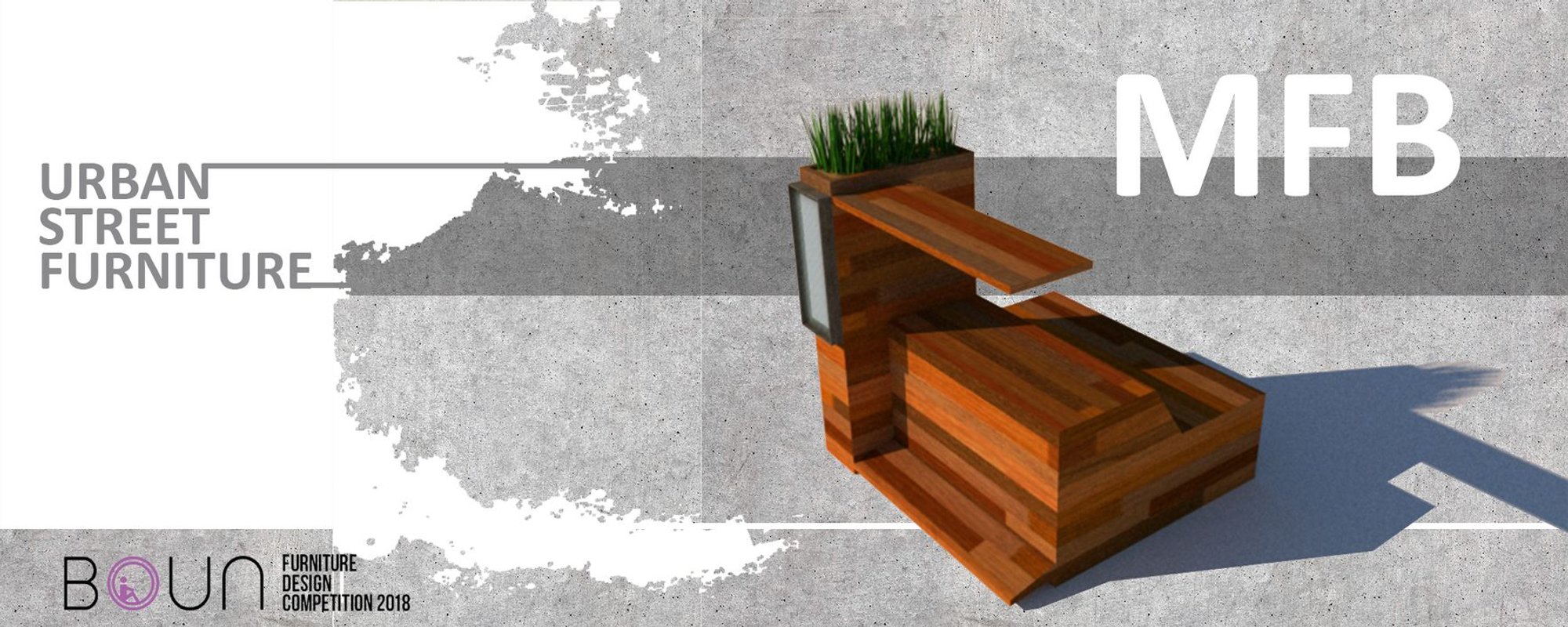
MFB – Redefining Modular Street Furniture in Urban Architecture
A modular street furniture design that redefines public seating through flexibility, sustainability, and human-centric architecture.

Project by Jahnavi Manem & Avanitha Thaduri
Urban environments are evolving rapidly, and with them, the needs of the people who inhabit these spaces. Traditional benches, once the go-to solution for public seating, have become monotonous, repetitive, and often limited to single-use purposes. The MFB design introduces a refreshing perspective by combining modular urban furniture architecture with human-centered design, creating multifunctional spaces that respond to the dynamic lifestyles of today’s city dwellers.
Rethinking Public Seating Architecture
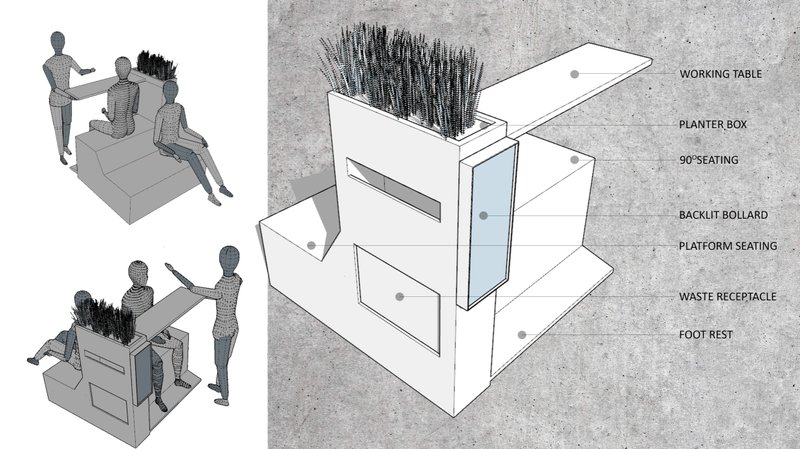
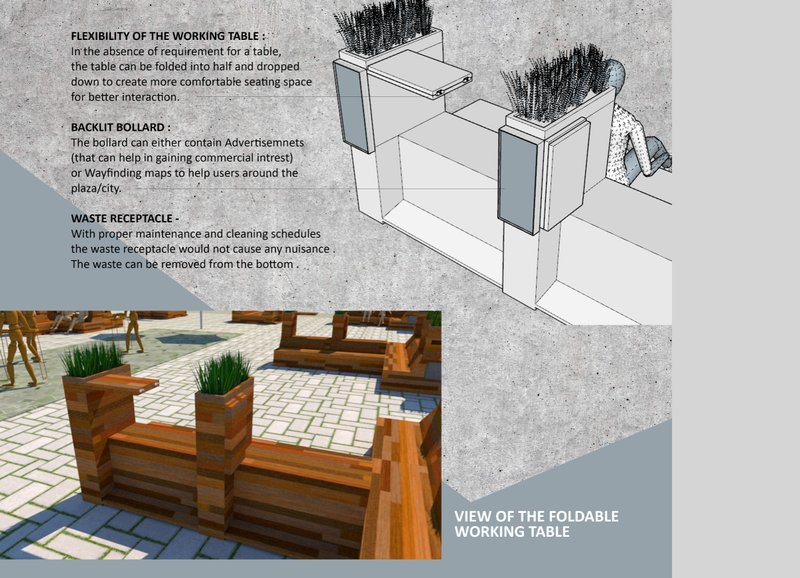
The MFB concept challenges the notion of benches as static, one-dimensional elements. Instead, it integrates multiple functionalities into a single modular unit. Beyond sitting, users can lean, lounge, stretch their legs, interact socially, or even use the built-in working table for laptops and other devices. This flexibility makes the design adaptable for plazas, parks, and high-traffic urban spaces.
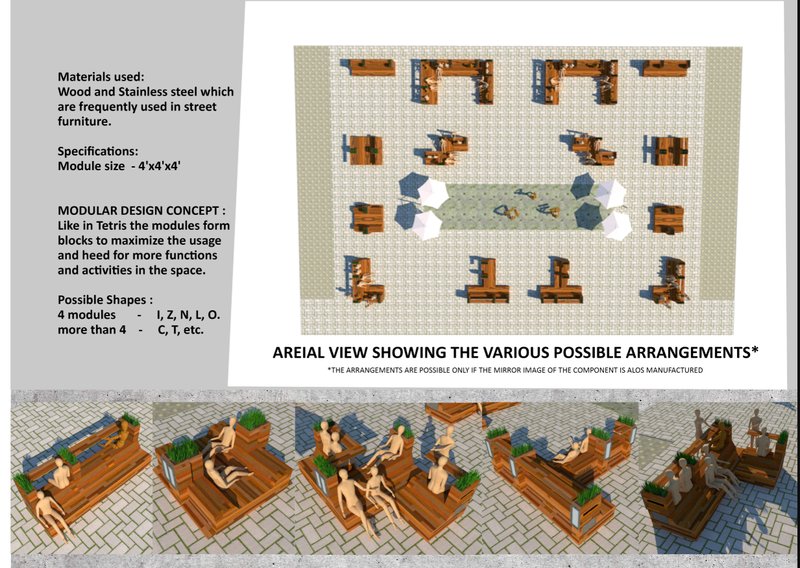
Each module measures 4’x4’x4’ and is constructed using wood and stainless steel, materials frequently used in street furniture due to their durability and aesthetic appeal. Much like the game Tetris, the modules can be arranged in multiple configurations (I, Z, N, L, O, C, T, and more) to optimize the use of space and cater to different crowd sizes and activities.
Features that Elevate Urban Design
The MFB modular furniture design is more than just a bench – it is a multi-utility public space solution. Key features include:
- Working Table: A foldable, adjustable surface that doubles as a workstation or dining area.
- Planter Box: Adds greenery while blending nature with the built environment.
- Backlit Bollard: Can be used for advertisements, wayfinding maps, or ambient lighting.
- Platform Seating: Encourages informal lounging and group interactions.
- Waste Receptacle: Promotes cleanliness and environmental responsibility.
- Foot Rest: Enhances comfort for relaxed seating positions.
A Human-Centric Architectural Vision
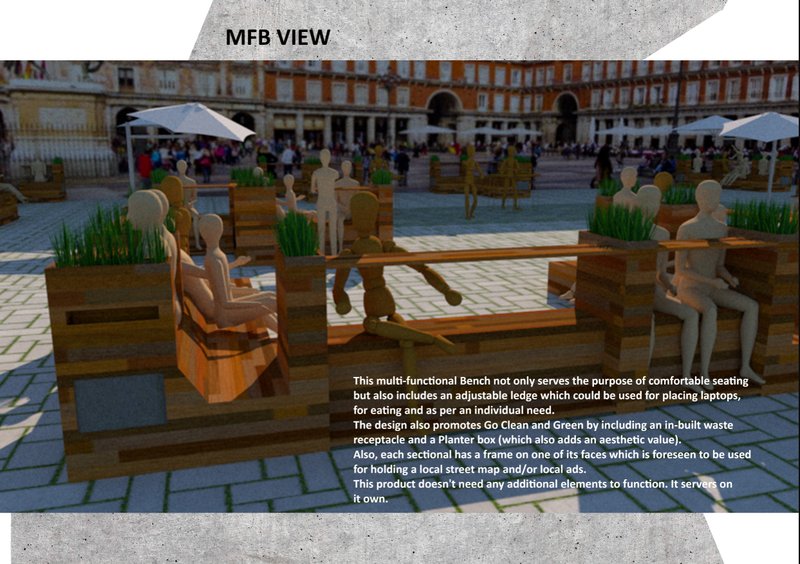
The core of the MFB design lies in its human-centric approach. Modern urban life requires spaces that are not only functional but also adaptive. Whether it’s a professional catching up on work outdoors, a group of friends socializing, or an individual pausing for rest, the MFB addresses multiple use cases in one architectural solution.
The modular design also supports sustainability. With in-built planters and waste receptacles, it promotes cleaner and greener public environments. Its self-sufficiency ensures that it functions as a standalone product without requiring additional elements.
Transforming Urban Architecture Through Flexibility
One of the most compelling aspects of the MFB is its flexibility in arrangement. From compact seating clusters to expansive modular landscapes, its adaptability allows architects and urban designers to reimagine public plazas, community spaces, and streetscapes. The incorporation of greenery and advertising-friendly bollards further makes it an ideal candidate for contemporary city planning.
By merging modular design principles with public space architecture, the MFB project demonstrates how multifunctionality can drive innovation in urban furniture.
The MFB design by Jahnavi Manem and Avanitha Thaduri presents a paradigm shift in how we perceive and use public seating. By breaking away from monotony and embracing modularity, it offers an inclusive, sustainable, and future-ready vision for urban architecture. As cities continue to grow, designs like MFB will play a critical role in shaping the way we rest, work, and interact in shared spaces.




Popular Articles
Popular articles from the community

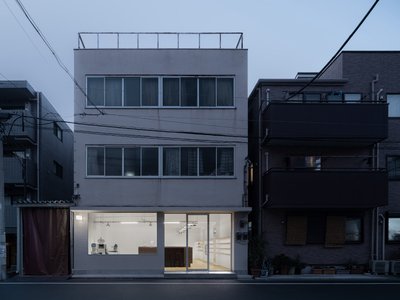
Atelier Macri Concept Store Interior Design by CASE-REAL
Atelier Macri store features a "ko" counter, walnut wood details, cork displays, blending retail, gallery, and seamless customer experiences.
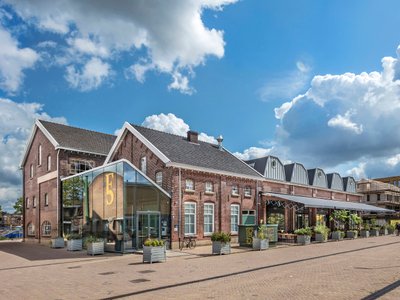
Fifth NRE Jazz Club – De Bever Architecten: Eindhoven’s Revitalized Cultural Hub
Historic gas factory transformed into Fifth NRE Jazz Club blending modern sustainability, jazz culture, dining, and heritage architecture seamlessly.
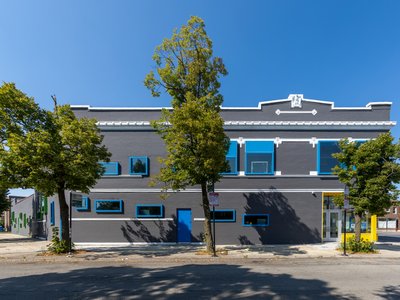
Gads Hill Early Learning Center by JGMA: Adaptive Reuse Shaping Community-Focused Educational Architecture
Adaptive reuse transforms fragmented structure into vibrant early learning center with playful façade, natural light, and community-focused sustainable design.
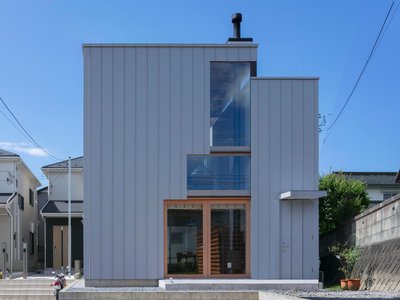
Split House: A Compact Urban Home Blending Privacy, Light, and Flexible Living in Japan
Compact Japanese home featuring DOMA space, flexible café potential, passive lighting, privacy zoning, and sustainable urban living design.


Similar Reads
You might also enjoy these articles

Digital Façade Design for our cities’ urban fronts
Prima Facie - Result Story
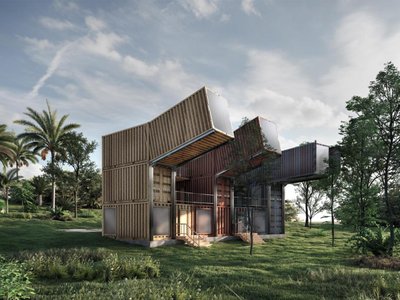
Protecting avian biodiversity: Bird observatories to help spread awareness & save rare bird species.
Results for ‘Fly’ - Landscape design competition out now
Connecting with nature: Forest interpretation center in Australia's Wollemi National Park
‘Asatti’ - Landscape design competition - Result story
Explore Product Design Competitions
Discover active competitions in this discipline




The Global Benchmark for Architecture Dissertation Awards

Challenge to merge furniture with learning

Design challenge to equip cities with modern furniture

Competition to design a workstation for architects
Comments (0)
Please login or sign up to add comments
No comments yet. Be the first to comment!