
Modern University Campus Architecture: A Vision for the Future of Urban Learning Spaces
The article explores modern university campus architecture, highlighting the innovative design and functionality of the Campus UADE Main Building.


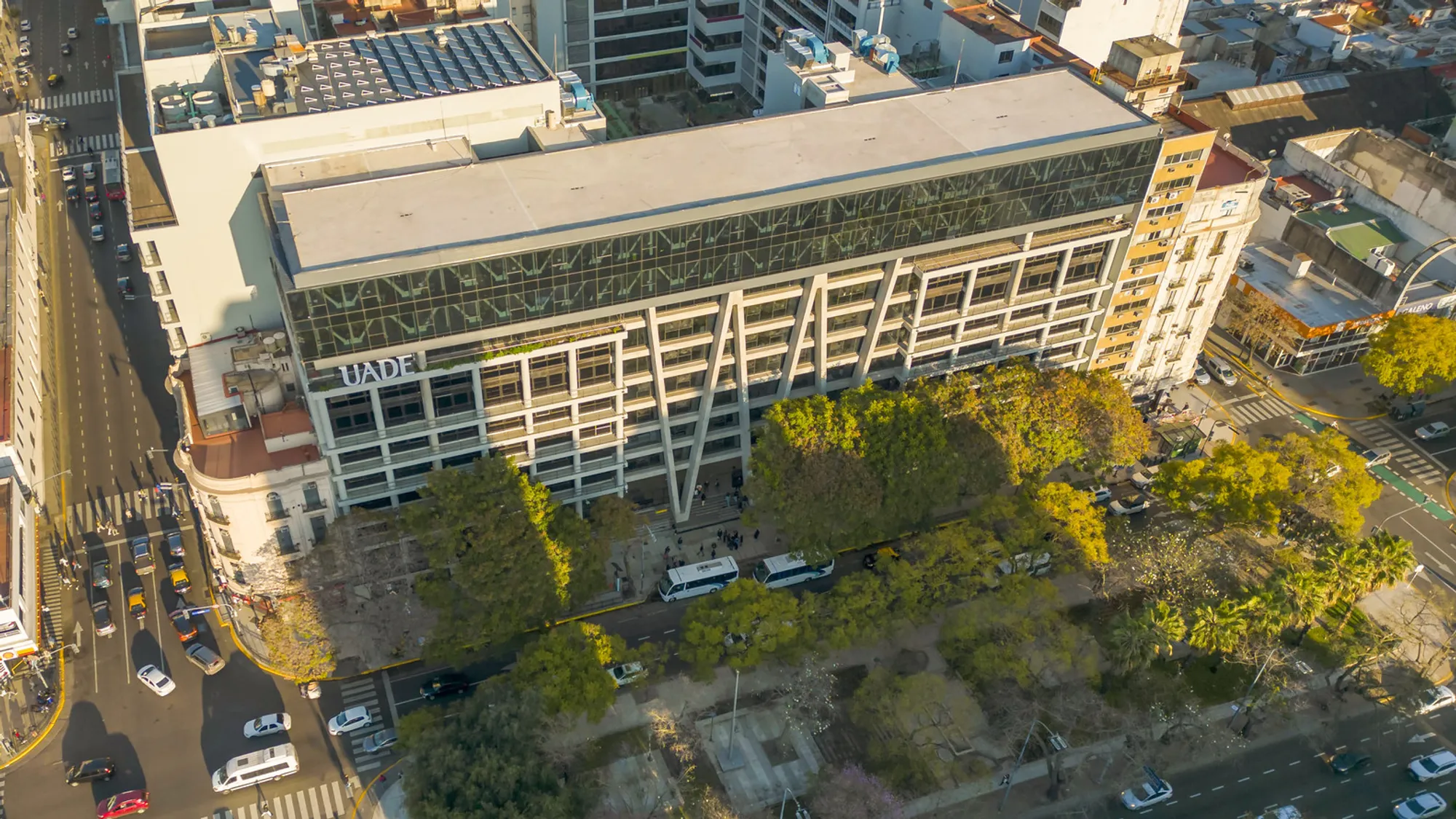
Modern university campus architecture is undergoing a significant transformation, with educational institutions around the world adopting new, innovative designs that cater to the evolving needs of students and faculty. One such example is the Campus UADE Main Building in Buenos Aires, Argentina, designed by the architectural firm Oficina Urbana (Roberto Converti and Fabio De Marco). Completed in 2023, this state-of-the-art building demonstrates the power of modern university campus architecture to blend functionality, technology, and urbanism, all while creating a space that promotes learning, community, and creativity.
The Rise of Modern University Campus Architecture
University campuses are no longer just places to attend classes; they have become vibrant hubs of innovation, creativity, and social interaction. Modern campus architecture plays a pivotal role in shaping the learning environment, addressing the needs of an ever-growing student body, and supporting the incorporation of technology in education. Gone are the days of rigid, traditional classroom layouts—today's campuses are designed to be flexible, adaptable, and integrated with the urban environment.
The Campus UADE Main Building is a perfect example of this new architectural philosophy. It combines cutting-edge design elements with practical spaces that enhance the overall student experience. The design team took into account the cultural, technological, and spatial shifts occurring in the education sector, crafting a space that is both functional and symbolic.
The Vision Behind Campus UADE Main Building
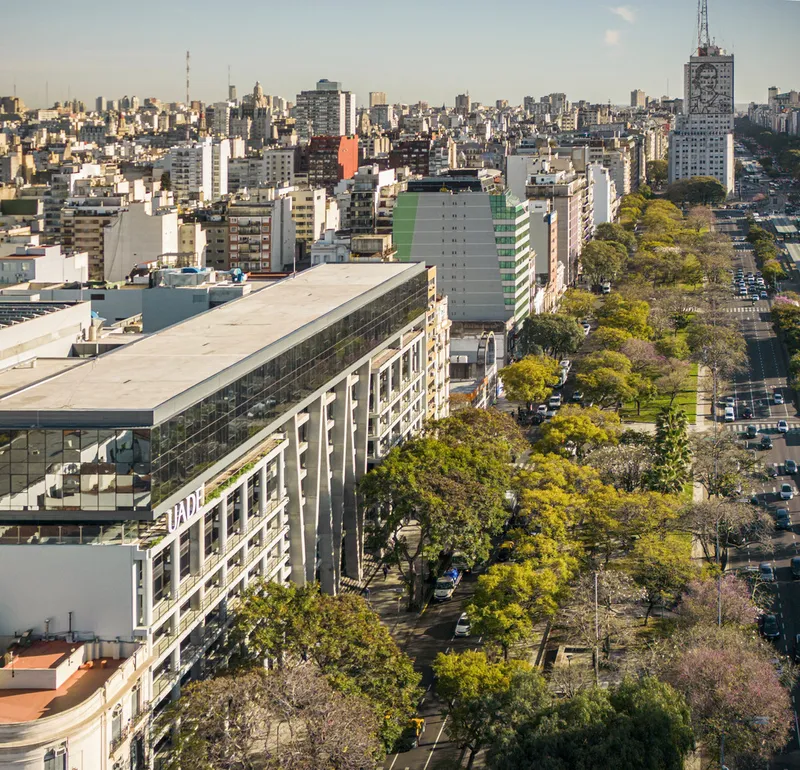
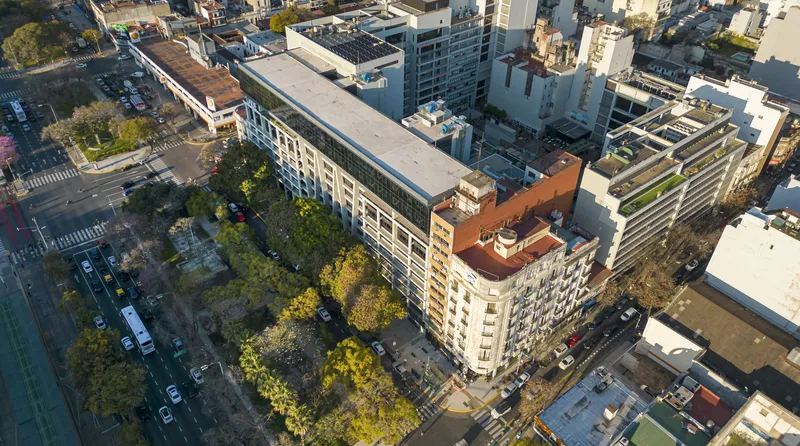
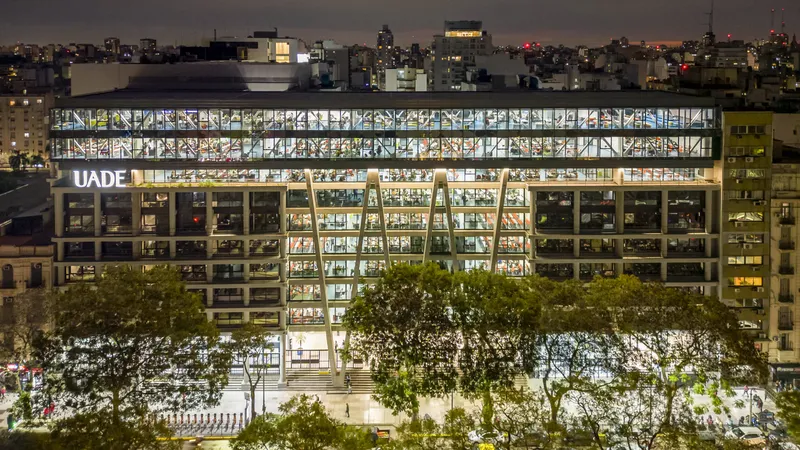
Located on 9th of July Avenue in Buenos Aires, the Campus UADE Main Building serves as a crucial expansion of the Universidad Argentina de la Empresa (UADE) campus. The project was conceived with the goal of accommodating the university’s growing student body while also enhancing the university’s urban presence. The architects set out to create a structure that would not only be functional but also stand as a symbol of the university's academic and cultural contributions to the city.
Integration of Urban Design with Campus Architecture
One of the standout features of modern university campus architecture is its ability to integrate with the surrounding urban environment. The Campus UADE Main Building achieves this by designing a large-scale structure that addresses the need for both academic space and public accessibility. The building’s three-level height and 80-meter length make it a prominent feature along 9th of July Avenue, turning the university campus into a visible landmark within Buenos Aires.
The integration of the building with the city is further emphasized by its four basement levels and seven additional floors, connecting the new structure with the original campus buildings. This architectural design not only optimizes space but also creates a seamless flow between the academic and social environments of the campus, ensuring that students and staff have easy access to various facilities.

Functional Spaces: From Classrooms to Cultural Hubs
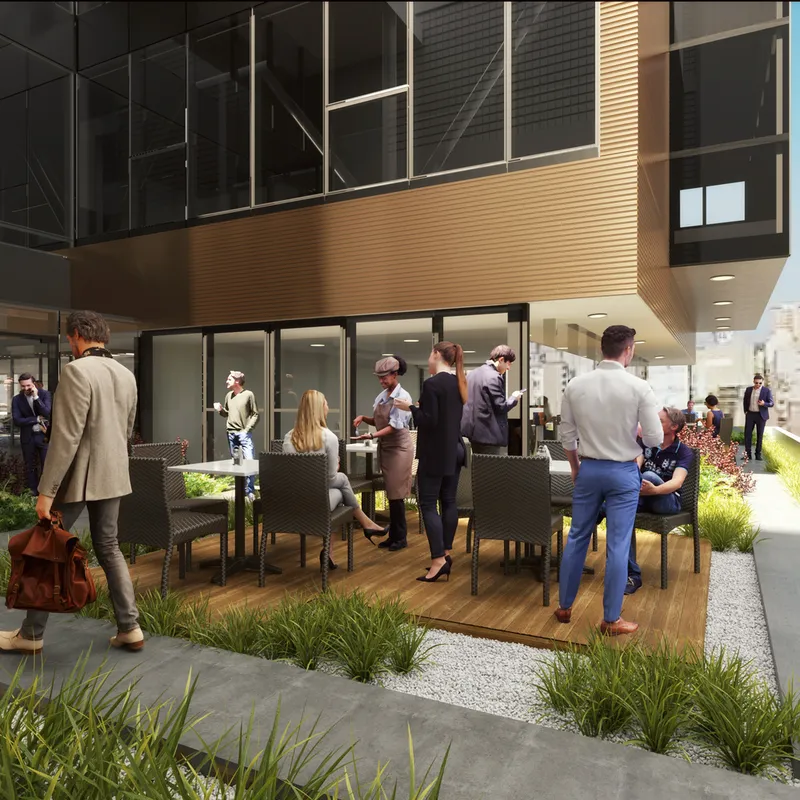
The Campus UADE Main Building is a multi-functional space designed to cater to various academic and cultural activities. Its functional spaces are strategically designed to support the diverse needs of a modern university.
A Focus on Teaching and Learning
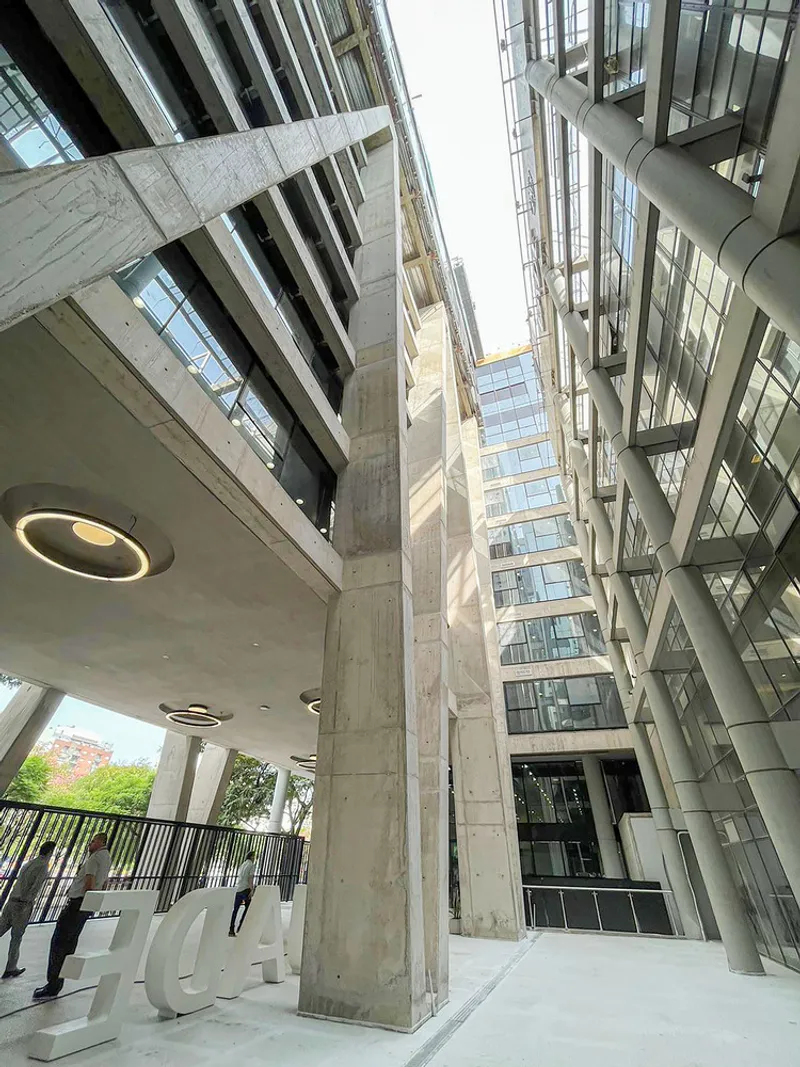
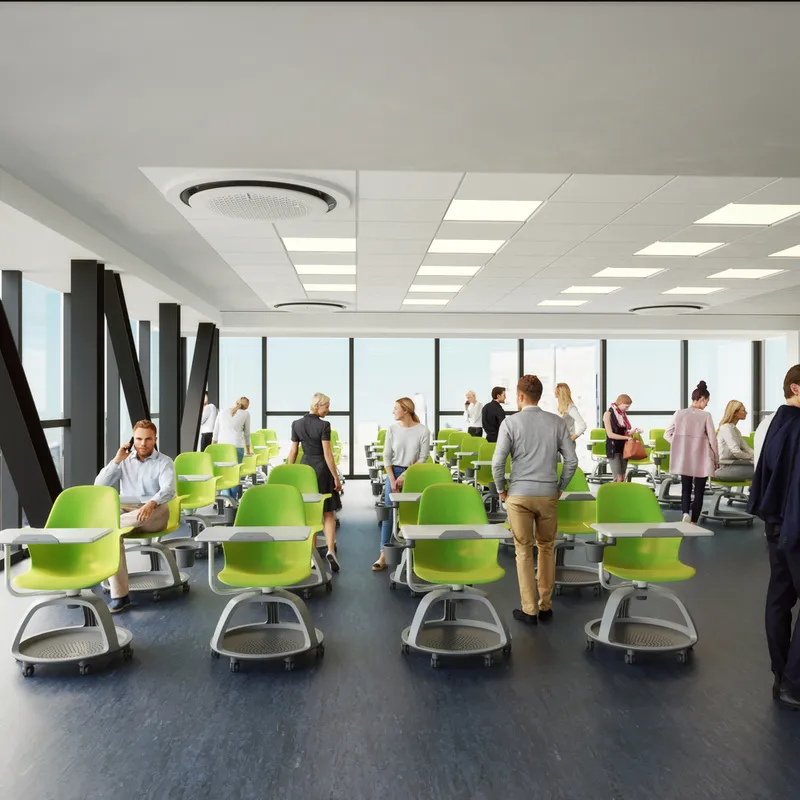
From the second to the seventh floor, the building houses classrooms and teaching facilities, organized in an orderly fashion that promotes the free movement of students and staff. Modern university campuses require more than just classrooms—they need spaces that can foster collaboration and interaction. The design of the new building incorporates these requirements by creating an efficient system of vertical and horizontal circulations, ensuring smooth transitions between spaces while enhancing the overall academic experience.
Cultural and Performance Spaces
One of the unique aspects of the Campus UADE Main Building is the integration of cultural spaces that go beyond traditional classrooms. The architects included a performing arts auditorium and a visual arts gallery in the design, addressing the growing importance of arts and culture in the modern university curriculum. These spaces provide students with opportunities to explore their creative potential while also serving as public venues for cultural events and performances.
Sustainable and Innovative Design Features
Modern university campus architecture is increasingly focusing on sustainability and innovation. The Campus UADE Main Building incorporates several cutting-edge design elements that prioritize energy efficiency and environmental impact. From the materials used in the construction to the energy-saving technologies embedded within the building, this project is a model for sustainable campus architecture.
The Role of Technology in Modern Campus Design
One of the key aspects of modern university campus architecture is the integration of technology. The Campus UADE Main Building incorporates smart technologies that support both teaching and learning. This includes digital platforms for communication, interactive whiteboards in classrooms, and smart lighting systems that optimize energy use throughout the building.

Symbolism and Urban Impact
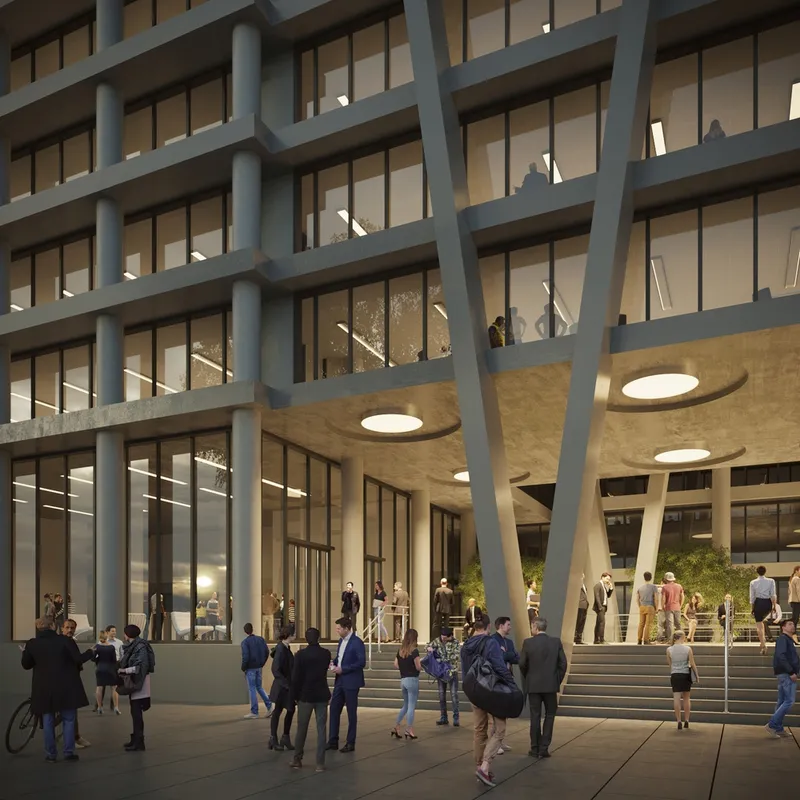
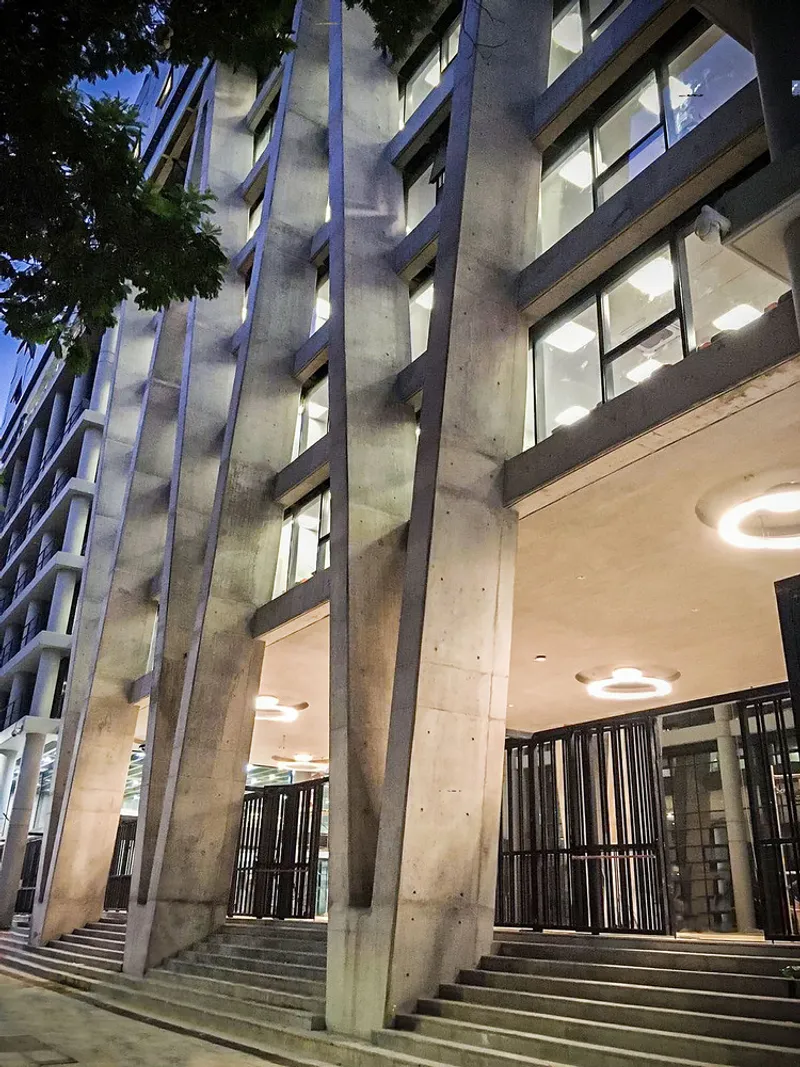
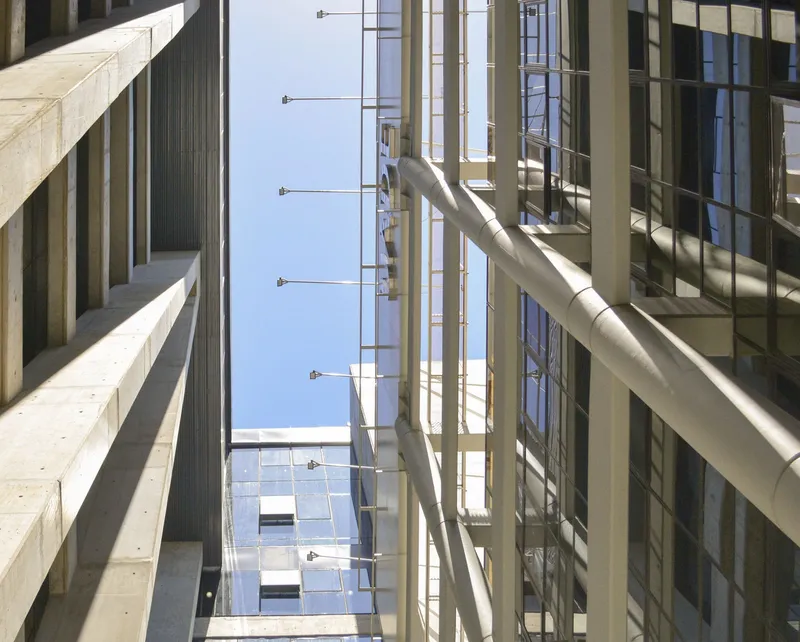
In addition to being a functional space, the Campus UADE Main Building is a symbolic contribution to the city of Buenos Aires. The building’s design reflects the university’s mission to provide a forward-thinking, innovative educational experience. The prominent reticular structure applied to the upper levels further adds to the building’s visual identity, creating a landmark that speaks to the university's commitment to modernity and progress.
The Future of Modern University Campus Architecture
As cities continue to evolve and educational practices shift, the role of architecture in shaping the modern university campus becomes ever more critical. The Campus UADE Main Building stands as a testament to the possibilities of modern university campus architecture, combining innovation, functionality, and urban design to create a space that meets the needs of today’s students and faculty.
By embracing the principles of flexibility, sustainability, and integration with the urban landscape, modern university campus architecture is setting the stage for the next generation of learning spaces. The Campus UADE Main Building serves as an example of how thoughtful design can foster academic excellence, cultural engagement, and a connection to the wider community. It’s an exciting glimpse into the future of university architecture, where the boundaries between campus and city are increasingly blurred.
All Photographs are work of Ramiro San Honorio




Popular Articles
Popular articles from the community


Co-life: Sustainable Architecture for Age-Friendly Community Living
Co-life reimagines sustainable architecture for seniors through courtyards, rammed earth, shared gardens, and spaces designed for belonging.

The Ocean Hive: Sustainable Architecture for a Self-Sufficient Civilization at Sea
The Ocean Hive imagines sustainable architecture at sea, where modular habitats, algae, wave power and ocean waste sustain a growing colony.

AL-JANNAH: Sustainable Architecture and Permaculture for Afghan Widows
AL-JANNAH uses sustainable architecture and permaculture to create resilient oasis of housing, learning, work and renewal for Afghan widows.

Co-Life: Senior Housing Design That Reconnects Older Adults With the City
Co-Life reimagines senior housing design through healing gardens, shared streets, workshops, and a sustainable community across generations.


Similar Reads
You might also enjoy these articles


Hodi-Mandai Geram
Project Function: Preservation and revitalization of the Intangible heritage and socio-spatial identity of the Hodi by Housing, Cultural Memory Center, Sacred Grove, landscape, local tourism economy


Olio Towers: A Mid-Rise for Performers That Fuses Housing, Rehearsal, and Stage
Located blocks from Houston's Theater District, this modular tower stacks living units around a central performance atrium.

Oasis: Modular Green Housing Carved into Dhaka's Urban Fabric
A shortlisted Plugin Housing entry reclaims unauthorized settlements in Dhaka with stepped concrete volumes, green roofs, and ventilation-driven design.

Black Hole: A Floating Megastructure for the Post-Physical Era
Emiliano Mazzarotto envisions a spherical, self-scaling arena where e-sports, digital hotels, and holographic stadiums replace traditional public space.


Explore Modern University Competitions
Discover active competitions in this discipline



Challenge to design public laboratory


Challenge to reimagine the Iron Throne


Photograph architecture without architects


Illustrate the lost glory of Angkor Wat - Render Challenge
Comments (0)
Please login or sign up to add comments
No comments yet. Be the first to comment!