
MoMa House: A Contemporary Mexican Architecture Marvel in San Pedro Cholula
MoMa House blends traditional Puebla materials with modern design, creating a sustainable, functional home tailored to remote living.

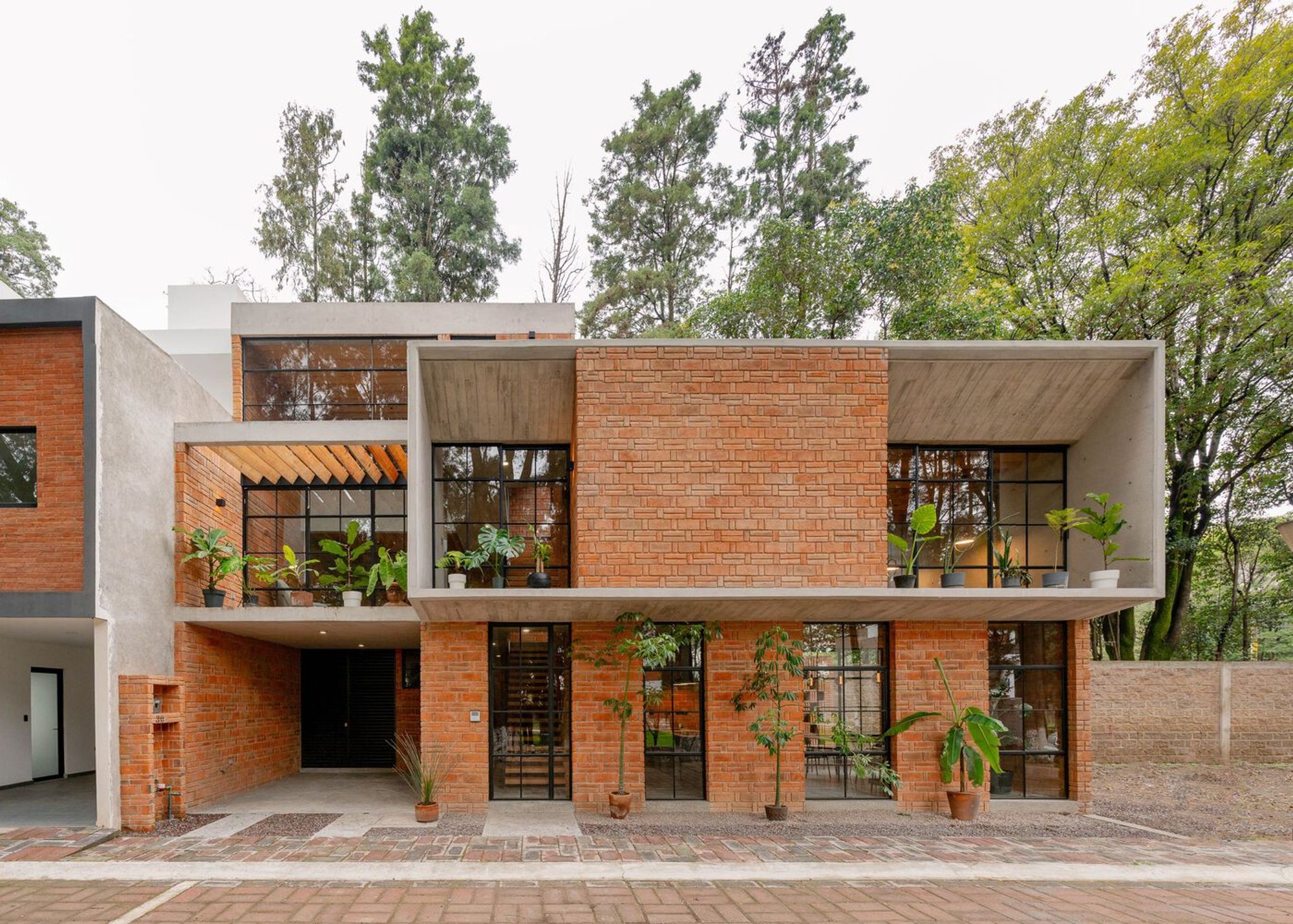
MoMa House, a stunning architectural creation by Estudio Tecalli, is a prime example of contemporary Mexican architecture. Located in the heart of Puebla Province, in San Pedro Cholula, Mexico, this home beautifully integrates the region’s traditional materials with modern architectural solutions. Designed for a young couple who adapted to remote working during the COVID-19 pandemic, MoMa House represents a departure from conventional residential models in Mexico. This article delves into the design philosophy, materials, and the unique features of the MoMa House that make it a standout example of modern living in the Puebla Valley.
Context and Site Analysis
San Pedro Cholula, located within the growing Puebla Valley, retains many agricultural parcels, clay furnaces, and local workshops operated by families. The area combines rich cultural history with rapid urban development. MoMa House stands in a former private recreational area now converted into a residential subdivision. The design took full advantage of the land’s unique characteristics: a front wider than its depth, offering an opportunity to create a broad façade that captures natural light from the east, optimizing the home’s exposure to sunlight throughout the day.
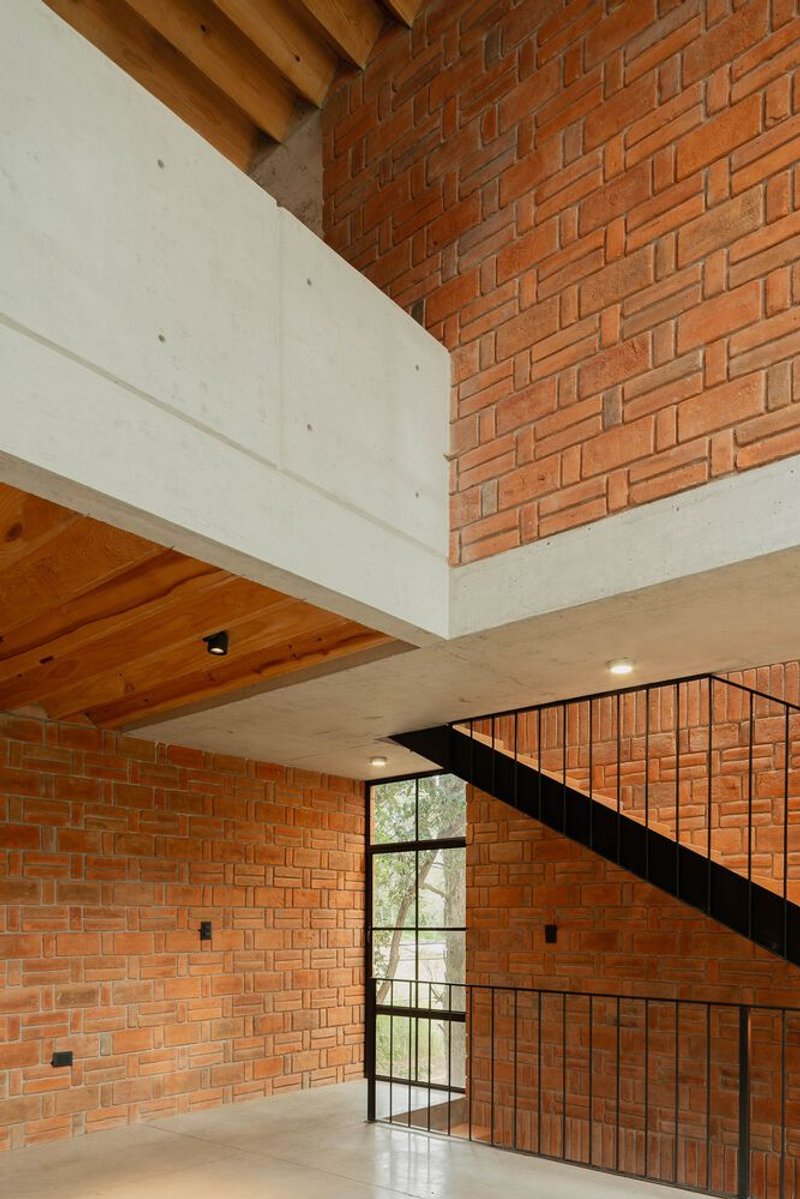
Design Vision: Blending Tradition and Modernity
Materiality of the Puebla-Tlaxcala Region
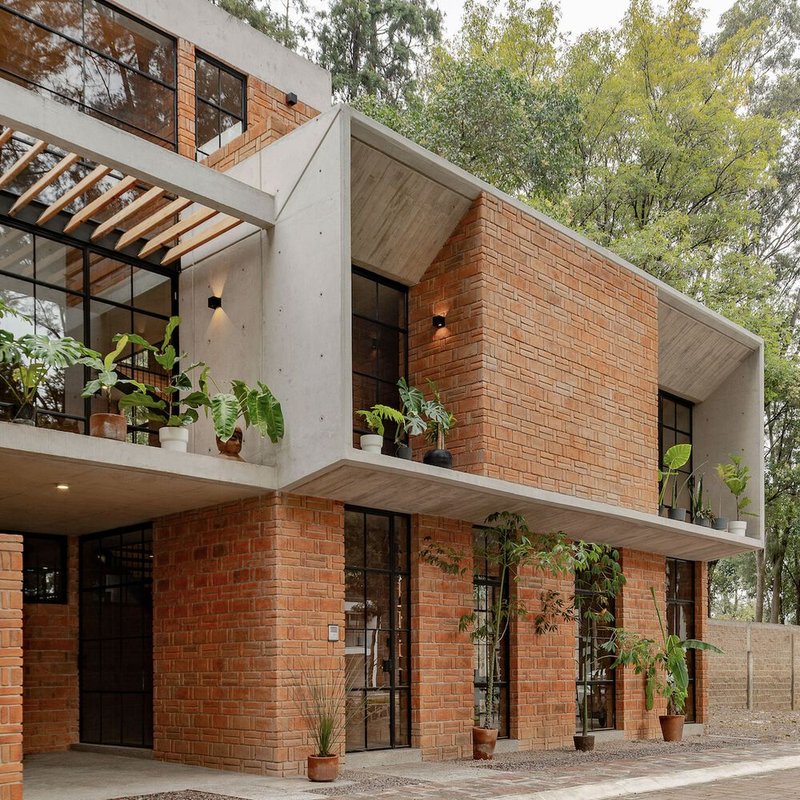
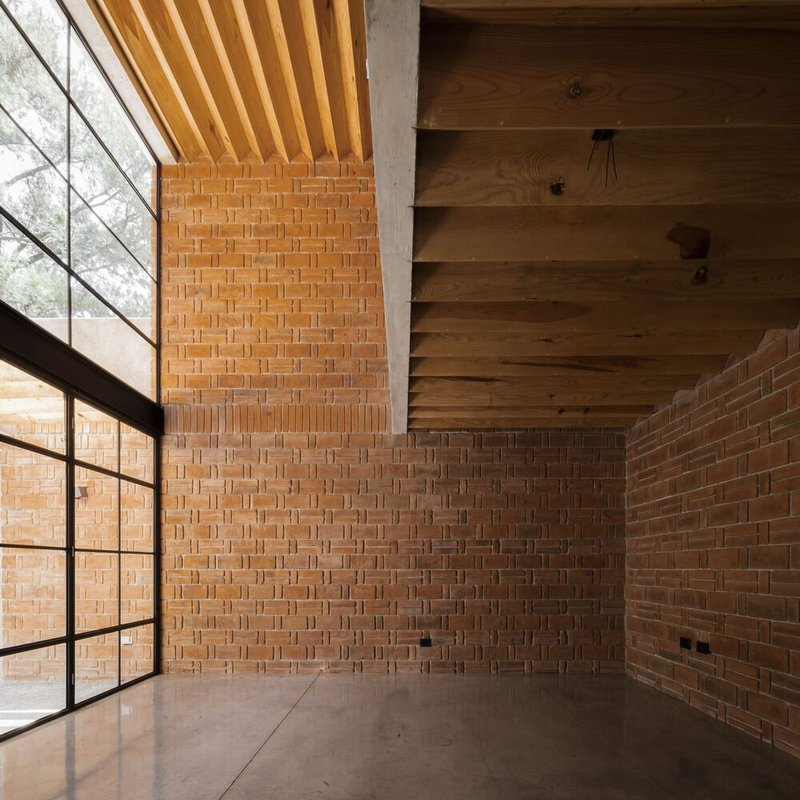
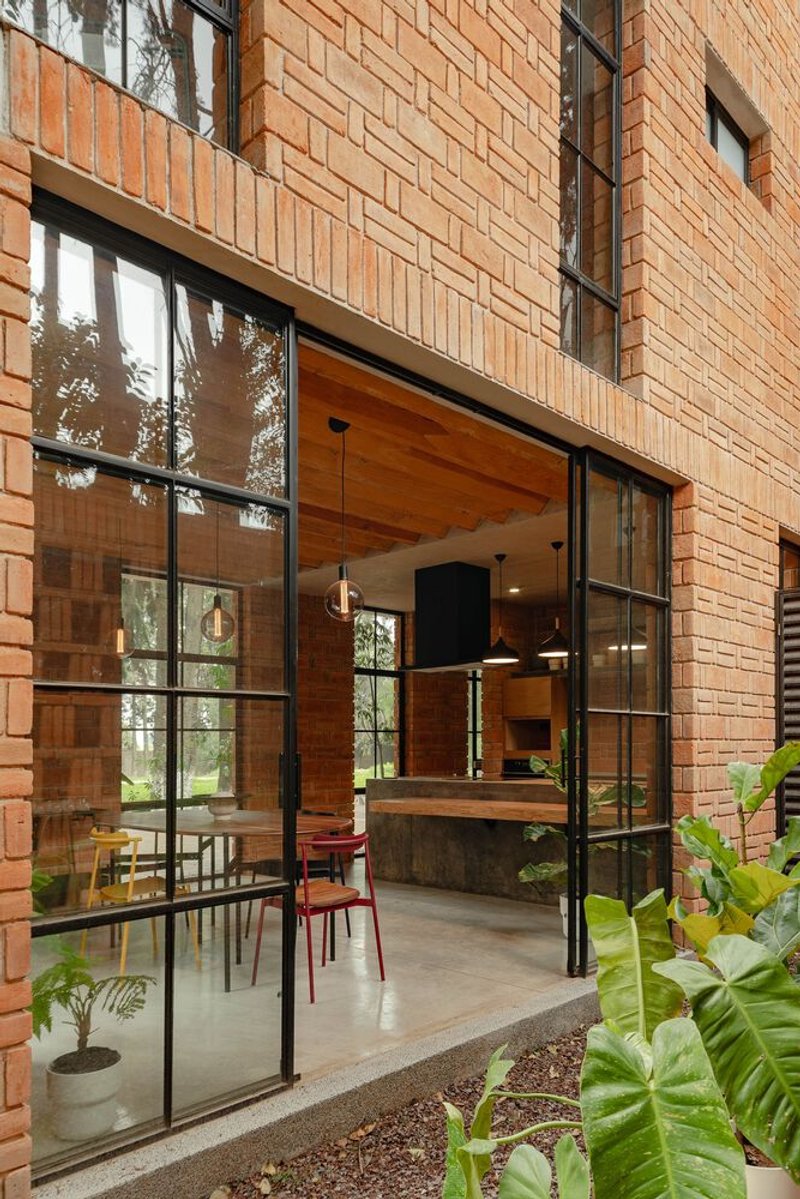
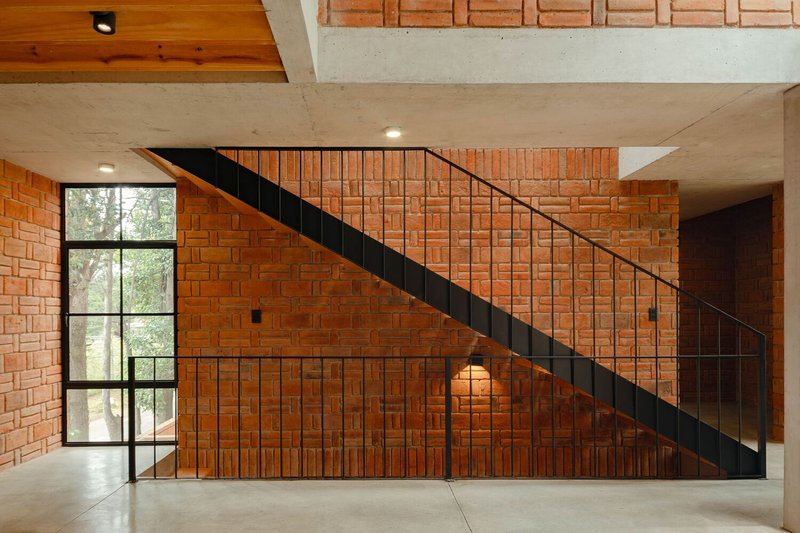
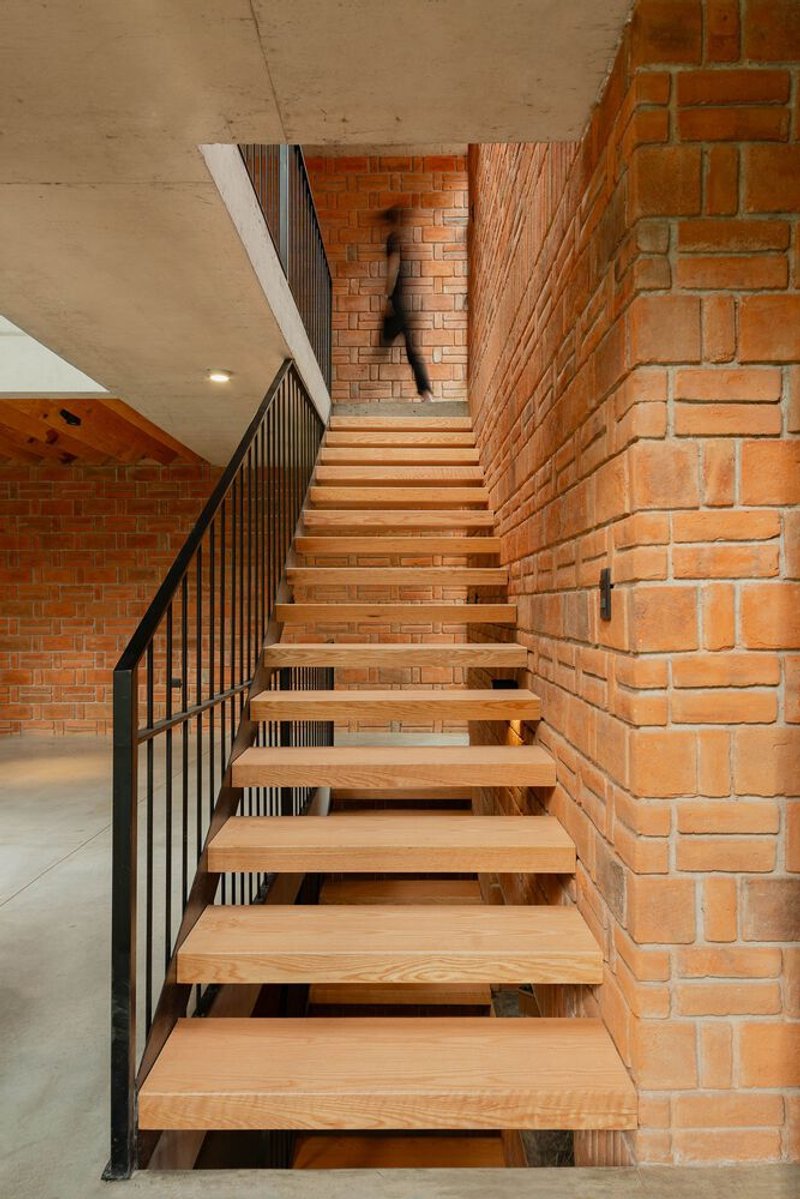
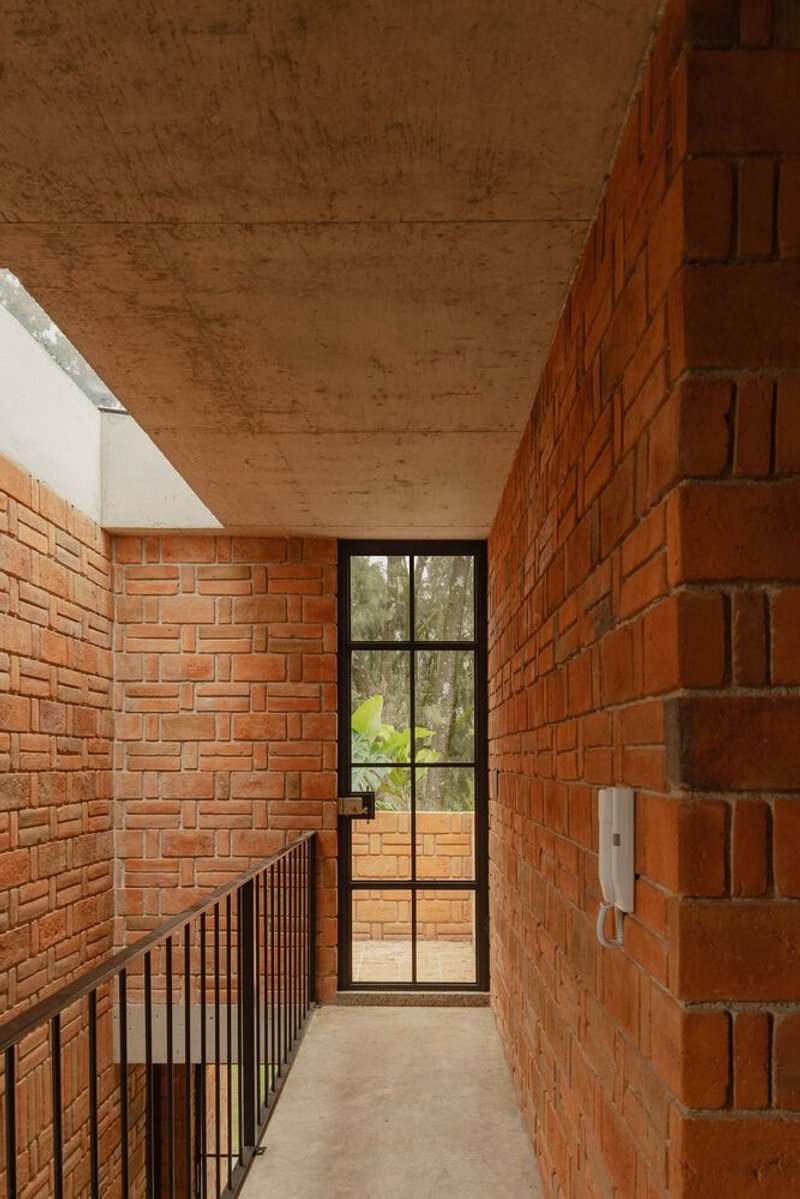
A defining aspect of contemporary Mexican architecture is its ability to blend traditional craftsmanship with modern materials. For MoMa House, Estudio Tecalli utilized local red clay bricks and Talavera tiles—key elements of the Puebla-Tlaxcala region's architectural identity. These materials are combined with sleek, modern elements like apparent concrete and large glass windows to create a harmonious fusion of old and new.
The inclusion of steel-framed windows references mid-20th-century Mexican architecture, a subtle nod to the modernist architecture of the time. These windows not only offer aesthetic appeal but also provide functional benefits such as natural light penetration and thermal insulation.
Spatial Organization: Tailored to Modern Lifestyles
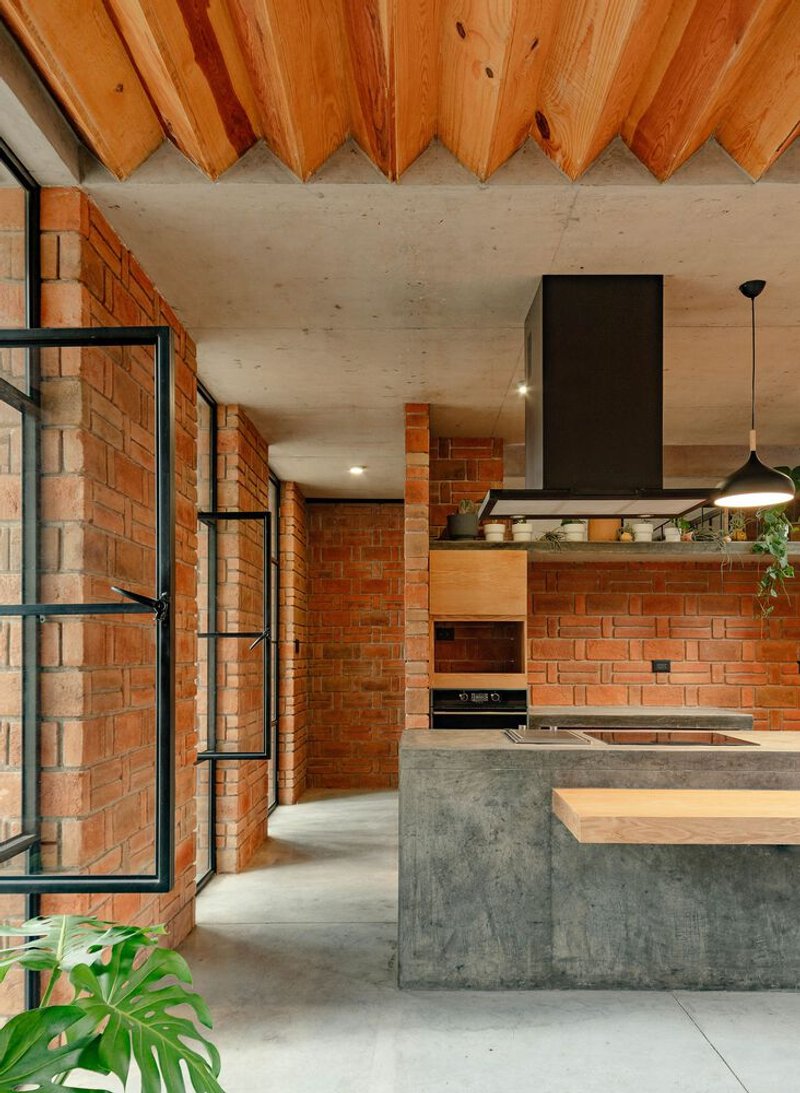
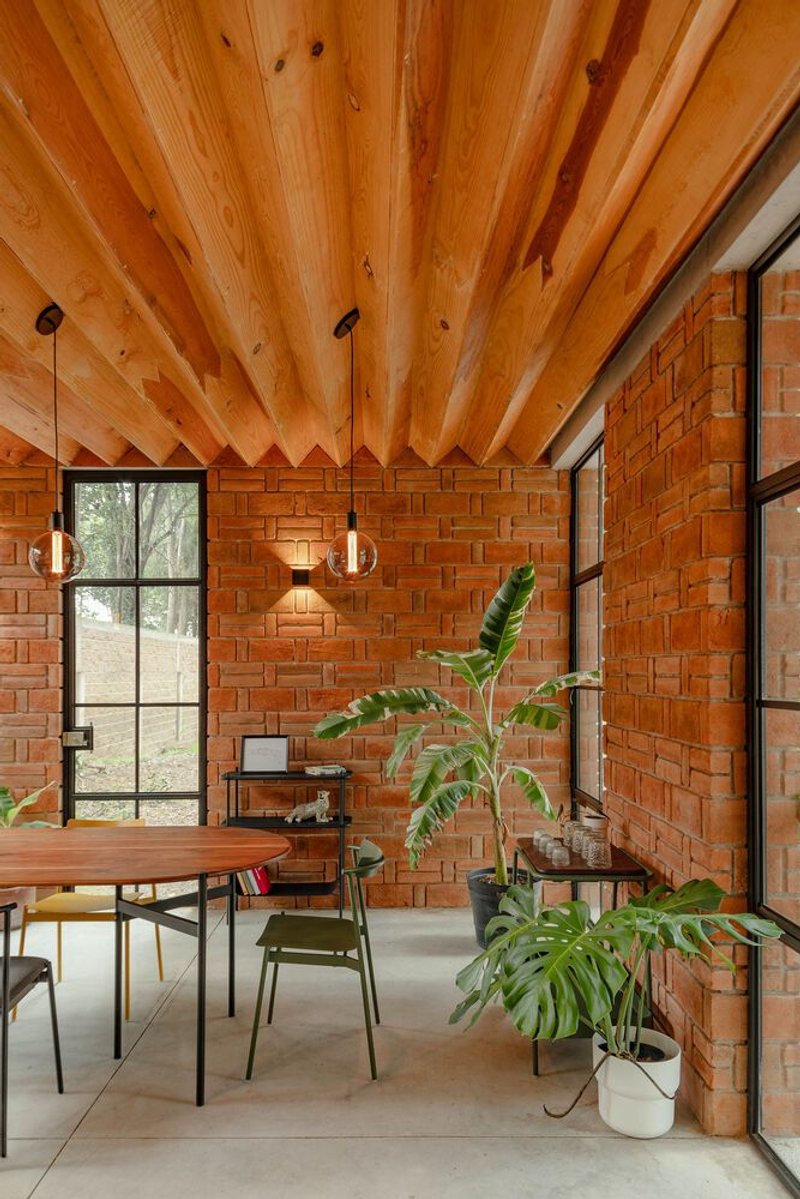
MoMa House’s layout was specifically tailored to the needs of its inhabitants, who work remotely. Unlike typical homes in the region, the house eliminates conventional spaces like a separate living room in favor of a more open, flexible design that fosters social interaction around the kitchen. The kitchen and dining area are designed to embrace natural light, while a charming patio adorned with clay brick screens offers an inviting space for relaxation and plant cultivation.
Double-Height Studio: A Central Feature
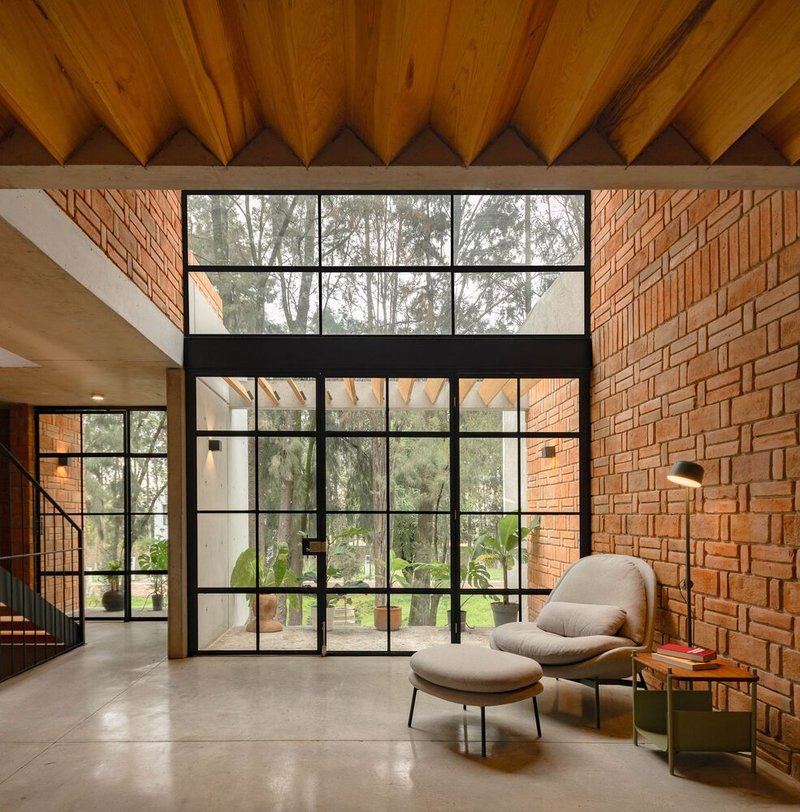
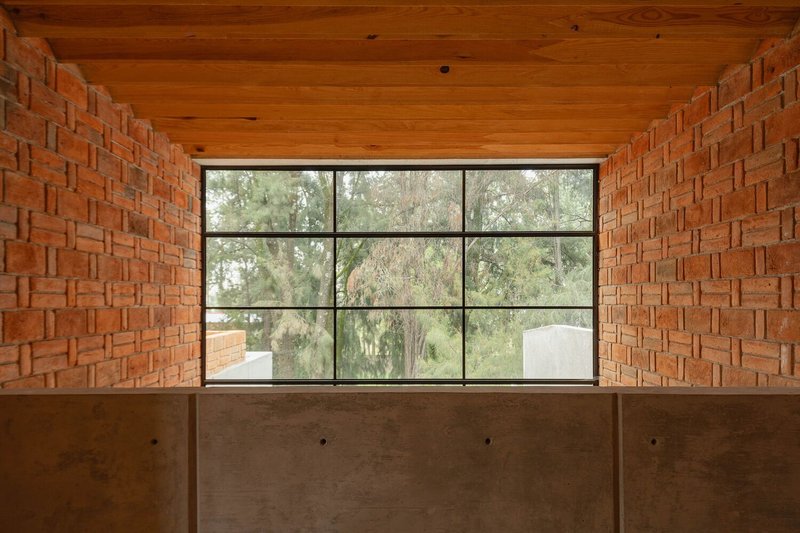
One of the standout features of MoMa House is the double-height studio. This large, open space is bathed in light from a massive window, ensuring optimal sunlight and solar heat throughout the day. The studio is a multifunctional area, designed to serve as both a workspace and a communal space for the family. Its design prioritizes thermal efficiency, preventing the greenhouse effect by allowing heat to disperse naturally. The polished concrete floors and handcrafted wooden slabs add warmth and texture to the space, contributing to the home’s overall sustainable and locally rooted aesthetic.
Sustainability and Local Craftsmanship
MoMa House is an exemplary model of sustainable design within contemporary Mexican architecture. The use of locally sourced materials, such as red clay brick and Talavera tiles, helps reduce the environmental footprint of the project while supporting regional artisans. The local labor force contributed to the construction of the house, ensuring that the project not only benefits from expert craftsmanship but also provides employment opportunities in the community.
The design also takes into account the surrounding microclimate created by the mature pine trees on the lot. The trees help maintain a cooler, more temperate environment within the house, reducing the need for artificial cooling systems.
A New Model for Contemporary Living in Mexico
MoMa House by Estudio Tecalli is a testament to the potential of contemporary Mexican architecture. The home beautifully merges traditional materials with modern design principles to create a functional, sustainable, and aesthetically pleasing living environment. With its focus on natural light, local craftsmanship, and sustainability, MoMa House is a forward-thinking example of how architecture can adapt to modern needs while respecting local heritage. This project not only redefines residential living in the Puebla Valley but also highlights the importance of architecture that responds to the climate, culture, and lifestyle of its inhabitants.
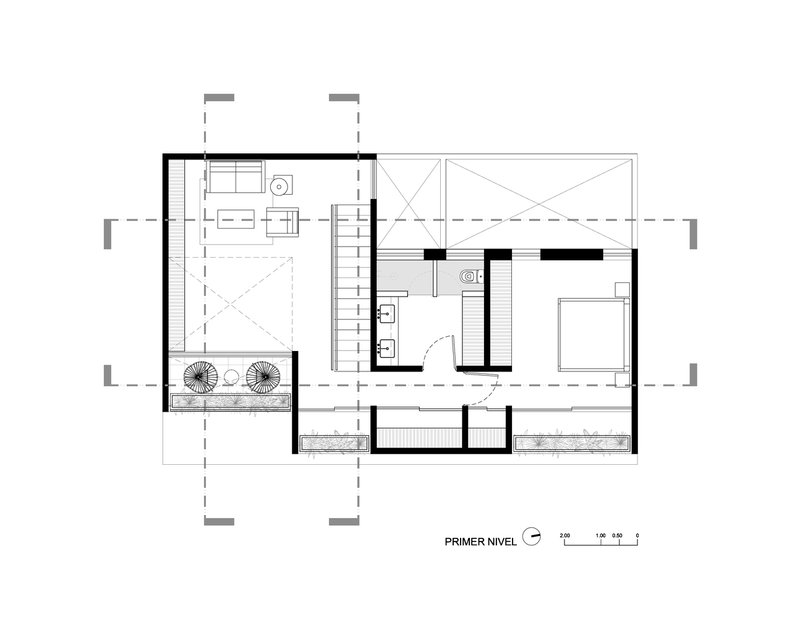
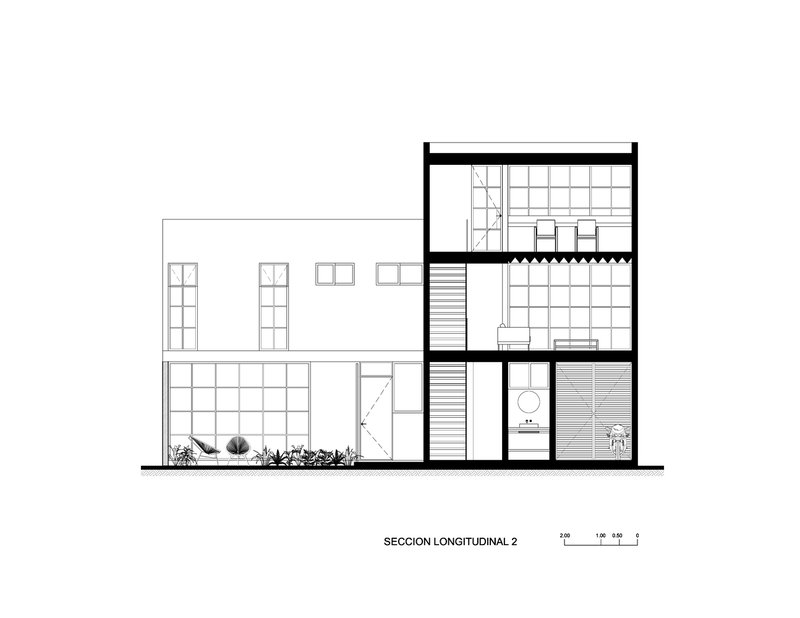
All the photographs are work of Amy Bello




Popular Articles
Popular articles from the community

A Contemporary Take on Iranian Residential Architecture
A modern interior design in Mashhad that reinterprets brick, light, and spatial flow to create a warm, contemporary residential architecture.
On the Brooks House by Monsoon Collective – A Contemporary Kerala Home Rooted in Tradition
Kerala home blending tradition and modernity with water-inspired design, brick architecture, courtyard planning, and sustainable rainwater harvesting strategies.

Inverted Architecture Installation by Studio Link-Arc: Exploring the Intersection of Architecture and Living Organisms
Inverted Architecture Installation by Studio Link-Arc blends mycelium, sustainability, inverted design, ecological cycles, and urban adaptive architecture in Shenzhen.
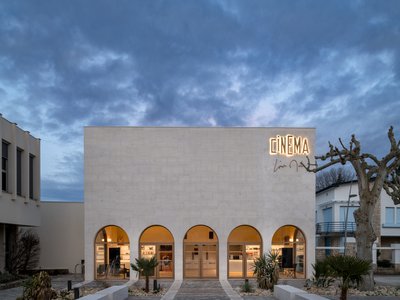
Louis Malle Cinema: A Limestone Cultural Landmark Revitalizing Community Life in Prayssac
Limestone cinema extension with public forecourt, blending heritage and modern design to create flexible cultural spaces and strengthen community interaction.


Similar Reads
You might also enjoy these articles


The Ken Roberts Memorial Delineation Competition (Krob)
As the most senior architectural drawing competition currently in operation anywhere in the world, it draws hundreds of entries each year, awarding the very best submissions in a series of medium-based categories.


Waterfront Redevelopment and Urban Revitalization in Mumbai: Forging a New Dawn for Darukhana
A transformative waterfront redevelopment project reimagining Darukhana’s shipbreaking heritage into an inclusive urban future.

OUT-OF-MAP: A Call for Postcards on Feminist Narratives of Public Space
Rhizoma Design and Research Lab invites artists, designers, architects, researchers, and students to reflect on how feminist perspectives can reshape public space. Selected works will be exhibited in Barcelona, October 2026. Submissions open until 15 April 2026.


Documentation Work on Buddhist Wooden Temple
Architectural syncretism and cultural hybridity: A comparative study of the Buddhist temples in Chattogram Hill tracks

Explore Architecture Competitions
Discover active competitions in this discipline




The International Standard for Design Portfolios


The Global Benchmark for Architecture Dissertation Awards


The Global Benchmark for Graduation Excellence


Challenge to reimagine the Iron Throne
Comments (0)
Please login or sign up to add comments
No comments yet. Be the first to comment!