
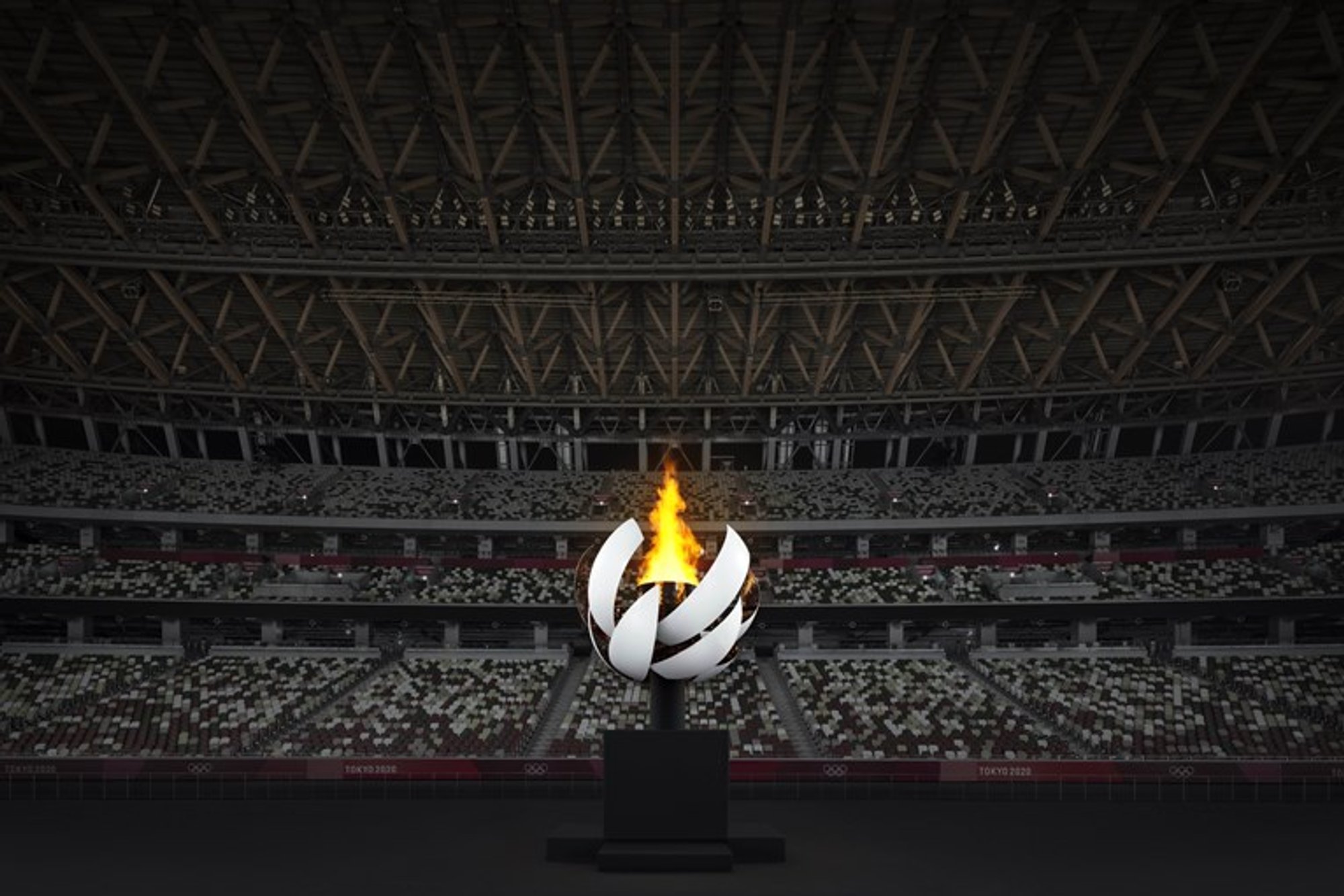
Nendo's Stunning Tokyo 2020 Olympic Cauldron Shines as a Hydrogen-Powered Sun
Japanese Design Studio Nendo creates an innovative and eco-friendly centrepiece for the Summer Games

The Tokyo 2020 Olympic Cauldron was designed by Oki Sato of Nendo, based on the concept "All gather under the Sun, all are equal, and all receive energy" by Mansai Nomura, who was the Chief Executive Creative Director of the planning team for the Opening and Closing Ceremonies at the Tokyo 2020 Olympics and Paralympics. The design process was a laborious journey, with a total of 85 drafts made to achieve the desired resemblance to the Sun. The final design features a spherical form, consisting of upper and lower hemispheres, each with five panels representing the Olympic rings.
During the Opening Ceremony of the Olympic Games, the cauldron "bloomed" to welcome the final torchbearer. This was a symbolic representation of not only the Sun but also the energy and vitality that can be obtained from it, such as plants sprouting, flowers blooming, and hands opening wide towards the sky. The flames are fueled by hydrogen energy, which is being touted as the next-generation energy source. The hydrogen used was produced at a facility in Fukushima Prefecture, which is undergoing recovery from the Great East Japan Earthquake that occurred in 2011. The electricity required for the electrolysis of water in the hydrogen production process is provided by solar power generation.
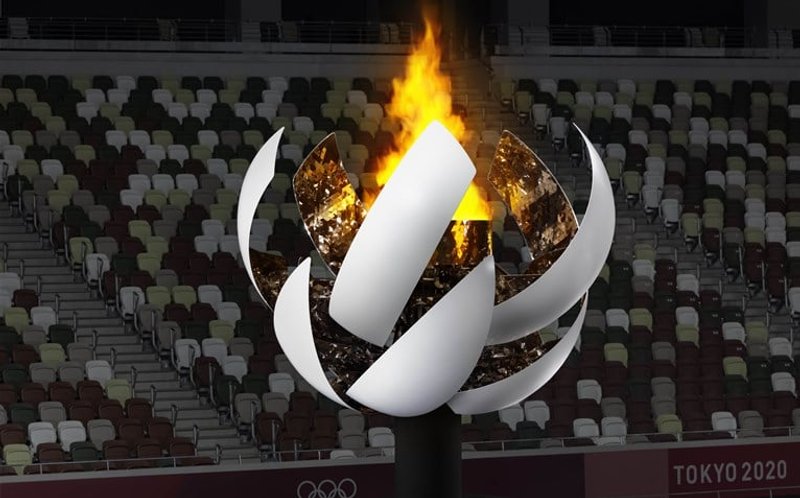
The design of the Olympic Cauldron presented some unique challenges. Since hydrogen burns with a colourless and transparent flame and is invisible, it was necessary to color the flame using sodium carbonate. The amount and direction of the aqueous solution sprayed from the vicinity of the burner were repeatedly examined along with the amount of hydrogen and the angle of the valve to adjust the movement and shape of the flame to shimmer like firewood being stoked. This attempt to "design flames" was unprecedented.
The cauldron weighs 2.7t and has a diameter of approximately 3.5m after transformation. The exterior panel, which weighs approximately 40 kg per sheet, was made by cutting out a 10 mm thick aluminium plate and moulding it with a special hot press machine capable of applying a pressure of 3500 tons, which only a few exist in Japan. The work was performed at an ultra-low speed while consistently scanning the shape using a laser to accommodate weight reduction. The last phase consisted of adjustments, polishing, and application of heat-resistant paint, all of which were finished by the hands of craftsmen.
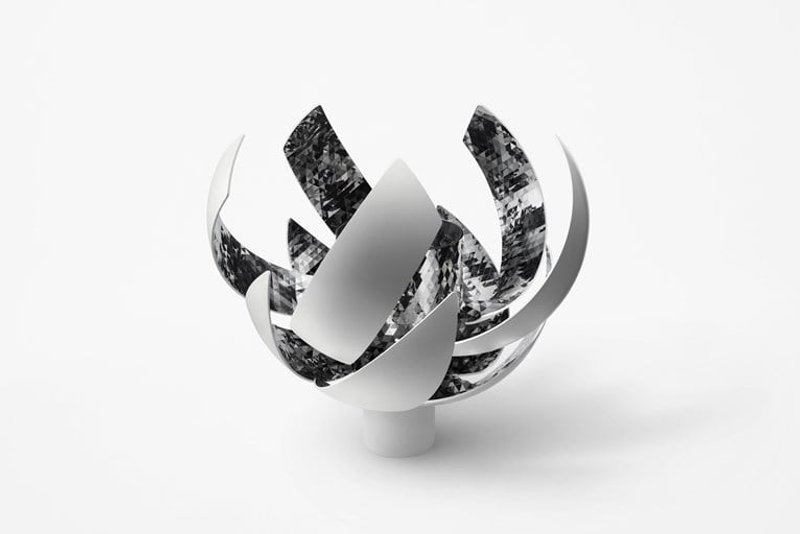
The internal drive unit was required to be as compact as possible, yet highly waterproof, fireproof, and heat-resistant. By covering the machines with polygonal mirror panels as much as possible, it was intended to create a diffused reflection of the lighting from the ceremonies and the flame light. Tests for heat resistance and wind resistance were repeated, and the apparatus was tuned to prevent any vibration or error even under varying conditions. As a result, a smooth movement with fine accuracy in panels passing each other was realized, operating at less than 3 mm distance at the area of the narrowest passing width.
The Olympic Cauldron thus created through this journey crystallizes the essence of Japanese manufacturing. The design process was rigorous, with numerous attempts made to achieve the desired effect. The final product is a testament to the skill and craftsmanship of the artisans who worked on it. The use of hydrogen energy, produced in an area still recovering from a devastating earthquake, underscores the resilience and determination of the Japanese people. The Tokyo 2020 Olympic Cauldron is a remarkable achievement and a fitting symbol for the games.
***
All images and text courtesy of nendo
Cover photo ©Takumi Ota




Popular Articles
Popular articles from the community

A Contemporary Take on Iranian Residential Architecture
A modern interior design in Mashhad that reinterprets brick, light, and spatial flow to create a warm, contemporary residential architecture.
Inverted Architecture Installation by Studio Link-Arc: Exploring the Intersection of Architecture and Living Organisms
Inverted Architecture Installation by Studio Link-Arc blends mycelium, sustainability, inverted design, ecological cycles, and urban adaptive architecture in Shenzhen.
On the Brooks House by Monsoon Collective – A Contemporary Kerala Home Rooted in Tradition
Kerala home blending tradition and modernity with water-inspired design, brick architecture, courtyard planning, and sustainable rainwater harvesting strategies.
An Miên Lumière Cafe by xưởng xép, Ho Chi Minh City, Vietnam
An industrial-inspired café where layered steel and warm light create a dynamic, immersive environment shaped by reflection, depth, and perception.


Similar Reads
You might also enjoy these articles
Zhuxi Wonderland: Reimagining Traditional Chinese Gardens by Doarchi Architects
Zhuxi Wonderland by Doarchi Architects reinterprets traditional Yangzhou gardens, integrating courtyards, pavilions, and tea houses in modern cultural design.
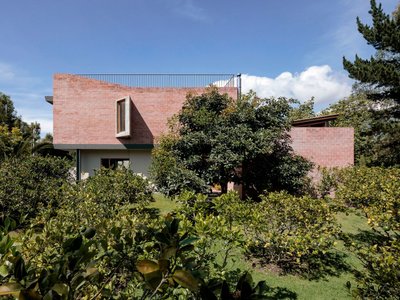
Doble Soga House: A Contemporary Brick Residence Rooted in Landscape in Quito, Ecuador
Brick house in Quito integrating nature, flexible living spaces, exposed materials, and rooftop terrace, creating warm contemporary architecture for modern family life.
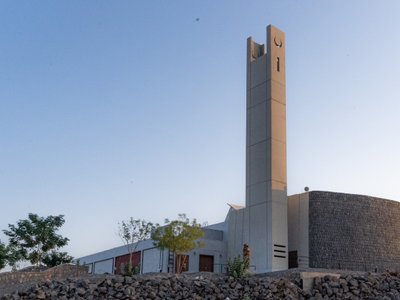
Al Gharra Mosque in Medina Redefining Contemporary Islamic Architecture
Minimalist Medina mosque using concrete, light, and landscape to reinterpret Islamic worship spaces through symbolic spiritual transitions and contemporary architecture.
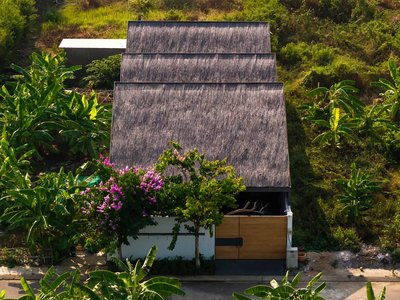
Viczonecode Villa by DDconcept – Tropical Family Living in Ho Chi Minh City
Tropical family villa in Ho Chi Minh City featuring courtyards, skylights, natural ventilation, elevated flooring, and seamless indoor–outdoor living surrounded by greenery.


Explore Architecture Competitions
Discover active competitions in this discipline




The International Standard for Design Portfolios


The Global Benchmark for Architecture Dissertation Awards


The Global Benchmark for Graduation Excellence


Challenge to reimagine the Iron Throne
Comments (0)
Please login or sign up to add comments
No comments yet. Be the first to comment!