

OMA unveils visionary design for the Hospital of the Future, integrating technology and human-centric approach
Revolutionary concepts from renowned architecture firm OMA aim to transform healthcare delivery and patient experience

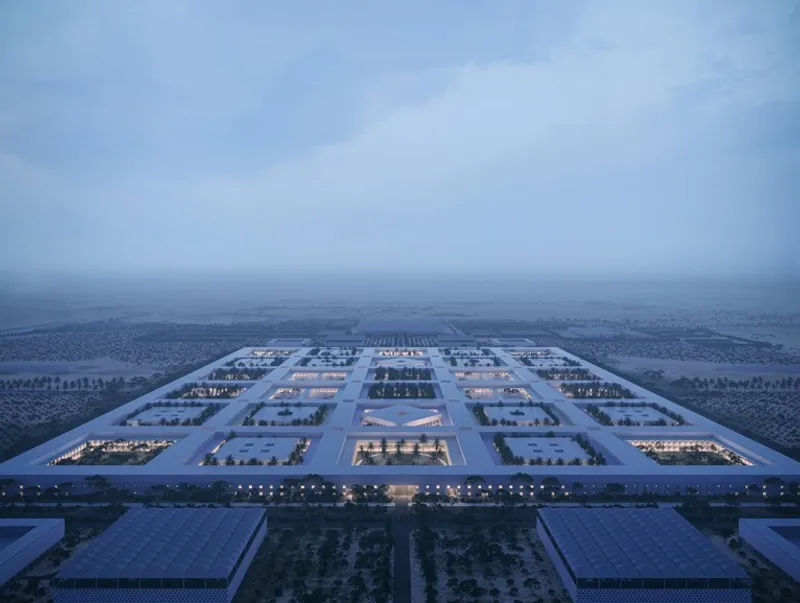
The Office for Metropolitan Architecture (OMA) and Squint/Opera has unveiled a prototype for a low-rise hospital that explores the potential of modularity, prefabrication, and automation in relation to the rapid changes occurring in medical science. The prototype was developed as part of the Al Daayan Health District Masterplan commissioned by Hamad Medical Corporation (HMC). Designed by OMA together with BuroHappold, the prototype presents an urgent rethink of hospital design in the context of rapidly advancing medical innovation.
The Al Daayan Health District, located on a 1.3-million-sqm virgin site between Qatar University and the new Lusail City, offers the possibility for a new symbiosis between architecture and medical science. The prototype includes a tertiary teaching hospital, a women’s and children’s hospital, and an ambulatory diagnostics centre, with a total capacity of 1,400 beds, all joined into a single structure. The first floor is dedicated to clinical facilities, while bed wards are located on the ground floor, allowing patients to enjoy the complex’s generous gardens, which have a long history in Islamic medical architecture.

The hospital’s cross-shaped modular units are prefabricated onsite and can be reconfigured and expanded with minimal disruption to ongoing processes, significantly lowering the cost of future adaptations. 3D-printing technology allows for endless variations in the design of the facades, reintroducing ornament in an architectural typology usually characterized by austerity. The hospital also includes a high-tech farm that supplies food and medicinal plants for the local production of medicine. All supporting facilities are connected to the hospitals by an automated underground circulation system. The district also includes a dedicated logistics centre and solar farm, enabling it to function autonomously.
The hospital’s modularity and prefabrication allow for flexibility and adaptability, which is essential in the rapidly changing world of medical science. The use of 3D-printing technology also introduces a new level of design freedom, allowing for the reintroduction of ornament in a typology that is usually characterized by austerity. The hospital’s gardens provide an important healing space, and their incorporation into the design reflects the long history of Islamic medical architecture.

The hospital’s innovative design also includes a high-tech farm that supplies food and medicinal plants for the local production of medicine. The inclusion of this facility further emphasizes the hospital’s self-sufficiency and autonomy, and it also demonstrates the potential for architecture to facilitate sustainable living.

Overall, the Al Daayan Health District Masterplan presents an urgent rethink of hospital design in the context of rapidly advancing medical innovation. The hospital’s modularity, prefabrication, and automation make it adaptable, flexible, and sustainable. The use of 3D-printing technology also allows for endless variations in design, reintroducing ornament in a typology that is usually characterized by austerity. The inclusion of gardens and the high-tech farm also reflects the long history of Islamic medical architecture and demonstrates the potential for architecture to facilitate sustainable living.

References (1)

Popular Articles
Popular articles from the community


Opera by the Sea Estonia: Three Shells Dissolving Architecture into Tallinn's Coastline
A winning opera house proposal replaces monumental form with interconnected shells that blur the boundary between building, park and Baltic Sea.

Temporary Home for Dogs: A Reversed Zoo Rethinks Animal Shelter Architecture
In Bucharest, a sinuous corridor and freed landscape flip the logic of containment, designing a shelter that works to make itself unnecessary.

Manzana Morphosis: Stretching Barcelona's Grid into a Living Landscape for 2050
A radical reworking of the Eixample manzana turns density into a tool for generous public space, vertical ecology, and environmental performance.

The Amber Palace Opera: A Geological Fiction Surfaces on Tallinn's Baltic Waterfront
Pierre Brillard reimagines a Baltic legend as a public landscape, opera house, and waterfront promenade rooted in Tallinn's coastal identity.

Similar Reads
You might also enjoy these articles
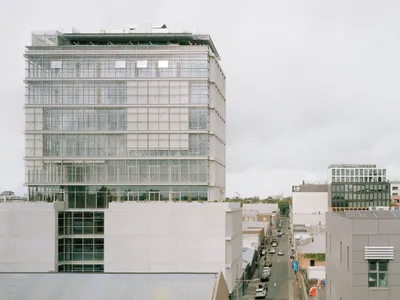
116 Rokeby Building, Collingwood
Sustainable Collingwood office building featuring double-skin façade, natural ventilation, rooftop amenities, and carbon-neutral design focused on wellbeing and longevity.
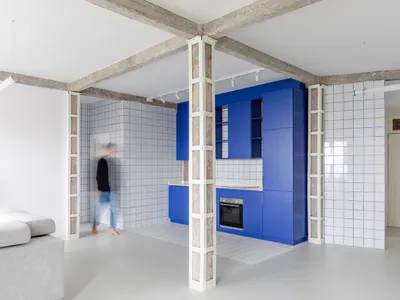
Contemporary Apartment Renovation in Spain: RV House by BIAN Opens Up to the Sea
A minimalist 1930s apartment in Santander is transformed into a flexible, sea-facing home through contemporary Spanish renovation.
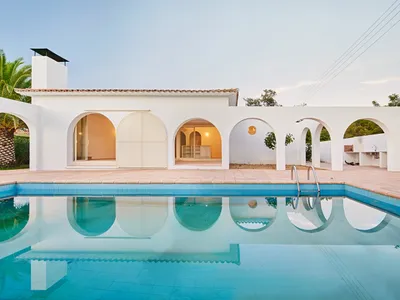
3 Marías House: A Contemporary Mediterranean Courtyard Retreat by Bajet Giramé + Burckhardt
Mediterranean courtyard home blending traditional architecture with modern design, terracotta flooring, flexible interiors, sustainable climate strategies, and garden integration.
NZ10 Apartment by auba studio: Adaptive Reuse in Palma de Mallorca
Adaptive reuse apartment transforms bakery into light-filled home with patios, privacy layers, and wood interiors enhancing urban living experience.

Explore Healthcare Building Competitions
Discover active competitions in this discipline


Challenge to reimagine the Iron Throne

Photograph architecture without architects

Illustrate the lost glory of Angkor Wat - Render Challenge

Design challenge to reuse E-waste
Comments (0)
Please login or sign up to add comments
No comments yet. Be the first to comment!