
Paradise SE11 Mass Timber Office: A Regenerative, Low-Carbon Workplace for the Future
A low-carbon mass timber office in London, Paradise SE11 showcases circular design, flexible workspaces, and regenerative architecture with fully demountable construction.

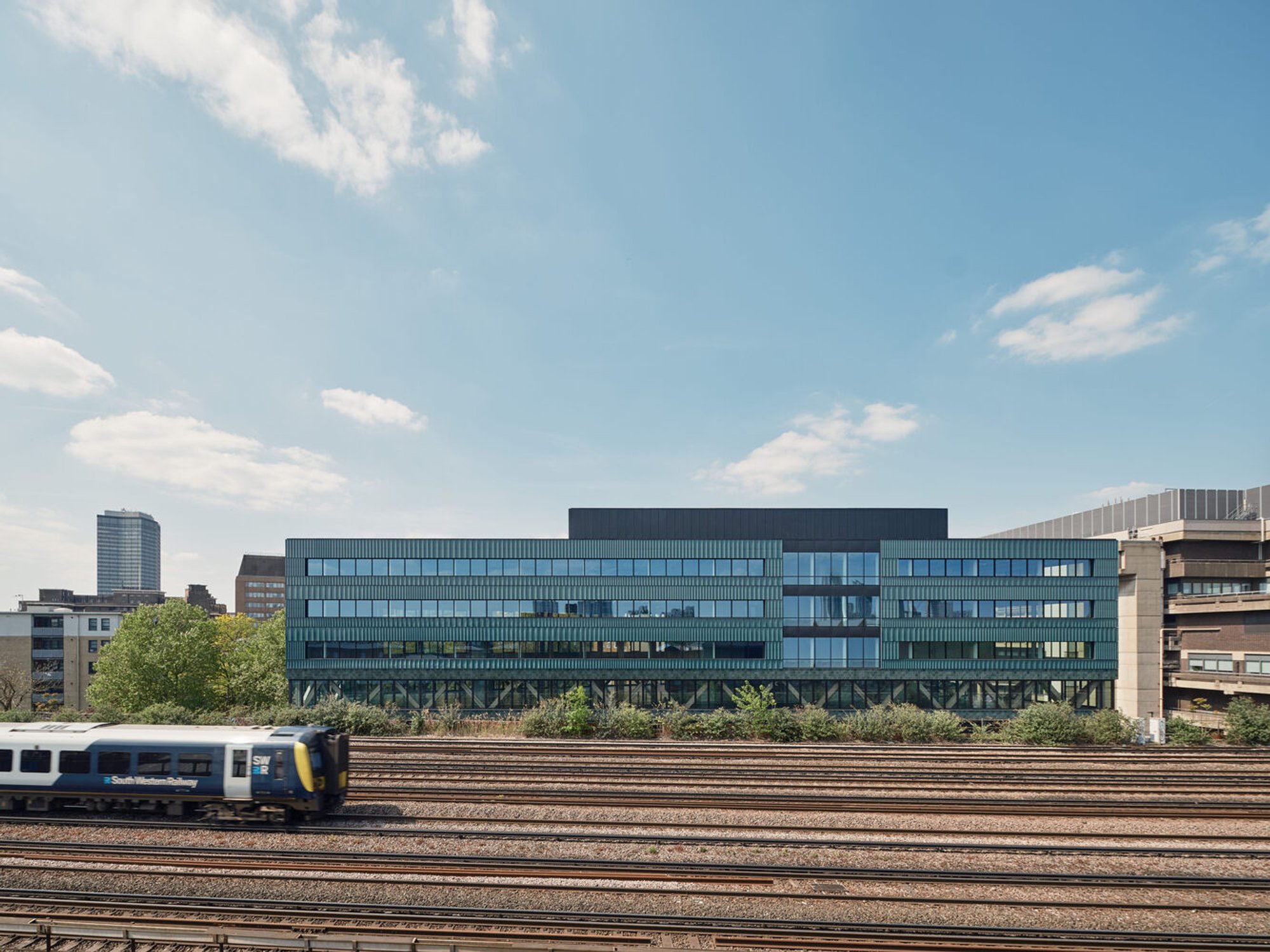
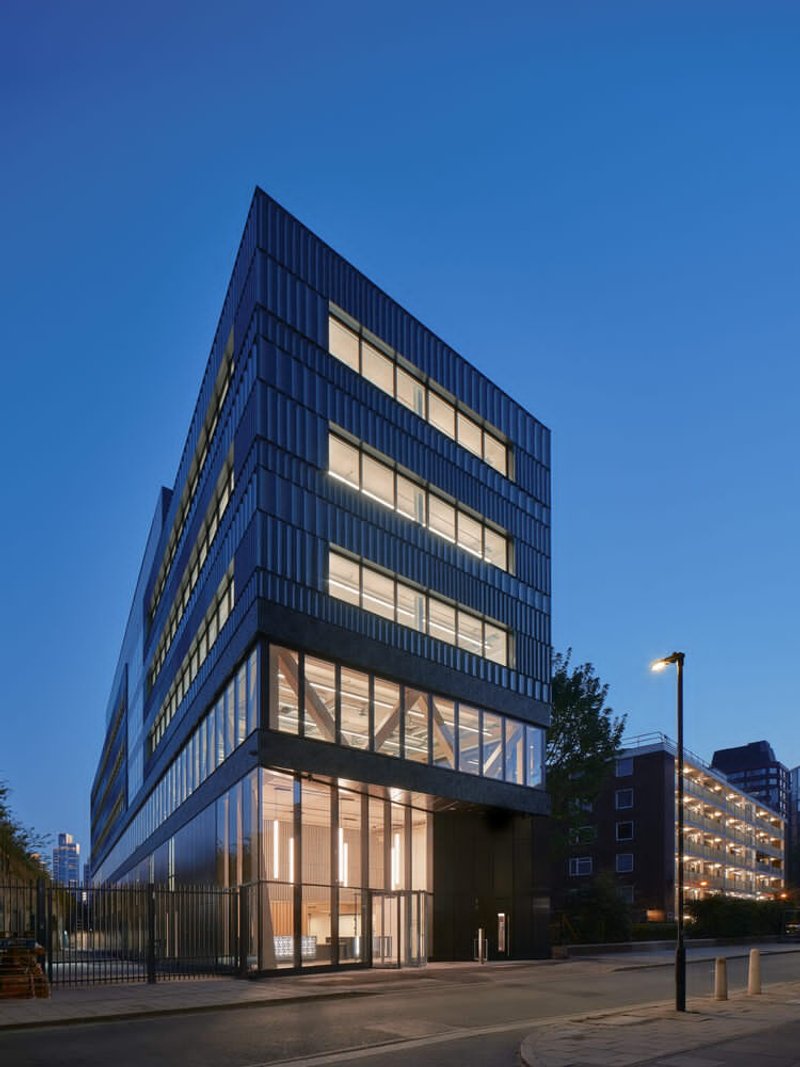
Paradise SE11 by Feilden Clegg Bradley Studios (FCBStudios) marks a groundbreaking shift in the evolution of sustainable office architecture in the United Kingdom. Completed in 2025 for Bywater Properties, this pioneering project in Lambeth, London, stands as the UK’s lowest embodied-carbon mass timber office development—an architectural prototype that redefines what a regenerative city can become.
Designed with a holistic whole-life approach, Paradise SE11 is more than a workplace. It is a fully demountable, circular, and low-carbon building that demonstrates how urban developments can store carbon, nurture well-being, and remain adaptable over multiple lifecycles.
A Low-Carbon Mass Timber Landmark
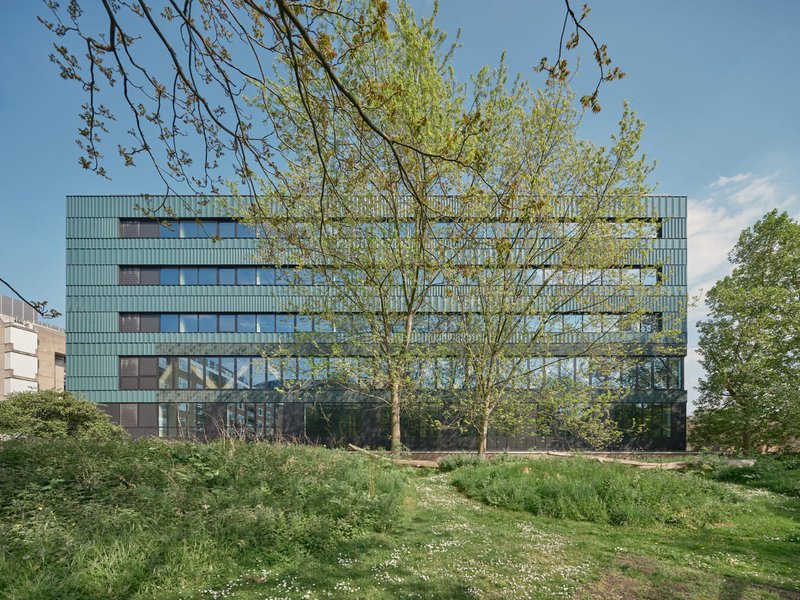
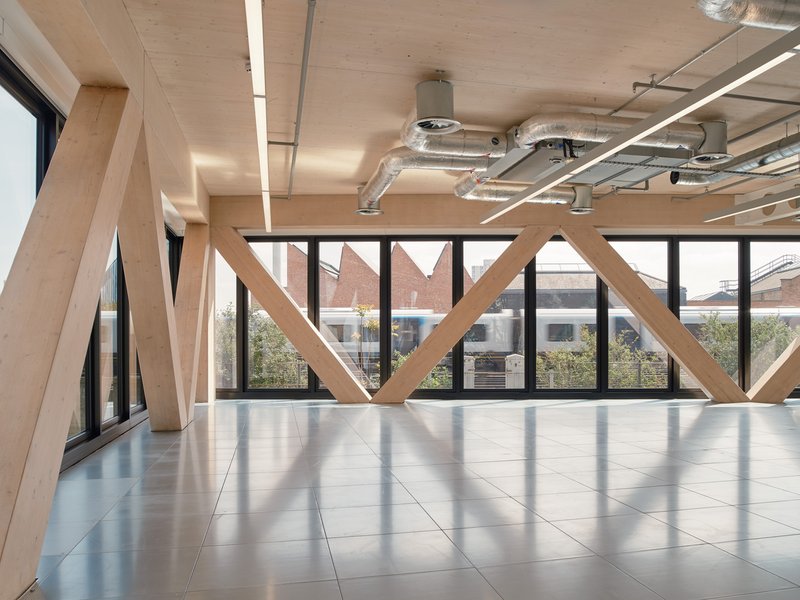
The six-storey building is constructed entirely from mass timber supplied by Stora Enso, integrating the Sylva™ system to reduce environmental impact while maximizing structural efficiency. Engineered for full disassembly, the building achieves 35% lower embodied carbon than conventional office developments and sequesters over 1,800 tonnes of CO₂—the equivalent of constructing 24 homes. By surpassing RIBA 2030 climate targets five years ahead of schedule, Paradise SE11 serves as a benchmark for future commercial architecture.
Every design decision embraces circular economy principles. Components are mechanically fixed rather than glued, allowing beams, slabs, and façade elements to be reused in future construction cycles. The project rejects carbon-heavy materials such as screeds and grout, opting instead for dry-fix assemblies, stone wool insulation, and reversible connections that safeguard the long-term carbon value of the timber structure.
A Human-Centric Workplace Rooted in Place
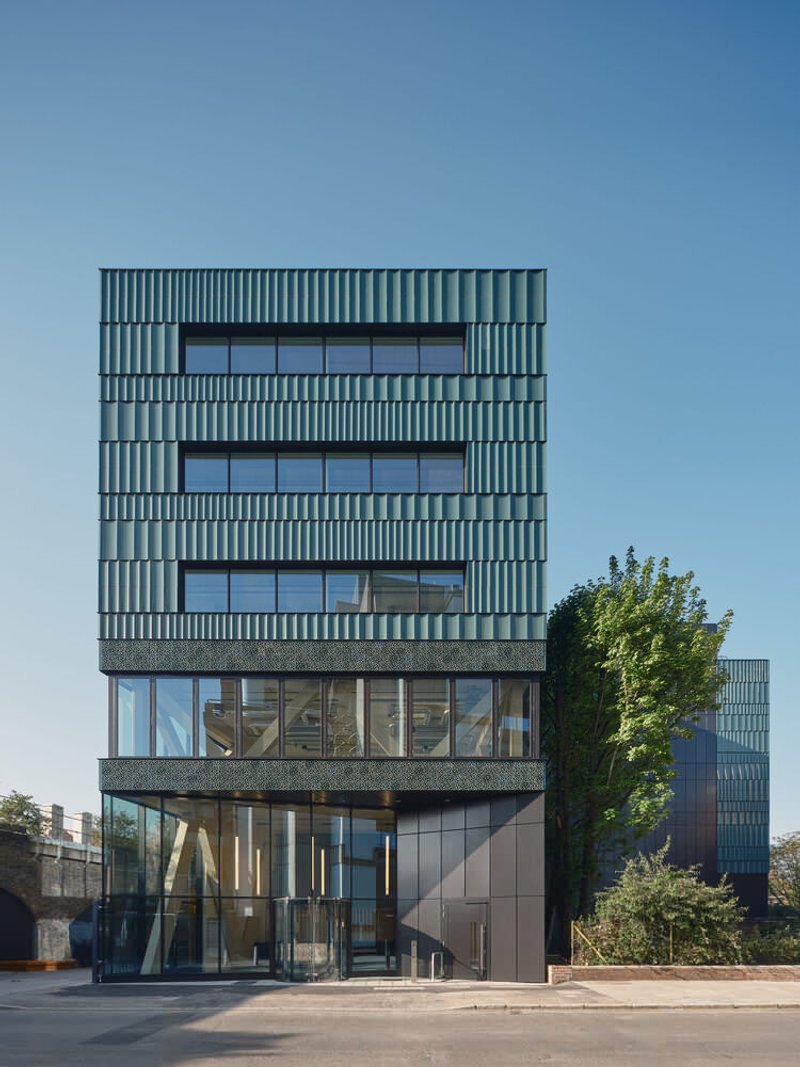
Named after the adjacent Old Paradise Gardens, the project reimagines the contemporary office as a natural, restorative, and community-oriented environment. Open floor plates are bathed in natural light, offering uninterrupted views of the London skyline and direct connections to surrounding greenery. Exposed timber interiors, tactile materials, and generous ceiling heights contribute to a warm, calming, and biophilic workspace that prioritizes mental and physical well-being.
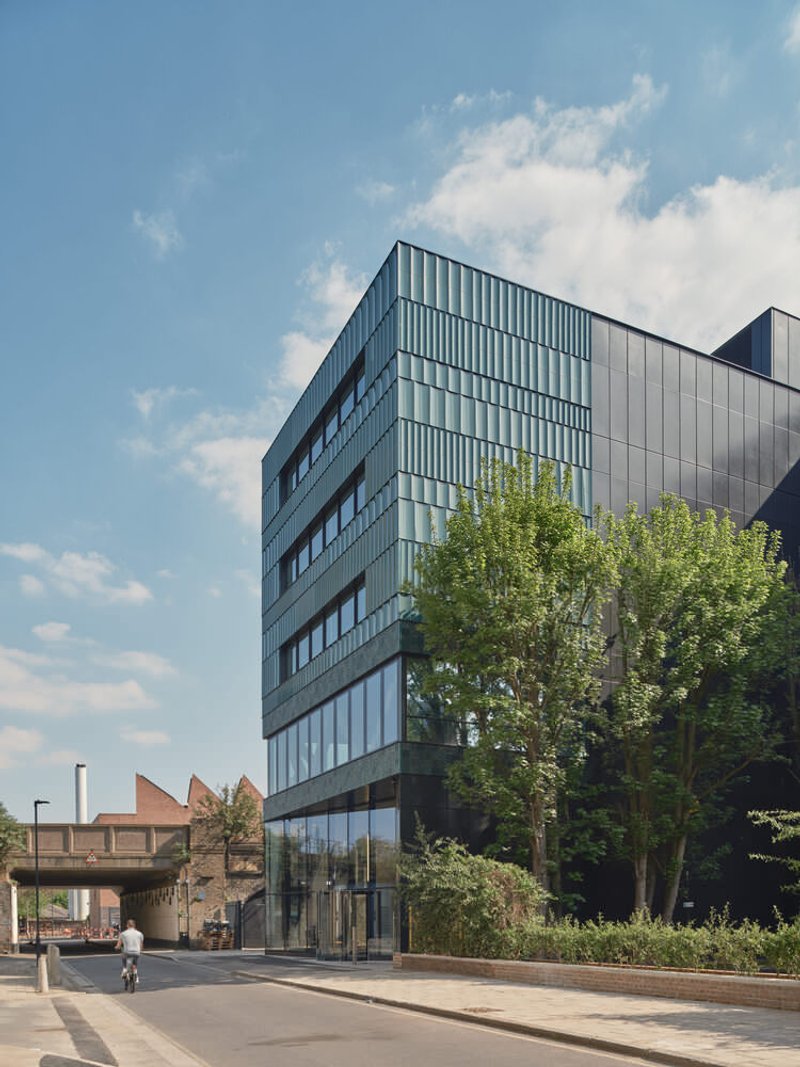
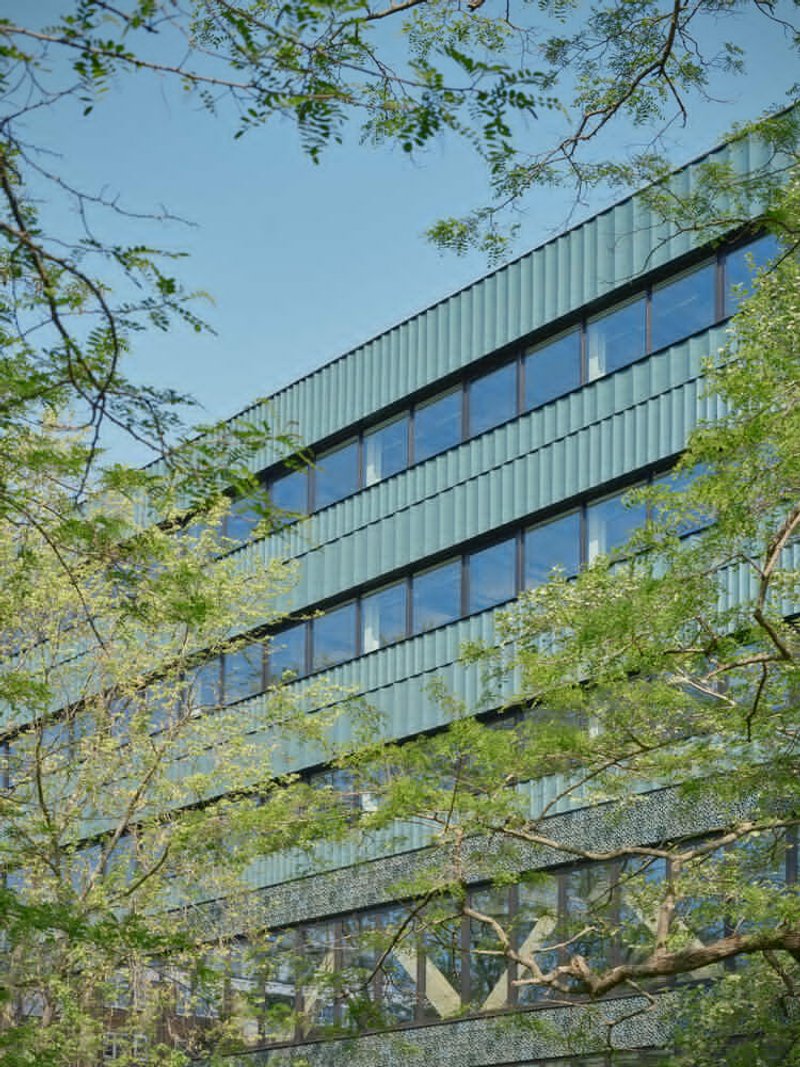
Openable façade panels enable natural ventilation, reducing reliance on mechanical cooling and improving indoor air quality. The building’s terracotta façade is both aesthetic and deeply contextual: co-designed with local schoolchildren, the tiles honor the area’s Royal Doulton ceramic heritage. This façade is expected to last more than a century, reinforcing the project’s long-term sustainability commitments.
Flexible Spaces for Evolving Urban Life
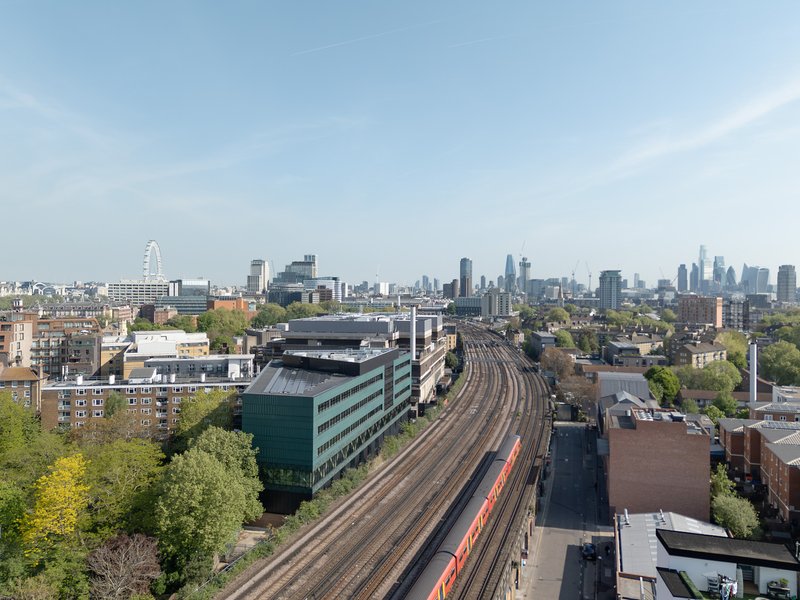
Paradise SE11 integrates programmatic flexibility into its core concept. The ground floor is designed for workshops, makerspaces, and community uses, reflecting the area’s creative character. Upper office floors can be easily reconfigured as workplace needs evolve, from collaborative studios to conventional desk layouts.
The simplicity of the structure—both in assembly and disassembly—allows for future adaptation without waste. This design intelligence reduces operational disruption, increases life-cycle value, and transforms the building into a reusable urban resource rather than a disposable product.
Collaborative Innovation Toward Circular Construction
Achieving this level of circularity required close coordination among architects, engineers, and sustainability specialists. Every junction, connection, and interface was carefully redesigned to eliminate adhesives and permanent fixings. The result is a system in which every component is recoverable, prolonging the lifespan of materials and reducing long-term environmental impact.
Paradise SE11 exemplifies how collaboration can push the boundaries of regenerative architecture and mass timber construction, influencing industry standards for decades to come.
A Blueprint for Regenerative Cities
Paradise SE11 is more than an office building—it is a model for future-proof, circular urban architecture. By integrating low-carbon materials, healthy interiors, community engagement, and a fully reusable structure, FCBStudios has created a project that demonstrates what cities could become: adaptable, biophilic, circular, and fundamentally regenerative.
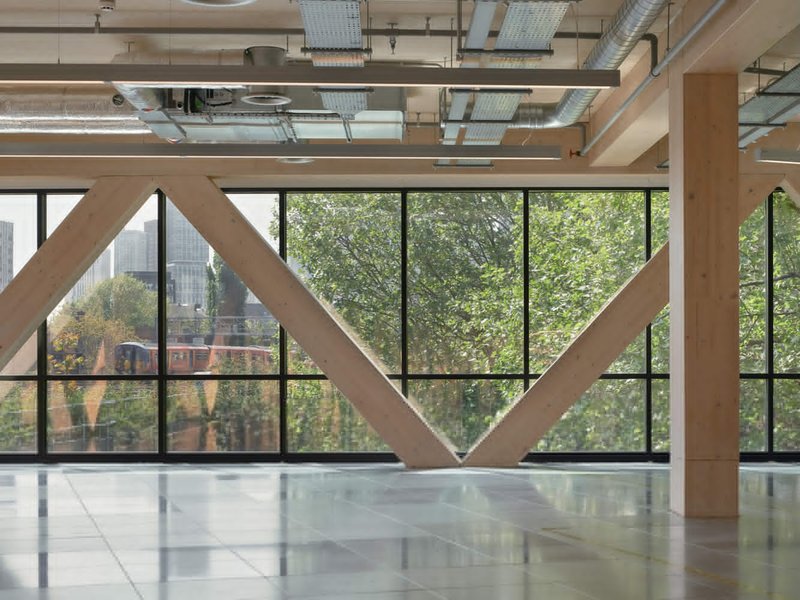
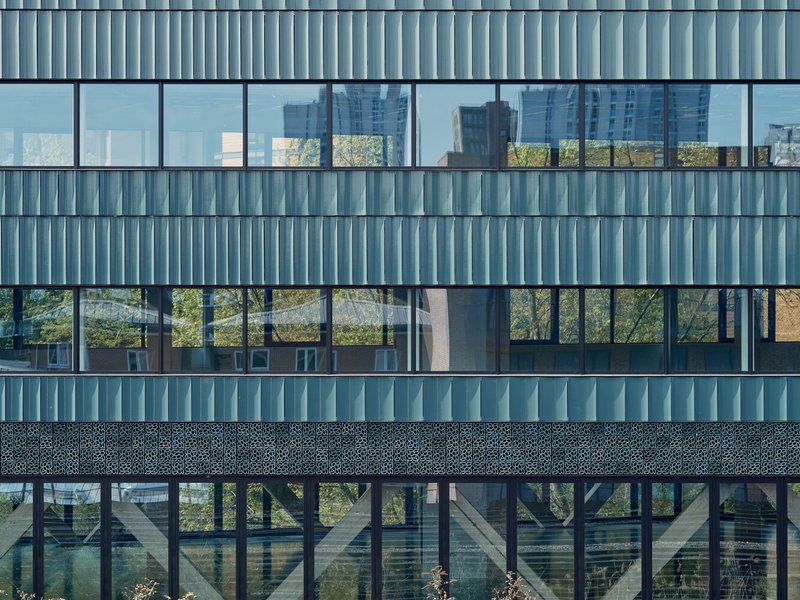
All photographs are works of Andy Stagg Photography




Popular Articles
Popular articles from the community

Solar Steam: A Climate-Responsive Architecture That Redefines the Monument
A climate-responsive memorial architecture that transforms heat, decay, and time into a living system reflecting humanity’s ecological impact.
Atelier Macri Concept Store Interior Design by CASE-REAL
Atelier Macri store features a "ko" counter, walnut wood details, cork displays, blending retail, gallery, and seamless customer experiences.
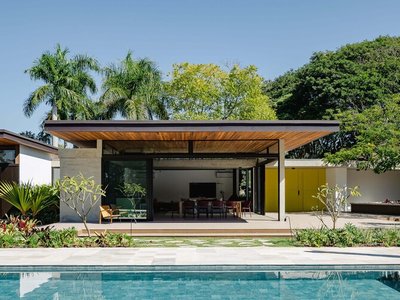
Flamboyant House by Juliana Camargo + Prumo Projetos
Modern Brazilian house integrating existing tree, pool, and volumes with glass, wood, and transitional spaces blending interior, exterior, and landscape seamlessly.
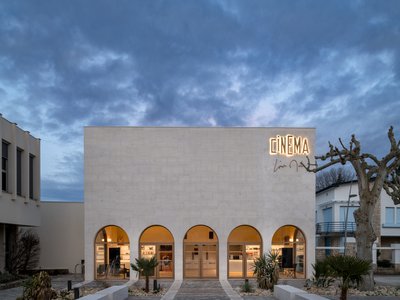
Louis Malle Cinema: A Limestone Cultural Landmark Revitalizing Community Life in Prayssac
Limestone cinema extension with public forecourt, blending heritage and modern design to create flexible cultural spaces and strengthen community interaction.


Similar Reads
You might also enjoy these articles


The Ken Roberts Memorial Delineation Competition (Krob)
As the most senior architectural drawing competition currently in operation anywhere in the world, it draws hundreds of entries each year, awarding the very best submissions in a series of medium-based categories.


Waterfront Redevelopment and Urban Revitalization in Mumbai: Forging a New Dawn for Darukhana
A transformative waterfront redevelopment project reimagining Darukhana’s shipbreaking heritage into an inclusive urban future.

OUT-OF-MAP: A Call for Postcards on Feminist Narratives of Public Space
Rhizoma Design and Research Lab invites artists, designers, architects, researchers, and students to reflect on how feminist perspectives can reshape public space. Selected works will be exhibited in Barcelona, October 2026. Submissions open until 15 April 2026.


Documentation Work on Buddhist Wooden Temple
Architectural syncretism and cultural hybridity: A comparative study of the Buddhist temples in Chattogram Hill tracks

Explore Architecture Competitions
Discover active competitions in this discipline




The International Standard for Design Portfolios


The Global Benchmark for Architecture Dissertation Awards


The Global Benchmark for Graduation Excellence


Challenge to reimagine the Iron Throne
Comments (0)
Please login or sign up to add comments
No comments yet. Be the first to comment!