
Permanent Public Pavilion by Besley & Spresser: A Civic Landmark Blending Sydney’s Land, Sea, and Sky
A sustainable civic pavilion on Sydney Harbour blending land, sea, and sky with oyster terrazzo, native landscaping, and elegant columned structure.

A New Civic Icon on Sydney Harbour
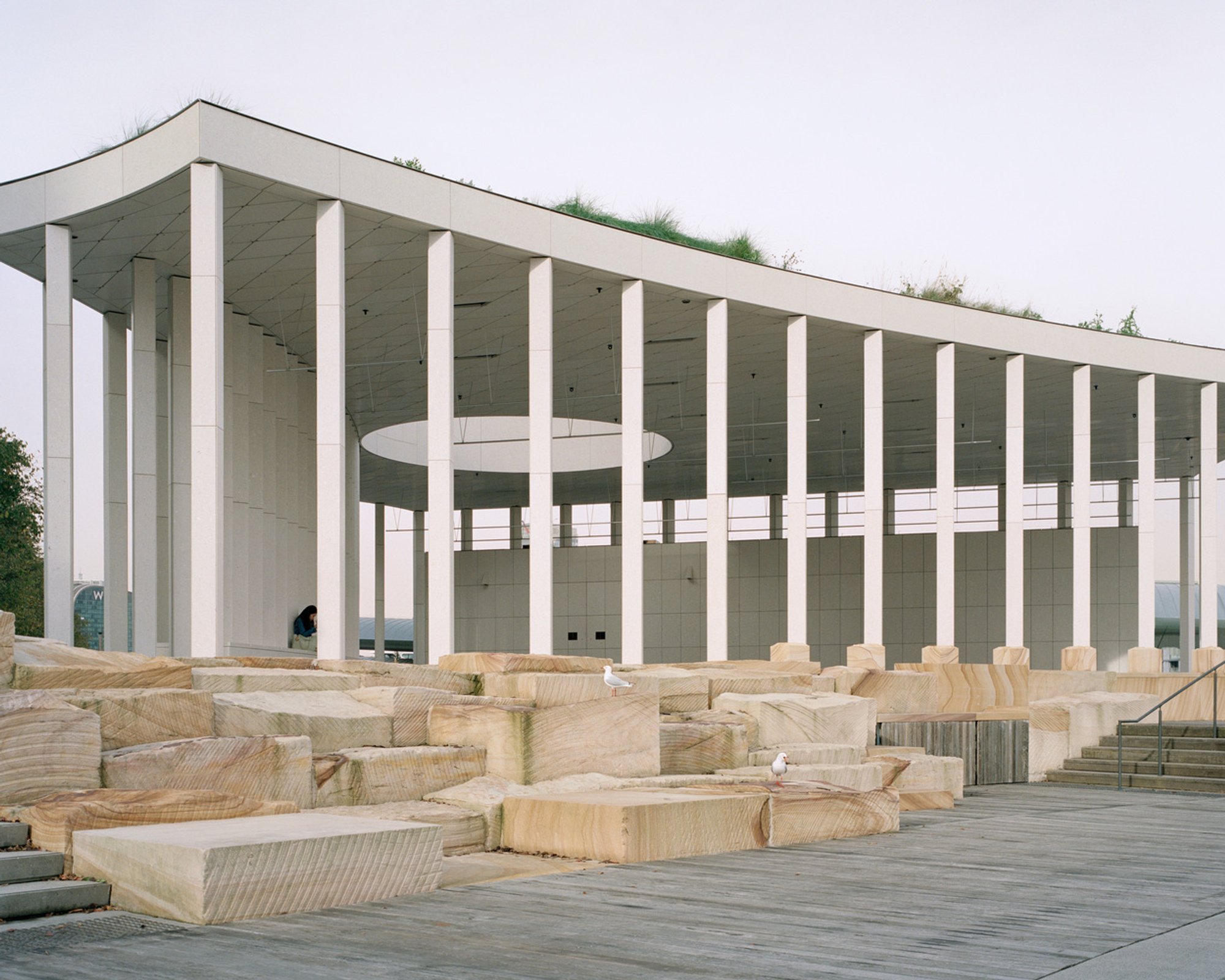
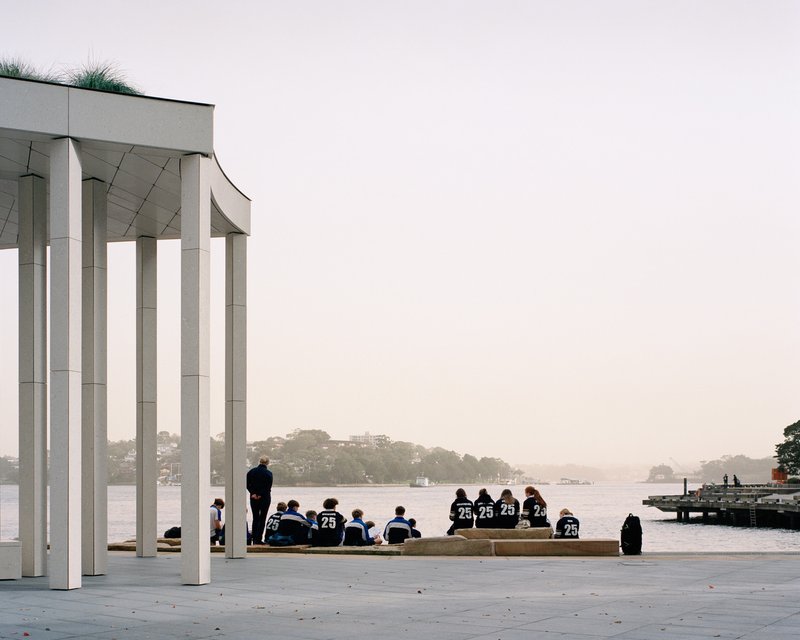
The Permanent Public Pavilion by Besley & Spresser stands as a striking new addition to Sydney Harbour’s western edge, within the rapidly regenerating Barangaroo precinct. Designed by architects Jessica Spresser and Peter Besley, the pavilion was the winning entry in a 2020 national competition and completed in 2025. Envisioned as both a public gathering space and a venue for special events, the pavilion creates a seamless connection between architecture, landscape, and community.
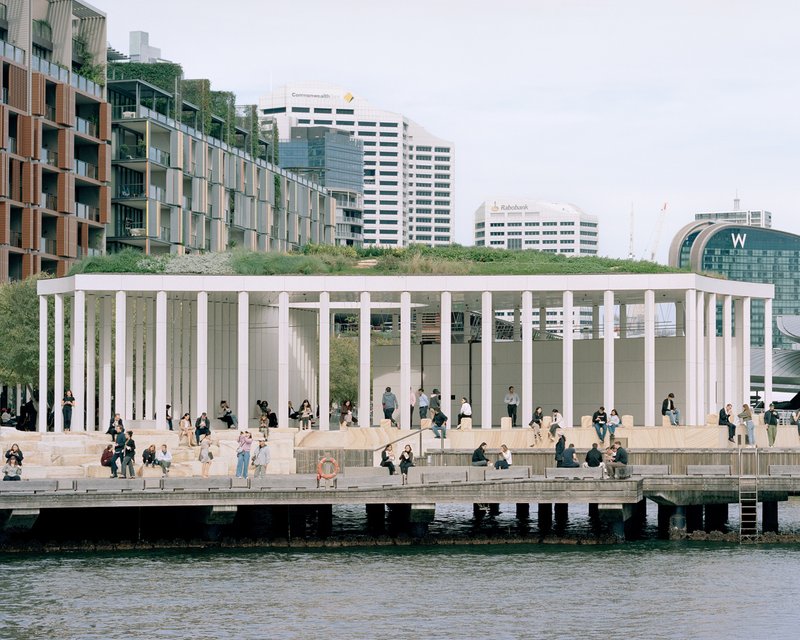
Set against the backdrop of Sydney’s glittering harbour, the pavilion offers a civic space where visitors can pause, gather, and experience the natural beauty of the waterfront. Acting as both a sculptural landmark and a functional structure, it redefines the relationship between built form and coastal ecology.
Design Concept: Geometry of the Harbour
The pavilion’s design draws direct inspiration from the curving coves and peninsulas that characterize Sydney Harbour. Its plan geometry responds to the fluidity of the coastline, translating those natural contours into architectural form.
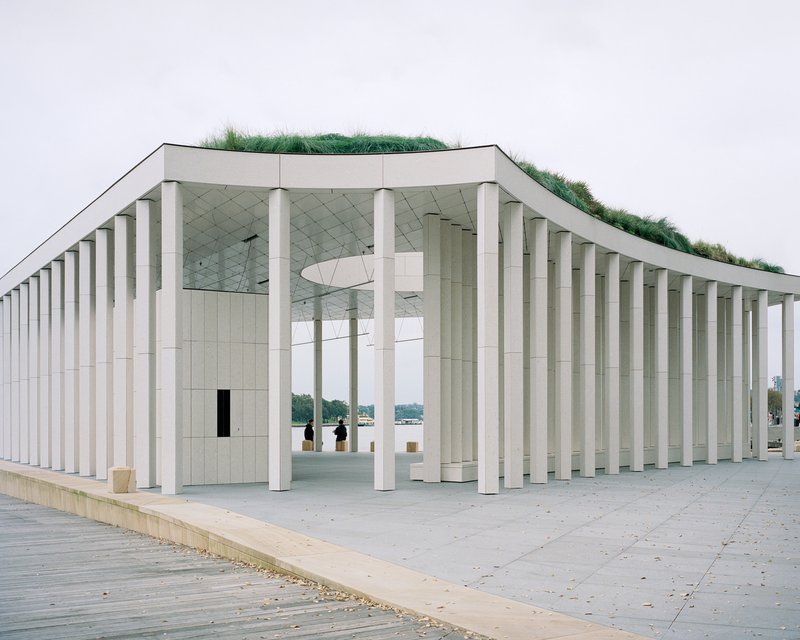
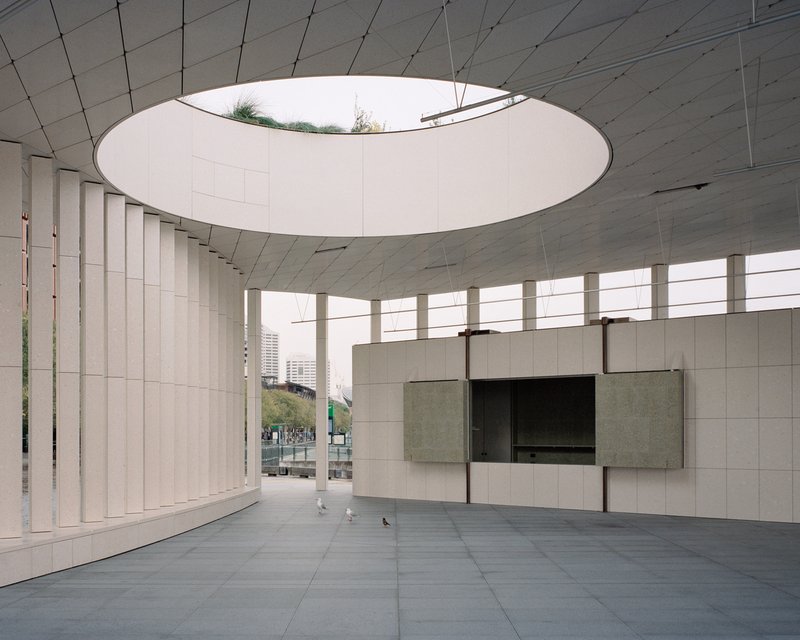
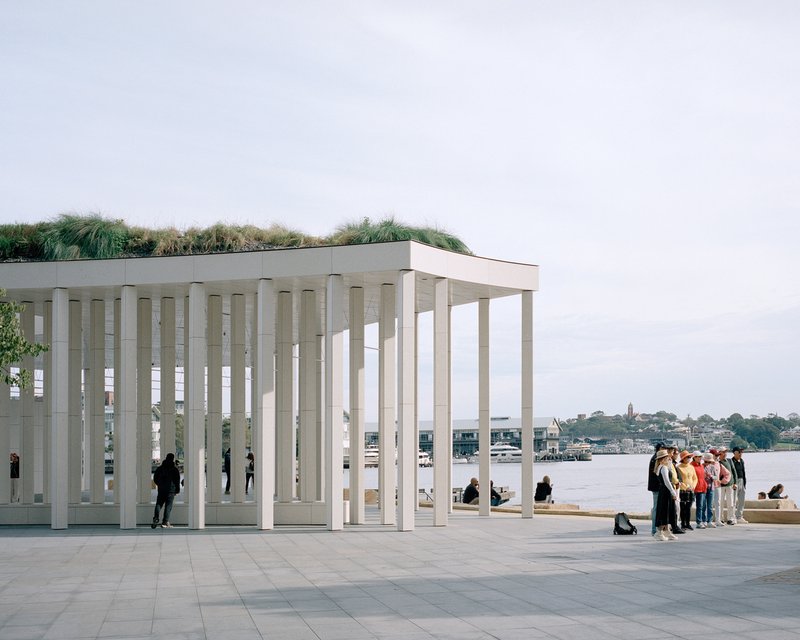
A complex array of slender columns supports the expansive landscape roof, while framing a variety of sheltered and open spaces. These columns create a rhythmic colonnade that both filters light and frames harbour views. A large circular oculus in the roof introduces a dynamic play of sunlight across the ground plane, marking the passage of time as the light shifts throughout the day.
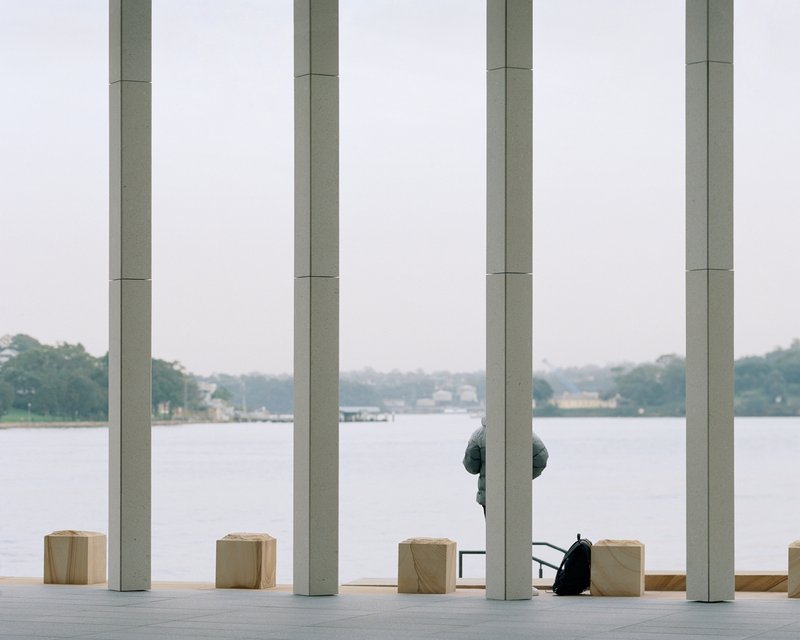
At the pavilion’s core stands a freestanding internal structure that houses a small servery, bar, and technical space to support public and private events. This layered composition of open and enclosed zones enables the pavilion to flexibly host diverse activities — from civic ceremonies and exhibitions to quiet public contemplation.
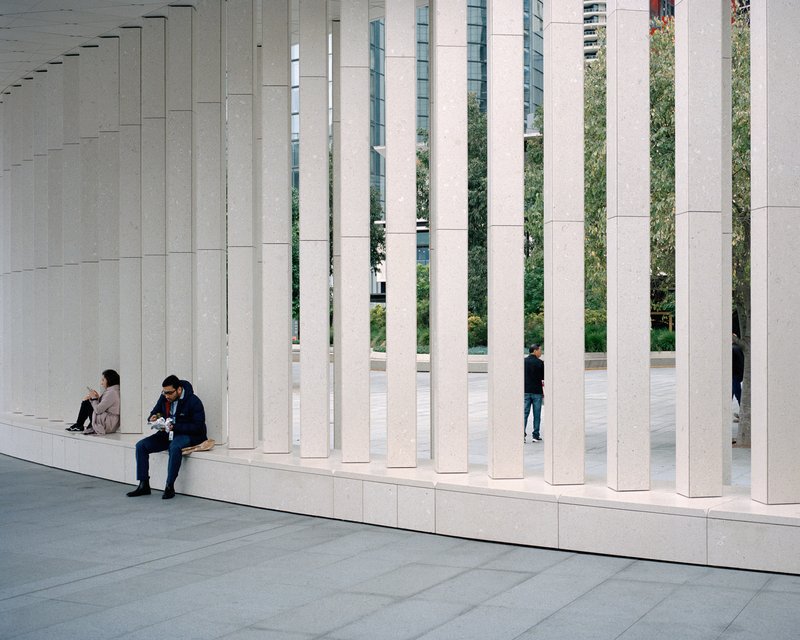
Material Innovation: The “Oyster Terrazzo”
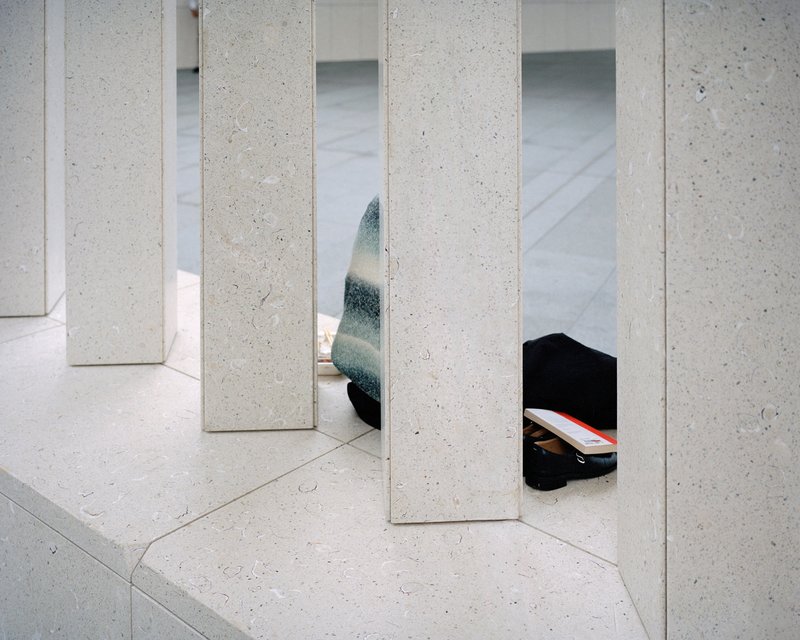
One of the most remarkable aspects of the pavilion is its innovative façade material, known as “oyster terrazzo”, a bespoke composite developed specifically for this project. Created by Besley & Spresser after a year of experimentation, the material combines whole Sydney Rock Oyster shells with recycled aggregates, achieving a unique, shimmering texture that celebrates local ecology and craftsmanship.
When polished, the terrazzo reveals the intricate patterns of the oyster shells, anchoring the building in the geological and cultural context of Sydney Harbour — where oyster reefs have thrived for millennia. Nearly half a million oyster shells were salvaged and reused, preventing them from entering landfill and embodying the project’s commitment to circular and sustainable construction.
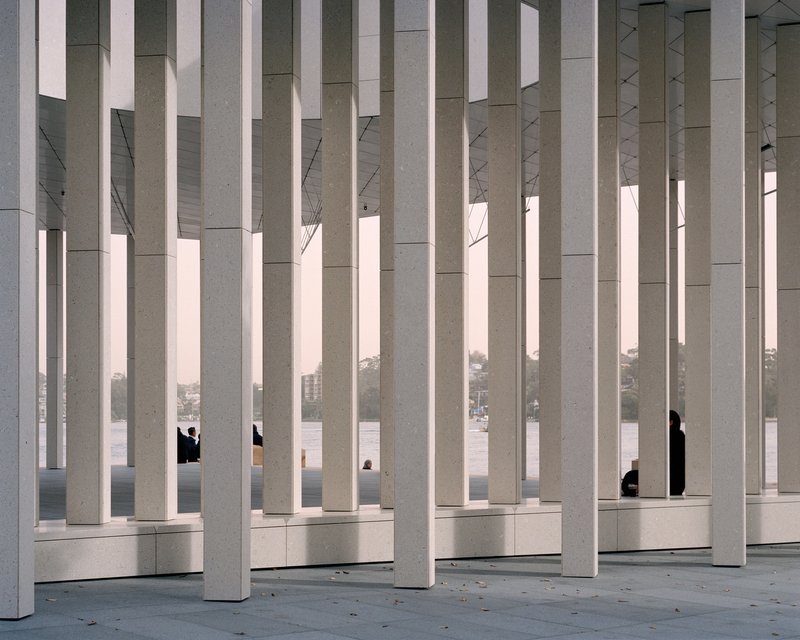
This material innovation not only establishes a tangible link between the pavilion and its coastal setting but also continues architecture’s long tradition of expressive, site-specific ornamentation.
Structural and Environmental Integration
The structural system of the pavilion achieves a remarkable sense of openness. The roof trusses converge around the central oculus, creating a long free span supported only by 86 moment-resisting perimeter columns. This design eliminates the need for intrusive internal supports, allowing uninterrupted views across the harbour.
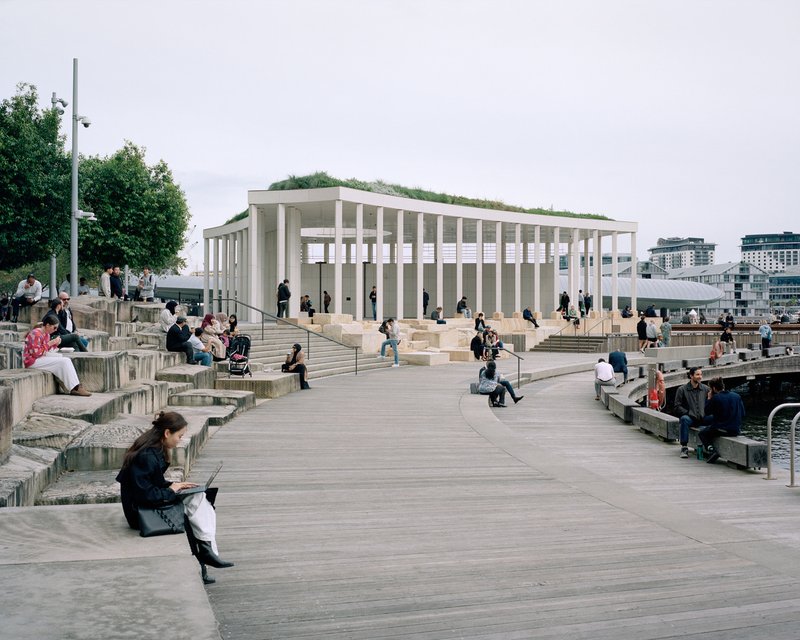
The landscape roof is another integral feature, layered with native plants, sandstone fragments, and hollow logs — elements that mimic the surrounding headlands. This green roof fosters biodiversity, attracting native birds and insects while providing natural insulation and stormwater management.
Beneath this ecological layer lies a folded laminated timber deck, expressing the architects’ commitment to using renewable materials. The building’s service routes — including drainage, electricity, and communications — are cleverly concealed within the hollow columns, preserving the purity of the architectural expression.
A Living Pavilion for the Public Realm
The Permanent Public Pavilion is more than a piece of architecture — it is a living organism within Sydney’s public realm. By merging material experimentation, environmental sensitivity, and civic generosity, Besley & Spresser have created a structure that embodies the spirit of contemporary Australian architecture.
Through its thoughtful integration of land, sea, and sky, the pavilion offers a tranquil refuge and a civic landmark that celebrates the enduring relationship between nature, material, and culture.
Project Details
Project Name: Permanent Public Pavilion (Pier Pavilion) Architects: Besley & Spresser Lead Architects: Jessica Spresser, Peter Besley Location: Barangaroo, Sydney, Australia Area: 400 m² Year: 2025 Photographer: Rory Gardiner
All photographs are works of Rory Gardiner




Popular Articles
Popular articles from the community

Gads Hill Early Learning Center by JGMA: Adaptive Reuse Shaping Community-Focused Educational Architecture
Adaptive reuse transforms fragmented structure into vibrant early learning center with playful façade, natural light, and community-focused sustainable design.
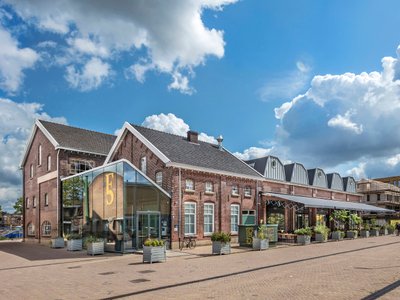
Fifth NRE Jazz Club – De Bever Architecten: Eindhoven’s Revitalized Cultural Hub
Historic gas factory transformed into Fifth NRE Jazz Club blending modern sustainability, jazz culture, dining, and heritage architecture seamlessly.


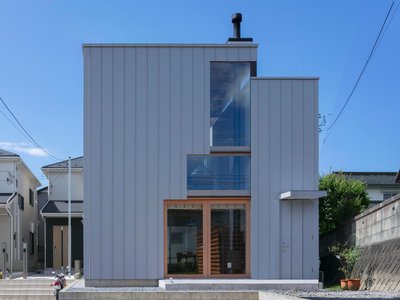
Split House: A Compact Urban Home Blending Privacy, Light, and Flexible Living in Japan
Compact Japanese home featuring DOMA space, flexible café potential, passive lighting, privacy zoning, and sustainable urban living design.


Similar Reads
You might also enjoy these articles


The Ken Roberts Memorial Delineation Competition (Krob)
As the most senior architectural drawing competition currently in operation anywhere in the world, it draws hundreds of entries each year, awarding the very best submissions in a series of medium-based categories.


Waterfront Redevelopment and Urban Revitalization in Mumbai: Forging a New Dawn for Darukhana
A transformative waterfront redevelopment project reimagining Darukhana’s shipbreaking heritage into an inclusive urban future.

OUT-OF-MAP: A Call for Postcards on Feminist Narratives of Public Space
Rhizoma Design and Research Lab invites artists, designers, architects, researchers, and students to reflect on how feminist perspectives can reshape public space. Selected works will be exhibited in Barcelona, October 2026. Submissions open until 15 April 2026.


Documentation Work on Buddhist Wooden Temple
Architectural syncretism and cultural hybridity: A comparative study of the Buddhist temples in Chattogram Hill tracks


Explore Architecture Competitions
Discover active competitions in this discipline




The International Standard for Design Portfolios


The Global Benchmark for Architecture Dissertation Awards


The Global Benchmark for Graduation Excellence


Challenge to design locus for the upliftment of human rights
Comments (0)
Please login or sign up to add comments
No comments yet. Be the first to comment!