
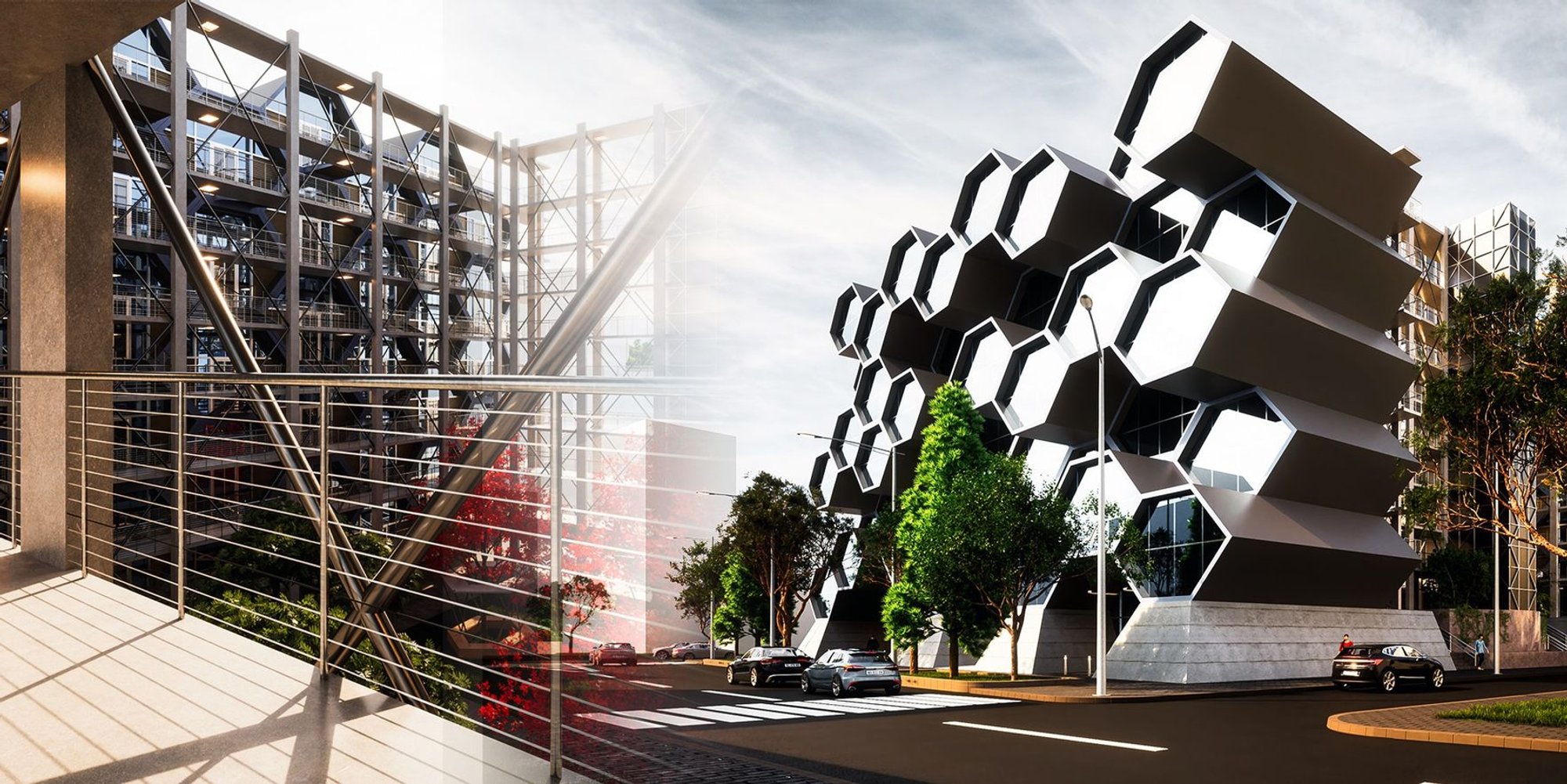
PG-01 Modular Apartment Building: Hexagonal Units Rethink Prefab Housing in London
A honeycomb-inspired modular system stretches irregular hexagons across a tight Islington site, proving prefab can build community.

Rectangles dominate modular construction for a simple reason: they stack. But stacking is not the same as living, and the relentless grid of prefab boxes tends to produce housing that feels provisional rather than permanent. PG-01 breaks that pattern by borrowing from a structure nature perfected long ago. Its irregular hexagonal modules, stretched horizontally to 7.65 meters in length and standing 4.2 meters tall, tessellate into a honeycomb facade that gives each unit a distinct identity while locking the whole assembly into a coherent structural system. The result is a building that looks nothing like a container village and performs like a finely tuned piece of urban infrastructure.
Designed by Maurice Samen, PG-01 was shortlisted in the Plugin Housing Challenge. The 376.53 square meter site sits in Islington, a London borough where public authorities have flagged acute housing shortages. Samen's proposal treats that constrained footprint as an opportunity: by manufacturing hexagonal units offsite in controlled factory conditions and assembling them on location, the project collapses construction timelines and limits the disruption that typically accompanies dense residential development.
A Honeycomb Facade That Earns Its Geometry
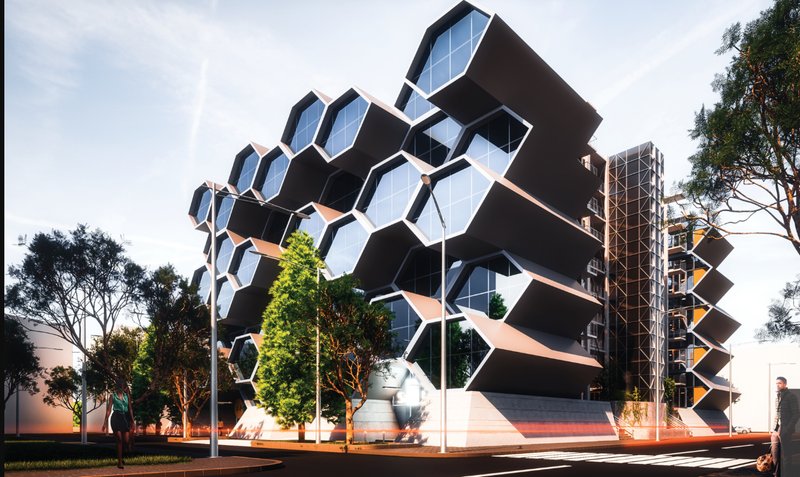
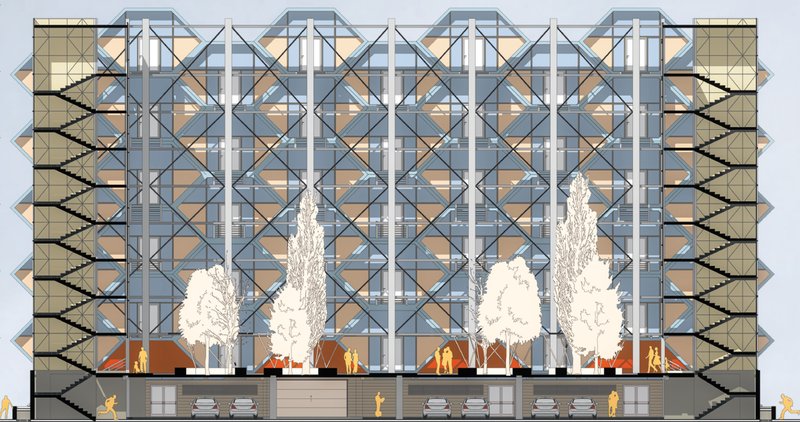
At dusk, the street view makes the argument immediately. Hexagonal balconies project outward with generous glazing, catching interior light in a staggered rhythm that gives the facade a visual depth conventional flat elevations cannot achieve. The geometry is not decorative; each facet of the hexagon negotiates between structural load, balcony depth, and daylighting angles. Behind that skin, a section drawing reveals exposed steel cross-bracing that forms the primary structural frame, threading through an internal atrium where planted trees rise through multiple levels. The steel is left legible, not hidden behind cladding, reinforcing the idea that the building's logic is part of its aesthetic.
Ground Plane: Plaza, Commerce, and Parking Below
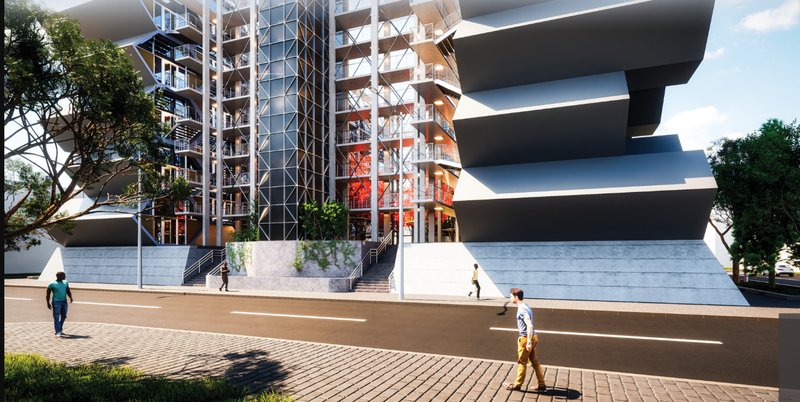
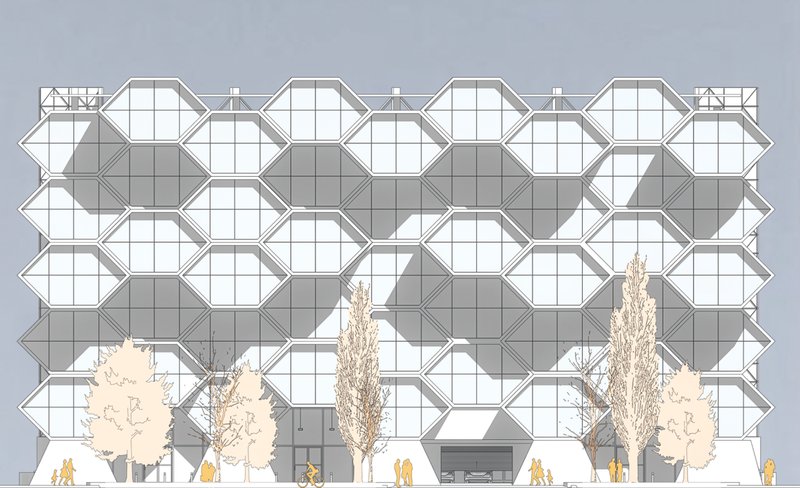
The ground level is where PG-01 engages the neighborhood. A white concrete plaza stretches beneath the staggered balcony structure, creating a covered public zone where pedestrians move freely between commercial units that activate the streetscape. These ground-floor shops and services add financial sustainability to the project while giving the building a civic presence beyond its residential function. The elevation drawing clarifies how the hexagonal facade pattern steps back from the base, with mature trees anchoring the composition at street level and softening the transition between the exposed structural framing and the surrounding Islington context.
Below grade, a subterranean parking lot accommodates 20 vehicles, a pragmatic move that keeps cars out of the public realm and preserves every square meter of the tight site for habitable or communal use. Integrated conduit systems for water supply, greywater recycling, and thermal management run through the modular connections, making infrastructure a plug-in element rather than an afterthought.
Inside the Hexagon: Timber, Light, and Flexible Plans
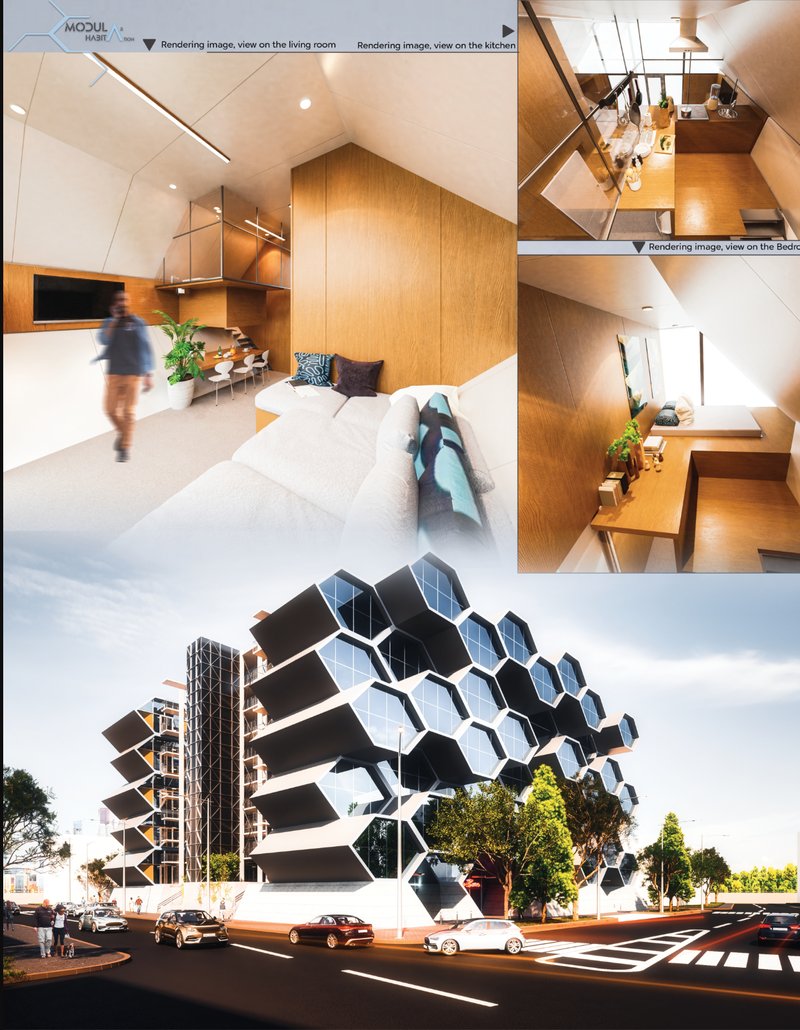
A composite rendering splits the view between the street presence and the interior life of a single hexagonal unit. Inside, timber casework lines the walls, lending warmth to what could otherwise feel like a clinical prefab shell. Open-plan living areas flow into kitchen zones and sleeping quarters that are positioned to maximize the angular geometry for privacy without relying on conventional partition walls. The design accommodates both single-occupancy and double-occupancy configurations, meaning the same module can serve different household types depending on how the internal fit-out is arranged. Vertical and horizontal circulation, including staircases, corridors, and elevator access, connects units seamlessly across the honeycomb matrix.
The Interior Courtyard as Social Core
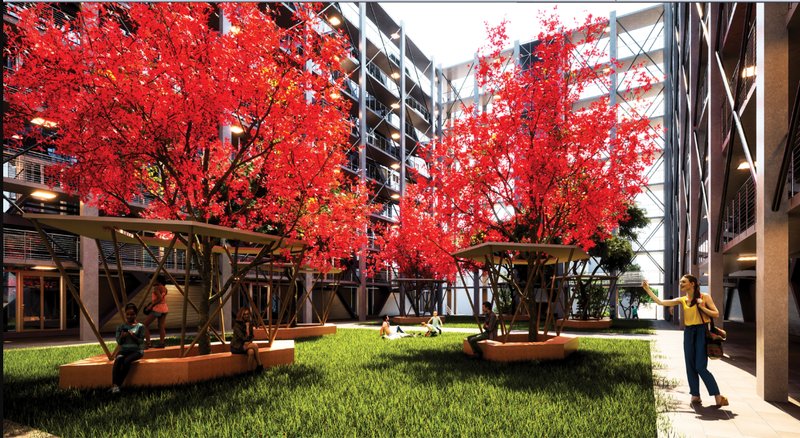
At the center of PG-01, a courtyard punches through the building mass. Red autumn foliage trees stand on a grass surface, surrounded by the exposed steel structure and overlooking balconies on all sides. The space functions as the social heart of the project, a place where residents encounter one another without the forced interaction of a corridor. Samen positions this green courtyard as essential to mental well-being and community formation, not as a decorative bonus. The decision to frame it with the building's raw structural elements, rather than polished finishes, gives it an honest, almost industrial character that contrasts with the softness of the planting.
Why This Project Matters
PG-01 takes a clear position: modular housing does not have to look modular. By choosing irregular hexagons over rectangles, Maurice Samen introduces spatial variety and facade richness at the scale of the individual unit, then multiplies that variety across the building without losing structural discipline. The offsite manufacturing strategy keeps quality consistent and construction fast, two qualities that London's housing crisis demands. Ground-floor commerce, subterranean parking, greywater recycling, and a central courtyard round out a project that thinks about urbanism, not just units.
What makes the proposal compelling is its replicability. The hexagonal module is a system, not a one-off sculptural gesture. Swap the site dimensions, adjust the unit count, and the same logic holds. For a competition focused on plugin housing, that scalability is the real breakthrough: a modular language flexible enough to adapt to different neighborhoods while maintaining the spatial generosity and communal ambition that make a building worth living in.
View the Full Project
About the Designers
Designer: Maurice Samen
Enter a Design Competition on uni.xyz
uni.xyz runs architecture and design competitions year-round that reward proposals with spatial conviction and real site intelligence.
Project credits: The PG-01 modular apartment building by Maurice Samen Plugin Housing Challenge (uni.xyz).




Popular Articles
Popular articles from the community

R/URBAN DESIGN OFFICE Carves a Communal Living Room from a Tokyo Corporate Dormitory
In Shinagawa's Oi district, a 35-year-old reinforced concrete tower becomes a 49-unit rental residence with shared spaces that redefine cohabitation.
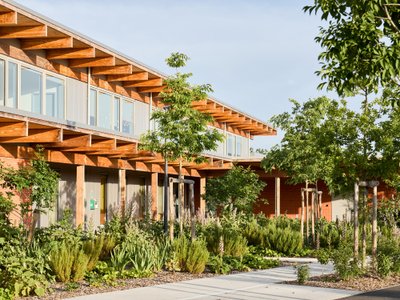
GGR Architectes Anchors a New Neighborhood in Frouzins with a Brick and Timber School Complex
A cruciform plan of terracotta brick and exposed wood frames four courtyards for 140 students outside Toulouse, France.
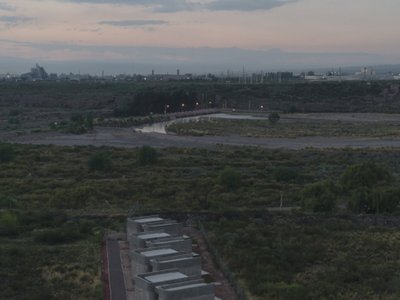
ONA Threads Four Board-Formed Concrete Cabins Along a 260-Meter-Deep Site in Mendoza
At the edge of Argentina's wine country, a set of curved concrete lodges negotiate a razor-thin parcel between city and mountain.
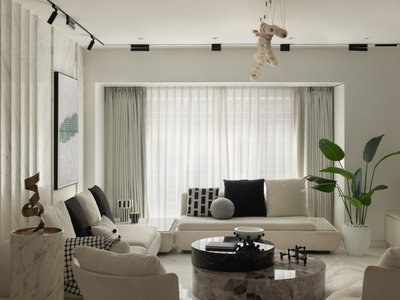
Inside a Timeless Mumbai Residence by Aether Studio
Aether Studio's 2,250 sq ft apartment in Malad, Mumbai uses marble, brass, boucle, and disciplined restraint to build a quiet retreat from the city.


Similar Reads
You might also enjoy these articles

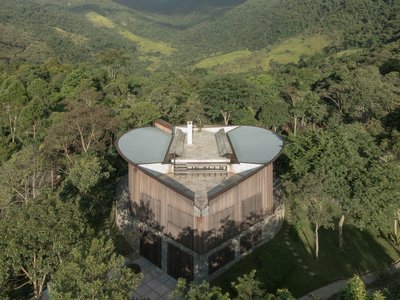
House in Bocaina by Ana Altberg + Cesar Jordão: A Circular Retreat Embracing the Atlantic Forest
Circular forest home in Brazil by Ana Altberg and Cesar Jordão, blending sustainable materials, passive design, and immersive landscape integration.
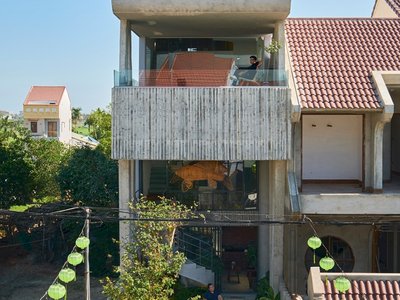
Cherry Homestay: A Harmonious Blend of Modern Design and Traditional Hoi An Architecture
Cherry Homestay blends modern architecture with traditional Hoi An elements, featuring spiral stairs, rooftop mezzanine, sustainable materials, and open, airy spaces.
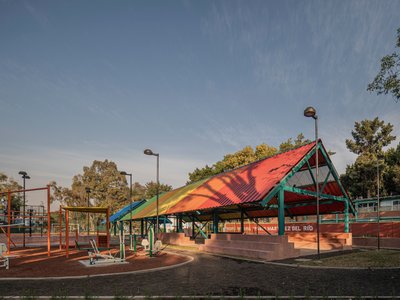
Revitalizing Culhuacán: Housing Unit Infonavit CTM Square by AMASA Estudio
AMASA Estudio revitalized CTM Culhuacán Square, transforming neglected housing unit spaces into vibrant, accessible, community-focused public areas with sustainable design elements.
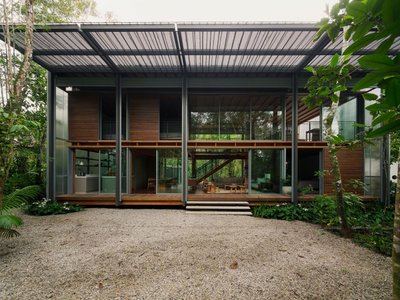
FR House by Andrade Morettin Arquitetos Associados: A Coastal Retreat Embedded in Brazil’s Native Landscape
Coastal vacation house blending into native vegetation, using translucent polycarbonate, timber structure, passive shading, and elevated design for climate-responsive living.


Explore Housing Competitions
Discover active competitions in this discipline




The International Standard for Design Portfolios


The Global Benchmark for Architecture Dissertation Awards


The Global Benchmark for Graduation Excellence


Challenge to reimagine the Iron Throne
Comments (0)
Please login or sign up to add comments
No comments yet. Be the first to comment!