
POST PANDEMIC WORK
Vertical city and vertical living circle
POST PANDEMIC WORK- Vertical city and vertical living circle
Origin:
In December 2019, COVID-19 appeared in people's lives and began to ravage the world. People have been waiting for the end of the epidemic for more than a year, but it seems that the epidemic will not end, and we must all learn to live with the virus. How to achieve healthy, safe, rich and reasonable use of free space in the era of the epidemic is a problem that space designers need to face.
Issues:
- Central business district
The scene returns to the once bustling central business district, where dense human movement and a lot of traffic take place in the city. First of all, we can start from the context of urban development. The central business district is the heart of the city, and its thriving development symbolizes the modernization of a country's region. The existence of central business districts often spreads to the surrounding suburbs due to their wealth of large numbers of business opportunities, traffic flows, leisure activities of the crowds or basic needs of life. Make it gradually elevate and close to the quality of life of the city center. Of course, this is the passive spreading part. People in the city centre will also take the initiative to seek opportunities to expand outward.
- AC type
And as the world slowly emerges from isolation, cities in different countries or cities have more opportunities for exchange. The patterns of communication within the city itself and between regions and regions have also taken different forms. Today's cities are undoubtedly more diverse than ever. Yet in the highly densely populated and diverse central business district. Cultural conflicts such as different groups of people, races, occupations, etc., gradually merge into a new individual under the passage of time. In addition, there are differences in the length of time people spend in the central business district. The previous traffic pattern was not enough to support the crowd to go back and forth over long distances in a day. It also seems to have created a model of living in Taiwan, where the first floor is commercial and above the second floor. Today, when the population is moving outward, some of the people who work in the central business district will become so-called commuters. In existing cities and pre-pandemic lifestyles, business districts are actually very centralized and partitioned. People use about 8 to 10 hours to enter the workplace. Among them, this period of time in the commercial area has generated a space for restaurants, traffic and other behavioral demand. Finally, office workers live in the central business district with a high concentration of working hours, and the central business district that does not work hours lacks vitality.
- About the outbreak
Bringing it into the current epidemic situation, it is undeniable that the epidemic does make people afraid. As a result, the emergence of the crowd has been greatly reduced. For the CBD we will have to think about continuing to centralize or make changes to become decentralized. Under the epidemic, some companies have shifted to a remote office model. Under this premise, the central business district, which originally had a lot of space, will have to be idle. In the central business district of the future, there should still be a part of the office staff. And this part of the office workers will live here more time. Maybe they lived here, or maybe they wanted to stay here. Because the rest of the people returned to their homes to work, the density of the space crowd became smaller. In the extra space, it can be used to increase the living space. It will also be used to increase entertainment, leisure, living functions, etc. to increase the quality of local life. Each business district was formed to be a low-density, decentralized place to live, but each with a high quality of life. This also echoes the concept of a mixed-use, pedestrian city. People will have a better chance of achieving the goal of a compact city with a 15-minute living circle in the original business district space.
Workaround:
- Technique thinking
On how to repurpose existing business centers to create and rebuild our cities to better align them with the changing needs of work and citizens. This problem is in response to the fact that the central business district is mostly a dense area of high-rise vertical buildings. In fact, similar to returning to the traditional storefront type in Taiwan, the mixing mode of sumitomo can be mixed in a vertical axial direction. Living and working spaces are commonly placed on the same vertical axis. This approach avoids situations where the same building may be many people and no one at the same time. For the rest, the demand density is lower, such as leisure and shopping space, which may be placed in the street outline. Turn the entire central business district into a small city in which most of the living needs can be solved.
- City example
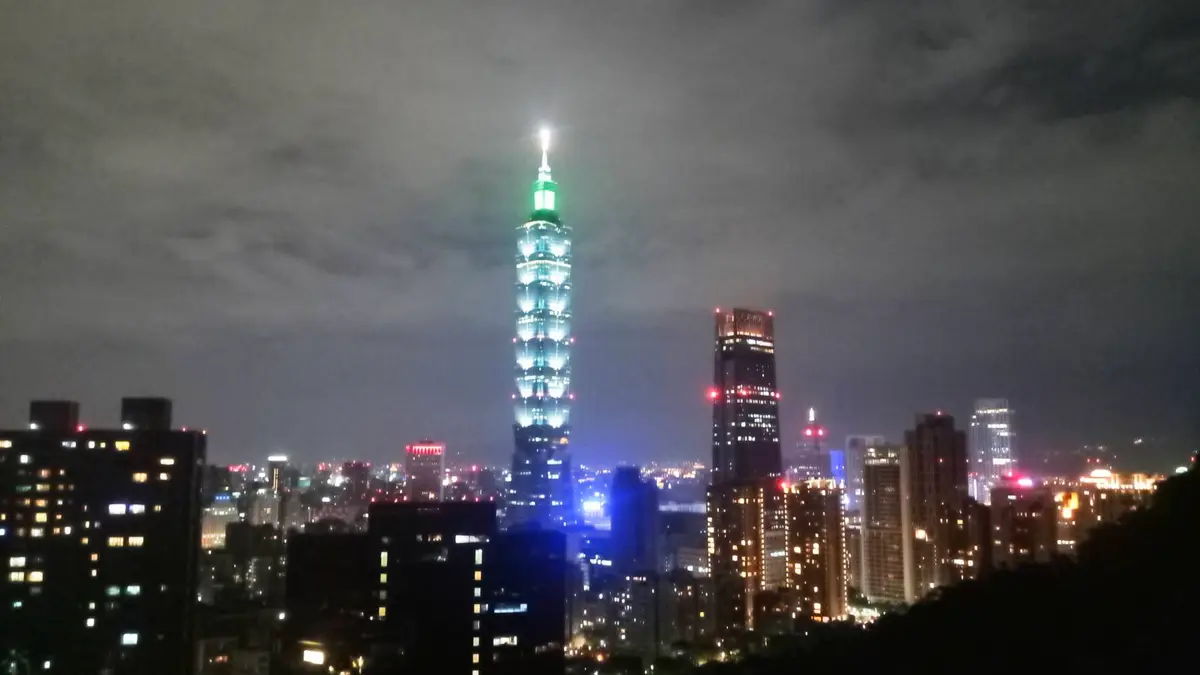
Take, for example, Taiwan's most prosperous Xinyi Planning Area, an urban development zone located in the Xinyi District of Taipei City, Taiwan, which began development in the 1980s and has become The premier central business district in Taipei. However, although Taiwan initially resisted the invasion of the epidemic, it was still affected by the epidemic the following year. As a highly densely populated, commercially prosperous Xinyi Planning area is naturally the first to bear the brunt. For the commercial activities in Xinyi District under the impact of the epidemic are not as good as before, I will propose some possible strategies. Most of the commercial space in the Xinyi Planning Area is in the form of a building, so it also creates a familiar scenery of the Xinyi District skyline. Many of the buildings here have also become vacant due to the rise of remote offices. According to the above-mentioned argument, this type of commercial building under the epidemic situation should become a block that combines residential business, entertainment and work. And the flow trend of people will also change from a flat horizontal movement to a vertical rapid movement in the commercial building in Xinyi District. In the series between buildings, the Xinyi Planning Area is also well connected. The empty bridge system between the various business districts and buildings is a very convenient way to walk in the Xinyi District. On this basis, we can improve the context and believe that we can combine the concept of a pedestrian city. Truly achieve the diversion of people and vehicles, but also will make the quality of life of the occupants improve.
- Behavior patterns
In terms of life behavior patterns, the real space composition will be to use the office space free due to the reduction of crowds as a unit to make it a housing space. The spatial properties on the same vertical dynamic will also be different, so that it can be mixed. And the concept of a 15-minute life circle is simultaneously transformed into a vertical imagination. As far as possible through the elevator rapid vertical movement of the premise, the horizontal range can meet the basic living conditions within a few meters or a few blocks. Under this blueprint, the concept of decentralization and polycentre can be brought into the world, so that the business district itself has many centers. Users can enter different circles of life when they enter a block. The concept is similar to a folding metropolis, where the working population in the commercially intensive areas of the metropolitan area is reduced, and in its place is transformed into a small polycentric area with vertical distribution of living circles. Transform the absence of unwanted space into a new demand space, or remove it and fold it up to become a vertical city. And life in vertical cities may also change, in the horizontal circle of life may be based on the individual's daily life as the axis, and in the vertical imagination, the scope of life may be based on function, behavior, and the interaction needs of different groups of people to make partitions.

Popular Articles
Popular articles from the community


Opera on the Sea: Driftwood Logic Shapes a Timber Opera House on Estonia's Coast
Trevor Orgill's opera house translates the entangled drift of floating timber into a civic building where wood, water, and music converge.

The Amber Palace Opera: A Geological Fiction Surfaces on Tallinn's Baltic Waterfront
Pierre Brillard reimagines a Baltic legend as a public landscape, opera house, and waterfront promenade rooted in Tallinn's coastal identity.
Faces of the Soviet Avant-Garde: Turning Moscow's Street Names into an Open-Air Museum
A network of sculptural installations across a Moscow residential district transforms forgotten architect names into spatial encounters with cultural memor

Temporary Home for Dogs: A Reversed Zoo Rethinks Animal Shelter Architecture
In Bucharest, a sinuous corridor and freed landscape flip the logic of containment, designing a shelter that works to make itself unnecessary.

Similar Reads
You might also enjoy these articles

Shakur's House: Exposed Brick as an Interior Organiser in a 168 m² Mashhad Residence
Brick moves indoors in this Mashhad residence, where masonry walls, glass partitions and teal planes sequence a compact home without closing it off.

Day and Night Park: A Time-Based Urban Newsstand in Beijing
A temporary urban newsstand in Beijing blending travel, light, and reading through poetic colors, compact form, and community-focused design.

Modernist Patio Renovation in El Masnou, Barcelona by Oliver Segura Arquitectura + Cebrià Arquitectura
Modernist patio renovation blending tradition and innovation with a movable pool, leveled floors, and Catalan materials in El Masnou.

Alto Residencial Coop: Cooperative Housing Development in Santiago de Compostela by Carbajo Barrios Arquitectos
A linear cooperative housing complex blending white volumes and perforated metal façades, enhancing community living, natural light, privacy, and urban integration.

Comments (0)
Please login or sign up to add comments
No comments yet. Be the first to comment!