
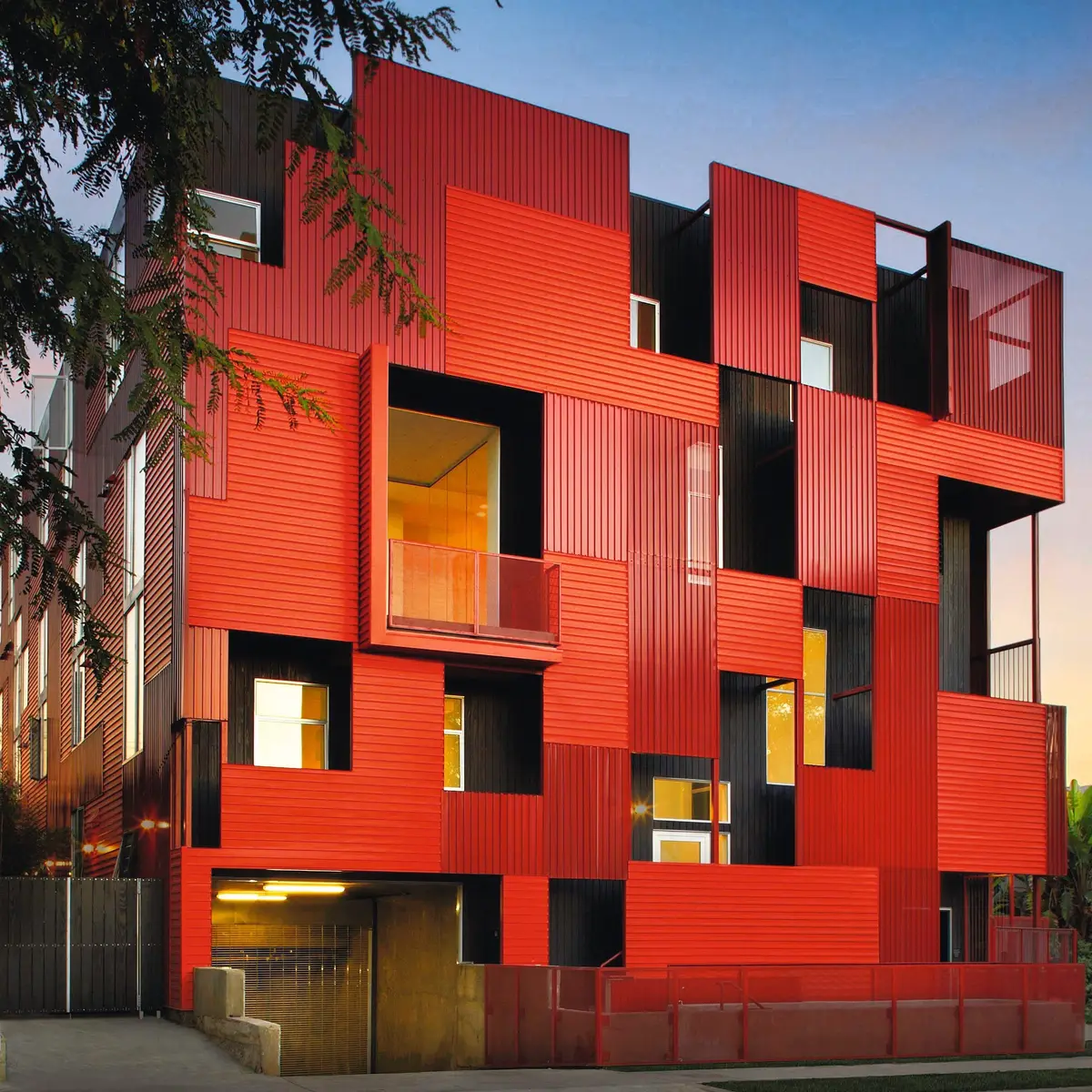
Rebirth Land
A land where can inspires optimism in the community

Due to its geographical positioning, Haiti has seen a number of catastrophes, such as the 7.0-magnitude earthquake that struck in 2010 and numerous other natural, human, and political uprisings. Although the people of Haiti have through many difficulties and frustrations before then, that shouldn't be an excuse for them to give up hope of life. As a result, the goal of my project, which is called "Rebirth Land," is to inspire optimism in the community's residents.
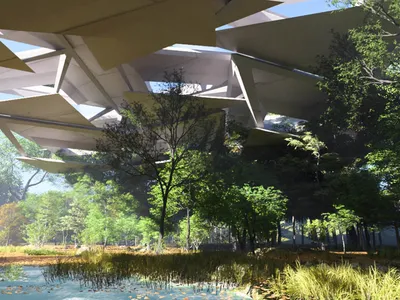
My design for the pavilion takes into consideration the interaction between people and the pavilion. In order to best meet the flow requirements of visitors, I built up two walking ways for my pavilion, taking into account the unique shape of the site itself, which maximises the flow of walkers in three different directions (north, south, and west). The pavilion's asymmetrical design evokes a sense of disorder for the passengers, the jumbled form could be taken as a metaphor for the rubble left behind by an earthquake; a closer inspection of the entry and exit reveals that the structure's original material—heavy reinforced concrete—has given way to a lighter and lighter condition, until the material of exit part has been replaced with a more airy wooden structure. The more lighter the materials are meant to represent a new beginning and a renewed sense of hope. The sensation of earthquake, rebirth, and optimism becomes increasingly powerful as people enter the pavilion to be infected by its interior space. When the visitors just coming into the pavilion, they can't even stand up, must be bent over or even sideways into the pavilion, this is because pavilion height is very short at entrance, and the chaotic structure makes the width of inside very narrow. Collaborating with concrete, making the side very dark, giving passengers a feeling of fear and depress. Moving forward, there will be increased interior space, increased height, and a broader space overall. Alongside this, the top of the pavilion begins to show signs of chinks, which allows more light to be reflected into the structure. This continues until the concrete is finally completely replaced by wood, at which point the darkness is driven away and everything appears bright and hopeful. This can give a person the impression that they have been rebirth. The concept of my design is rebirth, the pavilion was designed with the intention that its visitors would experience a transformation from despondency to optimism. I hope that those whose lives were shattered by the earthquake would find renewed strength and helping them to rediscover the courage and fortitude that was once within their hearts. The economy as a whole can only grow if individuals have trust in the goodness of life and hope for a better tomorrow.
Since the area is in an earthquake zone and earthquakes happen often, building materials with low earthquake resistance were avoided. It has been determined through study that the material used for the construction of the walls of local buildings is composed of cement blocks to the extent of 78.0%, earth to the extent of 5.7%, wood to the extent of 3.2%, and clissage to the extent of 28.2%. However, we discovered that neither the local structure nor the selection of materials provided any assurance of seismic protection, which is one of the reasons why I assume that the 2010 earthquake caused so much damage. Therefore, in order to satisfy the needs of both a heavy visual sense and earthquack resistance, I decided to construct my pavilion out of reinforced concrete. This decision was made so that it could meet both of these criteria. The first justification is that reinforced concrete has an exceptionally high level of resistance to earthquakes, and the second justification is that the cost of maintaining reinforced concrete is relatively low, which is in perfect harmony with the economic situation of the region.
I believe that the expansion strategy for this pavilion can have a fair amount of leeway. In terms of design, there is room for some degree of spatial complexity to be developed if the pavilion is expanded to other cities. This would be done in accordance with the circumstances of each individual location. The longer the pavilion is in use, the better the experience will be, in my opinion, because the accumulation of dust and cobwebs over time makes the pavilion look more attractive without any additional need for upkeep.

Popular Articles
Popular articles from the community


LT2A and OPEN Architectes Thread a Brick and Glass High School Through a Wooded Belgian Campus
In Braine-l'Alleud, a 3,000 m² wing for Collège Cardinal Mercier pairs pale brick with a glazed colonnade, deferring to a small chapel and a dense wood.

FCC Arquitectura Expands a Portuguese Granite House with a Board-Marked Concrete Wing
In Portugal, JV House pairs a cleaned-up whitewashed and granite dwelling with a timber-shuttered concrete extension, courtyards and a garden pool.


The Amber Palace Opera: A Geological Fiction Surfaces on Tallinn's Baltic Waterfront
Pierre Brillard reimagines a Baltic legend as a public landscape, opera house, and waterfront promenade rooted in Tallinn's coastal identity.

ETEH Reworks the Shared Spaces of São Domingos School in Brazil Around Timber, Color and Hanging Plants
At São Domingos School in Brazil, 436 m² of hall, refectory and library are recast with timber joinery, a yellow and blue code and trailing greenery.

Similar Reads
You might also enjoy these articles
The Rhythm of Seasons
A Farmers' Market Connecting Nature and the City

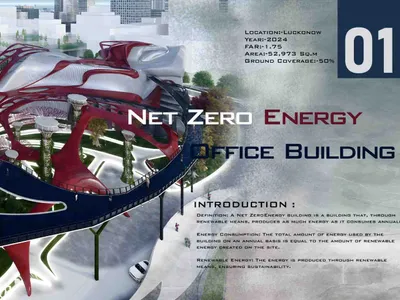
More Than a Building-Designing a Living System
More Than a Building-Designing a Living System
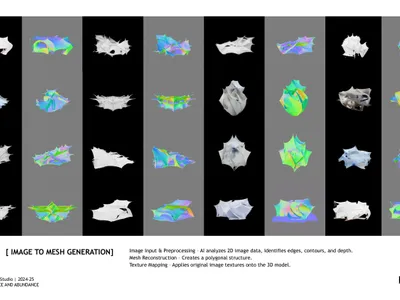
Base Beyond
DESERT COMPOUND ARID: TOURISM OF ABSENCE AND ABUNDANCE

Explore Landscape Revival Competitions
Discover active competitions in this discipline


Challenge to reimagine the Iron Throne

Photograph architecture without architects

Illustrate the lost glory of Angkor Wat - Render Challenge

Design challenge to reuse E-waste
Comments (0)
Please login or sign up to add comments
No comments yet. Be the first to comment!