
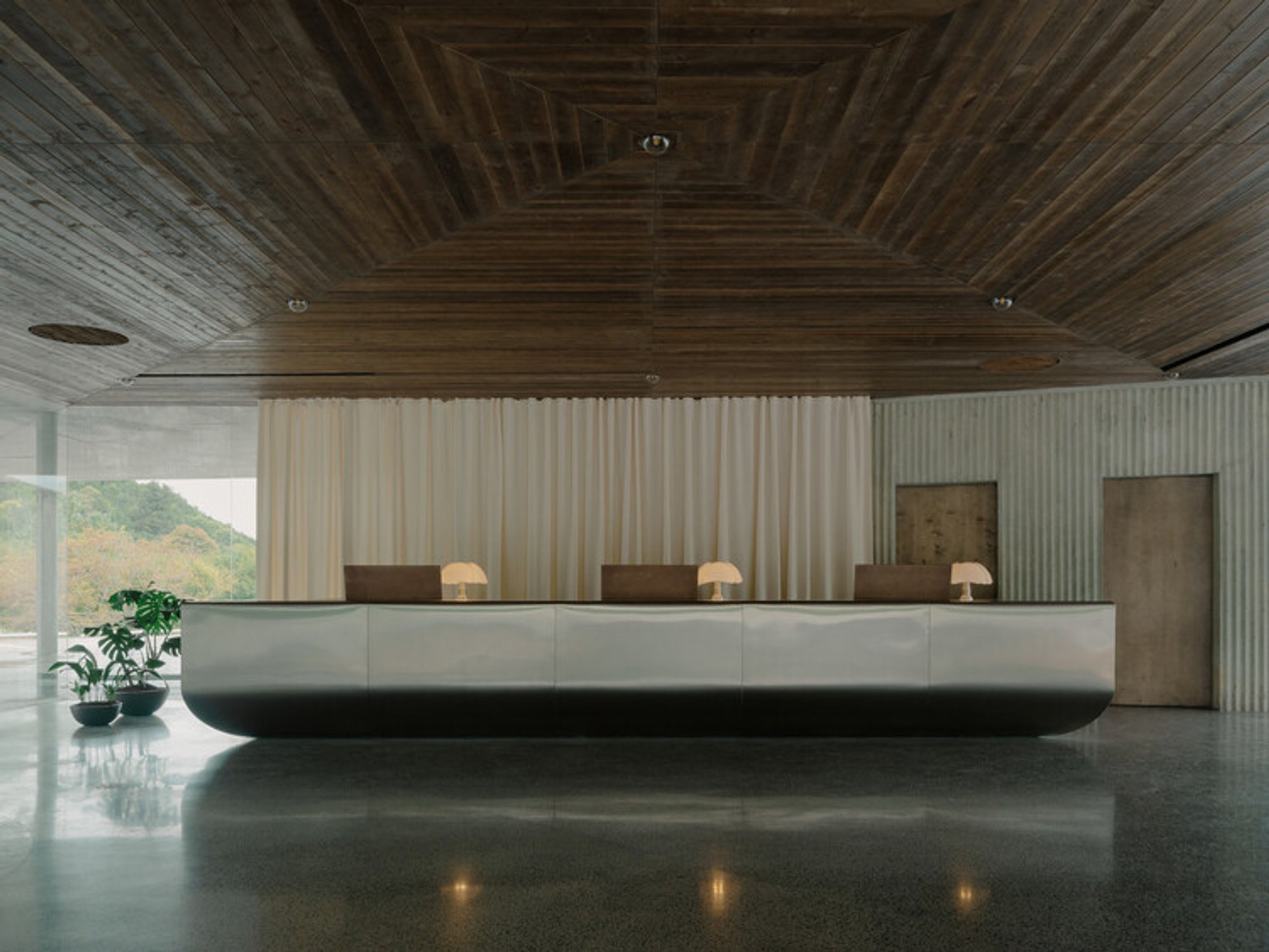
Reception Pavilion by David Giorgadze Architects – A Threshold Between Urban Life and Ecological Clarity
A floating concrete pavilion at Kvareli Lake forming a serene threshold between forest and water, blending transparency, passive comfort, and minimalist design.

The Reception Pavilion by David Giorgadze Architects is conceived as a transitional realm — an architectural mediator between the polluted tensions of urban life and the ecological purity of Eastern Georgia's Kvareli Lake landscape. Imagined as a subtle purgatory, it welcomes visitors into a space where nature circulates freely, light shifts constantly, and the boundary between built form and environment dissolves.
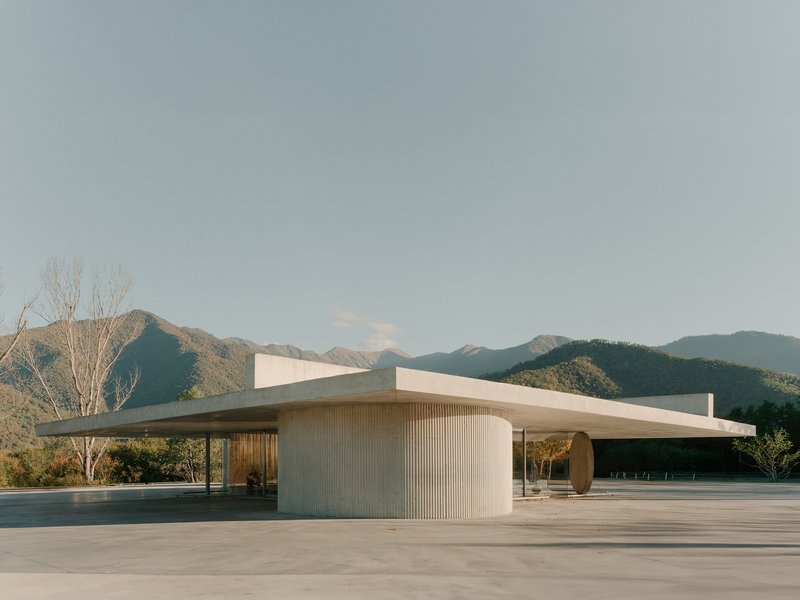
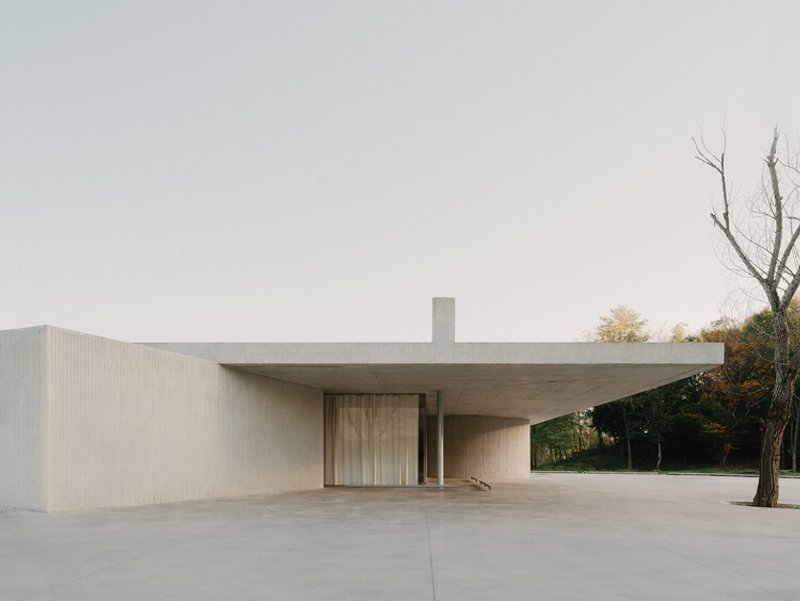
Positioned at the meeting line of dense forest and the calm waters of the lake, the pavilion serves as the reception hub of a regional eco-resort. It is here that guests leave their vehicles, shed the weight of everyday urbanity, and embark on a quieter journey via eco-transport toward the hotel embedded deeper in the landscape.
A 45° Rotation to Reveal Nature from All Sides
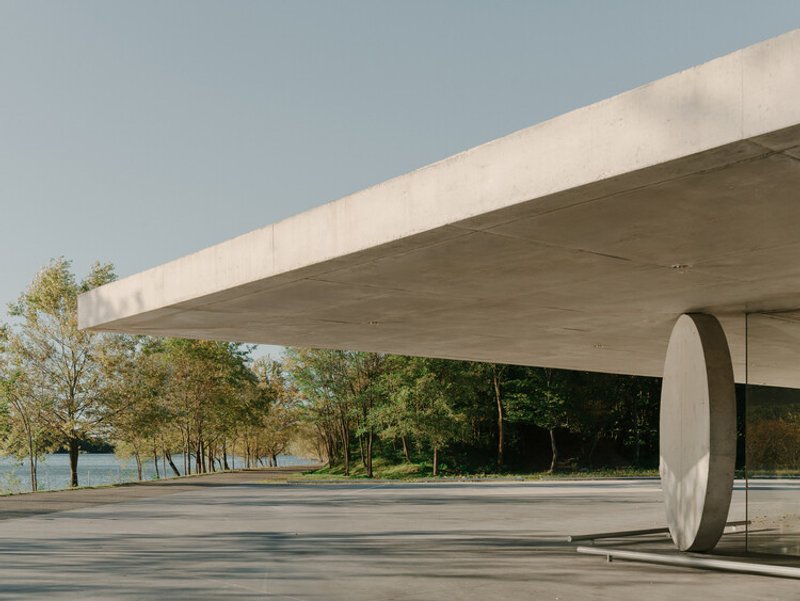
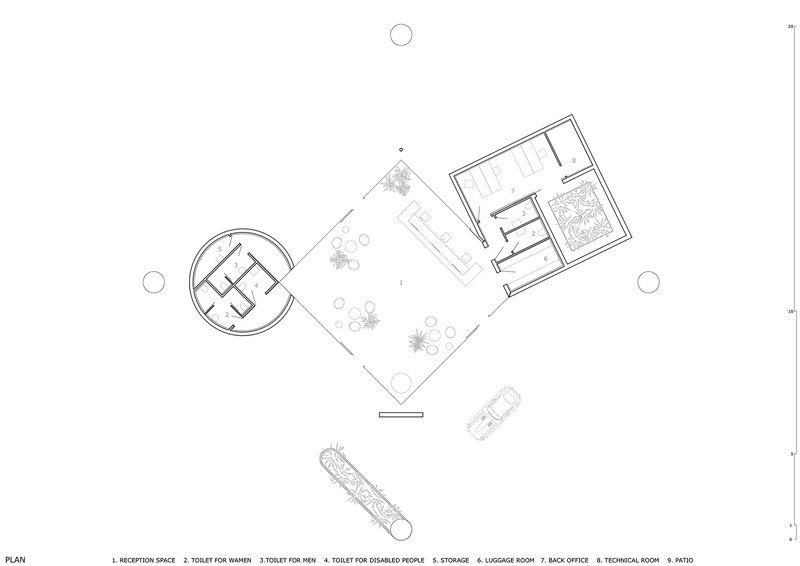
The project presented an unusual challenge: designing a building of hospitality and comfort adjacent to a large 75-car parking zone, without allowing the infrastructure to sever the relationship between building and nature. The architects’ solution was both strategic and poetic — a square plan rotated by 45 degrees, unlocking diagonal views and opening the pavilion to forest, mountains, and water on all sides.
This gesture transforms what could have been a static, obstructed site into a kinetic spatial organism, one that remains visually porous and experientially fluid.
Architecture That Breathes With Its Landscape
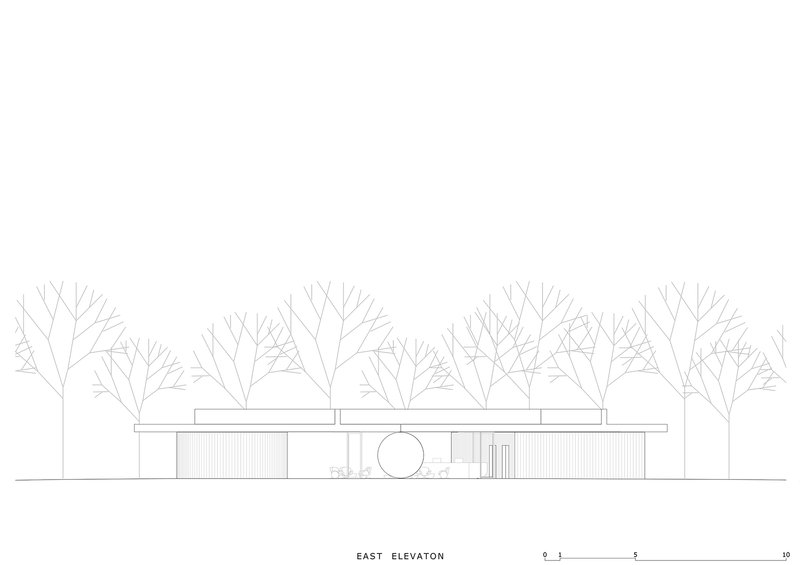
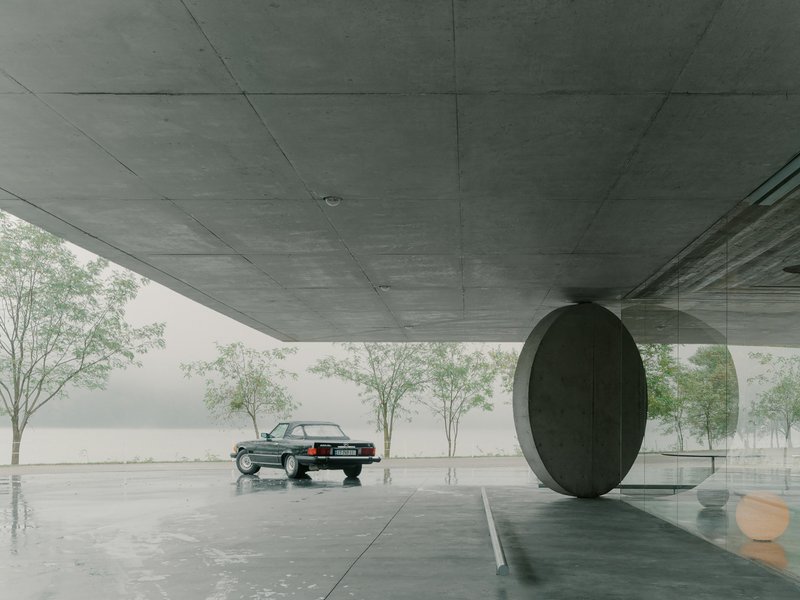
The architecture is defined by a floating concrete roof, a horizontal monolith resting delicately on just four structural supports:
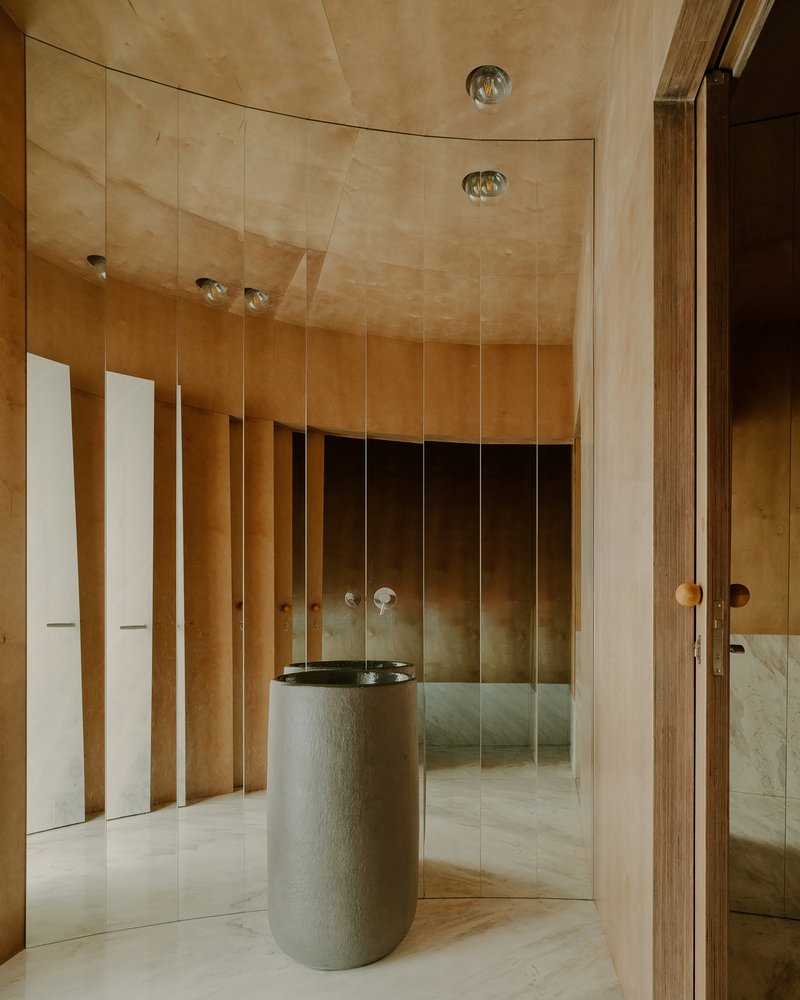
- A circular concrete volume containing guest restrooms
- A square concrete volume holding back-office and service spaces
- Two slender reinforced-concrete columns
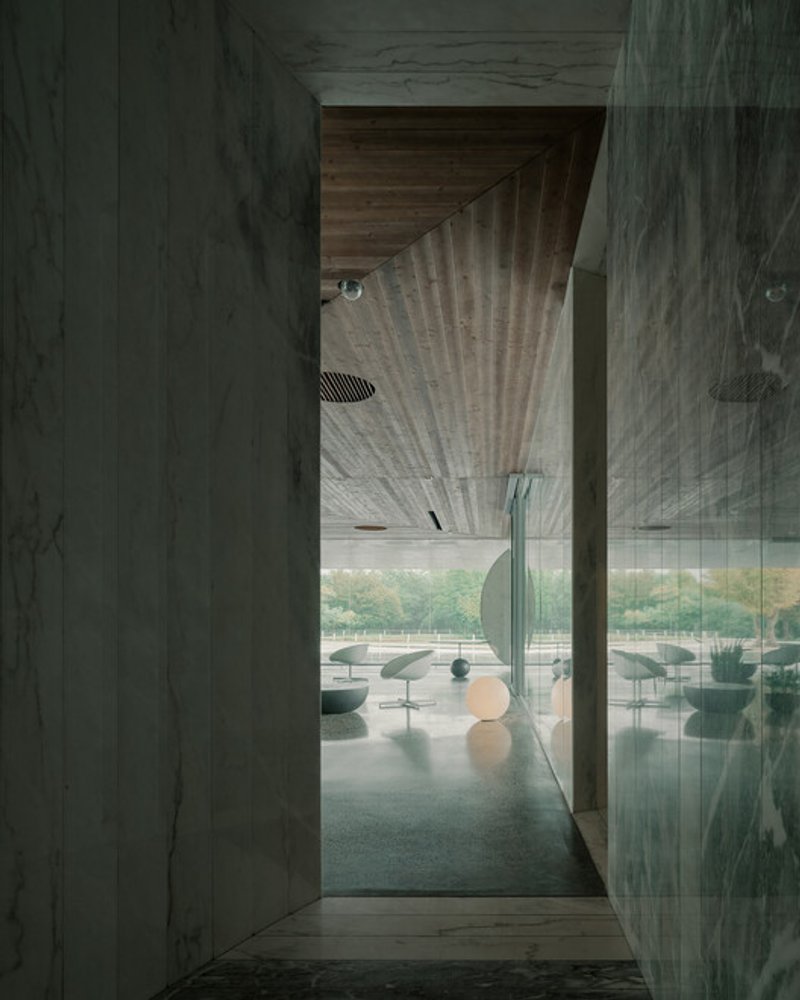
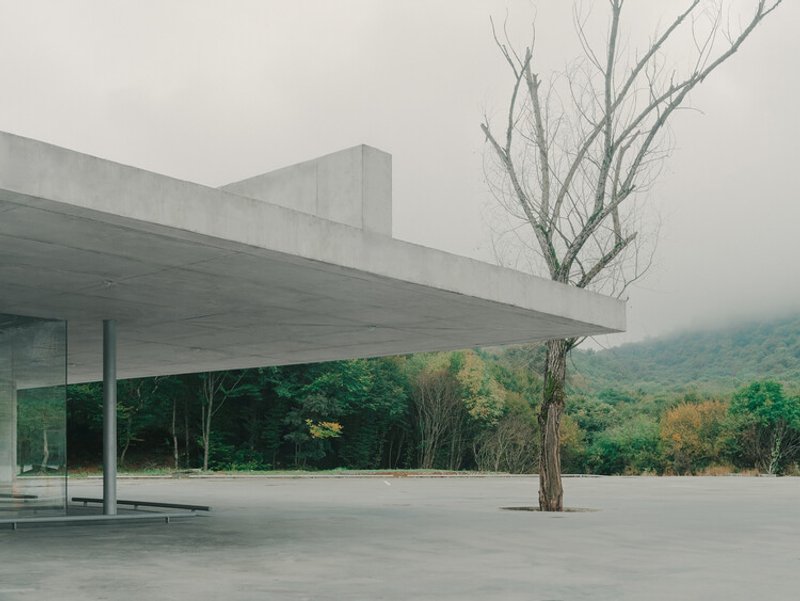
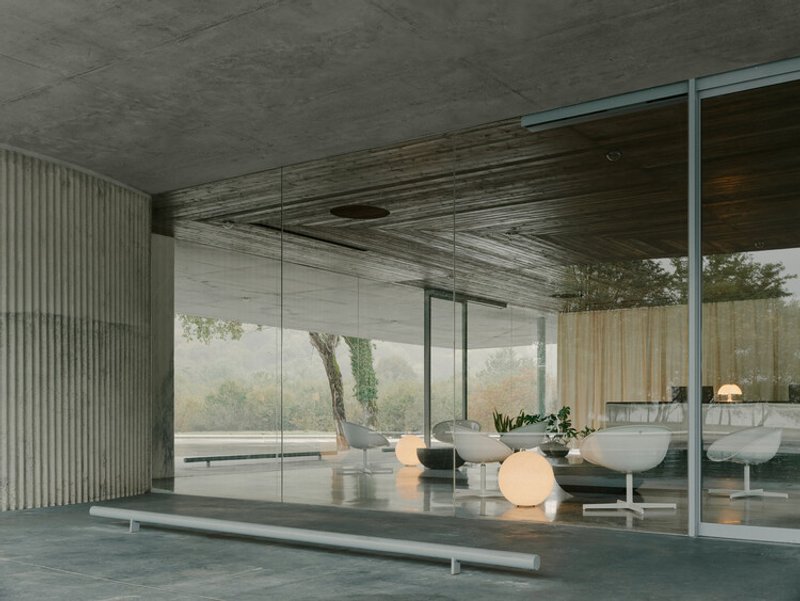
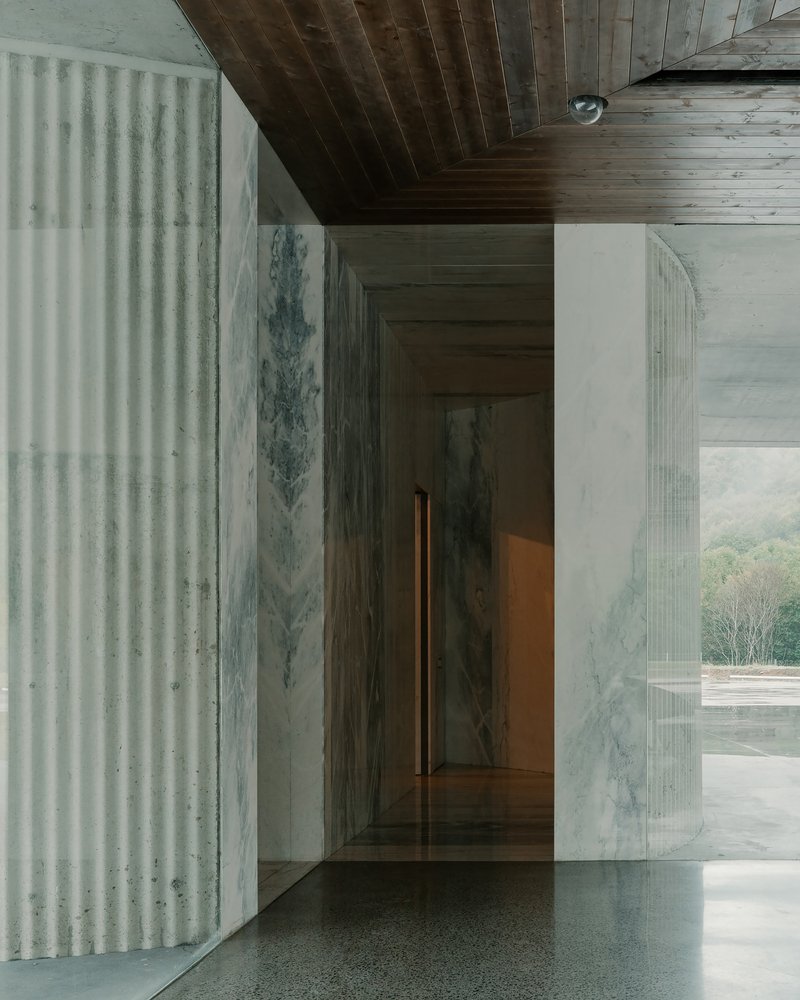
Between these elements, continuous glazing creates a 360° transparent envelope, merging interior and exterior into a single atmospheric space. Open and covered zones overlap seamlessly, enabling passive airflow beneath the roof and enhancing comfort without mechanical dependence.
Here, the pavilion does not compete with the landscape — it becomes a frame for nature, a porch of arrival rather than a closed building.
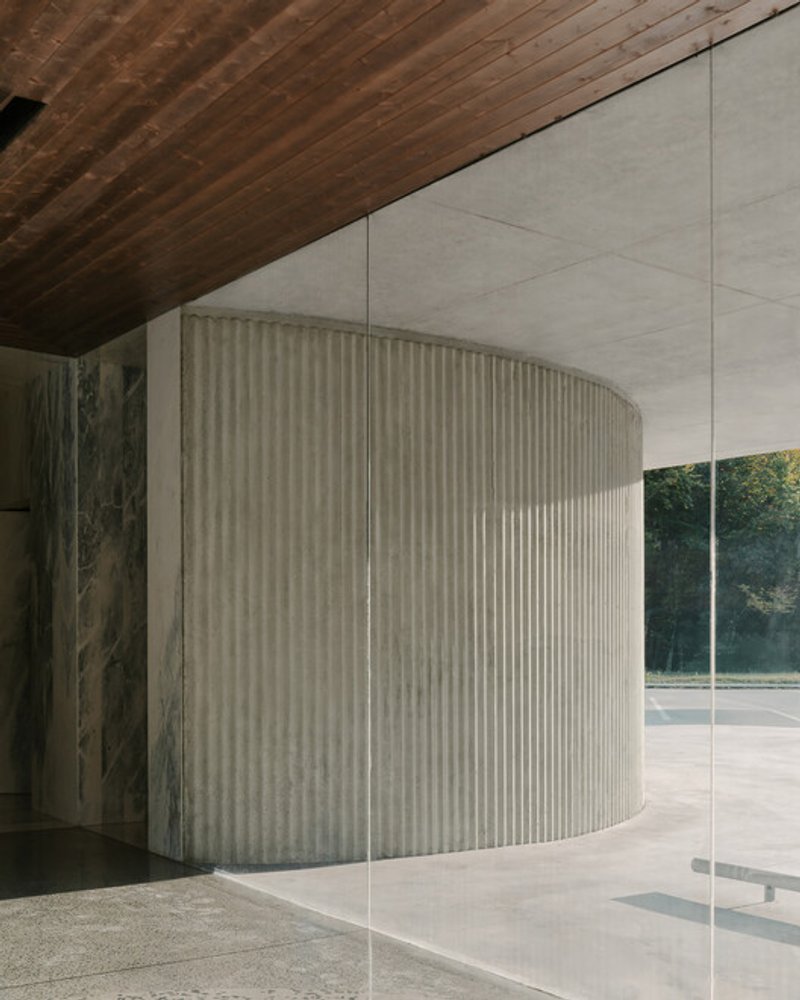
Program: Efficiency Quietly Wrapped in Spatial Calm
Under the generous roof plane lies a concise yet highly functional program:
- Reception and welcome lounge
- Guest restrooms tucked within the circular volume
- Back-office and staff facilities placed discreetly within the square volume
- Service and operational spaces shielded from guest flow
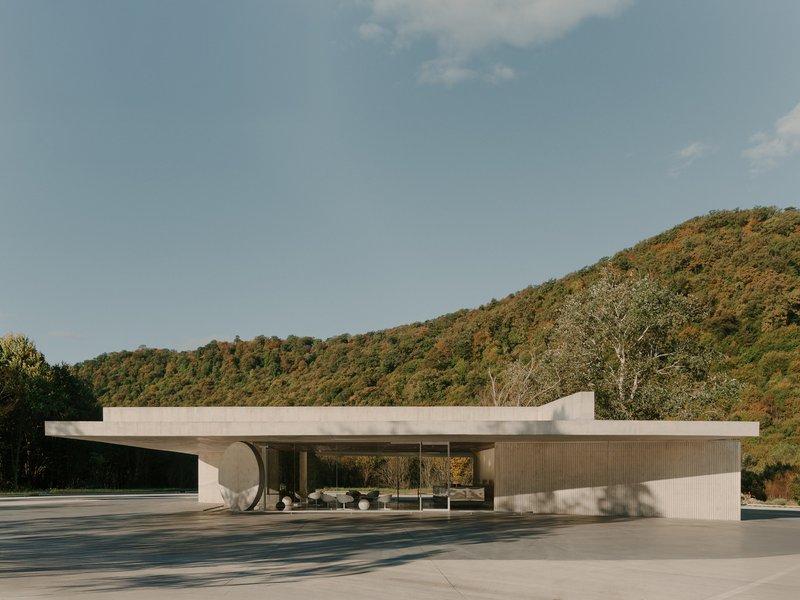
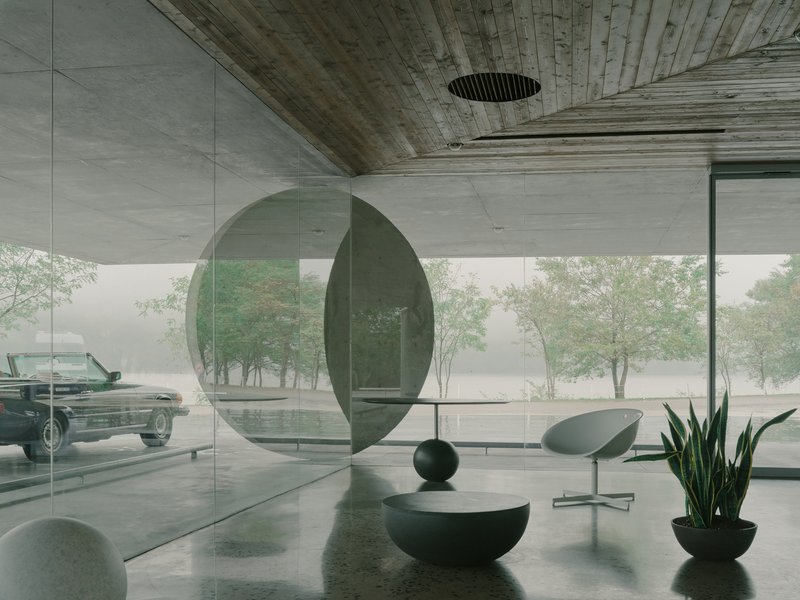
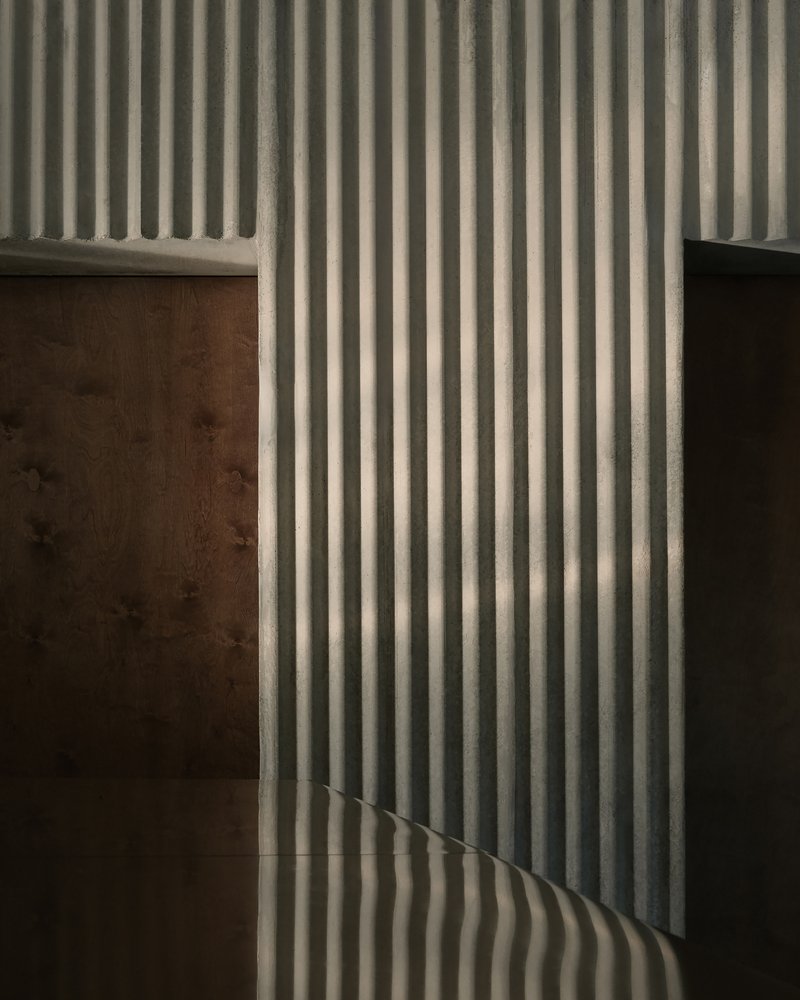
The clarity of the plan ensures staff efficiency while fostering a serene, composed arrival experience for visitors. Materially, the interior adopts a restrained palette of wood, glass, and concrete, complementing the freshness of the surrounding landscape.
Structural Simplicity With Poetic Precision
The roof’s structure is an engineering feat expressed with clarity. Extending 6 meters in cantilever, its stability is achieved through a dynamic pattern of four beams arranged to maximize rigidity. The heavy roof appears weightless — a quiet contradiction that gives the pavilion its distinctive presence.
The concrete-and-glass assembly is chosen for durability, low maintenance, and structural clarity, while the openness of the design significantly reduces energy use through natural cross-ventilation and daylighting.
The pavilion is thus both anchor and threshold — a grounded object at rest, yet always in dialogue with the movement of wind, light, and visitors.
All the Photographs are works of Grigory Sokolinsky




Popular Articles
Popular articles from the community

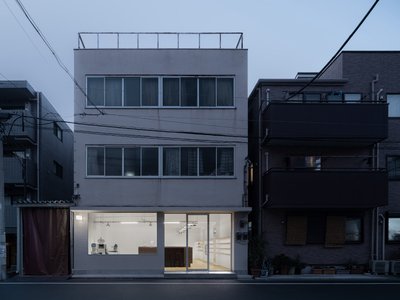
Atelier Macri Concept Store Interior Design by CASE-REAL
Atelier Macri store features a "ko" counter, walnut wood details, cork displays, blending retail, gallery, and seamless customer experiences.
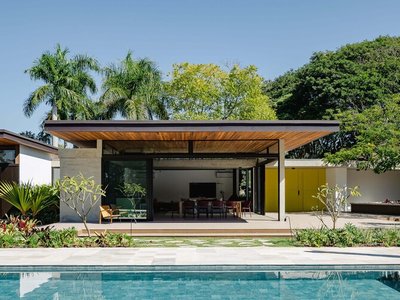
Flamboyant House by Juliana Camargo + Prumo Projetos
Modern Brazilian house integrating existing tree, pool, and volumes with glass, wood, and transitional spaces blending interior, exterior, and landscape seamlessly.
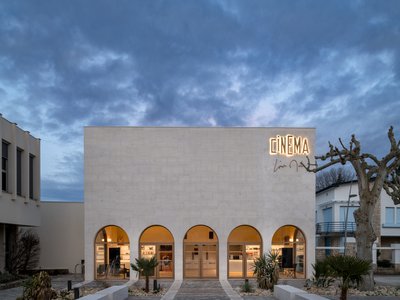
Louis Malle Cinema: A Limestone Cultural Landmark Revitalizing Community Life in Prayssac
Limestone cinema extension with public forecourt, blending heritage and modern design to create flexible cultural spaces and strengthen community interaction.
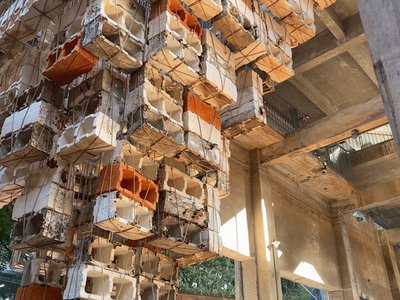
Inverted Architecture Installation by Studio Link-Arc: Exploring the Intersection of Architecture and Living Organisms
Inverted Architecture Installation by Studio Link-Arc blends mycelium, sustainability, inverted design, ecological cycles, and urban adaptive architecture in Shenzhen.


Similar Reads
You might also enjoy these articles


The Ken Roberts Memorial Delineation Competition (Krob)
As the most senior architectural drawing competition currently in operation anywhere in the world, it draws hundreds of entries each year, awarding the very best submissions in a series of medium-based categories.

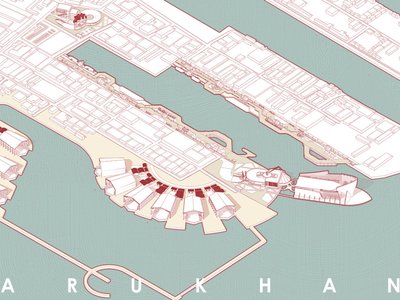
Waterfront Redevelopment and Urban Revitalization in Mumbai: Forging a New Dawn for Darukhana
A transformative waterfront redevelopment project reimagining Darukhana’s shipbreaking heritage into an inclusive urban future.

OUT-OF-MAP: A Call for Postcards on Feminist Narratives of Public Space
Rhizoma Design and Research Lab invites artists, designers, architects, researchers, and students to reflect on how feminist perspectives can reshape public space. Selected works will be exhibited in Barcelona, October 2026. Submissions open until 15 April 2026.

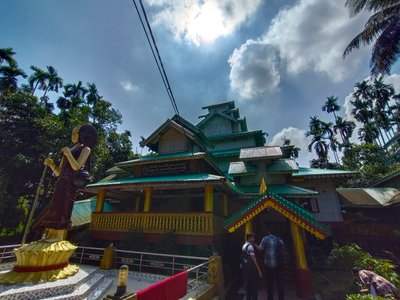
Documentation Work on Buddhist Wooden Temple
Architectural syncretism and cultural hybridity: A comparative study of the Buddhist temples in Chattogram Hill tracks


Explore Architecture Competitions
Discover active competitions in this discipline




The International Standard for Design Portfolios


The Global Benchmark for Architecture Dissertation Awards


The Global Benchmark for Graduation Excellence


Challenge to reimagine the Iron Throne
Comments (0)
Please login or sign up to add comments
No comments yet. Be the first to comment!