
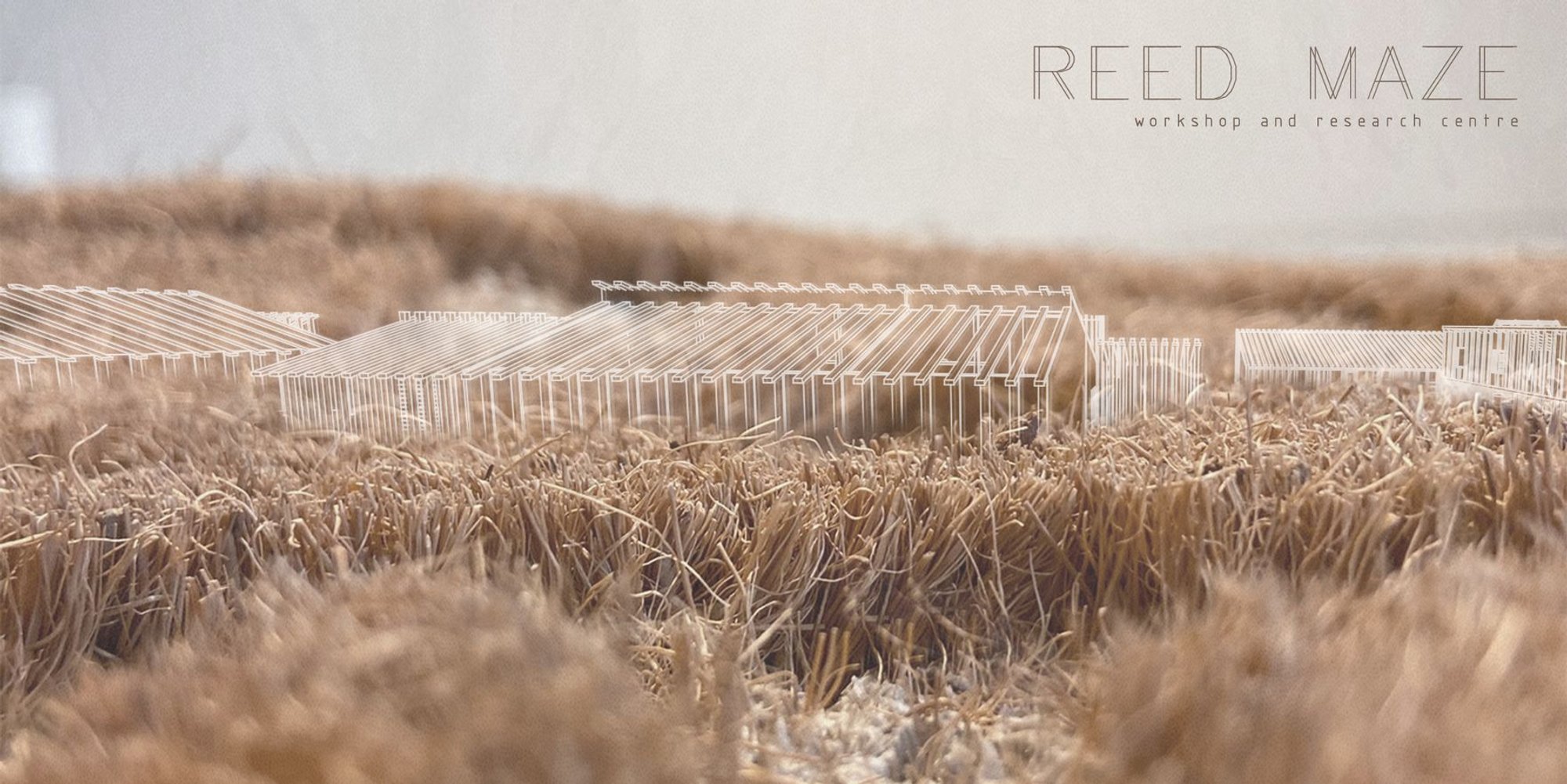
REED MAZE – A Model for Regenerative Architecture
Regenerative design meets reedlands—reviving wetlands, preserving craft, and shaping a sustainable future through architecture.

Winner Entry – WIC Competition Project by Ana Markovic
REED MAZE – Workshop and Research Centre serves as a groundbreaking example of regenerative architecture, merging ecological sensitivity with cultural revival. Located in the historically transformed landscape of the Tame Valley, the project carefully interweaves environmental healing, education, and vernacular tradition into a cohesive architectural narrative. By aligning design with natural processes and cycles, it doesn’t just respond to its context—it elevates and revitalizes it. This initiative stands as both a memorial to a damaged past and a forward-thinking blueprint for community-led ecological regeneration. At its core lies the integration of Miscanthus × giganteus, a sterile yet productive grass species, which functions as both a symbol and a tool of renewal.
Concept:
From Exploitation to RegenerationThe conceptual framework emerges from a thorough analysis of the River Tame and its ecological history. Heavily industrialized since the 19th century, the region suffered environmental degradation due to coal mining, chemical dumping, and gravel extraction. Once a vibrant waterway, the river became the most polluted in the UK. However, through the development of purification lakes, improved sewage systems, and community-driven conservation, the landscape began to regenerate over the past few decades.
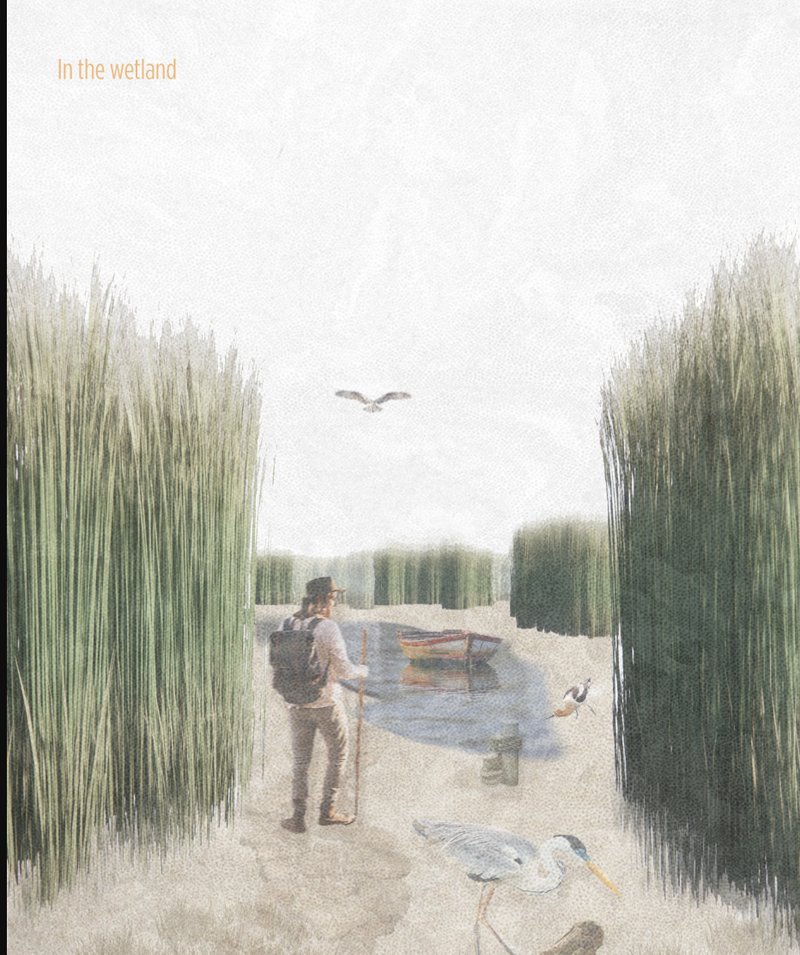
REED MAZE builds on this recovery by placing regenerative architecture directly in the heart of this renewed ecosystem. The reedbeds, a byproduct of former gravel pits now flooded into wetlands, become not only ecological havens but also the setting for a dynamic architectural intervention. The use of Miscanthus × giganteus—a robust, fast-growing bioenergy crop—anchors the project in both past and future. It reflects the site’s history of land exploitation while introducing a sustainable resource that powers educational and ecological agendas without harming the land. The project not only creates a physical place but fosters an ethos of cyclical productivity and ecological accountability.
Design Philosophy: Disappearing Architecture
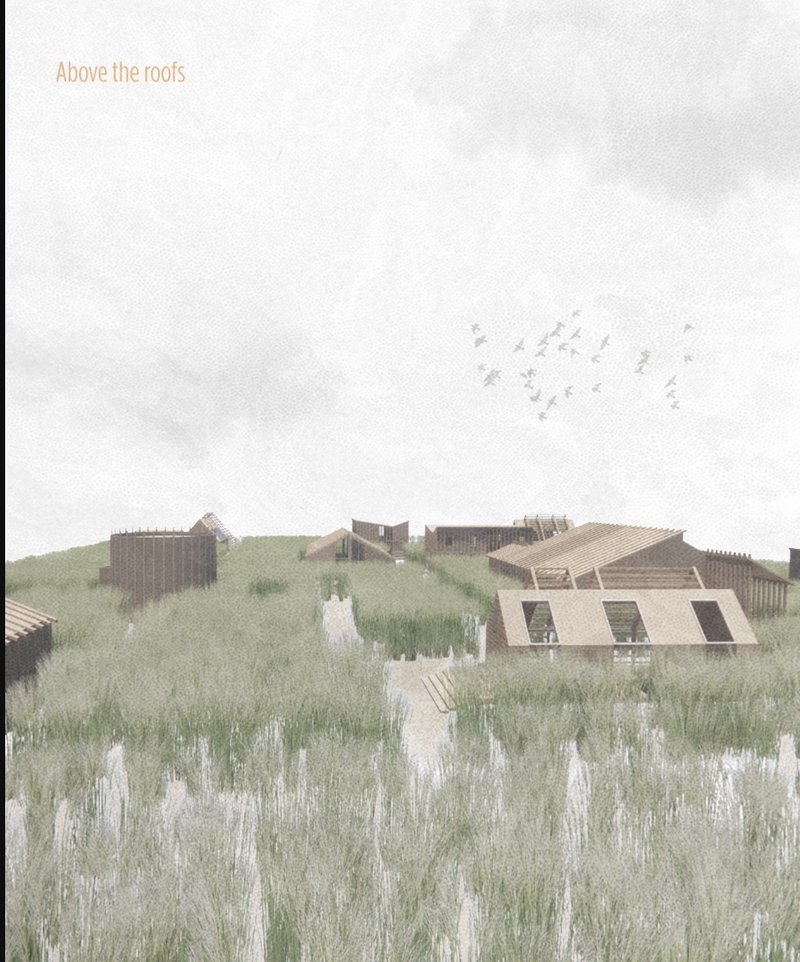
One of the defining aspects of the project is its innovative notion of 'disappearing architecture'—buildings that rise and retreat with the seasons. Concealed by reeds during their full growth cycle and unveiled when harvested, the architecture becomes a participant in the lifecycle of the surrounding landscape. This duality of presence and absence not only minimizes visual impact but also deepens the visitor’s sensory engagement with the site.
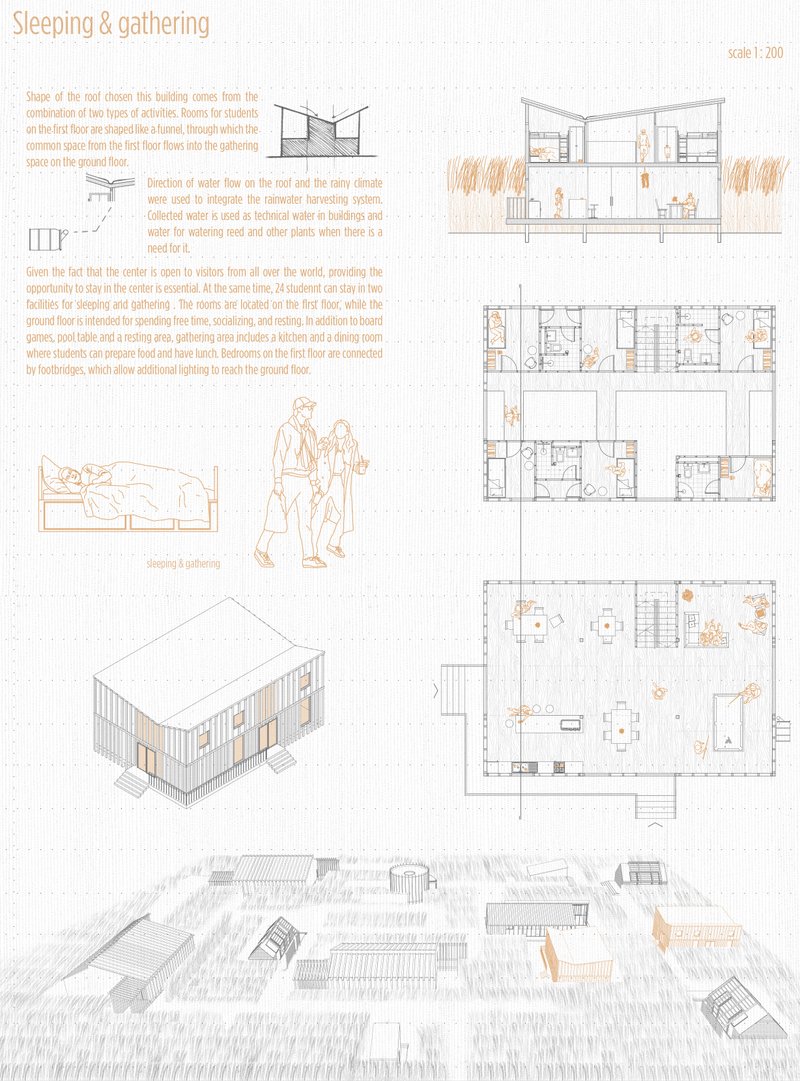
Each structure is shaped to echo its function and visibility needs. All buildings, except the striking cylindrical technology centre, adopt sloped roofs that blend with the topography and seasonal vegetation. These roofs act as visual signposts during summer when the walls are hidden, ensuring minimal disturbance to the habitat. The design also prioritizes flexibility—internal layouts adapt to educational, recreational, and residential needs, making every space perform multiple roles across time.
Spatial Program: Regeneration Through Use
The spatial programming reinforces the educational and ecological ambitions of the project:
- Museums (3 thematic spaces):The first focuses on the industrial history of the River Tame and the destructive forces that shaped the region.The second celebrates the wetland’s current biodiversity, emphasizing local flora and fauna.The third is dedicated to reedcraft, tracing its cultural history, utility, and present-day applications.
- Workshops:Botanical workshops introduce participants to the lifecycle of reeds and Miscanthus, encouraging hands-on ecological stewardship.Craft sessions teach traditional basket weaving, tool-making, and thatch-roof techniques to revitalize nearly-lost skills.Specialized thatching masterclasses train new generations of thatchers, contributing to the preservation of an ancient craft.
- Accommodation:The centre provides eco-friendly sleeping quarters, common lounges, kitchens, and dining areas for residents, students, and facilitators.
- Café & Restaurant:This multifunctional facility supports social interaction and leisure, offering meals made from local produce and serving as a communal hub.
- Technology Centre:The only structure inaccessible to visitors, this facility generates dynamic maps, manages infrastructure, and defines the evolving spatial choreography within the reed maze.
Every three years, the site plan is reimagined. Using a modular mat-based model, staff simulate new paths and object placements by rotating and interlocking segments. The intersection points that appear most frequently guide the siting of new buildings and installations. This dynamic approach prevents stagnation, encouraging fresh ways to navigate and inhabit the wetland.
Material Strategy and SustainabilitySustainability permeates every design decision. Timber-framed buildings ensure ease of construction and minimal environmental disruption. The sterile yet prolific Miscanthus is a zero-waste material—used for thatching, biomass energy, insulation, and biodegradable products. Rainwater harvesting systems and greywater recycling reduce water consumption, while natural ventilation strategies limit energy demand.
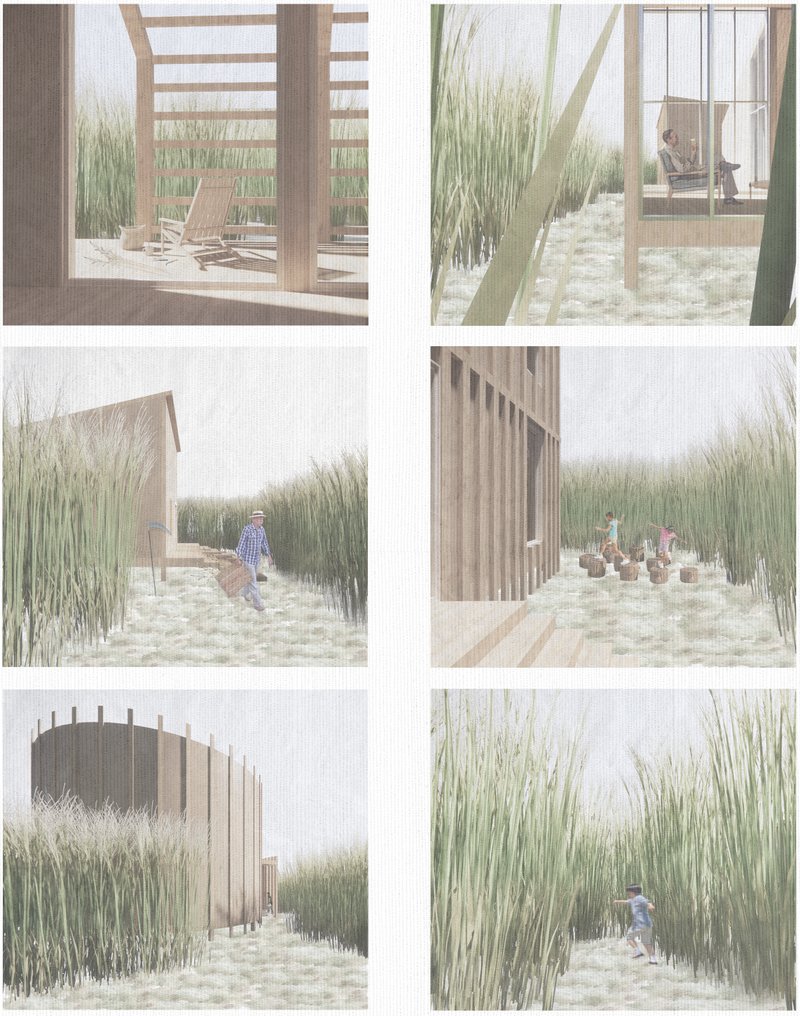
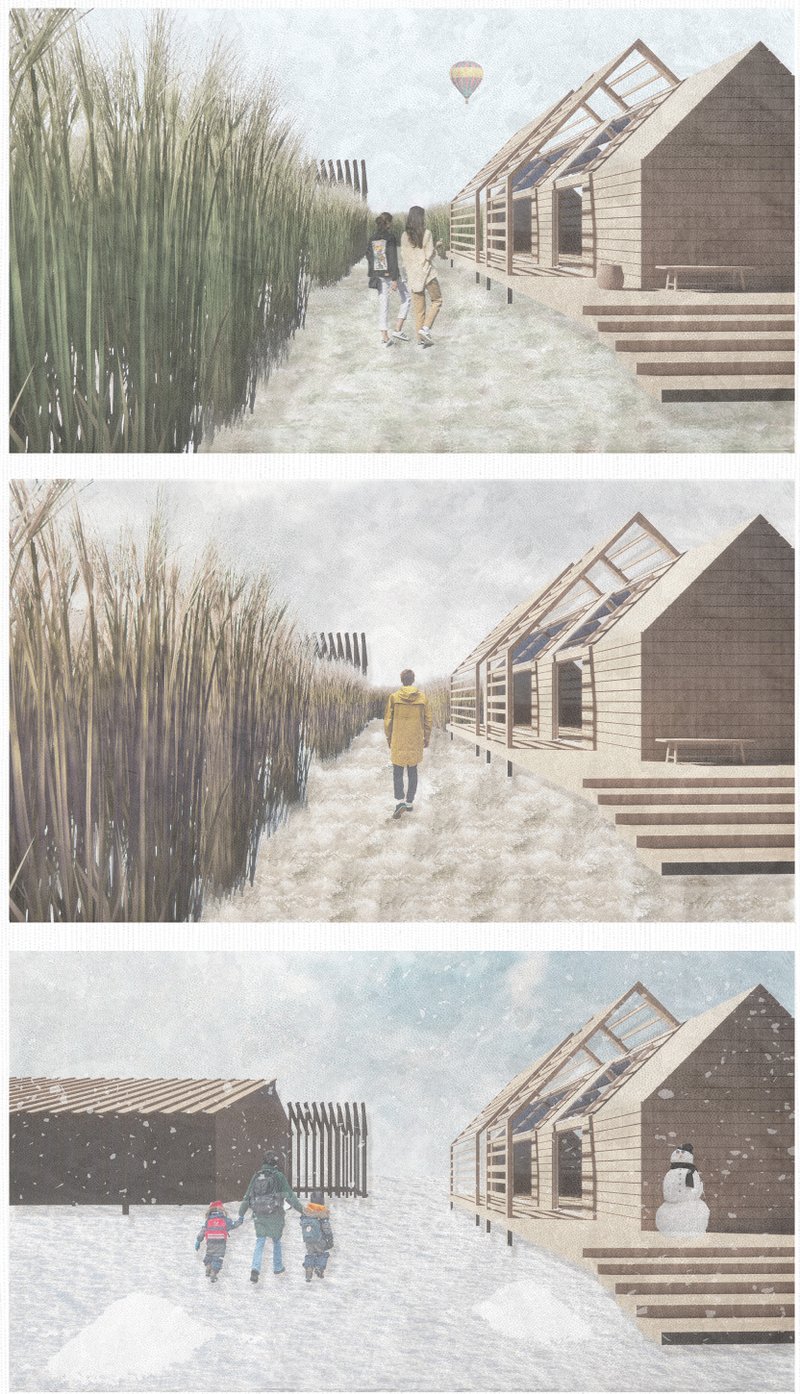
This seasonal and ecological responsiveness is reflected in the site’s cyclical character:
- Spring–Summer: The buildings visually disappear into the lush reed growth, maintaining visual continuity with the environment.
- Autumn: As reeds yellow and die back, the structures begin to re-emerge.
- Winter: After reed harvesting, the full architectural ensemble is revealed, showcasing the facility’s geometry and layout.
These phases are not merely visual spectacles—they cultivate an awareness of natural rhythms and demonstrate how built environments can live in harmony with seasonal cycles.
REED MAZE is more than an architectural project; it is an active ecological and cultural landscape. By employing the principles of regenerative architecture, it challenges conventional development models and proposes a new paradigm rooted in restoration, education, and cyclical design. The project transforms a scarred landscape into a living classroom and a regenerative ecosystem. Instead of imposing structures onto the land, it lets the land dictate the terms of design, function, and renewal.
This is a place where the past is acknowledged, the present is activated, and the future is built—reed by reed, path by path, season by season.




Popular Articles
Popular articles from the community

An Miên Lumière Cafe by xưởng xép, Ho Chi Minh City, Vietnam
An industrial-inspired café where layered steel and warm light create a dynamic, immersive environment shaped by reflection, depth, and perception.
On the Brooks House by Monsoon Collective – A Contemporary Kerala Home Rooted in Tradition
Kerala home blending tradition and modernity with water-inspired design, brick architecture, courtyard planning, and sustainable rainwater harvesting strategies.
Atelier Macri Concept Store Interior Design by CASE-REAL
Atelier Macri store features a "ko" counter, walnut wood details, cork displays, blending retail, gallery, and seamless customer experiences.
Louis Malle Cinema: A Limestone Cultural Landmark Revitalizing Community Life in Prayssac
Limestone cinema extension with public forecourt, blending heritage and modern design to create flexible cultural spaces and strengthen community interaction.


Similar Reads
You might also enjoy these articles


The Ken Roberts Memorial Delineation Competition (Krob)
As the most senior architectural drawing competition currently in operation anywhere in the world, it draws hundreds of entries each year, awarding the very best submissions in a series of medium-based categories.


Waterfront Redevelopment and Urban Revitalization in Mumbai: Forging a New Dawn for Darukhana
A transformative waterfront redevelopment project reimagining Darukhana’s shipbreaking heritage into an inclusive urban future.
OUT-OF-MAP: A Call for Postcards on Feminist Narratives of Public Space
Rhizoma Design and Research Lab invites artists, designers, architects, researchers, and students to reflect on how feminist perspectives can reshape public space. Selected works will be exhibited in Barcelona, October 2026. Submissions open until 15 April 2026.

Documentation Work on Buddhist Wooden Temple
Architectural syncretism and cultural hybridity: A comparative study of the Buddhist temples in Chattogram Hill tracks


Explore Educational Building Competitions
Discover active competitions in this discipline




The Global Benchmark for Architecture Dissertation Awards


Challenge to design public laboratory


Design challenge to reuse E-waste
Comments (0)
Please login or sign up to add comments
No comments yet. Be the first to comment!