
Rhythm Hub
Affordable Housing Design

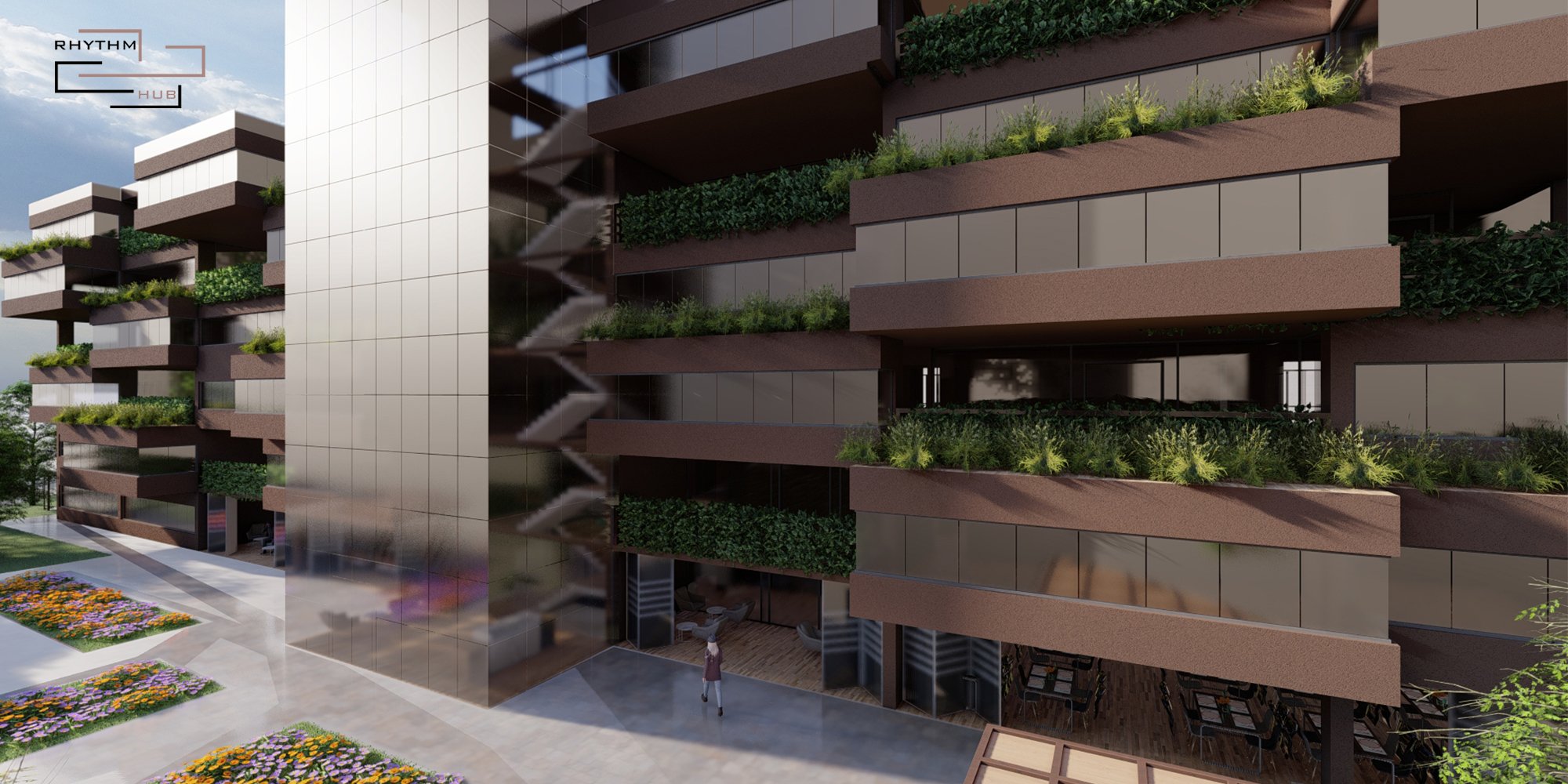
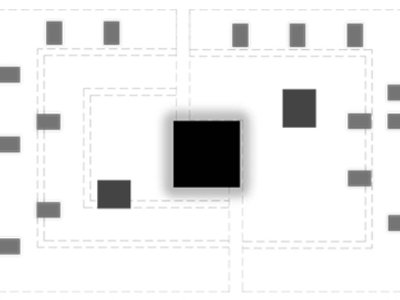
The concept behind Rhythm Hub is a monoblock affordable housing project with “Hub” elements in it. The monoblock is located on the lab respectively to the surrounding buildings. The design is shaped around the idea of some of the housing units being collectively used by all users. In order to make the project economic, the structure is built with prefabrique concrete system and bricks which can be archieved by reclaiming. Also designing some of the housing units as together for collective usage save space for accomodation units. Water harvesting during rains and solar panels on the roof lessen the cost of the users who live in the building. Gathering area, laundry room, a kitchen and a TV room are designed on the floor level while accomodation units are on the floor level with social areas. The intention behind this organization is to gather people on the ground level in order to socialize them while reducing the cost of living on the other hand. These gathering areas have sliding doors opening to the garden which is intended to be used with indoor spaces cooperatively. The green is added to upper floors which was aimed to gain the green the third dimention.
In the design process, the iteration were tried twice a week since the beginning of September. The limitations of the requirements of the project such as ground coverage percentage and user limitation restrained us designing freely.
For an exhausting but entertaining design period of four and a half month, the final outcome arrived.
The programme was devided in two groups at the beginning of the design process. First one was the necessities in an accommodation units while the second was the elements which can be used collectively. After numerous tries and attempts, final outcome has arrived. The gathering spaces that also provide services were placed on the ground level which will be used with the outdoor spaces while accommodation units and social areas were placed on the floor levels.
The materials were chosen by the price range in construction materials in London after a long search online. Eventhough steel is stronger than concrete, it is more expensive. Our concern is to find a construction method where we can have strong structure system and economic aspect in an efficient way. Also, surrounding buildings and buildings in London were searched to see the most common materials in construction are concrete and bricks. In order to lower the cost of the construction; reclaimed materials like bricks, wooden floorings and stones may be used in both indoor and outdoor.
Concrete is chosen to be the main structural element which is placed on a grid system. That makes it easier to build all around the world in case of need. As long as the site allows building to expand, the building can expand with additional fire escapes. Also eventhough it is a monoblock, the expansion can be added to the building perpendicularly, from the middle in 90 degrees. The grid system allows us to expand the building from any part of it, if the planning is made correctly.
The project will transform with expanded spaces on all elevations with grid system. New spaces with new functions can be added to the building by the hand of the grid system. Grid system allows the building to expand in any direction in a systematic way.
In 2050, it is estimated the homelessness level will increase as well as the living cost. Because of that a space filled with sleeping pods is designed on the ground level. These sleeping pods are designed in the minimal form which only has a bed, three drawers, a window and a ladder for the upper pods. These pods will be available on a cheap prize to rent for an overnight use via application. The space is only accessible through a security point which will keep the area in order and prevent any complications that might happen.
The accommodation rooms have three different types which are on type of single occupancy and two types of double occupancies. Single occupancy room has a bed, table for studying and working, wardrobe, washroom, balcony and a resting unit with a coffee table and two chairs. Double occupancy rooms are devided into two types. The first type is for couples and has a double size bed, washroom, table for studying, balcony, resting unit with two chairs, library attached to the bach side of the wardrobe and a separator panel for the sleeping area. Divider is designed in order to gain privacy for sleeping and working area by separating them. The second type is for non-couple users who might be two friends as roommates or a single parent with a young adult child. This room contains two floors that contain a bed, a table, a wardrobe, each, and there is a washroom and small kitchen area with sink on the lower floor while there is a resting unit with two chairs, a bookshelf on the upper floor of the duplex. Additionally, the staircase was designed especially for small spaces.
Social spaces on the floor levels are placed on the east side of the building in order to benefit from the natural light during daytime. Study rooms are designed to study in groups. Living areas have two types. One is for crowded groups while the other one is meant for small group of friends. Floor balconies are also placed in that side to enjoy the fresh air with other people without going outside through the stairs and ground floor. Last element of the social spaces on the floor levels is TV rooms which contain a TV unit with a couch and seats.
The basement floor is designed with technical rooms, storages for users, water tank storage units which can be used in water shortages for a week and a service elevator for transportation of the staff used in basement floor. The elevator is accessible from the Enfield Road which means a vehicle can reach to the elevator. Also solar panels are placed on the roof to lower the cost of living. Eventhough London is barely sunny, but rainy and cloudy most of the year, the solar panels generate electricity for users in an efficient way.



Popular Articles
Popular articles from the community

The Ken Roberts Memorial Delineation Competition (Krob)
As the most senior architectural drawing competition currently in operation anywhere in the world, it draws hundreds of entries each year, awarding the very best submissions in a series of medium-based categories.

Atelier Macri Concept Store Interior Design by CASE-REAL
Atelier Macri store features a "ko" counter, walnut wood details, cork displays, blending retail, gallery, and seamless customer experiences.
Louis Malle Cinema: A Limestone Cultural Landmark Revitalizing Community Life in Prayssac
Limestone cinema extension with public forecourt, blending heritage and modern design to create flexible cultural spaces and strengthen community interaction.
A Contemporary Take on Iranian Residential Architecture
A modern interior design in Mashhad that reinterprets brick, light, and spatial flow to create a warm, contemporary residential architecture.


Similar Reads
You might also enjoy these articles
Converge Hub – A Human-Centered and Sustainable Mobility Hub at the Urban Edge
Its open and permeable design promotes sustainable movement through walkable connections, green axes, and integrated public transport
51st Annual KRob - Ken Roberts Memorial Delineation Competition
Join us in celebrating 51 years in excellence in architectural representation! With $2,400 in prize money awarded across 8 categories, this prompt-less competition is accessible to all!



Explore Architecture Competitions
Discover active competitions in this discipline




The International Standard for Design Portfolios


The Global Benchmark for Architecture Dissertation Awards


The Global Benchmark for Graduation Excellence


Challenge to reimagine the Iron Throne
Comments (0)
Please login or sign up to add comments
No comments yet. Be the first to comment!