
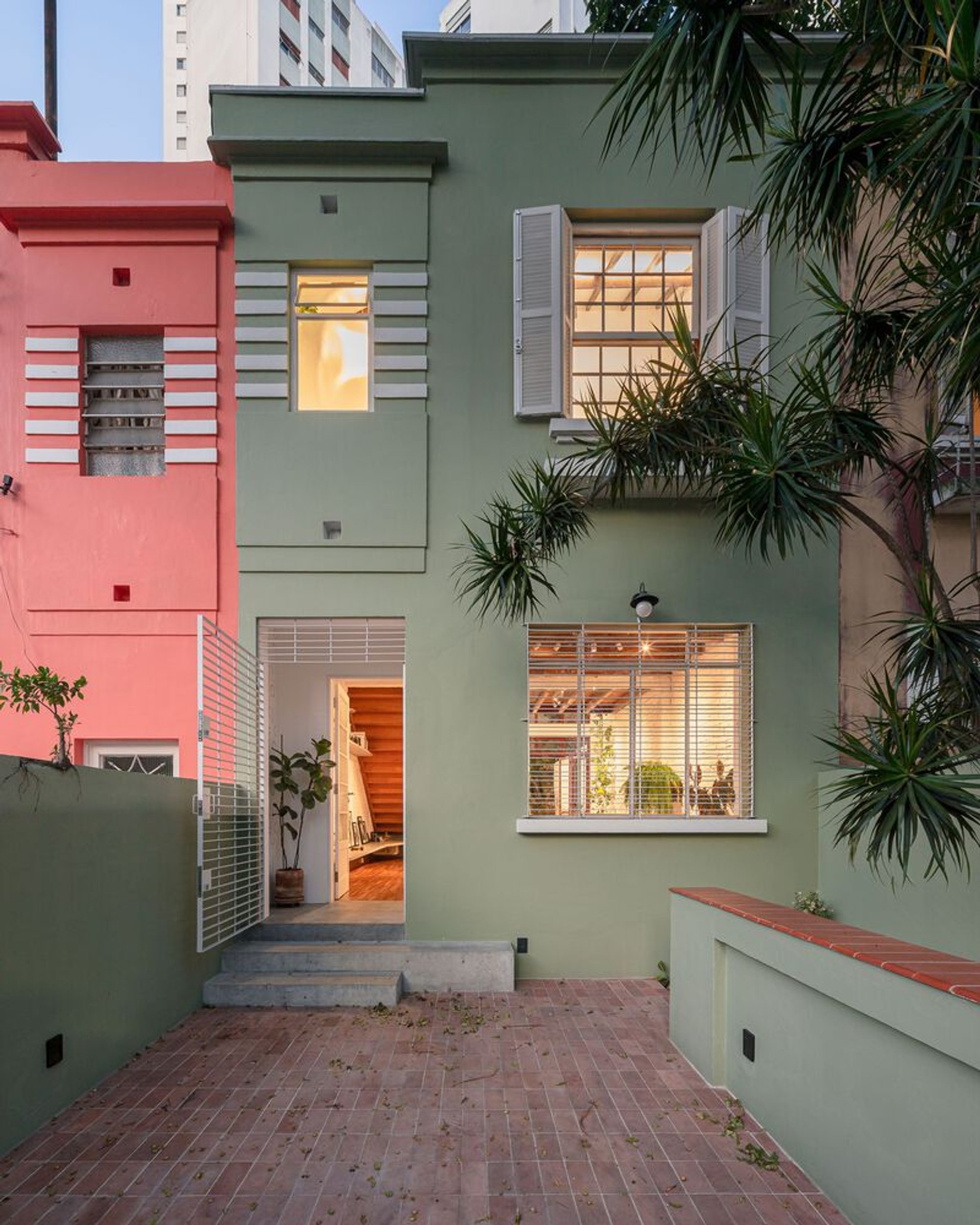
Saracura House: A Sensitive Renovation of a 1940s Sobrado in Bexiga by entre escalas
A sensitive renovation of a 1940s sobrado in São Paulo, blending heritage preservation with contemporary design and natural integration.

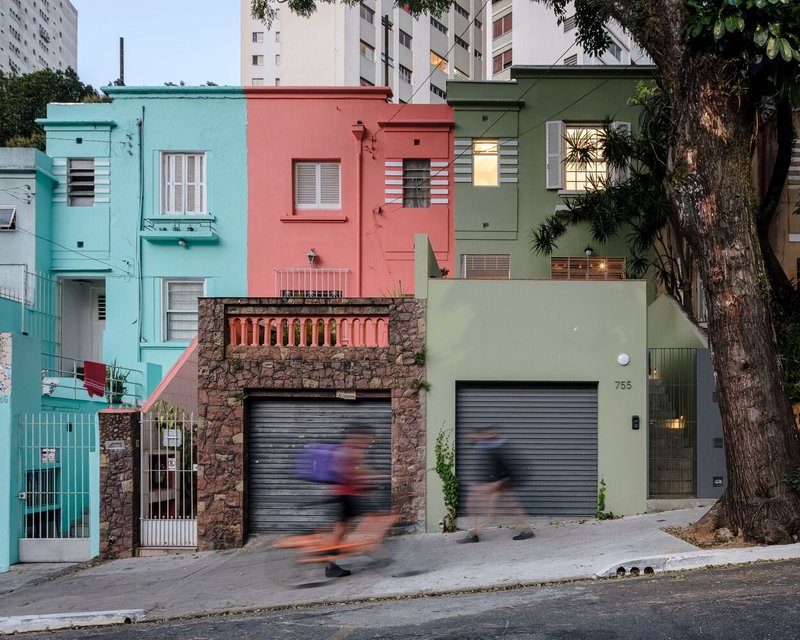
In the heart of São Paulo’s historic Bexiga neighborhood, the Saracura House stands as a thoughtful renovation of a 1940s sobrado—a traditional Brazilian two-story row house. Designed by the architecture studio entre escalas, this project goes beyond aesthetic transformation. It is a cultural and spatial preservation effort, countering the growing pressures of real estate speculation in the area.
Architectural Heritage Meets Contemporary Living
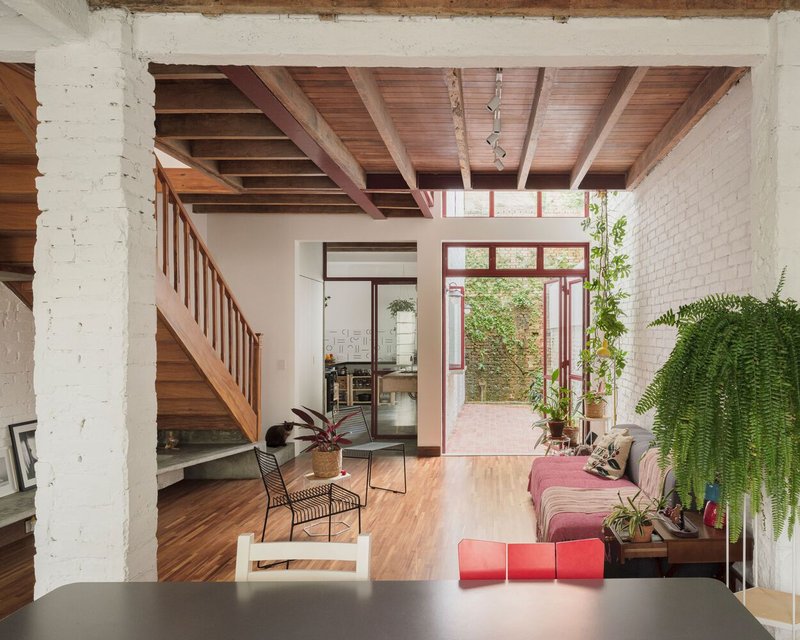
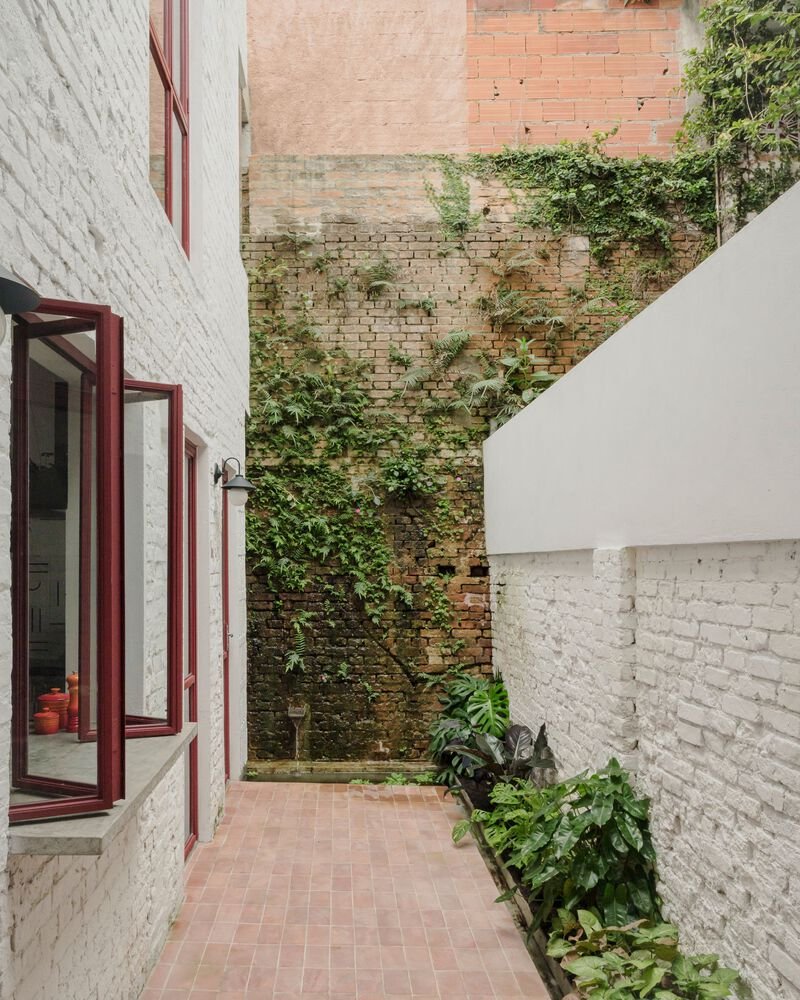
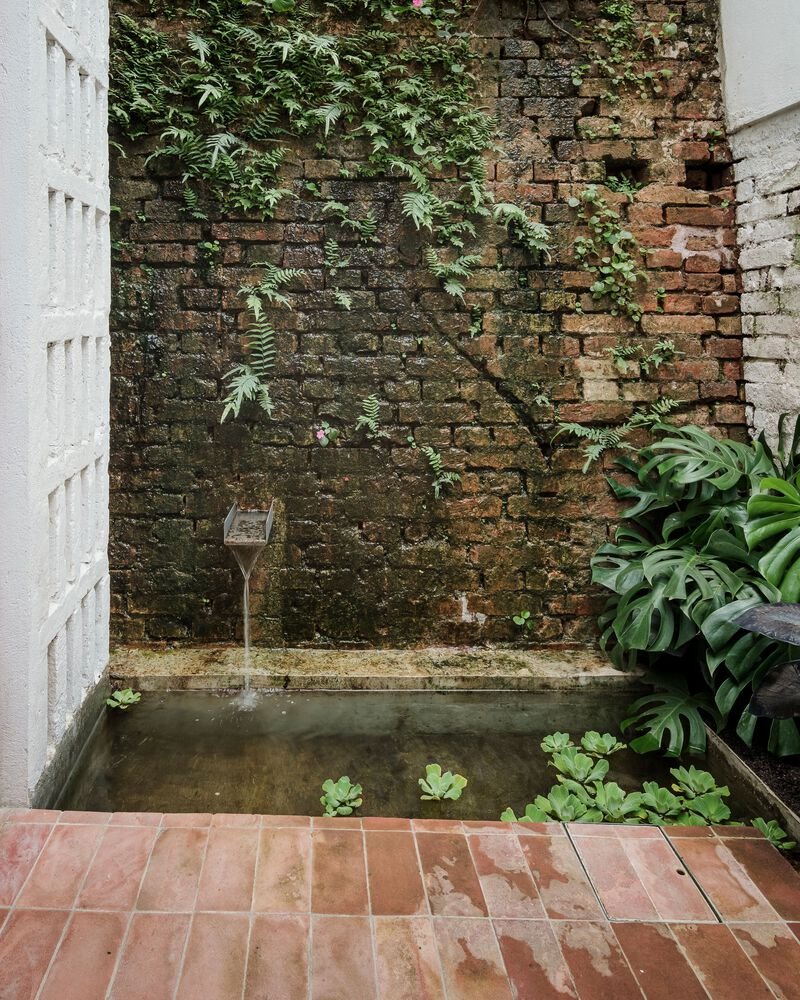
The renovation preserves the original façade and the existing courtyard layout, safeguarding the historical identity of the house and the character of the neighborhood. The architects intentionally revealed the house’s original structure, showcasing the historic retaining wall—a defining feature of the local topography—which is now visible from several areas within the home.
This wall is more than a structural artifact; it traces the path of the hidden Saracura stream, a natural element deeply rooted in the geography of Bexiga. To acknowledge this natural feature, the design introduces a symbolic water path, incorporating a tank and a visible channel that carries water through the courtyard—reconnecting the built environment to its ecological context.
Light, Void, and Connection Across Levels
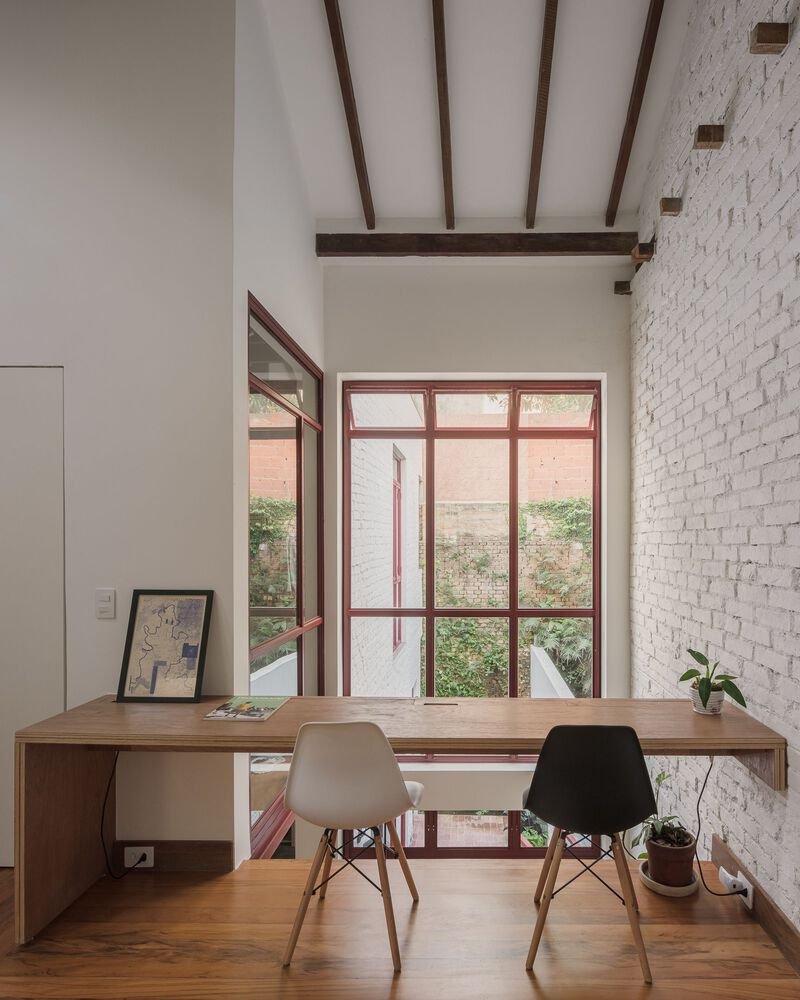
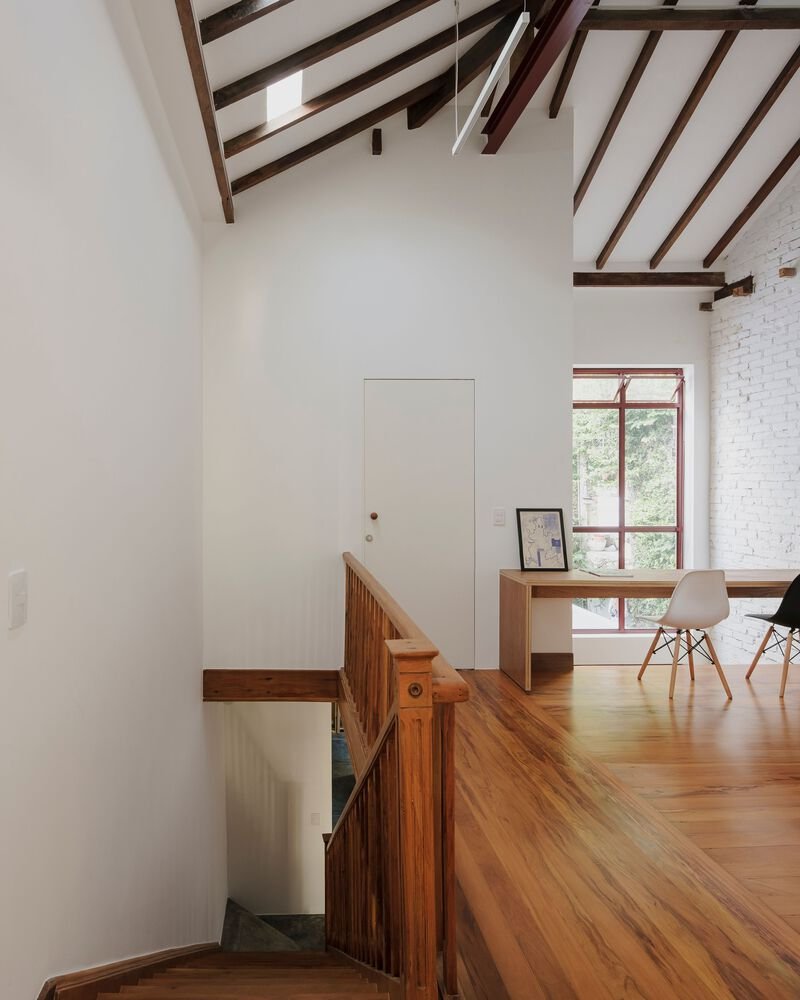
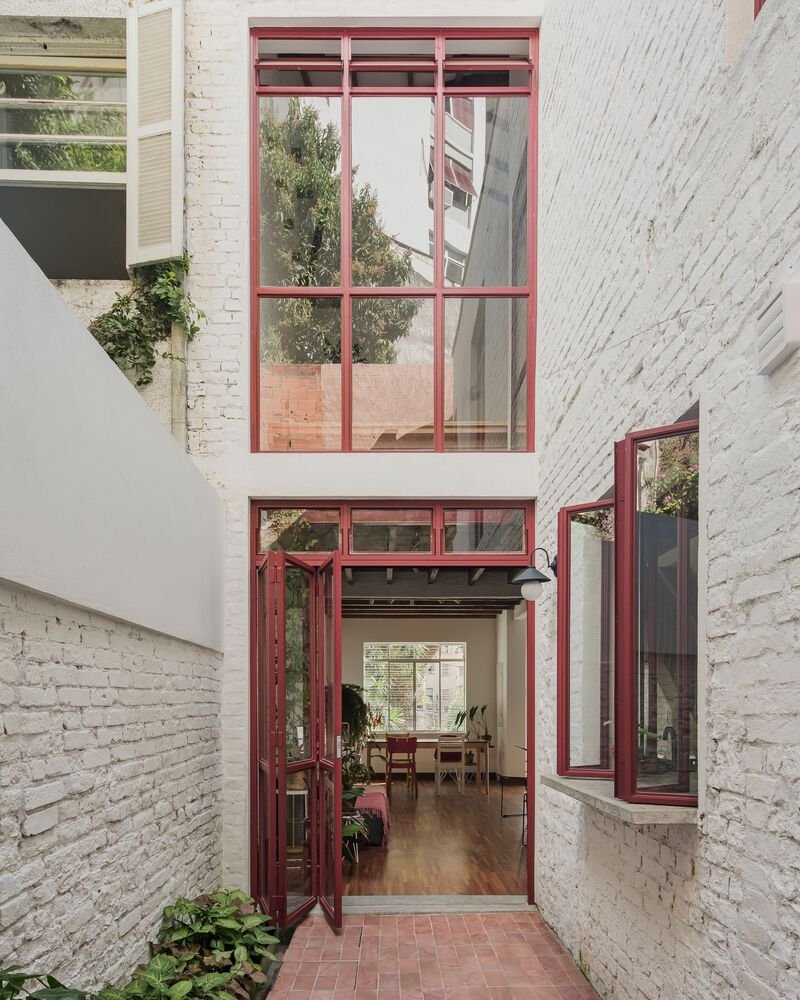
While the volume of the house remains intact, a strategic floor opening introduces a double-height void that enhances spatial interaction and brings natural light into the core of the home. This subtle yet powerful intervention establishes a stronger visual and physical connection between the upper and lower floors, enriching the daily living experience.
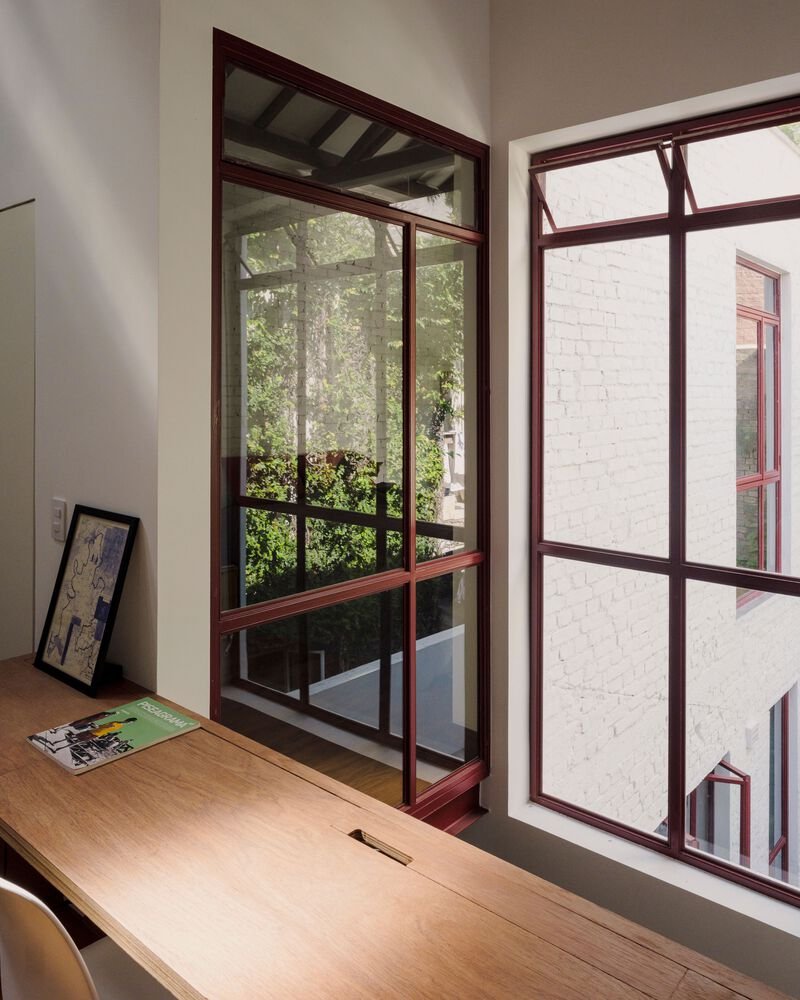
Upstairs, the reconfiguration of the central bedroom creates an open mezzanine workspace, linking the bedrooms with the shared living space below. This design strategy not only opens up internal views but also frames the retaining wall and patio—blurring the boundaries between indoors and outdoors.
Authentic Material Expression and Restoration
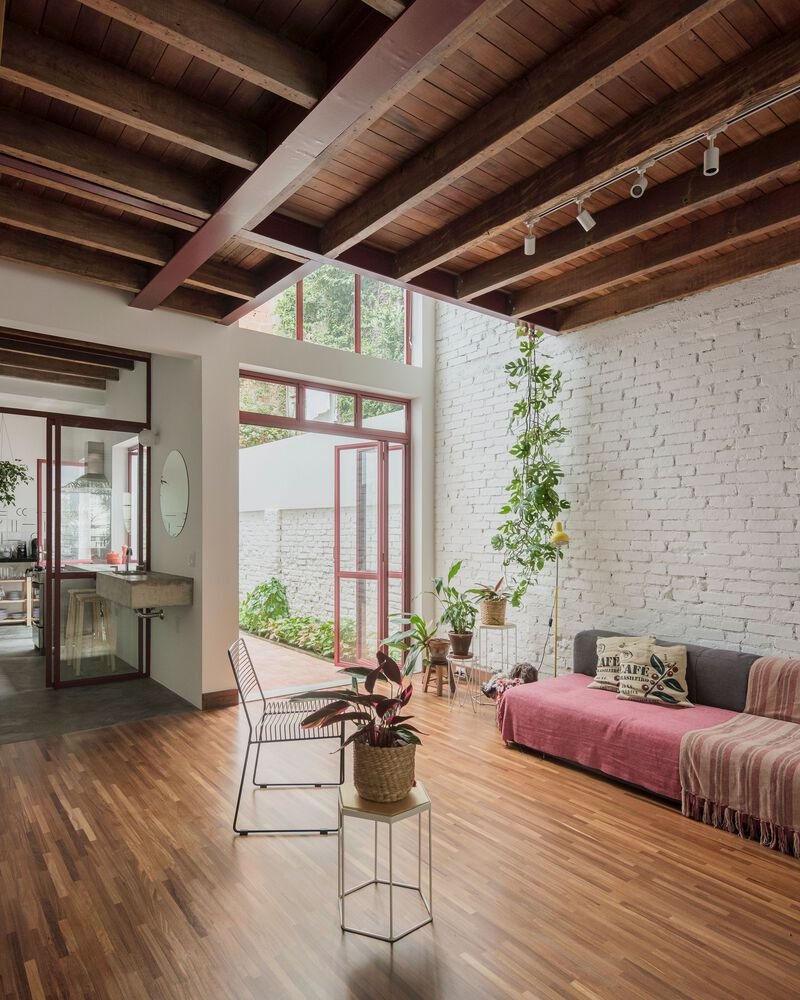
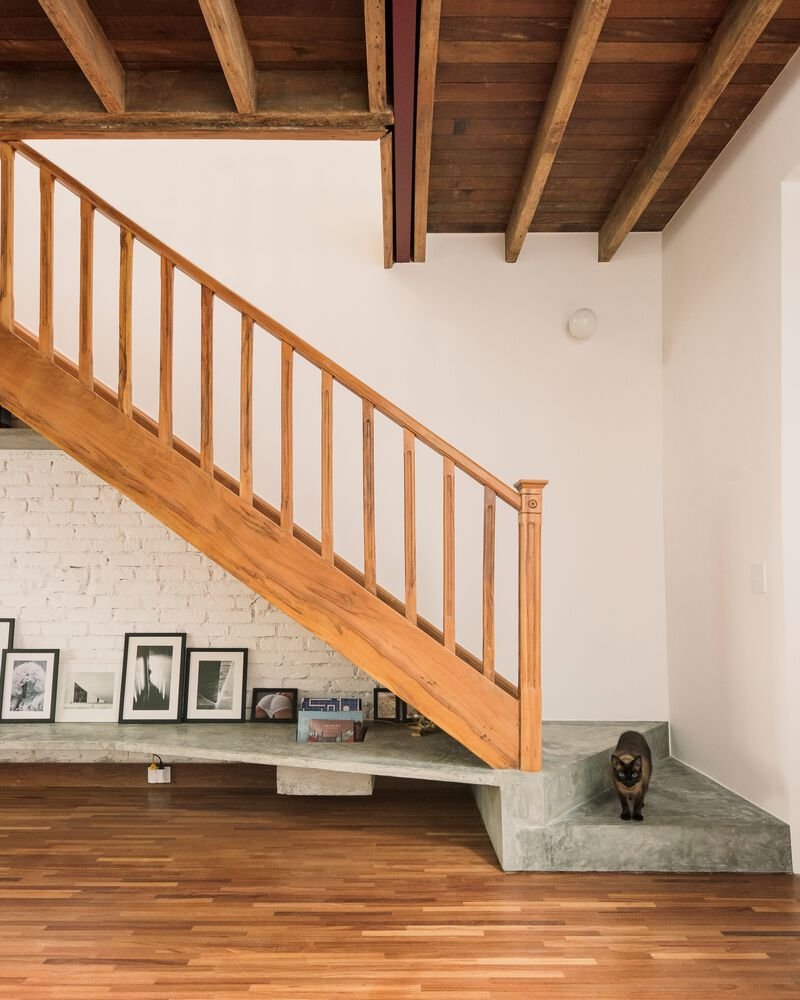
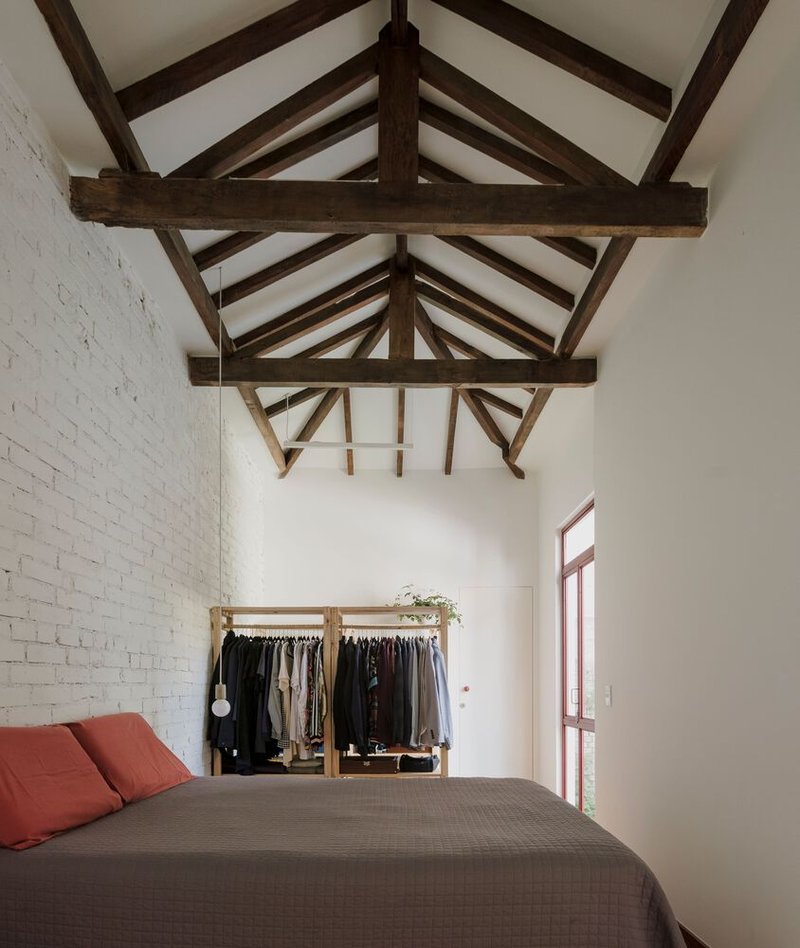
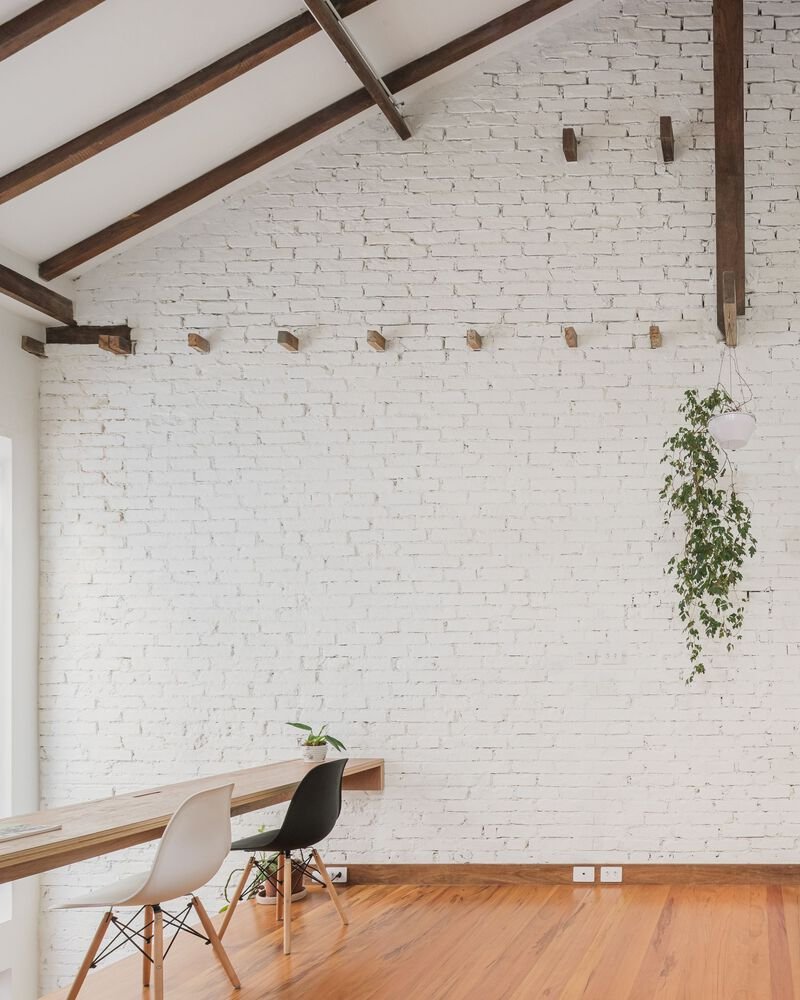
The architects embraced the building’s history by peeling away layers of modernity. They removed plaster from the side walls, revealing the original brick masonry—a testament to São Paulo’s mid-century construction methods. The wooden ceiling structure, once hidden, is now exposed on both floors, adding warmth and architectural texture to the interiors.
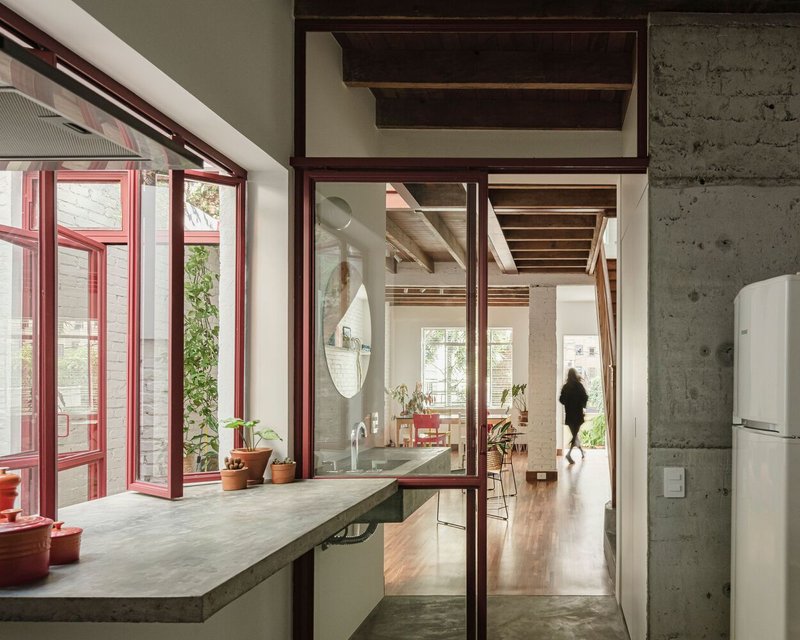
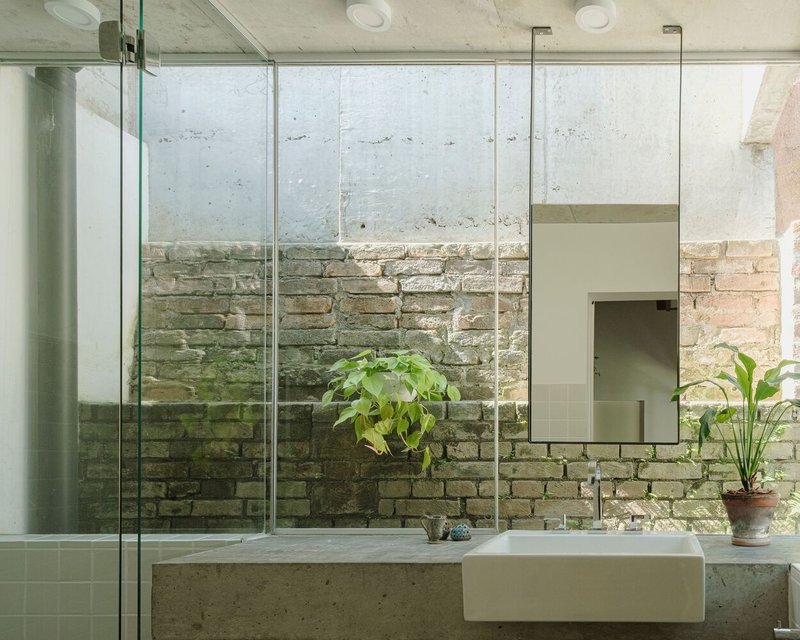
Original features were meticulously restored. The wooden staircase and railing—once painted over—have been stripped back and refinished. The upper floor’s timber flooring was also recovered, adding authenticity to the updated design. These elements are now harmoniously integrated with new concrete additions, including custom furniture, bathroom counters, and a sculptural bench that links the dining and living areas.
Reinventing Indoor-Outdoor Transitions
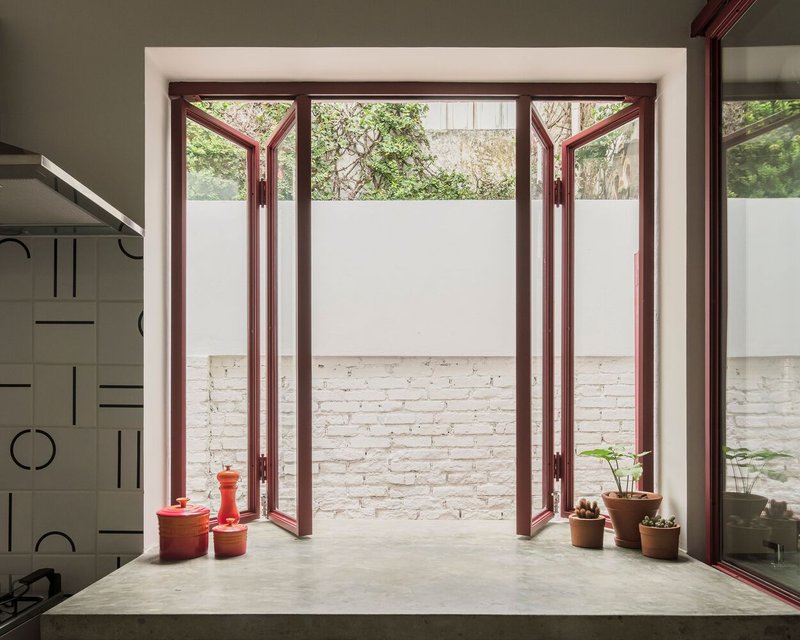
Key to the renovation is the redefinition of how the house interacts with its outdoor spaces. The kitchen was extended toward the patio through a concrete table that literally reaches outside. A new opening from the living room to the garden strengthens the indoor-outdoor flow, a crucial aspect of tropical urban living.
Design Team and Craftsmanship
The Saracura House was led by architects Marina Panzoldo Canhadas and André Nunes, whose sensitive approach celebrates both preservation and innovation. Local manufacturers and artisans—such as Looz, Mica Azulejos, Pedras Coimbra, and Strufaldi—contributed to the material richness and integrity of the project.
At 143 m², this renovation is modest in scale but monumental in cultural relevance and architectural clarity. It represents a model for how contemporary design can coexist with memory, ecology, and social context.
All Photographs are works of
Pedro Kok



Popular Articles
Popular articles from the community

A Contemporary Take on Iranian Residential Architecture
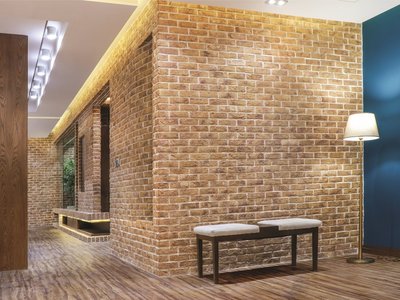
A modern interior design in Mashhad that reinterprets brick, light, and spatial flow to create a warm, contemporary residential architecture.
Treehouse Apartment: A Warm Timber Interior Blending Craft, Play, and Contemporary Living
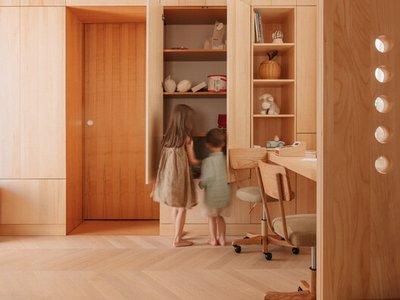
Warm timber apartment with integrated treehouse, combining natural materials, craftsmanship, and playful design to create a flexible, family-oriented living environment.

Solar Steam: A Climate-Responsive Architecture That Redefines the Monument
A climate-responsive memorial architecture that transforms heat, decay, and time into a living system reflecting humanity’s ecological impact.

Gads Hill Early Learning Center by JGMA: Adaptive Reuse Shaping Community-Focused Educational Architecture
Adaptive reuse transforms fragmented structure into vibrant early learning center with playful façade, natural light, and community-focused sustainable design.


Similar Reads
You might also enjoy these articles


The Ken Roberts Memorial Delineation Competition (Krob)
As the most senior architectural drawing competition currently in operation anywhere in the world, it draws hundreds of entries each year, awarding the very best submissions in a series of medium-based categories.


Waterfront Redevelopment and Urban Revitalization in Mumbai: Forging a New Dawn for Darukhana
A transformative waterfront redevelopment project reimagining Darukhana’s shipbreaking heritage into an inclusive urban future.

OUT-OF-MAP: A Call for Postcards on Feminist Narratives of Public Space
Rhizoma Design and Research Lab invites artists, designers, architects, researchers, and students to reflect on how feminist perspectives can reshape public space. Selected works will be exhibited in Barcelona, October 2026. Submissions open until 15 April 2026.


Documentation Work on Buddhist Wooden Temple
Architectural syncretism and cultural hybridity: A comparative study of the Buddhist temples in Chattogram Hill tracks


Explore Architecture Competitions
Discover active competitions in this discipline




The International Standard for Design Portfolios


The Global Benchmark for Architecture Dissertation Awards


The Global Benchmark for Graduation Excellence


Challenge to reimagine the Iron Throne
Comments (0)
Please login or sign up to add comments
No comments yet. Be the first to comment!