
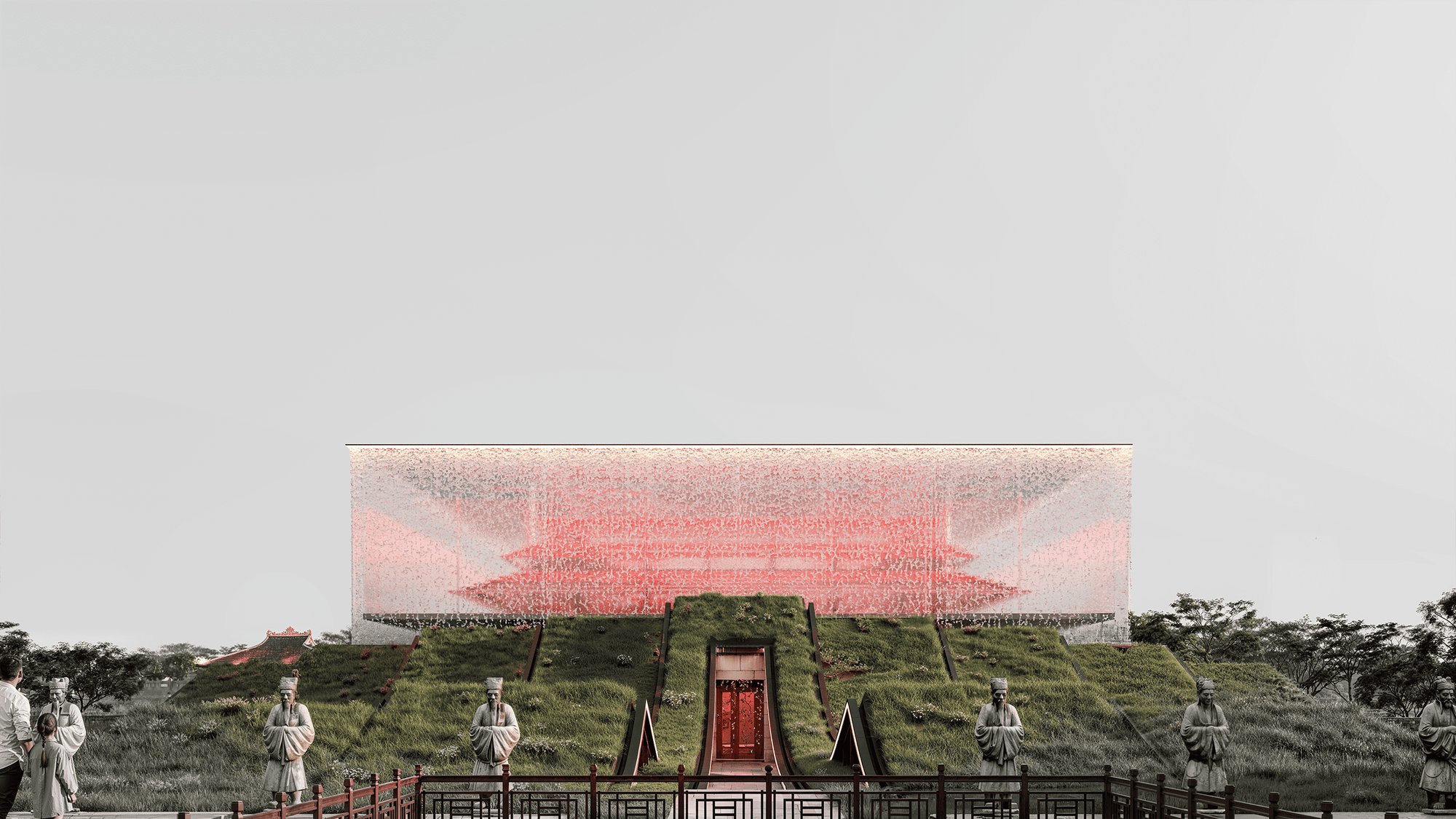
Scenic Transitions — A Hue Journey in Four Frames
Hue Imperial Heritage Museum: A reinterpretation of Hue’s landscapes and heritage through sequences of unfolding views.

Introduction
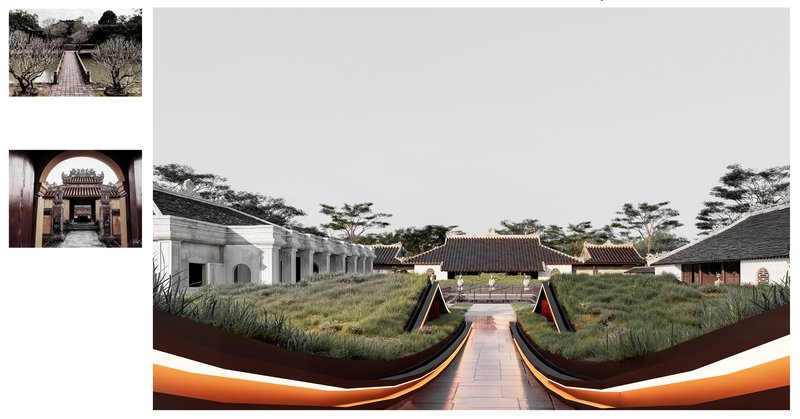
Architecture in Hue is never revealed all at once. Instead, it unfolds through layers—foreground, middle ground, and background—each offering a new perspective and emotion. This sense of scenic transition gives Hue its unique rhythm of discovery. The Hue Imperial Heritage Museum adopts this principle, shaping the visitor’s path as a sequence of shifting views: from curiosity to focus, from admiration to reflection.
Journey in Four Frames
Frame 1 — First Encounter
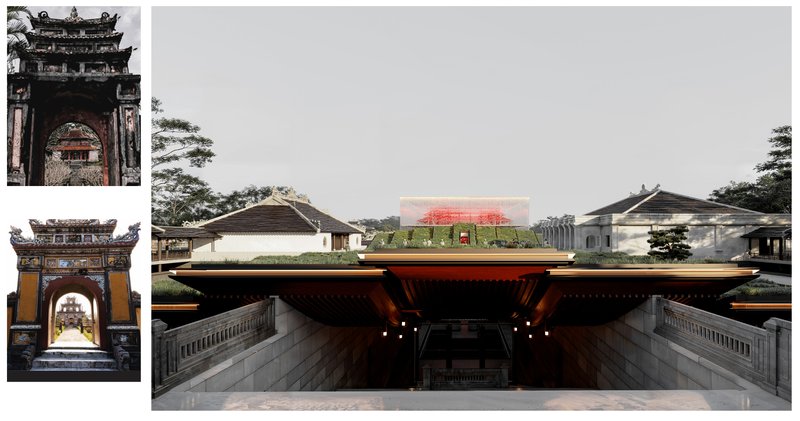
The green roof stretches forward like a ceremonial gate, shading the descent. Through misted glass, the outline of a contemporary pavilion shimmers—visible, but not yet reachable. The moment recalls the view through Ngo Mon into the Citadel, or the glimpse of Minh Lau beyond its arched gate: a distant promise that draws visitors closer.
Frame 2 — Opening Court
A green roof stretches like a ceremonial gate, shading the descent. Through misted glass, a distant contemporary form shimmers—hinted, but not yet reached
Frame 3 — Sacred Focus
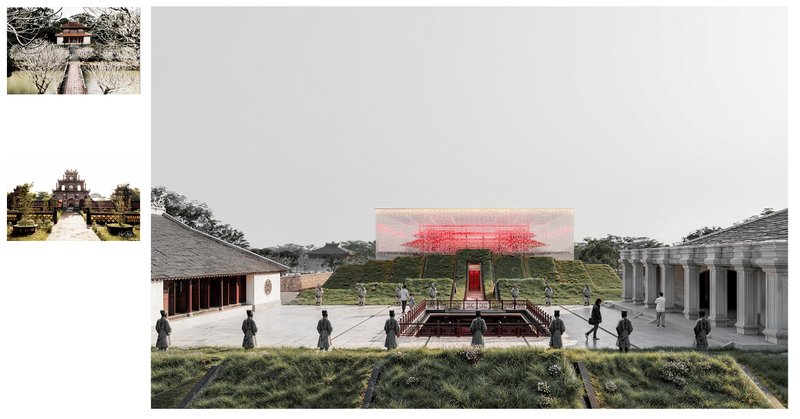
The glass pavilion stands revealed, rain-washed and solemn, gathered by rising topography into a symbolic “main icon” of past and present.
Frame 4 — Return to the Familiar
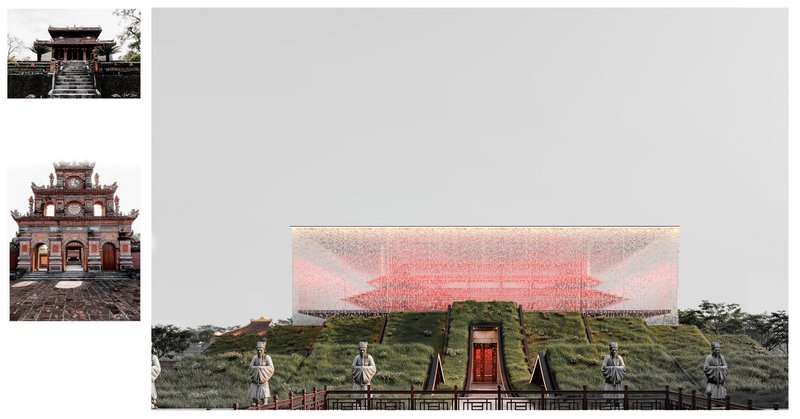
Turning back, relics reappear and the court feels intimate again—closing the journey with a renewed sense of Hue’s living heritage.




Popular Articles
Popular articles from the community

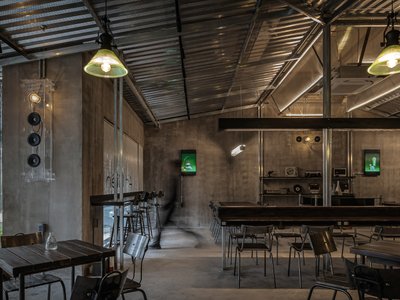
An Miên Lumière Cafe by xưởng xép, Ho Chi Minh City, Vietnam
An industrial-inspired café where layered steel and warm light create a dynamic, immersive environment shaped by reflection, depth, and perception.
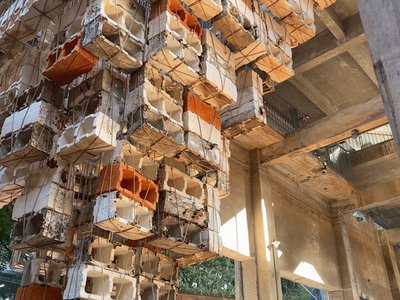
Inverted Architecture Installation by Studio Link-Arc: Exploring the Intersection of Architecture and Living Organisms
Inverted Architecture Installation by Studio Link-Arc blends mycelium, sustainability, inverted design, ecological cycles, and urban adaptive architecture in Shenzhen.

Solar Steam: A Climate-Responsive Architecture That Redefines the Monument
A climate-responsive memorial architecture that transforms heat, decay, and time into a living system reflecting humanity’s ecological impact.


The Ken Roberts Memorial Delineation Competition (Krob)
As the most senior architectural drawing competition currently in operation anywhere in the world, it draws hundreds of entries each year, awarding the very best submissions in a series of medium-based categories.

Similar Reads
You might also enjoy these articles
The Ken Roberts Memorial Delineation Competition (Krob)
As the most senior architectural drawing competition currently in operation anywhere in the world, it draws hundreds of entries each year, awarding the very best submissions in a series of medium-based categories.
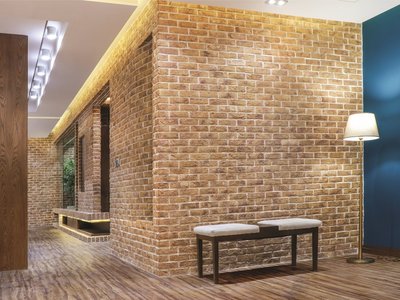
A Contemporary Take on Iranian Residential Architecture
A modern interior design in Mashhad that reinterprets brick, light, and spatial flow to create a warm, contemporary residential architecture.
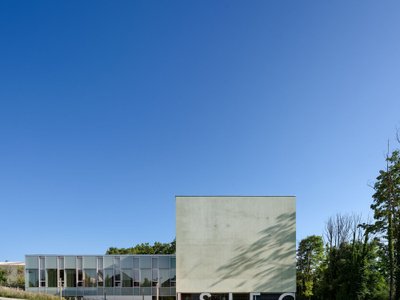
Franche-Comté Advanced School of Engineering by Dominique Coulon & associés, Besançon
A flexible engineering school immersed in woodland, combining concrete minimalism, adaptable spaces, and natural light to support evolving educational environments.


Waterfront Redevelopment and Urban Revitalization in Mumbai: Forging a New Dawn for Darukhana
A transformative waterfront redevelopment project reimagining Darukhana’s shipbreaking heritage into an inclusive urban future.


Explore Architecture Competitions
Discover active competitions in this discipline




The International Standard for Design Portfolios


The Global Benchmark for Architecture Dissertation Awards


The Global Benchmark for Graduation Excellence


Challenge to design an urban locus of culture and heritage
Comments (0)
Please login or sign up to add comments
No comments yet. Be the first to comment!