
Social Aquafarm
Social aquaponics farm idea!

-What was the concept of the project?
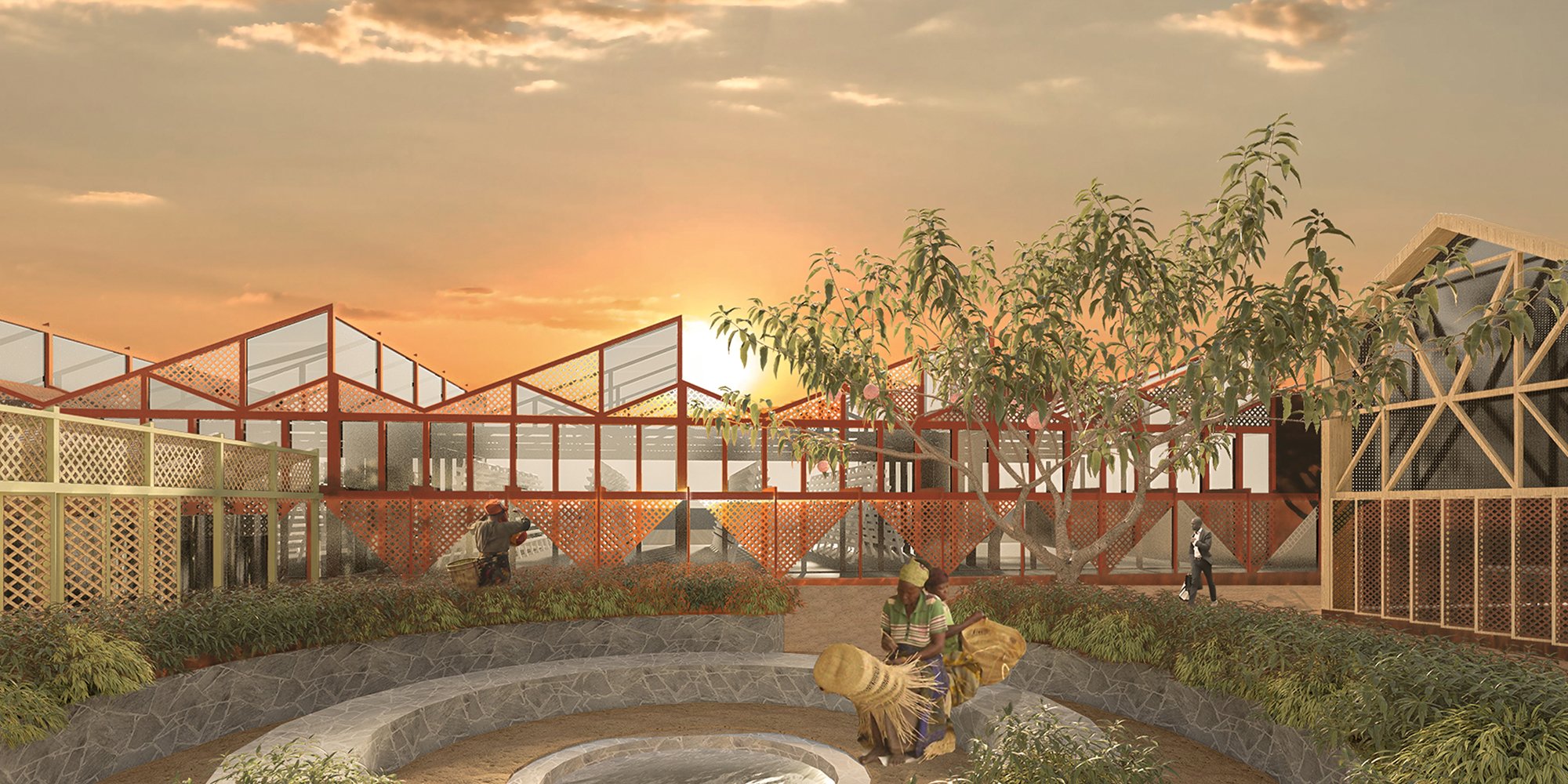
-The idea of the project was to create the farm as a public complex, not only industrial for employees and scientists, but also from local people and tourists participate. The purpose of the farm is to be a center for sustainable agriculture and through its activities it will tell people about alternative farming methods.
-What was the purpose of organizing the elements at different levels (Architectural, Website,
City)?
-In order for the farm to fit into the tissue of a nearby housing estate and to be friendly to people, the inspiration was the layout of a typical impluvium house, interpreting it as a farm complex with building and squeres with diferent character. The first public square is located in the corner of the plot from the estate side. It is to invite people to visit the farm, and at the same time people gain a market where they can spend time, do shopping at the market,
or take part in a DIY workshop and adapt the idea to your own household. In this way, we want to educate people about aeroponic farming practices, helping to be self-sufficient. The next square is the center of the farm with a central water spring, which is a symbol of the problem of agriculture in Africa due to lack of rainfall and saline land. The spring of water is surrounded by buildings: an aeroponic greenhouse, a fish aquarium, a laboratory, a workshop room and a cafe. The last square is the backstage of the farm's operation - that is logistics and the outbuilding - a chicken coop.
The squares have been functionally connected so that the workflow is comfortable, and the public and employee zones do not interfere with each other, but perfectly harmonize. We wanted people to be able to observe the work on the farm and take an active part in modern agriculture.
-How many iterations were you trying to get to get the final result?
-There was contructed modular grid on the plot. Next step the buildings were arranged to adapting them to the sun, surrounding buildings and road infrastructure.
Greenhouses have the greatest exposure to sunlight from the south. Market is located from a nearby estate. Logistics center in the north, at the roundabout. It is limiting the access of large cars to the estate.
The whole is based on circular communication, where the goods from the greenhouse go to the laboratory, and then to the logistics center, from where they are exported, to a cafe or market.
-What design study methods?
-Starting from the analysis of the place, the climate problem and the context - the program was clearly dictated by the needs.
After considering the methods of sustainable greenhouse farming, it was concluded that there is no point in creating a farmland that is less efficient and uses too much water. The aquponic system was chosen because of saves more than 90% of water, combines the cultivation of plants and fish, does not require frequent monitoring, and the crops are not exposed to damage and losses.
The fish work together with the irrigation system to provide nutrients, which makes the cultivation healthy and chemical-free.
The main cultivation takes place in a sterile greenhouse for skilled workers, where food production is intended on a larger scale. However, so that people from the outside could also take an active part in agriculture and in the workshops, a DIY farm was created.
It is, one where everyone can enter and observe how the system works.
-How was the program for the finals condensed?
-Finally, when the agricultural program and system had been established, the details of the buildings were resolved. The solids were divided into various typologies to adjust the form to the function, and the whole complex worked well together, and the participants perfectly knew which building corresponds to which function.
It was important that the greenhouse roofs let in as much sunlight as possible, while supporting air flow and ventilation.
Using the selected shape, the heights were operated to obtain a coherent complex.
-What / How were the materials selected?
-Colors are responsible for positive emotions, so the heavy steel structure was painted red to make it more pleasant to receive. The main contruction was filled with light polycarbonate plates - resistant to damage and lighter than glass.
The other buildings were also constructed of a steel structure and painted in different colors, but filled with wooden wall panels, openwork elements or woven mesh.
-How was it attempted to achieve the specific goal?
-The farm is a representation of effective agriculture. It inspires people to use productive, sustainable methods.
Workplaces and a public place for rest and study were provided. From the perspective of a cafe or workshop room, you can observe the life of the farm and the production process.
By using the DIY farm, people take an active part in the production of food for their own needs.
-What is the project development plan?
-As the complex is based on a modular grid and modular buildings, the farm can be expanded and transformed according to changing needs
-How will the project change over time? e.t.c.
-The project may be supplemented with another "impuvium" extending the complex with new functions,for e.g. hotel functions.

Popular Articles
Popular articles from the community

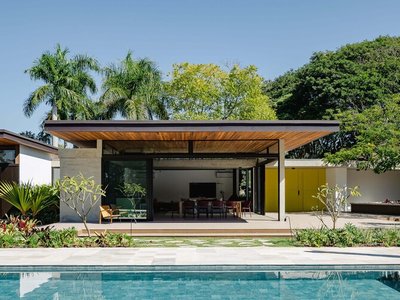
Flamboyant House by Juliana Camargo + Prumo Projetos
Modern Brazilian house integrating existing tree, pool, and volumes with glass, wood, and transitional spaces blending interior, exterior, and landscape seamlessly.
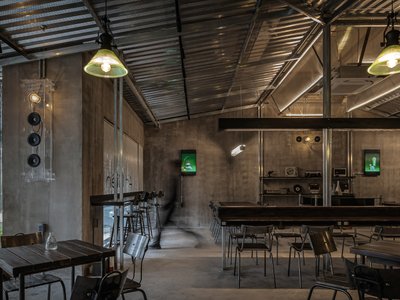
An Miên Lumière Cafe by xưởng xép, Ho Chi Minh City, Vietnam
An industrial-inspired café where layered steel and warm light create a dynamic, immersive environment shaped by reflection, depth, and perception.
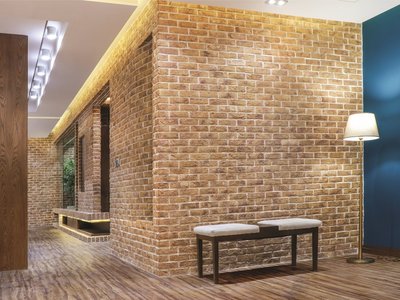
A Contemporary Take on Iranian Residential Architecture
A modern interior design in Mashhad that reinterprets brick, light, and spatial flow to create a warm, contemporary residential architecture.
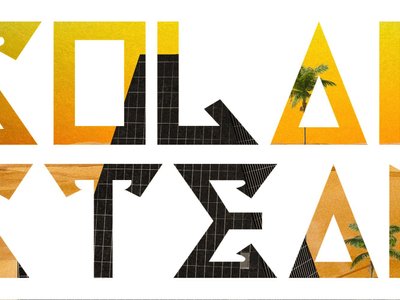
Solar Steam: A Climate-Responsive Architecture That Redefines the Monument
A climate-responsive memorial architecture that transforms heat, decay, and time into a living system reflecting humanity’s ecological impact.


Similar Reads
You might also enjoy these articles


The Ken Roberts Memorial Delineation Competition (Krob)
As the most senior architectural drawing competition currently in operation anywhere in the world, it draws hundreds of entries each year, awarding the very best submissions in a series of medium-based categories.
A Contemporary Take on Iranian Residential Architecture
A modern interior design in Mashhad that reinterprets brick, light, and spatial flow to create a warm, contemporary residential architecture.
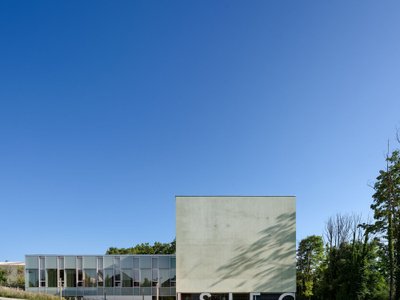
Franche-Comté Advanced School of Engineering by Dominique Coulon & associés, Besançon
A flexible engineering school immersed in woodland, combining concrete minimalism, adaptable spaces, and natural light to support evolving educational environments.

Waterfront Redevelopment and Urban Revitalization in Mumbai: Forging a New Dawn for Darukhana
A transformative waterfront redevelopment project reimagining Darukhana’s shipbreaking heritage into an inclusive urban future.


Explore Architecture Competitions
Discover active competitions in this discipline




The International Standard for Design Portfolios


The Global Benchmark for Architecture Dissertation Awards


The Global Benchmark for Graduation Excellence


Challenge to reimagine the Iron Throne
Comments (0)
Please login or sign up to add comments
No comments yet. Be the first to comment!