

Sustainable Architecture Installations in Spain: The Off-Season Pavilion by KOSMOS
This article explores the Off-Season Pavilion in Spain, focusing on its sustainable design using locally sourced, repurposed materials.


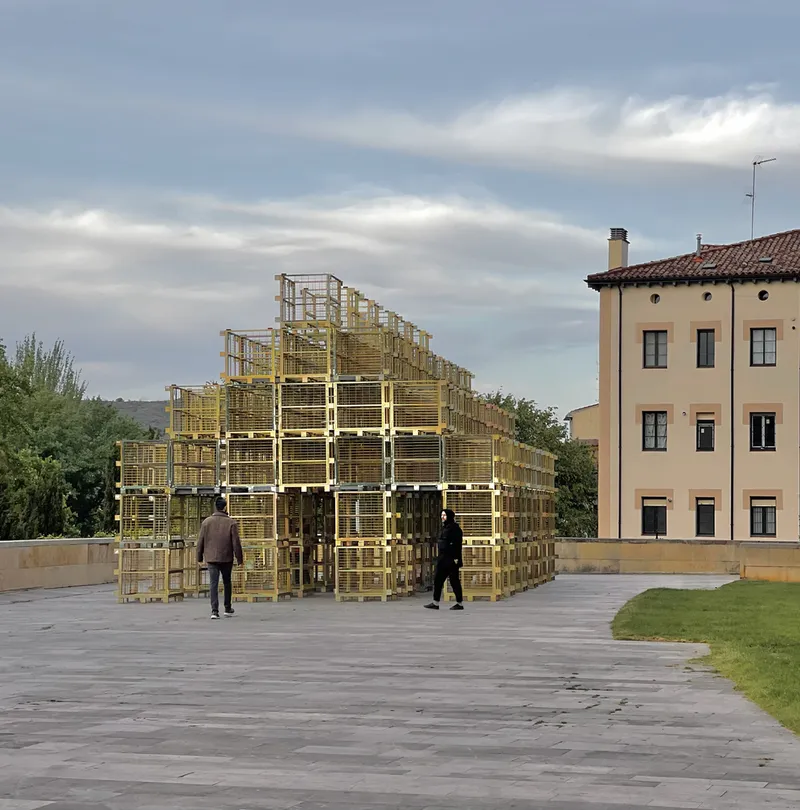
In the heart of Logroño, Spain, the Off-Season Pavilion emerges as a striking example of sustainable architecture. Designed by KOSMOS Architektur & Design, this temporary structure showcases the innovative use of local materials and embraces the ethos of environmental consciousness.

Concept and Design Philosophy
Utilizing Local Resources
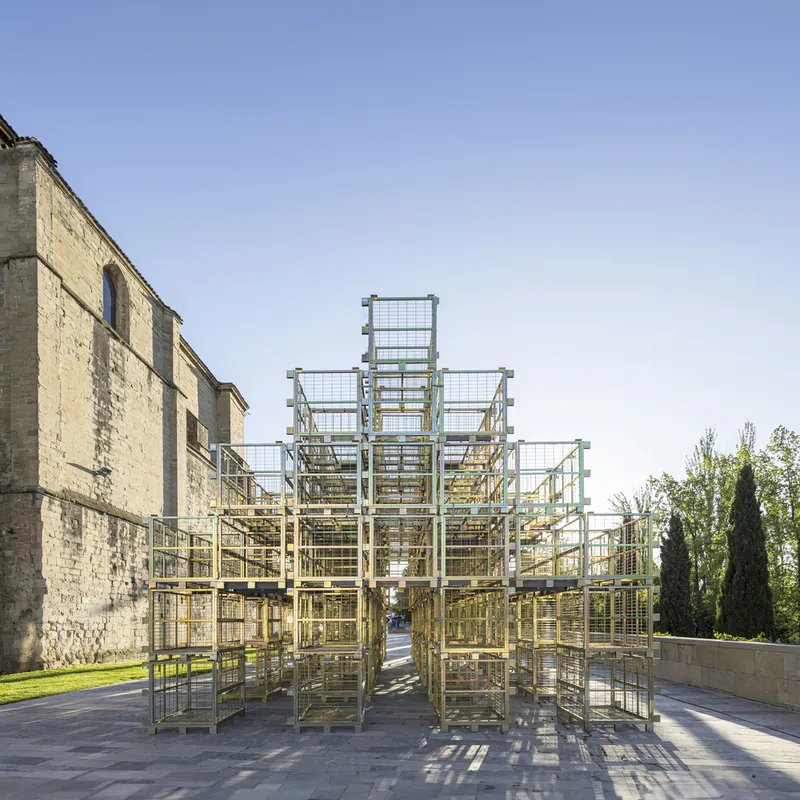
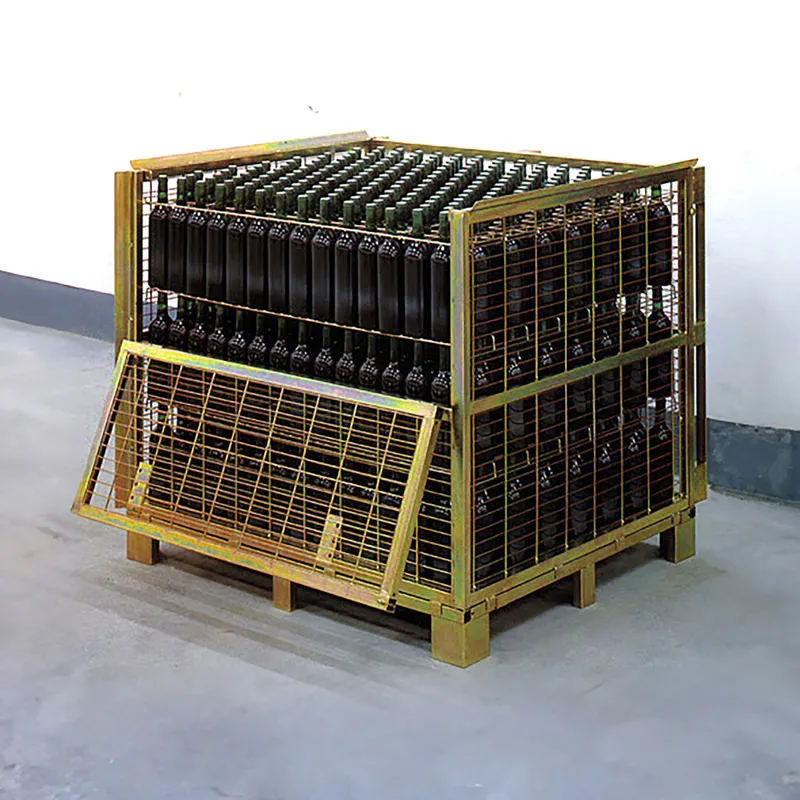
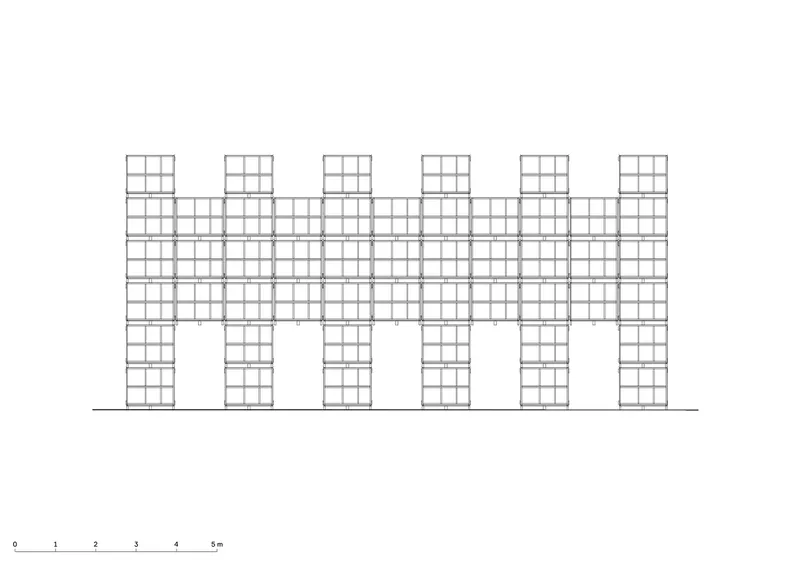
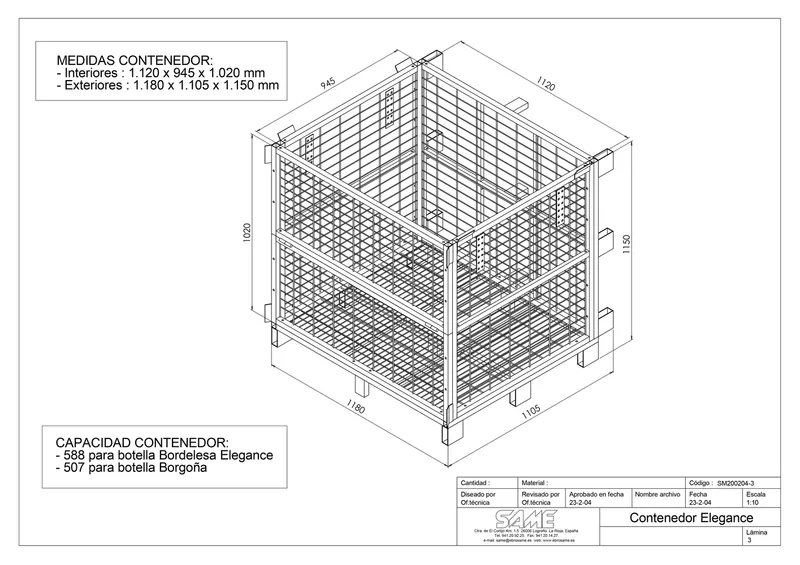
The pavilion creatively repurposes 'jaulones de vino,' which are large metal cages traditionally used to store wine bottles in the region's bodegas. These materials, which exhibit clear seasonal usage patterns, are given a new life during their off-season, aligning with the Concentrico Festival's schedule.


Architectural Symbolism
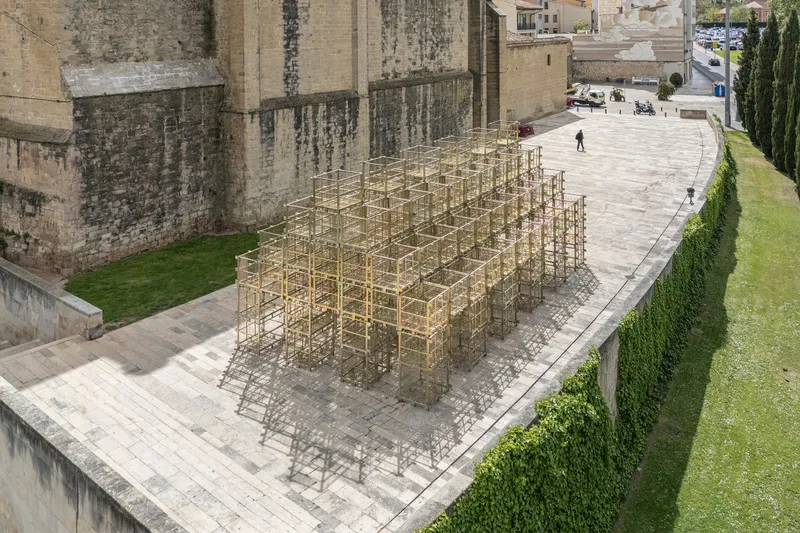
The design of the Off-Season Pavilion draws inspiration from both agricultural sheds and traditional basilicas, integrating elements of labor and spirituality. This dual reference enriches the pavilion's role as a social and cultural gathering place, positioned adjacent to the Church of Santiago el Real.
Sustainability and Innovation
Eco-Friendly Design Impact
The use of recycled materials not only reduces waste but also minimizes the environmental footprint of the pavilion. By choosing resources that are locally available and seasonally unused, KOSMOS Architektur & Design demonstrates a commitment to sustainable building practices that can be replicated in other contexts.


Light and Space Interaction
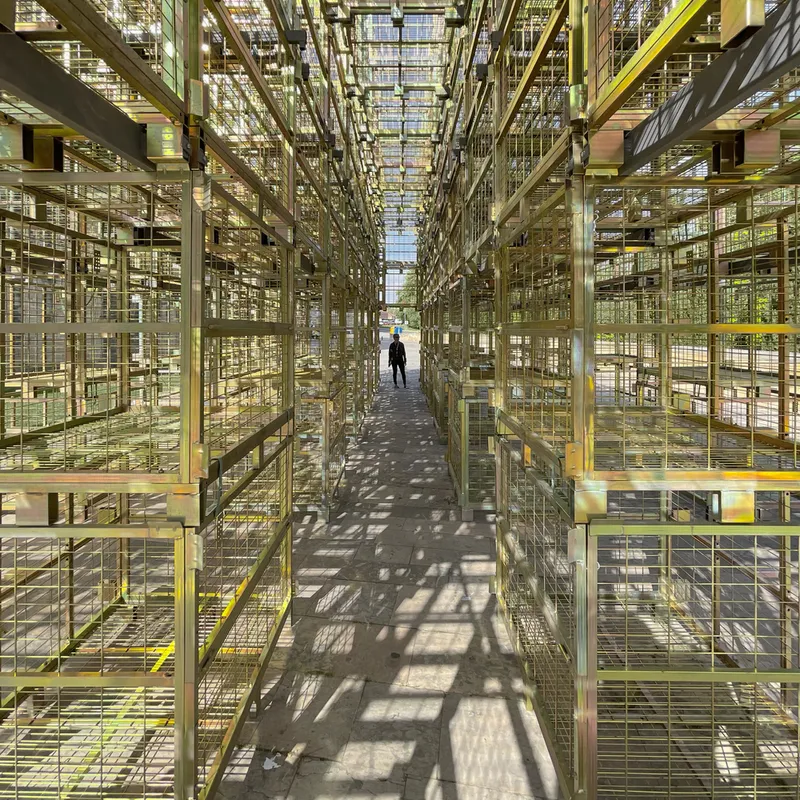
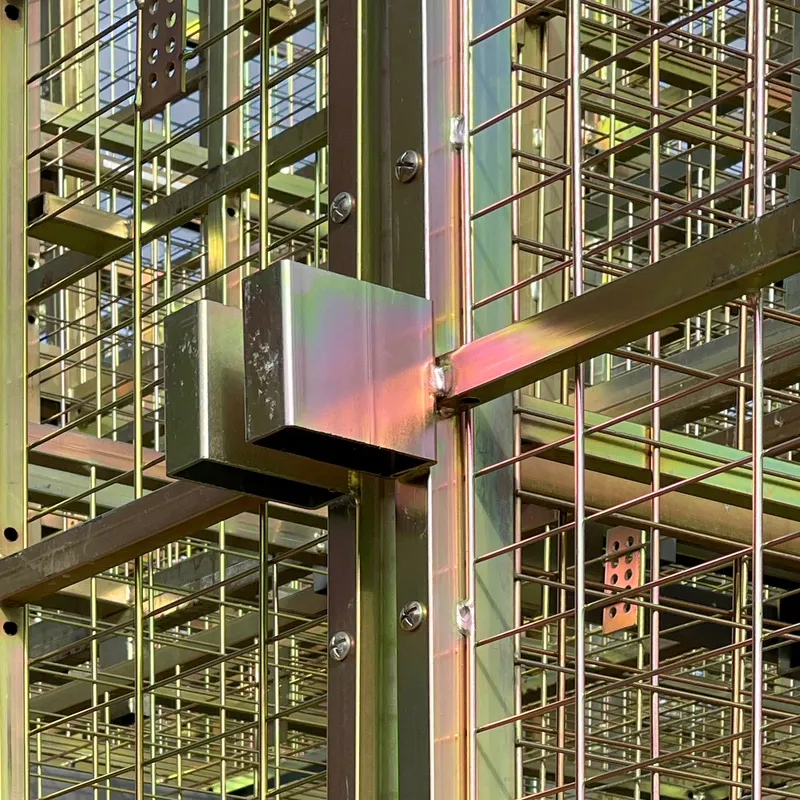
The golden meshes of the wine cages create an intricate play of light and shadows within the pavilion. This design choice transforms the space into a labyrinth of dematerialized rooms, enhancing the visitor's experience through visual and tactile interactions.

Cultural and Community Engagement
A Platform for Social Interaction
Located next to a historic church, the pavilion serves as a shaded retreat where locals and visitors can gather. This placement fosters community interaction and cultural exchange, making the pavilion a central feature in local festivities and social gatherings.

Support and Collaboration
The project was supported by various organizations, including Ebro SAME production, Swiss Art Council Pro Helvetia, and Pernod Ricard Winemakers. This collaboration highlights the importance of partnerships in achieving innovative architectural solutions.

A Model for Future Projects
The Off-Season Pavilion stands as a testament to sustainable architecture installations in Spain. It not only addresses the practical aspects of architectural design but also engages with the broader themes of sustainability, community, and cultural significance. Projects like this pave the way for future initiatives that seek to harmonize architectural practice with environmental stewardship and social responsibility.


All photographs are work of Sara Cuerdo, Leonid Slonimskiy,, Laurian Ghinitoiu, Josema Cutillas,


Popular Articles
Popular articles from the community


Cloaked Colonization: A Mobile Underwater Habitat That Moves Like a Fish
Micah Abaya's shortlisted EHC Pacific entry reimagines ocean settlement as a dispersed network of self-sustaining architectural organisms.

Temporary Home for Dogs: A Reversed Zoo Rethinks Animal Shelter Architecture
In Bucharest, a sinuous corridor and freed landscape flip the logic of containment, designing a shelter that works to make itself unnecessary.
Opera by the Sea Estonia: Three Shells Dissolving Architecture into Tallinn's Coastline
A winning opera house proposal replaces monumental form with interconnected shells that blur the boundary between building, park and Baltic Sea.

Opera on the Sea: Driftwood Logic Shapes a Timber Opera House on Estonia's Coast
Trevor Orgill's opera house translates the entangled drift of floating timber into a civic building where wood, water, and music converge.

Similar Reads
You might also enjoy these articles


Hodi-Mandai Geram
Project Function: Preservation and revitalization of the Intangible heritage and socio-spatial identity of the Hodi by Housing, Cultural Memory Center, Sacred Grove, landscape, local tourism economy


Olio Towers: A Mid-Rise for Performers That Fuses Housing, Rehearsal, and Stage
Located blocks from Houston's Theater District, this modular tower stacks living units around a central performance atrium.

Oasis: Modular Green Housing Carved into Dhaka's Urban Fabric
A shortlisted Plugin Housing entry reclaims unauthorized settlements in Dhaka with stepped concrete volumes, green roofs, and ventilation-driven design.

Black Hole: A Floating Megastructure for the Post-Physical Era
Emiliano Mazzarotto envisions a spherical, self-scaling arena where e-sports, digital hotels, and holographic stadiums replace traditional public space.

Explore Architecture Competitions
Discover active competitions in this discipline

Challenge to reimagine the Iron Throne

Photograph architecture without architects

Illustrate the lost glory of Angkor Wat - Render Challenge

Design challenge to reuse E-waste
Comments (0)
Please login or sign up to add comments
No comments yet. Be the first to comment!