
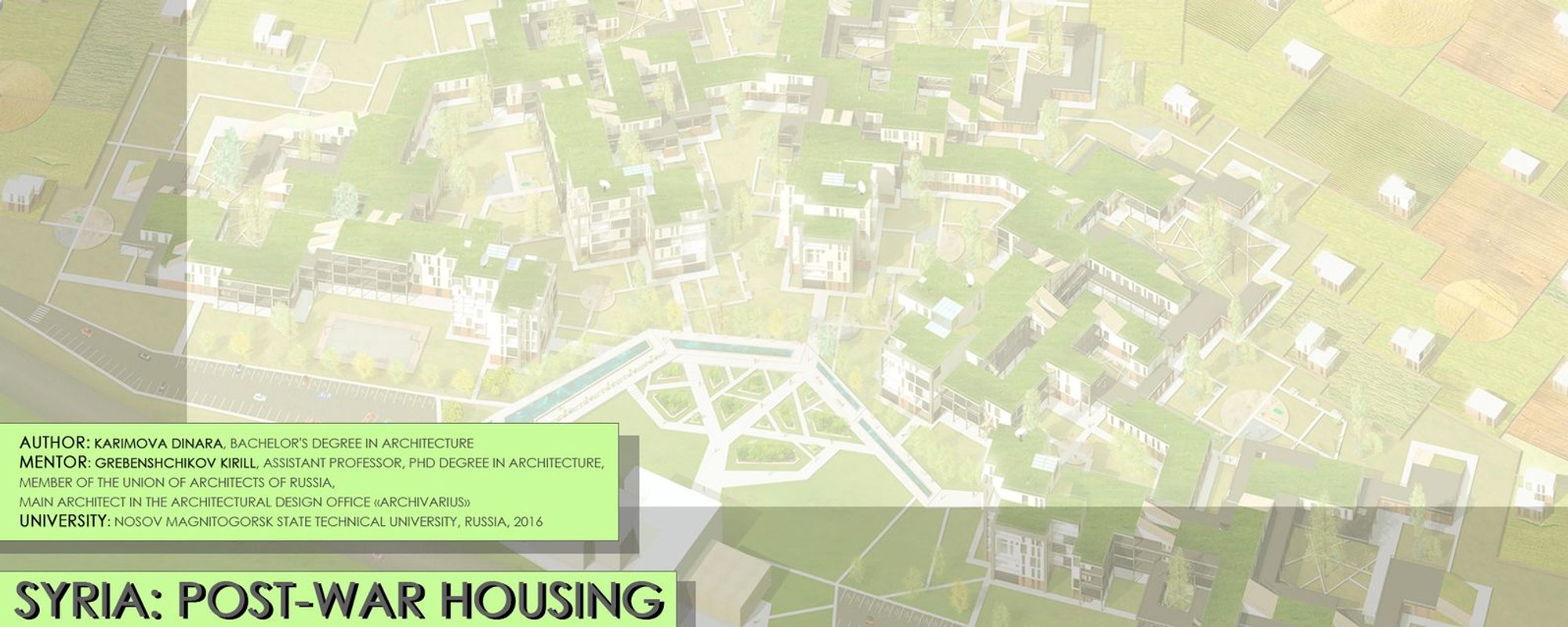
Syria: Post-War Housing — Sustainable Reconstruction Architecture for a Nation in Recovery
A sustainable post-war housing model that redefines reconstruction architecture by restoring dignity, resilience, and community life in Syria.

Rebuilding Through Architecture
The Syrian civil war stands as one of the gravest humanitarian crises since the Second World War, leaving millions displaced, cities fractured, and communities stripped of their social and spatial foundations. In response to this unprecedented destruction, Syria: Post-War Housing proposes a forward-looking model of sustainable post-war housing architecture, aimed not merely at shelter, but at long-term recovery, dignity, and reintegration.
Designed by Kirill Grebenshchikov, the project envisions permanent housing environments that actively encourage refugees to return, rebuild their lives, and reconnect with their homeland. Architecture here becomes an instrument of healing — spatially, socially, and psychologically.
Context: From Crisis to Opportunity
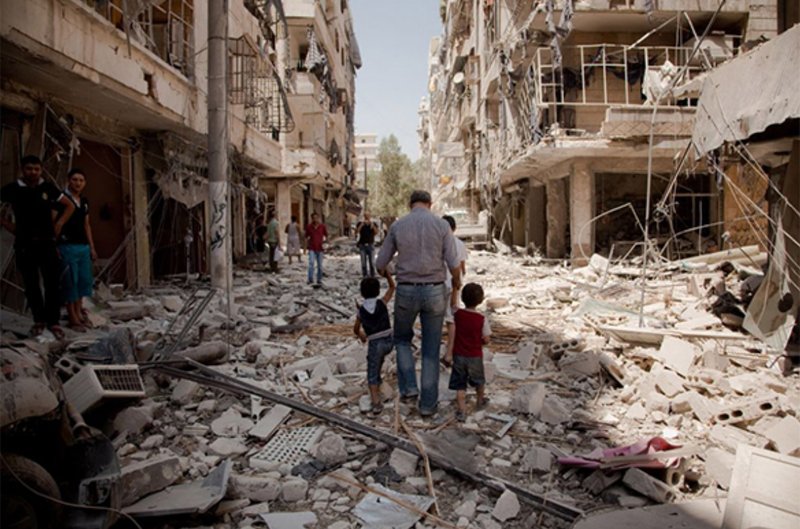
Since 2011, Syria has witnessed massive infrastructural collapse, with entire neighborhoods reduced to rubble. Millions fled to neighboring countries or temporary camps, where living conditions remain precarious and inhumane. As the conflict subsides in certain regions, a critical question emerges: How can architecture support the safe and dignified return of displaced populations?
This project addresses that question by shifting the narrative from emergency shelters to permanent, resilient housing systems. Instead of rebuilding dense urban cores immediately, it strategically proposes small residential compounds located outside damaged city centers, allowing reconstruction to begin incrementally and sustainably.
Masterplan Strategy: Decentralized Residential Compounds
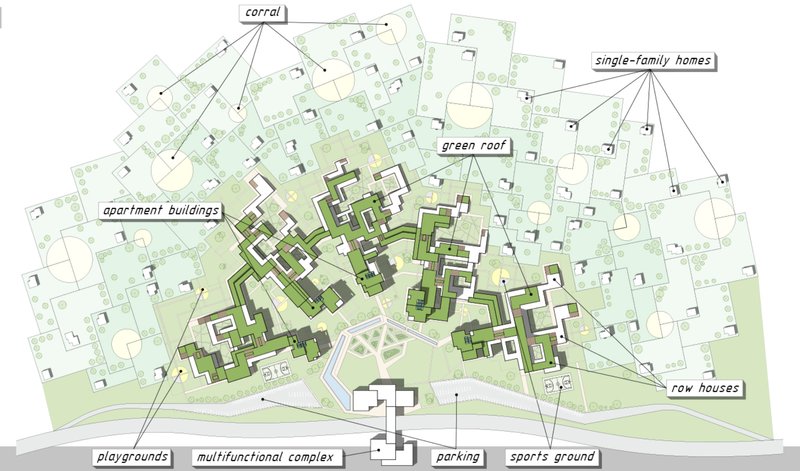
At the core of the proposal is a modular masterplan composed of multiple residential clusters. Each compound is designed as a self-sufficient micro-community, integrating:
- Residential units of varying sizes
- Public and communal spaces
- Local labor and employment areas
- Green courtyards and productive landscapes
This decentralized model reduces pressure on urban infrastructure while enabling phased growth. Construction can occur gradually, responding to population return rates, economic capacity, and material availability.
Housing Typologies for Diverse Needs
The project introduces a diverse mix of housing typologies to accommodate different family structures, economic conditions, and accessibility requirements:
- Apartment buildings for higher-density living
- Row houses and two-story row houses
- Detached individual houses with private garden plots
Unit sizes range from compact dwellings for small households to larger homes suitable for extended families. This flexibility ensures inclusivity while avoiding social segregation — a key principle of sustainable reconstruction architecture.
Landscape as Infrastructure
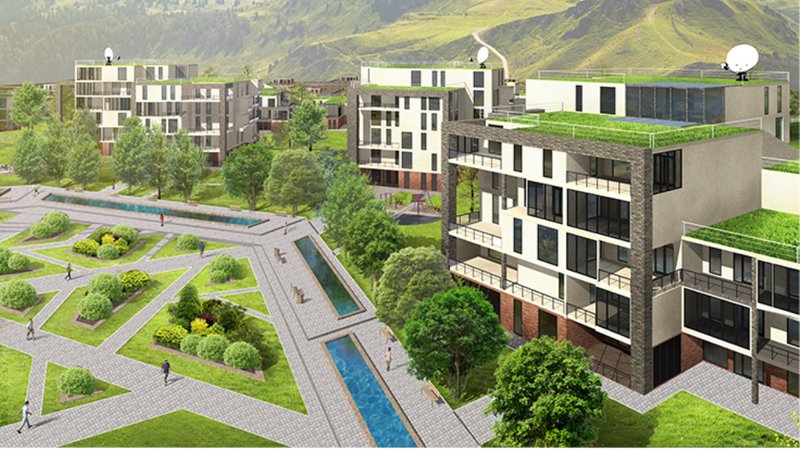
Green spaces are not treated as decorative elements, but as critical infrastructure. The masterplan integrates:
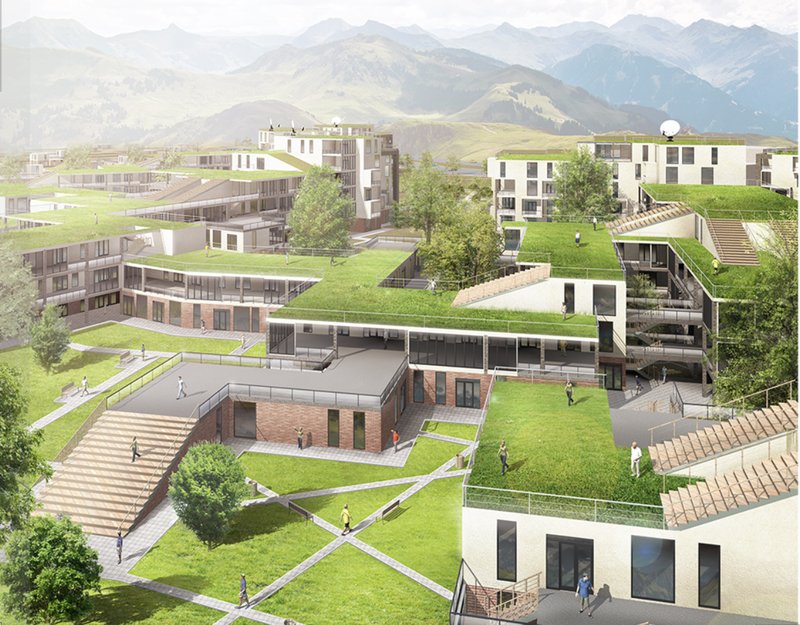
- Green roofs and inverted roof gardens
- Shaded pedestrian pathways
- Courtyards functioning as social condensers
- Landscaped terraces protecting buildings from harsh solar exposure
These elements improve thermal comfort, reduce energy consumption, and provide spaces for recreation, gardening, and community interaction — essential aspects of post-war social healing.
Climate-Responsive and Energy-Efficient Design
Given Syria’s climatic conditions, the architectural strategy prioritizes energy minimization through passive design principles:
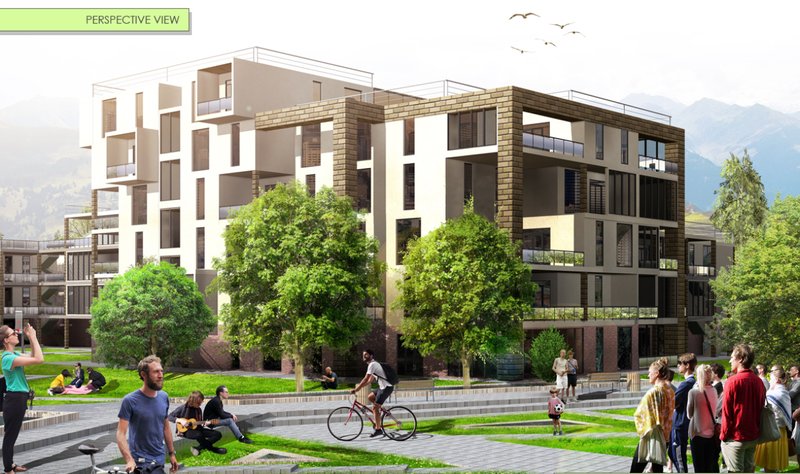
- Low-rise building heights to optimize shading
- Strategic spacing between residential blocks for ventilation
- Green roofs acting as thermal buffers
- Compact building forms to reduce heat gain
By minimizing reliance on mechanical systems, the project ensures affordability, durability, and resilience — critical factors in post-conflict environments.
Social Infrastructure and Community Life
Beyond housing, the project emphasizes the reconstruction of social networks. Central public spaces, playgrounds, shared gardens, and pedestrian corridors foster interaction among residents. These spaces are designed to support children, families, elderly residents, and people with disabilities, reinforcing a sense of belonging and safety.
Architecture here moves beyond physical reconstruction to support emotional recovery — enabling displaced individuals to transition from survival to stability.
A Model for Sustainable Post-War Housing Architecture
Syria: Post-War Housing presents a replicable framework for post-conflict regions worldwide. Its emphasis on adaptability, community-scale planning, and environmental responsibility positions it as a strong example of sustainable post-war housing architecture — one that prioritizes people over monuments, and recovery over spectacle.
By combining pragmatic construction strategies with humane spatial design, the project demonstrates how architecture can become a catalyst for long-term peace and regeneration.




Popular Articles
Popular articles from the community


The Ken Roberts Memorial Delineation Competition (Krob)
As the most senior architectural drawing competition currently in operation anywhere in the world, it draws hundreds of entries each year, awarding the very best submissions in a series of medium-based categories.


Solar Steam: A Climate-Responsive Architecture That Redefines the Monument
A climate-responsive memorial architecture that transforms heat, decay, and time into a living system reflecting humanity’s ecological impact.
Atelier Macri Concept Store Interior Design by CASE-REAL
Atelier Macri store features a "ko" counter, walnut wood details, cork displays, blending retail, gallery, and seamless customer experiences.
Flamboyant House by Juliana Camargo + Prumo Projetos
Modern Brazilian house integrating existing tree, pool, and volumes with glass, wood, and transitional spaces blending interior, exterior, and landscape seamlessly.


Similar Reads
You might also enjoy these articles

Digital Façade Design for our cities’ urban fronts
Prima Facie - Result Story
Protecting avian biodiversity: Bird observatories to help spread awareness & save rare bird species.
Results for ‘Fly’ - Landscape design competition out now
Connecting with nature: Forest interpretation center in Australia's Wollemi National Park
‘Asatti’ - Landscape design competition - Result story


Explore Architecture Competitions
Discover active competitions in this discipline




The International Standard for Design Portfolios


The Global Benchmark for Architecture Dissertation Awards


The Global Benchmark for Graduation Excellence


Challenge to reimagine the Iron Throne
Comments (0)
Please login or sign up to add comments
No comments yet. Be the first to comment!