
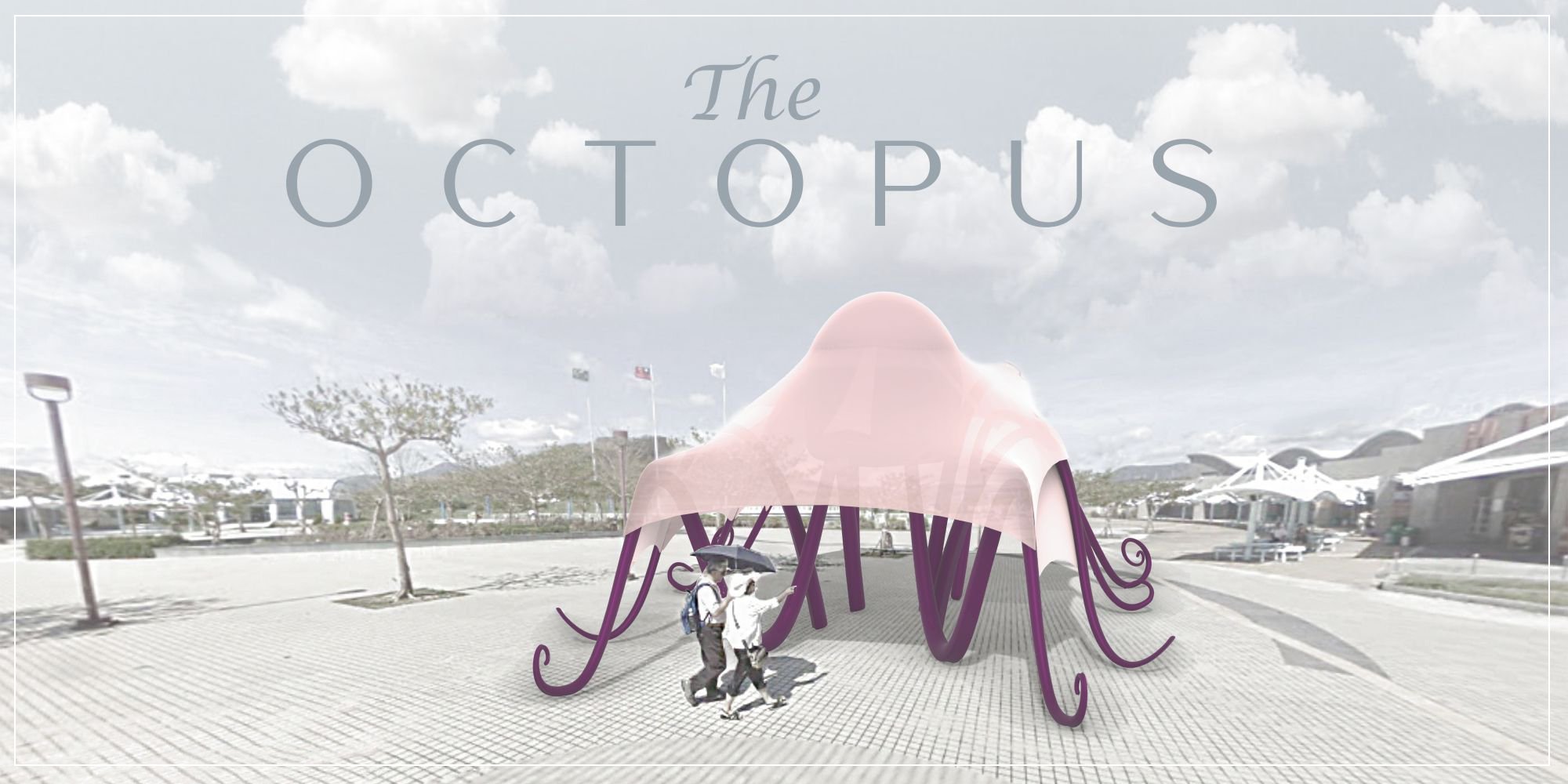
The Octopus
Pavilion Design - Terra x Terra

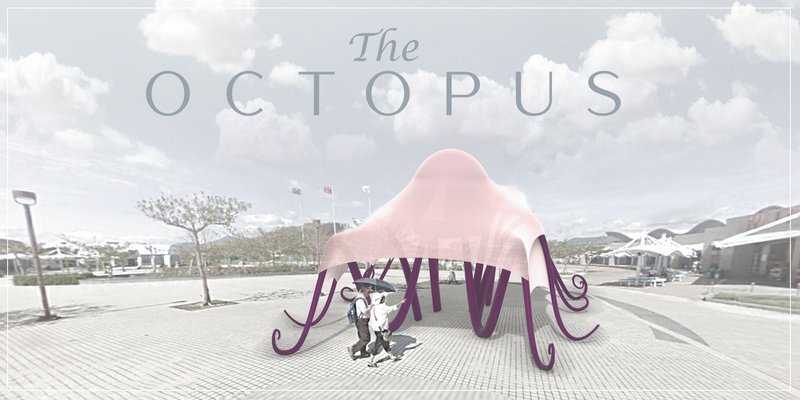
“An approach to innovation that seeks sustainable solutions to human challenges by emulating nature’s time-tested patterns and strategies” The Octopus is a pure outcome of inspiration from biomimicry and innovative spatial design. Finding abode in the process of abstraction of nature-inspired-form and sustainable spatial outcome, The Octopus is designed specifically for the location of Taiwan’s “National Museum of Marine Biology” and pertains to the theme of the site, drawing attention towards the intelligence of this misunderstood creature.
Location
The National Museum of Marine Biology and Aquarium is the most notable museum and research institution for marine biology in Taiwan, which located in Checheng Township, Pingtung County, Taiwan. In 2004, NMMBA cooperated with National Dong Hwa University to jointly establish NDHU College of Marine Sciences and Graduate Institute of Marine Biology, which was the first academic partnership between university and museum in Taiwan.
The Octopus is designed specifically for the location of Taiwan’s “National Museum of Marine Biology” and pertains to the theme of the site, drawing attention towards the intelligence of this misunderstood creature.
Concept
Octopus are soft-bodied, eight - limbed molluscs. Octopuses have a complex nervous system and excellent sight, and are among the most intelligent and behaviourally diverse of all invertebrates.
Octopuses have also been observed in what has been described as play, as well as flexibility in tool use.
To start with, a framework of the pavilion was created, by using the arms of an octopus as an inspiration for biomimicry. Stainless steel sections of small portions are moulded separately off-site and bolted together on site to form the structural framework of the pavilion.
After trying out multilple iterations of enveloping the structural arms to create the form, a decision to employ tensile fabric over them was made. In this manner, it would mimic the webbing certain octopuses have between their arms, furthering the concept of biomimicry.
Material
The framework of the octopus - ie, its arms - are made of stainless steel sections moulded separately and bolted together on site. Two different layers of tensile fabric stretch between the arms providing shelter from weather, while imitating the webbed skin some octopuses have between their arms.
The fabric is suspended between the arms by connecting it to sucker-like projections in the arms.
By minimising the volume of material used for the pavilion, it is ensured the pavilion is easy to install and transport, while maintaining a sustainable appoach towards design.
Script
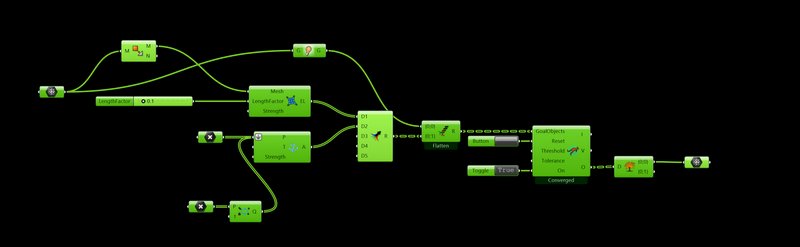
To derive the form of the tensile fabric, the following grasshopper script was used, using Kangaroo2 plugin.




Popular Articles
Popular articles from the community

On the Brooks House by Monsoon Collective – A Contemporary Kerala Home Rooted in Tradition
Kerala home blending tradition and modernity with water-inspired design, brick architecture, courtyard planning, and sustainable rainwater harvesting strategies.
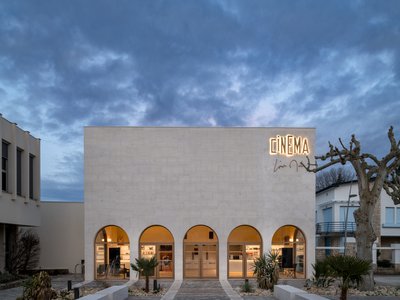
Louis Malle Cinema: A Limestone Cultural Landmark Revitalizing Community Life in Prayssac
Limestone cinema extension with public forecourt, blending heritage and modern design to create flexible cultural spaces and strengthen community interaction.
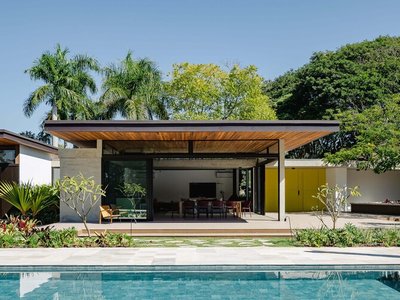
Flamboyant House by Juliana Camargo + Prumo Projetos
Modern Brazilian house integrating existing tree, pool, and volumes with glass, wood, and transitional spaces blending interior, exterior, and landscape seamlessly.
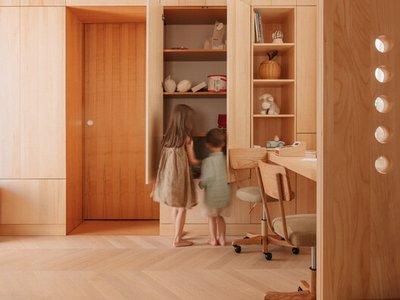
Treehouse Apartment: A Warm Timber Interior Blending Craft, Play, and Contemporary Living
Warm timber apartment with integrated treehouse, combining natural materials, craftsmanship, and playful design to create a flexible, family-oriented living environment.
Similar Reads
You might also enjoy these articles
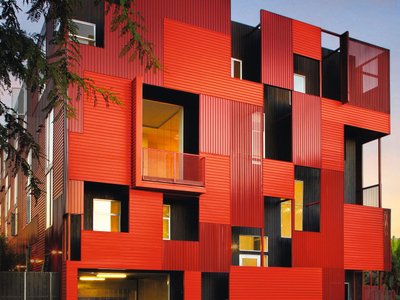
Converge Hub – A Human-Centered and Sustainable Mobility Hub at the Urban Edge
Its open and permeable design promotes sustainable movement through walkable connections, green axes, and integrated public transport
51st Annual KRob - Ken Roberts Memorial Delineation Competition
Join us in celebrating 51 years in excellence in architectural representation! With $2,400 in prize money awarded across 8 categories, this prompt-less competition is accessible to all!



Explore Computational Design Competitions
Discover active competitions in this discipline




The Global Benchmark for Architecture Dissertation Awards

Challenge to design a portable theatre

Challenge to design a portable music platform

Challenge to design an open learning module for the elderly
Comments (0)
Please login or sign up to add comments
No comments yet. Be the first to comment!