

The Secret Garden
Restaurant with greenhouses in Iceland

Idea
The project of the restaurant “The Secret Garden” is a response to the losing romance in society. Through the expression of the literary prototype from the novel by Frances Hodgson Burnett, the form of the building takes the form of a labyrinth, partially submerged in the terrain. However, this labyrinth has reference points that glorify nature - gardens dedicated to plant cultivation and landscape frames created by dining rooms in the shape of lunettes. Travelling through the building provides an emotional experience of discovering and noticing the mysticism of nature.
The project site is located in a secluded Icelandic landscape, in close proximity to thermal pools. They are the main goal of travellers in this location, so in order to interest and persuade people to visit the restaurant, I used a double theme of the secret garden in the project. By using a hill made of black volcanic tuff, the designed building is partially buried in the natural slope of the terrain. The first secret garden is visible to the viewer already outside, by aligning the glass pane covering the greenhouses with the slope line of the hill. Moreover, by using tinted black glass, the greenhouses give the impression of a continuation of black earth. It is possible thanks to the total lighting of the cultivated plants with artificial light, due to insufficient sunlight in Iceland.
The theme of the unreachable is also provided to the guests inside, by dividing the dining area into smaller modules, creating an asymmetrical string, alternating with greenhouses. The restaurant is spread over four floors and the main entrance is on the top floor. The first two levels are intended for additional rooms, and only the last two lowest floors have a dining area with gardens and a kitchen. Extending the access path to the garden is designed to evoke a sense of discovery in the guests, being lost in the intricate corridors and offering additional observation of nature.
Uniqueness is also subject to cultivation in each of the greenhouses, thanks to which each guest, when ordering a meal, will be able to collect their own set of vegetables and fruits for the meal.
By giving the forms of cuboids to the dining modules and other architectural elements, I obtained the effect of frames. Already at the entrance to the car park, the highest entrance part is accentuated with trees leading next to the stairs. The main entrance with an arcade as a dining module-shaped indentation forms the first frame for the landscape. Then, behind the reception desk, the next frame is created by a mezzanine overhanging the large observation room. The next rooms are staircases in cascade gardens, where the frames are formed by panels arranged parallel to the flight of stairs. The last one is intended for individual restaurant modules, where, on the one hand, we can observe partially hidden private themed greenhouses, and on the other, a unique view of the landscape.
In the novel by Frances Hodgson Burnett, a garden is not only a beautiful place with vegetation, but a personified being. Through human activity - caring for, staying, interfering - he begins to live. The restaurant will have such a cycle every day. During the sunny hours, greenhouses under dark glass will no longer be visible and the mirror coating on the modules will reflect the brightness of the day. This is the first phase - 'architecture'. At dusk, when the light from the greenhouse and the modules become visible, the object will emit almost all light. This is how the second phase is created - 'architecture / garden'. The third phase - the 'garden' - is visible after the guests have left the restaurant. The light from the interior fades and only the lit gardens are visible. In the morning, the gardens will symbolically cease to exist, only to be reborn again through the human factor.
Geothermal greenhouses in Iceland
Much of the country's energy is used to heat and light greenhouses in the cold regions of Iceland. For centuries, farmers have used geothermal heat to heat plants, which allowed the growing season of crops to be extended also during cold, cold winters. Starting from the 19th century, the fields were heated with geothermal heat, then makeshift greenhouses were created from natural materials to today's greenhouses, where glass is often replaced with plastic.
The proposed restaurant will use the close vicinity of a geothermal power plant to supply electricity and plant irradiation. This will result in the cultivation of many species of food plants that could not carry out the growing season in a given area without human intervention.
Construction
All load-bearing walls of the proposed restaurant, as well as foundations and ceilings, are designed of monolithic reinforced concrete. This type of construction was chosen due to the instability of the terrain and the complicated plan of the building. The thickness of the construction layers is 30 cm, while in the case of retaining walls transmitting forces from the ground, the thickness is 50 cm. The roof over the top storey has been designed as an inverted pressure plate, with the top layer of gravel limited by attic walls. The ceiling above the corridors is an inverted pressure ceiling with a layer of gravel. It is also designed to collect rainwater, the glass flowing from the greenhouse and dining modules. The water is stored and used to irrigate plants in greenhouses.
Availability
The main entrance to the building is located at a height of 12.50 m in relation to the entrance to the plot. Reducing the amplitude of the lifting height of the drug parking lot height with a 15% slope. 50 parking spaces have been designed, from whatever parking lots have been stopped by those who have stopped. The 3 m wide staircase to the building has a stair platform that can be used inside and outside the building. All doors in the building have a minimum width of 90 cm and are unlimited. Even though the lowest story is not connected to an emergency staircase, traffic is present in the stair network of the stair platform in the cascade gardens. This resulted in a transition for a restaurant client to observe the gardens and smoothly move through the entire building.
All toilets are for wheelchair users, there is a square-free space of 150 150 cm. The shells were secured in the cashier to provide access to the glove box from the toilet, the checkout service was written at the checkout. The washbasins are placed lower than the models, under the washbasin, they will be left free to allow the use of trolleys. Toilets are not gender-specific.
The showers are magnified at a height and there is no doorstep, it swims with the float. The floor is made of non-slip material.
For blind and visually impaired objects, permanent objects on modules, information about the vegetation of people in greenhouses.

Popular Articles
Popular articles from the community


Singing Woman: Contemporary Architecture Inspired by Estonia’s Voice and the Sea
Singing Woman turns Estonia’s song culture into flowing opera house architecture, blending public life, landscape, sea, and national memory.
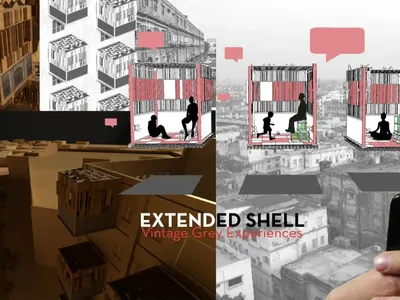
Extended Shell: Retrofitting Kolkata's Balconies as Living Urban Thresholds
A modular retrofit system recovers the social and environmental intelligence of Kolkata's historic verandas for contemporary Park Street residents.
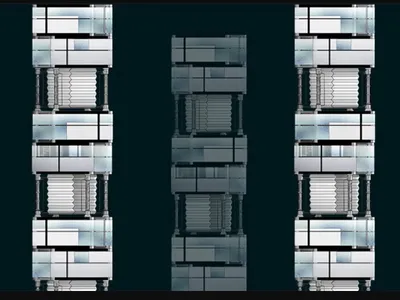
Tsunami Convergenics: Turning Catastrophic Ocean Forces into Underwater Housing Infrastructure
A speculative underwater settlement off the coast of Onagawa, Japan, treats tsunamis and typhoons as energy sources rather than threats.
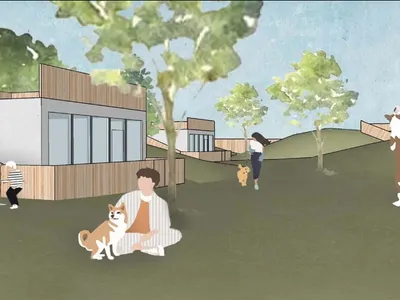
Temporary Home for Dogs: A Reversed Zoo Rethinks Animal Shelter Architecture
In Bucharest, a sinuous corridor and freed landscape flip the logic of containment, designing a shelter that works to make itself unnecessary.

Similar Reads
You might also enjoy these articles

Day and Night Park: A Time-Based Urban Newsstand in Beijing
A temporary urban newsstand in Beijing blending travel, light, and reading through poetic colors, compact form, and community-focused design.

Modernist Patio Renovation in El Masnou, Barcelona by Oliver Segura Arquitectura + Cebrià Arquitectura
Modernist patio renovation blending tradition and innovation with a movable pool, leveled floors, and Catalan materials in El Masnou.

Alto Residencial Coop: Cooperative Housing Development in Santiago de Compostela by Carbajo Barrios Arquitectos
A linear cooperative housing complex blending white volumes and perforated metal façades, enhancing community living, natural light, privacy, and urban integration.
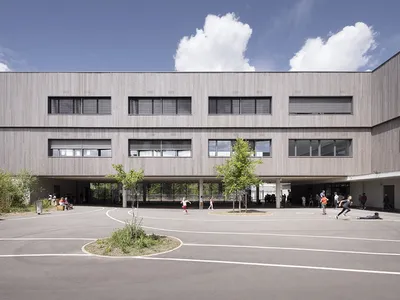
Vil Genis School by BPA ARCHITECTURE – Massy, France
Vil Genis School in Massy, France, features sustainable design, south-facing classrooms, community integration, accessible spaces, and modern educational architecture.

Explore Green Houses Competitions
Discover active competitions in this discipline


Challenge to design locus for the upliftment of human rights

Design challenge to reuse E-waste
Comments (0)
Please login or sign up to add comments
No comments yet. Be the first to comment!